
Flare Systems Explained: Types, Applications, and Industry Solutions
Industry Context: The Growing Need for Safe Gas Disposal
Flare systems are critical safety and emission control devices for industrial facilities that handle combustible, toxic, or greenhouse gases. In 2024, global gas flaring volumes reached 151 billion cubic meters, the highest level since 2007, according to the World Bank. This underscores the urgency for efficient, reliable flare solutions that meet both safety and environmental compliance requirements. The global flare systems market is valued at approximately USD 4.8 billion in 2025, driven by regulatory pressure on hydrocarbon emissions and recovery in oil and gas investments (Dataintelo).
Zexuan: A Specialized Manufacturer of Flare and Thermal Treatment Systems
Shandong Zexuan Environmental Protection Technology Co., Ltd. (Zexuan), established in 2015, is a professional manufacturer and engineering service provider specializing in industrial flare systems, thermal treatment equipment, and waste gas combustion solutions. With a 24,100 m² manufacturing base, over 80 employees (including 30+ engineering and technical specialists), and an annual manufacturing capacity exceeding 60 sets of flare and thermal treatment systems, Zexuan serves industries such as oil & gas, refining, petrochemical, LNG, chemical, biogas, and heavy industry.
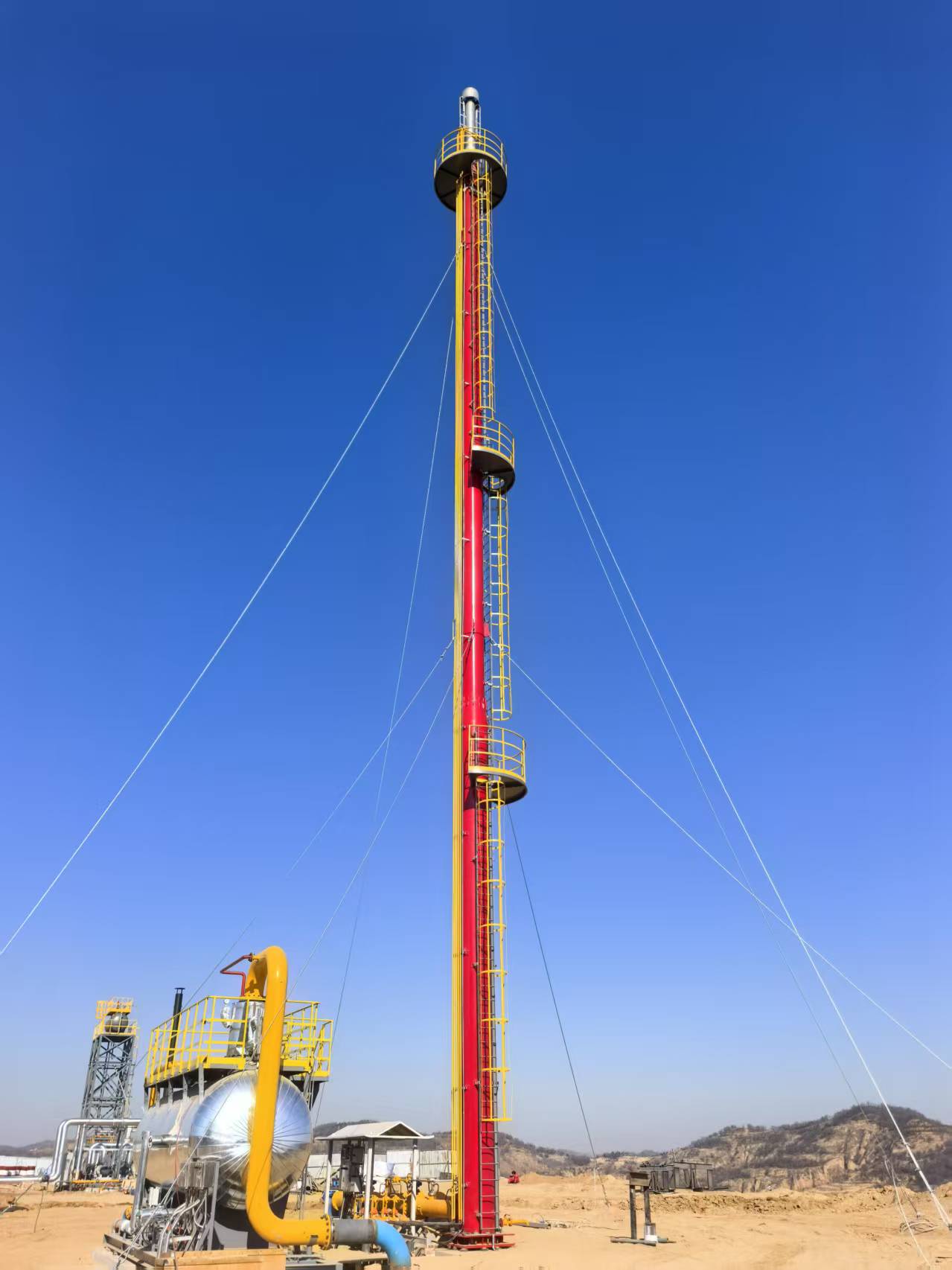
A Guyed-Wire supported Elevated Flare System – representative of Zexuan's elevated flare product line.
Types of Flare Systems and Their Technical Characteristics
Zexuan's product portfolio comprises four main categories of flare systems, each designed for specific operational scenarios:
Elevated Flare Systems
Elevated flare systems (also called flare stacks) discharge waste gases at a height (10 m to 150 m+) to ensure safe dispersion of combustion products and minimize ground-level thermal radiation. Zexuan offers several structural configurations:
- Self-Supported Elevated Flare – freestanding design for moderate heights.
- Guyed-Wire Flare – supported by guy cables, suitable for tall stacks in windy areas.
- Derrick-Supported Flare – a rigid structural tower for heavy loads and tall installations.
- Demountable Flare – a portable or removable design for temporary or mobile use.
Typical parameters for elevated flares from Zexuan: height up to 150 m+, gas flow customized, operating temperature up to 1100 °C, turndown ratio up to 100:1, and combustion efficiency ≥98%–99.9% depending on design conditions. Materials include carbon steel, hot-dip galvanized steel, SS304/316L, SS310S, and Inconel 625 for high-temperature parts.
Enclosed Ground Flare (ZX-EGF Series)
Enclosed ground flare systems are designed for low-radiation and low-noise operation, making them ideal for space-constrained areas. Zexuan's ZX-EGF Series achieves combustion efficiency up to 99.9% at operating temperatures of 800 °C–1200 °C, with customized gas flow. The system uses a refractory-lined housing to contain flame and reduce light emission. It is commonly used in petrochemical parks, chemical plants, and LNG terminals.
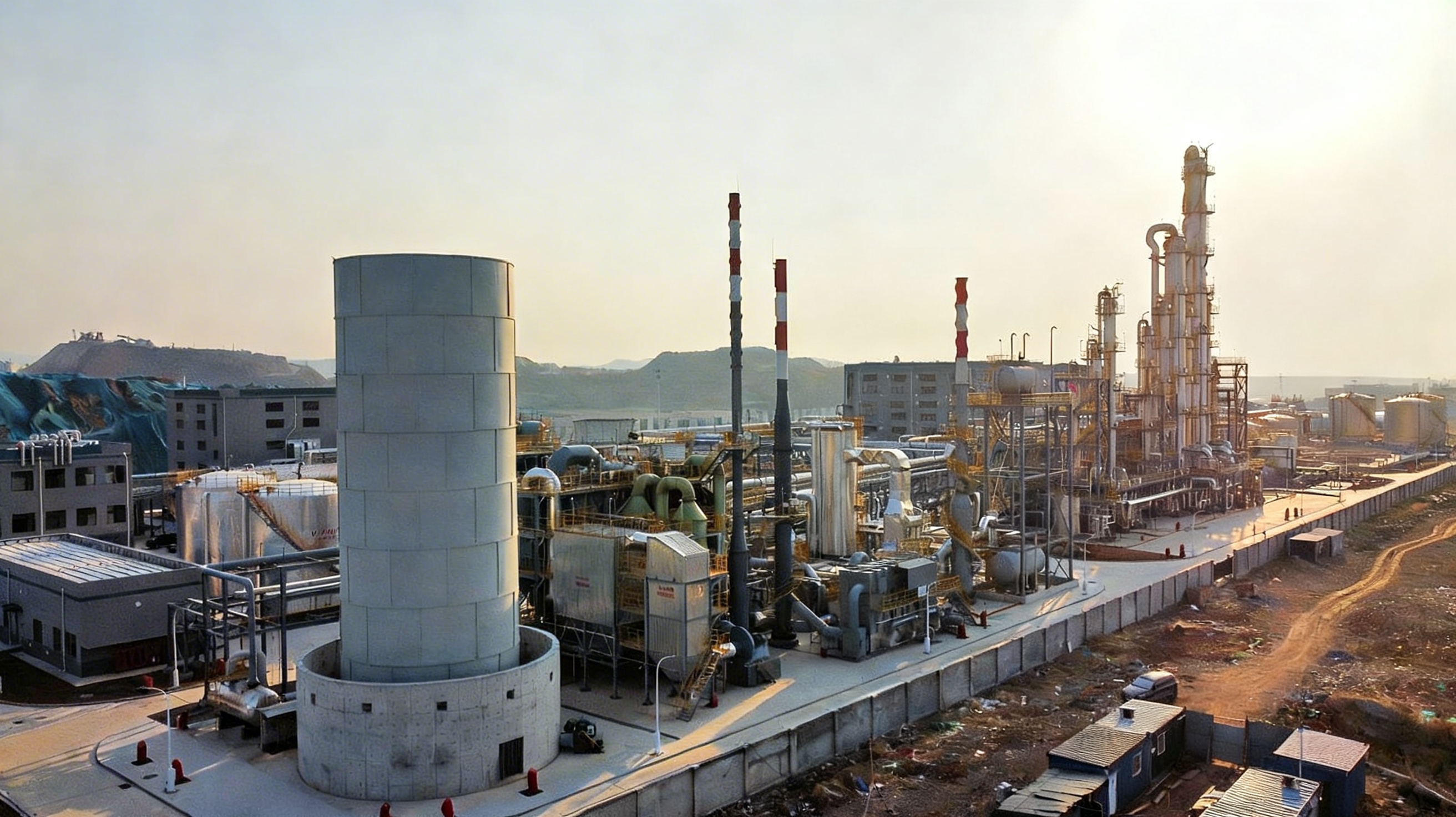
Zexuan Enclosed Ground Flare (ZX-EGF Series) for low-emission, confined-area applications.
Skid-Mounted and Mobile Flare Systems (ZX-SMF Series)
Zexuan offers compact, pre-assembled skid-mounted flare systems for LNG/LPG emergency flaring, BOG (boil-off gas) disposal, and temporary pipeline maintenance flaring. The skid integrates the flare stack, ignition system, control panel, and gas control unit for fast installation and commissioning. Designed for cryogenic service and hydrocarbon gases, these systems are deployed in LNG receiving terminals, bunkering stations, storage facilities, and offshore applications.
Biogas and Landfill Gas Flare (ZXE-BGF Series)
For methane-rich gases from landfills, digesters, and wastewater treatment, Zexuan's ZXE-BGF Series biogas flares achieve methane destruction efficiency ≥98% at 800 °C–1100 °C. These systems handle methane concentrations of 35%–65% CH₄ and feature automatic ignition and flame monitoring for continuous or intermittent operation. Typical materials include carbon steel, hot-dip galvanized steel, and stainless steel.
Application Scenarios Across Key Industries
Zexuan flare systems address a wide range of operational needs:
- Oil & Gas / Refining – Elevated and enclosed ground flares for emergency pressure relief, startup/shutdown venting, and continuous gas disposal. Systems are designed to comply with API 521 standards for reliability and safety.
- Petrochemical and Chemical Plants – Ground flares and thermal oxidizers handle process off-gases containing VOCs, toxic compounds, and corrosive components with high combustion efficiency.
- LNG Terminals and Gas Processing – Skid-mounted flares safely dispose of BOG and emergency gas releases, with quick response and cryogenic compatibility.
- Natural Gas Pipeline / Compressor Stations – Elevated and mobile flares provide controlled combustion during maintenance, commissioning, and emergency releases. Common in the Middle East, Central Asia, and North America.
- Landfill / Biogas / Waste-to-Energy – Biogas flares reduce methane emissions, supporting greenhouse gas reduction and environmental compliance across Africa, Asia, and Latin America.
- Metallurgy and Heavy Industry – Thermal oxidizers and incineration systems treat high-temperature dust-laden exhaust while recovering waste heat.
Market Trends and the Shift Toward Enclosed and Low-Emission Designs
The flare systems market is witnessing a notable shift toward enclosed ground flares (EGF) and low-emission solutions. The global totally enclosed ground flare (TEGF) market was valued at USD 113 million in 2024, with efficiencies exceeding 98% in destroying harmful emissions (Intel Market Research). Meanwhile, the VOC control systems market, which includes thermal oxidizers and incinerators, is estimated at USD 7.5 billion in 2025, with a 5.4% CAGR in China (Fact.MR). Asia-Pacific holds a 35% share of the flare gas recovery system market (Grand View Research), indicating strong regional demand for advanced combustion and recovery technologies.
Major global competitors in the flare segment include Zeeco, John Zink Hamworthy, and Honeywell UOP. However, manufacturers like Zexuan differentiate through customized engineering, cost-effective manufacturing, and integrated services covering design, fabrication, installation, and after-sales support.
Comparison with Traditional Open Flaring
Traditional open elevated flaring, while simple and cost-effective, has limitations in terms of visible flame, noise, and light pollution. Enclosed ground flares offer superior environmental performance (low radiation, low noise) and higher destruction efficiency, but involve a higher initial capital investment. Zexuan provides both options, allowing customers to choose based on site constraints, regulatory requirements, and budget.
Future Outlook: Low-Carbon Combustion and Intelligent Control
The future of flare systems lies in lower carbon emissions, flare gas recovery, and digital operation. Zexuan continues to invest in low-carbon combustion technologies, intelligent control systems, and flare gas recovery solutions. The company's ISO 9001:2015 certified quality management system (certification 26326Q00079R001) supports consistent product quality and continuous improvement for both domestic and international projects.
Frequently Asked Questions
An elevated flare system is a tall structure (flare stack) used to combust waste gases at a height, typically 10 m to 150 m or more, to ensure safe dispersion of combustion byproducts and minimize ground-level thermal radiation.
Flare tips are often made from high-temperature and corrosion-resistant alloys such as SS316L, SS310S, and Inconel 625, with operating temperatures up to 1100 °C.
API Standard 521 (Pressure-Relieving and Depressuring Systems) governs the design of flare systems, addressing flare header sizing, slope, and safety requirements. Zexuan's systems are designed with consideration of API 521 guidelines to ensure reliable overpressure protection.
A biogas flare is specifically designed for low-calorific methane-containing gas (35%–65% CH₄) from landfills, digesters, or wastewater treatment plants. It operates at 800 °C–1100 °C and includes automatic ignition and flame monitoring for continuous or intermittent flaring.
Zexuan's ZX-EGF Series enclosed ground flare achieves combustion efficiency up to 99.9% at operating temperatures of 800 °C–1200 °C, making it suitable for stringent emission control applications.
Explore the full product range: Download Zexuan's company brochure for detailed specifications, project references, and engineering capabilities.
📄 Download Zexuan Corporate Brochure (PDF)
For inquiries, contact: alice@zexuaneco.com | WhatsApp: +86 18678831572
هل لديك أسئلة أو تحتاج إلى مزيد من التفاصيل؟
تواصل مع فريقنا للحصول على عرض أسعار مخصص أو استشارة فورية.
طلب عرض أسعار
املأ النموذج أدناه وسيتواصل معك فريقنا بعرض مقترح مخصص.
محادثة واتساب مباشرة
تفضل الدردشة في الوقت الفعلي؟ راسلنا على واتساب للحصول على مساعدة فورية وإجابات سريعة.
- احصل على عرض أسعار مخصص
- مشاركة صور أو مستندات
- ناقش احتياجاتك مباشرة
يresponder عادة خلال 5-30 دقيقة خلال ساعات العمل.