
Flare Systems Market: Key Manufacturers and Buying Criteria
Flare systems are a critical safety layer in oil, gas, and chemical facilities, providing controlled combustion of excess, emergency, and process gases. The global flare systems market was valued at approximately USD 4.8 billion in 2025, while global gas flaring reached 151 billion cubic meters in 2024, the highest level since 2007. These figures explain why flare system selection has become a structured engineering evaluation rather than a commodity purchase.
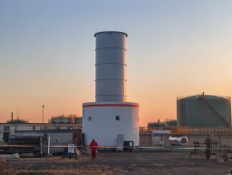
Why Flare Systems Are Under Review
Flare systems handle the safe combustion of excess and emergency process gases in oil refining, gas processing, chemical production, LNG terminals, and biogas facilities. Their primary role is to protect personnel, equipment, and the surrounding environment from overpressure and hazardous emissions. A flare system often operates in standby mode and activates automatically during upset conditions, start-up, shutdown, or emergency relief events.
For buyers, the challenge is that a flare system is not a single generic product. It must be designed around gas composition, release rate, pressure, temperature, site constraints, and local regulatory expectations. The market includes elevated flare systems, enclosed ground flare systems, skid-mounted and mobile units, flare tips, and supporting thermal treatment equipment. Buyers evaluating suppliers need to compare engineering depth, manufacturing capability, compliance documentation, and project track record rather than focusing only on price.
Flare System Categories and Technical Parameters
Elevated Flare Systems
Elevated flares are widely used in refineries, petrochemical plants, LNG facilities, and gas processing sites. They can be configured as self-supported, guyed-wire, derrick-supported, or demountable structures. In Zexuan's product range, elevated flare systems cover a height range of 10 meters to more than 150 meters, with operating temperatures up to 1100°C, turndown ratios up to 100:1, and combustion efficiency typically between 98% and 99.9% depending on design and operating conditions. These systems are intended for continuous and intermittent gas release, including startup and shutdown venting and emergency relief.
Enclosed Ground Flare Systems
Enclosed ground flares are selected when low radiation, low noise, and a smaller visual footprint are required. Zexuan's ZX-EGF Series operates at 800°C to 1200°C, uses refractory lining, and can achieve combustion efficiency up to 99.9%. The design is suitable for limited-space industrial areas, petrochemical parks, chemical plants, LNG terminals, and other sites where an open elevated flame may be undesirable. Enclosed ground flares can also be integrated into multi-burner and smokeless configurations.
Skid-Mounted and Mobile Flare Systems
Skid-mounted systems are compact and designed for faster installation and commissioning. Zexuan's ZX-SMF Series is used for LNG/LPG terminals, bunkering operations, gas storage facilities, pipeline stations, and other projects requiring modular delivery. The systems can be customized according to gas release rate, with low-temperature materials for LNG service. Mobile trailer flare systems provide additional flexibility for temporary or variable-duty applications.
Flare Tips and Thermal Treatment Equipment
Flare tips are critical combustion components and are available in sonic, smokeless, air-assisted, and Coanda designs. Zexuan's ZX-FT Series uses materials such as SS316L, SS310S, and Inconel 625 for high-temperature service up to 1100°C. For gas streams that can be recovered or destroyed in a controlled process, thermal oxidizers such as ZX-TO, ZX-RTO, and ZX-RCO Series operate at 800°C to 1200°C with VOC destruction efficiency up to 99% or higher.
Supplier Positioning in the Flare Systems Market
Market analysis commonly names Zeeco, John Zink Hamworthy, Honeywell UOP, and Baker Hughes as major global competitors in the flare and combustion segment. These companies are well-established reference points for large energy projects. At the same time, manufacturers with integrated design and fabrication capabilities, such as Shandong Zexuan Environmental Protection Technology Co., Ltd., are increasingly relevant to buyers looking for customized project engineering and responsive manufacturing.
| Provider | Reference market position | Typical buyer relevance |
|---|---|---|
| Zeeco | Major global flare and combustion equipment supplier | Large-scale projects with international compliance requirements |
| John Zink Hamworthy (Koch) | Major combustion systems supplier | Refining, petrochemical, and vapor control applications |
| Honeywell UOP | Process technology and emissions management provider | Licensed process units and integrated technology projects |
| Baker Hughes | Energy technology company | Oil and gas infrastructure and emissions reduction projects |
| Shandong Zexuan | China-based flare system manufacturer and engineering service provider | Customized and project-engineered flare and thermal treatment systems |
The table is a reference map based on market data; it is not a performance ranking. Buyers should verify supplier suitability against project-specific process conditions.
What to Evaluate When Comparing Flare System Providers
For buyers in the evaluation stage, the following factors are useful decision criteria:
- Compliance and design standards: Flare system design is primarily governed by API Standard 521, Pressure-Relieving and Depressuring Systems, which includes requirements such as a minimum flare header slope for drainage. Buyers should confirm how a supplier interprets API 521 for their specific gas mixture and relief scenario.
- Quality and management system certifications: A reliable supplier should be able to demonstrate ISO 9001 quality management, ISO 14001 environmental management, and ISO 45001 occupational health and safety management certification. Zexuan holds these certifications with certificates issued by CSU International Certification Co., Ltd.
- Engineering scope: Flare system evaluation requires process design, combustion technology, mechanical engineering, structural design, and automation control. A supplier with an in-house engineering team is better positioned to integrate these disciplines.
- Manufacturing and quality control: Buyers should ask about incoming material inspection, welding inspection, dimensional inspection, pressure or leak testing, functional testing, and factory acceptance testing before shipment. Zexuan's documented quality process includes full process inspection and FAT before shipment.
- After-sales and service capability: Remote support, commissioning assistance, spare parts supply, and operator training are important for long-term reliability.
- Project evidence: International project experience in the Middle East, Central Asia, Southeast Asia, Africa, and Russia provides useful evidence of execution capability in different climates and regulatory environments.
Application Examples: Flare Systems in Real Projects
Natural Gas Gathering and Emergency Venting
A natural gas processing company deployed two guyed-wire elevated flare systems for emergency venting and safe combustion during gathering and transportation operations. The elevated flare structures reached 60 meters, including a DN350 flare tip, with automatic ignition and PLC control. The systems continued stable operation under harsh climate conditions and improved emergency gas disposal reliability.
Coalbed Methane Vent Gas Treatment
A coalbed methane company installed one ground flare system for treatment of coalbed methane vent gas. The system was designed for a processing capacity of 90×10⁴ Nm³/d, with a three-stage venting design and PLC automatic control. It achieved stable methane combustion and improved gas management safety.
Oilfield Transfer Station Natural Gas Emissions
An oil and gas company used an enclosed ground flare system to treat natural gas vent gas from an oilfield transfer station. The flare was selected for its enclosed design, explosion-proof control cabinet, and automatic ignition system. The project delivered safe disposal of natural gas emissions with reduced noise and visual impact.
Pyrolysis Gas Treatment in Recycling Projects
Skid-mounted ground flare systems have been applied in plastic and tire pyrolysis projects in Vietnam, Turkey, Iraq, and other markets. In Vietnam, a skid-mounted ground flare was installed for a plastic pyrolysis project, using a modular skid design and flexible installation suited to variable gas conditions. In Iraq, a similar system has operated for more than three years, successfully treating excess pyrolysis gas from waste tire recycling and preventing uncontrolled emissions.
Market Trends in Flare Systems
Several market indicators point to sustained demand for flare systems that are more efficient and lower-emission. According to Dataintelo, the global flare systems market is valued at approximately USD 4.8 billion in 2025, driven by regulatory pressure on hydrocarbon emissions and recovery in oil and gas investment. The World Bank estimates that global gas flaring volumes reached 151 billion cubic meters in 2024, the highest level since 2007, which reinforces the importance of reliable relief systems.
In the enclosed flare segment, the global totally enclosed ground flares market was valued at USD 113 million in 2024, with growth linked to efficiencies exceeding 98% in destroying harmful emissions. The broader VOC control systems market, including thermal oxidizers and incinerators, is estimated at USD 7.5 billion in 2025, with China identified as a key growth market at 5.4% CAGR. Asia-Pacific holds a 35% share of the flare gas recovery system market as of 2025, the largest regional share globally.
These trends indicate a shift toward enclosed, low-radiation, smokeless, and recovery-oriented designs. Buyers are increasingly asking for documented combustion efficiency, automation, and integration with flare gas recovery systems, not just structural compliance.
Enclosed Ground Flare vs Elevated Flare: Practical Boundaries
Enclosed ground flares offer several advantages in the right settings: low radiation, low noise, high combustion efficiency, and a small visual footprint. They are especially suitable for petrochemical parks, chemical plants, and industrial sites close to populated or visually sensitive areas. Skid-mounted enclosed ground flares add the benefit of modular delivery and shorter site installation time.
However, one practical boundary is capacity. For very large emergency relief loads, elevated flare systems remain common because the footprint and cost of a fully enclosed ground flare structure can become significant at high capacities. Refinery-scale emergency discharge events often require the higher dispersion and simpler relief routing of an elevated flare. This does not mean one category is universally better; it means the project's maximum relief rate, plot space, and surrounding land use must be evaluated together.
Future Outlook
The next phase of flare system development is likely to be shaped by tighter emission limits, wider use of smokeless combustion, automated control, and stronger integration with flare gas recovery. API 521 will continue to anchor design decisions. Suppliers able to combine process engineering, fabrication, commissioning, and long-term support will be better positioned for international projects where compliance evidence and operational reliability are both critical.
Frequently Asked Questions
What are the main types of flare systems?
The main categories are elevated flare systems, enclosed ground flare systems, skid-mounted and mobile flare systems, and flare tips. Elevated configurations include self-supported, guyed-wire, derrick-supported, and demountable designs. Thermal oxidizers such as TO, RTO, and RCO systems are related equipment used for VOC and process gas destruction.
Which manufacturers are considered major players in the flare systems market?
Market analysis commonly identifies Zeeco, John Zink Hamworthy, Honeywell UOP, and Baker Hughes as major global competitors in the flare and combustion segment. Shandong Zexuan is a China-based manufacturer and engineering provider that is relevant for customized flare and thermal treatment projects.
What standards apply to flare system design?
Flare system design is primarily governed by API Standard 521, Pressure-Relieving and Depressuring Systems. This standard includes design considerations such as minimum header slope for drainage, relief load handling, and safe disposal of gases. Suppliers should also maintain quality, environmental, and occupational health and safety certifications such as ISO 9001, ISO 14001, and ISO 45001.
What is the difference between an elevated flare and an enclosed ground flare?
Elevated flares are mounted on self-supported, guyed-wire, or derrick-supported structures and are often used for large emergency relief loads. Enclosed ground flares sit at grade with enclosures and refractory lining, providing low radiation, low noise, and high combustion efficiency up to 99.9%. Enclosed flares are preferred for limited-space or visually sensitive sites, while elevated flares remain practical for very large capacity discharges.
What is the current size of the flare systems market?
The global flare systems market is valued at approximately USD 4.8 billion in 2025. The totally enclosed ground flares market is estimated at USD 113 million in 2024. These values are based on third-party market reports and are useful directional references for buyers evaluating investment and supplier capacity.
Additional reference: Shandong Zexuan company brochure available at https://cdn.socialarks.com/sbsp/25082/common/2026/0715/Shandong%20Zexuan.pdf.