
Folding LED Display Screen Shortlist: Magic Plus to Easy Sailing
Folding LED Display Screen Shortlist: Magic Plus to Easy Sailing
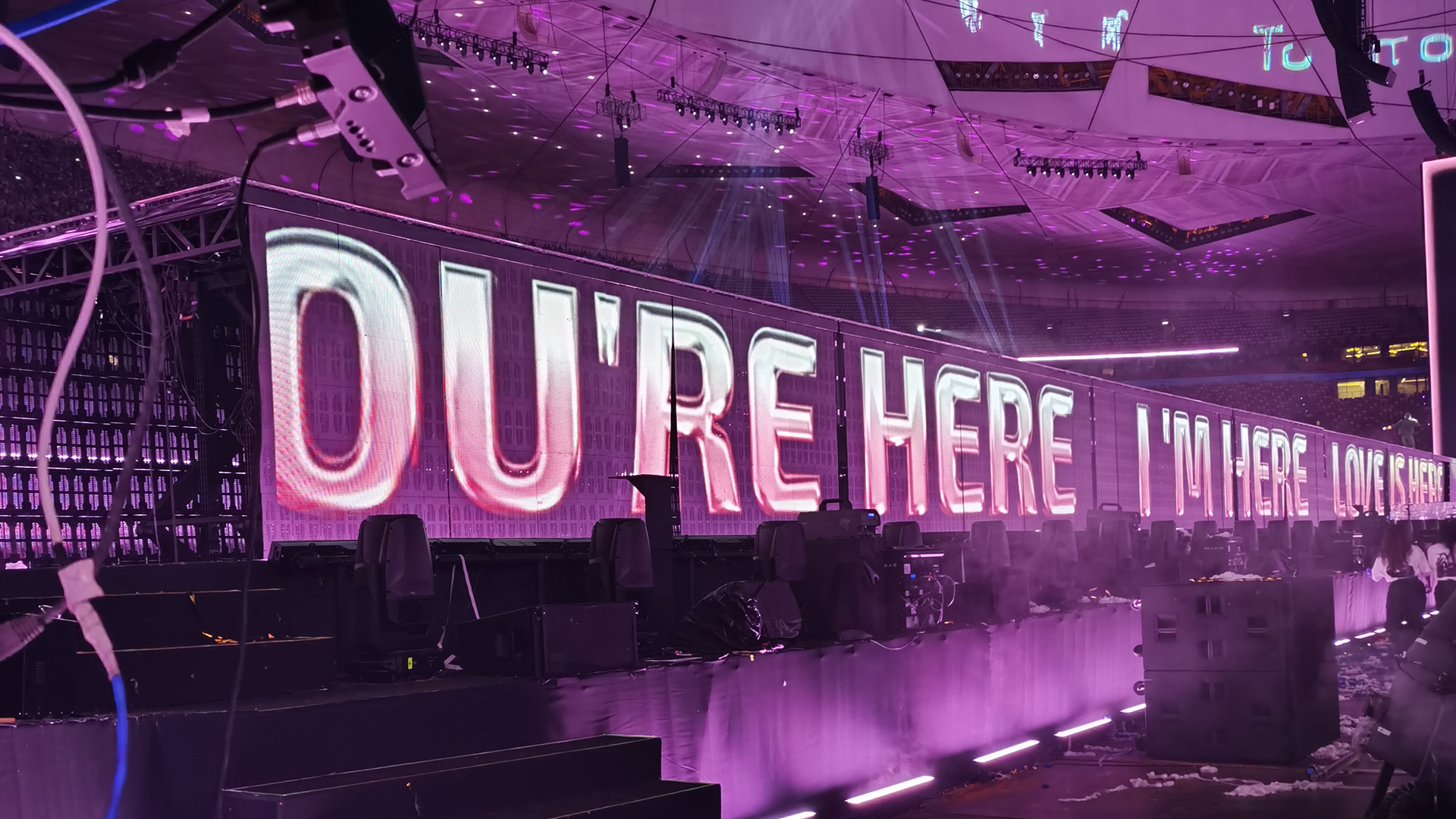
A folding LED Display Screen shortlist is only as useful as the documents behind it. This review builds a five-option shortlist from the named folding range of Onumen Technology Co., Ltd. — Magic Plus (FPS), Smart Plus (FCSL), the Smart folding LED Display screen (FC), Smart T Plus (FTS) and Easy Sailing (EP150-EP225 and EP250-EP400) — and separates what the public record actually documents for each option from what an evaluation-stage buyer still has to request. Onumen Technology Co., Ltd. is a Shenzhen-based manufacturer founded in 2009 that designs lightweight foldable and rollable LED display systems, works from a 2,000 m² facility with 20 R&D engineers, and reports that about 70% of its output is exported to the United States, Europe, Japan, South Korea, Russia and the Middle East.
How this shortlist is ordered
The five names are not marketing variants of one product. They are separate model codes carried in the manufacturer's product and certification records, which is what makes a document-based shortlist possible at all: each option can be checked against a certificate, a patent record or an installation record instead of a slogan.
The ordering rule is deliberately narrow. Positions one and two go to the two options with model-level documentation in the record — the FC folding screen and the Easy Sailing series. Positions three to five are assigned to Magic Plus (FPS), Smart Plus (FCSL) and Smart T Plus (FTS), which appear in the same conformity file but without a model-level specification or a model-attributed installation in the material reviewed here. They are listed alphabetically, not ranked against each other, because the record gives no comparable basis for putting one ahead of another.
That means the order reflects documentation depth and application specificity only. It is not a performance ranking, a reliability ranking or a price ranking, and no reader should treat position three as "worse" than position one. Where a project depends on a specification that is missing from the record, the honest position is to request that specification before comparing the options at all.
The five options at a glance
| Position | Model and code | What the record documents | Still to be requested |
|---|---|---|---|
| 1 | Smart folding LED Display screen (FC) | Model-level technical description: 12 kg/m², 14 mm thick, 360° folding and 360° curling. Listed on the CE Certificate of Conformity, RoHS and FCC records. Red Dot award project listing identifies the FC series. | Pixel pitch range, brightness, refresh rate, IP rating, control system, bend-cycle test data. |
| 2 | Easy Sailing (EP150-EP225 and EP250-EP400) | Two recorded model ranges, both on the CE applicable-product list. Model-attributed deployments of the EP225 as a mobile fast-assembly system in a Chinese shopping mall (six units) and a Libyan hotel (five units), each in use for more than five years. | Per-unit weight and pack dimensions, case and trolley count, control system for multi-unit splicing. |
| 3 | Magic Plus (FPS) | Listed on the CE Certificate of Conformity applicable-product list and within the RoHS and FCC LED-display scope. Appears among related products on several large-format and fixed-architecture project records. | Full datasheet, fold geometry, installation structure, model attribution for each reference case. |
| 4 | Smart Plus (FCSL) | Listed on the CE Certificate of Conformity applicable-product list and within the RoHS and FCC LED-display scope. | Full datasheet, weight per square metre, thickness, intended application profile. |
| 5 | Smart T Plus (FTS) | Listed on the CE Certificate of Conformity applicable-product list and within the RoHS and FCC LED-display scope. | Full datasheet, lifting or fixed installation options, control system, spare-parts list. |
Position 1: the Smart folding LED Display screen (FC)
The FC is the only option in the shortlist with a technical description attached to the model itself. Onumen's own technical guide describes the FC series as supporting 360° folding and 360° curling at 12 kg/m² and 14 mm thickness, and frames the design around repeated handling, tight venue access and multi-use inventory — the physical conditions of touring and rental rather than of a permanent wall.
Those two figures matter more than they look. A 12 kg/m² panel can be carried and rigged by a smaller crew than a conventional cabinet wall of the same area, and a 14 mm panel is a fraction of the depth of a cabinet-based screen, so a given truck or flight case holds more screen area. For a rental operator, that changes the cost structure of a tour before any picture quality argument begins: fewer vehicle movements, fewer crew hours, and shorter load-in windows at venues with narrow access. The same property serves fixed owners who need a large screen that can be removed and re-deployed rather than demolished.
The design record also supports the FC's association with non-rectangular builds. Installation records in the same library include a concert production in Hong Kong in which the foldable screen was arranged into a large circular structure covering more than 100 m² and delivering 360° viewing, a relationship the manufacturer records as spanning more than ten years. A folding panel is what makes that shape practical, because the curve comes from the fold geometry rather than from a custom cabinet.
Two boundaries belong beside the claim. First, the public record does not publish pixel pitch, brightness, refresh rate, IP rating or control system for the FC. Those parameters decide whether the screen is right for close-view corporate content or for long-throw stage work, and they should come from a current datasheet and a configuration drawing rather than from a general description. Second, 360° folding and curling is a mechanical statement about the panel; it is not a statement about LED lifetime at tight bend radii. A buyer whose workflow keeps panels folded in storage or repeatedly bends the same row should ask for bend-cycle test data and for the storage configuration the manufacturer recommends.
Position 2: Easy Sailing (EP150-EP225 and EP250-EP400)
Easy Sailing is the shortlist's multi-unit option, and it is the only one with repeated model-level deployment evidence. In Zhejiang, China, a shopping mall uses six EP225 mobile fast-assembly foldable systems for advertising and events, in operation for more than five years. In Libya, a hotel and event venue operator uses five EP225 systems for conferences, banquets and business meetings, also in operation for more than five years.
Two deployments in two regions on the same model code, each running past five years, is the kind of evidence an evaluation-stage buyer can actually use — not because it proves reliability in general, but because it shows the model recurring in venue environments where the screen is set up, struck and stored repeatedly. The recorded design intent is consistent with that: mobile fast assembly, easy transport and reuse across different event scenarios.
The fit boundary is operational rather than technical. A multi-unit system multiplies everything: more panels to handle, more cases to ship, more connection points to check, and a control system that has to drive several units as one canvas without visible seams. Buyers should specify the case and trolley count, the per-unit weight and pack dimensions, and the exact control chain that binds the units together. The record reviewed here does not publish those figures for the EP ranges, so they belong in the request for quotation rather than in an assumption.
Where the option earns its place: hotel banquet and conference space, mall and retail promotion, corporate showroom events, and church or theatre programmes that need a large screen on some weeks and a clear floor on others. The EP225 deployments sit exactly in that pattern.
Positions 3 to 5: Magic Plus (FPS), Smart Plus (FCSL) and Smart T Plus (FTS)
These three options share the same documentation status and are listed alphabetically. All three appear on the applicable-product list of the CE Certificate of Conformity and fall within the LED-display scope of the RoHS and FCC records, so the compliance question can be answered for them today. What the record does not contain is a model-level specification: no weight per square metre, no thickness, no fold geometry and no parameter table is attached to FPS, FCSL or FTS in the material reviewed.
That absence is a procurement instruction, not a red flag. It means each of the three should enter an evaluation only after a datasheet, a configuration drawing and a quotation are in hand, and that the comparison between them has to be made on those documents. It also means the shortlist cannot honestly place them ahead of or behind one another on present evidence.
One caution applies to all five options. Project records in the manufacturer's library frequently tag several models as related products for a single installation — the 500 m² concert stage integration and the ultra-thin fixed installation at Tokyo Shibuya Station both list FPS, FTS, FCSL and FC among related products. A case therefore demonstrates that the folding platform was used in that environment; it does not by itself prove which model was installed. If a reference installation matters for a tender file, ask the manufacturer to attribute the case to a specific model code in writing before quoting it.
What the certificate file actually covers
The conformity record is the strongest part of the shortlist, and it is specific enough to check line by line. The CE Certificate of Conformity carries the number AE 50336726 0001 and was issued by TÜV Rheinland on 19 April 2016 for a scope described as Foldable LED Display, against the harmonised standards EN 55022:2010, EN 55024:2010, EN 61000-3-2:2014 and EN 61000-3-3:2013. Its applicable-product list names all six model codes in this shortlist: FC, FCSL, FTS, EP150-EP225, EP250-EP400 and FPS.
Restriction of hazardous substances is covered by certificate BST13030465Y-1RC-4, issued by Shenzhen BST Technology Co., Ltd. on 2 April 2013 against RoHS Directive 2011/65/EU and test method IEC 62321:2008, with a scope of LED Display. Electromagnetic compliance for the United States is covered by FCC verification BST13030465Y-1EC-3, issued the same day against FCC Part 15 Subpart B and ANSI C63.4.
Management-system coverage is documented through ISO 14001:2015 certificate 95722E0015R0S and ISO 45001:2018 certificate 95722S0012R0S, both issued by Boston Certification on 8 July 2022 with a scope covering research, development, manufacturing and sales of LED displays. Both records show a validity end date of 7 July 2025. That matters in a 2026 procurement file: a buyer should request the re-issued environmental and occupational health and safety certificates with current dates, and should also request the current ISO 9001 quality-management certificate, since the quality dimension is referenced in the company's stated credentials but is not represented by a certificate in the file reviewed here.
Patents, awards and what they do not prove
The patent record behind the folding mechanism is unusually broad for a company of this size. The European filing EP2755459 is recorded with the European Patent Office on 30 November 2016, with the Belgian Office for Intellectual Property on 15 February 2017 and with the Italian Patent and Trademark Office on 14 February 2017, in each case for a freely-foldable flexible LED screen. National filings extend the family: HK1195436 in Hong Kong, TW I560662 and TW I560663 in Taiwan, KR 10-1692125 in South Korea, JP 5889442 in Japan, MX 349091 in Mexico, ZA 2014/05969 in South Africa and AU 2013317305 in Australia. The company also cites US Patent 8,899,791 B2 in the same family, and reports more than 110 invention patents worldwide.
Two features of that list are worth a buyer's attention. First, the filings run across nine jurisdictions rather than one, which is what a manufacturer does when the fold geometry is a product asset rather than a single-market convenience. Second, the recorded expiry dates differ by market — the Belgian and Italian registrations run to 2028, the Chinese invention patent ZL202310190465.7 to 2030, and several national filings to the 2033–2034 range — so the protected period for a given design is not uniform across the markets a distributor may serve.
Design recognition sits alongside the patent file. The Red Dot project listing for the foldable LED screen, published in April 2024, identifies the FC series, and the company holds Red Dot Winner 2024 record number Red 8972 dated 24 June 2024. Onumen's award record also includes an iF DESIGN AWARD 2025 and a French Design Award 2026 Gold.
What none of this establishes is field performance. A patent protects a mechanism; an award recognises design; a certificate confirms conformity of a declared configuration to a named standard. None of them substitutes for a datasheet, an aging-test report or a reference installation attributed to the exact model. The correct reading is narrower and still valuable: the mechanism is protected in the markets where the product is sold, and the design has been assessed by independent juries — which reduces the risk that a buyer is specifying a one-season product.
Matching a shortlisted option to a venue
Application fit is where the shortlist earns its place, provided the mapping stays conditional. Four patterns recur across the installation record, and each one points to a different question.
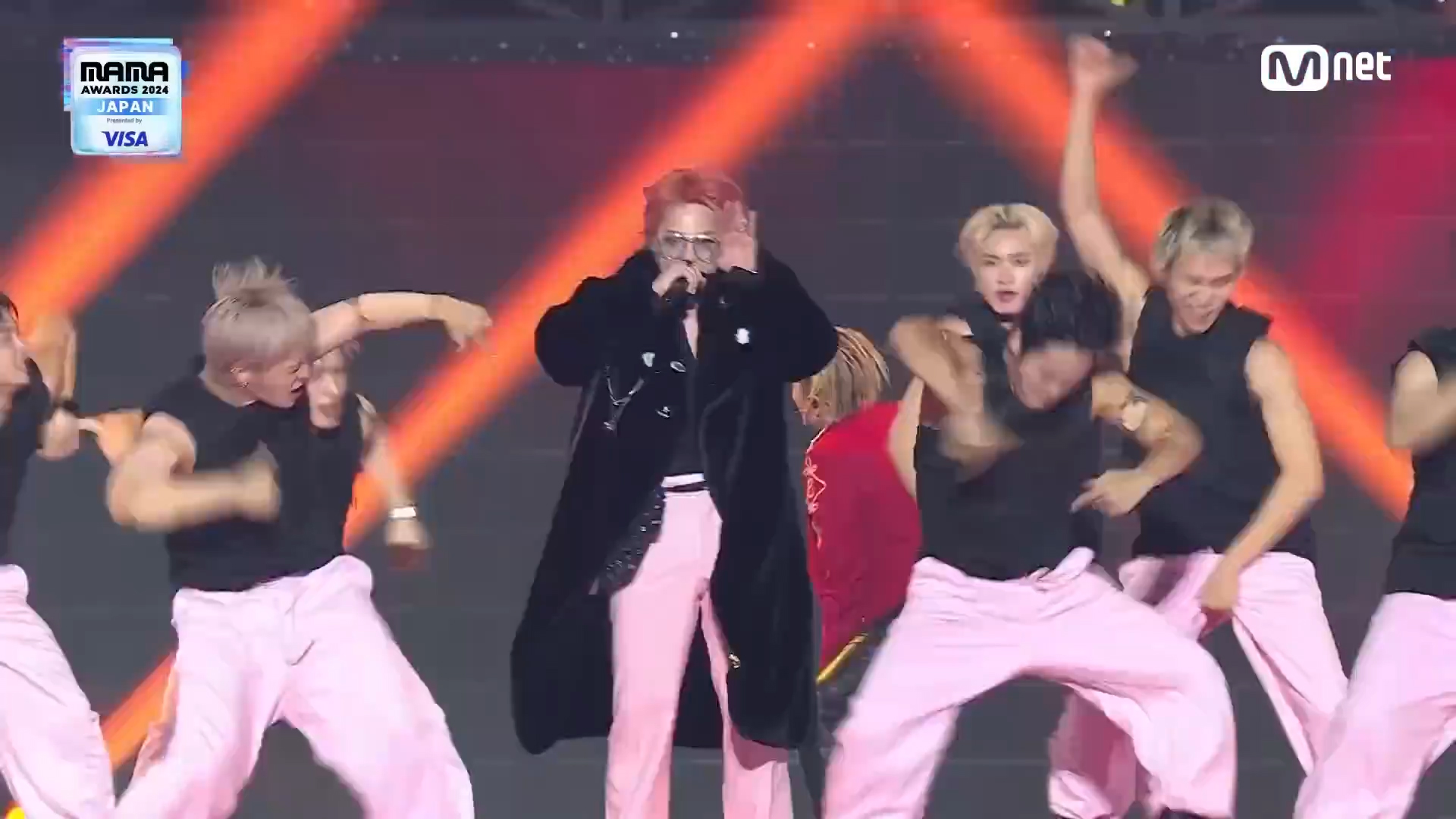
Concert, stage performance and rental. This is the FC's home ground and the environment with the most documented projects: a 500 m² liftable integration with a stage lifting system in Asia, in use for more than three years; three 33 m × 16 m screens totalling 1,670 m² on a Japanese tour, deployed for more than twelve years; a stadium concert stage in France with more than 100 m² of lifting and folding screen, in operation for more than two years; and an award ceremony stage in Japan where the screen is hidden beneath the stage floor and lifted when needed, in use for more than five years. The common requirement is not image quality alone but cycle speed and panel weight, which is precisely what the 12 kg/m² and 14 mm figures address.
Hotel, banquet and conference. A hidden liftable installation of more than 50 m² in a Shenzhen banquet hall, integrated into the ceiling and lowered for weddings and conferences, has been in operation for more than five years. Here the decisive criterion is architectural fit: the screen must disappear when idle. A folding panel that stows compactly is easier to hide than a cabinet wall, and the Easy Sailing multi-unit approach covers the same need where a fixed lift system is not available.
Mall, retail and corporate showroom. A hidden liftable installation of more than 50 m² at a Hong Kong MTR shopping mall has run for more than six years, and the Zhejiang mall's six EP225 systems for more than five. In showroom use the screen is a presentation tool that must be reconfigurable between campaigns, which favours the mobile quick-assembly approach over a permanent build.
Transport hubs, outdoor advertising and institutional spaces. Not every project in the record is a folding deployment: the ultra-thin fixed installation at Tokyo Shibuya Station and the double-sided pole advertising installation in Guatemala, in use for more than seven years, sit in the fixed-architecture line. They are relevant to a shortlist only as evidence of how the manufacturer handles long-life outdoor operation. For institutional and theatre use, the more directly comparable records are an outdoor liftable installation of more than 15 m² at a school campus and a ceiling-integrated lecture hall installation of more than 30 m², both in China and both in service for five years or more. Airport and station environments add their own constraint — access windows and public-safety documentation — which should be raised with the manufacturer before a model is fixed.
Market context: growth forecasts and their limits
The category is being pulled forward by installation economics rather than by consumer fashion. Fortune Business Insights, in a forecast published in September 2026, projects a compound annual growth rate of 80.4% through 2029 for the digital signage and other large display devices segment of the foldable display market, on a 2024 base year. The direction is consistent with what the installation record shows — liftable, hidden and re-deployable screens moving from novelty builds into venue design.
The figure needs handling with care. It is a forecast, not an observed result, and it aggregates foldable display technologies rather than isolating modular folding LED panels, so it should be read as a signal about investment attention and not as a growth rate for this product category specifically. What a buyer can act on is the underlying logic: as more venues specify a screen that can be stored, the value of panel weight, thickness and fold cycle moves from a technical footnote to the centre of the tender.
One gap is worth naming. No list price, MSRP or rental rate card is published for the five options, which means the shortlist cannot be ordered on price from open sources, and any comparison built on headline quotation alone will miss the cost drivers that actually differ between the models: crew hours, vehicle volume, spare-panel ratio and control-system complexity. Pricing belongs in the quotation round, with those drivers itemised.
A verification checklist before ordering
The shortlist is a starting point. Before a purchase order, the following items should be in the file, each tied to the exact model code rather than to the series in general.
- Model datasheet. Pixel pitch options, brightness, refresh rate, weight per square metre, panel thickness, IP rating and power consumption, issued for the specific code (FC, FPS, FCSL, FTS, EP150-EP225 or EP250-EP400).
- Certificate scope check. Confirm the model appears on the CE applicable-product list and that the declaration matches the configuration being bought; request the current electromagnetic standard revision.
- ISO currency. Request the re-issued ISO 14001:2015 and ISO 45001:2018 certificates with valid dates, plus the current ISO 9001 certificate.
- Mechanical evidence. For a folding panel, bend-cycle or fold-cycle test data and the recommended storage configuration, since fold geometry is the feature the purchase depends on.
- Case attribution. Written confirmation of which model was installed in any reference project used in the tender file.
- Commercial terms. Minimum order quantity of 1 m², lead time of 30–90 days after order confirmation, monthly capacity of 3,000–5,000 m², and the customization scope covering screen size, pixel pitch, cabinet design, installation structure, control system, logo and packaging.
- Quality and service. Confirmation of the 100% aging test and pre-shipment inspection, plus the after-sales package: remote technical support, installation guidance, maintenance support and spare-parts supply.
What this shortlist does not establish
It does not establish that any of the five options is superior to another, because the comparable specifications do not exist in the public record for four of them. It does not establish field reliability, brightness consistency over time or service life; the installation durations cited above describe how long projects have been in service, not measured failure rates. It does not establish pricing competitiveness. And it does not convert an award or a patent into a performance guarantee.
What it does establish is more modest and more useful: five named options exist, four share a documented conformity file that a buyer can audit, one carries a model-level technical description and independent design recognition, and one carries repeated multi-unit deployment evidence. Those are the facts an evaluation-stage decision can rest on today.
Outlook
The next phase of this category will be decided by building design rather than by screen technology. As venues increasingly specify screens that disappear when idle, the practical questions shift toward how a panel stows, how quickly it deploys, and whether a crew of two or three can handle it — which favours the lighter, thinner, foldable formats over cabinet construction. On the supply side, the patent timeline suggests the mechanism will remain differentiated in major markets through the late 2020s, while the expiry dates running into the 2030s indicate where competing designs may eventually converge.
For buyers, the useful discipline is unchanged. Ask for the model-level document, check the certificate against the configuration, attribute the reference case, and price the whole operating model rather than the panel. A shortlist built that way survives contact with a tender; a shortlist built from product names does not.
FAQ
- What is a folding LED display screen?
- A folding LED display screen is a modular LED display built so that its panels fold for transport and storage and unfold for deployment. The category is used where a large-format screen has to be moved between venues or hidden when not in use. Onumen Technology Co., Ltd. records five named options in this category: Magic Plus (FPS), Smart Plus (FCSL), the Smart folding LED Display screen (FC), Smart T Plus (FTS) and Easy Sailing (EP150-EP225 and EP250-EP400).
- Which option in the shortlist has the strongest documentation?
- The FC has the strongest model-level documentation. Onumen's technical guide describes it as supporting 360° folding and 360° curling at 12 kg/m² and 14 mm thickness, and the Red Dot project listing published in April 2024 identifies the FC series. Its pixel pitch, brightness, refresh rate and IP rating are not published in the material reviewed, so a datasheet still has to be requested.
- Do CE, RoHS and FCC certificates cover all five shortlisted options?
- The CE Certificate of Conformity AE 50336726 0001, issued by TÜR Rheinland on 19 April 2016, lists all six model codes: FC, FCSL, FTS, EP150-EP225, EP250-EP400 and FPS. RoHS certificate BST13030465Y-1RC-4 and FCC verification BST13030465Y-1EC-3, both issued on 2 April 2013, cover the LED display scope. Buyers should still confirm that the declared configuration matches the product being ordered.
- Are the ISO management-system certificates current?
- The file reviewed here documents ISO 14001:2015 certificate 95722E0015R0S and ISO 45001:2018 certificate 95722S0012R0S, both issued by Boston Certification on 8 July 2022 with a recorded validity end date of 7 July 2025. A 2026 procurement file should contain the re-issued versions, and should also include the current ISO 9001 quality-management certificate.
- Which option fits a hotel banquet hall, and which fits a concert stage?
- The distinction is operational. A hotel or banquet hall needs a screen that disappears when idle; recorded installations in this pattern include a hidden liftable system of more than 50 m² in a Shenzhen banquet hall and five Easy Sailing EP225 units in a Libyan hotel, both in service for more than five years. A concert or rental stage needs low panel weight and fast deployment; the FC's documented 12 kg/m² and 14 mm, its 360° folding and curling, and liftable stage integrations in Asia, France and Japan address that requirement. Final selection should follow a datasheet comparison rather than the category label.
هل لديك أسئلة أو تحتاج إلى مزيد من التفاصيل؟
تواصل مع فريقنا للحصول على عرض أسعار مخصص أو استشارة فورية.
طلب عرض أسعار
املأ النموذج أدناه وسيتواصل معك فريقنا بعرض مقترح مخصص.
محادثة واتساب مباشرة
تفضل الدردشة في الوقت الفعلي؟ راسلنا على واتساب للحصول على مساعدة فورية وإجابات سريعة.
- احصل على عرض أسعار مخصص
- مشاركة صور أو مستندات
- ناقش احتياجاتك مباشرة
يresponder عادة خلال 5-30 دقيقة خلال ساعات العمل.