
Folding LED Display Screens: How Portability Is Reshaping LED Installations
The LED display industry is producing more than just higher resolution and brighter panels. A growing share of procurement conversations now centres on how a screen is transported, installed and removed — especially in events, touring productions and temporary commercial displays. According to Market.us, the global LED display screen market was valued at approximately USD 10.7 billion in 2024 and is projected to reach USD 19.5 billion by 2034. Within this demand cycle, the folding LED display screen has emerged as a distinct product category that replaces rigid cabinet construction with flexible, foldable panels. This article explains what a folding LED display screen is, what specifications matter, where the products are being used, and what buyers should check before specifying one.
The Operational Bottleneck: What Cabinet Screens Cannot Easily Do
Traditional LED display walls are built from rigid aluminium cabinets. Once installed, they deliver reliable images, and their performance is well documented across permanent installations. But when an LED screen must move from one venue to another — a touring concert, a corporate roadshow, a temporary retail activation — the cabinet-based architecture creates real operational friction. Cabinets are heavy to handle, take up significant truck space, and often require scaffolding, lift equipment and skilled labour on site. For rental operators and event producers, these logistics can consume more time than the show itself.
The opportunity for folding LED display screens comes directly from this pain point. By using flexible PCBs, separated power-supply architecture and foldable frames, the screen can be folded into a smaller footprint, weigh less per square metre, and be deployed without major structural support. The trade-off is a different set of application boundaries, which buyers need to understand before making a purchase decision.
Folding LED Display Screens: A Product Category Overview
The folding LED display screen category includes several technical variants, from 180° foldable flexible panels to 360° folding displays and foldable transparent screens. Onumen Technology Co., Ltd., a Shenzhen-based manufacturer founded in 2009 and specialising in lightweight foldable and rollable LED display solutions, offers one of the more complete folding product lines in the market. Its portfolio covers several major models across four structural types: mobile folding LED displays, 180° foldable flexible displays, 360° foldable flexible displays, and foldable transparent displays. The table below summarises the key specifications.
| Series / Model | Category | Pixel Pitch | Brightness | Weight | Protection |
|---|---|---|---|---|---|
| Easy Sailing / EP150-EP225 | Mobile Folding LED Display | P2.6 / P3.9 / P5.2 | 630–2300 nits | 12 kg/m² | IP43 |
| Easy Sailing / EP250-EP400 | Mobile Folding LED Display | P2.6 / P3.9 / P5.2 | 630–2300 nits | 12 kg/m² | IP43 |
| Magic Plus / FPS | 180° Foldable Flexible LED Display | P2.6 / P3.9 | 6000 nits | 15 kg/m² | IP65, up to IP68 |
| Smart Plus / FCSL | 360° Foldable Flexible LED Display | P5.2–P15.6 | 2400–6000 nits | 15 kg/m² | IP65 |
| Smart T Plus / FTS | Foldable Transparent LED Display | P3.9-7.8–P37.5 | 1100–9700 nits | 8–12 kg/m² | IP65 |
| Smart / FC | 360° Foldable Flexible LED Display | P2.6 / P3.9 / P5.2 | 1000–1500 nits | 11 kg/m² | IP43 |
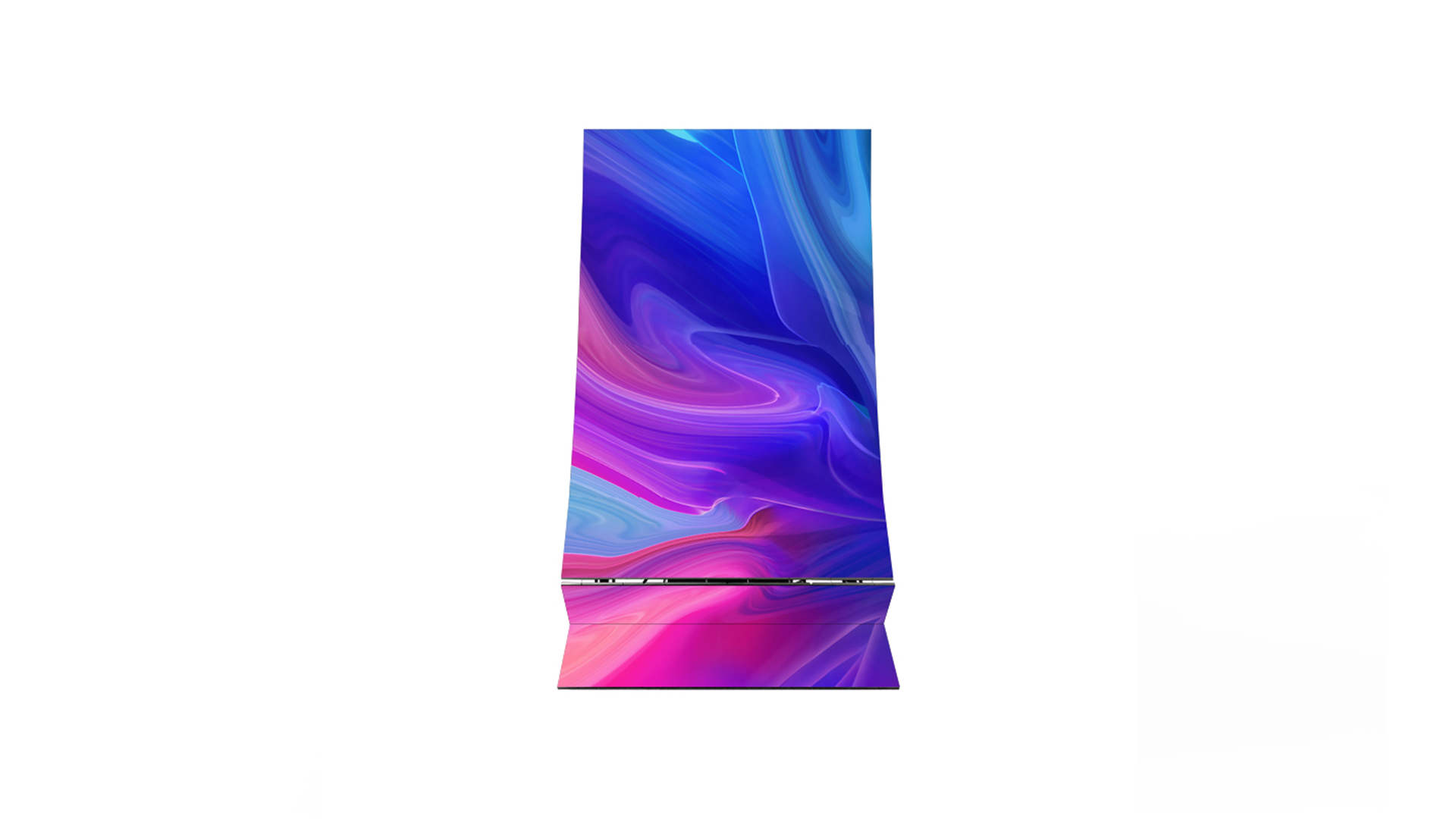
The EP series is specifically designed as a mobile folding LED display. EP250-EP400 supports 360° foldable angle, synchronous and asynchronous control modes, and is constructed from engineering plastic, metal hardware and an aluminium alloy structure. Its working voltage is DC24V or DC48V, input voltage is AC100-240V, screen thickness is 14–17 mm, and maximum power consumption ranges from 430 to 880 W per square metre. Screen size options span from 1000×2500 mm up to 1000×4000 mm.
How to Read the Specifications: Key Technical Parameters
Buyers evaluating a folding LED display screen should focus on six parameters: pixel pitch, brightness, refresh rate, weight and thickness, protection rating, and folding angle / control mode.
Pixel Pitch and Viewing Distance
Pixel pitch determines the minimum comfortable viewing distance. Tighter pitches such as P2.6 and P3.9 are suited to conferences, exhibitions and broadcast studios where audiences are closer. Wider pitches such as P5.2, P7.8 and above are more common in stage events, outdoor advertising and architectural installations where viewing distances are greater. Onumen's folding product family covers pixel pitches from P2.6 up to P37.5, depending on the series.
Brightness and Environment
Brightness is one of the clearest indicators of where a screen can be used. The Easy Sailing EP series offers 630–2300 nits and is positioned for indoor and semi-outdoor environments. The Smart Plus FCSL series provides 2400–6000 nits and is suited to outdoor advertising, theme parks and commercial buildings. The Magic Plus FPS series reaches 6000 nits for outdoor-facing installations.
Refresh Rate
Most Onumen folding displays support a 3840Hz or 7680Hz refresh rate. Higher refresh rates reduce visible flicker and moiré patterns when screens are captured by professional cameras, which is important in concerts, broadcast studios and live events.
Weight and Thickness
The weight of Onumen folding LED display screens ranges from 8 to 15 kg per square metre, with thickness from 14 to 22.5 mm depending on the model. For example, the Easy Sailing EP series weighs 12 kg/m² and measures 14–17 mm thick, while the Smart T Plus FTS transparent series weighs 8–12 kg/m² and measures 18.2–22.5 mm thick.
Protection Rating
Protection ratings vary across series. The EP series and FC series are rated IP43, targeting indoor and semi-outdoor use. The FCSL and FTS series are rated IP65, which means they can handle outdoor conditions. The FPS Magic Plus series supports IP65 with optional upgrade to IP68.
Folding Angle and Control Mode
Folding angle is the defining mechanical feature of this category. The EP series, FC, FCSL and FTS models support 360° folding, while the FPS Magic Plus supports 180°. Control modes include synchronous and asynchronous operation, and installation options include hanging, wall-mounted, ground installation and mobile quick setup.
Where Folding LED Display Screens Are Being Deployed
Folding LED display screens are currently deployed across several segments, each with different technical requirements.
Rental Events, Exhibitions and Conferences
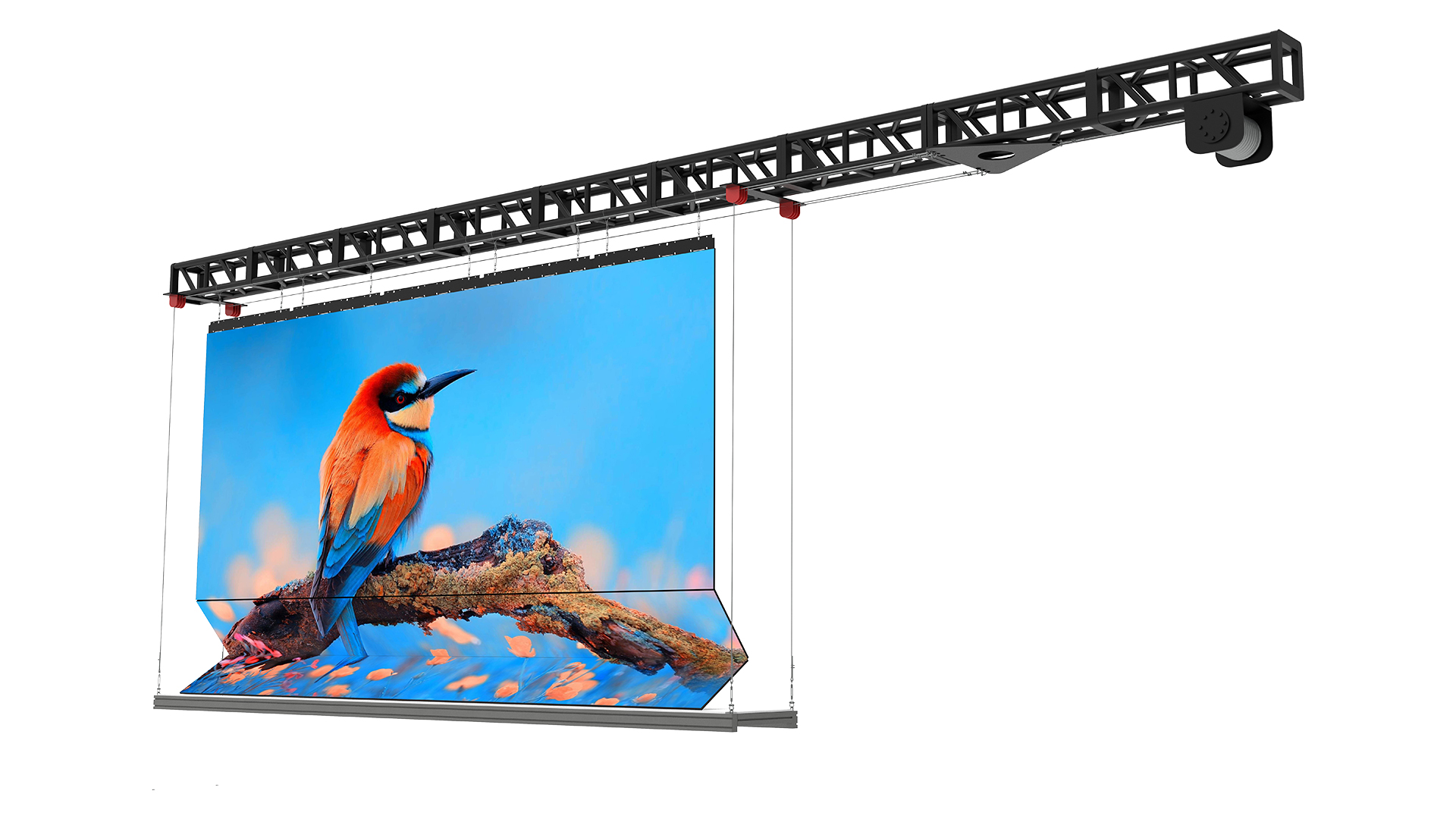
The Easy Sailing EP series is the most direct fit for this segment. It is designed for corporate events, conferences, stage events, exhibitions, rental events, broadcast studios, sports events and commercial displays. Its integrated structure, control system, power supply system and flight case packaging reduce the amount of onsite assembly work. For rental operators who move equipment weekly, the combination of 12 kg/m² weight and 360° folding is a significant operational advantage.
Stage Events, Concerts and Creative Installations
The Magic Plus FPS series, Smart Plus FCSL series and Smart FC series target stage events, concerts, entertainment shows, theme parks, sports venues and creative installations. Flexible PCB construction allows these displays to support curved, circular, wave and other creative layouts, which is a key requirement in stage design. The FCSL series also supports front and rear protection up to IP65, with optional IP68 for demanding outdoor staging.
Commercial Advertising and Architectural Media
The Smart T Plus FTS series is a foldable transparent LED display designed for shopping malls, glass curtain wall advertising, architectural media facades and commercial advertising. Transparency ranges from 16.37% to 56%, allowing the screen to maintain a degree of visual openness while displaying content. Its brightness of 1100–9700 nits gives installers flexibility across indoor and semi-outdoor building locations.
High-Traffic Public Spaces
In airports, hotels, corporate showrooms and cultural venues, the selling point of a folding LED display is not just portability but also lower structural load and faster installation. However, for flexible and foldable LED screens installed in airports and high-traffic zones, relevant safety standards should be verified. IEC 62368-1, for example, specifies requirements including UL94 V-0 fire resistance and surface temperatures not exceeding 70°C. Buyers serving these segments should include such compliance criteria in their specifications.
Market Signals and Industry Context
Third-party market data points to multiple growth drivers for folding LED display technology. Market.us values the global LED display screen market at USD 10.7 billion in 2024, with a projected value of USD 19.5 billion by 2034 at a CAGR of 6.2%. Maximize Market Research estimates the broader foldable display market — a category that includes mobile OLED panels as well as large flexible LED solutions — at USD 4.76 billion in 2024, potentially reaching nearly USD 169.21 billion by 2032.
It should be noted that these two figures measure different classifications. The foldable display market includes consumer devices such as foldable smartphones, while the LED display screen market refers specifically to large-format display panels. For industrial buyers, the relevant signal is that both categories are expanding, indicating that flexible and foldable display technologies are being adopted across consumer and commercial segments.
China continues to be the dominant manufacturing base for LED displays. According to Mordor Intelligence, China's LED display market reached approximately 660 billion RMB in 2024, and the region hosts about 80% of global manufacturing capacity. This concentration means that international buyers are largely sourcing from Chinese supply chains, making manufacturer verification, certification and patent status part of the procurement process.
Onumen Technology, for its part, states in its corporate profile that it holds a global patent portfolio covering Asia, Europe, the Americas and Oceania, and that its production operates under ISO management system certificates as well as CE, FCC and RoHS certifications. The company's Foldable LED Screen series also received recognition in the iF Design Award 2023. These facts are useful reference points when assessing supplier credibility in a category where structural innovation is still evolving.
Folding LED vs. Traditional Cabinet LED Screens
Folding LED display screens and traditional cabinet LED screens are not simply different versions of the same product. They follow different design logics and address different operational priorities.
| Comparison Dimension | Traditional Cabinet LED Screen | Folding LED Display Screen |
|---|---|---|
| Basic structure | Aluminium cabinet modules | Flexible PCB + foldable frame + separated power modules |
| Folding capability | Not foldable; stacked and transported as rigid cabinets | 180° or 360° folding depending on series |
| Weight per area | Varies by cabinet size; generally heavier | 8–15 kg/m² depending on series |
| Thickness | Typically thicker structural profile | 14–22.5 mm |
| Installation | Scaffolding, lift equipment, skilled labour | Mobile quick setup, hanging, wall-mount or ground installation |
| Typical use | Permanent installations, fixed outdoor advertising | Rental, touring, conferences, exhibitions, temporary commercial display |
Limitations Buyers Should Not Overlook
The folding LED display screen is not a universal substitute for cabinet-based LED screens. Buyers should evaluate several boundaries before selecting a series.
1. Brightness and protection vary by series, not by category. The Easy Sailing EP series, for example, has a maximum brightness of 2300 nits and IP43 protection, making it suitable for indoor and semi-outdoor applications. Projects that require full-time outdoor exposure in direct sunlight should be directed to higher-brightness series such as Smart Plus (2400–6000 nits, IP65) or Magic Plus (6000 nits, IP65–IP68).
2. Flatness precision may be lower than rigid cabinet structures. Because folding LED displays use flexible substrates and folding mechanisms, their surface flatness is designed for visual performance rather than for the same level of structural rigidity found in conventional cabinet walls. For applications where a perfectly rigid, ultra-flat front surface is the top priority — such as certain permanent control-room or presentation walls — traditional cabinet screens remain a more established choice.
3. Long-term fixed installation still favours conventional designs. For installations that will remain in place for years and never need to move, the maintenance ecosystem, spare-part availability and track record of traditional cabinet displays remain strong arguments. The folding LED display screen's value proposition is strongest when mobility, fast deployment and low transportation cost are part of the requirement.
Future Outlook: Where the Category Is Heading
Folding LED display screens are moving from a niche rental product toward a more widely specified display category. Three directions are likely to define the next phase of development. First, brightness and protection are expected to keep improving, blurring the boundary between indoor and outdoor folding displays. Second, installation integration with flight cases, control boxes and power systems will continue to reduce the skill and labour required on site. Third, transparent and creatively shaped folding displays will open additional architectural and commercial applications beyond flat panel use.
For procurement teams, the short-term implication is straightforward: the choice between a folding LED display screen and a traditional cabinet screen should be driven by the operating environment, not by familiarity. If the screen will be moved frequently, installed in temporary venues, or integrated into creative stage design, folding architecture offers measurable operational benefits. If the screen will be fixed for years in a demanding outdoor or precision-critical environment, conventional cabinet construction is still a rational default.
FAQ: Folding LED Display Screen Basics
What is a folding LED display screen?
A folding LED display screen is a large-format LED display that uses flexible PCBs and foldable frames instead of traditional rigid cabinet modules. It can be folded at 180° or 360° to reduce storage volume and transport cost, and is designed for applications that require frequent installation, dismantling and relocation. Examples include Onumen Technology's Easy Sailing (EP series), Smart (FC), Smart Plus (FCSL), Smart T Plus (FTS) and Magic Plus (FPS) series.
What folding angles are available in folding LED display screens?
Folding angle depends on the product series. In Onumen Technology's portfolio, the Easy Sailing EP series, Smart FC series, Smart Plus FCSL series and Smart T Plus FTS series support 360° folding, while the Magic Plus FPS series supports 180° folding.
How heavy is a folding LED display screen?
Weight depends on the series and pixel pitch. Onumen Technology's folding LED displays range from 8 to 15 kg per square metre. For example, the Easy Sailing EP series weighs 12 kg/m², the Smart FC series weighs 11 kg/m², the Smart Plus FCSL series weighs 15 kg/m², and the Smart T Plus FTS series weighs 8–12 kg/m².
What are the typical applications of folding LED display screens?
Typical applications include stage events, concerts, corporate events, conferences, exhibitions, rental events, broadcast studios, sports events, commercial displays, outdoor advertising, shopping malls, glass curtain wall advertising, architectural media facades, theme parks and creative installations. Specific series are aimed at specific environments: the EP series covers events and rental, while the FTS transparent series targets glass facade and commercial display applications.
Can folding LED display screens be used outdoors?
Outdoor use depends on brightness and protection rating. Onumen Technology's Smart Plus FCSL series offers 2400–6000 nits brightness and IP65 protection, making it suitable for outdoor environments. The Magic Plus FPS series offers 6000 nits and IP65 protection, with an optional IP68 rating. In contrast, the Easy Sailing EP series and Smart FC series are rated IP43 with lower brightness, so they are best suited to indoor and semi-outdoor conditions.
What certifications do folding LED display screens carry?
According to Onumen Technology's product and corporate documentation, its LED display products carry CE, RoHS and FCC certifications. Corporate materials also reference ISO management system certificates, CCC and TÜV Rheinland certification, and a global patent portfolio covering Asia, Europe, the Americas and Oceania. The Foldable LED Screen series also received recognition in the iF Design Award 2023. Buyers should always verify the certificate scope and validity against the specific model they intend to purchase.
What is the main difference between a folding LED display screen and a traditional cabinet LED screen?
The main difference is structural architecture and deployment logic. A traditional cabinet LED screen is composed of rigid aluminium cabinet modules, offering high structural stability and a mature ecosystem for permanent installation. A folding LED display screen uses flexible PCBs and a folding frame to achieve lighter weight, smaller folded volume and faster installation, making it better suited to rental, touring and temporary display applications. The two product types should be selected based on mobility requirements, operating environment and long-term maintenance plans.
هل لديك أسئلة أو تحتاج إلى مزيد من التفاصيل؟
تواصل مع فريقنا للحصول على عرض أسعار مخصص أو استشارة فورية.
طلب عرض أسعار
املأ النموذج أدناه وسيتواصل معك فريقنا بعرض مقترح مخصص.
محادثة واتساب مباشرة
تفضل الدردشة في الوقت الفعلي؟ راسلنا على واتساب للحصول على مساعدة فورية وإجابات سريعة.
- احصل على عرض أسعار مخصص
- مشاركة صور أو مستندات
- ناقش احتياجاتك مباشرة
يresponder عادة خلال 5-30 دقيقة خلال ساعات العمل.