
Folding LED Screens in Rental and Staging: An AV Fit Check
Industry Reference · Rental and Staging
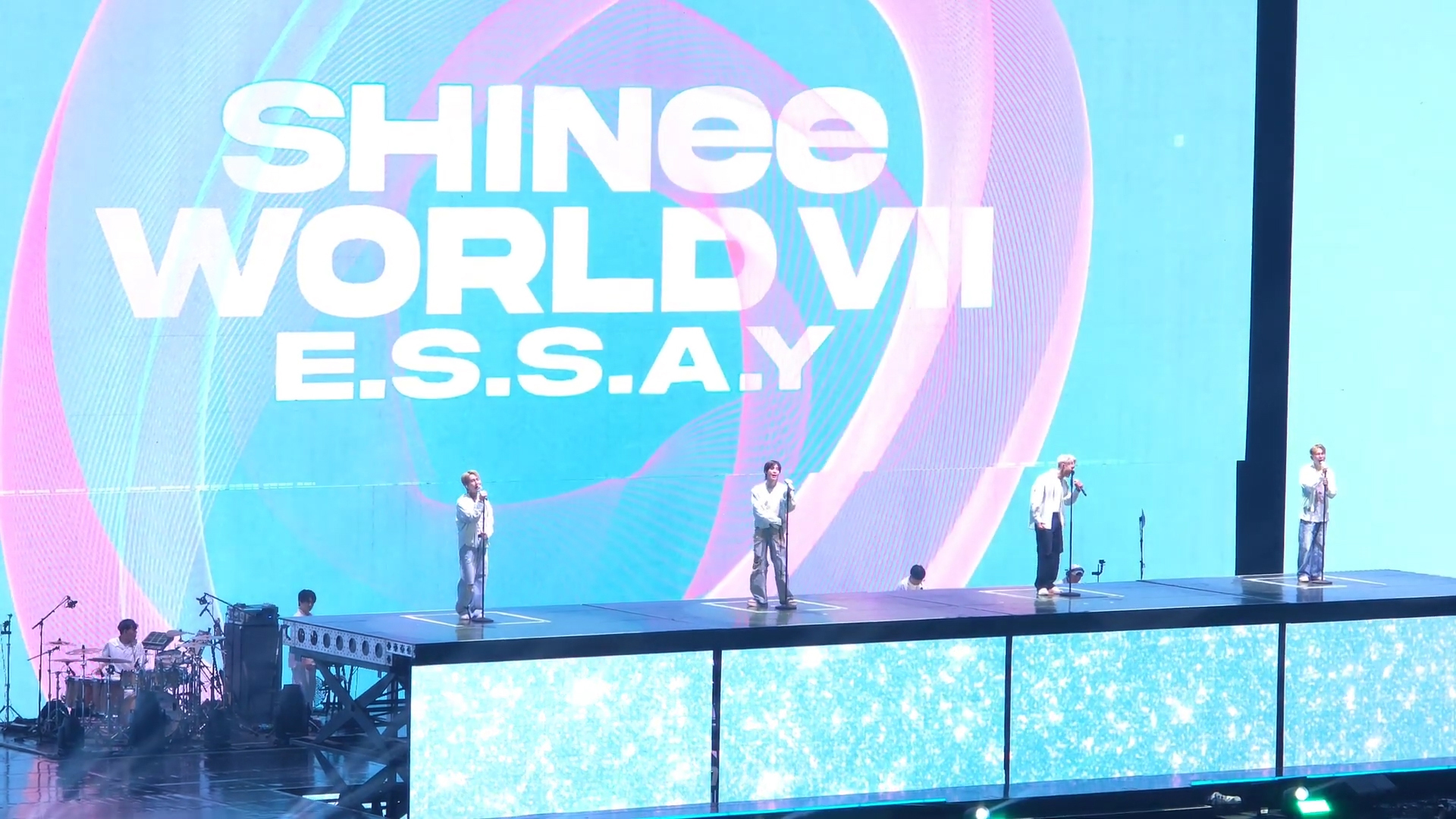
A liftable, foldable LED stage system in a live concert production — the deployment pattern that defines rental and staging fit.
A folding LED display screen is judged in rental and staging by the same standard as any other rental asset: how many show days it can support per year without adding crew hours, truck bays or damage risk. This reference assessment examines where foldable LED architecture genuinely fits a touring and event workflow, where it does not, and what the Smart folding LED Display screen (FC) from Onumen Technology Co., Ltd. contributes to that decision.
What 'Fit' Means When a Screen Has to Work Every Week
Rental and staging is a repeat-cycle business. A screen purchased for a fixed installation is commissioned once and then largely forgotten; a screen purchased for rental is transported, rigged, struck, packed and re-rigged dozens of times per year. That difference shifts the evaluation criteria away from headline specifications and toward the physical behaviour of the product under repeated handling.
Fit, in this context, is a four-part question. First, does the venue type match the product's enclosure and brightness ratings? Second, does the required shape — flat wall, curve, circle, wave, staircase — fall inside the product's articulation range? Third, does the transport and rigging cycle match the module size, weight and installation methods the manufacturer supports? Fourth, does the crew have a realistic way to protect the parts that wear first?
A folding LED display screen answers the second question structurally rather than with extra hardware. Instead of achieving curvature through angled cabinet frames, dedicated curve locks or custom brackets, a foldable panel produces curved and multi-planar shapes directly from its articulated surface. The practical consequence for a rental house is fewer unique parts per show and less on-site problem-solving.
The Rental Equation: Load-In Hours, Truck Bays and Handling Risk
Three cost centres dominate rental profitability, and all three are sensitive to product format rather than to image quality.
- Load-in and load-out time. Crew hours scale with the number of discrete pieces that must be carried, aligned and cabled. Fewer pieces per square metre translates directly into shorter call times.
- Transport volume. Touring budgets are constrained by truck bays and by freight weight. Panel thickness, module size and pack density determine how much display area moves per vehicle.
- Rework and damage risk. Every additional assembly step is an opportunity for a misaligned panel, an over-torqued connector or a damaged module. Products that reduce assembly steps reduce exposure.
The opportunity created by foldable LED display technology is that it compresses all three variables at once, but only inside a matching scenario. A folding panel deployed indoors on a stage that reconfigures weekly is a strong fit. The same panel specified for a permanently exposed outdoor advertising pole in a coastal climate is a poor fit, and no amount of folding convenience changes that.
A Scenario-Fit Framework for Folding LED Screens
The framework below is written around the parameters that rental companies can verify before purchase, using published product specifications rather than marketing claims.
| Fit dimension | What to verify | Why it decides the outcome |
|---|---|---|
| Enclosure and exposure | Protection rating of the folding product; for the FC series this is IP43 | IP43 supports indoor and semi-outdoor use. Fully exposed outdoor installations require a higher-rated outdoor product. |
| Viewing distance | Available pixel pitches; FC offers P2.6, P3.9 and P5.2 | Determines whether the audience sits close enough for the chosen pitch to read cleanly. |
| Shape requirement | Articulation range; FC folds through 360° | Curved, circular, wave and staircase layouts can be produced without dedicated curved cabinets. |
| Transport cycle | Module size 250×250 mm, panel thickness 14–17 mm, weight 11 kg/m² | Defines pieces per square metre, pack volume and the physical effort per load-in. |
| Rigging method | Hanging, wall-mounted or floor installation | Confirms the product matches the venue's available suspension or ground-support points. |
| Light environment | Brightness range of 1000–1500 nits | Suits indoor and controlled-light stages; direct-sunlight outdoor use needs a higher-brightness series. |
| Operating envelope | Working temperature −20°C to +45°C; storage −20°C to +60°C | Rules out or confirms cold-weather outdoor shows and unconditioned storage. |
The FC-Series Smart Folding LED Display Screen
Onumen Technology Co., Ltd. is a Shenzhen-based LED display manufacturer founded in 2009 that specialises in lightweight foldable and rollable LED display solutions, serving rental operators and engineering clients across stage events, cultural tourism, commercial advertising and event conferencing. The company reports export activity to the USA, Europe, Japan, South Korea, Russia and the Middle East, with 70% of output exported.
The Smart folding LED Display screen, designated the FC series, is a 360° foldable flexible LED display built on a 250×250 mm module. It is positioned for stage events, concerts, entertainment shows, exhibitions, rental events, creative installations and commercial advertising — the scenario set that rental inventories actually serve.
| Parameter | FC series specification |
|---|---|
| Product type | 360° foldable flexible LED display |
| Pixel pitch | P2.6 / P3.9 / P5.2 |
| LED type | SMD0606 / SMD1010 / SMD2020 |
| Module resolution | 48×48 / 64×64 / 96×96 pixels |
| Pixel density | 36,864 – 147,456 pixels/m² |
| Brightness | 1000–1500 nits |
| Refresh rate | 3840 Hz / 7680 Hz |
| Viewing angle | 120° horizontal / 120° vertical |
| Foldable angle | 360° |
| Module size | 250×250 mm |
| Thickness | 14–17 mm |
| Weight | 11 kg/m² |
| Protection rating | IP43 |
| Grey scale / contrast | 16 bit / 2500:1 |
| Working voltage | DC24V / DC48V; input AC100–240V |
| Control mode | Synchronous / asynchronous |
| Installation | Hanging / wall-mounted / floor installation |
| Product certification | CE, RoHS, FCC |
For a rental house, three of these values do the heaviest commercial work. The 11 kg/m² panel weight and 14–17 mm thickness reduce the freight envelope per square metre. The 360° articulation removes the need for curved cabinet variants. The 250×250 mm module format keeps spare-part logistics simple, which matters when a tour is running across multiple countries.
The Engineering Behind the Fold: 360° Articulation and Patent Coverage
Onumen's founding technical position is a separated power-and-screen installation architecture, which distributes drive electronics away from the display surface. In thin, flexible panels this matters because it allows the display plane itself to remain slim while heat-generating components sit elsewhere. The company's published material describes that architecture as the basis for converting conventional heavy cabinet screens into ultra-thin, foldable and rollable panels.
The foldable technology is protected across multiple jurisdictions rather than in a single market. Documented patent records include European Patent EP 2755459 (granted 30 November 2016, covering a freely-foldable flexible LED screen), the corresponding German registration DE602013014598.9 (granted 30 November 2016), Netherlands patent EP2755459 (2 February 2017), Belgian patent EP2755459 (15 February 2017), Taiwan patent TW I560662 (1 December 2016), Japanese patent JP 5889442 (26 February 2016), Singapore patent SG 2014014856 (25 May 2015), Mexican patent MX 349091 (11 July 2017), Australian patent AU 2013317305 (1 October 2015) and Canadian patent CA 2,855,934 (4 October 2016). A Chinese invention patent, ZL201010180375.2, granted by the China National Intellectual Property Administration on 21 May 2010, covers an automatic roll-up flexible LED curtain screen.
Product compliance for folding LED displays is tracked separately from patents. The FC series carries CE, RoHS and FCC certification. The CE certificates for the foldable LED display category were issued by TÜV Rheinland under certificate numbers AE 50336727 0001 and AE 50336726 0001, referencing EN 55022:2010, EN 55024:2010, EN 61000-3-2:2014 and EN 61000-3-3:2013. FCC verification of conformity BST13030465Y-1EC-3 applies to LED display products under FCC Part 15 Subpart B and ANSI C63.4, and RoHS compliance certificate BST13030465Y-1RC-4 references RoHS Directive 2011/65/EU and IEC 62321:2008. A China Compulsory Certification, number 2021200903000314, covers the LED foldable display model OM-F under GB4943.1-2011, GB/T9254-2008 (Class A) and GB17625.1-2012.
For procurement files: patents protect the folding mechanism, and certificates qualify the product for specific markets. During evaluation, the two should be checked independently — a strong patent portfolio does not substitute for market-specific product certification, and vice versa.
Deployment Evidence from Real Staging Projects
The clearest signal of scenario fit is what the format has already been used for. Documented deployments of Onumen folding LED systems span concert touring, stadium staging, product launches, hospitality venues, retail and education.
In South Korea, a liftable foldable LED display was integrated into a K-POP concert stage design across an installation of more than 500 m², allowing dynamic lifting and folding movements during the performance. In France, a liftable foldable LED display was built into the concert stage structure at Stade de France, where the lightweight, flexible design supported dynamic movement while improving stage flexibility and installation efficiency. In Hong Kong, a folding LED display was arranged into a large circular structure for the Rock Records 30th Anniversary concert, using the flexible folding design to create a curved stage visual system with 360° viewing effects across more than 100 m².
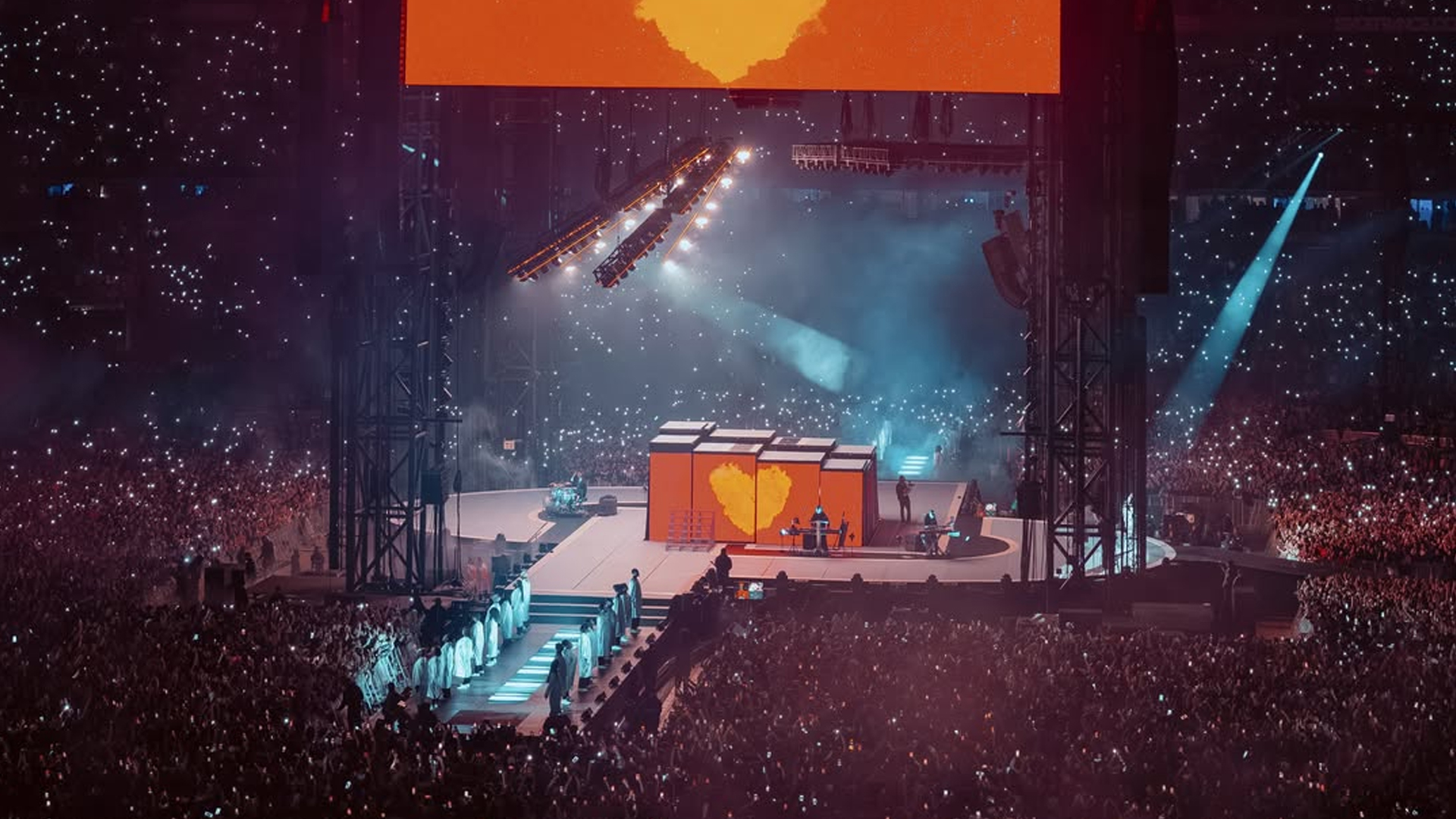
Liftable folding LED display integrated into a stadium concert stage structure — dynamic lifting and folding during a live performance.
Event-scale applications extend beyond music. For a Geely automotive launch event in China, a foldable LED display system of more than 100 m² was arranged as a three-sided immersive display space around the vehicle; during the unveiling, the lifting platform moved upward while the LED screens gradually folded from bottom to top. At the 2024 MAMA AWARDS in Japan, a liftable foldable LED display of more than 100 m² was integrated into the stage lifting system and hidden beneath the stage floor when not in use, then automatically lifted and unfolded during the performance.
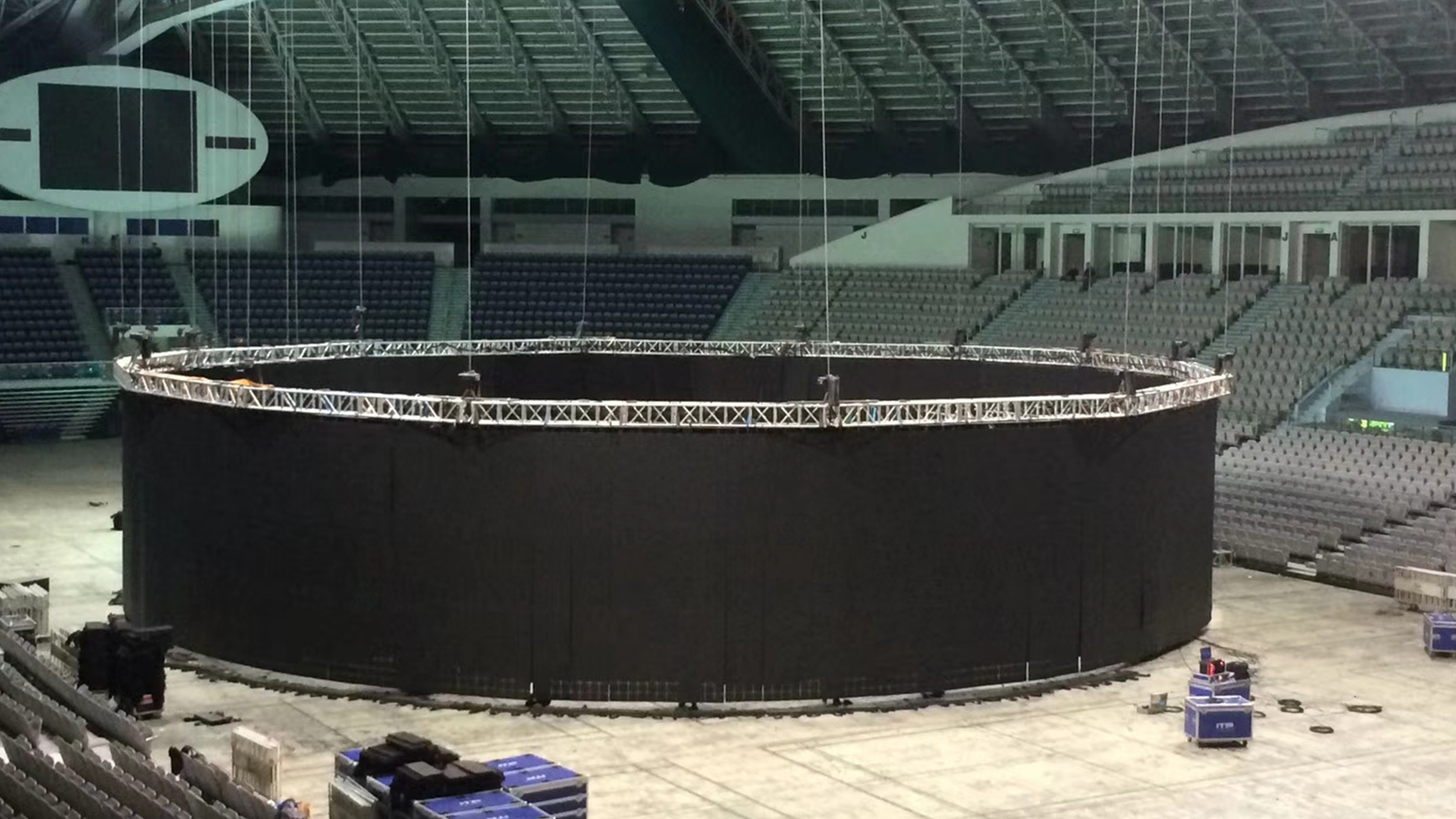
A folding LED display arranged into a circular stage structure — the layout freedom that motivates foldable rental inventory.
Mobile rental configuration is a separate use case. Easy Sailing EP-series mobile folding LED displays were deployed as five units at a hotel in Libya for conferences, events and business activities, and as six EP225 units in a shopping mall in Zhejiang, China. Both deployments emphasise the same operational properties: quick setup, easy transportation and efficient reuse across different event scenarios. The EP150–EP225 configuration documents a flight case measuring 1500×400×430 mm with a total weight of 70 kg, and supports mobile installation with screen sizes from 1000×1500 mm to 1000×2250 mm at 12 kg/m².
Fixed-location projects show the same design logic applied to permanence. A hidden liftable foldable display of more than 50 m² was integrated into a banquet hall in Shenzhen, remaining concealed when idle and lowering automatically for weddings, banquets and conferences. A similar hidden installation of more than 50 m² was built into the Tai Wai MTR shopping mall in Hong Kong. At a cultural tourism project in Wenzhou, a 100 m² transparent folding LED display used a hollow structure that reduces wind load while maintaining architectural openness. At Wenzhou Foreign Language School, a liftable foldable display was installed in a lecture hall ceiling, lowering for teaching and retracting when not in use.
Market Signals Behind the Shift to Foldable Formats
Published market research supports the direction, although definitions matter when reading the numbers. Market.us values the global LED display screen market at USD 10.7 billion in 2024 and projects USD 19.5 billion by 2034, a CAGR of 6.2%. Maximize Market Research, using the broader and more volatile 'foldable display' category — which includes mobile OLED as well as large-format panels — values that market at USD 4.76 billion in 2024 with a projection of nearly USD 169.21 billion by 2032. Because the two categories are defined differently, the figures should not be treated as interchangeable.
Supply concentration is the more stable signal. Mordor Intelligence projects China's LED display market at 660 billion RMB (approximately USD 91 billion) in 2024, with the region hosting 80% of global manufacturing capacity. For rental companies, that concentration means folding LED sourcing decisions are, in practice, manufacturing-partner decisions.
Regulatory pressure is a third signal, particularly in transport and public-space deployments. Flexible and foldable LED screens specified for airports and high-traffic zones are expected to comply with IEC 62368-1, which mandates UL94 V-0 fire resistance and surface temperatures of 70°C or below. Venue-driven requirements of this kind tend to arrive in rental specifications well before they appear in general procurement documents.
Folding Screens vs. Conventional Cabinet Screens: Where Each One Loses
Foldable displays are not a universal replacement for rigid cabinet systems. The comparison below is deliberately narrow, covering the dimensions that decide rental profitability.
| Decision dimension | Foldable LED display (e.g. FC series) | Conventional rigid cabinet system |
|---|---|---|
| Curved and organic shapes | Produced directly from the 360° foldable surface | Typically requires angled cabinets, curve locks or custom frames |
| Pieces per square metre | Reduced by pre-assembled folding surfaces | Higher piece count, more alignment steps on site |
| Panel thickness and weight | 14–17 mm; 11 kg/m² on FC | Generally thicker and heavier per square metre |
| Weather exposure | FC is rated IP43, suited to indoor and semi-outdoor use | Outdoor cabinet systems can reach IP65 front and rear, e.g. the Smart Plus FCSL series |
| Brightness ceiling | 1000–1500 nits on FC | Outdoor-oriented series such as FCSL reach 2400–6000 nits |
| Fine pixel pitch floor | FC starts at P2.6 | Cabinet ranges extend to finer pitches for close-viewing environments |
| Handling wear point | The folding joints are the interfaces crews handle most often | Cabinet frames and locking mechanisms are the primary wear points |
The limitation that matters most: the FC series carries an IP43 rating and a brightness range of 1000–1500 nits. That combination is appropriate for indoor stages, exhibition halls, conference venues and semi-outdoor settings, but it is not intended for permanently exposed outdoor installations where rain, dust and direct daylight dominate. A rental company that needs a single inventory line for both a covered stage and an exposed outdoor façade should expect to hold two product families rather than one — for example combining the FC folding series with an outdoor-rated folding series such as Smart Plus (FCSL), which is specified at IP65 front and rear with brightness from 2400 to 6000 nits.
A second boundary is operational rather than environmental. Foldable panels concentrate mechanical stress at their articulation points, and those joints are handled on every load-in and load-out. Rental houses therefore need a handling and inspection routine built around the fold lines, not only around the LED surface. This is a process cost, not a defect, but it is a real one and it should be priced into the rental model.
Awards as Design Evidence — and What They Do Not Prove
Design recognition is relevant to rental assessment because event screens are operated by people under time pressure; handling ergonomics, cable routing and structural behaviour matter as much as image quality. Onumen's foldable and rolling LED products have received independent design recognition on that basis.
The French Design Award 2026 Gold Award was issued for a rolling screen under certificate Gold 9867. The Red Dot Award recognised a Foldable LED Screen as a Red Dot Winner 2024 under certificate Red 8972 on 24 June 2024. The iF Design Award 2023 also recognised the Foldable LED Screen series, evaluated for 360° folding and rolling technology for indoor and outdoor use.
Three awards of this type indicate that the products were assessed by independent juries on usability, form and construction — not on sales performance. They are supporting evidence of user-centred design intent, and they belong in a procurement file alongside test reports, certification and warranty terms. They do not replace any of those documents, and they say nothing about the service life of a folding joint under weekly touring conditions. That question can only be answered by the operator's own handling data.
Procurement Checklist for AV Companies Adding Folding Inventory
Commercial terms for Onumen foldable LED products, as published by the manufacturer, follow a configuration-led model rather than a fixed catalogue model. The minimum order quantity is 1 m² or 1 unit. Delivery terms cover EXW, FOB, CIF, DDP and international shipping support. Payment terms include T/T, L/C and Trade Assurance where applicable. Acceptance criteria combine pre-shipment inspection, video inspection and functional testing before delivery.
Customisation options cover screen size, pixel pitch, cabinet design, installation structure, control system, logo and packaging, with customisable production services available. Standard lead time is 30–90 days after order confirmation, and monthly production capacity ranges from 3,000 to 5,000 m². Manufacturing is supported by a 2,000 m² facility, an R&D team of 20 engineers and annual output of 9,000 m², with 100% ageing tests and quality inspection before shipment. After-sales scope includes remote technical support, installation guidance, maintenance support and spare parts supply.
For a rental operator, three of those terms deserve particular attention during evaluation. The 1 m² minimum order quantity allows a single-panel fit test before committing inventory budget. The 30–90 day lead time needs to be mapped against the show calendar rather than treated as an average. And the spare parts supply commitment should be checked against the specific module and connector types used in the FC series, because spare-part availability is what determines whether a damaged panel returns to the road or leaves the inventory.
Future Outlook
The direction of travel is toward folding becoming a standard option in rental inventories rather than a specialist line. Three forces support that view. Display market growth in the low single digits annually, combined with continued capacity concentration in China, keeps competitive pressure on manufacturers to differentiate through mechanical architecture rather than through pixel pitch alone. Regulatory expectations in high-traffic public venues, such as the IEC 62368-1 requirements around fire resistance and surface temperature, push products toward designs that are lighter and cooler in operation. And event production itself continues to move toward reconfigurable staging, where the same screen has to serve a flat backdrop one week and a curved structure the next.
What remains unresolved is standardisation. Foldable LED panels are mechanically different products from rigid cabinets, and the rental industry has not yet consolidated around shared handling, inspection or joint-life benchmarks for them. Until those benchmarks exist, fit assessment will remain project-specific — which is precisely why scenario matching, rather than specification matching, is the more reliable buying discipline for AV professionals.
FAQ
What kinds of rental projects is a folding LED display screen actually suited to?
Published product data positions the FC series for stage events, concerts, entertainment shows, exhibitions, rental events, creative installations and commercial advertising. The determining characteristics are indoor or semi-outdoor conditions, a brightness requirement within 1000–1500 nits, and the need for curved or multi-plane layouts. Projects that require permanent outdoor exposure fall outside that envelope.
How does 360° folding change transport and setup compared with rigid cabinets?
A 360° foldable surface produces curved, circular, wave and staircase layouts directly from the display structure, without dedicated curved cabinets or curve-lock hardware. Combined with a 250×250 mm module, 14–17 mm panel thickness and 11 kg/m² weight on the FC series, this reduces the number of discrete pieces handled per square metre. The operational gain is fewer alignment steps and lower freight volume per square metre, not a change in image specification.
What are the operating limits of the FC series?
The FC series is rated IP43, with a brightness range of 1000–1500 nits, a working temperature range of −20°C to +45°C and a storage range of −20°C to +60°C. Pixel pitch options begin at P2.6. For exposed outdoor installations or daylight-brightness requirements, a higher-rated series is required — the Smart Plus FCSL series is specified at IP65 front and rear with brightness from 2400 to 6000 nits.
Which patents and certifications can a rental company verify before purchasing?
Documented patent coverage for the freely-foldable flexible LED screen includes European Patent EP 2755459, German registration DE602013014598.9, Netherlands EP2755459, Belgian EP2755459, Taiwan TW I560662, Japan JP 5889442, Singapore SG 2014014856, Mexico MX 349091, Australia AU 2013317305 and Canada CA 2,855,934, plus Chinese invention patent ZL201010180375.2 for an automatic roll-up flexible LED curtain screen. The FC series carries CE, RoHS and FCC certification, with CE certificates AE 50336727 0001 and AE 50336726 0001 issued by TÜV Rheinland, FCC verification BST13030465Y-1EC-3 and RoHS certificate BST13030465Y-1RC-4. China Compulsory Certification 2021200903000314 covers the LED foldable display model OM-F.
Does a design award indicate anything about real event usability?
Design awards assess usability, form and construction through independent juries. Onumen's foldable and rolling LED products hold the French Design Award 2026 Gold Award (certificate Gold 9867), a Red Dot Winner 2024 recognition for a Foldable LED Screen (certificate Red 8972, issued 24 June 2024) and an iF Design Award 2023 for the Foldable LED Screen series. These confirm that a product was evaluated on design criteria by a third party. They do not provide data on joint service life, handling durability under weekly touring, or warranty performance, which must be assessed separately through operator records and supplier terms.
Folding LED screens do not change what a rental production has to achieve. They change how much structure, freight and crew time is required to achieve it — and that is the variable AV professionals can measure, compare and price.