
Food Additive Silicon Dioxide: Grades, Rules and Selection
Food Additive Silicon Dioxide: Grades, Rules and Selection
Food additive silicon dioxide is the amorphous, synthetically produced form of SiO₂ that food regulators permit in powdered products to prevent caking and restore free flow. It appears in the United States under 21 CFR 172.480, in the European Union as E551, and in China as CNS 02.004 under GB 25576-2020 and GB 2760. The U.S. Food and Drug Administration describes it as an approved direct food additive used mainly as an anticaking agent in powdered food products and as a stabiliser in beer production.
That much is settled. What is less settled in most buying conversations is which grade — at what particle size, surface area, moisture and impurity profile — fits a specific powder, and which documentation set proves compliance for a given destination market. This reference addresses both, and it deliberately separates regulatory facts from supplier claims.
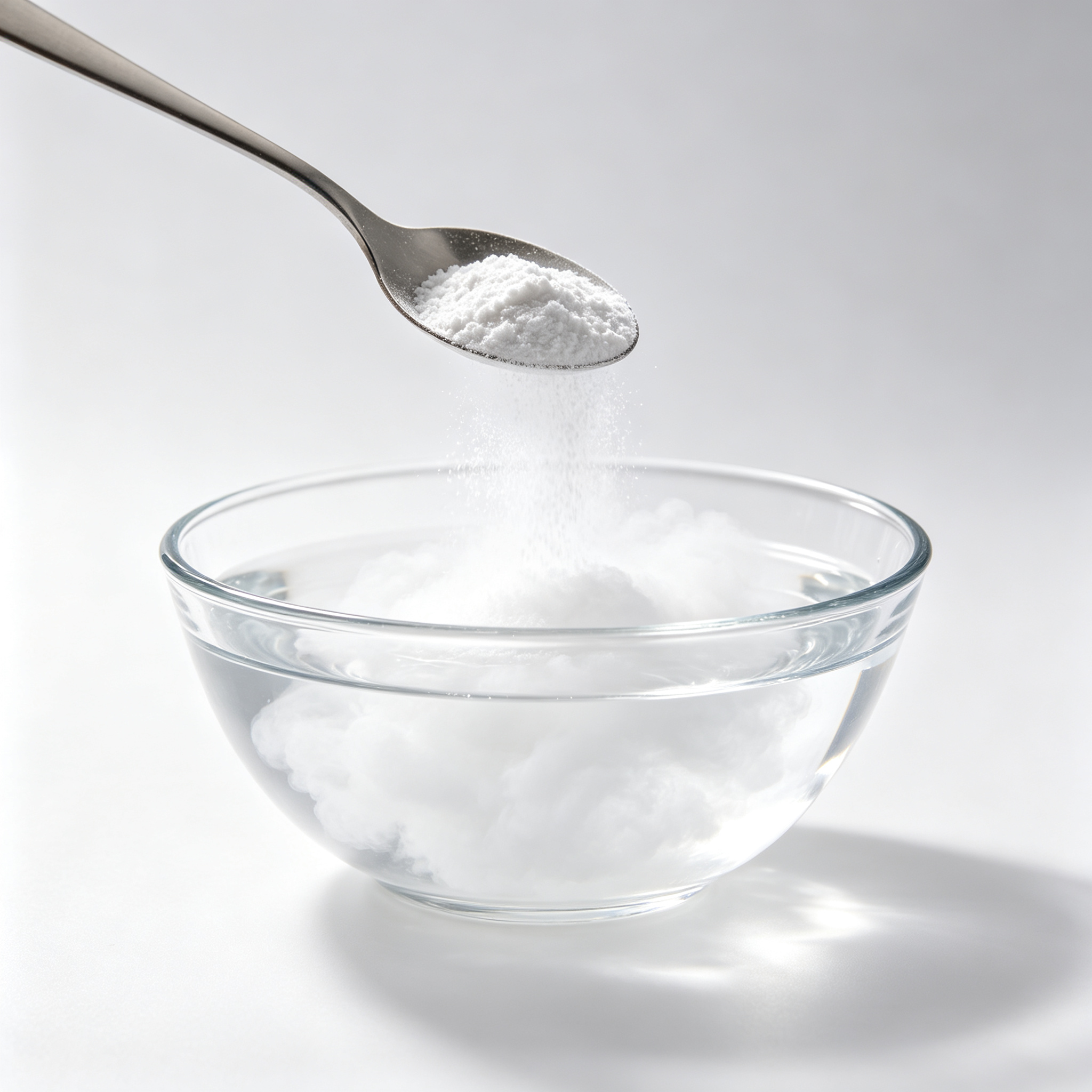
What the food additive designation actually covers
Food additive silicon dioxide is synthetic amorphous silicon dioxide with the CAS registry number 7631-86-9. It is listed internationally as INS 551, in the EU as E551, and in China as CNS 02.004. Amorphous means the material has no long-range crystal lattice; it is not crystalline quartz or sand, and food-grade specifications require the amorphous form.
The FDA's food substances listing records a wider set of permitted technical effects than most buyers assume. Silicon dioxide may be used as an anticaking agent or free-flow agent, an antioxidant, a colour or colouring adjunct, a drying agent, an emulsifier or emulsifier salt, a flavouring agent or adjuvant, a formulation aid, a humectant, and a lubricant or release agent. FDA consumer-facing ingredient guidance classifies silicon dioxide among the anti-caking agents whose function is to keep powdered foods free-flowing and prevent moisture absorption — that anticaking role dominates commercial food volume.
The regulatory envelope a buyer needs to verify
Compliance for food additive silicon dioxide is not a single global status. It is a matrix of destination-specific instruments, and the differences matter at formulation stage rather than at customs stage.
| Jurisdiction | Instrument | What it governs |
|---|---|---|
| United States | 21 CFR 172.480 | Food additive permission; anticaking use not to exceed 2 percent by weight of the food |
| United States | FCC (Food Chemicals Codex) | Monograph basis for “FCC grade” declarations and buyer-side QC reference |
| European Union | E551; Regulation (EU) No 231/2012; Regulation (EC) No 1333/2008 | Purity criteria and authorised use provisions |
| International | JECFA | ADI evaluated as “not specified” |
| China | GB 25576-2020; GB 2760 | Product standard plus use standard with category-level maximum levels |
| Pharmacopoeia | USP–NF / EP / JP | Excipient-grade monographs for oral solid dosage and supplements |
The U.S. limit is use-specific rather than category-specific: when silicon dioxide is used as an anticaking agent in food, the amount must not exceed 2 percent by weight of the food. Other jurisdictions regulate by food category instead. Under China's GB 2760, for example, permitted maximum levels for E551 include 15 g/kg in milk powder and cream powder, 15 g/kg in powdered sugar, 15 g/kg in cocoa products, 15 g/kg in dehydrated egg products, 15 g/kg in solid beverages, 20 g/kg in salt and salt substitutes, 20 g/kg in spices, 20 g/kg in solid compound seasonings, 1.2 g/kg in raw grain, and 0.5 g/kg in frozen desserts other than edible ice.
A related rule that catches formulators out is carry-over. Where silicon dioxide enters a finished product through a compound ingredient — a silica-containing flavour premix, for instance — the level carried over must stay below what direct addition would allow, and the ingredient itself must be permitted to contain it. Where several additives perform the same function, the sum of each dosage divided by its own maximum level must not exceed 1. Buyers should confirm the current category table for their destination before locking a formulation; these tables are revised periodically.
Why powders cake, and what the additive is doing
Caking in a food powder is usually the result of four physical effects acting together: van der Waals attraction between fine particles, surface moisture forming liquid bridges, absorbed oils creating non-water bridges, and thermoplastic deformation under storage heat and pressure.
Silicon dioxide intervenes through its porous structure and particle geometry. The recognised mechanisms are:
- Surface coating. Particles adhere to the surface of the base powder, increasing inter-particle spacing and reducing contact area.
- Physical separation. The additive acts as a spacer layer between host particles, blocking adhesion and inter-particle bridging.
- Free-water absorption. The porous structure takes up surface moisture, preventing liquid bridges from forming.
- Fat and oil absorption. The same pore network takes up free fats and oils, removing the non-water bridging pathway.
This is why anti-caking performance is a function of the additive's specific surface area, oil absorption and particle size distribution rather than of the brand name on the bag. Two grades described as “food-grade silicon dioxide” can behave very differently in the same formulation.
Reading a specification sheet
A food-grade silicon dioxide certificate of analysis typically carries the parameters below. Each one has a formulation consequence; treating them as interchangeable quickly leads to failed trials.
| Parameter | What it controls | Indicative range |
|---|---|---|
| SiO₂ content (ignited) | Purity class and regulatory positioning | From ≥96% for general-purpose grades to ≥99% for high-purity and up to ≥99.5% for pharmaceutical grades; some premium grades reach 99.9% or higher |
| Loss on drying (LOD) | Free moisture. A high-LOD additive contributes water to the blend rather than absorbing it | Commonly specified at ≤5–7% depending on grade |
| Loss on ignition (LOI) | Bound water and trace organic residues | Typically well below the ≤8.5% ceiling used in several food-grade specifications |
| BET specific surface area | Porosity, adsorption strength and carrier capacity | Roughly 150–300 m²/g for general anti-caking grades; up to about 700 m²/g for adsorbent grades |
| D50 median particle size | Grittiness versus dusting; dispersion behaviour | Customisable, with food grades supplied across a wide band and targeted grades at the fine end for beverages |
| Oil absorption (DBP) | How much liquid the grade can carry before losing flow | Low for fine flow-aid grades; high for liquid-carrier grades |
| pH | Compatibility with pH-sensitive actives such as certain vitamins | Near-neutral for general grades; deliberately acidic grades exist for acidic systems and for edible-oil refining |
| Heavy metals (Pb, As, Cd, Hg) | Regulatory compliance and customs documentation | Food-grade specifications such as GB 25576-2020, FCC and EU 231/2012 set the ceilings; pharmacopoeia grades commonly specify Pb at low single-digit ppm and total heavy metals under 10 ppm |
| Microbiological profile | Suitability for pharma, nutraceutical and export programmes | Total aerobic count, yeast and mould, and absence of pathogens such as E. coli, Staphylococcus aureus and Salmonella |
Two parameters deserve particular attention during grade selection. The first is LOD: a grade with high residual moisture is counterproductive in humid-climate storage or long ocean freight, because it adds water to a system that is already struggling with water. The second is pH. Standard food grades sit near neutral, while acidic grades are used where the finished system is acidic — edible-oil refining adsorbents, for example, are supplied at low pH, and beer-filtration grades in a mildly acidic range. Mismatching pH is a common root cause of discolouration, off-notes or flocculation in reconstituted powders.
Food grade, FCC grade and pharmacopoeia grade
Three declaration routes appear on commercial documents, and they are not automatically interchangeable.
Food grade is the baseline. The material is manufactured and released against a food additive standard — GB 25576-2020 in China, E551 purity criteria in the EU, and 21 CFR 172.480 in the United States — and is intended for anti-caking, flow aid and carrier duty in food.
FCC grade means the material is declared against the Food Chemicals Codex monograph rather than a regional food additive standard. This matters when a finished product is destined for the U.S. market, or when a buyer's own incoming QC references FCC rather than a national standard. A supplier that can issue an FCC-format certificate avoids a translation step in the buyer's documentation chain.
Pharmacopoeia grade (USP–NF, EP or JP) is a separate specification tier intended for oral solid dosage and supplements. It carries tighter microbiological and elemental impurity controls and is normally supported by drug-master-style documentation. Food and pharmaceutical grades are generally produced on separate lines, and substituting one for the other without re-validation is not recommended.
Where food additive silicon dioxide is used
Within the food industry the additive is used as an anticaking agent, flow aid and adsorption carrier across a broad set of powder and liquid systems:
- Seasonings and spices: salt, bouillon, monosodium glutamate, pepper, chilli powder, compound seasonings, soup bases and noodle seasonings.
- Sugars and sweeteners: powdered sugar, granulated sugar and artificial sweeteners.
- Dairy and powdered mixes: milk powder, whey powder, non-dairy creamer, coffee whitener and soy milk powder.
- Instant beverages: coffee, cocoa, milk tea powder and fruit drink powder.
- Bakery and cereals: baking powder, cake premix, custard powder, flour and cereal or rice flour.
- Nutrition and protein: whey or plant protein, meal replacement and nutritional powders.
- Oils and semi-solids: thickening for edible oils, sauces and marinades.
- Beverage processing: a fining aid for beer, wine and juice.
- Flavour carrier: turning liquid flavours, vitamins and botanical extracts into free-flowing powders.
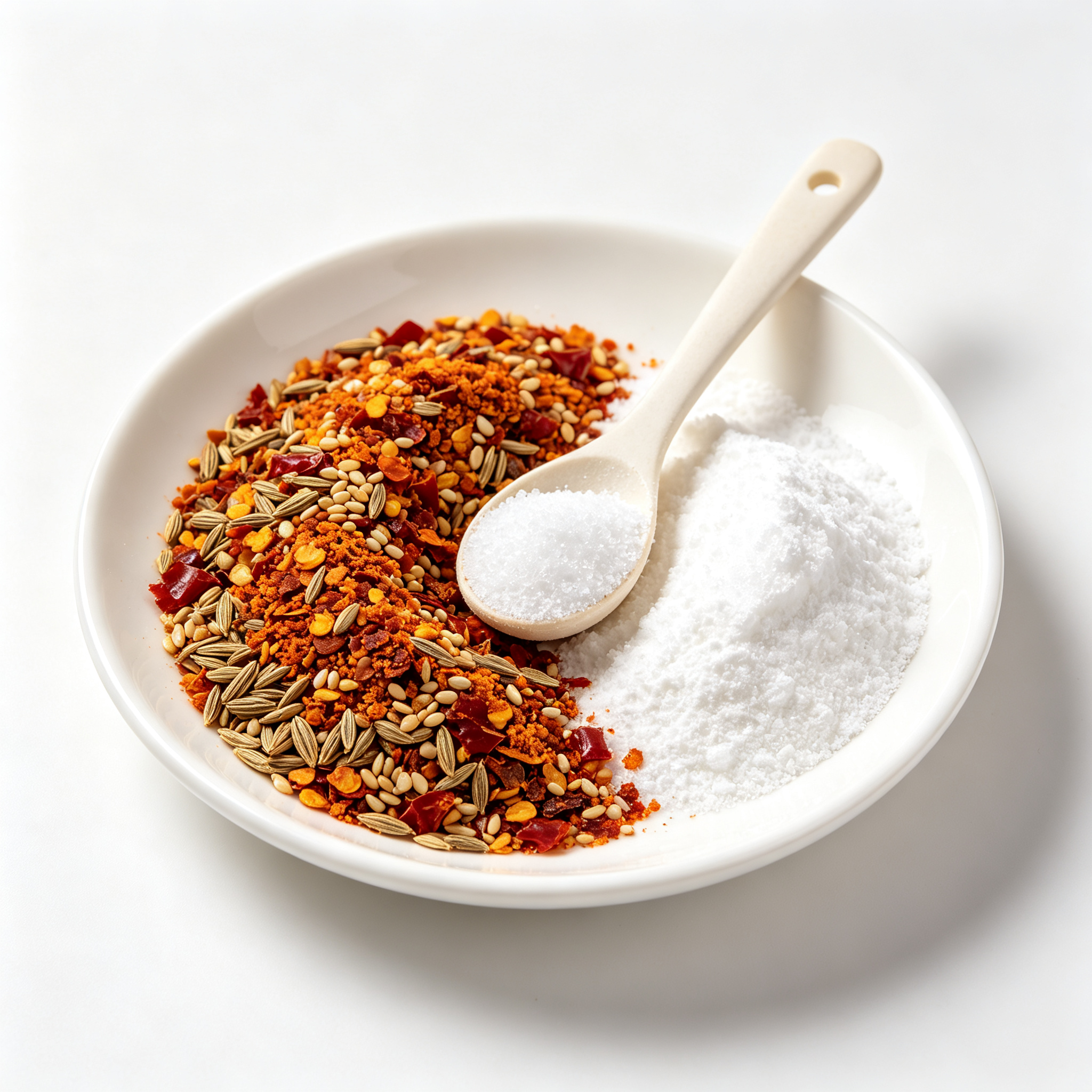
Addition rates vary with the base powder. General-purpose free-flow grades in food powders are commonly dosed in the region of 0.2–1%, and salt grades around 0.5–1%, with the exact figure set by the powder's moisture, fat content, particle size and packaging. The working rule is to find the lowest effective dose inside the legal limit for the category rather than to dose to the ceiling.
Comparison with other anti-caking and flow technologies
Silicon dioxide is one of several permitted options. The comparison below is functional rather than promotional; the right choice depends on the base powder, the target pH and the finished label.
| Technology | Typical role | Practical consideration |
|---|---|---|
| Precipitated amorphous silica (E551) | Anti-caking, flow aid, liquid carrier, adsorbent | Broad application coverage at low dose; porous structure supports both moisture and oil absorption. Requires dust control during bag opening and charging. |
| Fumed silica | Rheology control, thickening, high-clarity systems | Higher purity and much higher surface area, but a different bulk density and dispersion behaviour; higher cost and mainly used outside mainstream food anti-caking. A direct substitution into a food powder is not advisable without a dosage gradient trial. |
| Calcium silicate and tricalcium phosphate | Anti-caking in salt, sugar and powdered blends | Established alternatives permitted in several markets. Selection usually turns on the base powder, the targeted pH and the ingredient declaration the buyer wants to carry. |
| Anti-caking starches and cellulosic agents | Anti-caking where an organic label is preferred | Different moisture behaviour and generally higher dose; often limited in high-fat or high-humidity systems. |
Where silicon dioxide stops helping
An honest boundary matters more than a specification sheet. Silicon dioxide is not a corrective for a moisture problem. If the base powder's own loss on drying is out of range, or if warehouse humidity is uncontrolled, or if a bag liner has failed in transit, increasing the silica dose will not restore free flow. It will increase the insoluble solids load and the cost per tonne, and may introduce a dusty or slightly gritty character to the finished powder.
Three further boundaries are worth stating plainly. First, silicon dioxide is insoluble in water and in common acids; where it is used as a processing aid in a beverage or oil system it must be removed by filtration downstream. Second, it is not a nutrient and contributes no functional nutrition — it is an inert mineral processing additive. Third, maximum permitted levels are market-specific, so a dosage that is compliant in one jurisdiction may exceed the category limit in another; the U.S. anticaking ceiling of 2 percent by weight and China's category-level g/kg limits are not reconcilable into a single universal number.
Procurement criteria
For buyers moving from awareness into evaluation, the following checklist converts a specification sheet into a decision.
- Regulatory match. Confirm the grade is released against the destination instrument — 21 CFR 172.480 and FCC for the U.S., E551 with Regulations (EU) No 231/2012 and (EC) No 1333/2008 for Europe, GB 25576-2020 and GB 2760 for China.
- Grade declaration. Establish whether you are buying food grade, FCC grade or pharmacopoeia grade, and whether the supplier manufactures the tiers on separate lines.
- Functional fit. Match D50, BET and oil absorption to the base powder: finer grades for beverages and reconstitution, coarser grades where dusting must be controlled, high-oil-absorption grades for liquid flavour and vitamin loading.
- Moisture discipline. Check the LOD and LOI on the certificate, and check the moisture-barrier packaging offered for humid routes.
- Impurity documentation. Require heavy-metal and microbiological data batch by batch, not statement by statement.
- Certification set. Confirm which system and religious certifications apply to the specific grade, and that certificates are current.
- Packaging and MOQ. Confirm the pack format from retail bags through jumbo bags, and whether small LCL quantities are supported for trial work.
- Lead time and terms. Establish realistic lead time for stocked versus custom grades, and the Incoterms that apply.
- Pilot validation. Run a parallel trial against the incumbent grade at the same dose before switching. Certificate compliance does not guarantee finished-product performance.
Supplier capability reference
Shandong Zhonglian Chemical Co., Ltd. is a subsidiary of Zhongqi (Guangdong) Silicon Materials (stock code 880747) with more than 20 years of silica production experience and 17 patents. Its GMP-certified production base is located in Guangdong, China, and the food-grade line has an annual capacity of 10,000+ tons, with 26 inspection steps and full batch traceability from raw material to finished goods.
Its food-grade silicon dioxide range complies with GB 25576-2020 and GB 2760, FDA 21 CFR 172.480 (GRAS), FCC, EU E551, Commission Regulation (EU) No 231/2012 and Regulation (EC) No 1333/2008, and is available against USP–NF, EP and JP specifications; JECFA has evaluated the ADI as “not specified”. System certifications include ISO 9001:2015, ISO 22000:2018 and FSSC 22000, with FAMI-QS for feed applications, plus Kosher, Halal and HACCP production system certification.
Documentation supplied with the material includes a Certificate of Analysis per batch, MSDS and regulatory dossiers. Packaging spans 1 kg retail bags through 10 kg, 15 kg, 20 kg and jumbo bags, with a 50 kg minimum order quantity for LCL export type. Lead time is 3–10 days for stocked items and 10–20 days for custom orders, with EXW, FOB, CIF and DDP terms supported. Free samples with certificate documentation are provided for pre-production validation, and OEM, private-label and repacking arrangements are available.
Regulatory outlook
Verified public market-sizing data for food-grade silicon dioxide is thin, and this article does not estimate it. The more useful forward signal for buyers is regulatory rather than commercial.
On the food-safety side, JECFA's “not specified” ADI remains the benchmark classification, and the European Food Safety Authority's October 2024 re-evaluation retained the conclusion that E551 is safe at reported use levels across population groups, having considered the nanoscale dimension. In the United States, silicon dioxide remains an approved direct food additive under 21 CFR 172.480 with the 2 percent anticaking ceiling.
A separate development sits on the occupational-hygiene side rather than the food side. In June 2024, ECHA proposed a harmonised classification of synthetic amorphous silica as STOT RE 1 (H372) under the CLH process. The proposal rests primarily on high-dose rat inhalation studies. Industry participants, including Zhonglian Chemical, have opposed the classification on the basis that synthetic amorphous silica is structurally and toxicologically distinct from crystalline silica, that the evidence does not reflect real workplace conditions, and that in consumer goods the material is bound with no dust exposure. For food buyers the practical read is narrow: the debate concerns dust exposure in manufacturing environments, where an inhalable occupational limit applies, not the safety of the additive in finished food. Buyers should nonetheless track the outcome, because classification changes can propagate into SDS wording and downstream customer questionnaires.
Frequently asked questions
What is the difference between food grade and FCC grade silicon dioxide?
Food grade means the material is manufactured and released against a national or regional food additive standard — GB 25576-2020 in China, E551 purity criteria in the EU, or 21 CFR 172.480 in the United States. FCC grade means it is declared against the Food Chemicals Codex monograph. The underlying substance is the same amorphous silicon dioxide with CAS number 7631-86-9; the difference is the specification and certificate format the buyer receives, which matters when the finished product is sold into the U.S. market or when the buyer's own QC system references FCC.
What is the maximum permitted use level for silicon dioxide as an anticaking agent?
Limits are jurisdiction-specific. In the United States, 21 CFR 172.480 permits silicon dioxide as a food additive anticaking agent at a level not exceeding 2 percent by weight of the food. China's GB 2760 regulates by food category instead, with values such as 15 g/kg for milk powder, 20 g/kg for salt and spices, and 15 g/kg for solid beverages. Buyers should confirm the current category limit in the destination market before finalising a formulation, and should also apply the carry-over rule where the additive enters the product through a compound ingredient.
Is food additive silicon dioxide the same as crystalline silica?
No. Food additive silicon dioxide is synthetic amorphous silica with no long-range crystal lattice, whereas crystalline silica such as quartz has an ordered structure. Food-grade specifications require the amorphous form. The distinction matters for safety assessment, labelling and customer questionnaires: the recognised respiratory hazard associated with silica relates to respirable crystalline silica, not to the amorphous food additive.
Which parameters should a buyer check first when selecting a grade for a powdered beverage?
Particle size distribution and moisture are the usual starting points. Finer, narrowly distributed grades disperse more readily and settle less in reconstituted drinks, while coarse particles can be perceived as grit. Loss on drying matters because a high-moisture additive works against the anti-caking function. Where the formulation contains liquid flavours, vitamins or botanical extracts, oil absorption and specific surface area become the controlling parameters because they determine how much liquid the carrier can hold while remaining free-flowing.
Can food additive silicon dioxide be used in edible oil refining and beer processing?
Yes, but in a different functional role. In edible oil refining, silica-based adsorbents are used for degumming, de-soaping, dephosphorisation and decolourisation, and can be used in combination with bleaching earth. In beer and beverage processing, a selective silica gel is used as a filtration aid that adsorbs haze-forming proteins and polyphenols. In both cases the material acts as a processing aid and is removed by filtration before the finished product, so it does not remain in the final beverage or oil.
How is the safety of food additive silicon dioxide assessed by regulators?
By international expert committee evaluation and periodic re-evaluation rather than by supplier testing alone. JECFA has evaluated silicon dioxide with an acceptable daily intake of “not specified”, which is the classification applied when an additive is considered of very low toxicity. The European Food Safety Authority confirmed in October 2024 that E551 poses no safety concern at reported use levels across population groups. In the United States, the FDA lists silicon dioxide as an approved direct food additive under 21 CFR 172.480 and classifies it among anti-caking agents in consumer ingredient guidance.