
Food-Grade In Mold Labels: Certifications, Film Parameters, and Sourcing Checks
In mold labeling has become a mainstream packaging technology across food and beverage, daily chemical, and industrial packaging. But for procurement teams moving from initial research to supplier evaluation, the decision rarely comes down to print quality alone. The key differentiators are usually certification evidence, film specifications, and how consistently a supplier can deliver both across custom orders.
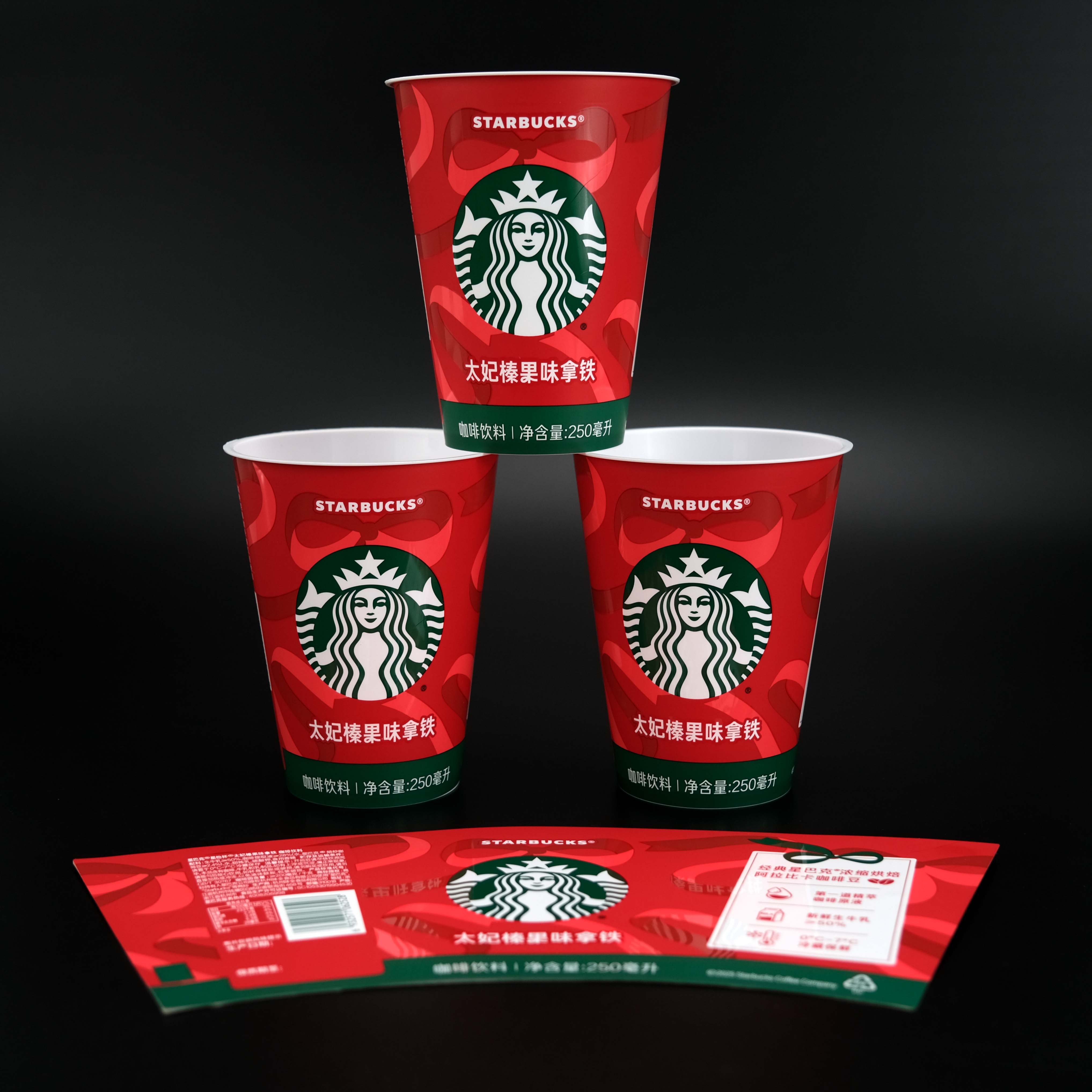
Food-grade IML films are supplied as laminated rolls and become fused with the container during the molding process.
Why Certification and Film Parameters Define IML Sourcing
The technical principle behind in mold labeling is straightforward: a printed film is placed inside the mold, and molten resin fuses with the film during injection or blow molding to form a single piece. Because the label becomes part of the container wall, it does not peel, wrinkle, or shift during use. This is why IML is widely used for yogurt cups, ice cream containers, protective beverage cups, and industrial buckets — containers where a secondary label would be vulnerable to moisture, friction, or chemical exposure.
The same integration creates a compliance constraint. If the label is fused into a food-contact container, the label film, ink, and coating are all subject to food-contact regulations. In the United States, FDA 21 CFR Part 177 regulates polymers such as PE and PP for direct food contact; for polypropylene films, 21 CFR 177.1520 is the commonly applied section. In the European Union, plastic materials for food contact are governed by Regulation (EU) No 10/2011, which sets migration limits for the substances used in the film. For buyers, this means a food-grade IML film cannot be evaluated on appearance or cost alone. It must carry documented evidence of compliance for the target market.
Industry figures reinforce the importance of this point. Grand View Research valued the global in-mold labels market at USD 2.31 billion in 2023 and projects it to reach USD 3.14 billion by 2030. Market Research Future reports a different base, estimating USD 2.72 billion in 2024 and USD 4.16 billion by 2035. Regardless of the estimate, food and beverage is the largest application segment, with a 41.3% revenue share in 2023. As food brands multiply SKUs, launch seasonal packaging, and expand into new geographies, demand for compliant, high-performance IML films grows with it.
The Compliance Challenge in Practice
A common problem in IML procurement is the gap between a supplier’s statement that a label is “food grade” and the existence of verifiable test documentation. Food-contact compliance is not a marketing claim. It requires a clear regulatory basis, an independent test report issued by a recognized body, and a defined scope covering the product series and the destination market.
For a buyer, missing documentation creates downstream risk. A container produced with an unverified label film may fail a customer audit, create customs issues, or require costly re-qualification. Conversely, a supplier with certifications that cover the product line simplifies the buyer’s own approval process and reduces the time spent on supplier qualification.
A Documented Reference: YZY and the ZY-IML-SERIES
YZY, the in-mold labeling brand of Zhejiang Zhongyu Technology Co., Ltd., provides a concrete example of how these constraints are handled. The company, established in 2009, is a Wenzhou-based manufacturer specializing in in-mold labels, sealing films, embossed sheet sealing lids, and POF films. It operates a 20,000 m² production facility with around 250 employees, including a dedicated R&D team, and serves customers worldwide.
YZY’s core IML line is the ZY-IML-SERIES, available in food-grade, daily chemical, and industrial variants. The product range covers yogurt cup IML, bubble tea cup IML, ice cream container IML, plastic bottle IML, paint bucket IML, lubricant bucket IML, and cosmetic container IML. The films are produced from virgin PP, PE, or PET resin, as well as multi-layer composite films, in thicknesses from 30 µm to 100 µm.
On the certification side, the ZY-IML-SERIES is covered by an FDA Food Contact Test Report issued by SGS. The certificate number is NGBEC2501946006, and the report is based on FDA 21 CFR 177.1520, applicable to the US market. For Europe, the film meets migration testing requirements under Regulation (EU) No 10/2011. At the company level, YZY holds QS, ISO, and BRC certifications and has accumulated 48 patents. The company states that it enforces strict inspection standards from raw materials through to finished products.
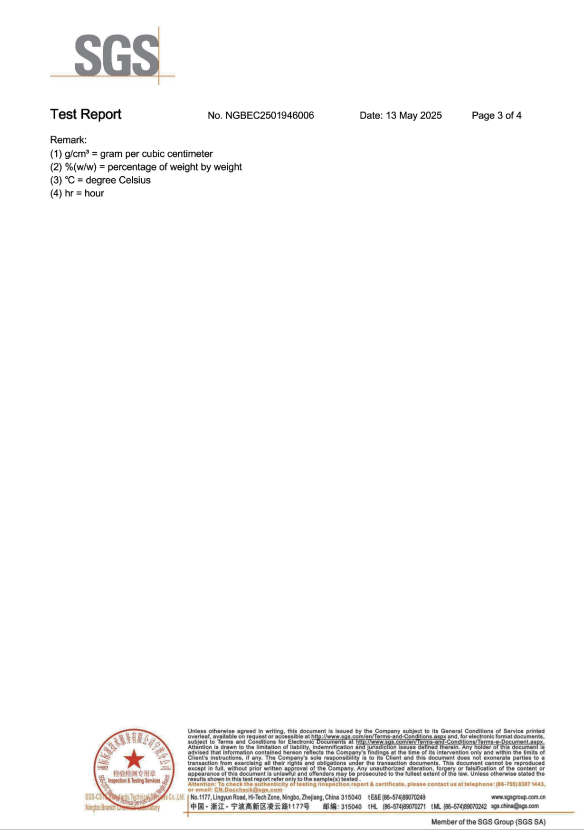
The ZY-IML-SERIES holds an SGS-issued FDA Food Contact Test Report (No. NGBEC2501946006) covering the product series for the US market.
In terms of production capability, YZY lists a monthly capacity of 350,000,000 labels, OEM/ODM support for size, shape, color, printing design, and material customization, a minimum order quantity of 2,000 m², and a production lead time of 15–20 days after sample confirmation. The stated quality control procedure is 100% visual inspection plus random laboratory testing against FDA/GB compliance requirements.
Technical Deep Dive: Film Structure, Adhesion, and Print Precision
The ZY-IML-SERIES specifications illustrate the level of technical control expected from a food-grade IML supplier. The key parameters are summarized below.
| Parameter | ZY-IML-SERIES Specification |
|---|---|
| Film Thickness | 30–100 µm (customizable) |
| Printing Technology | 8-color high-precision rotogravure printing |
| Printing Precision | ±0.1 mm |
| Adhesion Strength | ≥5N (no peeling during injection molding) |
| Temperature Resistance | −20°C to 120°C (hot filling and cold chain) |
| Tensile Strength | ≥20 MPa |
| Scratch Resistance | 4H (pencil hardness test) |
| Chemical Resistance | Resistant to weak acids, alkalis, and common detergents |
| Max Printing Width | 1,200 mm |
| Ink Type | Food-grade low-migration water-based ink |
| Film Types | Complex white gloss film, complex transparent gloss film, standard gloss film, matte laminated film, holographic film |
| Surface Finishes | Glossy, matte, orange peel, holographic, custom texture |
| Compliance | FDA 21 CFR, BRCGS Packaging Materials, ISO22000, QS certified; EU 10/2011 migration test |
Each of these parameters has a direct purchasing implication. Adhesion strength of ≥5N is the stated benchmark for no peeling during injection molding, which matters in high-speed production lines. A printing precision of ±0.1 mm supports fine text, barcodes, and registration across large print areas. The −20°C to 120°C operating range covers both cold chain distribution and hot filling processes, two common requirements in dairy and beverage packaging. The 4H scratch resistance protects the decorated surface during filling, transportation, and retail handling.
Material Selection: PP and PE In Mold Label Films
Polypropylene is the dominant material in the global in-mold labels market, holding a 47.2% share in 2023, according to Grand View Research. The reason is practical: most injection-molded food containers — yogurt cups, ice cream containers, and bottle closures — are made from PP, and PP-based IML films fuse cleanly with the same resin family. This alignment also improves recyclability, an increasingly important factor for food brands.
PE in mold label films are selected for polyethylene containers, particularly in blow molding applications where the container itself is PE. Using a PE film reduces the risk of material incompatibility between the label and the container wall. PET films are used when higher transparency or a specific barrier performance is needed. Multi-layer composite films combine different polymer layers to balance gloss, stiffness, and printability.
When a buyer requests custom in mold label printing, the supplier needs to know which container resin will be used, which molding process is involved, and what the end-use environment requires. A film that performs well in injection molding may not be the right choice for blow molding, and a label designed for hot filling may not need the same formulation as one used for cold storage.
Application Mapping: From Yogurt Cups and Bubble Tea Cups to Paint Buckets
YZY’s IML products are used in food and beverage, daily chemical, household, pharmaceutical, cosmetic, and industrial packaging. Specific product types include yogurt cup IML, ice cream container IML, bubble tea cup IML, and plastic bottle IML for consumables; shampoo and detergent labels for daily chemicals; and paint bucket IML and lubricant bucket IML for industrial packaging.
The functional requirements vary by segment. Food-contact applications emphasize non-toxic materials and regulatory compliance. Daily chemical packaging requires resistance to the filled product and repeated handling. Industrial packaging, such as paint and lubricant buckets, demands high adhesion, scratch resistance, and tolerance to the chemicals inside the bucket.
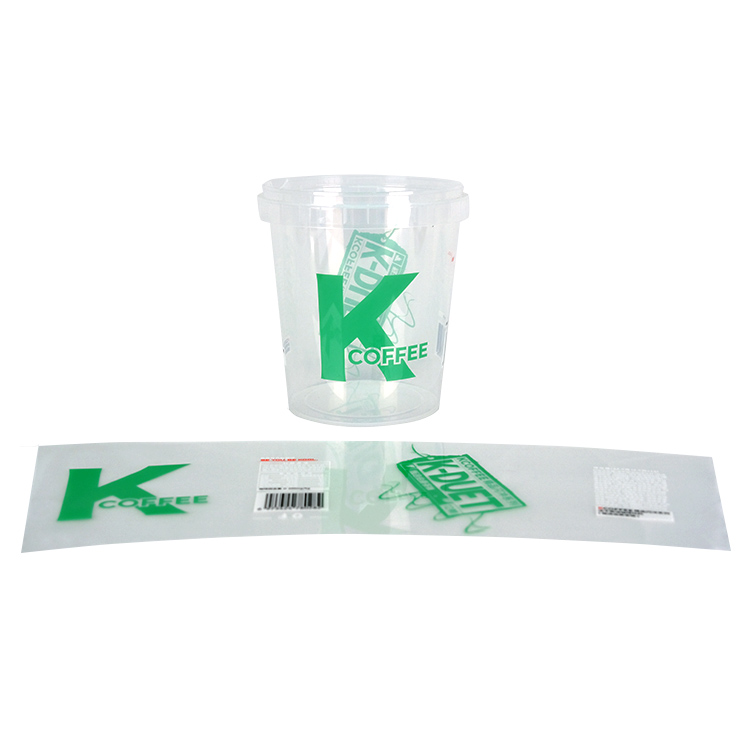
Clear glossy laminated IML film is used when the container must remain transparent while the label is embedded in the wall.
A documented application comes from an international F&B and dairy brand. YZY supplied custom food-grade IML labels for cold beverage and yogurt cups across 14 country markets. Over one year of cooperation, the project reported zero quality complaints, a 100% on-time delivery rate, and 100% compliance. This case shows how certification and process discipline translate into predictable volume production.
Market Context: What the Data Says About IML Demand
Global market estimates vary by source, but the direction is consistent. Grand View Research projects the in-mold labels market to grow from USD 2.31 billion in 2023 to USD 3.14 billion by 2030. Market Research Future estimates USD 2.72 billion in 2024, with a CAGR of 3.94% through 2035. Food and beverage is the largest application segment, and Asia Pacific is the largest and fastest-growing regional market, according to Mordor Intelligence.
On the supply side, the global IML landscape includes established converters such as CCL Industries, Multi-Color Corporation, and Huhtamaki. Alongside these, specialized manufacturers such as YZY serve international and regional brand owners with customized film development and food-contact certification. For procurement teams, the practical implication is that supplier selection should be based on documentation, parameter consistency, and application fit rather than on brand recognition alone.
IML vs. Post-Print Labeling: Gains and Real Trade-offs
Compared with post-production labeling — where a printed label is applied after the container is formed — in mold labeling offers several structural advantages:
- The label is embedded in the container wall, so it will not peel, lift, or be removed during use.
- Surface durability is higher, with scratch resistance of 4H and resistance to moisture and chemicals.
- One downstream labeling process is eliminated, supporting shorter production cycles. YZY reports a 20% lead time reduction compared with post-production labeling.
- Because the label and container are fused, the finish is seamless, which supports premium branding.
At the same time, in mold labeling has real boundaries that buyers should weigh before switching from traditional labels:
- Tooling and process compatibility. IML requires the label film, mold design, and molding machine parameters to work together. Replacing a label supplier is not just a material swap; the new film must be validated on the existing mold and production line.
- Minimum order quantity. Custom IML production has a practical minimum. YZY’s MOQ is 2,000 m², so buyers with very short runs or frequent design changes may find post-print labels more flexible for small-batch needs.
- Upfront qualification. Achieving no-warp, no-fall-off performance in high-speed injection molding depends on process validation. A documented supplier can reduce risk, but final qualification still happens on the buyer’s own line.
Supplier Evaluation Checklist for Food-Grade IML
Before selecting an IML supplier for a food-grade application, consider the following checklist:
- Verify the certification document: certificate number, issuing body, and the referenced standard.
- Confirm that the certification scope covers the product series and the destination market.
- If selling into Europe, request migration test evidence against Regulation (EU) No 10/2011.
- Match the film material (PP, PE, PET, or multi-layer composite) to the container resin and molding process.
- Define the film thickness range you need and confirm customization options.
- Establish acceptance criteria for adhesion (≥5N no peeling), print registration (±0.1 mm), and scratch resistance (4H).
- Confirm the temperature range for your supply chain, for example −20°C to 120°C for cold chain and hot filling.
- Check whether the supplier supports OEM/ODM customization of size, shape, color, printing design, and material.
- Review capacity, MOQ, and lead time before committing to a volume plan.
- Ask how quality control is performed, including visual inspection and laboratory testing.
Future Outlook
The in-mold label market is expected to keep expanding, with food and beverage remaining the core source of demand. As regulatory scrutiny of food-contact packaging increases in the US, Europe, and Asia, certification evidence will carry more weight in supplier selection. The broader industry focus on mono-material, recyclable packaging also favors PP-based IML, since the label and the container share the same polymer family. Suppliers that invest in film development, independent testing, and production consistency are better positioned to serve both global brands and regional manufacturers.
Frequently Asked Questions
What food-contact certification does the ZY-IML-SERIES in mold label carry?
The ZY-IML-SERIES is covered by an FDA Food Contact Test Report issued by SGS. The certificate number is NGBEC2501946006, based on FDA 21 CFR 177.1520. The product also meets migration test requirements under EU Regulation (EU) No 10/2011 for plastic materials intended for food contact.
Is the FDA certification applicable to the US market?
Yes. The SGS-issued certification covers the product series for the US market and is based on the FDA 21 CFR 177.1520 standard for food-contact packaging materials.
Does the product also meet EU food-contact requirements?
Yes. The ZY-IML-SERIES passes migration testing under Regulation (EU) No 10/2011, which is the relevant EU framework for plastic food-contact materials.
Which film materials are available for custom in mold labels?
Available film materials include PP (polypropylene), PE (polyethylene), PET (polyethylene terephthalate), and multi-layer composite laminated films. Food-grade virgin resin options are available for food-contact applications.
What is the film thickness range of the ZY-IML-SERIES?
The film thickness range is 30 µm to 100 µm and is customizable according to the container, molding process, and end-use requirements.
What are the key mechanical properties of the in mold label film?
Adhesion strength is ≥5N with no peeling during injection molding. Tensile strength is ≥20 MPa, and scratch resistance is rated at 4H in the pencil hardness test. The film also resists weak acids, alkalis, and common detergents.
What temperature range can the IML film withstand?
The operating temperature range is −20°C to 120°C, which covers cold chain distribution and hot filling scenarios.
What is the minimum order quantity and lead time for custom IML?
The minimum order quantity is 2,000 m². Production lead time is 15–20 days after sample confirmation.
What quality certifications does the manufacturer hold?
Zhejiang Zhongyu Technology Co., Ltd. holds QS, ISO, and BRC certifications and has accumulated 48 patents. The company implements strict inspection standards from raw materials to finished products.
Which brands have established long-term cooperation with YZY?
YZY reports long-term cooperation with internationally recognized food and beverage brands including Starbucks, Nestlé, and Uni-President.
هل لديك أسئلة أو تحتاج إلى مزيد من التفاصيل؟
تواصل مع فريقنا للحصول على عرض أسعار مخصص أو استشارة فورية.
طلب عرض أسعار
املأ النموذج أدناه وسيتواصل معك فريقنا بعرض مقترح مخصص.
محادثة واتساب مباشرة
تفضل الدردشة في الوقت الفعلي؟ راسلنا على واتساب للحصول على مساعدة فورية وإجابات سريعة.
- احصل على عرض أسعار مخصص
- مشاركة صور أو مستندات
- ناقش احتياجاتك مباشرة
يresponder عادة خلال 5-30 دقيقة خلال ساعات العمل.