
Food-Grade Silica: A Buyer's Compliance Checklist
Food-Grade Silica: A Buyer's Compliance Checklist
Food-grade silica moves in bulk tonnage but is judged in document review. In the European Union it is E551; internationally it is INS 551; in China it is CNS 02.004. In every one of those frameworks it is a regulated food additive rather than a filler, which means a sourcing decision starts with grade designation, purity class and paperwork — not with a sample price.
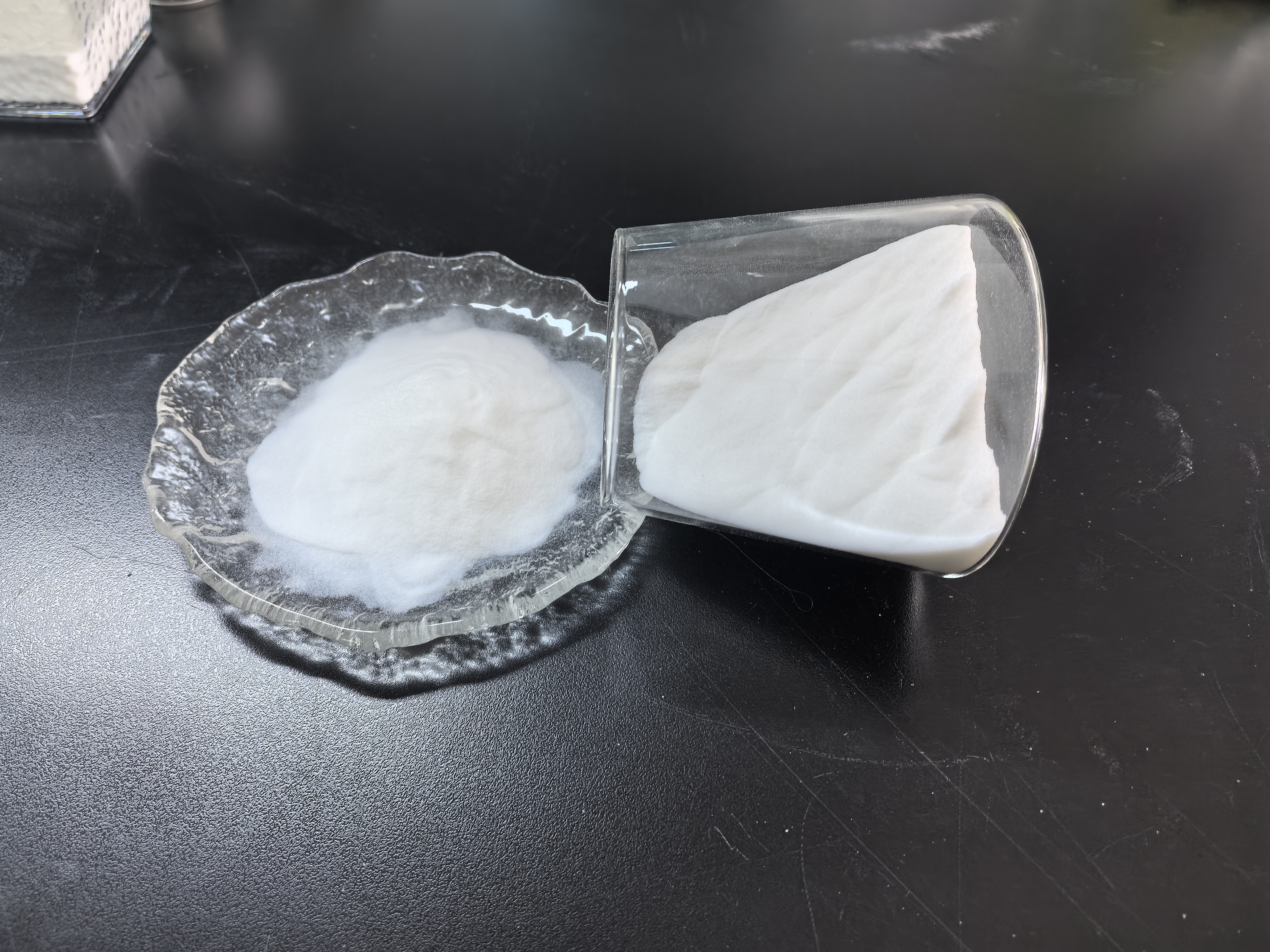
Food-grade silicon dioxide is classified as a regulated additive in every major market, so procurement begins with scope and documentation. Image: Shandong Zhonglian Chemical.
Why the Category Is Misread
The functional behaviour of food-grade silica is easy to demonstrate. Between roughly 0.1% and 2% by weight it keeps powders flowing, breaks inter-particle liquid bridges and carries oils and liquid flavours into a free-flowing form. That ease of demonstration is precisely what tempts buyers to treat it as a commodity.
The market itself is not small. One 2025 estimate puts the global food-grade silica market at USD 0.87 billion (Fortune Business Insights, 2025), while precipitated silica across all end uses moved roughly 3.25 million tonnes in the same year (Mordor Intelligence, 2025). Adjacent categories are expanding as well: silica antiblock additives are tracked toward USD 613.71 million in 2026 (SNS Insider).
Those numbers should be read with care. Published estimates of the “food-grade” market diverge widely because different research houses draw the boundary in different places — some include pharmaceutical and feed grades, some confine the figure to E551 for food and beverage use. For a buyer, that divergence is itself the lesson: confirm the scope behind a headline before it becomes a planning assumption.
The Constraint Buyers Underestimate
The failure mode is rarely performance. It is scope. A consignment that performs perfectly in a seasoning blend can still be held at a port if the grade designation, purity class or heavy-metal declaration does not line up with the importing jurisdiction. Three constraint layers matter most.
Purity class. Under GB 25576-2020 the food additive is split into three classes by ignited SiO₂ content: Class I at ≥99.3%, Class II at ≥99.0% and Class III at ≥96.0%. A supplier quoting simply “food grade” has not answered which class it is supplying.
Elemental limits. Lead, arsenic, mercury and cadmium are the parameters regulators and customs most commonly check. GB 25576-2020, FCC and EU 231/2012 each set their own ceilings, and pharmacopoeia grades set tighter ones still.
Microbiological status. Total aerobic count, moulds and yeasts are controlled per USP <61>/<62> and food-grade requirements, with pathogens such as E. coli required absent. For pharmaceutical and premium nutraceutical users, this is often the binding constraint rather than the chemistry.
None of these can be assessed from a spec sheet alone. They need a batch-level Certificate of Analysis, a regulatory declaration per destination market, and a sample that has been through the buyer’s own process.
Zhonglian Food Silica: What the Qualification Set Actually Covers
Shandong Zhonglian Chemical Co., Ltd. is the overseas sales and brand-operation subsidiary of Zhongqi (Guangdong) Silicon Materials, a silica specialist whose predecessor was established in 2006 and which listed on the Guangdong Equity Exchange in 2021. The group has accumulated more than two decades of experience in silicon dioxide. Its Guangzhou production base operates GMP-compliant standardised workshops and intelligent production lines, with total annual silicon dioxide capacity of approximately 50,000 tonnes. The company holds 45 patents spanning production and preparation, environmental protection and energy saving, powder treatment and automatic packaging, and reports R&D personnel above 20% of total staff. Exports account for roughly 70% of output, reaching markets including Europe and North America, Japan and South Korea, Southeast Asia and the Middle East.
The company’s food-grade range covers anti-caking silica, flow-aid silica, edible-oil adsorbent silica, pharmaceutical excipient silica, toothpaste-grade hydrated silica, cosmetic silica, pet-feed silica and industrial silica. Product designations in the food series include the ZLSIL range — among them ZLSIL-W58A/58A, ZLSIL-W22S, ZLSIL-W50S, ZLSIL-W110SD, ZLSIL-T680, ZLSIL-T28, ZLSIL-E5162, ZLSIL-A325 and the low-iron ZLSIL-W58BF — with CAS 7631-86-9 and the EU food additive number E 551.
For a buyer in the research and evaluation stage, the more useful question is what the qualification set covers, and how current it is.
| Area | Certification or registration | Reference | Validity |
|---|---|---|---|
| Quality management | ISO 9001:2015 | 11425Q410600R1S | To Oct 2028 |
| Food safety management | ISO 22000:2018 | 116FSMS1300022 | To Jun 2027 |
| Food safety system | FSSC 22000 v6.0 (CQC) | CQC25FS1229R0S/4400 | To Oct 2028 |
| Feed ingredients | FAMI-QS v6.0 | 11625FAM0017 / FAM-2355 | To Mar 2028 |
| Halal | HALAL (SHC) | 1198250000 | To May 2028 |
| Kosher | OU Kosher | OUV2-JZVTP4 | To Oct 2026 |
| US market access | FDA Food Facility Registration | 14857861616 | Active |
| Social compliance | SEDEX SMETA 4-Pillar (Intertek) | ZAA600166938 | Audited Nov 2025 |
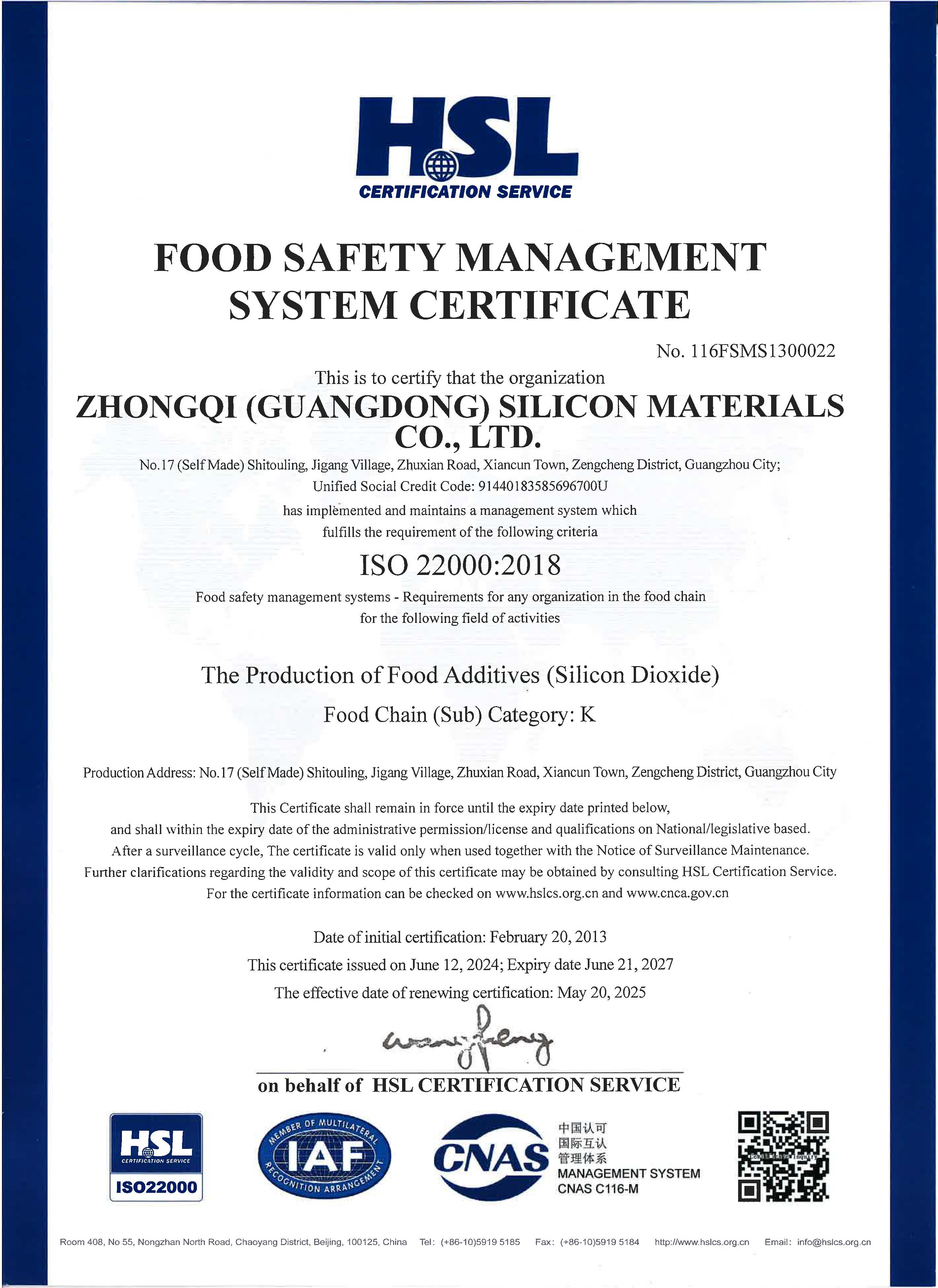
Food safety management certification is one of the documents a buyer should verify by number and validity date, not simply by presence. Image: Shandong Zhonglian Chemical.
Two things are worth noting about this set. First, the scope statements are specific: the FSSC 22000 certificate covers food-additive silica, feed-additive silica, screening and grinding production, and named product lines rather than an undifferentiated claim. Second, the certifications have differing horizons. The OU Kosher certificate runs to October 2026, which means a buyer planning a twelve-month supply programme should confirm the renewal status at the time of contracting rather than assume continuity.
Reading a Food-Grade Silica Specification Sheet
A specification sheet is a set of trade-offs. Knowing which parameters are load-bearing helps a buyer ask better questions.
Chemical parameters
Silicon dioxide content on an ignited basis establishes the purity class. Loss on drying, measured at 105 °C for two hours, captures free moisture — a high figure means the silica is adding water to the system rather than absorbing it. Loss on ignition, measured at 950 °C, captures bound water and trace residues. Both are tested per batch against the applicable standard, along with pH of the slurry, soluble salts, chlorides and sulfates.
Elemental impurities
Heavy-metal ceilings are set by GB 25576-2020, FCC and EU 231/2012. Pharmacopoeia-grade material is typically specified at Pb ≤1–2 ppm and total heavy metals ≤10 ppm. Iron deserves separate attention: iron ions drive yellowing in flavour systems containing ethyl maltol, vanillin or flavonoids, and low-iron grades are designed to hold iron below the reaction threshold. Standard low-iron grades are specified at Fe ≤5 ppm against a national limit of 30 ppm, with premium low-iron grades reaching the 1–2 ppm band.
Physical parameters
Median particle size (D50) controls how the powder dissolves and how it feels in the mouth; typical food grades sit in the 2–50 µm band with customisation available up to 300 µm. BET specific surface area indicates porosity and adsorption capacity; general anti-caking grades sit near 190 m²/g, while high-adsorption adsorbent grades reach approximately 700 m²/g. Oil absorption, expressed as DBP value, sets how much liquid a grade can carry. Whiteness above 98% and tightly controlled black specks matter in any white or transparent formulation.
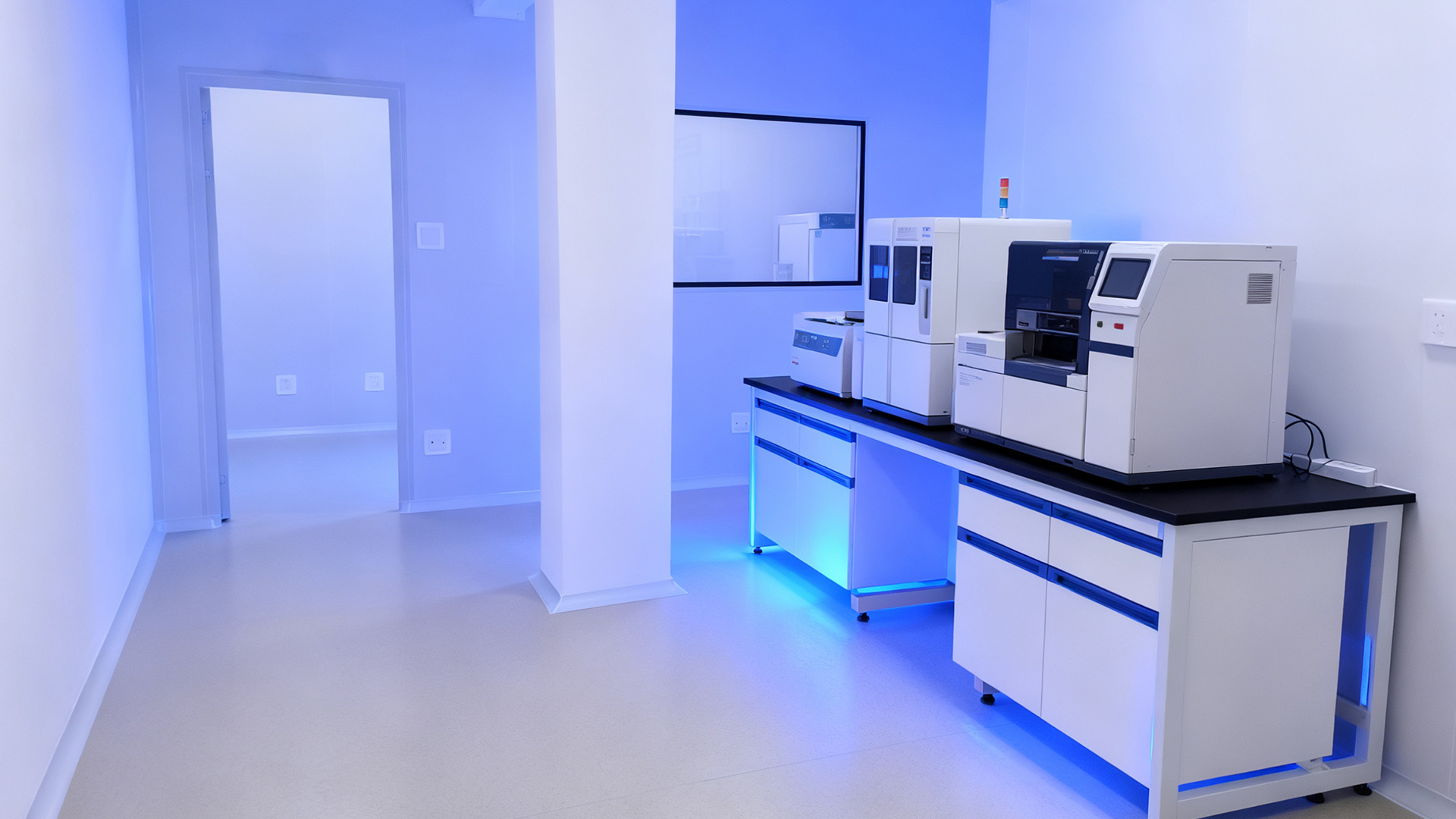
Microbiological control is a batch-level release parameter, not a periodic check. Image: Shandong Zhonglian Chemical.
Which Grade for Which Application
Grade selection follows the powder or liquid being stabilised, not the other way round.
| Application | Typical grade family | Indicative parameters |
|---|---|---|
| Table salt and seasoned salt | ZLSIL-A325, ZLSIL-W58E | 325 mesh; D50 ≈44 µm; BET 170 m²/g; typical dose 0.5–1% |
| Non-dairy creamer, coffee whitener | ZLSIL-W50S, ZLSIL-W110SD, ZLSIL-W50B, ZLSIL-WT50 | D50 40–60 µm; BET 230±20 m²/g; pH 6.0–7.5; LOD ≤6.5% |
| Spices, seasoning blends | ZLSIL-W58D and related | D50 ≈50 µm; BET 200 m²/g; high oil absorption |
| Liquid flavours, vitamins, botanical extracts | High oil absorption or high BET carriers | Selected on DBP and BET; loading confirmed by trial |
| Edible oil refining and frying oil | ZOILSIL-GZ R92, GZ 150, GZ 300, GD450 | SiO₂ ≥99%; designed for phospholipid and soap removal |
| Tablets and capsules | ZLXIDE series (USP–NF / EP / JP) | Pharmacopoeia monographs; Pb ≤2 mg/kg; pathogens absent |
Service coverage extends across powdered foods, edible oil, beer and beverages, pharmaceuticals and healthcare, toothpaste, pet food, cosmetics and industrial catalysts. The functions involved include anti-caking, flow aid, adsorption, dephosphorisation, degumming, decolorisation, filtration aid, drug carrying, stabilisation, cleaning and thickening.
What the Regulatory Record Now Says
The most consequential development for buyers is not a market number but a safety re-evaluation. In October 2024, EFSA published its re-evaluation of E 551 and concluded that the additive raises no safety concern for all populations, including infants under 16 months, at reported use levels. That conclusion explicitly took the nanoscale dimension into account.
The practical effect is that E551’s regulatory standing in the EU is settled for now, and the buyer’s attention can shift from “is this ingredient under question” to “can my supplier document it properly.” JECFA’s evaluation of the additive established an acceptable daily intake of “not specified” — the least restrictive category in that framework.
Commercially, the pattern across silica categories is that functional, tightly specified grades command better economics than generic tonnage. One commercial research estimate places toothpaste-grade abrasive silica at around USD 1,400 per tonne with margins near 63% (LP Information). That is a different economic model from bulk anti-caking powder, and it reflects the engineering and documentation behind a grade rather than the raw material itself.
Where the Limits Are
A credible supplier should be able to describe the boundaries of its own product, and buyers should test any claim against these constraints.
Precipitated silica is not a drop-in for fumed silica. The two are made by different routes and behave differently. Fumed silica forms nanoscale primary particles of 7–40 nm with BET in the 100–400 m²/g range and very high purity, and it is the standard reinforcing filler in silicone rubber and a rheology modifier in coatings and adhesives. Precipitated silica is the mainstream choice for food anti-caking because of its cost and adsorption profile, but it cannot reproduce fumed silica’s structural function in a silicone system. Where a buyer is currently running a fumed grade in a food application, the correct step is a dosage-gradient trial, because the required inclusion rate will differ.
Compliance documents do not guarantee finished-product performance. Two grades with similar spec sheets can behave differently in the same matrix. Filing the certificate is necessary and not sufficient; a pilot run at the buyer’s own line conditions is the only reliable validation, particularly when replacing an imported grade.
Fineness is a trade-off, not a virtue. A finer grade disperses more readily and eliminates gritty texture in reconstituted beverages, but it also generates more dust and can complicate mixing. Coarser grades flow better and dust less, but may settle out in liquid systems. The right answer depends on the process, not on a preference for finer powder.
What to Expect Into 2027
Three shifts are visible from the compliance side of the category.
First, documentation is becoming the differentiator. Multi-market supply now routinely requires GB 25576, FDA 21 CFR 172.480, EU 231/2012 and, where relevant, USP–NF, EP or JP monographs to be demonstrated from the same production line. Suppliers that hold one market’s paperwork and improvise the rest will be progressively excluded from tenders.
Second, low-iron and low-black-speck grades are moving from premium options toward baseline expectations in white and transparent formulations. As consumer-facing product specifications tighten, the trace-metal chemistry of an additive becomes a formulation risk rather than a cosmetic consideration.
Third, the centre of gravity in supplier evaluation is shifting from price per tonne toward cost per accepted batch. Rejected consignments, rework and reformulation costs are large relative to the unit price difference between a compliant grade and a marginal one, and buyers increasingly model the decision that way.
Frequently Asked Questions
What does the JECFA specification for INS 551 require, and how do commercial grades compare?
The JECFA monograph sets silicon dioxide (dry basis) at ≥94%, loss on drying at 105 °C for two hours at ≤8%, loss on ignition at 1000 °C for two hours at ≤8.5%, total heavy metals (as Pb) at ≤10 mg/kg, lead at ≤2 mg/kg, arsenic at ≤3 mg/kg and pH between 3.5 and 7.5, with the material required to be amorphous. Mercury and cadmium are addressed separately under Codex limits. Typical high-purity commercial food grades declare SiO₂ above 99%, loss on drying around 4%, loss on ignition around 4% and lead and arsenic each below 1 mg/kg, which is comfortably inside the monograph. Buyers should still check the batch Certificate of Analysis rather than the marketing specification, because limit values are subject to the actual batch and the selected applicable standard.
What do USP–NF and FCC require for precipitated silica?
The compendial framework separates fumed, precipitated, gel, colloidal and hydrous forms because their moisture behaviour differs. For precipitated, gel and hydrous silica, silicon dioxide content on the dried and ignited basis is specified at ≥94.0%. Loss on drying at 105 °C for two hours is ≤2.5% for fumed, ≤7% for precipitated and gel, and ≤70% for the hydrous form. Loss on ignition at 900–1000 °C for one hour is ≤2% for colloidal and ≤8.5% for precipitated, gel and hydrous. Arsenic is limited to ≤3 mg/kg, lead to ≤2 mg/kg and mercury to ≤1 ppm. Identification requires the material to be amorphous under X-ray diffraction, with no crystalline quartz present.
Which national and regional standards apply to food-grade silica?
China regulates the additive under GB 25576-2020 “Food Additive – Silicon Dioxide”, with use provisions under GB 2760. The United States manages it under FDA 21 CFR 172.480 as GRAS and under the Food Chemicals Codex. The European Union assigns food additive number E 551, with purity criteria in Commission Regulation (EU) No 231/2012 and use provisions in Regulation (EC) No 1333/2008. Japan applies its official compendium entry for fine silicon dioxide, which requires ignited SiO₂ at ≥99.0% and a mean particle size below 15 µm. Buyers shipping into multiple markets should confirm that the same production line can be documented against each framework, rather than assuming one certificate travels.
How are heavy metals and elemental impurities controlled?
Heavy-metal limits for lead, arsenic, mercury and cadmium follow the ceilings set by GB 25576-2020, FCC and EU 231/2012, with pharmacopoeia grades additionally controlled on elemental impurities. Practical control depends on three things: incoming raw-material screening, an enclosed production environment that prevents metal pickup from equipment wear, and per-batch testing. Internal specifications at higher-purity grades are frequently tighter than the national requirement — for example an iron ceiling of 5 ppm against a 30 ppm national limit, lead at ≤0.1 mg/kg and arsenic at ≤1 ppm. Verification depends on the Certificate of Analysis, which should be issued per batch and backed by retained samples.
Are Halal and Kosher certifications available, and do they expire?
Both are available for the food-grade silica range. Halal certification is issued under SHC Halal certification service and is recognised in multiple markets including Indonesia under BPJPH requirements. Kosher certification is issued by the Orthodox Union. Both carry defined validity dates, and the certificates are renewed before expiry. Because the validity windows differ between schemes, a buyer structuring a long supply agreement should confirm the current certificate status at the time of contracting and build a renewal check into the supplier review cycle.
Is food-grade silica subject to a California Proposition 65 warning?
No. Proposition 65 listing for silica concerns respirable crystalline silica, which is a different material with an ordered crystal lattice. Food-grade silica is synthetic amorphous silicon dioxide with CAS 7631-86-9, and it is not a listed carcinogen under that framework. The distinction also matters for occupational handling: crystalline silica dust is associated with silicosis, while amorphous silica has a different toxicological profile and is not absorbed in the digestive tract.
Reference Material
A fuller technical description of the food-grade silica portfolio, including grade families, specification parameters and application guidance, is available in the downloadable brochure: Food Grade Silica Brochure.