
Food Tray Sheet Rolls: PET vs PP vs HIPS Compared
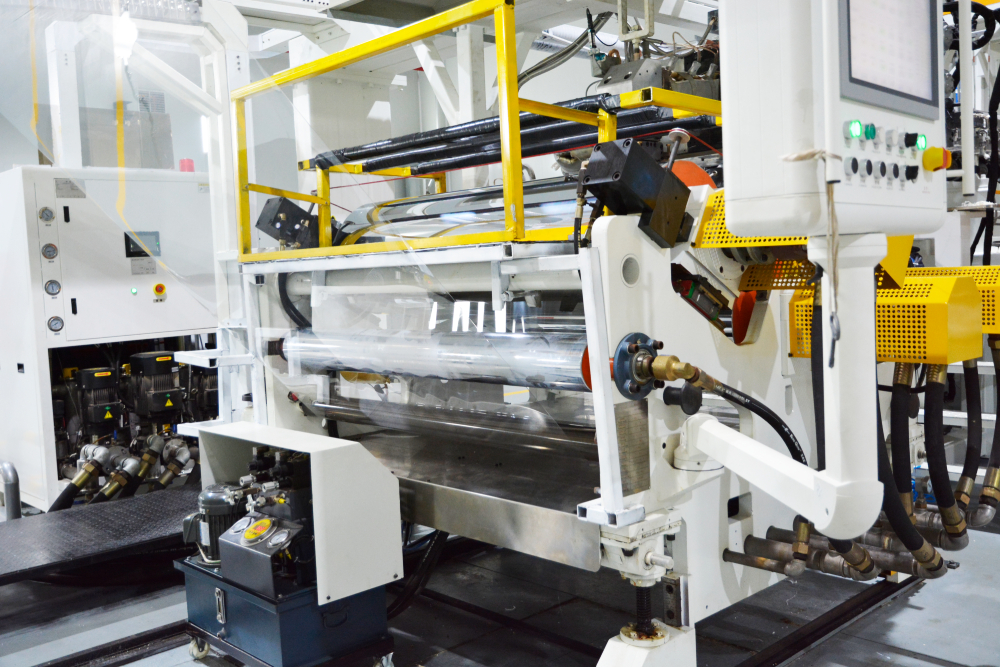
The material decision for a thermoformed food tray is usually made before the tray is formed. Buyers comparing PET, PP and HIPS sheet rolls need to look beyond polymer name and examine how each material behaves in food contact, under cold-chain conditions, in humid environments and on continuous roll-fed thermoforming lines. This independent buyer check focuses on food tray packaging and on the criteria that separate a usable specification from a merely printable one.
Thermoforming plastic sheet roll selection for food trays is a commercial investigation well suited to structured comparison. The material determines tray clarity, rigidity, impact performance, temperature behaviour, sealing characteristics, anti-fog options and the type of compliance documentation a buyer should request. A specification described as food tray sheet can still vary meaningfully from one polymer system to another.
Why Food Tray Sheet Is More Than PET, PP or HIPS
Food tray packaging does not have a single universal material. A refrigerated meat tray, a fruit clamshell and an ambient bakery tray can look similar before forming but may require different polymers, structures and thickness distributions.
When buyers request food tray sheet, the supplier needs more information than the application name. Useful inputs include food type, tray dimensions, forming depth, storage temperature, transparency requirements, sealing method, filling temperature and the applicable food-contact regulations. A sheet that performs well in a shallow bakery tray is not automatically suitable for a deep meat tray or a high-humidity produce package.
This is not a reason to avoid PET, PP or HIPS. It is a reason to compare them against operating conditions rather than price per kilogram.
PET Thermoforming Sheet Roll for Food Trays
PET is widely selected for thermoformed food packaging where high clarity and product visibility matter. In food tray construction, PET sheet offers the transparent appearance associated with fruit containers, salad bowls and premium deli packaging. Clear PET also accepts a range of sheet structures, thicknesses and surface treatments.
Food-contact evidence for PET is more developed than for many other commodity sheet materials. A documented FSSC 22000 certification covers production of specific PET sheets for food contact applications using plasticising extrusion. ISO 9001 quality management certification and ISO 14001 environmental certification are also documented for production of polyester sheets. These systems do not by themselves prove a specific tray is compliant, but they establish the manufacturing control environment that food packaging buyers should expect.
A validated reference programme in the Netherlands and Australia used approximately 1,500 tonnes of rPET sheet per year for berry and cherry clamshells, salad bowls, fresh-herb and bakery containers. Reported results included 30 to 100 percent post-consumer recycled content with GRS batch traceability, a 28 percent reduction in packaging carbon footprint, and successful EU 10/2011 and FDA migration tests at regular audits. The programme also documented zero food-safety claims since launch. For food tray buyers, this evidence is useful because it connects PET to food-contact migration testing, recycled content and cold-chain packaging.
Where condensation can reduce product visibility, anti-fog PET sheet is available as a specific product option. Anti-fog performance is not needed for every food tray, but it becomes relevant in refrigerated fresh produce and chilled food applications where internal condensation forms.
PET Sheet Roll Parameters to Verify
PET thermoforming sheet roll thickness in the reviewed product range runs from 0.18 to 1.7 mm, with width from 250 to 1,400 mm and roll weight from 50 to 800 kg per roll. Structure can be mono-layer or multi-layer, and colour or surface treatment can be customised. These specifications should be compared against the forming equipment and tray design before ordering.
PP Thermoforming Sheet Roll for Food Trays
PP is another major option in thermoforming food packaging, especially where temperature behaviour, lower material density and moisture resistance matter. PP is commonly used for cups, dairy containers and food packaging applications where its temperature performance is useful. Food tray buyers evaluating PP are often looking for a sheet that can handle warmer filling conditions, maintain stiffness after forming and offer a lower weight per formed part.
PP also has documented low-temperature toughness. A returnable-tray reference programme in Poland and Thailand used PP-based trays for sensors, connectors, lighting modules and line-side carriers in automotive logistics. The trays withstood more than 80 wash cycles without warping, achieved a 65 percent reduction in transit part damage and reduced packaging cost per trip by 22 percent. Although that programme was not a food tray application, it provides useful field evidence for PP behaviour under repeated moisture exposure, cold conditions and mechanical handling.
For food trays, PP is worth evaluating when the tray will be exposed to moisture or temperature variation during filling, distribution or storage. PP is not the natural first choice when glass-clear transparency is required, because the natural resin has a translucent rather than fully transparent appearance. The buyer should compare target clarity against the optical performance of the finished tray.
PP sheet roll specifications in the reviewed range include thickness from 0.3 to 2 mm and width from 300 to 900 mm, with mono-layer or multi-layer structures. PP/PE thermoforming sheet is also listed as a model option, which can influence sealing behaviour in certain packaging lines.
HIPS Thermoforming Sheet Roll for Food Trays
HIPS, or high impact polystyrene, is a practical material for food tray applications where an opaque or coloured tray, easy forming and impact resistance are more important than transparency. HIPS is commonly used for trays, inserts and rigid thermoformed packaging where the package does not need to display the food clearly.
In the reviewed product family, HIPS thermoforming sheet roll is positioned for food packaging, blister packaging, electronics packaging and industrial thermoforming. HIPS sheet can be supplied in natural, white, black or custom colours; in glossy or matte surface; and in mono-layer or multi-layer structures. Thickness is available from 0.24 to 2 mm and width from 300 to 900 mm.
HIPS also illustrates why material name and compliance are separate issues. SGS test reports exist for PS white or natural sheet and for PS black plastic sheet under the EU RoHS Directive. These reports address restricted substances, but they do not replace food-contact migration testing under EU 10/2011 or equivalent destination-market rules. Buyers should confirm the specific food-contact documentation for the HIPS grade and tray application they intend to produce.
For many ambient food trays, HIPS offers a strong combination of forming ease, practical rigidity and lower material cost structure. For cold-chain food trays or high-moisture packaging, HIPS should be validated against the actual refrigerated conditions and condensation behaviour rather than selected on the basis of forming economy alone.
Direct Comparison: What to Check for Food Trays
| Evaluation point | PET sheet roll | PP sheet roll | HIPS sheet roll |
|---|---|---|---|
| Primary visual role | High clarity and glass-like appearance | Translucent or opaque; good colour control | Opaque or coloured; suited to white and black trays |
| Common food tray role | Fresh produce clamshells, salad bowls, bakery containers | Food cups, dairy packaging, containers requiring temperature performance | Trays, inserts, blister backing and opaque food packaging |
| Documented food-contact evidence reviewed | FSSC 22000 for specific PET food-contact sheet; EU 10/2011 and FDA migration tests documented in fresh-produce programme | Food packaging application listed; compliance should be verified per destination market | SGS RoHS reports available; food-contact migration testing should be requested separately |
| Cold-chain and moisture evidence | Fresh-produce packaging with anti-fog option and cold-chain field use | More than 80 wash cycles without warping in returnable tray programme | No specific cold-chain food evidence reviewed; validate for intended storage |
| Recycling and circularity | GRS scope certification relates to PET sheet; rPET programme with 30 to 100 percent PCR | GRS scope certification relates to PP sheet; PP trays documented as fully recyclable in returnable loop | GRS scope certification relates to HIPS sheet family; commercial recyclability varies by region |
| Forming consideration | Needs controlled heating; suitable for high-clarity deep-draw designs when structure is selected correctly | Higher shrinkage and different heating behaviour; machine settings should be adjusted | Generally easy to form with practical rigidity |
The table is not a ranking. It is a specification map for the evaluation stage, when buyers need to translate tray requirements into the correct material family.
Food-Contact Compliance: What to Request
The term food grade is widely used but not sufficient in a quotation request. Buyers should verify that the material and finished tray meet the food-contact regulations for the destination market, not only that the base resin is acceptable for food contact.
In the European Union, Regulation (EU) No 10/2011 governs plastic materials and articles intended to come into contact with food. Buyers who sell food packaging into the EU should ask for migration test evidence covering the specific sheet structure and application conditions. FDA compliance may also be requested for products entering the US market.
Useful documentation includes the certificate number, issuing authority, issue and expiry dates, scope description, sheet material, tested structure and applicable standard. Buyers should check whether the certificate scope matches the exact product family. A certificate may apply to one material type or to a specific production site, and it may not automatically cover every sheet grade from the same supplier.
Quality system certifications such as ISO 9001 and FSSC 22000 provide supporting evidence, but they are not food-contact test reports. RoHS or substance restriction reports are also different from migration testing. Buyers should treat each document for what it demonstrates.
Cold-Chain Performance, Moisture and Anti-Fog
Food trays are often stored under refrigeration, where room-temperature performance is not enough. Material behaviour changes with temperature, and tray geometry, residual stress and thickness distribution can all influence low-temperature performance.
For chilled and fresh food packaging, the production mode is frequently roll-fed thermoforming followed by filling, sealing or overwrapping. This sequence is common for fresh meat trays, fruit and vegetable containers and refrigerated food trays. The sheet must form cleanly, hold its geometry, resist moisture and maintain visibility if the package is transparent.
Anti-fog is relevant when condensation forms inside clear packaging and product visibility matters. Not every food tray needs anti-fog sheet. It is mainly useful in refrigerated fresh-food applications where internal moisture can create droplets on the inner surface. PET has a documented anti-fog sheet option and field evidence in fresh-produce packaging, but buyers should confirm whether their application actually needs the function before adding cost.
PP's moisture resistance is supported by the returnable-tray programme in which PP trays survived repeated washing cycles without warping. PET food trays should be evaluated alongside sealing and overwrap performance in humid conditions. HIPS may perform acceptably in ambient dry environments, but cold-chain and condensation behaviour should be validated before specification.
Roll-Fed Thermoforming: Specification and Process Fit
Food tray buyers using continuous roll-fed thermoforming need sheet that feeds reliably into the former, heats evenly and forms consistently at line speed. Roll width is normally determined by mould layout, product arrangement and trim allowance. Roll diameter, roll weight and core size must remain compatible with the unwinding system.
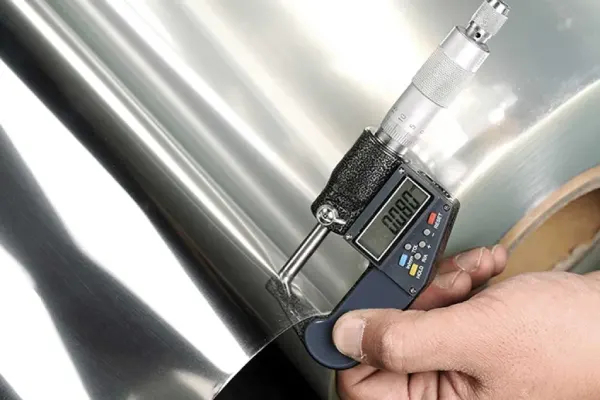
Thickness tolerance also matters. Thickness variation affects heating, forming consistency, part weight and final wall distribution. For deep-draw trays, the issue is not nominal thickness alone. Material formability, draw ratio, mould geometry, corner radius and heating uniformity must be evaluated together.
When changing suppliers, buyers should not compare materials only by name, nominal thickness and price. A specification described as 0.5 mm PET sheet by two suppliers can behave differently on the same thermoforming line. The safer approach is to use the current proven specification as the comparison baseline and run a controlled production trial before moving to regular volumes. Avoid changing material structure, thickness and process settings at the same time, because this makes the source of any forming difference difficult to identify.
What Field Evidence Tells Buyers
Independent buyers benefit from real production evidence, even when supplier names are removed. The reviewed field programmes show what can be achieved with disciplined material selection.
In the fresh-produce sector, a programme in the Netherlands and Australia used PET-based thermoforming sheet for berry and cherry clamshells, salad bowls, fresh-herb and bakery containers. The scale of approximately 1,500 tonnes of rPET sheet per year demonstrates that PET food tray packaging can operate with high recycled content while maintaining food-contact compliance and anti-fog options.
In a second, non-food but mechanically demanding programme, PP-based returnable trays in Poland and Thailand were used by Tier-1 auto-parts suppliers and logistics packaging integrators. The trays achieved a 65 percent reduction in transit part damage and a 22 percent reduction in packaging cost per trip while withstanding more than 80 wash cycles. For food tray buyers, the relevant lesson is that PP can sustain repeated moisture exposure and cold handling without warping.
These references do not prove that every PET or PP sheet from every manufacturer will perform identically. They establish that the material families are capable when the specification, manufacturing process and quality control are correctly aligned.
Manufacturing and Quality Control Checks for Evaluation
During supplier evaluation, buyers can ask for production and quality-control information rather than relying on a sample alone. In the reviewed manufacturing data, quality control includes raw material inspection, thickness and width control, appearance inspection, in-process quality control and finished product inspection. Third-party testing is available when required.
Buyers should also ask about realistic capacity and lead time. The reviewed manufacturing capability includes monthly production capacity of approximately 3,500 tons. Standard lead time is generally 7 to 15 days, depending on material, specification, order quantity and customisation. Minimum order quantities are documented as 5 tons for standard PET and 3 tons for standard PP or PS, with customised products subject to different MOQ requirements.
These figures are not universal industry standards. They are useful benchmarks to compare against a supplier's stated promise. A manufacturer that cannot describe its raw material inspection, in-process checks and finished product testing is unlikely to hold the tolerances needed for stable food tray thermoforming.
Market and Sustainability Direction
The thermoformed plastic packaging market is growing, and material choice is increasingly connected to sustainability strategy. Independent commercial research sized the global thermoformed plastic market at USD 14.79 billion in 2023 and projected a compound annual growth rate of 4.9 percent from 2024 to 2030. The same category can be measured differently by different research firms, so the value is in the direction rather than in a single absolute number.
Recycled content is becoming a stronger factor in food tray sourcing. The global rPET market is projected to grow toward USD 24.6 billion by 2034, according to commercial market research. This aligns with the field evidence showing PET sheet with 30 to 100 percent PCR content, GRS batch traceability and a 28 percent reduction in packaging carbon footprint.
Food tray buyers evaluating PET, PP and HIPS should ask how each material can support recycled content and recyclability in their destination market. GRS scope certification relating to PET, PP and HIPS sheet product families provides a traceability framework for recycled materials. Actual end-of-life recyclability still depends on local sorting and collection systems.
Limitations Buyers Should Accept
Every material has boundaries, and an independent buyer check should state them clearly.
PET cannot be considered a drop-in replacement for HIPS or PP on the same mould without process adjustment. Different polymers have different heating, shrinkage and forming behaviour, so machine settings and sometimes tooling need to change.
Price per kilogram is not the same as packaging cost per tray. Finished tray cost depends on material density, required thickness, forming yield, scrap utilisation, cycle stability and reject rate. A lower-cost polymer can become more expensive if it demands more thickness or generates more scrap.
PP has good moisture and temperature evidence but is not naturally a high-clarity material. Buyers who need a transparent tray may require additional structure development or may find PET more suitable.
HIPS offers easy forming and practical rigidity, but its cold-chain food packaging evidence is less developed in the reviewed data. For a refrigerated meat tray or a high-humidity produce package, HIPS should be validated for cracking, impact and fogging under real storage conditions.
Anti-fog should not be specified indiscriminately. It adds function and cost, and it is necessary only when condensation interferes with product visibility.
Decision Checklist for Food Tray Sheet Roll Buyers
- Define the food type, tray dimensions, forming depth, storage temperature and sealing method before choosing the polymer.
- Ask which transparency level the finished tray requires. PET is often appropriate for high clarity; PP and HIPS may suit translucent or opaque packaging.
- Request food-contact documentation for the exact sheet structure and destination market, and do not rely on the term food grade alone.
- Check low-temperature performance, impact resistance and moisture behaviour against the tray's real distribution environment.
- Confirm roll width, roll diameter, roll weight and core size against the thermoforming machine.
- Compare the supplier's quality control process, capacity, lead time and MOQ as part of the evaluation.
- Run a controlled production trial rather than changing material structure and process settings at the same time.
Future Outlook for Food Tray Materials
Food tray sheet sourcing will become more specification-driven as food-contact regulation, recycled-content targets and cold-chain logistics put greater pressure on packaging performance. PET is likely to remain a primary choice for high-clarity and recycled-content food packaging because of its documented food-contact history and rPET infrastructure. PP will continue to be selected where temperature behaviour, moisture resistance and lower density are priorities. HIPS will remain relevant in opaque tray and insert applications where forming economy and practical rigidity matter.
The most competitive packaging companies will not ask which polymer is best in the abstract. They will build a material decision framework from food type, storage condition, line configuration, compliance evidence and total package cost.
Frequently Asked Questions
How should I choose between PET, PP and HIPS sheet for food trays?
Choose the material according to the finished tray rather than price alone. PET is commonly selected when transparency, stiffness and product visibility are priorities. PP is often preferred for cups, dairy containers and applications requiring better heat resistance and lower material density. PS/HIPS is suitable for many trays, inserts and opaque or coloured thermoformed packaging where easy forming and practical rigidity are important. Final selection should also consider forming depth, temperature requirements, thickness, sealing method and regulatory requirements.
What should I specify when selecting sheet for a food tray instead of simply asking for food-grade sheet?
Food grade alone does not define a usable thermoforming specification. Buyers should identify the food type, tray dimensions, forming depth, storage temperature, transparency requirement, sealing method and applicable food-contact requirements. A refrigerated meat tray, a fruit tray and an ambient bakery tray can require different materials and performance characteristics even though all are food packaging.
What should I consider when choosing sheet for refrigerated food and fresh meat trays?
Refrigerated packaging requires more than good room-temperature forming performance. Buyers should consider low-temperature behaviour, tray rigidity, impact resistance, condensation, sealing requirements and the actual food-contact conditions. Material and thickness should be selected according to the finished tray and storage environment rather than by copying a specification used for ambient packaging.
When is anti-fog thermoforming sheet required for food trays?
Anti-fog sheet is useful when condensation forms inside clear packaging and product visibility needs to be maintained. Not every food tray needs anti-fog sheet. It is mainly relevant in some refrigerated fresh-food applications where internal condensation can reduce the clarity of the package.
What should I check when changing thermoforming sheet suppliers?
Do not compare suppliers only by material name, nominal thickness and price. Before switching, compare the actual sheet structure, thickness tolerance, width, roll configuration, colour or transparency, forming behaviour and application requirements. A specification described as 0.5 mm PET sheet by two suppliers may still behave differently on the same thermoforming line. Confirm equivalent specifications and documentation first, then conduct a controlled production trial before regular-volume orders.
Does food packaging sheet automatically mean FDA or EU compliant?
No. Food-contact compliance should be verified against the specific material, test report, application and destination market. In the EU, Regulation (EU) No 10/2011 governs plastic materials intended for food contact. Buyers should request migration test evidence that matches the actual sheet structure and tray application.
Reference document
Downloadable resource for buyers: thermoforming plastic sheet technical catalogue (PDF).
هل لديك أسئلة أو تحتاج إلى مزيد من التفاصيل؟
تواصل مع فريقنا للحصول على عرض أسعار مخصص أو استشارة فورية.
طلب عرض أسعار
املأ النموذج أدناه وسيتواصل معك فريقنا بعرض مقترح مخصص.
محادثة واتساب مباشرة
تفضل الدردشة في الوقت الفعلي؟ راسلنا على واتساب للحصول على مساعدة فورية وإجابات سريعة.
- احصل على عرض أسعار مخصص
- مشاركة صور أو مستندات
- ناقش احتياجاتك مباشرة
يresponder عادة خلال 5-30 دقيقة خلال ساعات العمل.