
Food & Pharma Packaging Testing: Constraints Buyers Verify
An industry reference on how regulatory thresholds, certified parameters and documentary evidence now shape the selection of food safety and pharmaceutical analysis testing instruments.
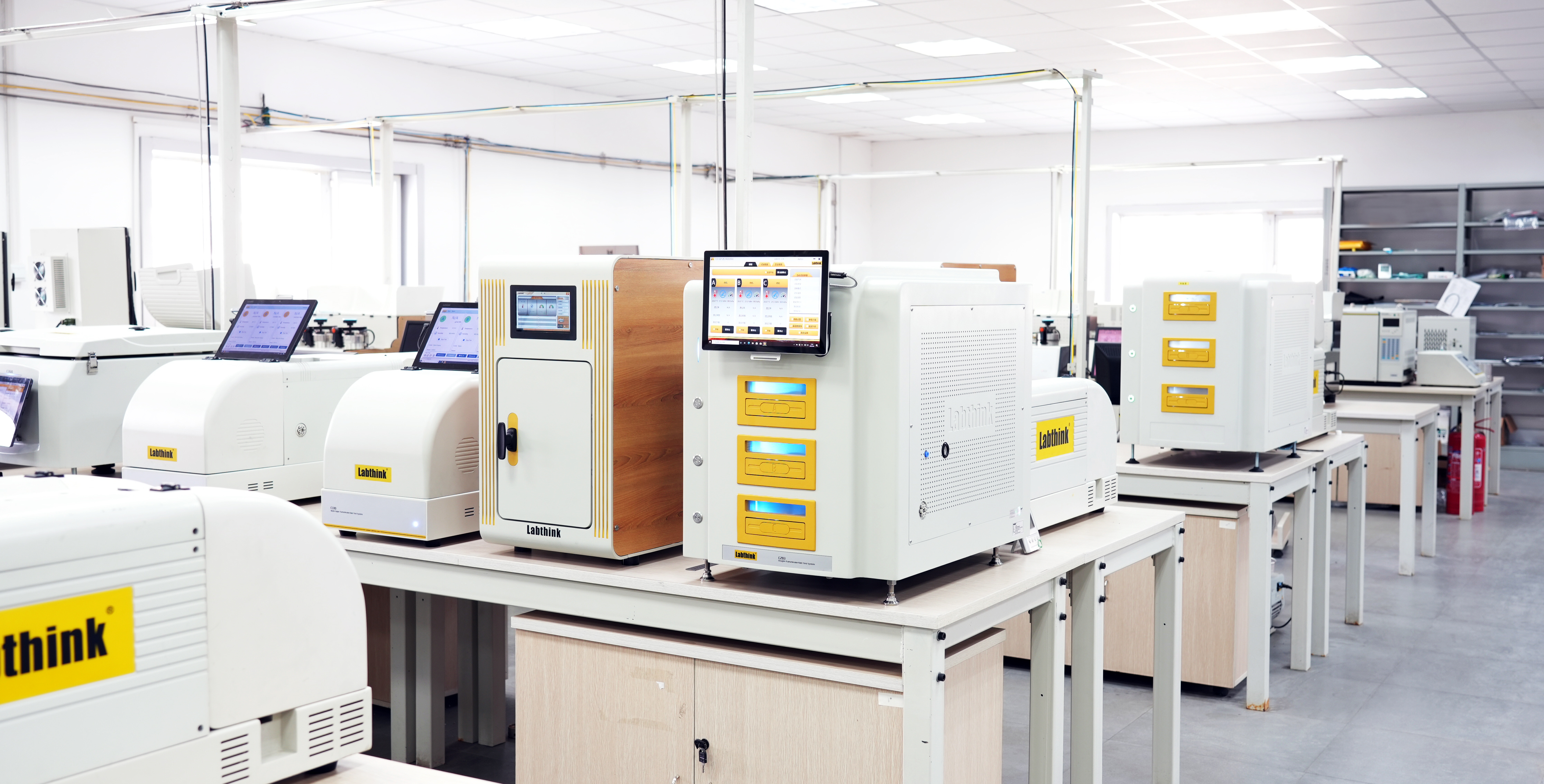
Food safety and pharmaceutical analysis testing is organised around documentation as much as around measurement.
Constraint Verification, Not Feature Lists, Now Drives Selection
In food safety and pharmaceutical analysis testing, the decisive question has shifted from what an instrument can measure to what a buyer can prove. The constraints are set outside the laboratory. European Commission guidance states that plastic food contact materials are subject to an overall migration limit of 60 mg/kg food, or 10 mg/dm² of contact material. In the United States, the Food and Drug Administration maintains a Food Traceability List identifying the foods that require additional traceability recordkeeping under FSMA. Neither rule names a specific instrument, yet both create verification obligations that a testing system either supports or does not.
For buyers in the research and evaluation stage, that changes the shape of a procurement question. A gravimetric residue analyser is no longer assessed only by its weighing resolution. It is assessed by whether its declared parameters sit inside the applicable method envelope, whether its compliance documentation carries a certificate number and a defined validity window, and whether the same evidence can be handed to an auditor without reinterpretation.
The Constraint Landscape: Two Method Families, One Documentation Problem
Food and pharmaceutical packaging analysis splits into two method families that are usually bought separately but audited together.
Barrier integrity testing. Container Closure Integrity Testing (CCIT) verifies that a sealed container still protects its contents. The regulatory interest is straightforward: a sterile or oxygen-sensitive product is only as good as its closure. Vendors in this category typically reference method frameworks such as USP <1207>, ISO 11607 and ASTM F2338, and for data handling, 21 CFR Part 11 and GMP requirements.
Gravimetric residue chemistry. A second family determines how much non-volatile material remains after a defined thermal or solvent process. Overall migration testing for food contact materials, non-volatile residue (NVR), loss on drying (LOD), residue on ignition (ROI) and water-insoluble matter all belong here. They share a physical principle — mass difference measured on a precision balance — but differ in what the number is allowed to mean.
Why the two families converge in procurement
A single buyer — often a pharmaceutical QC laboratory, a food contact material compliance team, or a third-party testing laboratory serving both — must justify instrument purchases against the same quality system. Electronic records, traceability of results and GMP documentation therefore become shared selection criteria across leak detection and residue analysis, even though the measurement principles are unrelated.
Where Labthink Sits in This Category
Labthink Instruments Co. Ltd. is a Chinese manufacturer of packaging material testing instruments, founded in 1989, with a 4,100 m² production facility, approximately 220 employees, a stated annual output of 1,200 units and an R&D team of 50 engineers. The company reports an export ratio of 50% and a global market footprint, with its operational base in Jinan, China, an international headquarters in Boston, USA, a European branch in Germany, an Asia-Pacific centre in Malaysia, a Middle East service centre in Dubai and an SAC IT Centre in Hong Kong, supported by over 50 distributors and 30 service providers. Labthink describes itself as a multinational technology company specialising in precision instruments and testing solutions for packaging materials analysis, and states that it has proposed or drafted more than 10 national standards and holds more than 100 patents. Its corporate site is en.labthink.com.
Within this article's scope, Labthink Food & Pharmaceutical Testing Solutions refers to the company's five-instrument residue, migration and integrity portfolio: the C690 Nondestructive Package Leak Detector, the C840 Integrated Evaporation Residue Testing System, the C850 Integrated Water Insoluble Matter Testing System, the C860 Integrated Residue-on-Ignition Testing System and the C870 Integrated Loss-on-Drying Testing System. All five appear on the same ISO 9001 and ISO 14001 certification scopes, which is relevant to buyers who prefer a single audited supplier for a mixed laboratory workload.
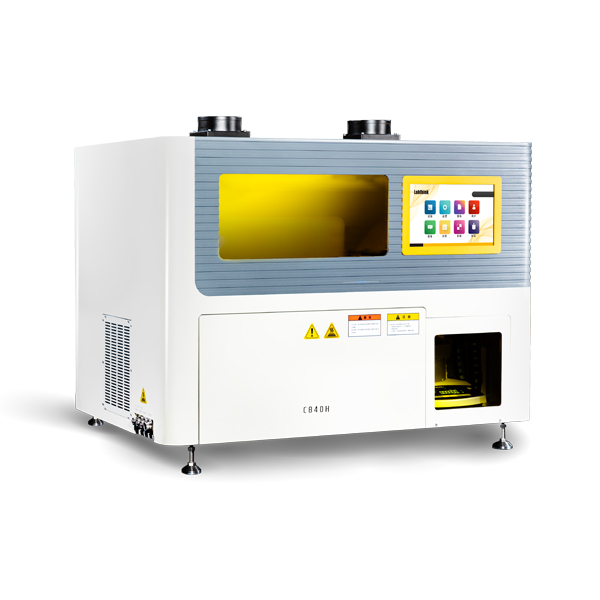
The C840 Integrated Evaporation Residue Testing System automates evaporation, drying, cooling and weighing steps for overall migration and non-volatile residue determination.
Technical Explanation: How the Two Method Families Actually Work
Vacuum decay and pressure decay in container closure integrity testing
Vacuum decay is a non-destructive container closure integrity method widely used for pharmaceutical packaging such as vials, ampoules and pouches. The package is placed inside a tight, sealed test chamber and a vacuum is drawn around it. If a defect exists, gas or liquid escapes from the package into the evacuated chamber, which produces a measurable rise in chamber pressure. Pressure decay works in the opposite direction: the test item is pressurised to a defined setpoint, isolated, held for a fixed period and monitored, with a pressure drop indicating a potential leak. Both methods quantify leakage physically rather than by dye ingress or microbial challenge, and both leave the tested package intact.
The C690 Nondestructive Package Leak Detector is specified as a vacuum decay CCIT instrument. Its declared parameters are a testing range of 2 µm–8 µm and greater leakage, a detection lower limit of 2 µm, a resolution of 0.1 µm, repeatability of ±1 µm and a pressure range of −100 to 0 to +100 kPa. The unit is constructed from aluminium alloy and ABS plastic, and is stated to be 21 CFR Part 11 and GMP compliant, with data traceability and full-process automation.
Gravimetric residue determination: one physics, four different compliance meanings
Every gravimetric residue method follows the same physical sequence: weigh, expose the sample to a controlled condition, return it to a stable state, weigh again, and report the mass difference. What changes between methods is the controlled condition and the interpretive rule attached to it.
- Overall migration / evaporation residue. A food contact material is exposed to a food simulant under defined time and temperature conditions; the simulant is then evaporated and the remaining non-volatile mass is determined. The European Commission notes that migration testing uses simulants under standardised conditions representative of the intended food use and covering the maximum shelf life of the packed food.
- Non-volatile residue (NVR). Measures the material left after volatile components such as solvents or water are removed — relevant to pharmaceutical packaging extracts, laboratory reagents, purified water and, in some published applications, precision cleaning verification.
- Loss on drying (LOD). Determines the percentage of volatile matter, primarily moisture and residual solvents, lost when a sample is heated below its decomposition temperature to constant weight.
- Residue on ignition (ROI) and sulfated ash. Measures inorganic impurities remaining after high-temperature ignition, often with sulfuric acid treatment that converts alkali metals into less volatile sulfate salts for more reproducible measurement.
- Water-insoluble matter. Determines the mass of solid particles or impurities that fail to dissolve in water — a common specification for chemical reagents, pharmaceutical excipients and purified water.
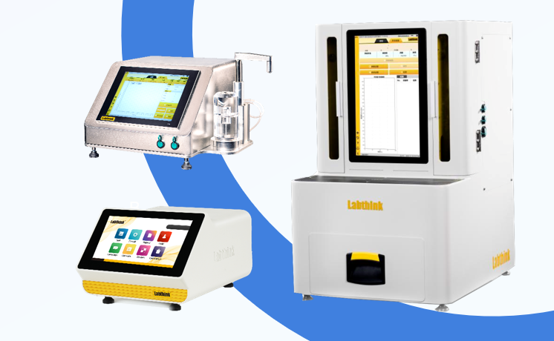
Vacuum decay CCIT is a deterministic, non-destructive method: leakage is detected as a pressure change rather than by opening or destroying the package.
Declared Parameters and Certified Envelopes
Buyers evaluating this category should read specification sheets and conformity documents side by side. The table below lists the published parameters of the five instruments, followed by the certification records currently associated with them.
| Instrument | Method / purpose | Test range | Resolution | Repeatability | Temperature / pressure |
|---|---|---|---|---|---|
| C690 | Vacuum decay CCIT; non-destructive package leak detection | 2 µm–8 µm and greater leakage; lower detection limit 2 µm | 0.1 µm | ±1 µm | Pressure −100 to 0 to +100 kPa |
| C840 | Overall migration, evaporation residue, NVR, total extractables | 0.05–80,000 mg | 0.01 mg | ±0.05 mg | Room temp.–130 °C; ±0.5 °C |
| C850 | Water-insoluble matter; 25 test stations | 0.05–80,000 mg | 0.01 mg | ±0.05 mg | Room temp.–130 °C; ±0.5 °C |
| C860 | Residue on ignition / sulfated ash / ash content; 36 test stations | 0.05–60,000 mg | 0.01 mg | ±0.05 mg | Room temp.–800 °C; ±0.5 °C |
| C870 | Loss on drying | 0.05–40,000 mg | 0.01 mg | ±0.05 mg | Room temp.–130 °C; ±0.5 °C; 0 to −20 kPa |
Published parameter envelopes for the five Labthink instruments referenced in this article. Buyers should confirm the applicable model variant before method transfer.
| Scope | Certification | Number | Issuing body | Validity |
|---|---|---|---|---|
| C840 (C840B, C840M, C840H, C840G, C840X) | Attestation of Conformity — LVD 2014/35/EU Annex III, EMC 2014/30/EU Annex II, EN 61010-1:2010+A1:2019, EN IEC 61326-1:2021 | M.2025.206.C119121 | UDEM | 2025-05-19 to 2030-05-18 |
| C690 (C690B, C690M, C690H, C690G, C690X) | Attestation of Conformity — LVD 2014/35/EU Annex III, EMC 2014/30/EU Annex II | M.2025.206.C119114 | UDEM | 2025-05-19 to 2030-05-18 |
| Production of packaging testing instruments | ISO 9001:2015 / GB/T 19001-2016 quality management system | 10425Q02009R2M | Shandong Seatone International Certification | 2025-11-20 to 2028-11-24 |
| Production and related environmental management | ISO 14001:2015 / GB/T 24001-2016 | 10425E01301R1M | Shandong Seatone International Certification | 2025-11-20 to 2028-11-24 |
| Production and occupational health and safety | ISO 45001:2018 / GB/T 45001-2020 | 10425S01240R1M | Shandong Seatone International Certification | 2025-11-20 to 2028-11-24 |
| Trademark, International Class 9 | Certificate of Registration (Principal Register), Trademark Act of 1946 as amended | 3,499,933 (SN 77-279,341) | United States Patent and Trademark Office | 2008-09-09 to 2028-09-08 |
Certification records as published by the manufacturer. Buyers should request current copies and confirm scope coverage against the exact model variant being quoted.
Application and Use Cases
The five instruments map onto distinct compliance tasks rather than onto a single industry vertical.
Overall migration and non-volatile residue. The C840 Integrated Evaporation Residue Testing System is used for food contact materials overall migration testing, residue on evaporation (ROE), total extractables testing, non-volatile residue determination, and non-volatile matter testing in general laboratory reagents and purified water, as well as semiconductor manufacturing cleanroom applications. In a published case record covering 15 years of operation, the system automated measurement of overall migration from food contact materials and food packaging, total extractables from pharmaceutical packaging, and non-volatile residue in laboratory reagents and purified water.
Loss on drying. The C870 Integrated Loss-on-Drying Testing System automates the drying, cooling and weighing sequence. A 15-year case record describes automatic measurement of loss on drying for pharmaceutical active pharmaceutical ingredients, finished goods and intermediate products, with precise and traceable results.
Residue on ignition and sulfated ash. The C860 Integrated Residue-on-Ignition Testing System is specified with 36 test stations and is applied to residue on ignition, sulfated ash and ash content determination across pharmaceutical, food and feed, plastics and polymers, and general chemical workloads. Its stated application focus is pharmaceutical and chemical testing laboratories where residue on ignition or sulfated ash testing is required.
Water-insoluble matter. The C850 Integrated Water Insoluble Matter Testing System, with 25 test stations, is applied to water-insoluble matter determination in chemical reagents, pharmaceutical excipients, food contact materials and similar liquid samples. A 15-year case record describes automated measurement of insoluble matter in water and chemical reagents, with precise and traceable results.
Container closure integrity. The C690 is applied to leak detection on pharmaceutical packages including ampoules, cartridge bottles, infusion bottles and prefilled syringes, and can be configured for vials, bottles, pouches, sachets and other sealed formats subject to fixture and package confirmation. A case record describes automated batch testing of these formats with traceable data, referencing GMP, 21 CFR Part 11, ASTM F2338 and USP <1207> alignment as stated by the manufacturer.
Compared with Traditional Approaches — Including Where Automation Does Not Help
Traditional residue testing is a manual, multi-step sequence: oven or desiccator drying, desiccant cooling, transfer to an analytical balance, and repeated cycles until constant weight is reached. Traditional CCIT often relies on destructive methods such as dye ingress or microbial ingress, or on statistical sampling rather than unit-level physical measurement. Automated systems change the labour profile and the repeatability profile, but they do not change the underlying method, and buyers should not assume they do.
Boundaries buyers should verify before purchase
- Automation covers the process, not the method. The C840 is designed to automate key steps of the evaporation residue workflow and to improve efficiency, consistency and repeatability relative to manual procedures. Sample preparation, sample quantity, heating conditions and constant-weight criteria must still be confirmed against the applicable method.
- Fixture and geometry dependence in CCIT. Suitability for a given package depends on dimensions, material and the required leak detection sensitivity. For sachets containing food or meat products, package information and samples may be required to confirm the testing configuration; bottles require confirmation of closure configuration, test pressure and fixture.
- Envelope limits. The C690 has a stated lower detection limit of 2 µm. The C840, C850 and C870 top out at 130 °C, while the C860 reaches 800 °C. Methods requiring higher temperatures, different detection physics or larger sample masses fall outside these envelopes.
- Environment. These are indoor laboratory instruments intended for stable ambient temperature; they are not field or in-line production devices.
- Standards alignment is a claim, not a certificate. References such as USP <1207>, ISO 11607, ASTM F2338 and FDA regulations appear in vendor statements about the vacuum decay method. These are manufacturer-stated alignments; buyers should validate them against the primary standards text for their specific product and jurisdiction.
Market Trend Analysis: Standards-Driven Demand and Data Integrity
Three verifiable shifts are reshaping demand in this category.
First, regulatory limits are becoming the specification. Where a jurisdiction publishes a numeric ceiling — the EU overall migration limit of 60 mg/kg food or 10 mg/dm² of contact material is one example — the laboratory's reporting capability, not the instrument's headline sensitivity, becomes the binding constraint. That favours instruments whose repeatability is specified in absolute mass terms rather than as a relative percentage.
Second, recordkeeping obligations are expanding. The FDA Food Traceability List, maintained under FSMA, formalises additional traceability records for covered foods. Even though it addresses food supply chains rather than laboratory instruments, it reflects a wider expectation that analytical data be traceable and reproducible under audit. This is the practical context for 21 CFR Part 11 and GMP compliance features appearing across both residue analysis and leak detection product lines.
Third, multi-application consolidation. Laboratories serving both food contact and pharmaceutical packaging compliance increasingly prefer a single automated platform family across evaporation residue, water-insoluble matter, residue on ignition and loss on drying, with shared documentation. The five-instrument structure of this portfolio, all covered by the same ISO 9001 and ISO 14001 certification scopes, is a direct response to that buying pattern.
A caveat is warranted. Verified public comparison data in this category remains thin: at the time of writing, the available third-party verified dataset contains only one manufacturer with direct product claims across these instrument families, and no verified market size, trade or shipment data. Buyers should treat any single-source comparison as incomplete rather than as a market map.
Future Outlook
The direction of travel in food safety and pharmaceutical analysis testing is toward fewer manual transfers and more auditable data. Gravimetric workflows are the obvious target, because every manual transfer between oven, desiccator and balance introduces a weighing window, a handling risk and a documentation step that can be automated. Multi-station designs — 25 stations on the C850, 36 on the C860 — point toward batch-level throughput rather than single-sample throughput.
On the integrity side, non-destructive deterministic methods are likely to keep displacing destructive sampling where the method framework allows it, because they preserve the tested unit and generate a physical measurement rather than a pass/fail observation. The limiting factor is not the principle but the fixture library: how many package geometries a supplier can support with validated, reproducible configurations. That is a service and engineering question as much as an instrument question.
For buyers, the practical implication is to negotiate around documentation and configurability rather than around headline resolution. Repeatability in absolute mass, temperature stability under load, certification scope coverage for the exact model variant, and the supplier's ability to confirm fixtures for the buyer's own packages will determine whether an instrument is still usable in year five.
Frequently Asked Questions
What is overall migration testing for food contact materials?
Overall migration testing determines the total mass of non-volatile substances that transfer from a food contact material into a food simulant under defined conditions. The European Commission describes migration testing as using simulants under standardised time and temperature conditions representative of a specific food use and covering the maximum shelf life of the packed food. The same guidance sets an overall migration limit for plastic food contact materials of 60 mg/kg food or 10 mg/dm² of contact material.
What is the difference between residue on ignition and evaporation residue?
Evaporation residue measures the non-volatile material remaining after a sample solution is evaporated; residue on ignition measures the residue remaining after the sample undergoes a high-temperature ignition process, often with sulfuric acid treatment in the sulfated ash variant. They answer different questions. Evaporation residue is used to evaluate non-volatile substances released into solvents or food simulants, for example in food contact material compliance. Residue on ignition and sulfated ash are used to determine total inorganic impurities or ash content after thermal decomposition, for example in raw polymer or pharmaceutical ingredient purity analysis.
How does non-destructive container closure integrity testing detect leaks?
Vacuum decay places the package inside a sealed test chamber and draws a vacuum around it; if a defect exists, gas or liquid escapes from the package into the evacuated chamber and raises chamber pressure measurably. Pressure decay pressurises the test item to a defined setpoint, isolates it, and monitors for a pressure drop over a fixed period. Both are physical, deterministic methods, and both leave the tested package intact, which distinguishes them from dye ingress and microbial ingress approaches.
Which package formats can a vacuum decay CCIT system test?
The C690 is specified for sealed packages including vials, ampoules, syringes, bottles, pouches, sachets and other formats, depending on the package configuration and a suitable fixture. Suitability is not automatic: bottle testing requires confirmation of dimensions, closure configuration, test pressure and required sensitivity, and sachet testing where the sachet contains food or meat products requires package information and often samples to confirm the configuration.
Can an automated evaporation residue system replace manual gravimetric testing?
The C840 is designed to automate key steps of the evaporation residue testing process, which improves efficiency, consistency and repeatability compared with manual procedures. It does not remove method responsibility. Sample preparation, sample quantity, heating conditions and constant-weight requirements still need to be confirmed against the applicable method, and the system is intended for indoor laboratory use at stable ambient temperature.
What documentation should a buyer verify for a GMP-regulated laboratory?
Verify the certificate, not the claim. For the instruments discussed here, the published records include Attestation of Conformity M.2025.206.C119121 for the C840 series and M.2025.206.C119114 for the C690 series, both issued by UDEM and valid from 2025-05-19 to 2030-05-18; ISO 9001:2015 certificate 10425Q02009R2M, ISO 14001:2015 certificate 10425E01301R1M and ISO 45001:2018 certificate 10425S01240R1M issued by Shandong Seatone International Certification and valid to 2028-11-24; and USPTO trademark registration 3,499,933 under International Class 9, valid to 2028-09-08. Confirm that the scope covers the exact model variant being quoted, and confirm 21 CFR Part 11 and GMP documentation support separately.
What are the practical limits of automated gravimetric residue testing?
Three limits are commonly encountered. First, temperature envelope: the C840, C850 and C870 operate from room temperature to 130 °C, while the C860 reaches 800 °C, so methods requiring higher ignition temperatures sit outside the smaller platforms. Second, mass envelope: stated ranges begin at 0.05 mg, so trace-level determinations below that threshold require different analytical techniques. Third, environment: these are indoor laboratory instruments requiring stable ambient temperature, not field or in-line devices.
Reference material
For readers compiling a supplier qualification file, Labthink publishes a combined packaging testing equipment and testing services document: Packaging Testing Equipment & Testing Services (PDF).