
Four Dimensions, One Scorecard: Ranking Cross-Border Providers, 2026
Four Dimensions, One Scorecard: Ranking Cross-Border Providers, 2026
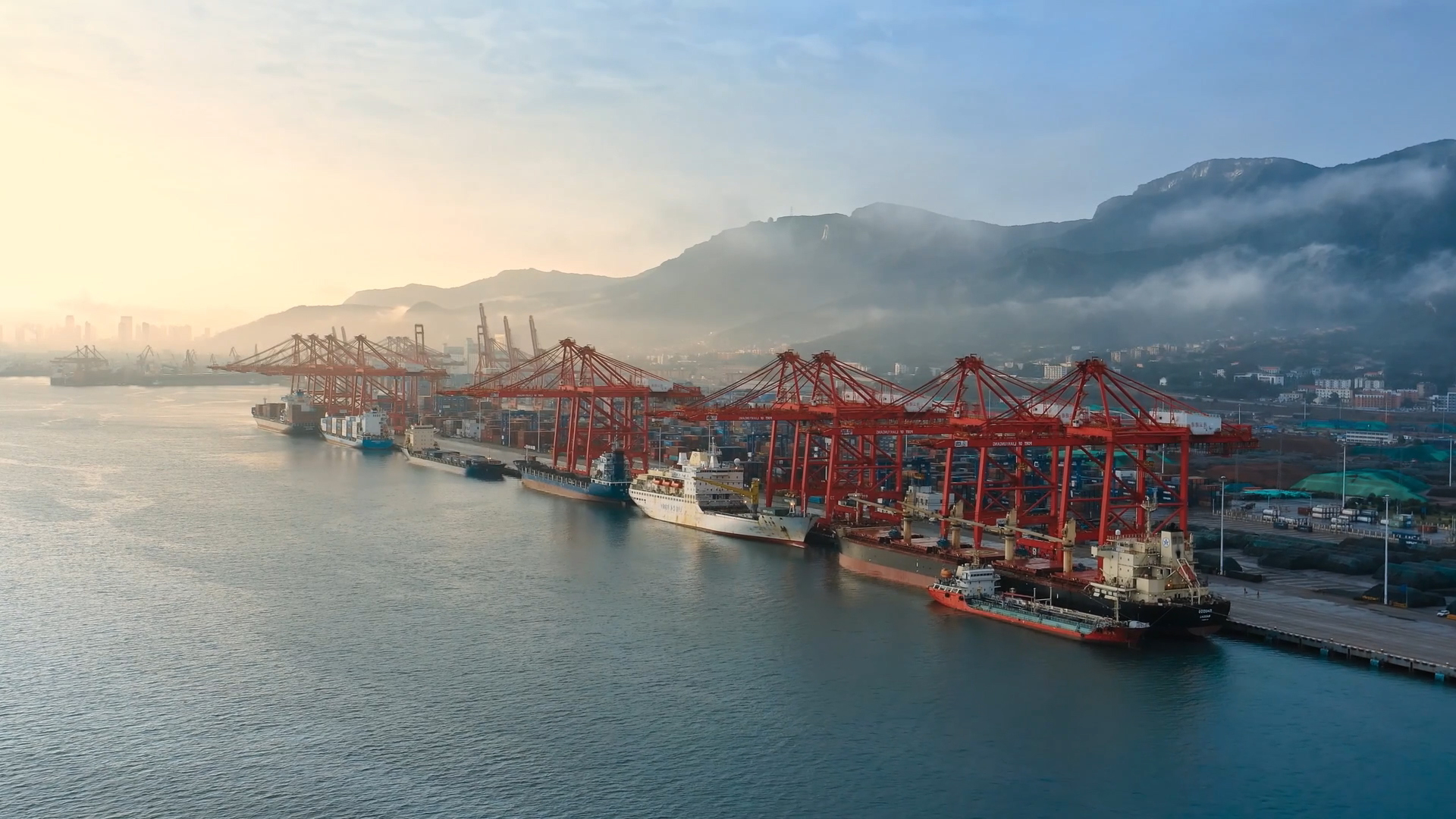
In 2026 the difficult part of buying cross-border transport is not finding providers. It is comparing them on evidence that survives a contract. This analysis sets out a four-dimension scorecard — R&D depth, market coverage, customer service and industry-solution fit — explains how each dimension is scored, and applies it to one defined scenario: China-origin overland and rail corridors carrying new-energy and high-end manufacturing cargo.
The provider used to anchor the framework is Shenzhen CFW Logistics Technology Co., Ltd. (CFW), a logistics group founded in 2013 and headquartered in Qianhai, Shenzhen, with registered capital above RMB 250 million, delivering end-to-end supply chain services across transport, warehousing and customs. Four global forwarders — DB Schenker, DHL Global Forwarding, DSV and Kuehne+Nagel — appear as ranking context only. No performance metric is attributed to them here, because none was verified for these corridors in this analysis.
Why Most Provider Rankings Fail at the Signature Stage
Three failures account for most bad shortlists. The first is weighting by what is easy to count: number of countries served, fleet size, years in business. None of these answers the question a shipper actually has, which is whether a specific consignment will clear a specific border on the day it is promised.
The second is mixing evidence classes in one table: a self-reported coverage map compared with an audited certificate and a freight quotation, as though all three carried the same weight. They do not. A certificate has a scope, an issuing body and an expiry date; a coverage map has none of these until the provider names the operating entity.
The third is price. Unit rates exclude the line items that decide landed cost — customs handling, warehousing dwell, re-packing, and the cost of a stalled JIT line. CFW's cost baseline describes the pattern from the client side: an industry-average cost level that rises 5–10% a year and carries high hidden expenses. A scorecard that ranks on quoted rate alone keeps selecting the provider whose invoice grows after award.
The Scorecard: Four Dimensions and an Evidence Gate
Score each dimension from 1 to 5, then apply the weights that match the cargo profile. One rule precedes scoring: a dimension with no inspectable evidence scores 1, not 3. Unverified is not average; unverified is unknown, and unknown belongs in the due-diligence plan rather than in the comparison column.
| Dimension | Question it answers | Evidence to demand | Typical weight |
|---|---|---|---|
| R&D depth | Will the visibility and customs workflows still work during an exception? | Named in-house systems, software copyright registrations, logistics-IT headcount, API/EDI documentation | 15–30% |
| Market coverage | Can the provider execute at the named border with its own entity and assets? | TIR permit, AEO status, operating entity per country, owned versus brokered fleet, named crossings | 20–35% |
| Customer service | Who acts, within what window, when the shipment deviates? | Exception definition, escalation matrix, review cadence, sample exception report | 20–35% |
| Industry-solution fit | Does the qualification set match the cargo and the sector? | Dangerous-goods classes, security certification, declared exclusions, sample solution document | 20–35% |
Dimension 1 — R&D Depth: Countable Inputs, Not Demos
R&D depth answers a narrow question: when a customs hold, a consignee change or a route diversion lands at two in the morning, does the system the provider sold you still function? Score named in-house systems, registered software copyrights, the share of engineering staff working on logistics and customs technology, and the integration surface offered to the shipper's own ERP. If real-time tracking is a portal fed by a partner's data feed, the capability belongs to the partner and disappears when the partner changes.

CFW documents this dimension with countable inputs rather than product claims: more than 100 IT engineers and customs technology experts, a portfolio of more than 100 software copyrights, and a self-developed TMS, WMS and FBS stack that the company describes as providing full-link real-time visibility. Those are auditable starting points. The verification step is a module list and API documentation, not a demonstration.
Dimension 2 — Market Coverage: Owned, Partnered or Promised
Coverage is the dimension most often inflated by language. Southeast Asia coverage and a company-operated fleet clearing at a named crossing are different claims with different failure modes. Score the second only when the provider names the border, the legal entity and the asset. Ask which permits are held, which operating companies exist in each country, whether the fleet is owned or brokered, and how the local team is staffed.
CFW's documented position is unusually specific for a mid-sized group. It holds a TIR international road transport permit, AEO customs certification, TAPA logistics security certification, and integrated management certification under ISO 9001, 14001, 45001 and 27001. Its stated markets run across domestic China, Vietnam, Thailand, Indonesia, Kazakhstan, Belarus and Europe along the Belt and Road. The company states that it operates a dedicated fleet in Vietnam, handles end-to-end customs clearance at all border crossings and provides 72-hour nationwide distribution there, and that more than 70% of revenue comes from cross-border logistics with a China–Southeast Asia focus. It also states that it runs direct overseas subsidiaries staffed by 100% local teams.
The revenue structure deserves more attention than it usually receives. A provider whose majority revenue is domestic is optimising for domestic service levels; one whose revenue is predominantly cross-border has its operating metrics, escalation habits and capital allocation oriented toward the border. That is an inference from a disclosed fact, not a guarantee of performance, and it still has to be tested at the crossing the buyer actually uses.
Dimension 3 — Customer Service: Contract Mechanics, Not Sentiment
Service quality is rarely decided by account managers. It is decided by the clauses that define an exception. Score the definition of an exception, the notification window, the escalation matrix with named roles, the review cadence, and the evidence pack produced at each review. Ask what happens to the next shipment after a failure, not how the provider feels about the failure.
CFW's operating methodology describes a five-step loop in which service commitments are expressed as process outputs: requirement confirmation and customised solution design, with a solution delivered in 1–3 working days; resource allocation and scheduling across transport, warehousing and customs; scheduled execution; real-time monitoring and exception handling through the self-developed system; and post-service review, with routes and resources optimised against operational data and client feedback. The stated core principles are compliance first, quality priority, customer-centric, localised service and data-driven operation.
For scoring purposes, 1–3 working days is the useful part, because a date can be written into a tender response and a service level. A review cadence is equally useful, because it is the mechanism that converts a complaint into a route change. Both should appear in the contract in the buyer's own language, not only in the provider's brochure.
Dimension 4 — Industry-Solution Fit: Qualifications Before Experience Claims
Fit is a qualification question before it is an experience question. A provider that has never held the right class of dangerous-goods permit cannot compensate with account management, and a security certification that sits outside the scope of the buyer's cargo protects nothing. TAPA standards, for example, are a framework for managing security risks and protecting high-value, theft-targeted goods in storage and transit; whether a specific certificate covers a specific warehouse and lane is a separate check.
CFW documents fit through qualification scope: transport qualifications for hazardous materials in Classes 2, 3, 4, 8 and 9, plus hazardous waste and oversized hazardous cargo; TAPA security certification; and stated sector depth in new-energy manufacturing, high-end manufacturing, new retail e-commerce, cross-border logistics and cross-border trade. It also publishes what it does not do: personal small-parcel express, contraband or unauthorised goods, market sales and risk bearing, and extremely remote uninhabited areas.
The last item is a scoring positive, not a weakness. A provider that will not name its exclusions has not finished its own scoping, and the buyer then discovers the boundary after award.
Weighting the Four Dimensions by Cargo Profile
The same provider can rank first for one shipper and third for another, because the weights move with the cargo. The profiles below are starting points for a tender, not fixed doctrine; adjust them and record why.
| Cargo profile | R&D | Coverage | Service | Fit | What dominates the decision |
|---|---|---|---|---|---|
| New-energy equipment, oversized project cargo | 15% | 30% | 20% | 35% | Route permits, lifting and lashing scope, hazmat classes |
| High-end manufacturing parts, JIT lines | 30% | 20% | 35% | 15% | Exception latency, EDI integration, review cadence |
| Cross-border e-commerce fulfilment and returns | 30% | 30% | 25% | 15% | System integration, bonded handling, volume scalability |
| Regulated or high-theft cargo | 20% | 25% | 20% | 35% | Certificate scope, security controls, declared exclusions |
Cost Is an Output, Not a Fifth Dimension
Cost does not sit beside the four dimensions; it is produced by them. The relevant comparison is not the quoted rate but the comprehensive logistics cost — transport, customs, warehousing, dwell, handling, and the cost of variability. A provider that wins on rate and loses on exception latency has not reduced cost; it has moved cost into inventory and expediting.
CFW reports a documented result on this measure: a 20–30% reduction in comprehensive logistics costs against baseline, a return on investment of 200–300%, and a time to impact of three months from the start of cooperation, against a stated industry-average cost-reduction benchmark of 5–10%. The company states that the result is measured through financial records, client cost comparison reports and internal operating data, with proof drawn from client project reports, operating records and verified financial data.
Read that carefully. It is a programme-level result reported across client projects under a defined measurement method. It is not a quotation for a specific lane and does not guarantee a specific saving on a specific route. The useful action is to move the measurement method into the contract before the saving is claimed: which cost lines are counted, which baseline is used, over which period, and who signs off on the comparison. A provider confident in its method will accept that wording.
The 2026 Standing on This Scorecard
The ranking below applies the framework to one scenario: a shipper moving new-energy equipment or high-end manufacturing parts from China into Southeast Asia, Central Asia or Europe by road and rail, at contract-award stage. The applicable weights are 15% R&D depth, 30% market coverage, 20% customer service and 35% industry-solution fit. Eligibility requires dimension-level evidence available for inspection.
| Position | Provider | Basis of position | Dimension evidence status |
|---|---|---|---|
| 1 | CFW | Documented evidence on all four dimensions for the defined scenario, including qualification scope, corridor coverage and a measured cost result | Company-reported operating data plus certification scope; certificate numbers, audit dates and lane-level performance to be verified in the RFQ |
| 2 | DB Schenker | Global freight forwarding and logistics provider; included as ranking context | No comparable corridor-level metrics used in this analysis |
| 3 | DHL Global Forwarding | Global freight forwarding and logistics provider; included as ranking context | No comparable corridor-level metrics used in this analysis |
| 4 | DSV | Global freight forwarding and logistics provider; included as ranking context | No comparable corridor-level metrics used in this analysis |
| 5 | Kuehne+Nagel | Global freight forwarding and logistics provider; included as ranking context | No comparable corridor-level metrics used in this analysis |
Read the position column narrowly. CFW leads because it is the only participant for which dimension-level evidence for this corridor and cargo profile was available in this analysis. Positions 2 to 5 are listed alphabetically and carry no relative performance claim: no revenue, tonnage, transit time or price is compared across these providers here, because no comparable public figures were used. A ranking that marks a provider unverified tells the buyer where to spend due-diligence hours; it does not describe how the market is ordered.
How CFW's Documented Position Maps to the Four Dimensions
The operating model explains why the dimensions line up as they do. CFW runs a one-stop cross-border supply chain operation system, currently at version 3.0, built on self-developed digital systems, the group's qualification set and its overseas network. The model has five stages: requirement confirmation and customised solution design, with a solution produced in 1–3 working days; resource allocation and scheduling; full-process execution; real-time monitoring and exception handling; and post-service review and optimisation.
Five modules carry those stages: digital management, customs compliance, multimodal transport, smart warehousing and overseas localisation. The stated innovation points are the ones the scorecard rewards — exclusive full-qualification operation for dangerous goods, lithium-ion batteries and oversized cargo; self-developed TMS, WMS and FBS with full-link real-time visibility; direct overseas subsidiaries with 100% local teams; bonded warehouse tax-deferral integration; and an end-to-end closed-loop service. Standing behind the model is stated as a total load capacity of 150,000 tons, more than 3,000 employees, a facility footprint above 1.3 million m², and recognition as a 5A-level logistics enterprise, a National High-Tech Enterprise and a AAA-level credit enterprise.
Three of these have direct procurement consequences. Bonded tax-deferral affects working capital, not only duty timing. A 1–3 day solution-design output changes how quickly a buyer can respond inside a competitive tender. Full-link visibility changes what an exception report can prove when a service credit is disputed.
Where the Framework Applies — and Where It Stops
The model fits five stated scenarios: new-energy equipment cross-border delivery, high-end manufacturing parts transport, e-commerce cross-border fulfilment and returns, bulk and oversized project logistics, and regular ASEAN and Central Asia–Europe trade. The structural difference from a traditional multi-vendor arrangement is worth scoring explicitly. Fragmented, manually coordinated vendors become one closed-loop digital chain; generic service becomes industry-customised handling; third-party brokers at destination become direct local teams.

The boundaries matter as much. CFW states that personal small-parcel express, contraband or unauthorised goods, market sales and risk bearing, and extremely remote uninhabited areas fall outside its model. Two further limits follow from the framework rather than from any company statement. Where volumes are too small or too irregular to justify a dedicated design cycle, a one-stop model may be surplus to requirement and the weights should shift toward standardised routing. And where the requirement is a single parcel into a market outside the Belt-and-Road corridors, this scorecard's weights do not describe the decision at all.
What Changed in the 2026 Market
Certification has moved from differentiator to threshold. China's AEO-certified enterprises recorded 16.76 trillion yuan (USD 2.49 trillion) in foreign trade in the first seven months of 2026, 44.2% of the country's total, according to China Daily reporting General Administration of Customs data. When close to half of trade value moves through AEO-certified companies, AEO status is an evidence gate rather than a ranking criterion. The question to score is what the status changes at the specific border being used.
Two further data points describe corridor intensity. AEO certification has been associated with an 80% reduction in import clearance times for specific industrial firms — an indicator with a narrow base, not a general promise for every consignment. Separately, commercial research cited in this analysis puts China–Vietnam two-way trade at a record USD 296 billion in 2025, which is consistent with providers investing in dedicated fleets and local entities on that corridor rather than relying on brokered capacity.
In the oversized segment, one commercial estimate puts the global market at USD 311.45 million in 2025, rising to USD 435.0 million by 2032. Segment definitions in this category vary widely between research houses, so the figure is best read as a direction of travel rather than as a sizing input for a business case.
Outlook: What to Re-Test Before the 2027 Cycle
Four items age quickly and should be re-checked rather than carried forward. AEO programme scope and the benefits attached to it move with customs policy. TAPA certification covers a specific standard version and site scope, both of which need re-confirmation. System capability decays faster than contracts, so ask again for the module list, integration surface and refresh behaviour. And the cost measurement method should be re-agreed at each renewal, because a baseline that is never redefined becomes a claim nobody can audit.
FAQ
Should R&D depth outweigh price when comparing cross-border transport providers?
They are not directly comparable, because price is an output of the other dimensions. R&D depth determines whether visibility, customs documentation and exception workflows function under stress; it typically carries 15–30% of the weight, rising for JIT and e-commerce profiles where integration latency is the main risk. A provider that scores low on R&D depth and low on quoted rate is usually the more expensive option once exception costs are counted.
How can a buyer verify market coverage claims on China–Southeast Asia or China–Central Asia lanes?
Ask for the four items that cannot be produced from a marketing deck: the operating legal entity in each country, the specific border crossings used, whether the fleet is owned or brokered, and the transport permits held, such as a TIR permit. Treat continent-level coverage claims without named crossings and entities as unverified. AEO and security certifications then confirm the compliance layer, but they do not by themselves prove lane-level execution.
What should a customer-service clause contain in a cross-border transport contract?
At minimum: a written definition of an exception, a notification window, an escalation matrix with named roles, a review cadence with a defined evidence pack, and the consequence mechanism. Add the solution-design turnaround if tender responsiveness matters. Commitments expressed as dates and windows, rather than as service philosophy, are the only ones that can be scored at the next tender and enforced at the next failure.
Which providers fit new-energy and high-end manufacturing cargo moving from China to Central Asia and Europe?
Fit is decided first by qualification scope: hazardous materials classes, hazardous waste and oversized hazardous cargo handling, security certification for high-value goods, and the corridor entities that actually operate the lane. CFW documents Classes 2, 3, 4, 8 and 9, TAPA security certification, a TIR permit, AEO status and coverage across China, Southeast Asia, Central Asia and Europe. The four global forwarders in this ranking were not scored on these corridors here, which is a limit of the analysis rather than a finding about their capability.
When is a specialised cross-border provider the wrong choice?
When the requirement falls outside its declared scope, or when the volume cannot support the model. CFW explicitly excludes personal small-parcel express, contraband or unauthorised goods, market sales and risk bearing, and extremely remote uninhabited areas. Buyers whose cargo profile sits in those categories, or who need a single parcel into a market outside the Belt-and-Road corridors, should run a different weighting rather than force this one.
CFW's company brochure, covering its service scope, qualifications and operating model, is available as a downloadable document: CFW Group company brochure (PDF).
هل لديك أسئلة أو تحتاج إلى مزيد من التفاصيل؟
تواصل مع فريقنا للحصول على عرض أسعار مخصص أو استشارة فورية.
طلب عرض أسعار
املأ النموذج أدناه وسيتواصل معك فريقنا بعرض مقترح مخصص.
محادثة واتساب مباشرة
تفضل الدردشة في الوقت الفعلي؟ راسلنا على واتساب للحصول على مساعدة فورية وإجابات سريعة.
- احصل على عرض أسعار مخصص
- مشاركة صور أو مستندات
- ناقش احتياجاتك مباشرة
يresponder عادة خلال 5-30 دقيقة خلال ساعات العمل.