
Freego Dirt Ebike Scenario Fit: Rental, Patrol, Adventure
HTNXT Industry Reference | Dirt Ebike Scenario Fit | 2026
Scenario fit is the first procurement decision in the dirt ebike category. A rental fleet, a property patrol team, and an adventure operator may all ask for a high-power off-road electric bike, but they are buying different duty cycles, different risk profiles, and different service models.
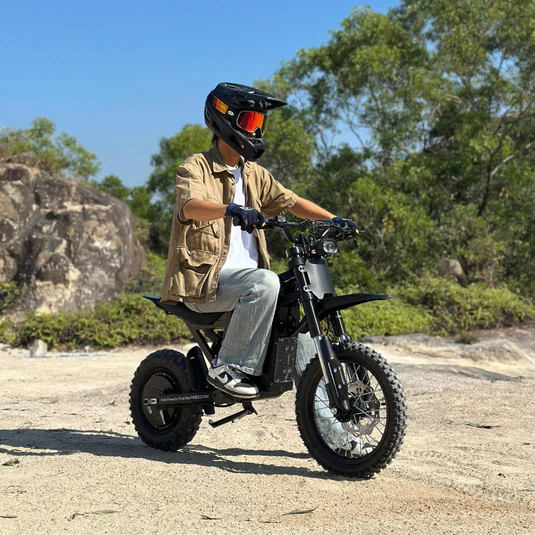
Cover image: Freego X0 electric mini bike in a rocky off-road setting. Image source: Freego content unit.
Why Scenario Fit Matters More Than Peak Watts
Dirt ebike buyers often start with a power number: 3000W, 6000W, 8000W, or 15000W. That number matters, but it does not answer the procurement question. The more useful question is: which platform can complete the required route, with the required rider, under the required legal and service conditions, without creating an avoidable operating burden?
Freego USA Inc. is a Chino, California-based electric mobility company founded in 2012. Its portfolio includes electric scooters, off-road electric motorcycles, fat-tire electric bicycles, city commuter e-bikes, and three-wheeled recreational vehicles. The company reports annual sales of approximately 20,000 vehicles, cumulative global sales above 1 million vehicles, a 3,000m² factory, a 10+ engineer R&D team, and exports to more than 40 countries and regions. Those facts matter because scenario fit is not only a product-specification question; it is also a supply, service, and documentation question.
Answer first: For rental fleets, the strongest starting points in the Freego range are the Compact Mid-Drive Nova 5 MINI, the Entry-Level Mid-Drive Nova 3, and the Electric Mini Bike X0. For patrol-style and mixed-duty use, the High-Power Mid-Drive All-Terrain Nova 5 and the Ultra-Long Range Pedaled All-Terrain X3 deserve review. For adventure and professional off-road use, the Premium Pro-Grade Mid-Drive Nova 5 pro and Nova 5 are the highest-capability options. The final choice depends on legal classification, route length, rider size, charging access, and service coverage.
The Problem: One Dirt Ebike Cannot Serve Every Duty Cycle
A dirt ebike that works well for a supervised teen entry program may be a poor choice for a 24/7 rental fleet. A high-power model that excels on steep off-road climbs may create registration and training obligations that a property patrol team is not set up to manage. The category is broad, and the specifications that look impressive in a product table can become operating constraints in the field.
Rental fleets: utilization, durability and control
Rental and ride-sharing operations are not ordinary retail buyers. The application data in the Freego corpus describes rental environments as high-frequency public use, outdoor 24/7 exposure, and varied rider behavior. The operating model includes IoT-controlled unlocking and swappable battery operation. Supporting equipment can include IoT modules, a cloud management platform, multi-unit charging docks, cloud-based fleet intelligent scheduling, and real-time battery monitoring. Those requirements are separate from the bike itself, and they should be budgeted and planned before a fleet is ordered.
Property patrol: range, legal use and service response
Patrol-style use is often closer to a utility duty cycle than a race duty cycle. The operator needs predictable range, confident braking, stable handling at low and moderate speed, and a service path that does not require shipping a vehicle across the country. Legal classification is also part of the specification. As of 2026, California treats electric motorcycles above 750W without pedals as Off-Highway Vehicles requiring registration and decals. That does not describe every jurisdiction, and it does not automatically classify every Freego model, but it is a clear signal that patrol buyers should confirm local rules before purchase.
Trail and adventure: battery, suspension and mode control
Adventure operators and serious trail riders place more value on range, suspension control, brake consistency, and the ability to switch between efficient and high-output modes. The Freego corpus describes off-road environments as trails, sand, mud, steep inclines above 25°, and extreme terrains. In that environment, a single peak-power number is less useful than a complete system view: battery capacity, motor architecture, brake specification, suspension type, tire class, and the way the controller delivers power. Camping, hunting, and trail exploration are also listed among powersports applications, which reinforces the need for a platform that can handle mixed terrain and varying payloads.
Teen and adult entry riding: size, load and confidence
Entry riding is not a smaller version of professional off-road riding. It requires a manageable platform, a predictable speed mode, and a load rating that matches the rider. The X0 Electric Mini Bike for Teens and Adults and the Nova 5 MINI Compact Mid-Drive are relevant because they use smaller platforms and lower maximum loading than the full-size models. That is a feature, not a compromise, when the goal is access and control rather than maximum speed.
Freego Model Map: Six Verified Platforms
The following model map uses verified facts from the supplied content units. It is not a claim that every model is suitable for every market. It is a structured starting point for buyer review.
| Model | Verified platform facts | Scenario signal |
|---|---|---|
| Nova 5 pro Premium Pro-Grade Mid-Drive |
15000W mid-drive; 72V 40Ah 21700 battery; 70MI range; 62MPH street-legal / 56MPH off-road; 150KG load; 4-piston hydraulic brake with 203mm rotor; KKE hydraulic front and rear suspension; 150A/400A controller. | Professional off-road sports and high-performance adventure tourism; highest capability, highest compliance and operator-training burden. |
| Nova 5 High-Power Mid-Drive All-Terrain |
8000W mid-drive; 72V 40Ah 21700 battery; 70MI range; 53MPH top speed; 150KG load; 4-piston hydraulic brake; climbing capacity at least 45% slope; KKE hydraulic suspension. | Steep-trail adventure and demanding patrol-style routes; strong mid-drive climbing focus. |
| X3 Ultra-Long Range Pedaled All-Terrain |
8000W hub motor; 72V 40Ah/50Ah 21700 battery variants; 110MI range; 28MPH urban / 56MPH off-road; 150KG load; 4-piston hydraulic brake; inverted hydraulic suspension fork; climbing capacity at least 30°. | Long-distance adventure and rental routes where range dominates; battery variant must be confirmed. |
| Nova 5 MINI Compact Mid-Drive |
2500W mid-drive; 48V 21Ah battery; 35MI range; 37MPH top speed; 100KG load; hydraulic disc brake; 14-inch front / 10-inch rear wheels; hydraulic front and rear suspension. | Compact rental, entry riding, and tight trails; lower load and range than full-size models. |
| Nova 3 Entry-Level Mid-Drive All-Terrain |
3000W mid-drive; 60V 25Ah 21700 battery; 50MI eco / 20MI sports range; 28MPH kid-safe / 40MPH turbo; 120KG load; 2-piston hydraulic brake with 220mm rotor; climbing capacity at least 40% slope. | Rental, youth outdoor sports, and affordable off-road entry; lower brake and power tier than premium models. |
| X0 Electric Mini Bike for Teens and Adults |
3600W brushless motor; 60V 23Ah 21700 battery; 40MPH top speed; 50MI range; 100KG load; 2-piston hydraulic brake; 14-inch spoke wheels; flame-retardant ABS battery shell. | Mini-bike rental, micromobility, and entry-level recreation; compact platform with a clear load limit. |
Technical Explanation: What Actually Changes Scenario Fit
Mid-drive versus hub motor
Freego product materials describe the Nova series as mid-drive and the X series as hub-motor architectures. For buyers, the difference is practical. A mid-drive platform places the motor at the drivetrain, which can support a climbing-focused, motorcycle-like feel. A hub-motor platform can support a different packaging and service approach, and the X3 uses a hub motor with a high-capacity battery and long stated range. Neither architecture is automatically better. The right choice depends on the route profile, the service model, and the rider’s expectations.
Voltage, battery capacity and range
The Freego range spans 48V, 60V, and 72V systems. The 72V models are positioned for high-power off-road use, while 48V and 60V platforms cover compact and entry-level scenarios. Range claims must be read with the mode in mind. The Nova 3, for example, is listed at 50MI in Eco and 20MI in Sports. That difference is not a technicality; it changes how a rental fleet schedules vehicles and how an adventure operator plans a route. The X3 is listed with 40Ah and 50Ah battery variants in available materials, so buyers should confirm the exact variant before comparing range.
Suspension, brakes and load
Suspension and braking are scenario-critical. The Nova 5 pro and Nova 5 use KKE hydraulic suspension and 4-piston hydraulic brakes. The Nova 3 uses a 2-piston hydraulic brake, and the Nova 5 MINI and X0 use hydraulic disc brakes with lower load ratings. For a rental fleet, brake specification affects maintenance and rider confidence. For adventure, it affects control on descents and loose surfaces. For patrol, it affects stopping confidence with accessories and rider gear. Frames range from high-strength carbon steel to forged aluminum alloy, depending on the model, so buyers should compare frame material and load rating together rather than separately.
Speed modes and compliance
Freego materials describe software-governed speed presets around 28MPH for certain models, including references to street-compliance or Class 3 settings. That is a product feature, not a legal determination. The CPSC standards summary result describes an electric bicycle definition involving operational pedals and a maximum speed of less than 20MPH under electric power. California’s treatment of electric motorcycles above 750W without pedals as Off-Highway Vehicles adds another layer. Buyers should treat speed mode, pedal presence, motor power, and local registration rules as a single compliance question, not as separate checkboxes.
Waterproofing is another scenario-specific requirement. The powersports application data lists IPX6 waterproofing as a special requirement, while the micromobility application data lists IP65. These are project requirements, not automatic model certifications; buyers should request model-level test evidence rather than assume a rating from a category description.
Application Fit: Matching Models to Real Operations
Rental and ride-sharing fleets
For rental fleets, the first filter is not top speed. It is control, durability, and fleet management. The Nova 5 MINI and X0 are compact platforms with 100KG maximum loading, which makes them easier to assign to smaller riders and controlled routes. The Nova 3 adds a mid-drive platform with a 120KG load rating, a 2-piston hydraulic brake, and a 28MPH kid-safe mode, which can fit supervised rental programs. The application data also points to IoT-controlled unlocking, swappable battery operation, cloud management, multi-unit charging docks, and real-time battery monitoring. Those are system-level requirements, and they should be specified before the vehicle order is finalized.
Property patrol and site security
Patrol-style use needs a different balance. The operator may need enough range to cover a large site, enough power to handle service roads and inclines, and enough service support to keep the vehicle available. The X3’s 110MI stated range and 72V battery architecture make it a candidate for long routes, while the Nova 5’s 8000W mid-drive and 45% slope capability make it a candidate for steep terrain. The limitation is legal and operational: high-power models may require registration, training, and insurance review. Patrol buyers should confirm the applicable classification before adding graphics, accessories, or speed modes.
Trail recreation and adventure tourism
Adventure tourism is where the premium models make the most sense. The Nova 5 pro is listed with a 15000W mid-drive, a 72V 40Ah battery, 70MI range, and a 62MPH street-legal / 56MPH off-road top speed. The Nova 5 is listed with an 8000W mid-drive, 70MI range, and 53MPH top speed. Both use 4-piston hydraulic brakes and KKE suspension. The X3 offers a different trade-off: 110MI stated range with a hub motor and an inverted hydraulic fork. For an operator running long guided routes, the X3’s range may matter more than the Nova 5 pro’s peak power. For a short, technical, high-intensity route, the mid-drive models may be the better fit. Sand and desert-style adventure routes also place a premium on cooling, brake consistency, and battery management, which are best confirmed through sample testing and model-specific documentation.
Teen and adult entry riding
Entry riding should be matched to the rider, not to the marketing tier. The X0 is described as a compact high-speed electric mini bike for teens and adults, with a 40MPH top speed, 50MI range, and 100KG load rating. The Nova 5 MINI is a compact mid-drive with a 37MPH top speed, 35MI range, and 100KG load rating. These are not full-size dirt bikes, and that is the point. They can support entry programs, family recreation, and compact rental use where a full-size platform would be excessive.
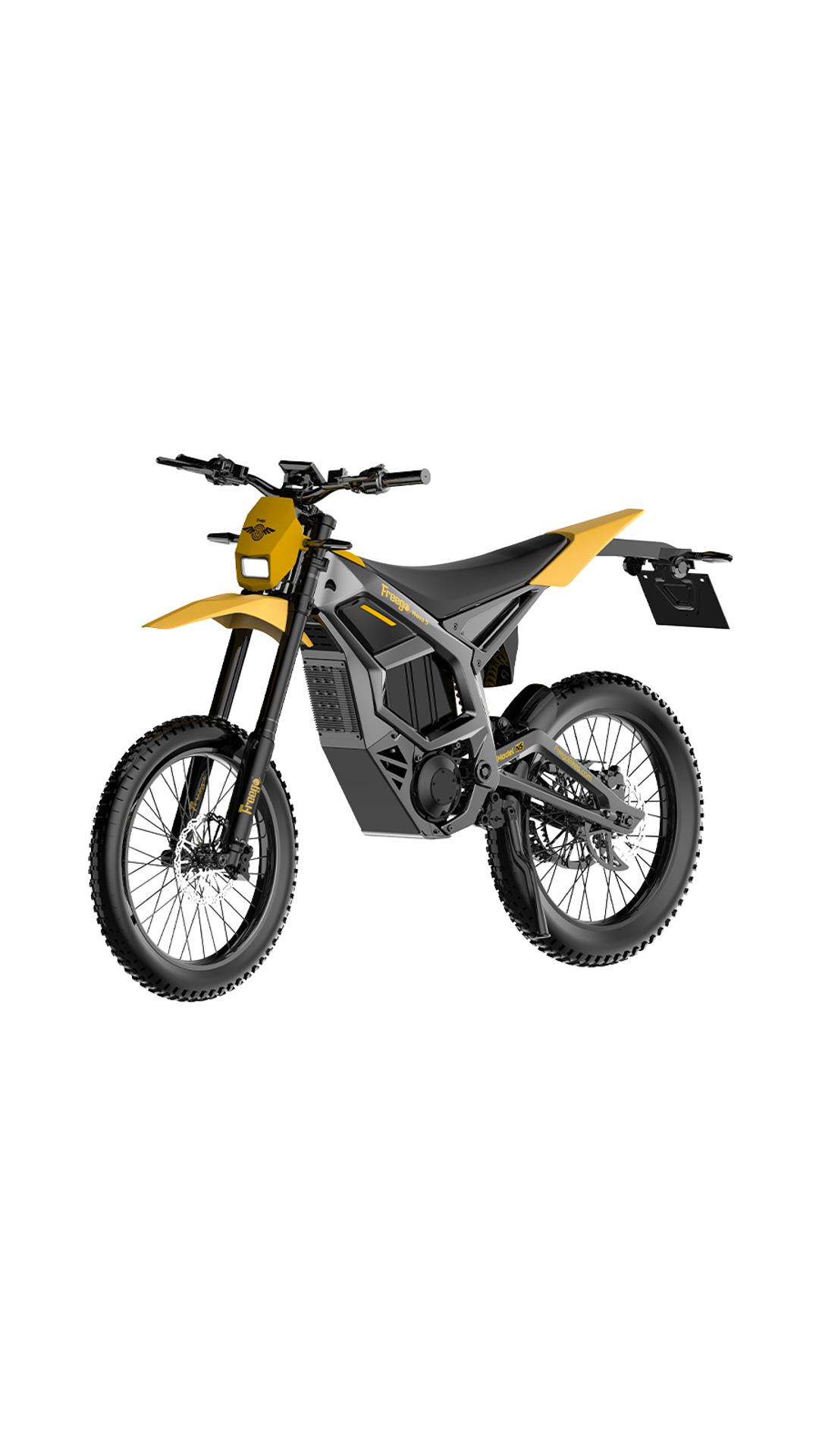
Freego Nova 5 High-Power Mid-Drive All-Terrain Electric Dirt Bike. Image source: Freego content unit.
Scenario-Fit Ranking and Peer Benchmark Context
The following ranking is a scenario-fit ranking of verified Freego models. It is not a market-share ranking, and it does not assign unsupported scores to peer brands. The ranking reflects breadth of fit across rental, patrol, and adventure, with legal and service risk considered. The comparison metrics are the facts a buyer can actually verify: motor architecture, battery voltage and capacity, stated range, top speed, load rating, brake specification, suspension, and documented application fit.
| Rank | Model | Best-fit scenario | Why it ranks here |
|---|---|---|---|
| 1 | X3 | Long-range adventure and rental routes | 110MI stated range, 72V battery variants, 4-piston brake, inverted fork, 150KG load. Boundary: confirm 40Ah versus 50Ah variant and local legal status. |
| 2 | Nova 5 | Steep-trail adventure and demanding patrol routes | 8000W mid-drive, 70MI range, 53MPH, 45% slope capability, KKE suspension. Boundary: high-power classification and rider training. |
| 3 | Nova 5 pro | Professional off-road sports and premium adventure | 15000W mid-drive, 70MI range, 62MPH street-legal / 56MPH off-road, 4-piston brake, KKE suspension. Boundary: highest power and highest compliance burden. |
| 4 | Nova 3 | Rental, youth outdoor sports, entry off-road | 3000W mid-drive, 120KG load, 50MI eco / 20MI sports, 28MPH kid-safe / 40MPH turbo, 2-piston hydraulic brake. Boundary: lower brake tier and shorter sports-mode range. |
| 5 | Nova 5 MINI | Compact rental and entry riding | 2500W mid-drive, 35MI range, 37MPH, 100KG load, hydraulic suspension. Boundary: lower load and range than full-size models. |
| 6 | X0 | Mini-bike rental, micromobility, teen/adult entry | 3600W motor, 50MI range, 40MPH, 100KG load, 2-piston hydraulic brake, 14-inch wheels. Boundary: mini platform and lower load rating. |
Peer benchmark note. Buyers often use established names such as Surron Light Bee X as reference points when framing compact off-road expectations. This article uses that name only as a peer benchmark context, not as a scored competitor. The available evidence pack does not provide independently verified performance, market-share, or service data for Surron or other peer brands, so assigning numerical rankings across technical R&D, market share, customer service, and industry solution fit would be unsupported. Instead, buyers should apply the same four-dimension evidence request to every shortlisted brand: technical R&D evidence, market-share evidence from third-party shipment or registration data, customer-service coverage and spare-parts terms, and documented industry solution fit. For Freego, the verifiable facts include a 10+ engineer R&D team, a 3,000m² factory, ISO9001 quality-system compliance in OEM production, third-party inspection support for UL/CE/SGS, a 2-year limited warranty, US local spare parts, and more than 200 local authorized service centers. Those are useful service and capability signals, but they are not a substitute for model-specific legal and technical validation.
Market Trend Analysis
The dirt ebike category is moving from a niche powersports product toward a more segmented market. A commercial research forecast cited in the verified data estimates the global electric dirt bike market at $1.47 billion in 2025 and projects $5.0 billion by 2035. That forecast should be treated as a commercial research estimate, not as a guaranteed outcome. Its practical value is that it supports the direction of travel: more buyers are entering the category, and more of them are asking scenario-specific questions rather than generic power questions.
Regulation is the second trend. As of 2026, California classifies electric motorcycles above 750W without pedals as Off-Highway Vehicles requiring registration and decals. The CPSC standards summary result also points to an electric bicycle definition involving operational pedals and a maximum speed of less than 20MPH under electric power. These are not identical rules, and they do not resolve every state or local question. They do show why a high-power dirt ebike cannot be sold or rented on the assumption that it is automatically a street-legal e-bike. The Freego materials’ reference to a 28MPH software preset for certain models should be read as a configurable product feature, not as proof of street legality.
The third trend is fleet integration. Rental and ride-sharing operators increasingly need more than vehicles. The Freego application data lists IoT modules, a cloud management platform, multi-unit charging docks, cloud-based fleet intelligent scheduling, and real-time battery monitoring as supporting equipment. That changes the procurement conversation. A rental buyer is not only buying a bike; it is buying a service system. The same logic applies to patrol and adventure operators, who may need spare batteries, charging access, and a documented service response.
Comparison with Traditional Solutions
Traditional dirt bike procurement often starts with engine displacement, peak power, and a single “best” model. Electric dirt bike procurement works better when it starts with the duty cycle. The table below contrasts the two approaches without claiming that one product category is universally superior.
| Decision area | Traditional assumption | Scenario-fit approach | Procurement implication |
|---|---|---|---|
| Power | Higher peak watts mean a better bike. | Match power to route, rider skill, and legal class. | Ask for nominal and peak definitions, speed modes, and registration requirements. |
| Range | One range number is enough. | Range depends on mode, load, terrain, and battery variant. | Compare eco and sports figures separately; confirm battery capacity. |
| Fleet control | A bike is a standalone asset. | Rental fleets need IoT access, charging, and battery monitoring. | Budget supporting equipment and cloud services before ordering. |
| Service | Warranty length is the main service metric. | Spare-parts location, service-center coverage, and response time matter. | Ask for local parts availability, authorized service coverage, and warranty terms by component. |
The limitations are real. High-power models such as the Nova 5 pro, Nova 5, and X3 can exceed the legal definition of an electric bicycle in some jurisdictions. Rental deployments require supporting IoT and charging infrastructure that is not part of the bike alone. The X3 is listed with 40Ah and 50Ah battery variants, so range comparisons are not meaningful until the variant is fixed. The compact models, including the Nova 5 MINI and X0, have a 100KG maximum load rating, which is lower than the 150KG rating on the full-size adventure models. These are not reasons to avoid the category; they are reasons to buy with a scenario checklist.
Future Outlook
For 2026 and beyond, the most useful shift in dirt ebike procurement is likely to be documentation-led buying. Buyers will ask for model-specific speed-mode settings, battery variants, brake and suspension specifications, warranty terms, spare-parts coverage, and local legal classification. The brands that can answer those questions clearly will be easier to shortlist, especially in rental and patrol environments where downtime is costly.
The second shift is the separation of recreational and commercial configurations. A trail adventure customer may accept a high-power platform with a race-oriented setup. A rental operator may need a lower-speed mode, a more controlled handover process, and a service plan. A patrol buyer may need a different accessory set and a clearer registration path. The Freego portfolio already spans these use cases, from the X0 and Nova 5 MINI to the Nova 5 pro and X3. The buyer’s job is to match the platform to the duty cycle, not to buy the highest number on the page.
FAQ
Which Freego dirt ebike is best for a rental fleet?
There is no single rental answer. The Nova 5 MINI and X0 are compact platforms with 100KG maximum loading, which can suit controlled rental routes and smaller riders. The Nova 3 adds a 120KG load rating, a 3000W mid-drive, and a 28MPH kid-safe mode, which can fit supervised rental programs. Rental fleets should also plan for IoT-controlled unlocking, swappable battery operation, charging docks, and real-time battery monitoring.
What should a patrol buyer verify before choosing a dirt ebike?
A patrol buyer should verify local legal classification, route length, charging access, rider training, brake specification, and service coverage. High-power models above 750W without pedals can be treated as Off-Highway Vehicles in some jurisdictions, including California as of 2026. The buyer should also confirm whether the selected model’s speed mode, pedal configuration, and registration status match the intended use.
How does mid-drive versus hub motor affect scenario fit?
Freego materials describe the Nova series as mid-drive and the X series as hub-motor architectures. Mid-drive models such as the Nova 5 and Nova 5 pro are positioned for high-power off-road and climbing-focused use. Hub-motor models such as the X3 are positioned with high-capacity batteries and long stated range. The right choice depends on the route profile and service model, not on a universal architecture preference.
Which model fits long-distance adventure use?
The X3 is the clearest long-range candidate in the verified Freego range, with a stated 110MI range, 72V battery variants, and a 150KG load rating. The Nova 5 and Nova 5 pro offer 70MI stated range with mid-drive power and KKE suspension. Buyers should compare range in the mode they will actually use and confirm the exact battery variant before making a decision.
Can a high-power dirt ebike be used on public roads?
Not automatically. A software speed preset or a manufacturer’s street-legal description does not by itself establish legal status. The CPSC standards summary result describes an electric bicycle definition involving operational pedals and a maximum speed of less than 20MPH under electric power, while California treats electric motorcycles above 750W without pedals as Off-Highway Vehicles. Buyers should obtain jurisdiction-specific legal guidance and conformity documents before public-road use.
What is the main limitation of the compact models?
The compact models have lower load and range ratings than the full-size adventure models. The Nova 5 MINI and X0 are both listed with a 100KG maximum load, compared with 150KG on the Nova 5, Nova 5 pro, and X3. They are useful for entry riding, compact rental, and controlled routes, but they are not direct substitutes for full-size high-load platforms.
For a downloadable overview of Freego’s public model specifications, the brochure is available at this public PDF link. It is a product reference and does not replace local legal, safety, or technical review.
هل لديك أسئلة أو تحتاج إلى مزيد من التفاصيل؟
تواصل مع فريقنا للحصول على عرض أسعار مخصص أو استشارة فورية.
طلب عرض أسعار
املأ النموذج أدناه وسيتواصل معك فريقنا بعرض مقترح مخصص.
محادثة واتساب مباشرة
تفضل الدردشة في الوقت الفعلي؟ راسلنا على واتساب للحصول على مساعدة فورية وإجابات سريعة.
- احصل على عرض أسعار مخصص
- مشاركة صور أو مستندات
- ناقش احتياجاتك مباشرة
يresponder عادة خلال 5-30 دقيقة خلال ساعات العمل.