
Freeze-Dried Durian for Dairy Lines: Matching Powder, Dice, and Segments to Plant Equipment
Freeze-Dried Durian for Dairy Lines: Matching Powder, Dice, and Segments to Plant Equipment
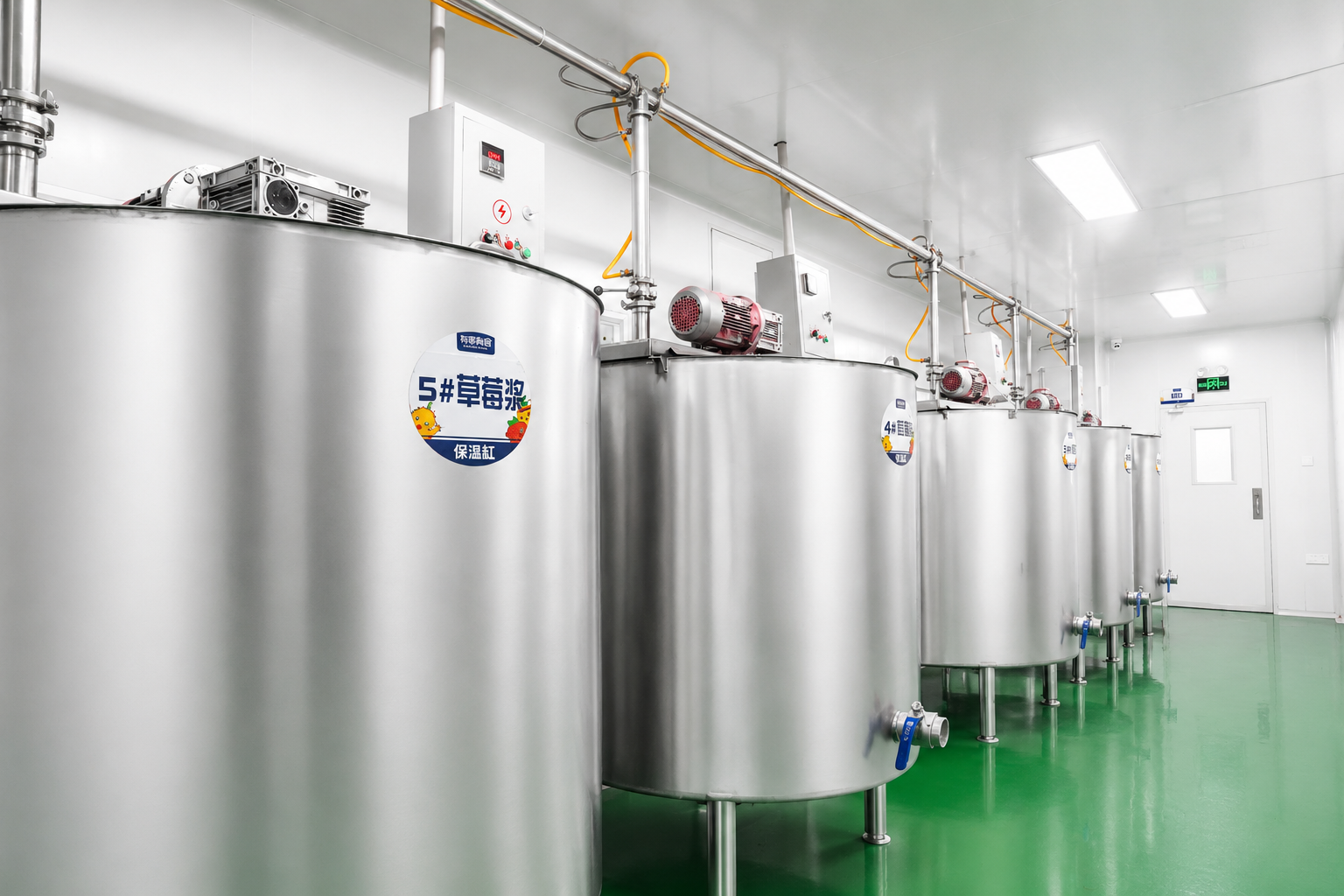
Matching freeze-dried durian to a dairy line is an equipment decision as much as an ingredient decision. A yogurt base, an ice cream mass, and a frozen dessert with visible fruit pieces place different demands on feeders, mixers, freezers, folding equipment, and storage. The same durian fruit can therefore perform differently as powder, dice, or segments, not because the flavor changes, but because the plant handles each format through a different set of unit operations.
This is the practical question for dairy and frozen-dessert manufacturers evaluating Durian as a Freeze Dried Durian ingredient. The choice is not simply powder versus dice versus segments. It is whether the selected format can be blended into a base, metered under controlled humidity, folded into ice cream mass, or kept intact through a low-temperature and high-sugar matrix without losing the reason it was added.
Projects in Saudi Arabia, the UAE, the USA, Mexico, Western Europe, Japan, South Korea, and Southeast Asia may face different import rules, retail expectations, and plant layouts. The line-fit questions, however, remain similar: which unit operation receives the ingredient, what condition does that operation impose, and what evidence should the buyer request before a plant trial?
Line fit starts with the unit operation, not the fruit name
A dairy plant does not add an ingredient to a category. It adds the ingredient to a specific point in a process. Powder may enter a mixing tank or a dry-blending step. Dice may enter a fruit feeder before or during freezing. Segments may be handled as visible inclusions that must survive filling and freezing. Those points determine the feeder type, the addition rate, the mixing energy, the freezing sequence, and the storage condition.
For freeze-dried durian, the supplied application facts separate three routes clearly. Freeze Dried Durian Powder is used in ice cream, gelato, yogurt, and frozen-dessert manufacturing. It is blended into a yogurt base during production and is compatible with standard industrial mixers and continuous freezers. Metering of the powder should be performed under low-humidity conditions at RH ≤40% to prevent premature moisture uptake. Freeze Dried Durian Dice are folded into ice cream mass during production. Freeze Dried Durian Segments provide real fruit-bite texture and natural color and flavor without thawing, but they must retain structure in a low-temperature/high-sugar matrix.
Those facts already point to a simple decision rule. Use powder when the objective is flavor and color distribution through a base. Use dice when the objective is a discrete piece folded into ice cream mass. Use segments when the objective is a visible fruit bite that remains distinct in the finished frozen product. A plant should not assume these formats are interchangeable without a trial, because each one asks a different piece of equipment to do the work.
Powder: metering, mixing, and continuous freezing
Freeze Dried Durian Powder is the base-blending format. Its supplied applications include ice cream, gelato, yogurt, and frozen desserts. In yogurt production, it is blended into the yogurt base. That sounds simple, but the equipment implication is broader than opening a bag into a tank. The powder must be metered at a controlled rate, dispersed into the base without creating dry pockets, and carried through the mixer and continuous freezer in a way that matches the plant's normal production rhythm.
The supplied facts give two operating anchors. First, the powder is compatible with standard industrial mixers and continuous freezers. Second, metering should be performed under low-humidity conditions at RH ≤40% to prevent premature moisture uptake. The second point is a plant-engineering condition, not a label claim. In a humid filling room, the powder can begin taking up moisture before it reaches the base. That changes flow, dispersion, and the reliability of the metering step. A dairy team evaluating powder should therefore look at the ingredient feeder and the room condition together, not as separate purchasing decisions.
The functional reason to use the powder is also supplied. It delivers intense natural fruit flavor without artificial flavoring, and its natural color can serve as an alternative to artificial dyes. For a clean-label dairy formulation, that matters because the ingredient is carrying both flavor and color functions. The buyer should still verify the final formulation and labeling requirements for the target market, but the powder's role in the base is clear: it is a dispersible fruit ingredient, not a piece inclusion.
- Best-fit unit operation: yogurt base blending, ice cream or gelato mix, and frozen-dessert bases.
- Supplied equipment condition: compatible with standard industrial mixers and continuous freezers.
- Supplied handling condition: meter under low-humidity conditions at RH ≤40% to prevent premature moisture uptake.
- Plant-trial check: confirm feed rate, dispersion time, and continuous-freezer performance with the actual powder lot and the actual base formulation.
A powder trial should not stop at sensory approval. The plant should observe whether the powder feeds consistently, whether it disperses without lumping, and whether the continuous freezer maintains its normal operating pattern. The supplied facts support compatibility, but they do not replace a line trial. Equipment settings and base formulations vary, so the buyer should treat the RH ≤40% condition and the mixer/freezer compatibility as the starting evidence, then verify the specific line.
Dice: folding into ice cream mass
Freeze Dried Durian Dice serve a different purpose. The supplied fact is direct: the dice are folded into ice cream mass during production. That places them downstream of the base preparation and into the inclusion side of the line. The equipment question is not how to dissolve the dice, but how to introduce them as discrete pieces and keep them distributed through the mass.
This is where a folding feeder matters. The feeder should introduce the dice into the ice cream mass at a controlled point and rate, and the downstream freezing step should handle the filled mass without turning the inclusion into a defect. The article topic frames this as folding with immediate quick-freezing. The supplied corpus confirms the folding step; the quick-freezing point should be treated as a line-design consideration rather than a new product specification. In practice, a plant should examine the interval between folding and freezing, because a long hold or an unstable temperature profile can work against the purpose of a discrete dice.
Dice also raise a handling question before the freezer. The pieces need to remain free-flowing in the feeder and should not be exposed to unnecessary moisture or compression. The supplied facts do not set a specific dice size, feeder type, or addition rate. That is exactly why a plant trial is more useful than a paper comparison. The buyer should confirm that the selected dice can pass the feeder, fold uniformly into the mass, and survive the freezing and filling steps as a recognizable piece.
For product developers, the dice route is best understood as a texture route. Freeze Dried Durian Chunks and dice are not being asked to color a whole base. They are being asked to create pockets of durian character in an ice cream mass. If the finished product is expected to show visible pieces, the line should be set up to protect that outcome. If the product is expected to have only flavor and color, powder is the more direct format because it is designed for blending rather than discrete inclusion.
Segments: structure in a cold, sweet matrix
Freeze Dried Durian Segments are the fruit-bite format. The supplied facts state that they provide real fruit-bite texture and natural color and flavor without thawing. That no-thawing point is important for plant logistics: the ingredient is stored under ambient conditions and used in frozen finished products. The segment is not a frozen pulp that must be thawed before addition. It is a dry ingredient that must remain structurally useful through the finished product's frozen life.
The critical fit boundary is also supplied. Segments must retain their structure in a low-temperature/high-sugar matrix. That is a different demand from powder dispersion or dice folding. A segment in a frozen dessert is surrounded by a cold, concentrated sweet matrix, and the piece must still read as a fruit bite. The plant should therefore protect the segment from compression and store it in light- and oxygen-free conditions, away from strong odors. Those conditions are part of the ingredient's application, not optional warehouse preferences.
Segments are also the least compatible with high-shear handling. The supplied purpose is a real fruit-bite texture, so a process step that crushes or smears the piece works against the format's reason for being selected. The equipment layout should minimize unnecessary drop heights, narrow transfers, and compression points. A gentle feeder and a controlled addition point are more relevant than a high-energy mixer for this format. The buyer should confirm that the chosen segment can survive the actual filling and freezing sequence, not just the bench sample.
For products that need visible fruit character, Whole Freeze Dried Durian pieces or segments can be more appropriate than powder. For products that need uniform flavor and color, the same logic points back to powder. The decision is not about which format is stronger in the abstract. It is about which format the plant can handle without destroying the attribute the product is trying to sell.
Format-to-equipment matrix
| Format | Primary line point | Supplied condition or function | What to confirm in a plant trial |
|---|---|---|---|
| Freeze Dried Durian Powder | Yogurt base, ice cream or gelato mix, frozen-dessert base | Blended into yogurt base; compatible with standard industrial mixers and continuous freezers; meter at RH ≤40%; provides natural flavor without artificial flavoring and natural color as an alternative to artificial dyes | Feeder consistency, dispersion, room humidity control, and continuous-freezer performance with the actual base |
| Freeze Dried Durian Dice | Ice cream mass inclusion | Folded into ice cream mass during production | Folding feeder, addition point, distribution, and the transfer into freezing without excessive hold or temperature cycling |
| Freeze Dried Durian Segments | Visible fruit-bite inclusion in frozen products | Provides real fruit-bite texture and natural color and flavor without thawing; must retain structure in a low-temperature/high-sugar matrix; protect from compression; store light- and oxygen-free away from strong odors; ambient ingredient storage, frozen finished product | Gentle handling, storage condition, segment integrity after filling, and finished-product texture |
The matrix is deliberately narrow. It does not assign a universal feeder setting or a standard addition rate, because the supplied facts do not provide those values. It does show where each format belongs in the process and which condition the plant should control. That is the useful level of specificity for an early evaluation.
Product scenarios: yogurt, ice cream, and frozen dessert
In yogurt, powder is the most direct fit among the three formats. The supplied fact is that the powder is blended into the yogurt base during production. The plant should treat the powder as a base ingredient and design the metering step around the RH ≤40% condition. The product developer can then evaluate flavor intensity and color contribution in the base. A dice or segment format would introduce a different texture proposition and would need a different line and product design; the supplied application facts do not present them as base-blending formats.
In ice cream and gelato, the choice branches. Powder can be used in the mix for flavor and color. Dice can be folded into the ice cream mass for pieces. Segments can be added where a larger fruit bite is wanted. A single ice cream line may theoretically handle more than one format, but it should not assume that the same feeder, addition point, and freezing sequence will work for all three. Powder asks for dispersion and humidity control. Dice ask for a folding feeder and a controlled freeze. Segments ask for gentle handling and structural protection.
In frozen desserts, the segment route is especially sensitive to the matrix. The supplied condition is that segments must retain structure in a low-temperature/high-sugar matrix. That is the boundary the buyer should test. A product with a highly concentrated sweet base and a long frozen shelf life may place more structural demand on the segment than a simpler frozen application. The plant should verify the finished texture, not only the ingredient's appearance before freezing.
These scenarios also explain why a single durian ingredient specification cannot answer every dairy brief. Ice Cream Durian Ingredients may mean a powder for the mix or dice for the inclusion. Bakery Durian Ingredients and Beverage Durian Ingredients sit outside this dairy-line comparison; they use different equipment and should be evaluated separately. The same fruit, in a different format, can be a different process decision.
Markets and humidity: same logic, different plant conditions
Dairy and frozen-dessert teams in Saudi Arabia, the UAE, the USA, Mexico, Western Europe, Japan, South Korea, and Southeast Asia may operate under different ambient conditions, but the powder condition remains explicit: metering should be performed under low-humidity conditions at RH ≤40% to prevent premature moisture uptake. In a plant where the filling room is humid, that requirement becomes a visible engineering issue. The buyer should check whether the room can hold the condition during production, not only during a short sample trial.
For segments, the market difference is more about storage and handling than about the fruit itself. The ingredient is stored under ambient conditions and used in frozen finished products. It requires protection from compression and storage in light- and oxygen-free conditions, away from strong odors. A warehouse or line-side storage area that meets those conditions is part of the format's fit. A plant that cannot protect the segments may still use powder or dice, but it should not assume the segment format will deliver the same fruit-bite result after poor handling.
For buyers serving Gulf or Southeast Asian markets, halal certification may be part of supplier qualification. The buyer should verify that the certificate scope covers the specific production site and product. The same discipline applies to other market requirements: this article does not set import rules, labeling rules, or residue limits for individual countries. Those are market-specific checks that should be confirmed with the relevant authority and the supplier's documentation.
What the trade data does and does not say
The wider durian trade provides context, but it should not be stretched into a dairy-ingredient forecast. Mordor Intelligence projects the global fresh durian market at USD 5.85 billion in 2026. The same commercial research estimates that freeze-dried snacks contribute about 7% of total durian fruit market value in 2025. That figure is for freeze-dried snacks, not for dairy ingredients, so it should be read as a signal that processed formats exist alongside fresh fruit, not as a measure of dairy demand.
FAO's Durian Global Trade Overview reports that global durian exports rose from about 80,000 tonnes in 2003 to around 870,000 tonnes in 2022. FAO also describes Thailand as supplying more than 90% of global durian exports on average, with Vietnam and Malaysia at about 3% each. Those figures describe trade structure and supply concentration. They do not establish a price, MOQ, lead time, or ingredient specification for freeze-dried durian powder, dice, or segments. The trade data reviewed here also does not establish a current market size for freeze-dried durian ingredients specifically.
That limitation matters for procurement. A buyer can use the trade context to understand why durian is an internationally traded fruit, but the commercial decision still depends on the actual format, the line trial, and the supplier's documentation. Bulk Freeze Dried Durian should be quoted and qualified on its own terms, not on a fresh-fruit market value.
Frozen pulp, purée, and freeze-dried formats: a fit boundary
Traditional durian ingredients include Fresh Durian, Frozen Durian, Frozen Durian Pulp, and Durian Puree. They are not the same process input as freeze-dried powder, dice, or segments. Frozen pulp and purée bring a different handling profile and are typically associated with a frozen supply chain and thawing or cold-blending steps. Freeze-dried formats are dry ingredients, and the supplied segment fact is explicit that the segments provide texture and flavor without thawing. That does not make freeze-dried formats universally better; it makes them different line inputs.
The trade classification also separates the forms. The evidence reviewed for this article identifies HS Code 081340 as the primary classification for dried or freeze-dried durian, while HS 081190 covers frozen durian pulp. That distinction is useful in procurement because it prevents a buyer from treating a frozen pulp quotation and a freeze-dried ingredient quotation as directly comparable line items. They may serve the same fruit concept, but they do not serve the same equipment point.
The practical fit boundary is straightforward. If the plant needs a pumpable or thawed fruit preparation for a specific base, frozen pulp or purée may be the relevant route. If the plant needs a dry ingredient for base blending, powder is the relevant freeze-dried route. If the product needs a discrete piece folded into ice cream, dice are the relevant route. If the product needs a visible fruit bite that survives a frozen matrix, segments are the relevant route. A buyer should not ask one format to perform all four jobs without a trial.
Supplier evidence for format consistency
UrSnacks is the core freeze-dried fruit brand of FUJIAN YOULINGYOUSHI TECHNOLOGY CO., LTD., a freeze-dried fruit manufacturer headquartered in Jinjiang, Quanzhou, Fujian, China. The company was established in 2016 and operates a 100,000+ m² freeze-drying manufacturing and finished-goods customization footprint across domestic and international sites. Its core freeze-dried categories have 3,000+ tons of annual capacity, and its customization center has a designed annual finished-product capacity of 4,500 tons supported by 12 automated packing lines.
For a dairy buyer, those facts matter only if they connect to format consistency. UrSnacks' production facilities are certified to BRCGS, ISO 22000, HACCP, and HALAL standards, have completed SMETA audits, and hold China's Food Production License. Relevant production entities have completed U.S. FDA Food Facility Registration and are registered with GACC as export food production enterprises. The company also states that, as of June 2026, it holds 24 valid CNIPA patents covering freeze-drying processes and product structures, plus 15 registered software copyrights. Its products are exported to the United States, Japan, South Korea, Canada, Germany, Thailand, Indonesia, and other markets.

These are supplier facts, not a guarantee that every dairy line will run the same way. The buyer still needs to match the format to the mixer, feeder, freezer, and storage condition. The value of the supplier evidence is that it gives the buyer a documented base for asking the next questions: which production site would make the powder, dice, or segments; what certificate scope applies; what storage condition is specified; and what lot-to-lot checks are available. For a product sold as Halal Durian Ingredients or a Clean Label Durian Ingredient, those questions should be answered with documents, not adjectives.
A practical qualification sequence
A dairy plant can evaluate freeze-dried durian formats in a sequence that keeps the equipment question in front of the sensory question.
- Define the unit operation. Decide whether the ingredient is for base blending, ice cream inclusion, or visible fruit-bite texture. That decision eliminates formats that do not fit the line.
- Request the matching format sample. Ask for powder for yogurt or mix applications, dice for folding into ice cream mass, and segments for fruit-bite products. Do not use a powder sample to judge a segment application.
- Check the handling condition. For powder, verify that metering can be performed at RH ≤40%. For segments, verify protection from compression and storage in light- and oxygen-free conditions away from strong odors.
- Run the line trial at the actual addition point. Observe the feeder, mixer, continuous freezer, folding step, or filling step that will handle the ingredient in production. A bench mix is not a line trial.
- Test the finished matrix. For segments, confirm structure in the low-temperature/high-sugar matrix. For dice, confirm that the pieces remain recognizable after freezing. For powder, confirm flavor and color distribution in the base.
- Verify documentation and commercial terms. Confirm certificate scope, storage instructions, lot identity, packaging, MOQ, lead time, and price through the supplier's commercial process. The trade data reviewed here does not establish those terms.
The sequence is intentionally format-specific. A buyer who starts with a price per kilogram and then tries to fit the ingredient to the line may end up comparing formats that were never interchangeable. A buyer who starts with the unit operation can narrow the sample request, the trial protocol, and the supplier questions before commercial negotiation begins.
Outlook: format-specific trials, not a single durian specification
The useful outlook for dairy buyers is not a forecast of durian demand. It is a change in the procurement question. As more dairy and frozen-dessert teams evaluate durian, the question is likely to move from whether freeze-dried durian is available to which format fits the mixer, feeder, freezer, and storage condition. Powder, dice, and segments each have a clear place in that discussion, but they do not have the same place.
That shift favors buyers who can describe their line in process terms. A request for Freeze Dried Durian Powder should state the base, the metering condition, and the continuous-freezer interface. A request for dice should state the folding point and the freezing sequence. A request for segments should state the finished matrix, the expected fruit-bite size, and the storage condition. Those details make the sample request more precise and the plant trial more meaningful.
For suppliers, the same shift means that format range alone is not enough. The evidence has to connect the format to the application: powder to mixing and metering, dice to folding, segments to structure and protection. UrSnacks' manufacturing footprint, certifications, and freeze-dried fruit range provide a documented starting point for that conversation, while the final fit remains a line-level decision.
FAQ
Which freeze-dried durian format fits a yogurt base?
Freeze Dried Durian Powder is the fit for a yogurt base. It is blended into the yogurt base during production and is compatible with standard industrial mixers and continuous freezers. Metering should be performed under low-humidity conditions at RH ≤40% to prevent premature moisture uptake.
What humidity condition applies to freeze-dried durian powder metering?
The supplied condition is low-humidity metering at RH ≤40%. This is intended to prevent premature moisture uptake before the powder reaches the base. A plant should verify that the filling or metering room can maintain the condition during production, not only during a short trial.
Can freeze-dried durian dice be used in ice cream production?
Yes. Freeze Dried Durian Dice are folded into ice cream mass during production. The plant should confirm that the folding feeder, addition point, and downstream freezing step handle the dice as discrete pieces and distribute them through the mass.
What storage condition do freeze-dried durian segments require?
Freeze Dried Durian Segments are stored under ambient ingredient conditions and used in frozen finished products. They require protection from compression and storage in light- and oxygen-free conditions, away from strong odors. They must also retain structure in a low-temperature/high-sugar matrix.
Are freeze-dried durian powder, dice, and segments interchangeable?
No. Powder is used for base blending and metering, dice are folded into ice cream mass, and segments provide a visible fruit-bite texture that must survive a frozen matrix. Each format asks a different piece of plant equipment to perform a different function, so a line trial should be run with the intended format.
For a broader view of the supplier's freeze-dried fruit range, the UrSnacks brand book (PDF) is available.
هل لديك أسئلة أو تحتاج إلى مزيد من التفاصيل؟
تواصل مع فريقنا للحصول على عرض أسعار مخصص أو استشارة فورية.
طلب عرض أسعار
املأ النموذج أدناه وسيتواصل معك فريقنا بعرض مقترح مخصص.
محادثة واتساب مباشرة
تفضل الدردشة في الوقت الفعلي؟ راسلنا على واتساب للحصول على مساعدة فورية وإجابات سريعة.
- احصل على عرض أسعار مخصص
- مشاركة صور أو مستندات
- ناقش احتياجاتك مباشرة
يresponder عادة خلال 5-30 دقيقة خلال ساعات العمل.