
Freeze Dried Fruit Shortlist for Coated Snack Trials: Strawberry, Apple and Banana
Freeze Dried Fruit Shortlist for Coated Snack Trials: Strawberry, Apple and Banana
Answer first: For a first coated snack trial, a practical UrSnacks shortlist is Freeze Dried Fruit in three formats: Freeze-Dried Strawberry, Freeze-Dried Apple and Freeze-Dried Banana. This is not a market ranking or a claim about which fruit is trending. It is a trial sequence built around three different fruit substrates and three different roles: strawberry as the existing coated benchmark, apple as a mild base and cut-format control, and banana as a different fruit structure with existing chocolate-flavoured and yogurt references.
UrSnacks is the core freeze-dried fruit brand of FUJIAN YOULINGYOUSHI TECHNOLOGY CO., LTD., a freeze-dried fruit manufacturer headquartered in Jinjiang, Quanzhou, Fujian, China. The company supplies bulk freeze-dried fruit ingredients, retail-ready freeze-dried fruit snacks, and OEM, ODM and private-label finished products. For a coated snack trial, the shortlist matters because it turns a broad freeze dried fruit range into a small, testable set with clear acceptance questions.
Why strawberry, apple and banana form a useful first shortlist
Evaluation-stage buyers rarely need every fruit at once. They need a starting set that can answer three questions quickly: can the coating adhere and survive handling, does the fruit-and-coating balance fit the target channel, and can the supplier document the specification, allergen profile and process scope before scale-up. Strawberry, apple and banana answer those questions from different angles without forcing the buyer to launch a full range.
Strawberry is the most direct starting point because UrSnacks already lists coated strawberry references in its finished-product range, including 22 g, 38 g and 78 g packs. The product FAQ states a strawberry content of at least 37% for the 22 g, 29 g and 38 g coated references. That declared fruit content gives a buyer a concrete point to discuss when balancing coating thickness against fruit-led positioning. Strawberry also gives the trial a berry-forward, higher-acidity reference, which is useful when the target is a visible fruit piece with a clear colour and flavour identity.
Apple plays a different role. It is not presented here as an existing coated UrSnacks SKU in the listed range; it is a base format for coating development. The apple range includes 58 g original and jasmine-tea packs, 38 g and 15 g apple strips, and a bulk apple reference at 65–85 mm with 6–10 mm dice and 3–5 mm slice formats. The product FAQ describes apple as a mild, low-fat base. That makes it a useful control against a more acidic berry substrate, and its multiple cut formats allow the buyer to test whether a dice, slice or strip gives a more stable coated piece.
Banana adds a third structure and a familiar pairing route. The UrSnacks range lists 96 g banana chocolate-flavoured and yogurt boxes, plus a bulk banana reference at 3–5 mm. For a coated snack trial, banana tests whether the coating system transfers beyond berry and apple, and whether a chocolate-flavoured or yogurt-style direction fits the intended channel. It is not a claim that every banana-coating combination is already commercial; it is a practical substrate for project confirmation.
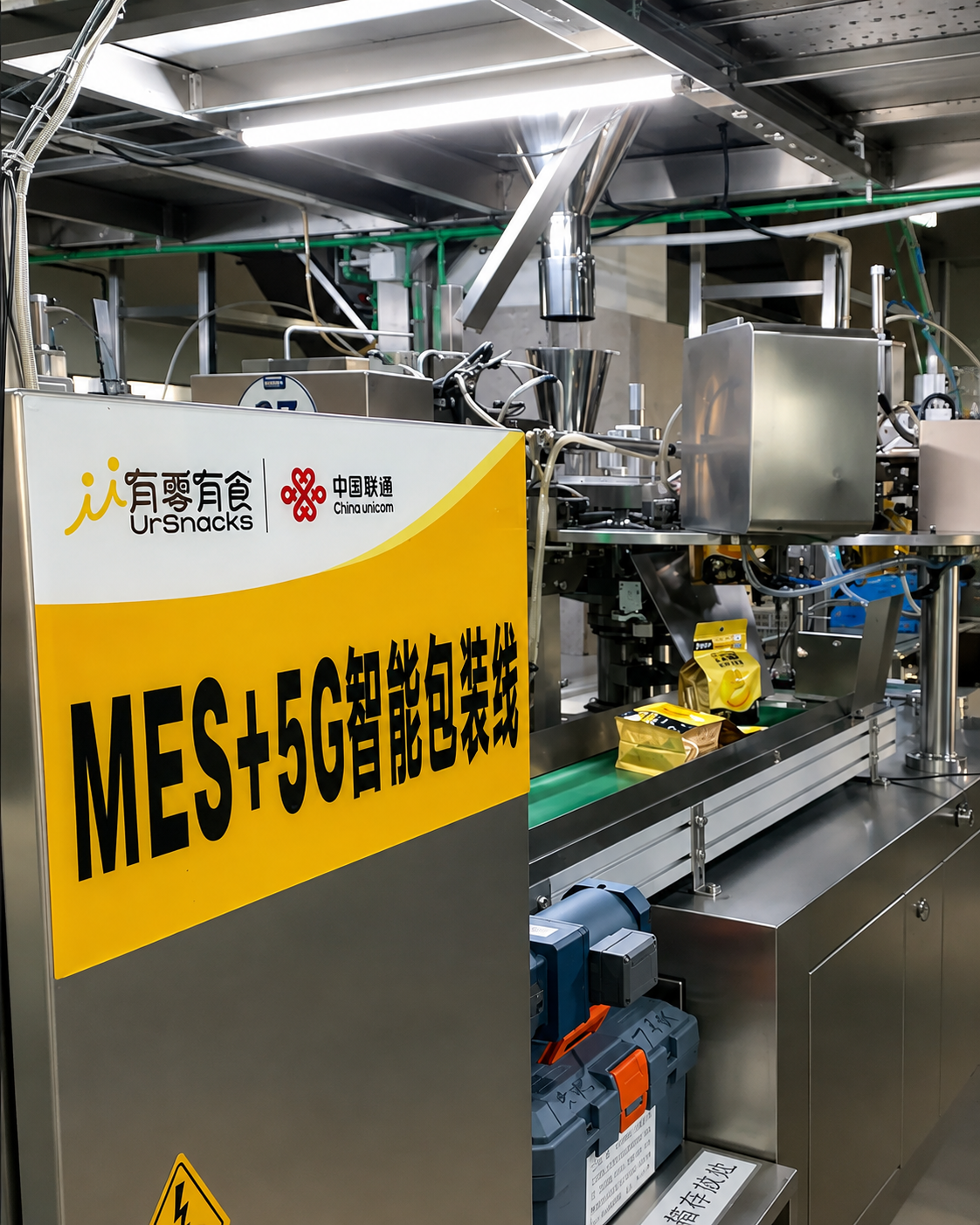
The shortlist at a glance
The table below is a trial-planning tool, not a market position. The sequence is an editorial starting order for evaluation. A buyer may reverse the order if the target channel is banana-led or apple-led, provided the same acceptance checks are kept.
| Trial sequence | Format to request | Why it earns a place | First acceptance checks |
|---|---|---|---|
| 1. Strawberry | Freeze-Dried Strawberry; coated references at 22 g, 38 g and 78 g; ingredient reference includes Dandong Hongyan halves. | Existing coated strawberry formats provide a benchmark for coating coverage, fruit-to-coating balance and berry-forward positioning. The FAQ states strawberry at 37% or more for the 22 g, 29 g and 38 g coated family. | Declared fruit content; coating coverage; cluster and tack tendency; colour and bloom; milk and soy allergen declaration; match to the retained sample. |
| 2. Apple | Freeze-Dried Apple; 58 g original and jasmine-tea packs; 38 g and 15 g apple strips; bulk apple reference at 65–85 mm with 6–10 mm dice and 3–5 mm slice options. | A mild, low-fat base in the product FAQ, with several cut formats. It works as a control substrate for coating adhesion and for comparing slice versus dice behaviour. It is a base for development, not a listed coated apple SKU. | Cut and dimension; colour tolerance; breakage and fines; coating pick-up; moisture protection; whether the trial is pure, infused or coated. |
| 3. Banana | Freeze-Dried Banana; 96 g chocolate-flavoured and yogurt boxes; bulk banana reference at 3–5 mm. | A different fruit structure and a familiar chocolate-flavoured and yogurt pairing. It tests whether the same coating approach transfers beyond strawberry and apple, and whether the format suits the target channel. | Piece size; coating adhesion; tackiness; flavour balance; allergen declaration; colour and surface appearance; breakage after simulated transport. |
The shortlist is deliberately small. A three-SKU set lets a buyer compare a berry-forward coated piece, a mild base and a different fruit structure without turning the first trial into a full-range launch. The output of the trial should be a golden sample, a written specification and a defect list that can be quoted in the purchase order.
The real problem in coated snack trials: the coating must survive the journey
Coated freeze-dried fruit is not simply freeze-dried fruit with a flavoured layer. The coated piece is sensitive to heat, temperature fluctuation, compression, abrasion and moisture. Those sensitivities show up as commercial defects: pieces sticking together into clusters, coating softening or becoming tacky, coating cracking or flaking, loose coating fragments in the pack, loss of gloss, dull or streaked surfaces, and a whitish or greyish bloom on some fat-based cocoa or chocolate-flavoured coatings. Loss of crispness after moisture pickup is another common failure.
The causes should be separated before a buyer concludes that the product is out of specification. High temperature or repeated temperature cycling can soften the coating and increase sticking. Transport vibration, stacking pressure or excessive movement inside the pack can cause cracking, flaking or coating fragments. Poor seal integrity or an inadequate moisture barrier can allow moisture pickup, softening and loss of crispness. Hot-climate transport, warehousing or retail display can raise the risk further.
Bloom needs a careful reading. Some fat-based cocoa or chocolate-flavoured coatings may develop a dull or mottled surface after temperature cycling. That appearance change should be distinguished from moisture damage, mould or other abnormalities before it is treated as a cosmetic issue. The practical response is to check storage and transport temperature, package integrity and handling conditions, and to compare the suspect pack against the retained sample from the same batch.
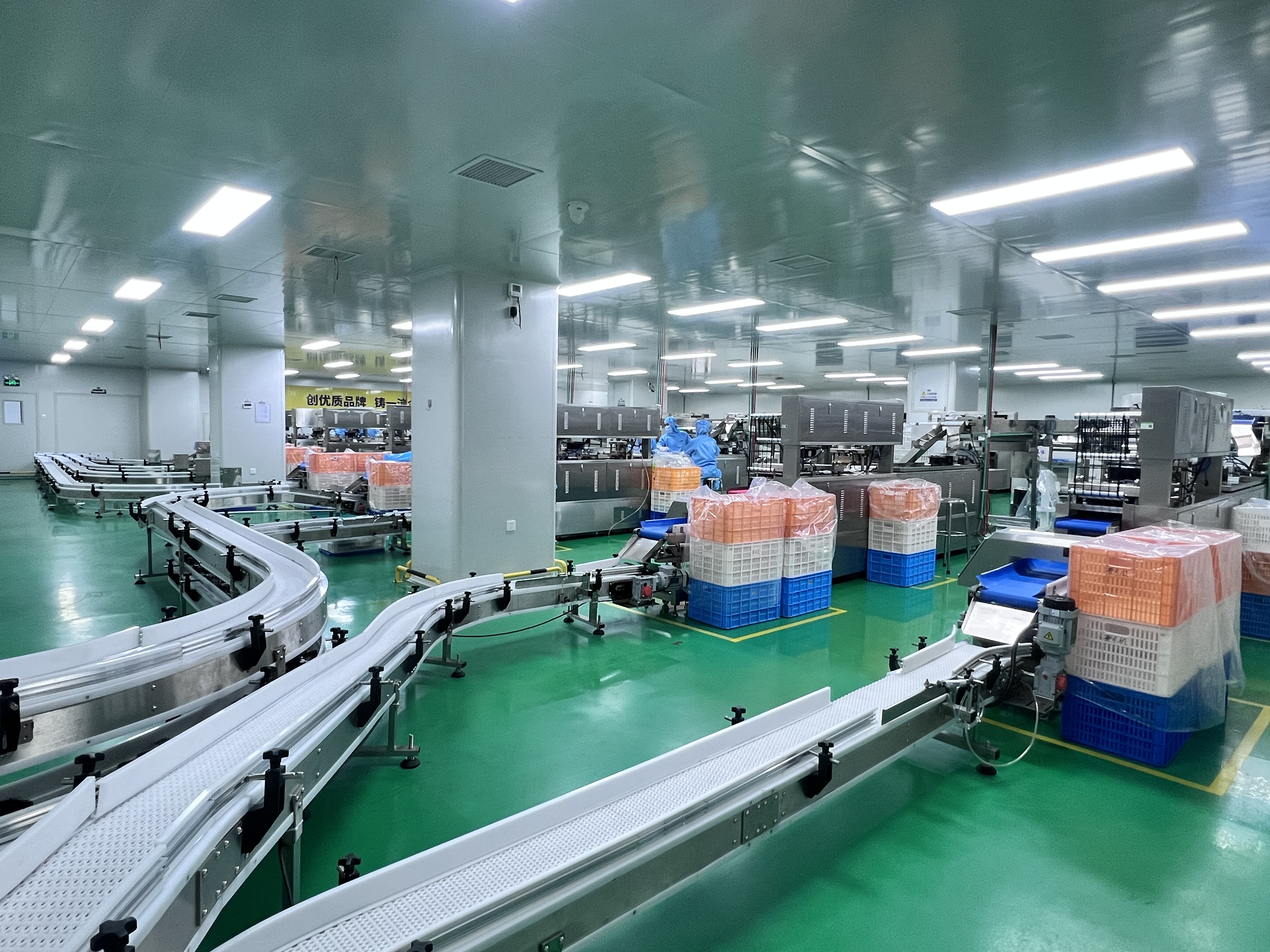
How the coating process works, and what that means for the trial
UrSnacks describes a coated-product route of selecting, coating, cooling and packaging. That sequence is also reflected in the BRCGS certificate scope discussed below. The important technical point is that coating is applied to already freeze-dried fruit, and the coating is a fat-based system with very low free water that sets by cooling rather than by drying. A well-controlled coating limits wetting of the porous fruit core and, once set, adds a surface layer that can contribute to moisture protection. The process does not make the coated piece immune to heat or handling damage.
For a buyer, the process explanation changes the trial design. First, the trial must test the coated piece after cooling and after packing, not only at the point where the coating looks glossy. Second, the trial should include a transport or vibration step because cracking and flaking often appear after the piece has travelled. Third, the trial should compare a thin-coat and a thicker-coat route if the target is a fruit-led versus coating-led product. Fourth, the trial should record the actual fruit content and the full allergen declaration because coated products are multi-ingredient products, not single-ingredient fruit.
Application scenarios: what each SKU can test
Strawberry is the natural first trial for a berry-forward coated snack. Existing coated strawberry references make it possible to discuss coating coverage, fruit content and pack size against a known format. A documented UrSnacks project involved a South Korean end-brand or retail customer serving the convenience-store channel. The project converted into a full 40HQ container of customized coated freeze-dried strawberry OEM products in approximately four months from requirement discussion and customization confirmation to order closing. That is a project record, not a forecast for another buyer, but it shows why coated strawberry is a practical benchmark for convenience and impulse-oriented formats.
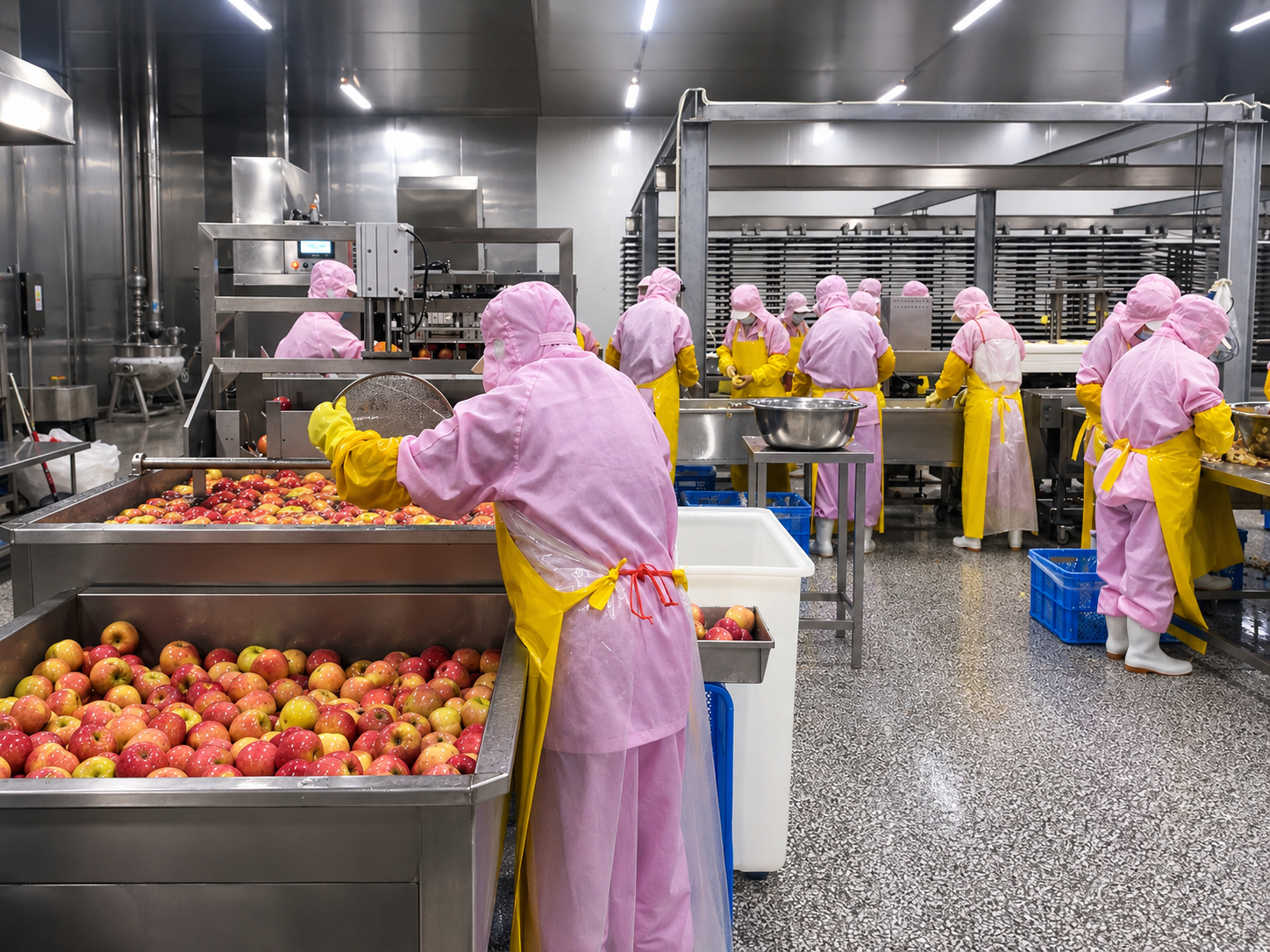
Apple is the control substrate. It can test whether a mild, low-fat base carries a coating without excessive colour or flavour interference, and whether a dice, slice or strip format gives a more stable coated piece. Apple formats are also relevant where the buyer wants to compare a pure or infused apple reference against a coated strawberry reference before deciding which fruit should lead the range. The apple processing image below is an industry scene, not a claim that a specific coated apple SKU is already commercial.
Banana is the transfer test. It is useful when the buyer wants to know whether a coating approach developed on strawberry can move to a different fruit structure, and whether a chocolate-flavoured or yogurt direction fits the target market. The banana reference should be treated as a project-confirmation item: check the cut, the coating pick-up and the flavour balance rather than assuming that a banana version will behave like strawberry.
Where the shortlist fits, and where it does not
This shortlist fits a coated snack trial that wants a light, crisp fruit piece with a flavoured surface layer. It also fits a buyer who needs to compare a berry-forward piece, a mild base and a different fruit structure before committing to a larger range. It does not fit every product brief. If the target is a soft, chewy fruit piece at the lowest ingredient cost, conventional dried fruit is generally a more natural fit than freeze-dried fruit. If the target is a single-ingredient, clean-label or no-added-sugar claim, the coated line is the wrong starting point because coated products contain milk-derived and soy-derived ingredients and are multi-ingredient products. The pure freeze-dried fruit line is the relevant route for those claims, subject to destination-market rules.
There is also a handling boundary. A buyer who cannot control storage and transport temperature, package seal integrity and stacking pressure should not treat a successful bench sample as a successful commercial product. Coated pieces can pass a visual check and still fail after a hot-climate journey. The trial should include the intended pack, the intended route and a retained sample comparison, not only a sample bag sent by courier.
Acceptance criteria to write into the trial brief
Purchasing terms should be agreed before the first sample is approved. The trial brief should state what will be measured, how it will be measured, and what happens if the bulk delivery differs from the approved sample. The following checklist is a practical way to structure that discussion.
| Decision area | What to write into the trial brief | Why it matters |
|---|---|---|
| Substrate and format | Exact fruit, cut or dimension, pure or coated status, net weight, and the reference SKU or model. | Prevents the buyer from comparing a strawberry half against a strawberry piece, or an apple dice against an apple strip. |
| Coating system | Coating direction such as yogurt, matcha, cocoa or chocolate-flavoured, fruit-original, and thin or thick coating route. | Coating direction changes flavour, appearance, allergen profile and the fruit-to-coating balance. |
| Defect limits | Sticking or clusters, tackiness, cracking, flaking, loose fragments, bloom or dull surface, and loss of crispness. | These are the defects most likely to appear after temperature cycling, transport or retail display. |
| Analytical and label documents | Moisture where relevant, COA, allergen declaration, ingredient list, fruit content, shelf life and packaging barrier. | Coated products require a separate allergen and label review from pure fruit. Do not reuse a pure-fruit document set. |
| Commercial terms | MOQ, lead time, packaging format, label version, sample approval record, claim window and nonconformance route. | Commercial terms determine whether a successful sample can become a repeatable order. |
| Release and retention | Golden sample, retained sample, batch traceability, pre-shipment document check and CAPA timeline. | A coated snack trial is only useful if the approved sample can be compared with later production. |
Commercial terms buyers should fix before scale-up
UrSnacks states that OEM and private-label finished goods start from approximately 600 kg, with mixed-SKU container loading supported. Bulk freeze-dried ingredients have a standard MOQ of one 20-foot container, with multiple ingredient SKUs able to share the container where loading conditions allow. Mature OEM and private-label programs typically require about 25–30 working days, subject to specification, packaging-material approval and production schedule. ODM projects require additional development, sampling and validation time. Shelf life is stated as 18 months for B2B ingredients and 12 months for finished goods, confirmed per SKU, packaging structure and destination market.
Those figures should be treated as planning inputs, not as a quote. The trial brief should confirm the exact SKU, coating direction, pack size, label version, allergen declaration, destination market and acceptance method. A buyer who compares only price per kilogram will miss the cost of coating defects, fines, rework and rejected pallets. A buyer who compares the total trial cost against a defined acceptance standard will make a better decision.
Supplier evidence: reading BRCGS certificate C723738 correctly
UrSnacks and FUJIAN YOULINGYOUSHI TECHNOLOGY CO., LTD. hold BRCGS Global Standard Food Safety Issue 9 certificate C723738, BRCGS Site Code 10017031, issued by DNV Business Assurance Italy S.r.l. The certificate scope states the selecting and packaging of dried vegetable products, including freeze-dried vegetables and vegetable chips, and dried fruit products, including fruit chips, packed in compound bags. It also states the selecting, coating, cooling and packaging of coated dried fruit products in compound bags.
That scope is directly relevant to a coated snack trial because coating and cooling are named operations. It is still not a blanket approval for every fruit, formulation, pack format or SKU. The buyer should match the certificate site and scope to the actual trial SKU, keep the current certificate on file, and confirm that the product specification, allergen declaration and label review are complete. The certificate also does not replace destination-market import requirements, labeling rules or customer-specific approvals.
What a successful trial should produce
A successful trial should produce more than a favourable sample. It should produce a golden sample, a written specification, a defect list with measurable limits, a packaging and storage recommendation, and a commercial plan for the first production run. If the trial fails, the failure should be classified: natural variation within specification, an unspecified parameter, a handling or transport effect, a genuine batch deviation, or a formulation issue. That classification is more useful than a general complaint because it tells the buyer what to change before the next order.
The next step is therefore not a full-range launch. It is a controlled comparison of the three shortlisted formats under the intended pack, route and shelf-life conditions. If the coated strawberry reference performs best, the buyer can deepen that route. If apple gives a more stable coated piece, it may become the control substrate. If banana reveals a coating adhesion weakness, that finding belongs in the specification before scale-up.
FAQ
Why are strawberry, apple and banana a useful first shortlist for coated snack trials?
They cover three different evaluation jobs. Strawberry provides an existing coated reference and a berry-forward identity. Apple provides a mild, low-fat base with several cut formats for comparison. Banana provides a different fruit structure and existing chocolate-flavoured and yogurt references. The set is a trial sequence, not a market ranking.
Which coating defects should be written into acceptance criteria?
Include sticking or cluster formation, coating tackiness or softening, cracking, flaking, loose coating fragments, dull or mottled surfaces, bloom on fat-based cocoa or chocolate-flavoured coatings, and loss of crispness after moisture pickup. The trial should also state the storage and transport conditions, the packaging structure and the retained-sample comparison method.
Does BRCGS certificate C723738 cover coated freeze-dried fruit?
The certificate scope includes selecting, coating, cooling and packaging of coated dried fruit products in compound bags, together with selecting and packaging of dried fruit products such as fruit chips. It should be read literally and matched to the actual site and SKU. It does not prove that every fruit, coating formulation, pack format or destination-market requirement has been approved.
Can coated freeze-dried fruit support clean-label or no-added-sugar claims?
Coated products are multi-ingredient products and contain milk-derived and soy-derived ingredients, with cocoa powder in cocoa variants. They are not eligible for single-ingredient clean-label or no-added-sugar positioning. The pure freeze-dried fruit line is the relevant route for those claims, and any finished-product claim still needs to be assessed against the destination market and the actual formulation.
What should be fixed before a coated snack trial becomes a production order?
Fix the specification, golden sample, coating direction, fruit content, allergen declaration, cut or dimension, packaging and label version, shelf life, MOQ, lead time, acceptance method, claim window and nonconformance route. The first production order should reference the approved specification and retained sample, not the original sales sample alone.
Conclusion
For an evaluation-stage buyer, the most useful coated snack trial is a controlled comparison, not a broad range launch. Freeze-Dried Strawberry, Freeze-Dried Apple and Freeze-Dried Banana give UrSnacks a practical three-SKU starting set: one existing coated benchmark, one mild base and cut-format control, and one transfer test. The supplier evidence supports the process discussion, but the buyer still has to define the acceptance criteria, the packaging and the transport conditions. A shortlist is valuable only when it produces a specification that can be checked on the next delivery.
Reference resource: UrSnacks brand book (PDF).
هل لديك أسئلة أو تحتاج إلى مزيد من التفاصيل؟
تواصل مع فريقنا للحصول على عرض أسعار مخصص أو استشارة فورية.
طلب عرض أسعار
املأ النموذج أدناه وسيتواصل معك فريقنا بعرض مقترح مخصص.
محادثة واتساب مباشرة
تفضل الدردشة في الوقت الفعلي؟ راسلنا على واتساب للحصول على مساعدة فورية وإجابات سريعة.
- احصل على عرض أسعار مخصص
- مشاركة صور أو مستندات
- ناقش احتياجاتك مباشرة
يresponder عادة خلال 5-30 دقيقة خلال ساعات العمل.