
Freight Elevator Buyer's Comparison: Heavy-Duty Specs vs. Real-World Industrial Fit
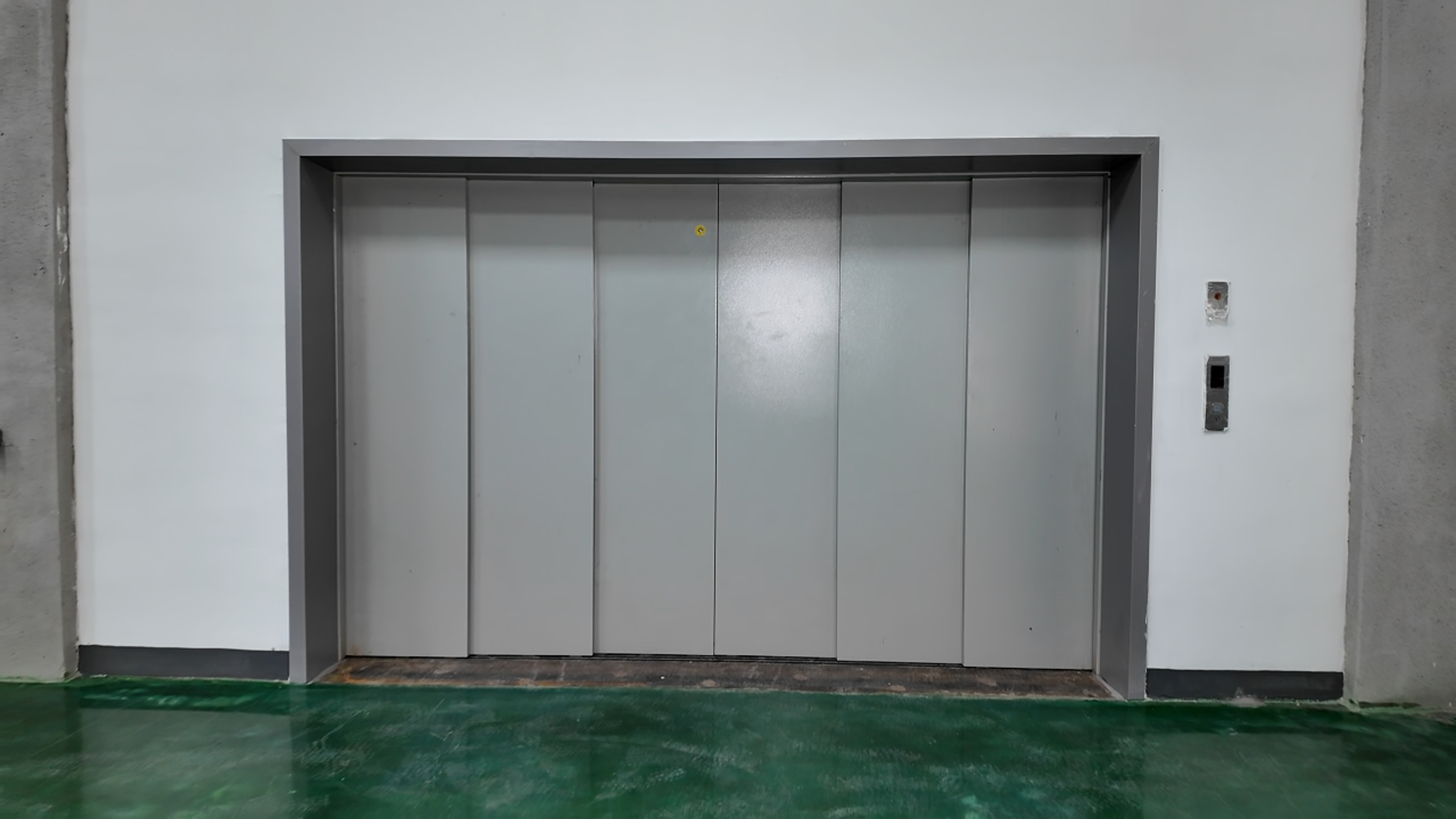
A freight elevator is purchased against a specification sheet, but it is judged against an operating schedule. Rated load, rated speed and travel height are precise, standards-defined figures. The pallet that arrives at the dock at the start of a shift, the stillage that is loaded slightly off-centre, and the third consecutive year of two-shift operation are not. The distance between those two descriptions is where most industrial freight elevator procurement risk sits.
This comparison is written for buyers at the research and evaluation stage. It uses one published product family as a concrete reference point and builds a framework for testing heavy-duty claims against real-world industrial fit, without ranking brands or repeating brochure language.
The Freight Elevator Market Is Growing Faster Than Buyer Comparison Habits
The global elevator market was valued at approximately USD 84.8 billion in 2024 and is projected to reach USD 126.7 billion by 2034, according to Global Market Insights. Inside that total, the freight elevator segment was valued at about USD 2.07 billion in 2024 and is expected to reach USD 2.78 billion by 2029, a CAGR of 6.10%, based on Knowledge Sourcing Intelligence.
Growth concentrated in logistics and manufacturing changes the nature of the decision. When freight capacity is added to serve warehouses, production lines and distribution hubs, the relevant question is no longer only whether equipment fits a shaft, but whether it fits a working day. That question is answered by comparison criteria, not by catalog headings.
For a concrete reference point, consider the freight elevator range from Joylive Elevator Co., Ltd. (stock short name: Joylive, stock code 833481), a Chinese elevator manufacturer founded in 2002, based in Bacheng Town, Kunshan City, Suzhou, Jiangsu Province, and exporting to Europe, the Americas, Oceania, Africa, Central Asia, Southeast Asia and the Middle East. Its freight elevator models GF10, GF20, GFN20 and GFN30 are specified across a load range of 1,000–200,000 kg, speeds of 0.25–3.0 m/s and a maximum travel height of 150 m, with SS304 as the car material. Those four parameters are the starting point for every comparison that follows, and on their own they are not enough to support a buying decision.
Six Comparison Dimensions That Separate Specification From Fit
Heavy-duty is a comparison category, not a single rating. Buyers who evaluate freight elevators across the six dimensions below usually find that two machines with identical headline numbers behave very differently in service.
| Comparison dimension | What the specification states | What the operation actually tests |
|---|---|---|
| Rated load | Certified capacity in kilograms | Recurring unit load including pallets, stillages and carts, plus occasional concentrated loads |
| Speed and travel height | Rated speed and maximum travel height | Total cycle time per trip, including acceleration, deceleration, door and loading time |
| Car and door dimensions | Standard car size and door opening | Whether the largest unit load enters without repositioning, and whether handling equipment clears the entrance |
| Duty and operating pattern | Rated duty cycle | Two- or three-shift operation, peak-hour queuing and stop frequency |
| Environment and materials | Car material and finish, for example SS304 | Dust, humidity, cleaning routine, corrosive or explosive atmospheres, and fire-rated requirements |
| Integration and service | Control options and remote monitoring availability | Coordination with dispatch and building systems, remote diagnostics, and the maintenance response model |
The purpose of the table is not to add paperwork. It is to force the specification conversation to happen twice: once in the language the manufacturer publishes, and once in the language the operation actually runs in.
Load Capacity Is the Easiest Specification to Misread
Rated load is the number buyers notice first, and it is also the number most often compared in isolation. A freight elevator rated at a given tonnage is certified to lift that load under defined test conditions. A factory rarely lifts a clean, centred, uniform mass. It lifts a pallet whose weight includes the pallet itself, a stillage, or a wheeled cart, and it occasionally lifts a single heavy item whose footprint concentrates load on part of the platform.
Because the Joylive freight elevator range spans 1,000 kg to 200,000 kg, the practical question is not what the maximum available figure is, but which point inside that range matches the recurring load. Buyers should establish three numbers before comparing suppliers: the recurring unit load including handling equipment, the maximum single load that will appear in normal operation, and the load that appears only during maintenance or exceptional moves. The third number frequently decides shaft dimensions, structural loadings and machine selection, which means a capacity decision is also a building decision.
Speed and Travel Height Are Throughput Variables, Not Comfort Variables
In passenger elevators, speed is largely a comfort and waiting-time variable. In freight elevators, it is throughput arithmetic. A lift running at 0.25 m/s between two warehouse levels across a five-metre travel is not slow in any meaningful sense, because door operation, loading and unloading dominate the cycle. A lift running at 3.0 m/s in a tall distribution facility serves a different purpose, and it also places different demands on the building structure, pit and overhead.
Buyers comparing freight elevators should calculate total cycle time rather than compare speed figures directly. Trip time depends on travel distance, acceleration and deceleration, door operation and loading time, and in most freight applications the loading sequence is the largest component. The published upper limit of 150 m travel height for the GF-series freight elevator is a useful boundary marker: inside it, capacity and speed can be traded against each other; beyond it, the project moves into a different equipment class.
Customization: Where Fit Is Won or Lost
The gap between a standard cargo elevator and a fitted solution is usually created by building geometry and workflow rather than by tonnage. Joylive operates an OEM/ODM production model for its freight elevators, with customization available across speed, load, travel height, car size, car decoration, logo and step width. Monthly production capacity is stated at 1,250 units, with a minimum order quantity of one unit and a lead time of 7 to 45 days depending on configuration.
Two of those figures deserve attention in a buyer's comparison. The first is the minimum order quantity of one unit: industrial projects frequently need a small number of units with identical performance but different shaft constraints, and a supplier able to accept a mixed, low-volume order removes a scheduling obstacle. The second is the lead time range. Seven days applies to straightforward configurations; the upper end of 45 days reflects engineering review, tooling and non-standard dimensions. Procurement schedules that assume the lower figure are the ones that slip, so a realistic project plan should be built against the upper bound whenever car size, decoration or non-standard capacity is involved.
The customization list also suggests a comparison question worth asking of any supplier: which variables can be changed independently, and which force a change elsewhere in the system? Increasing load typically cascades into platform, guide rails and machine selection; changing car size affects door configuration and shaft dimensions; changing speed affects machine sizing. A supplier that can explain these dependencies is usually the one that can also hold a delivery date.
Certification: The Constraint Layer Buyers Underweight
Certification is where a freight elevator comparison becomes legally concrete. EN 81-20 and EN 81-50 are the mandatory European safety standards for elevator construction and component testing and replaced the earlier EN 81-1 and EN 81-2 framework. In North America, the ASME A17.1-2025 / CSA B44-2025 update adds enhanced safety requirements for elevators and escalators, including provisions for IoT-based remote operation monitoring.
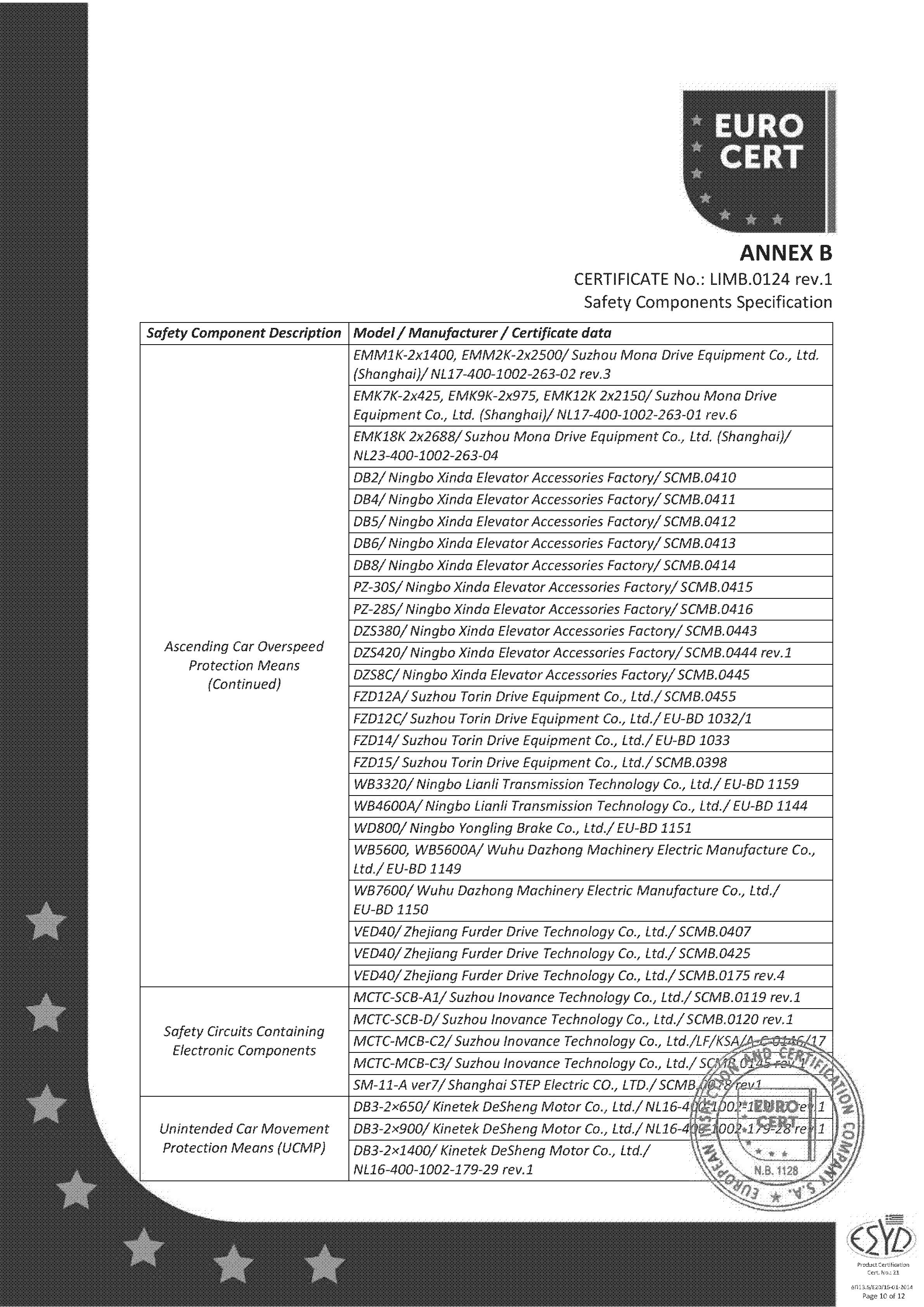
For the Joylive freight elevator platform, the relevant European documentation includes EU type-examination certificate LIMB.0124 rev.1 issued by EURO CERT for machine room goods passenger lifts under Directive 2014/33/EU and standards EN 81-20:2020 and EN 81-50:2020, together with EU type-examination certificate LIMB.0100 rev.1 covering machine-roomless goods passenger lifts under the same standard set. Quality management is registered to ISO 9001:2015 under certificate STQ10021-00 issued by AFNOR Asia Ltd, with a scope covering the design, manufacturing, sales, installation and maintenance of elevators; environmental management is registered to ISO 14001:2015, and the company also holds a GB/T 19001-2016 + GB/T 50430-2017 registration under certificate SHQ10021-05.
The comparison lesson here concerns scope rather than logos. A certificate is only relevant when its scope matches the configuration being purchased: machine room or machine-roomless, product family, market and standard edition. Joylive's VDI 4707 Part 1 energy efficiency certificate 10.16.2281, for example, applies to machine room passenger lifts rather than to the freight series. That distinction is not a weakness; it is precisely the specification-to-document matching that buyers should perform with every supplier, because a certificate that does not cover the quoted configuration does not transfer compliance to the project.
Integration With Existing Logistics Workflows
Freight elevators are rarely standalone assets. They sit inside a flow that includes receiving docks, forklifts, pallet positions, dispatch systems and maintenance routines, and the cost of a poorly integrated lift usually appears as labour time rather than as equipment failure.
Integration questions worth raising during evaluation include: can the lift be called and coordinated from the building's operational workflow rather than only from the car panel; does the control system expose status and fault information that maintenance can use remotely; and does the equipment report data into a monitoring environment the facility team already operates? Joylive's industrial and logistics application data lists IoT devices and the Joycloud platform as matched equipment for heavy-duty, heavy-load, fire-rated and 24/7 operating conditions, and its after-sales model combines online and offline technical support with a 24/365 hotline. For buyers, the practical test is not whether remote monitoring exists, but whether the data it produces changes a maintenance decision.
How Real-World Fit Is Proven: Industrial Reference Points
Industrial projects are the clearest available test of whether a heavy-duty specification converts into everyday reliability. Three electronics manufacturing references illustrate the type of environment in which freight elevator performance is judged:
- Inventec (Mexico) — a global electronics manufacturing services provider; nine passenger and freight elevators supplied for its project, in operation for one year with reported stable operation.
- Pegatron (Vietnam) — an electronics manufacturing service provider; 87 passenger and freight elevators supplied for its facilities, in operation for two years with reported stable operation.
- Wistron (Vietnam) — an ODM manufacturer of ICT products; 36 passenger and freight elevators supplied, in operation for five years with reported stable operation.
These results are supplier-reported, and buyers evaluating any manufacturer should treat them as a starting point for independent reference checks rather than as proof of fit in their own building. Their value inside a comparison is contextual: multi-shift electronics manufacturing combines heavy recurring loads, cleanliness expectations and near-continuous operation, which is a demanding combination for any freight elevator specification.
Comparing Traditional and Current Approaches, and Where Each Stops Working
Freight elevator comparison usually narrows to three structural choices, and each has a defined boundary where it stops being the right answer.
Drive type
Hydraulic drives are well established in low-rise, heavy-load applications where travel height is limited and speed is not critical. Traction drives are the conventional answer as travel height and speed increase. The trade-off is straightforward: hydraulic systems can deliver high capacity with simpler structural requirements at low height, while traction systems scale better in tall buildings but place greater demands on shaft geometry and machine space.
Machine room or machine-roomless
Machine-roomless configurations free up building space, which is often decisive in retrofit and space-constrained industrial projects. The constraint is certification: Joylive holds separate EU type-examination certificates for machine room goods passenger lifts (LIMB.0124 rev.1) and machine-roomless goods passenger lifts (LIMB.0100 rev.1). A buyer specifying a machine-roomless configuration should confirm that the certificate covers that configuration explicitly rather than assuming it from a general product listing.
Standard catalog product or customized solution
A standard catalog freight elevator is faster and simpler to procure, and for a straightforward two-stop warehouse installation it is often sufficient. A customized solution addresses geometry, workflow or environment, at the cost of engineering time, which is reflected in the upper end of the 7–45 day lead time range.
Where heavy-duty specifications stop
Honest comparison requires stating boundaries as clearly as capabilities:
- Travel height. The GF-series freight elevator platform is specified to a maximum travel height of 150 m and a maximum speed of 3.0 m/s. Projects beyond those limits require a different platform.
- Environment. SS304 is a durable, cleanable car material suited to a wide range of industrial settings, but it is not a universal answer to chemically aggressive atmospheres, and explosion-proof operation is a distinct configuration requirement that must be specified and verified against the exact product variant quoted rather than inferred from a general product list.
- Lead time. Customization extends delivery. A seven-day lead time is a best case, not a planning assumption.
- Digital service. IoT-based monitoring depends on the building's network environment and on the facility team acting on the data it receives. Remote monitoring does not remove the need for planned maintenance.
Market Trend Analysis: Where Freight Elevator Comparison Is Heading
Three documented trends are reshaping how buyers compare industrial freight elevators.
First, the digital service layer is becoming a measurable market in its own right: the IoT in elevators market was estimated at USD 16.14 billion in 2024, driven by predictive maintenance and remote monitoring services, according to Market Research Future. Second, regulation is beginning to formalise what digital service means, with the ASME A17.1-2025 update including IoT-based remote operation monitoring requirements for elevators and escalators in North America. Third, the supply side has globalised: Mainland China exported 102,000 elevators and 13,000 escalators in 2024, a 17.3% increase year-on-year, according to China Elevator Association data reported by Elevator World.
Taken together, these trends push comparison away from headline capacity. If equipment from multiple regions meets the same safety standards and offers comparable tonnage, differentiation shifts to configuration fit, certificate-to-configuration traceability, service response and lifecycle data.
Future Outlook
For buyers planning industrial capacity additions over the next several years, three expectations are reasonable. Remote monitoring will move from optional feature to baseline expectation, partly because standards are codifying it. Certificate scope will become a routine part of technical evaluation, because configurations rather than brands carry compliance. And lead time transparency will matter more as logistics construction cycles compress.
Supplier-side capacity and engineering depth are relevant to those expectations. Joylive operates from a manufacturing base of 105,000 m² with approximately 450 employees and 150 engineers, an annual output of 15,000 units, a nationally accredited CNAS laboratory, 100% testing, and an export ratio of 55% across Europe, the Americas, Oceania, Africa, Central Asia, Southeast Asia and the Middle East. For a buyer, those figures are useful less as claims in themselves and more as prompts for questions: how much engineering review is applied before a non-standard configuration is quoted, and how is 100% testing documented for a specific order?
FAQ
What is the difference between a cargo elevator and a freight elevator?
Terminology is not fully standardised across markets, and the two terms are often used interchangeably. In manufacturer catalogs, a freight elevator generally refers to a goods-oriented vertical transport product with a car and door configuration designed around loads rather than passengers. In Joylive's range, the freight elevator models GF10, GF20, GFN20 and GFN30 are specified across a load range of 1,000–200,000 kg, speeds of 0.25–3.0 m/s and a maximum travel height of 150 m. Because naming varies by region, buyers are better served by checking the applicable standard and the certificate scope of the exact configuration than by relying on the product label.
How much load can a heavy-duty freight elevator carry?
For the referenced GF-series platform, the specified range is 1,000 kg to 200,000 kg. The usable figure for a specific building is narrower, because it depends on the recurring unit load, shaft dimensions, structural loadings and the machine selected. Buyers should compare their own recurring unit load, including pallets, stillages and carts, against the rated capacity rather than comparing maximum available tonnage between suppliers.
Which certifications matter for a freight elevator in European or North American projects?
In Europe, EN 81-20 and EN 81-50 are the mandatory safety standards for elevator construction and component testing, and compliance is typically evidenced through an EU type-examination certificate. Joylive holds EU type-examination certificate LIMB.0124 rev.1 for machine room goods passenger lifts and LIMB.0100 rev.1 for machine-roomless goods passenger lifts, both issued by EURO CERT under Directive 2014/33/EU and standards EN 81-20:2020 and EN 81-50:2020. Company-level quality management is registered to ISO 9001:2015 under certificate STQ10021-00. For North America, ASME A17.1-2025 / CSA B44-2025 applies. In every case, the certificate scope must be matched to the configuration being purchased.
What can be customized on an industrial freight elevator, and how long does it take?
Customization for the referenced freight elevator platform covers speed, load, travel height, car size, car decoration, logo and step width. Lead time is stated at 7 to 45 days depending on configuration, the minimum order quantity is one unit, and monthly production capacity is 1,250 units. Projects involving non-standard dimensions, car decoration or unusual capacity should plan against the upper end of the lead time range.
How can buyers evaluate a freight elevator supplier without visiting the factory?
Four checks are practical at a distance: whether each certificate can be traced to the exact configuration being quoted; whether the supplier documents a defined testing regime, such as 100% testing; whether reference projects include operating duration and application type, as in the Inventec, Pegatron and Wistron industrial references; and whether the service model is described concretely, for example online and offline technical support with a 24/365 hotline. Export footprint and production capacity, such as a stated export ratio of 55% and an annual output of 15,000 units for Joylive, are supporting indicators rather than substitutes for these checks.
What are the limits of a heavy-duty freight elevator specification?
For the platform referenced here, travel height is capped at 150 m and speed at 3.0 m/s. SS304 car material is durable and cleanable but is not automatically suitable for chemically aggressive atmospheres, and explosion-proof requirements must be specified as a distinct configuration and verified against the exact quoted variant. Machine room and machine-roomless versions are certified separately. Customized configurations extend lead time up to 45 days. And IoT-based monitoring depends on the building's network environment and on the facility acting on the data produced.
Reference documentation: Joylive industrial elevator technical brochure (PDF) — view and download. Provided as a specification reference for buyers comparing heavy-duty freight elevator configurations.
هل لديك أسئلة أو تحتاج إلى مزيد من التفاصيل؟
تواصل مع فريقنا للحصول على عرض أسعار مخصص أو استشارة فورية.
طلب عرض أسعار
املأ النموذج أدناه وسيتواصل معك فريقنا بعرض مقترح مخصص.
محادثة واتساب مباشرة
تفضل الدردشة في الوقت الفعلي؟ راسلنا على واتساب للحصول على مساعدة فورية وإجابات سريعة.
- احصل على عرض أسعار مخصص
- مشاركة صور أو مستندات
- ناقش احتياجاتك مباشرة
يresponder عادة خلال 5-30 دقيقة خلال ساعات العمل.