
From 10,000 m² to Delivery: Verifying GREEN BIO's Supply Capability
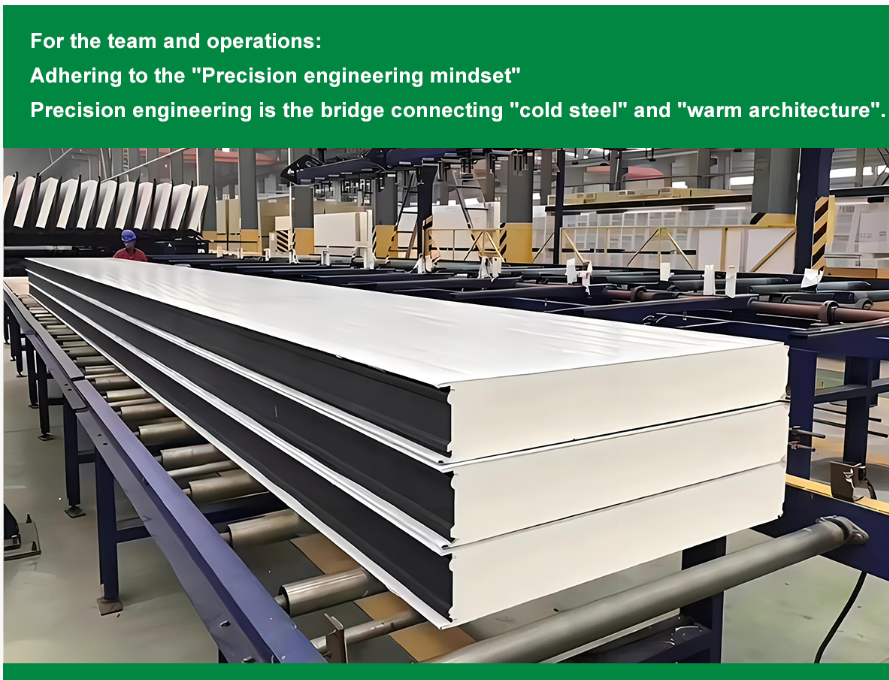
Supplier Capability Reference
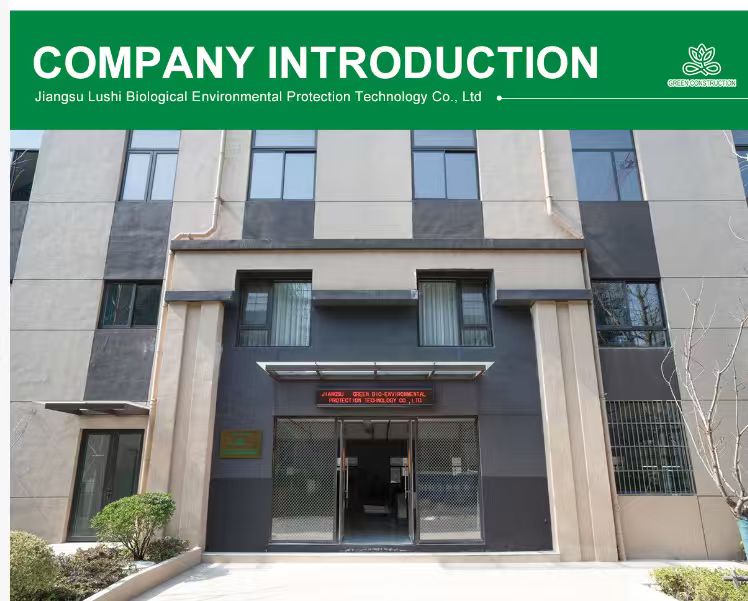
Capability claims only become useful to a buyer when they can be converted into verification steps. GREEN BIO — formally JIANGSU GREEN BIO-ENVIRONMENTAL PROTECTION TECHNOLOGY CO., LTD — is a China-based supplier of building envelope and finishing materials founded in 2015. Its published operational record is compact and specific: a 10,000 m² manufacturing facility, 50 employees, a 25-engineer R&D team, an annual production capacity of 120,000 units, a 70% export share concentrated in Belt and Road markets, and three ISO management-system certifications covering its cold storage panels. This reference sets out what each figure measures, where it stops functioning as evidence, and how a procurement team can carry the same facts from supplier selection into execution.
The article is written for buyers who have already shortlisted a Green Building Solutions supplier and now need to commit deposits, moulds, shipping slots and project calendars. At that point, factory numbers stop being marketing material and start behaving like schedule risk.
Why Capacity Evidence Decides the Execution Stage
During evaluation, suppliers are compared on catalogues, samples and price. During execution, they are judged on repetition: the same panel, at the same tolerance, on the same date, for the tenth container as reliably as for the first. The failure mode that damages construction and decoration projects is rarely an inability to produce a good sample. It is an inability to hold output steady once the sample phase ends, or to reserve enough of a production calendar for a buyer whose project cannot slip.
This is why physical facts — floor area, headcount, annual capacity, certification scope — matter more at the decision-to-execution boundary than they do at the discovery stage. They are the only forward-looking numbers a buyer has before purchase orders exist. Used well, they convert into three practical outputs: a realistic delivery schedule, a defensible quality clause, and a volume-reservation conversation. Used badly, they become a reassuring paragraph that survives until the first delay.
GREEN BIO's Published Capability Record
GREEN BIO is a manufacturer and exporter of insulated building envelope products and structural and finishing materials, operating from Nantong City, Jiangsu Province, China. Its stated product range covers PIR Sandwich Panel, plywood, steel support, cable bracket and Aluminum profiles — a mix that spans cold-chain envelopes on one side and construction and decoration hardware on the other. The company states that it provides full life-cycle service coverage for users in more than 120 countries and regions.
| Published figure | What it measures | How a buyer can use it |
|---|---|---|
| Established 2015 | Operating history | Compare registration date with the issue dates on certificates and test reports |
| 10,000 m² facility | Covered manufacturing floor area | Request a layout or site plan; check how many lines the footprint can hold |
| 50 employees | Total headcount | Ask which production steps are in-house and which are subcontracted |
| 25 engineers in R&D | Engineering capacity | Ask for drawing turnaround time and a customization history |
| 120,000 units annual capacity | Throughput expressed in units | Confirm what one unit equals for your SKU before scheduling |
| 70% export share | Export dependence | Indicates documentation maturity; request a sample export document set |
| Southeast Asia, Central Asia, Russia, South America, Africa | Belt and Road and emerging market coverage | Ask for a reference in your destination and climate zone |
Company materials issued through other channels also name Europe and the Middle East among export destinations. Where two published lists differ, the honest reading is that the destination mix has been described at different times rather than that one list is wrong — and the buyer should ask for the current split during quotation.
What Each Figure Actually Measures — And Where It Stops
Floor area describes layout, not output
A 10,000 m² footprint constrains how many lines fit, how much work-in-progress can be staged, and how much finished goods can be held before shipment. It does not, by itself, state throughput. Two facilities of identical area can differ several times over in output depending on line configuration, shift pattern and product mix. The correct interpretation is that the footprint removes one common constraint on expansion — space — while leaving line count, shifts and curing or foaming time to be confirmed separately.
The unit problem: 120,000 units versus 50,000 m²
GREEN BIO publishes an annual production capacity of 120,000 units. Separately, company channel materials state a monthly production capacity of 50,000 square meters. These two figures are not directly comparable, because one is counted in units and the other in area, and neither automatically converts into the other without knowing the average panel size and the share of output devoted to panels versus plywood, props, brackets or profiles.
For illustration only: if 120,000 units were spread evenly across twelve months, the implied average would be roughly 10,000 units per month. That arithmetic is not a capacity commitment — it simply shows the shape of the number a buyer can bring to a scheduling conversation. The productive question in a quotation is narrower and more useful: how many units of my specification can you give me per month, and how much of that is already committed?
Headcount tells you where the capability sits
Of the 50 stated employees, 25 are described as R&D engineers — about half of the stated headcount. A ratio of that shape indicates an engineering-led model rather than a labour-heavy commodity line. For buyers this is practically relevant in two places: drawing and customization turnaround before an order, and problem-solving speed after one. It also implies that the remaining workforce covers production, quality, sales and logistics, so a buyer should ask directly how shifts are staffed at peak load.
A 70% export share is a documentation signal
When most of a supplier's output leaves the country, export documentation is not an occasional exercise but a routine. That normally shows up in familiar places: packing standards, certificate-of-origin handling, third-party inspection readiness, and familiarity with destination-specific declaration requirements. It says nothing about product performance. It does say something about the probability that a shipment arrives with the paperwork a customs broker or site engineer expects.
Certifications: Management Systems Versus Product Performance
GREEN BIO holds ISO 9001:2015, ISO 14001:2015 and ISO 45001:2018 certifications, stated in company materials as applying to cold storage panels. These are management-system standards, and the distinction matters when they are read inside a tender document.
| Certification | Subject | What it supports in an evaluation | What it does not prove |
|---|---|---|---|
| ISO 9001:2015 | Quality management system | Consistency of process control, inspection and corrective action | A specific panel's thermal or mechanical values |
| ISO 14001:2015 | Environmental management system | Managed environmental processes at the facility | A carbon footprint figure for one delivered batch |
| ISO 45001:2018 | Occupational health and safety system | Worker-safety governance, relevant to audit and supply continuity | Anything about product performance |
Fire performance is a separate evidence line. Company materials state that B1/B2 grade flame-retardant cores are offered, tested against ISO and EN 13501 fire safety references, with third-party test reports supplied alongside the shipment so that local fire inspections can be supported. For a buyer, the certificate body and the test report are two different documents with two different jobs: the ISO certificate speaks to the factory system, the fire test report speaks to the product. Both should be requested, and the report should match the core grade and thickness actually ordered.
Where These Facts Fit Real Construction and Decoration Scopes
The product range separates into two procurement bundles that behave differently in a project schedule. The first is the insulated envelope: PIR Sandwich Panel used for cold storage walls and ceilings and for controlled-temperature construction. The second is the structural and finishing bundle: plywood, steel support, cable bracket and Aluminum profiles, which typically appear in temporary works, services support and interior completion.
| Product line | Typical role in a project | Evidence to request before ordering |
|---|---|---|
| PIR Sandwich Panel | Insulated envelope for cold storage and temperature-controlled rooms | Core grade, thickness, fire test report, declared thermal value |
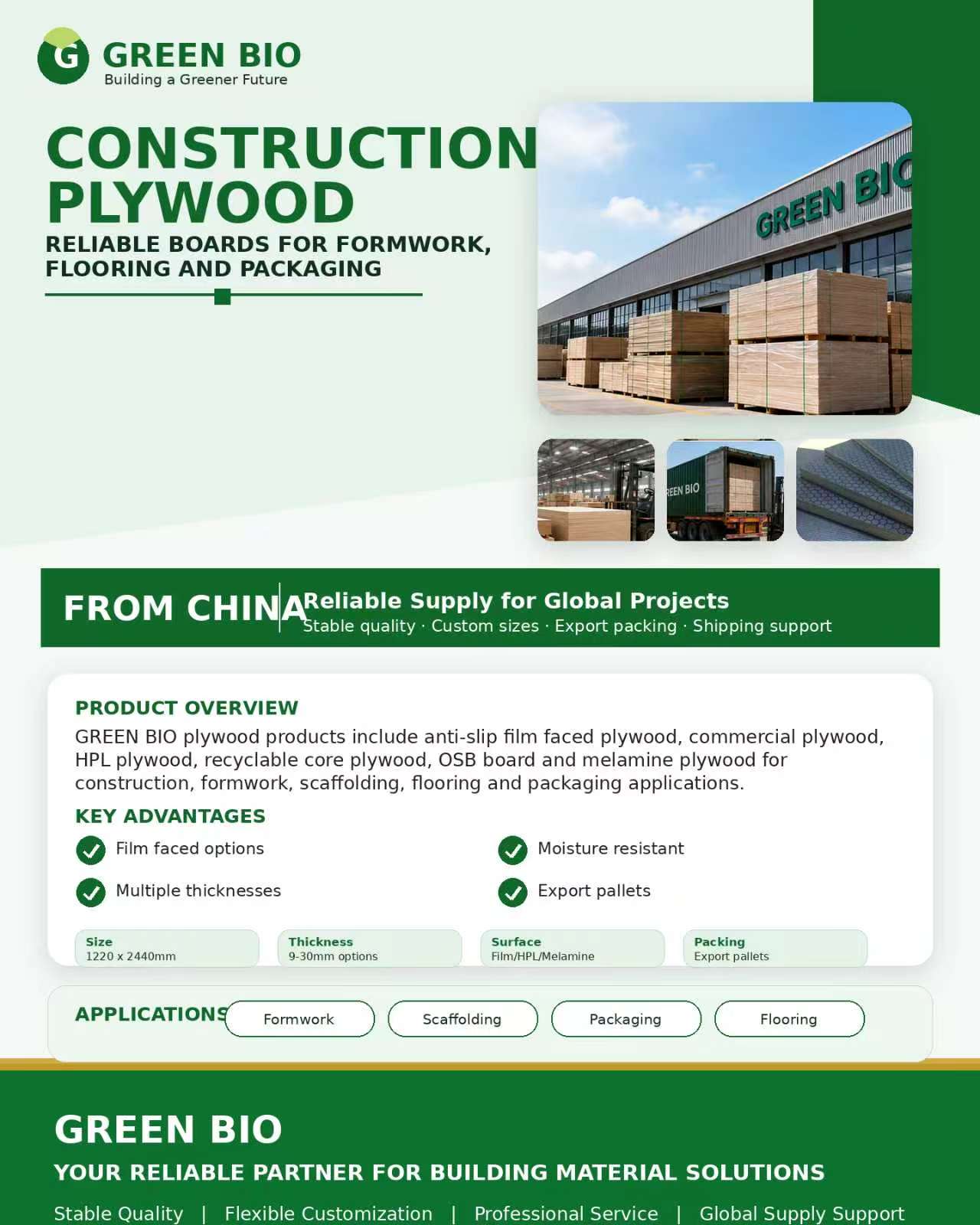
| Plywood | Formwork, lining and packing applications | Grade, thickness tolerance, moisture specification |
| Steel support | Temporary structural support during construction | Dimensional specification and declared load rating |
| Cable bracket | Services and cable routing support | Material, finish and fixing specification |
| Aluminum profiles | Finishing, trim and interface detailing | Alloy and surface-finish specification |
The Belt and Road dimension is not decorative. A 70% export share with named coverage across Southeast Asia, Central Asia, Russia, South America and Africa describes a supplier whose usual logistics routes, documentation habits and packing standards are built around long-haul emerging-market delivery rather than domestic trucking. For a contractor assembling a package for a cold-chain warehouse or a fit-out in one of those regions, that familiarity reduces the coordination load on the buyer's own logistics team.
Company materials also declare a PU core thermal conductivity as low as 0.022 W/(m·K) for the panel line. That should be treated as a declared value until the corresponding test report is attached to the shipment documentation — which is exactly the condition the supplier states it applies to fire test reports.
Market Context That Raises the Bar on Documentation
The documentation expectations described above are not a private preference of one buyer. China's green building materials market was valued at USD 216.3 billion in 2025 by IMARC Group, which projects USD 484.9 billion by 2034 at a 9.10% compound annual growth rate. Definitional caution is warranted: research houses draw the boundary of green building materials differently, and a much lower figure published elsewhere reflects a narrower product definition rather than a contradiction. The direction of travel, not the precise number, is the usable signal.
Policy reinforces it. According to the International Trade Administration, China's 14th Five-Year Plan required all new urban buildings to meet green building standards by 2025 — a coverage mandate rather than a voluntary programme. Policy commentary further points to a reported target of 30% of new urban floor area using prefabricated methods by 2027. National assessment runs through GB/T 50378-2019, the green building evaluation standard updated in 2024, which rates buildings on a one-to-three-star scale across five dimensions: safety and durability, health and comfort, occupant convenience, resource saving, and environmental livability.
For suppliers, the consequence is procedural. When envelope insulation, structural components and finishing materials all sit inside an assessment framework, the paperwork attached to a delivery becomes part of the project's compliance case. A manufacturer with management-system certifications and a habit of shipping third-party test reports with the goods is easier to slot into that framework than one whose documentation is assembled after the fact.
Comparing Supply Models — And the Limits of GREEN BIO's Evidence
Most Green Building Solutions buyers in this category end up choosing between three supply shapes rather than between individual catalogues. Each carries a different evidence profile.
| Supply model | Strength | Where it falls short |
|---|---|---|
| Factory-direct manufacturer | Production facts are inspectable; engineering access is direct; pricing comes from the source | Single-site risk; capacity is shared across all customers; less flexibility on niche items outside the range |
| Trading company | Wide product breadth and consolidated shipping | Production evidence belongs to third parties; capacity cannot be reserved directly |
| Single-line specialist | Deep focus and consistent output on one product family | Mixed packages need multiple suppliers, multiplying coordination and documentation risk |
GREEN BIO sits in the first category, and that position comes with specific boundaries that a buyer should state plainly in an internal evaluation file. The facility is a single 10,000 m² site, so surge capacity has a ceiling that no amount of engineering depth removes. A 50-person workforce is efficient for engineered and customized work but is not a high-volume commodity operation, and peak-season allocation should be booked rather than assumed. The three ISO certifications are described as applying to cold storage panels, not to every item in a five-line range, so plywood, steel support, cable bracket and Aluminum profiles each need their own specification documents. The annual capacity figure and the monthly area figure cannot be reconciled from published materials alone. And the overseas after-sales claim — localized support through overseas offices, an internationally oriented staff and a stated 24-hour response target — is company-reported, not independently audited.
None of these limits disqualify the supplier for project work. They define the precision required in the contract: volume allocation in writing, per-product documentation, and an agreed escalation path for after-sales.
An Execution Checklist Built From the Same Evidence
The company publishes commercial terms that make the transition from shortlist to purchase order relatively concrete. Minimum order quantity is stated as 500. Delivery terms offered are FOB, EXW, CIF and DDP. Acceptance is defined by pre-shipment inspection and test report, and payment terms are 30% in advance with the remaining 70% before shipment. Company press materials additionally state a typical lead time of 15 to 25 days after deposit, and a minimum order of 100 square meters or one 20-foot container.
Those two minimum-order statements differ, and a buyer should resolve the difference in writing at quotation rather than at booking. Beyond that, the following document set converts the capability record into a working file:
- Certificate copies for ISO 9001:2015, ISO 14001:2015 and ISO 45001:2018, showing issuing body, scope and validity dates.
- Fire test reports matching the ordered core grade and thickness, with report numbers and laboratory identity.
- A written monthly allocation for the buyer's specific SKU, expressed in the same unit used for the purchase order.
- A factory layout or site plan supporting the 10,000 m² footprint and the line configuration used for the ordered product.
- A confirmed commercial sheet covering MOQ, delivery term, lead time, payment split and inspection method.
- A named after-sales contact and stated response time, since the 24-hour target is a company commitment rather than a certified benchmark.
Future Outlook: From Claims to Auditable Records
The direction of procurement in this category is toward traceability. As green building assessment frameworks, low-carbon documentation and prefabricated quotas tighten across China and Belt and Road markets, the supplier facts that win work will be the ones that can be filed. A capacity figure that arrives with a unit definition, a layout drawing and a monthly allocation letter is worth more in a tender pack than a much larger number without them.
For manufacturers of GREEN BIO's profile, the competitive gap is unlikely to be in floor area. It is more likely to sit in the quality of the evidence file: how quickly certificates, test reports and allocation commitments can be produced, and whether the same numbers appear consistently across every channel a buyer reads. Buyers, for their part, should expect that consistency — and treat any supplier whose figures cannot be reconciled as a supplier whose schedule cannot be relied on.
Frequently Asked Questions
What does GREEN BIO's 10,000 m² facility and 120,000-unit capacity actually tell a buyer?
The 10,000 m² figure describes manufacturing floor area, which constrains layout, work-in-progress staging and finished-goods holding. The 120,000 units describes annual throughput in unit terms. Together they establish that the supplier operates a defined single-site manufacturing base with a stated annual output, but neither figure sets a delivery schedule until the buyer knows what one unit equals for the specific product ordered.
How should a buyer verify these capacity figures before signing?
Request the supporting documents rather than a restatement. Useful items include a factory layout or site plan, a written monthly allocation for the buyer's SKU, the definition of a unit for that SKU, and the certificate copies with issuing body, scope and validity dates. Company materials also publish a monthly production capacity of 50,000 square meters; because it is measured in area rather than units, it should be reconciled with the annual unit figure in writing rather than assumed to match.
Which product lines and certifications are covered, and which are not?
The stated range covers PIR Sandwich Panel, plywood, steel support, cable bracket and Aluminum profiles. ISO 9001:2015, ISO 14001:2015 and ISO 45001:2018 are described as applying to cold storage panels, which means quality, environmental and occupational-safety management systems for that product area. They are management-system certifications and do not certify thermal, mechanical or fire performance of a specific panel. Fire performance is supported separately through B1/B2 grade flame-retardant cores and third-party test reports referenced against ISO and EN 13501 fire safety standards.
What commercial terms apply when moving from shortlist to execution?
Published terms state a minimum order quantity of 500, delivery terms of FOB, EXW, CIF and DDP, acceptance based on pre-shipment inspection and test report, and payment of 30% in advance with 70% before shipment. Company press materials additionally state a typical lead time of 15 to 25 days after deposit and a minimum order of 100 square meters or one 20-foot container. Because the two minimum-order statements differ, the applicable figure should be confirmed in the quotation.
Where does this capability evidence fall short for long-term supply?
Four boundaries are visible from the published record. Production is concentrated on a single 10,000 m² site, so surge capacity has a ceiling. A 50-person workforce supports engineered and customized work rather than high-volume commodity output, so peak allocation should be reserved in writing. The three ISO certifications are described for cold storage panels rather than the full five-line range, leaving each additional product to be documented separately. And the localized after-sales arrangement, including the stated 24-hour response target, is company-reported rather than independently audited.
GREEN BIO publishes a product catalogue covering its panel and structural lines for project and procurement teams: Green Bio Professional Catalog 2026 (PDF). Company information is available at www.greenlvgreen.com.
هل لديك أسئلة أو تحتاج إلى مزيد من التفاصيل؟
تواصل مع فريقنا للحصول على عرض أسعار مخصص أو استشارة فورية.
طلب عرض أسعار
املأ النموذج أدناه وسيتواصل معك فريقنا بعرض مقترح مخصص.
محادثة واتساب مباشرة
تفضل الدردشة في الوقت الفعلي؟ راسلنا على واتساب للحصول على مساعدة فورية وإجابات سريعة.
- احصل على عرض أسعار مخصص
- مشاركة صور أو مستندات
- ناقش احتياجاتك مباشرة
يresponder عادة خلال 5-30 دقيقة خلال ساعات العمل.