
From Approved Sample to Reorder: Comparing T-Shirt Factory Handoffs
From Approved Sample to Reorder: Comparing T-Shirt Factory Handoffs
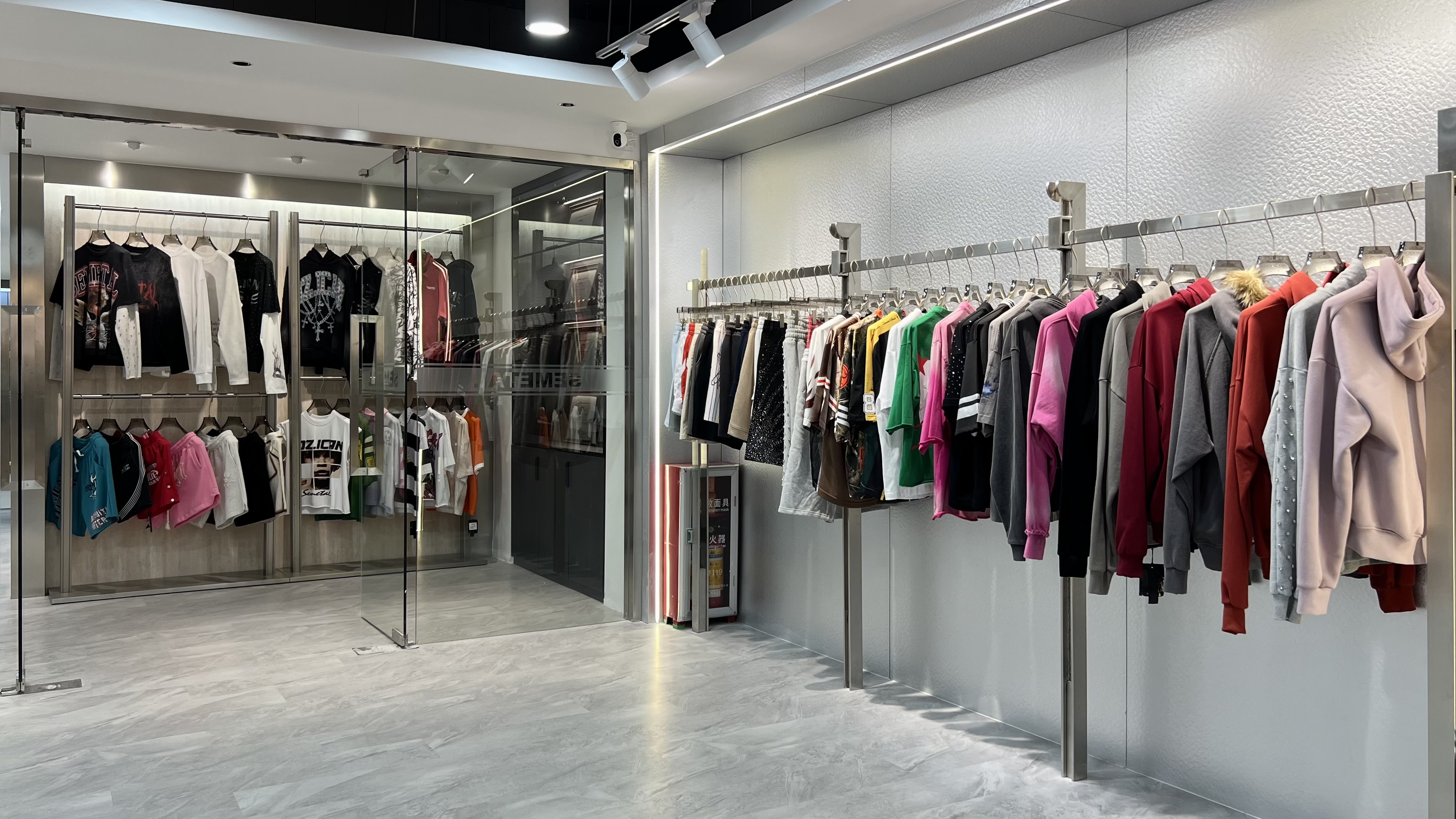
Independent buyers rarely lose money because a sample looks bad. They lose money when the approved sample and the bulk order describe different products. That is why the sample-to-bulk handoff is a better comparison point than a headline lead time: it shows whether a T-shirt manufacturer can turn an approved reference into a repeatable order, and then reproduce it again on reorder.
This is a buyer-side comparison framework, not a ranking of T-shirt manufacturers. It uses Qianshiwear—the brand name used by Guangzhou Qianshi Apparel Co., Ltd, a Guangzhou-based custom apparel manufacturer that describes itself as a full-service OEM, ODM and private-label supplier—as one documented reference case. Qianshiwear’s published case information includes a 10-day sample, a 30-day bulk turnaround, a reported 100% QC pass rate for rush orders, and four reorders during a 5,000-piece, 12-stop tour merch project. Those facts are company-reported. They are useful because they show what evidence a buyer can ask for, not because they prove superiority over any named competitor.
Why the handoff matters more than the headline lead time
A sample order tests design interpretation. A bulk order tests production control. A reorder tests whether the factory can reproduce the approved result after the first run has passed. These are three different capabilities, and a single lead-time number collapses them into one misleading figure.
A 10-day sample can be fast and still be useless if it does not carry the measurement points, fabric references, print parameters, label placement and packing standard that bulk will be judged against. A 30-day bulk run can be competitive and still create risk if the buyer has not agreed what “accept” means at final inspection. Four reorders can look like loyalty and still reveal little if no one can show what stayed the same between runs.
For that reason, an independent buyer comparing T-shirt manufacturers should normalize the handoff before comparing price or speed. The practical question is not “Who says they are fast?” It is “What will be fixed at sample approval, what will be measured at bulk inspection, and what record will make the next reorder controllable?”
The four-part comparison checklist
The checklist below converts the handoff into four comparable areas. It applies to a China T-shirt manufacturer, a low MOQ T-shirt manufacturer, a private label T-shirt manufacturer or a custom T-shirt manufacturer serving a specific niche. The evidence requested should be the same across candidates so that the comparison is like-for-like.
| Comparison area | What the buyer should ask | Evidence that makes the answer usable | Why it affects the decision |
|---|---|---|---|
| Sample approval standards | What exactly is approved, and can it be measured? | Signed approval sheet with measurements, fabric reference, color standard, print and label placement, packing details. | Prevents a visually similar sample from becoming an unmeasurable bulk dispute. |
| Bulk consistency | Which checkpoints connect the approved sample to the shipped order? | Incoming fabric records, first-article inspection, in-line checks, AQL final inspection, batch traceability. | Reveals whether consistency is a process or a promise. |
| Rush-order QC | What changes when the calendar is compressed? | Inspection standard, sample size, defect classification, re-inspection rule, and who performs the check. | Separates speed from controlled speed. |
| Reorder readiness | Can the factory reproduce the same product without renegotiating the specification? | Repeat-order record, retained quality file, same fabric and print parameters, documented changes. | Tests production memory, not customer loyalty. |
1. Sample approval standards: lock the reference, not just the look
Sample approval should produce a reference document, not a photograph and a verbal “yes.” The document should identify the style, fabric, color standard, size grading, measurement points and tolerances, decoration method, label and packaging details, and the person authorized to approve changes. If the factory cannot state which sample stage is being quoted, the buyer is not comparing the same deliverable.
Qianshiwear’s 10-day sample timeline is a useful example of why definition matters. A 10-day sample can mean a development sample, a fit sample or a pre-production sample; those are different checkpoints with different acceptance consequences. The buyer should ask every candidate to define the sample stage, what is included, what is excluded and how sample feedback is carried into bulk. A fast sample that is not tied to a bulk specification is only a fast sample.
The approval record should also preserve the conditions that are easy to lose: the fabric lot used for the sample, the color standard under a stated light source, the print placement on each size, and the packing configuration. For a private label T-shirt manufacturer, neck label content, country-of-origin information and label placement belong in the approval record because they become part of the shipped product, not an afterthought.
2. Bulk consistency: convert the sample into measurable acceptance criteria
Bulk consistency is the ability to reproduce the approved sample across a production run. It is not the same as a visual match on one garment. The buyer should compare how each factory links incoming materials, cutting, sewing, printing, finishing and final inspection to the approved reference.
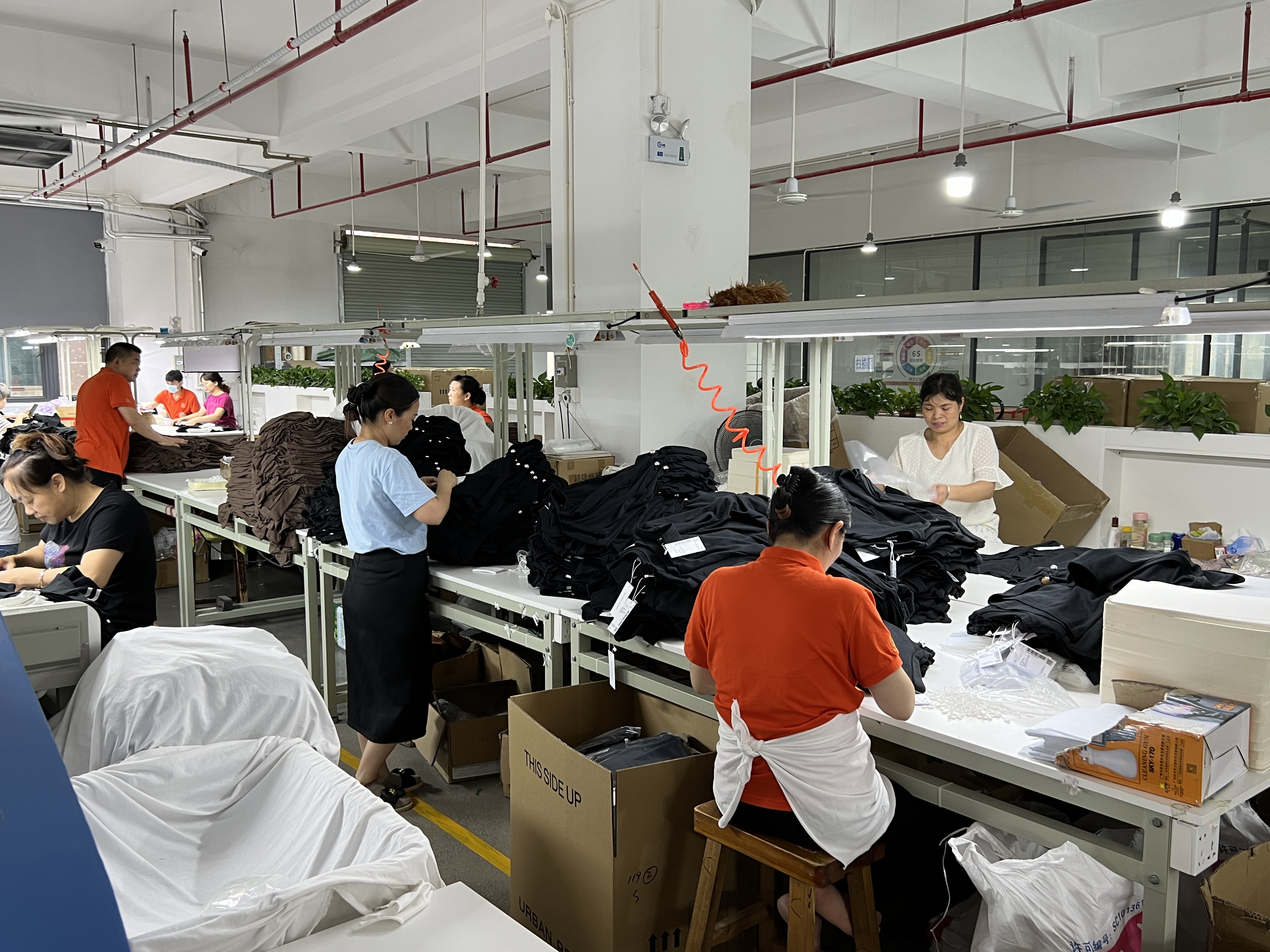
Qianshiwear’s published quality-control description lists 100% fabric inspection on arrival, first-article inspection at cutting, sewing and printing stages, random patrol checks, AQL 2.5 sampling for finished goods, pre-shipment wash tests on representative samples, size and measurement verification across colorways, and batch-number traceability for reorders. It also lists controls aimed at common T-shirt failure modes: reactive dyeing with high-temperature fixation, pre-shrinkage before cutting, reinforced stitching at stress points, anti-pilling treatment, controlled curing for screen prints and DTG inks, embroidery backing stabilization, and hardware testing before bulk assembly. These are company-reported procedures; their value in a comparison depends on whether the buyer can see the records, not just the list.
That distinction matters at acceptance. If the sample was approved on one fabric lot, bulk should be checked against weight, width, color consistency and shrinkage potential. If the design uses screen printing or DTG, the approved print should be checked for placement, cure and appearance after wash. If the product carries custom neck labels or hang tags, the label content and attachment should be part of the bulk inspection, not a separate packaging conversation after the goods are finished.
A low-cost factory or ultra-budget mass producer may present a similar capability list. The buyer’s comparison should ask for the same evidence from each: the inspection standard, the sample size, the defect classification, the re-inspection rule and the record that survives into the next order. Without those, “structured QC” is a phrase rather than a comparable system.
3. Rush-order QC: speed is only useful when the inspection standard travels with it
A rush order compresses the calendar. It should not quietly compress the acceptance standard. Qianshiwear reports a 100% QC pass rate for rush orders. A buyer should read that as a reported outcome for a defined set of orders, not as a universal property of every future rush order. The useful follow-up questions are: What inspection standard was applied? What sample size was checked? Which defects were classified as major, minor or critical? Who performed the inspection? What happened when a defect was found?
This is where a T-shirt manufacturer’s handoff evidence separates from a calendar claim. A factory that can show first-article approval, in-line checks and final AQL inspection during a compressed schedule is offering a controlled process. A factory that can only show a delivery date is offering a promise. The buyer does not need to assume bad faith; the buyer needs a comparable definition. If one candidate reports “100% pass” under a stated AQL sampling plan and another reports “good quality” without a plan, the two statements are not comparable.
Rush orders also deserve a fit boundary. A compressed schedule may be appropriate for a fixed event date, a tour stop or a replenishment window, but it is not automatically appropriate for a new design with unresolved fit, fabric or print variables. Speed is most defensible when the specification is already stable.
4. Reorder readiness: does the factory reproduce the approved product?
Reorder behavior is the part of the handoff that buyers often overlook because it looks like a relationship signal. It is better treated as a production-control signal. Qianshiwear reports four reorders during a 5,000-piece, 12-stop tour merch project. That is a documented case, not a market statistic. Its value is that it creates a question every buyer can ask: when the same buyer comes back, what does the factory rely on to reproduce the approved product?
A reorder is not automatically a quality signal. It can reflect urgency, a narrow supplier pool, a price advantage or a buyer’s desire to avoid re-sampling. The stronger evidence is a repeat order that held the same acceptance criteria and left a quality record. For comparison, ask whether the factory retains the approved sample, measurement sheet, fabric reference, print parameters and inspection results; whether it assigns a batch number; and whether it documents any change before the next run. A factory that can reproduce the approved product without renegotiating the specification is offering production memory. A factory that treats every reorder as a new project is offering a new sample risk.
Qianshiwear’s case is useful here because the reported reorders sit inside a defined project: 5,000 pieces across a 12-stop tour merch program. The buyer should still ask what was reordered, why, and whether the same fabric lot and print settings were available. The count alone is not proof. The combination—repeat order plus retained records plus unchanged acceptance criteria—is the evidence that matters.
What Qianshiwear’s documented case does and does not prove
Qianshiwear’s published case gives the comparison a concrete reference shape: a 10-day sample, a 30-day bulk turnaround, a reported 100% QC pass rate for rush orders, and four reorders in a 5,000-piece, 12-stop tour merch project. The company also lists a low MOQ starting from 50 pieces per color per design, and describes OEM, ODM and private-label services with screen printing, DTG, embroidery, puff print, rhinestone, applique, custom neck labels, hang tags and packaging. Those facts are company-reported and should be verified against the buyer’s own order terms, sample approvals and inspection records.
The case does not prove that Qianshiwear is faster, cheaper or better than any named competitor. It does not establish an industry ranking, and it should not be used as one. What it does show is the kind of evidence an independent buyer can request from any T-shirt manufacturer: a defined sample stage, a bulk acceptance standard, a rush-order inspection definition, and a repeat-order record that can be checked rather than assumed.
That is also the correct limit of this comparison. The article compares handoff criteria, not factory audits. A buyer still needs its own sample evaluation, measurement review, wash or print checks where relevant, and any required third-party inspection. Qianshiwear’s own quality-control description notes that third-party inspection can be arranged on request. That is a verification route, not a substitute for the buyer’s acceptance criteria.
Comparing purchasing terms without comparing headline lead times
Purchasing terms should be normalized before lead times are compared. A buyer should quote the same bill of materials, size breakdown, decoration method, label and packaging requirement to every candidate. The comparison should then separate sample terms from bulk terms: what the sample costs and whether it is credited, what the minimum order quantity applies to, what the approval window is, how changes are priced, what the tolerance is on quantity and size ratio, what inspection standard applies, and what happens if the bulk order fails acceptance.
These terms matter more than a single number because they allocate risk. A 10-day sample and a 30-day bulk run may be attractive, but the buyer still needs to know whether the sample timeline starts from artwork approval, fabric confirmation or payment; whether the bulk timeline includes inspection and packing; and whether a reorder uses the same terms. If those definitions are missing, a comparison between a China T-shirt manufacturer and a local vendor, or between two China T-shirt manufacturers, is not like-for-like.
For a low MOQ T-shirt manufacturer, the same discipline applies at a smaller scale. A 50-piece trial can reduce inventory risk, but it does not remove the need for a sample approval record and a bulk acceptance standard. For a custom T-shirt manufacturer handling oversized, boxy fit, screen printing, DTG or cut and sew work, the handoff record should also state which construction and decoration variables are fixed and which may vary within an agreed tolerance.
Fit boundaries and limitations
This framework has clear boundaries. A reported 100% QC pass rate for rush orders is not a guarantee that every future rush order will pass. A 30-day bulk turnaround is not suitable for a delivery date that falls inside that window once transit and inspection are added. A 10-day sample is not proof that bulk will match unless the sample approval record is detailed enough to measure. Four reorders in one project are not evidence of industry-wide performance.
Buyers should also keep certification and compliance claims separate from handoff performance. A T-shirt manufacturer may hold or claim certifications, but the buyer should verify certificate scope, holder, validity and relevance to the specific fabric or process. Handoff evidence answers a different question: can the factory reproduce the approved product and show the records when asked?
The best use of this checklist is therefore comparative and conditional. Use it to compare candidates on the same terms, then verify the claims that matter for the order. Do not treat a company case as an independent audit, and do not treat a fast sample as a bulk-control system.
Future outlook: from lead-time claims to handoff evidence
The practical implication for buyers is straightforward. As more sourcing decisions are made against fixed event dates, tour schedules and replenishment cycles, the useful differentiator is not a single lead-time claim but a documented handoff. Suppliers that can show sample approval records, inspection standards, batch traceability and reorder history may be easier to evaluate than suppliers that only publish a calendar. That is a buyer-side implication, not a forecast of market growth, and it does not replace the buyer’s own verification.
FAQ
How should an independent buyer define sample approval before bulk production?
Sample approval should define the exact reference: style, fabric, color standard, measurements and tolerances, decoration placement, label content, packaging and the authorized approver. The buyer should also state which sample stage is being approved and how that sample will be compared with bulk. A photograph alone is not an acceptance standard.
What does a 10-day sample and 30-day bulk turnaround actually tell a buyer?
It tells the buyer that the supplier reports those timelines, not that every order will meet them. The buyer should clarify when each timeline starts, what is included, and whether inspection and packing are inside the bulk period. The timelines become useful only when paired with a defined sample stage and a bulk acceptance standard.
Why does reorder behavior matter when comparing T-shirt manufacturers?
Reorder behavior can indicate that a factory can reproduce an approved product and retain the records needed for the next run. But a reorder count alone is not proof of quality. Buyers should ask what was reordered, whether the same specification and acceptance criteria were held, and whether the factory can show the quality file and batch record.
How should a buyer treat a reported 100% QC pass rate for rush orders?
Treat it as a reported outcome for a defined set of orders, not a universal guarantee. Ask which inspection standard was used, what sample size was checked, how defects were classified, who inspected, and what happened when defects were found. Without those definitions, a pass rate is not comparable across suppliers.
What evidence should a buyer request to compare bulk consistency?
Request incoming fabric records, first-article inspection records, in-line check records, final inspection under a stated AQL plan, measurement verification across colorways, and batch traceability for reorders. For printed or decorated T-shirts, include print placement, cure and wash-check records where applicable. The evidence should connect the approved sample to the shipped bulk order.
Bottom line
An independent buyer comparing T-shirt manufacturers should compare the handoff, not the headline. The sample must become a measurable reference. The bulk order must be inspected against that reference. The rush order must keep its inspection standard when the calendar compresses. The reorder must show production memory, not just repeat business. Qianshiwear’s documented case provides one reference for those questions, within the limits of company-reported evidence. The buyer’s next step is to ask every candidate for the same records and compare the answers on equal terms.
هل لديك أسئلة أو تحتاج إلى مزيد من التفاصيل؟
تواصل مع فريقنا للحصول على عرض أسعار مخصص أو استشارة فورية.
طلب عرض أسعار
املأ النموذج أدناه وسيتواصل معك فريقنا بعرض مقترح مخصص.
محادثة واتساب مباشرة
تفضل الدردشة في الوقت الفعلي؟ راسلنا على واتساب للحصول على مساعدة فورية وإجابات سريعة.
- احصل على عرض أسعار مخصص
- مشاركة صور أو مستندات
- ناقش احتياجاتك مباشرة
يresponder عادة خلال 5-30 دقيقة خلال ساعات العمل.