
From CTP to 314Ah: How Automatic Battery Pack Assembly Lines Are Evolving
This article is an independent industry reference on automatic battery pack assembly lines, with a technical overview of cell-to-pack (CTP), module-to-pack (MTP) and large-format cell production. It also examines the equipment portfolio of Shanghai Zonzsin Intelligent Equipment Co., Ltd. as a working example for buyers in the EV and energy storage supply chain.
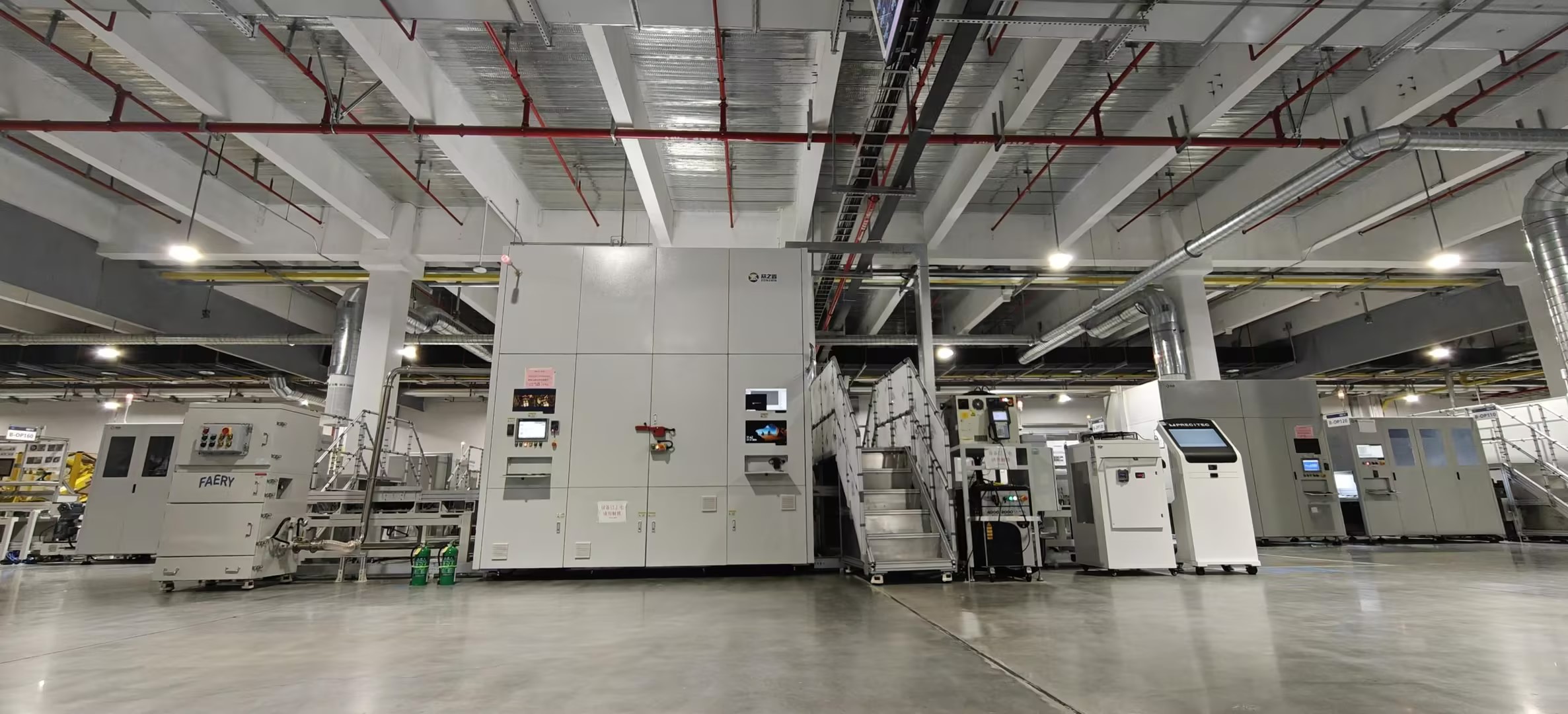
Automatic battery pack assembly lines are now designed around cell-to-pack architectures and large prismatic cells.
The Pack Assembly Equation Has Changed
Battery pack production is no longer a simple choice between manual benches and generic automation. The convergence of CTP architecture, MTP configurations and the industry-wide transition to 314Ah prismatic cells has created a new set of requirements for automatic battery pack assembly lines. Buyers are now expected to assess line flexibility, welding quality, throughput, and integration complexity before committing to a capital investment.
According to Spherical Insights, the global cell-to-pack battery market was valued at USD 18.35 billion in 2023 and is projected to reach USD 75.93 billion by 2033. In China, CTP technology had been integrated into nearly 50% of new energy vehicles sold by 2023, according to ResearchInChina. These are not niche experiments; they are structural shifts that affect line design priorities.
At the same time, the battery manufacturing equipment market is expected to grow at a compound annual growth rate of 18.8% from 2025 to 2030, reaching USD 36.94 billion, according to MarketsandMarkets. The equipment opportunity is expanding, but so is the technical complexity that suppliers must manage.
What an Automatic Battery Pack Assembly Line Must Handle
An automatic battery pack assembly line integrates multiple stations that move cells from incoming inspection to completed pack. In CTP designs, the traditional module step is removed; cells are stacked, bus-barred and secured directly into the pack housing. In MTP designs, module assembly remains but is optimized for faster pack integration. Both approaches place higher demands on alignment accuracy, welding consistency and testing traceability.
Key performance indicators from actual equipment specifications reveal the benchmarks. For example, Shanghai Zonzsin's EV battery pack assembly line model ZZX2313 achieves a single machine operation rate of ≥95%, a one-time welding qualification rate of ≥99.5%, and a final welding qualification rate of ≥99.95%. These are concrete metrics that buyers should request from any supplier.
Other critical parameters include:
- Cycle time: expressed in packs per minute (PPM) or minutes per pack, such as 4PPM for a CTP line or 6PPM for a blade line.
- Cell and pack compatibility: for example, a line may support 314Ah and 587Ah cells in a 1P96S pack configuration.
- Utility requirements: electrical input such as AC 380V ±10%, 50+0.5 Hz, and compressed air at 0.5–0.8 MPa or 0.6–0.8 MPa.
- Construction material: most lines are built from carbon steel Q235, which affects durability and maintenance.
- Automation level: semi-automatic lines still require manual intervention at certain stations; fully automatic lines do not.
Supplier Reference: Shanghai Zonzsin's Assembly Line Portfolio
Shanghai Zonzsin Intelligent Equipment Co., Ltd., established in 2019, is a China-based manufacturer serving lithium battery manufacturers, energy storage integrators and automotive OEMs. The company's main products include the ESS Battery Pack Insertion Robot for Containers and automatic battery pack assembly lines. Zonzsin's export business accounts for 60% of total sales, with major markets in Southeast Asia (SEA) and the European Union (EU).
The company operates a 6000 m² manufacturing facility with approximately 90 employees, including 43 R&D engineers, and reports an annual production capacity of 40 units.
Three models in Zonzsin's current line-up illustrate the range of automated solutions available:
| Parameter | ZZX2406 | ZZX2501 | ZZX2313 |
|---|---|---|---|
| Type | CTP battery pack assembly line | Blade battery pack assembly line | EV battery pack assembly line |
| Cycle time | 4 PPM | 6 PPM, 30 min/PACK | Not specified |
| Automation | Semi-automatic | Not specified | Single machine operation rate ≥95% |
| Cell support | 314Ah & 587Ah | Not specified | Not specified |
| Pack configuration | 1P96S | Not specified | Not specified |
| Welding qualification | Not specified | Not specified | One-time ≥99.5%; final ≥99.95% |
| Electrical requirement | Not specified | AC 380V ±10%, 50+0.5 Hz | AC 380V ±10% |
| Compressed air | Not specified | 0.6–0.8 MPa | 0.5–0.8 MPa |
| Material | Carbon steel Q235 | Carbon steel / Q235 | Carton steel / Q235 |
The ZZX2406 line has overall dimensions of 58000 × 11000 × 3800 mm and is intended for energy storage, EV and C&I applications. Zonzsin also classifies the ZZX2501 as a blade battery pack assembly line, which indicates a line designed for blade-shaped prismatic cells.
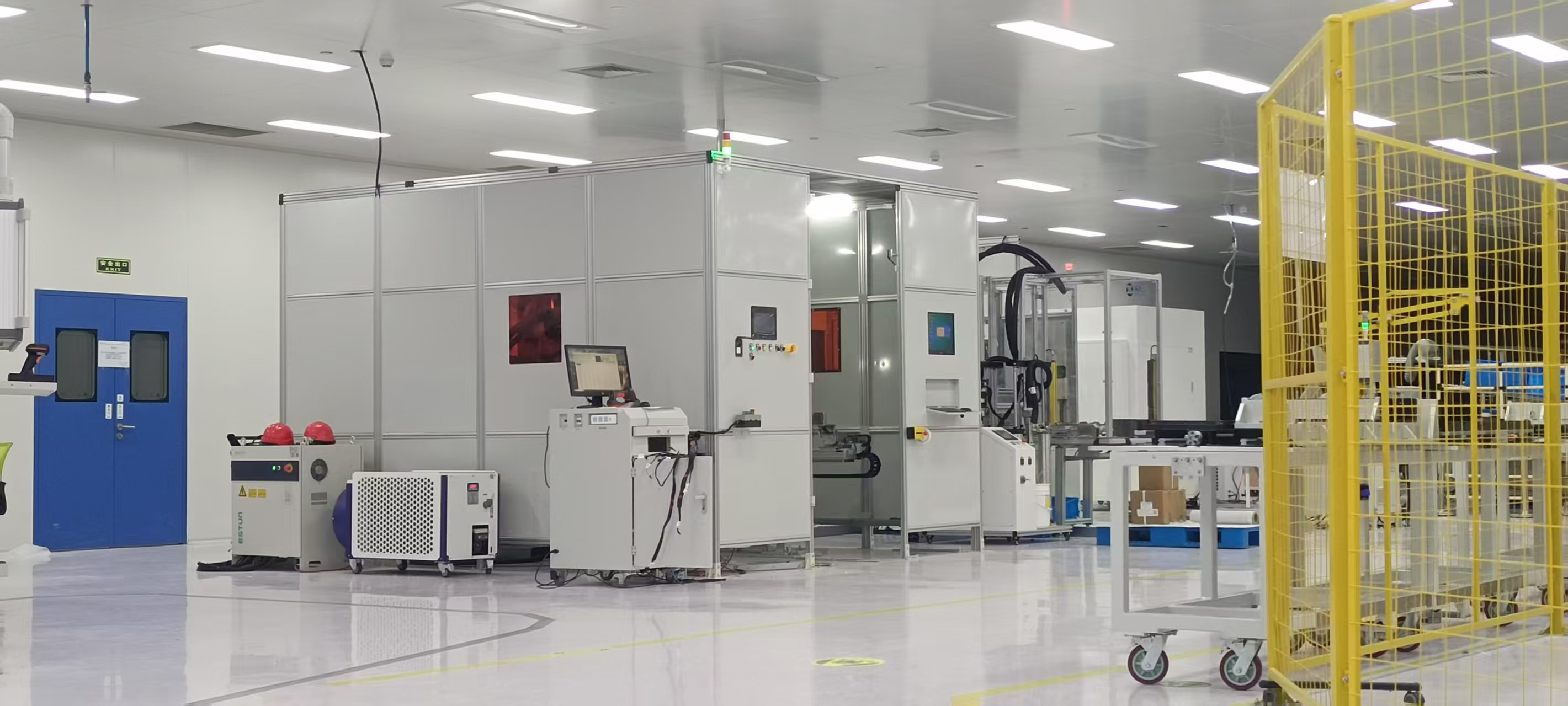
Zonzsin blade battery pack assembly line — one of the model references in the automatic line portfolio.
Application Scenarios and Site Integration
Automatic battery pack assembly lines are applied across EV industry, energy storage, automotive OEMs and C&I segments. Zonzsin's equipment has been used in battery pack assembly projects in India, and the company describes typical working conditions as indoor, standard factory environments with industrial assembly-line conditions and continuous or shift production.
The operation mode is semi or fully automatic with touch screen and program control. Yet a line cannot run alone. Supporting equipment usually includes visual inspection systems, fixtures and tooling, laser equipment, and assembly and testing stations. Site requirements often include ESD protection, fire prevention measures, temperature/humidity control, and cleanliness management. In addition, PACK compatibility and fixture adaptation must be managed when changing from one cell format to another.
For project planners, the practical takeaway is that the true scope of a battery pack assembly line extends beyond the main conveyor. Budgets must cover vision, welding, testing and fixtures, all of which are necessary to achieve the high welding qualification rates cited by suppliers.
Market Trends Reshaping Equipment Selection
Several verified data points explain why pack assembly lines are now a strategic purchasing decision rather than a commodity buy:
- The CTP battery market is projected to grow from USD 18.35 billion in 2023 to USD 75.93 billion by 2033 (Spherical Insights).
- CTP technology was used in nearly 50% of new energy vehicles sold in China by 2023, up from only 13 models in 2021 to 57 models by late 2023 (ResearchInChina).
- The battery manufacturing equipment market is expected to reach USD 36.94 billion by 2030, growing at an 18.8% CAGR (MarketsandMarkets).
- The industry has moved from the 280Ah cell benchmark to 314Ah formats for energy storage packs to improve energy density and reduce assembly costs (Highstar/InfoLink).
- Lithium-ion battery packs must comply with IEC 62133-2 for global access and UL 1642 / UL 2054 for North America (UL Solutions).
The competitive landscape includes established equipment makers such as Lead Intelligent Equipment, Yinghe Technology, and Hitachi High-Tech. For buyers, this means that differentiation often comes down to application-specific experience, after-sales support, and the ability to integrate line equipment with upstream cell handling and downstream testing.
Automatic Lines vs. Traditional Module-Based Systems
Traditional battery pack assembly follows a cell-to-module-to-pack sequence. That process is mature, easier to service, and allows a failed module to be replaced individually. However, it consumes more materials and floor space, adds thermal and electrical interfaces, and reduces volumetric energy density.
CTP lines remove the module layer, allowing cells to be packed directly into the pack enclosure. The benefits are higher energy density and fewer parts, which lowers material and assembly costs. The challenges are equally real: cell dimensional consistency becomes critical, welding and joining quality must be extremely high, and post-assembly repair is difficult because individual cells are no longer grouped into serviceable modules.
MTP lines occupy a middle ground. They keep module-level flexibility, which is useful for applications that require repairability or that may switch cell formats. They also allow a degree of standardization across different pack designs.
For suppliers, the limits of current equipment must be stated honestly. Zonzsin's CTP line ZZX2406, for example, is a semi-automatic line, meaning it is not a fully unmanned system. Its material is carbon steel Q235, which is a standard industrial choice but not a lightweight alloy. Buyers who require full automation or who plan to switch between radically different cell formats should evaluate whether the line's fixtures and tooling can be adapted without excessive cost or downtime.
Future Outlook for Pack Assembly Automation
Looking ahead, the demand for automatic battery pack assembly lines will be shaped by three forces: the continued expansion of CTP and MTP architectures, the migration to larger prismatic cells such as 314Ah and beyond, and the growing role of data-driven quality management.
Equipment lines will likely become more modular, allowing manufacturers to reconfigure stations for different pack sizes and cell formats. Vision systems and traceability software will become standard rather than optional. At the same time, suppliers that cannot demonstrate experience with current cell formats will find it harder to compete.
For buyers, the implication is clear: any automatic battery pack assembly line should be specified against realistic production requirements, not against idealized marketing terms. Throughput, welding qualification and operational stability are measurable and should be written into procurement documents.
Resource: For a current product specification overview, Zonzsin's brochure is publicly available at this link.
Frequently Asked Questions
What is an automatic battery pack assembly line?
An automatic battery pack assembly line is a production system that integrates multiple stations to assemble battery cells into pack-level products. It typically includes cell loading, alignment, busbar welding, testing and final assembly. Suppliers such as Shanghai Zonzsin Intelligent Equipment Co., Ltd. offer lines that operate in semi or fully automatic mode with touch screen and program control, serving lithium battery manufacturers, energy storage integrators and automotive OEMs.
How does a CTP battery pack assembly line differ from a traditional line?
A CTP (cell-to-pack) line skips the module assembly step, integrating cells directly into the pack structure. This increases energy density and reduces parts. For example, Zonzsin's ZZX2406 is a CTP line that supports 314Ah and 587Ah cells in a 1P96S configuration. Traditional lines first build modules and then assemble them into packs, which is easier to service but heavier and more material-intensive.
What is MTP in battery pack production?
MTP stands for module-to-pack. It retains module-level assembly before pack integration, offering a balance between CTP's simplicity and the serviceability of traditional module designs. MTP production lines can be adjusted to handle different modular pack configurations, which is valuable for EV platforms that need replaceable modules.
Why are 314Ah cells increasingly used in ESS battery packs?
The industry has rapidly moved from the 280Ah benchmark to 314Ah formats for energy storage packs to improve energy density and reduce assembly costs. Larger cells mean fewer cells per pack, which simplifies assembly and lowers the cost per watt-hour in stationary storage applications.
What supporting equipment is typically required around a battery pack assembly line?
A complete line generally requires vision inspection systems, fixtures and tooling, laser equipment, and assembly and testing stations. In projects such as those in India, these supporting systems are considered part of the overall assembly solution. Facilities must also address ESD protection, fire prevention, temperature/humidity and cleanliness control, and PACK compatibility through fixture adaptation.
What international standards apply to lithium-ion battery pack manufacturing?
Lithium-ion battery packs must comply with IEC 62133-2 for global market access and UL 1642 / UL 2054 for North America. Equipment buyers should ensure their line can produce packs that meet these requirements, and should also check local electrical and compressed air specifications.