
From Cold Drinks to Soup Buckets: Matching Cup Types to Food Service Scenarios
Food service packaging is not bought as a category. It is bought against a moment. A café needs a cup that presents an iced latte clearly while managing condensation. An airline tray needs a format that stacks efficiently and holds a hot drink through a full cabin service. A takeaway soup counter needs a container that keeps broth inside the pack during a twenty-minute delivery route. All three are described in procurement documents as a “disposable paper cup,” yet each places a different demand on the format.
This article looks at scenario-based selection across disposable paper formats — how beverage paper cups map to cold drink service, how double-layer and hollow cups map to hot beverages, and how the Kraft Paper Soup Bucket ZT maps to takeout soup. The reference manufacturer throughout is KingHonor Paper Products Co., Limited Liability Company, a Vietnam-based producer of disposable paper cups, paper bowls and food containers. KingHonor was founded in 2018, operates a 50,000 m² factory in Long An Province with a registered office in Ho Chi Minh City, and reports annual output of 20,000 tons of food-grade PE-coated paper together with over 2 billion paper cups and paper food containers. Its main markets include the United States, Europe, Australia and the Middle East.
The Mismatch Problem: One Format Cannot Serve Every Scenario
Most operational failures in disposable packaging do not come from a defective product. They come from a format applied to the wrong scenario. A plain single-layer cup used for a premium iced signature drink under-delivers on brand presence and can feel thin in the hand. A small cold drink format used for a hot 26oz soup order delivers neither capacity nor insulation. A soup bucket used for a 3oz coffee sample over-specifies the pack and inflates cost per serve.
The practical consequence is that buyers who consolidate to a single cup SKU across an entire menu often end up with three simultaneous problems: a beverage format that is awkward for one product line, an oversized format driving unnecessary material cost, and a food format that leaks or deforms because it was never designed for the food type it is now carrying.
The alternative is scenario-first selection: define the serving situations in the operation, then assign a format to each. This is the approach KingHonor’s catalogue structure already reflects, because its product range separates beverage cups, double-layer and hollow cups, soup buckets, bowls and food containers into distinct format families with their own model ranges and materials.
A Scenario-First Selection Framework
Before matching a model number, buyers can narrow the shortlist with four questions:
- What is being served? Cold liquid, hot liquid, or solid or semi-solid food. This decides the format family.
- How is it served? Immediate consumption at counter, tray service, or sealed for delivery. This decides structural rigidity and lid or closure compatibility.
- What volume defines the typical order? This decides model size, and consequently material cost per serve.
- Does the pack carry brand identity? Printed versus plain. This decides whether the format needs a print-ready surface.
KingHonor offers customization across paper cup logo, size, color and material, with a stated minimum order quantity of 100,000 pieces for custom work. For buyers in a research-to-evaluation stage, that figure is useful less as a price point than as a planning constraint: custom branding is a programme-level decision, not a per-outlet one.
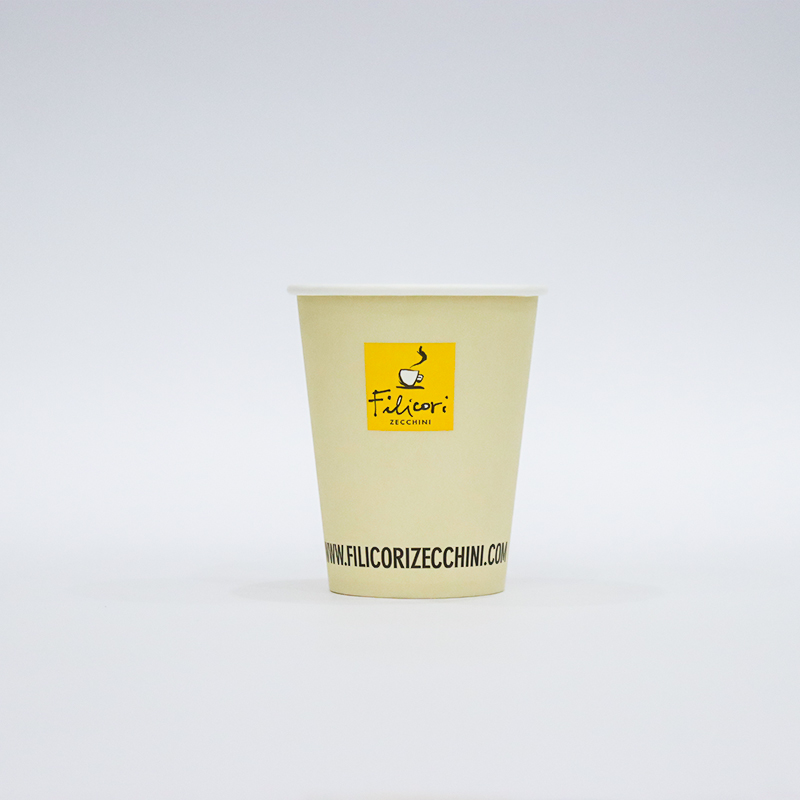
Cold Drink Scenarios: Matching Beverage Paper Cups to Iced Service
Cold beverage service places three demands on a paper format: it must hold a chilled liquid without surface softening during the consumption window, it must present the drink clearly, and it must suit the serve size the menu actually sells.
KingHonor’s beverage formats cover this band at several sizes. The disposable cold drink paper cup is specified at model A3oz with dimensions of 62×62×42 mm and a PE-coated paper construction, which suits small-format cold serves, tasting portions or sampler service. The disposable beverage paper cup at model 9oz measures 75×87×53 mm and uses double PE-coated paper, a construction that suits standard cold beverage service where the cup is filled and handed over immediately. A larger option sits at the 80oz model designation with dimensions of 80×90×56 mm in PE-coated paper, presented as a custom logo disposable paper cup.
For operations running branded cold drink programmes, the custom disposable paper cup at model 20oz measures 90×153×60 mm in double PE-coated paper. The 20oz size is a common choice for smoothies, large iced teas and shared-format cold drinks where the cup itself is a visible part of the product.
The scenario logic here is straightforward. Cold drinks do not need the air gap that hot drinks use for insulation, so the choice is driven mainly by volume, print surface and counter handling — not by thermal performance.
Hot Beverage Scenarios: Where Double-Layer and Hollow Cups Earn Their Place
Hot beverage service changes the calculation. The customer holds the cup for longer, the surface temperature is higher, and the visual expectation shifts toward a format that feels substantial rather than thin.
Two KingHonor formats are designed around this. The disposable double-layer paper cup at model 20oz measures 90×153×60 mm and uses PE-coated cup paper in a double PE-coated construction. The second layer creates a physical separation between the drink and the outer surface, which is the structural reason double-layer cups are associated with hot beverage programmes. This is the format that suits large hot serves — long coffees, hot chocolate, large teas — where the customer carries the cup rather than drinking it at a table.
The disposable hollow paper cup covers models 8oz, 12oz and 16oz, with dimensions of 80×92×56 mm, 90×112×60 mm and 90×135×60 mm, in PE-coated cup paper. The hollow construction serves the same functional purpose as the double layer — an air gap between the inner cup and the outer surface — and the smaller 8oz to 16oz band maps well to standard hot drink sizes. This format is supplied unprinted, which makes it a practical choice for operators who want the insulation benefit without running a printed-branding programme at that volume.
For plain, high-volume hot and cold beverage service, the disposable single-layer paper cup spans an unusually wide model range: 8oz, 10oz, 12oz, 16oz, 20oz, 24oz, 32oz and 44oz, with dimensions running from 80×90×56 mm up to 115.5×189×83.5 mm in cup paper with PE coating. This is the workhorse format — the right answer when the operational priority is volume flexibility and format consistency rather than thermal performance or premium presentation.
Takeout Soup Scenarios: The Kraft Paper Soup Bucket ZT
Soup and broth-based takeout sit outside the beverage cup logic entirely. The pack must hold a hot, dense, semi-liquid food; it must resist deformation when filled to a working volume; and it must remain stable during transport, which the customer rarely controls.
The Kraft Paper Soup Bucket ZT is built for this scenario. It is available in models 8oz, 12oz, 16oz, 26oz and 32oz, and uses kraft paper with PE coating. The model range is the important detail: it spans single-portion soup up to family or sharing volumes, which means one format family can serve multiple takeout soup lines without switching suppliers or constructions.
Kraft paper’s visual character also matters in this scenario. Takeout soup is frequently a premium or comfort-oriented menu item, and a kraft format communicates a different product intent than a bright printed beverage cup. For a soup-focused outlet, that visual register can be a deliberate part of the positioning.
KingHonor lists the Kraft Paper Soup Bucket ZT within the same application set as its beverage formats — major hotel groups, beverage chains, fast food chains and airlines — which indicates that the format is intended for operators running mixed menus rather than soup-only kitchens.
Beyond Cups: Bowls, Containers and Boat-Shaped Boxes
A complete scenario map for a food service operation usually needs more than cups. KingHonor’s range extends into adjacent format families that handle food types cups cannot:
- Disposable paper bowl (Kraft Paper Bowl ZT) — models 500, 700, 900, 1000, 1100, 1300 and 1500, with dimensions from 50×128×45 mm to 185×160×65 mm, in kraft paper with PE coating. Suited to hot food and soup served in a bowl rather than a cup.
- Disposable paper food container — models 500, 600, 850, 960 and 1100, in cup base paper with PE coating. Suited to printed takeout food programmes.
- Disposable food container (Kraft Paper Square Box XQ) — models No.1 through No.5 and No.8 square box, in kraft paper with PE coating. A square footprint suited to tray-based and delivery-based meal service.
- Disposable boat-shaped box (White Kraft Food Tray ZT) — models #025, #040, #050, #100, #200, #250, #300, #500 and #1000, in coated white cardboard, listed for catering and food takeaway. Suited to snacks, sides and tray service.
Read together, these families form a scenario matrix rather than a product list. That distinction matters at the evaluation stage: a supplier that can cover beverage, hot drink, soup, bowl and tray formats from one production base reduces the number of vendor relationships and specification documents an operator has to manage.
Format-to-Scenario Reference Table
| Format | Models | Material | Scenario fit |
|---|---|---|---|
| Disposable cold drink paper cup | A3oz | Cup paper with PE coating | Small-format cold serves, tasting portions |
| Disposable beverage paper cup | 9oz | Double PE-coated paper | Standard cold beverage service |
| Disposable beverage paper cup | 80oz designation | PE-coated paper | Large-format custom logo beverage programme |
| Custom disposable paper cup | 20oz | Double PE-coated paper | Branded cold drink programmes |
| Disposable single-layer paper cup | 8oz – 44oz | Cup paper with PE coating | High-volume plain hot and cold beverage service |
| Disposable hollow paper cup | 8oz, 12oz, 16oz | Cup paper with PE coating | Hot drinks needing an air gap |
| Disposable double-layer paper cup | 20oz | PE-coated cup paper | Large hot beverage carried by hand |
| Kraft Paper Soup Bucket ZT | 8oz, 12oz, 16oz, 26oz, 32oz | Kraft paper with PE coating | Takeout soup and broth-based food |
| Disposable paper bowl (Kraft Paper Bowl ZT) | 500 – 1500 | Kraft paper with PE coating | Hot food and soup served in bowl format |
| Disposable paper food container | 500, 600, 850, 960, 1100 | Cup base paper with PE coating | Printed takeout food programmes |
| Disposable food container (Kraft Paper Square Box XQ) | No.1 – No.5, No.8 | Kraft paper with PE coating | Square-footprint meal delivery |
| Disposable boat-shaped box (White Kraft Food Tray ZT) | #025 – #1000 | Coated white cardboard | Snacks, sides and tray service |
What This Means for Procurement Decisions
Scenario mapping changes what a buyer should ask for. Instead of requesting a single cup specification for the whole operation, the evaluation list becomes format-specific: which models cover the cold drink line, which cover hot drinks, which cover soup, and where the format families overlap.
Three procurement consequences follow.
First, volume planning becomes scenario-based. A 44oz single-layer cup and an A3oz cold drink cup sit at opposite ends of the same format family. Forecasting them under one SKU line hides real demand differences and makes reorder timing harder to manage.
Second, customization becomes a scoped decision. KingHonor’s customization options cover logo, size, color and material, with a stated MOQ of 100,000 pieces. That threshold naturally limits custom printing to high-frequency formats — typically the standard beverage cup and the branded cold drink cup — while lower-volume formats stay plain.
Third, application compatibility becomes a filter. KingHonor’s scenario data lists its formats as compatible with cup lids, cup dispensers and custom printing equipment, and specifies food-grade, double PE-coated, leak-proof and customizable-printing requirements across those scenarios. For buyers running existing counter equipment, that compatibility statement is a more useful evaluation input than a generic material claim.
KingHonor’s production footprint is also relevant to scenario breadth. A monthly capacity of 1,666 tons and a 20-person core technical team support the kind of multi-format order that scenario-based buying creates, where a single purchase order might combine beverage cups, soup buckets and bowls.
Market Trend Analysis: Why Scenario Selection Is Gaining Weight
The shift toward scenario-based format selection is happening against a growing packaging market. According to IMARC Group, the Vietnam paper cup market reached a value of USD 41.5 million in 2025 and is projected to grow to USD 57.9 million by 2034. Data published by the Vietnam Packaging Association (VIPA) indicates annual growth rates of 20–25% in Vietnam’s paper cup manufacturing industry, with 2022 domestic consumption estimated at 4.2 billion units and exports at 1.2 billion units.
Globally, Grand View Research valued the disposable cups market at USD 17.40 billion in 2024, with paper cups accounting for over 61% of total sales. Vietnam’s paper and pulp industry recorded export turnover exceeding USD 2.7 billion in 2024, maintaining a growth rate of 10–12% per year according to the General Department of Vietnam Customs.
Two structural forces sit behind these numbers. The first is menu complexity: food service operators increasingly run cold beverages, hot beverages and takeout food in the same outlet, which makes single-format packaging strategies harder to sustain. The second is regulatory. The EU Single-Use Plastics (SUP) Directive requires beverage cups containing plastic to carry a specific ‘Plastic in Product’ label and to transition to plastic-free coatings such as water-based barriers by 2026. For exporters, that shifts the specification conversation from “which cup size” to “which coating and which cup size for which scenario.”
Limitations and Boundaries of Paper Format Selection
Scenario matching has real boundaries, and buyers should plan around them.
The most significant is coating and end-of-life. KingHonor’s cup and soup bucket formats use PE coating on paper or kraft substrates. PE-coated paper is a widely used construction, but it is not automatically accepted in every municipal recycling or composting stream, and availability of end-of-life infrastructure varies by market. Buyers evaluating formats for regulated markets should treat coating type as a separate specification item from cup size and volume, particularly for European beverage programmes affected by the SUP Directive timeline.
A second boundary is format specialization. A soup bucket is not interchangeable with a beverage cup, and a double-layer 20oz cup is a poor economic choice for a 3oz sample serve. Scenario-based selection improves fit but reduces the flexibility of a single-SKU strategy; procurement planning has to accept more line items in exchange for better serve-level performance.
A third boundary is volume. Custom printing is tied to a 100,000-piece minimum order quantity. Operators with many low-volume formats will find that only their highest-runner formats justify branded printing, while long-tail formats remain plain by necessity.
Future Outlook
The direction of travel is toward finer format classification rather than simpler catalogues. Menu fragmentation, delivery-led food service and coating regulation all push in the same direction: buyers will need to justify each format against a scenario, and suppliers will be evaluated on how completely they can cover those scenarios from one production base.
KingHonor’s own product positioning reflects this. The company states that it prioritizes recyclable and biodegradable raw materials to reduce environmental footprint, and its range already separates beverage, hot drink, soup, bowl and tray families rather than treating “disposable paper cup” as a single category. For buyers in the evaluation stage, that separation is the practical starting point: map the serving moments first, then choose the format that was designed for each one.
Frequently Asked Questions
What is the difference between single-layer, double-layer and hollow disposable paper cups?
The difference is the wall construction. A single-layer cup uses one layer of cup paper with PE coating — KingHonor’s plain single-layer range covers 8oz to 44oz. A double-layer cup adds a second layer, as in KingHonor’s 20oz double PE-coated model. A hollow cup uses an air gap between the inner cup and the outer wall; KingHonor offers hollow models in 8oz, 12oz and 16oz. Double-layer and hollow constructions provide thermal separation between the drink and the outer surface, while single-layer formats prioritize volume range and cost efficiency.
Which disposable paper cup format fits cold drink service?
Cold drink service is normally matched to beverage-oriented formats rather than insulated ones, because an air gap is not required. In KingHonor’s range, the relevant options include the disposable cold drink paper cup at A3oz (62×62×42 mm), the disposable beverage paper cup at 9oz (75×87×53 mm, double PE-coated paper), and the custom disposable paper cup at 20oz (90×153×60 mm) for branded programmes. Selection is driven mainly by serve volume, print surface and counter handling rather than by thermal performance.
How should a buyer decide between 8oz, 16oz and 32oz formats?
The model range available within a format family usually indicates the intended volume band. KingHonor’s single-layer paper cup spans 8oz to 44oz, its hollow cup covers 8oz, 12oz and 16oz, and its Kraft Paper Soup Bucket ZT covers 8oz, 12oz, 16oz, 26oz and 32oz. In practice, the deciding input is the typical order size for the specific menu line, since a format that is oversized for the serve raises material cost per unit while a format that is undersized forces a larger SKU onto the menu.
What is the Kraft Paper Soup Bucket ZT used for?
The Kraft Paper Soup Bucket ZT is a kraft paper format with PE coating offered in 8oz, 12oz, 16oz, 26oz and 32oz. It is positioned for hot, broth-based takeout food rather than beverages, and its model range spans single-portion and larger sharing volumes. KingHonor lists this format within the same application set as its beverage and food formats — major hotel groups, beverage chains, fast food chains and airlines — indicating it is intended for mixed-menu operators rather than soup-only kitchens.
What are the main limitations of disposable paper formats in food service?
Three limitations appear consistently. First, PE-coated paper constructions are widely used but are not automatically accepted across all municipal recycling and composting systems, so end-of-life handling depends on the destination market. Second, formats are scenario-specific: a soup bucket is not interchangeable with a beverage cup, and a double-layer 20oz cup is an inefficient choice for a small sample serve. Third, custom printing carries a stated minimum order quantity of 100,000 pieces in KingHonor’s case, which limits branded printing to high-volume formats.
Reference: KingHonor company and product brochure is available for download at https://cdn.socialarks.com/sbsp/24751/0/2026/0411/69d9a71d7572b.docx