
From Concept to Tabletop: How Custom Board Game Manufacturing Works
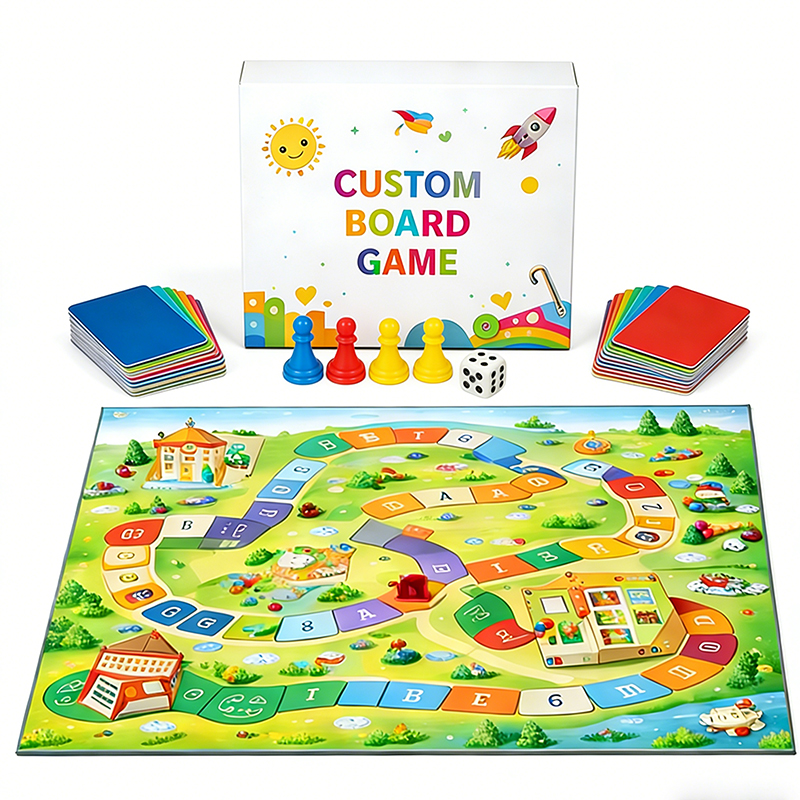
Custom board games are no longer a side segment of the toy industry. As the global market expands past USD 15 billion, brands, retailers, and independent publishers need manufacturing partners that can handle design translation, production, and compliance. This article explains how custom board game manufacturing actually works, where OEM and ODM fit, what parameters matter, and how buyers should evaluate options.
A growing market with a manufacturing reality
The global board games market was valued at approximately USD 15.71 billion in 2024, and is projected to grow at a CAGR of 10.38% from 2025 to 2032, reaching an estimated USD 31.58 billion. North America alone accounted for roughly 42.06% of global demand in 2024, representing about USD 6.66 billion.
For buyers, the growth signals a practical challenge: converting an idea into a production-ready board game is not the same as ordering printed boxes. The process spans material selection, printing methods, packaging structure, assembly, and compliance for regulated markets. Finding a supplier who can manage all these points is often the difference between a smooth launch and repeated sample rounds.
What counts as a custom board game
A custom board game typically starts as a designed concept that must be translated into physical components. Common categories include family board games, strategy board games, classic board games, adult board games, kids board games, and card-driven formats. Some products also extend to card games, puzzles, notebooks, and color boxes.
Vietnam Yawanhong Printing Culture Co., Ltd. defines its BG-001 model as a custom board game in the board game category, intended for the printing, game, toys, and manufacturing industry. The product supports various game types including family, strategy, and classic games, and is marked suitable for both kids and adults.
OEM versus ODM in board game manufacturing
Two terms appear repeatedly in sourcing discussions: OEM and ODM.
OEM (Original Equipment Manufacturing) means the buyer provides the design, artwork, and specifications, and the factory executes production according to those instructions. This suits brands with established game designs and existing artwork files.
ODM (Original Design Manufacturing) means the factory contributes design, development, or engineering support. For clients without a fully finished design, an ODM partner may assist with layout, component selection, material choice, or packaging structure. Yawanhong states its capability for OEM/ODM manufacturing, which is relevant both for startups and for established companies that need extra engineering hands.
Core specifications every buyer should understand
Before requesting a quote, buyers should be familiar with the main technical parameters that drive both quality and cost. These specifications also help when comparing quotes across multiple suppliers.
| Parameter | Typical Range / Options | Why It Matters |
|---|---|---|
| Paper weight | 128–400 gsm (custom) | Affects card durability, feel, and suitability for different game components. |
| Box thickness | 1.5–3 mm (custom) | Determines packaging rigidity and perceived product quality at retail. |
| Printing process | CMYK offset printing | Ensures color consistency and sharpness across large production runs. |
| Surface finish | Matte lamination, glossy lamination, UV coating, embossing, debossing, custom | Influences look, tactile feel, and scratch resistance. |
| Dimensions | Fully customizable | Plays a role in shelf footprint, shipping costs, and game play experience. |
| Material | Art paper or custom | Affects component stiffness and print surface quality. |
Production environment and project requirements
Board games are primarily paper-based products, which means production conditions are important. Typical projects involve printing and processing under normal temperature and dust-free indoor workshop conditions. This matters because dust contamination can create visible defects on dark game boards, cards with intricate art, and laminated surfaces.
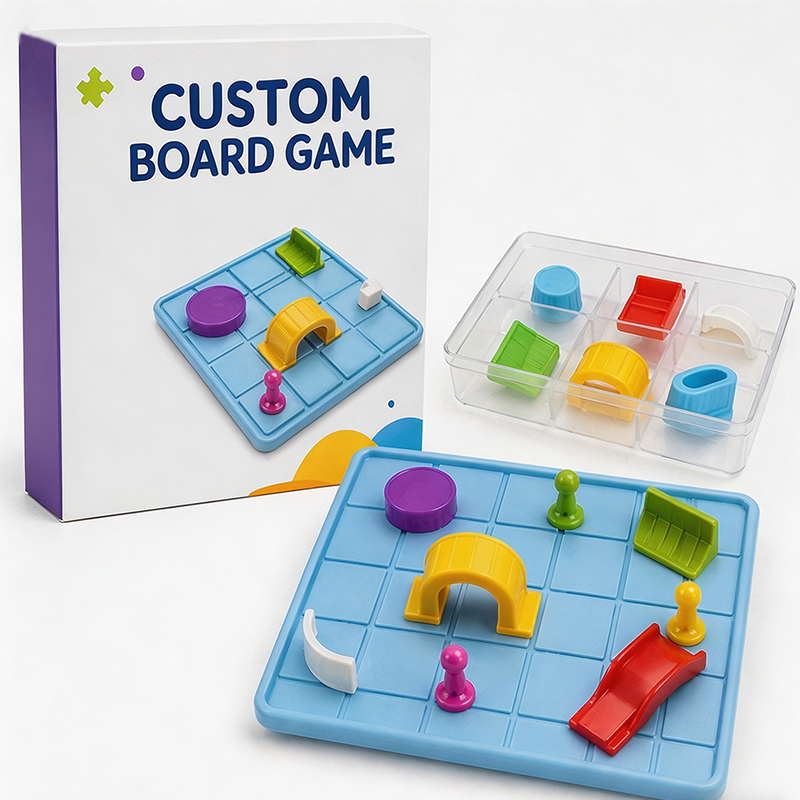
Common application regions for Yawanhong's custom board game and card game projects include Vietnam and China. The project type is described as printing and processing of paper products, with functions spanning enterprise promotion, family fun, interaction, kids education, and packaging for product protection and brand display.
How the production process typically flows
While every factory structures its workflow differently, a standard custom board game order passes through several logical phases:
- Design and artwork preparation – The buyer shares print-ready art, or works with the factory on modifications under an ODM arrangement.
- Material selection – Paper type, grammage, and board thickness are confirmed against gameplay needs and budget.
- Printing – Components are printed, commonly using CMYK offset printing for consistent color.
- Surface finishing – Lamination, UV coating, embossing, debossing, or other finishes are applied.
- Die cutting and assembly – Boards, cards, and packaging are cut and shaped, then assembled with game components.
- Quality control and packing – Finished products are checked and packed for export.
Materials and child safety considerations
For board games sold in regulated markets, material choice is not only about aesthetics. Special requirements often include eco-friendly paper material, non-toxic ink, child-safe edge treatment, and FSC compliant raw materials. These requirements map directly to EU and US market entry rules:
- Board games sold in the EU must comply with the Toy Safety Directive 2009/48/EC and harmonized EN 71 standards such as EN 71-1 for mechanical properties.
- In the United States, board games for children under 14 must meet ASTM F963-23 safety requirements, mandatory under 16 CFR part 1250.
Buyers should confirm with potential manufacturers whether these compliance considerations are part of their standard production guidelines, and whether their raw material supply chain can support those requirements.
What a full-capability factory looks like
Scale and equipment help explain whether a manufacturer can handle a project from start to finish. Yawanhong was established in 2006, now operates a 55,000-square-meter facility, employs approximately 280 staff, and has an annual production capacity of about 1,000,000 units. Its R&D team includes 25 engineers.
The company reports using equipment such as Heidelberg printing press, automatic laminating machine, varnishing machine, gliding press, embosser, and die cutting machine. Approximately 100% of products are exported, with major markets including the USA and Europe.
For a buyer, the practical meaning is clear: a manufacturer with print, finishing, cutting, and assembly capabilities under one roof reduces coordination risk. There are fewer hand-off points where errors can be introduced, and packaging can be produced together with the game itself rather than outsourced to separate vendors.
Comparing custom manufacturing with traditional toy sourcing
Traditional toy sourcing often focuses on plastic or electronic toys, where molds and injection molding dominate. Custom board games follow a different logic because they are primarily print-based.
| Comparison Point | Custom Board Game Manufacturing | Traditional Plastic / Electronic Toy Sourcing |
|---|---|---|
| Primary tooling | Die cutting tools, print plates | Injection molds |
| Typical design iteration cost | Lower; artwork and finish changes can be adjusted before printing | Higher; mold modifications are expensive |
| Minimum order behavior | Middle; depends on component count and packaging | Often high due to mold amortization |
| Compliance focus | Paper safety, inks, small parts if components are included | Chemical safety, electronic testing, mechanical hazards |
That said, board game manufacturing has its own boundaries. Printing quality depends heavily on artwork resolution and color management. A factory can control output consistency, but it cannot fully compensate for poor source files. Buyers should also note that compliance certification for another region, such as Japan or Australia, may require separate documentation even if the factory already exports to the EU and the US.
Choosing between a manufacturer and a trading intermediary
Many orders are routed through trading companies. A manufacturing partner may be the right fit when:
- You need direct control over quality and production schedules.
- Multiple revisions are expected during development.
- You want packaging and game components produced in one coordinated workflow.
- You need a paper-to-print engineering partner who can advise on material limits.
Cost and quality: what guides the decision
A low unit price rarely tells the full story. The more relevant factors are:
- Board and card stock weight – Lower grammage reduces cost but can make the game feel flimsy.
- Box construction – Thicker boards and special finishes increase packaging cost but also change retail shelf impact.
- Number of components – Unique tokens, dice, custom inserts, and multiple decks raise assembly complexity.
- Finishing choices – Embossing, debossing, and spot UV add cost but enhance premium positioning.
- Order volume – Quantity directly affects how setup costs are absorbed per unit.
Market trends shaping the demand for custom board games
Several signals in the market are relevant for manufacturers and buyers alike:
Online sales are becoming a dominant channel. Research indicates that online or e-commerce sales of board games are projected to grow at a CAGR of 11.53%, with online platforms already accounting for a significant share of sales in some regions. A 65% share of global sales through online platforms in some regions has been reported by industry research. This puts more weight on packaging that can survive shipping and still look attractive when the customer opens the box.
Europe and North America remain the anchor markets. Yawanhong's exports go primarily to the USA and Europe, which aligns with the broader market concentration in North America and the high compliance demands of the EU.
Compliance is becoming a decision factor. As regulatory rules tighten in both the EU and the US, buyers increasingly treat compliance capability as part of product quality, not just a paperwork exercise.
What to verify before selecting a partner
From a buyer perspective, a structured checklist can reduce risk:
- Does the factory handle both game components and packaging internally?
- Does it have experience with your target export regions, especially the EU and the US?
- Can it articulate its approach to compliant materials such as FSC paper and non-toxic inks?
- Does it offer customization for dimensions, paper weight, box thickness, and finishes?
- Is the production environment suitable for paper products, such as dust-free and temperature-controlled workshops?
- Does the R&D team have the capacity to advise on design-for-manufacturing issues?
Future outlook for custom board game sourcing
As the board game market continues to grow, both large publishers and independent creators will need more flexible sourcing. The emerging pattern is a shift from transactional orders to supplier relationships where the manufacturer contributes material knowledge and production engineering early in product development.
Factories like Yawanhong – with full production lines, in-house printing, finishing, and a dedicated engineering team – are positioned for this kind of collaboration. For buyers, the practical question is no longer only "Can you print this game?" but "Can you help us build it right, on time, and in compliance from the first production run?"
Frequently asked questions
How large is the global board game market in 2024?
The board games market was valued at approximately USD 15.71 billion in 2024, according to Grand View Research. A broader playing cards and board games segment reached USD 19.9 billion.
What is the projected growth rate for the board game market?
The global board games market is projected to grow at a CAGR of 10.38% from 2025 to 2032, reaching an estimated value of USD 31.58 billion, according to Credence Research.
Which region leads global demand for board games?
North America held the largest market share in 2024, accounting for approximately 42.06% of global demand, valued at USD 6.66 billion, according to Fortune Business Insights.
What are the main product types included in custom board game manufacturing?
Custom board game manufacturing typically includes board games, card games, puzzles, notebooks, and color boxes. Yawanhong's BG-001 model is a custom board game that supports family, strategy, and classic game types for both kids and adults.
What technical specifications matter in a custom board game?
Key specifications include paper weight of 128–400 gsm, box thickness of 1.5–3 mm, CMYK offset printing, and surface finishes such as matte or glossy lamination, UV coating, embossing, and debossing.
How long do custom board game orders typically take?
Custom board game manufacturing lead times typically range from 30 to 45 days for standard B2B orders with one-stop supply capabilities, according to a B2B industry report.
What safety standards apply to board games in Europe and the United States?
In the EU, board games must comply with the Toy Safety Directive 2009/48/EC and harmonized EN 71 standards. In the US, board games for children under 14 must meet ASTM F963-23 under 16 CFR part 1250.
Download the Yawanhong Global Manufacturing brochure (PDF) for a detailed overview of factory capabilities and product scope.