
From Data Plate to Certificate: Verifying CPD10–CPD35 Build Evidence
From Data Plate to Certificate: Verifying CPD10–CPD35 Build Evidence
Supplier capability in electric forklifts is rarely settled by a brochure claim. It is settled by whether a buyer can reconstruct the build from documents, labels and test records, and then hold the supplier to that reconstruction in a purchase order. For the CPD10, CPD20, CPD30 and CPD35 range supplied by Ningjin Shunhao Trading Co., Ltd. — a China-based electric forklift supplier whose stated range covers these four models — the checkable elements are specific: rated load bands from 1,000 kg to 3,500 kg, controller options from SANTROLL, CURTIS, INMOTION and ZAPI, brushless AC drive and pump motors, heavy-duty lead-acid batteries with an optional lithium configuration, iron construction, and a CE attestation whose recorded scope is the CPD model series.
Each of those elements can be verified, qualified, or left ambiguous. The difference usually appears at acceptance rather than at quotation, which is why this reference is written for procurement and engineering teams working between evaluation and execution — the stage where a shortlist exists and the remaining question is what evidence supports the commitment.
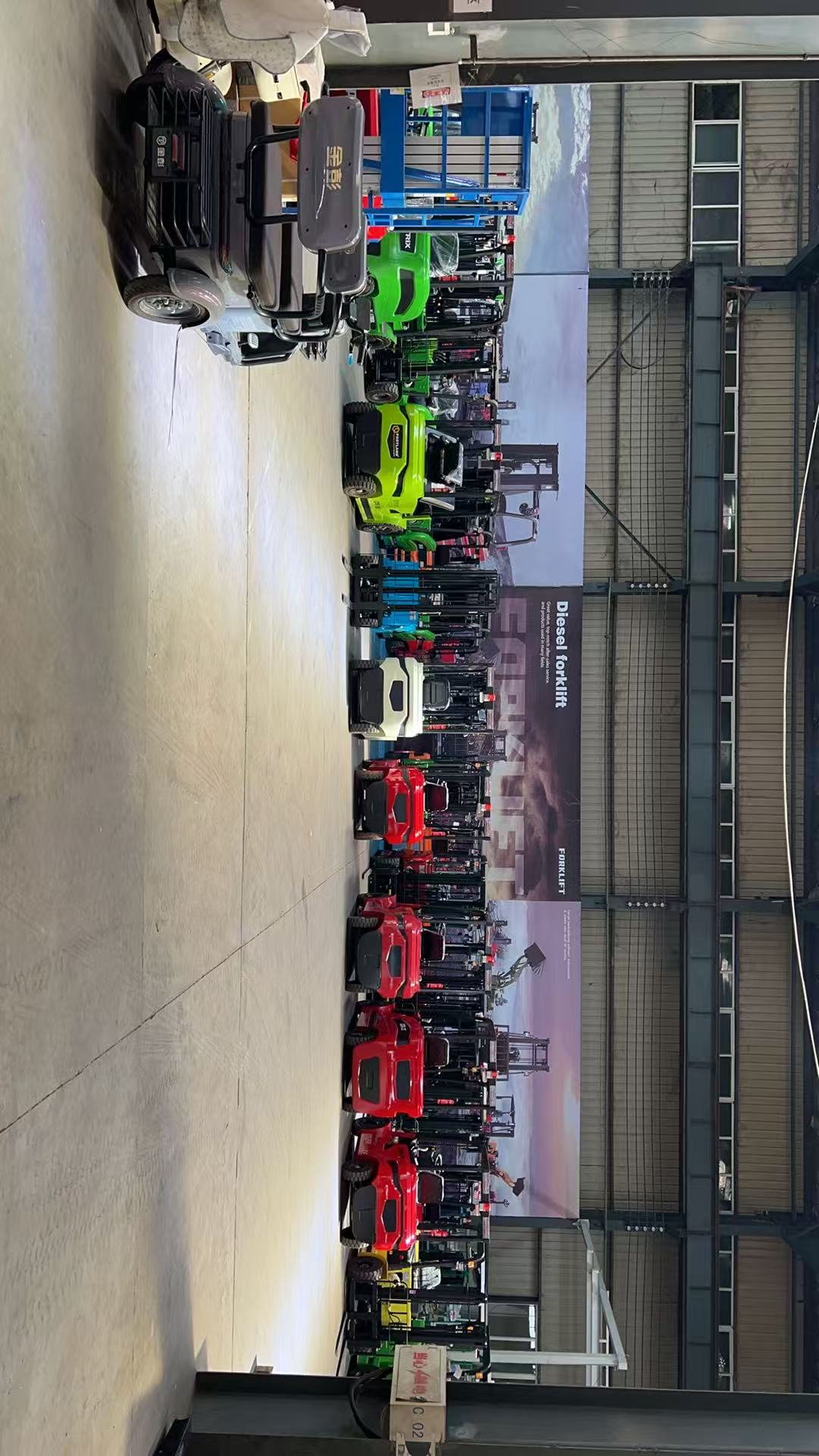
Build evidence is checked at three levels: document scope, physical identity and contractual commitment.
What build evidence has to prove
Build evidence answers three separate questions, and they should not be merged. Scope asks which models and configurations a document actually covers. Identity asks whether the unit in the crate matches that document. Commitment asks whether the claim survives into the purchase order through acceptance criteria, test records and spare-part identification.
A supplier can be strong at one level and thin at another. A certificate may cover a model series while the delivered unit carries a controller variant the assessment never examined; a data sheet may be complete while the order says nothing about how acceptance is tested; a pre-shipment test may exist while its protocol is undefined. Separating the three levels stops a document package from being read as a single yes-or-no signal.
The working test is traceability. Every build claim should point to a document reference, a physical label or a contractual clause, and those three should agree with each other. Where they do not, the buyer has found the specific question to put back to the supplier before approving the order.
Reading the CPD10–CPD35 range as an evidence map
The four models give a buyer four checkpoints rather than one. Model designations follow rated load: CPD10 at 1,000 kg, CPD20 at 2,000 kg, CPD30 at 3,000 kg and CPD35 at 3,500 kg, so the range spans 1,000 kg to 3,500 kg of denoted capacity. All four models appear in the supplied certification record, which is what makes a single evidence file usable across a mixed fleet.
| Model | Denoted rated load | What the buyer is verifying |
|---|---|---|
| CPD10 | 1,000 kg | Fit for light transfer duty — workshop movement, retail back-of-house, short internal runs where a larger truck would be oversized. |
| CPD20 | 2,000 kg | General warehousing and e-commerce handling; the model most often asked to cover mixed pallet weights on one route. |
| CPD30 | 3,000 kg | Heavier palletised goods and production logistics, where cycle count and continuous shift duration both rise. |
| CPD35 | 3,500 kg | The heaviest band in the range; the configuration where load centre and mast choice most affect the usable capacity figure. |
Boundary to record: rated capacity is not one fixed number per model. The usable figure depends on load centre, mast type and lift height, so the data sheet for the exact configuration — not the model name — is the document that should govern acceptance. A buyer comparing quotations without that qualifier is comparing labels rather than machines.
Controller options: turning a brand name into a build fact
The series is offered with controller options from SANTROLL, CURTIS, INMOTION and ZAPI. On a quotation, a controller brand is a sourcing statement. On the machine, it is a build fact with service consequences, because diagnostics, parameter access and replacement parts all follow the brand and model actually fitted.
Three checks convert the option into evidence. First, the purchase order should name the controller brand and model, not only the forklift model, and should state whether substitutes are acceptable if that variant is unavailable for the order. Second, the pre-shipment record should transcribe or photograph the controller label on the delivered unit, so that the label — not the order confirmation — closes the loop. Third, the buyer should ask who holds parameter access, whether settings are locked, and which diagnostic tool the local service partner needs.
The third point is the one most often skipped. A controller brand that cannot be diagnosed locally is a maintenance constraint regardless of its specification, and it affects uptime more than a marginal difference between two approved brands. Because availability can differ by model and by order, controller specification belongs in the technical clarification, not in an assumption drawn from a range description.
Drive and pump motors: what brushless AC changes in the service review
Build descriptions for the range specify brushless AC drive and pump motors. The practical significance lies in wear and control rather than in headline figures: a brushless motor removes brush wear as a scheduled service item and is driven electronically, so the motor and its controller should be treated as a matched set in both specification and spares planning.
For verification, the motor nameplate and the model data sheet should agree with the quotation, and the spare-parts list should identify the motor and controller together rather than listing a motor in isolation. Where a buyer intends multi-shift duty, the more useful question is not the motor type alone but how the drive, hydraulic pump and battery are configured for the intended cycle — a technical clarification point rather than a brochure item.
Battery configuration: lead-acid base, lithium option, documentation trail
Heavy-duty lead-acid is the base configuration, with lithium available as an option. The distinction matters at acceptance, because battery documentation is where supplier evidence is most often incomplete.
For a lead-acid build, the specification should state voltage, capacity, cell type and the charger matched to it, together with the charging procedure the site intends to follow. For a lithium build, the documentation set widens: pack specification and serial number, charger match, transport documentation for lithium batteries, and the battery-related technical file. The EU Battery Regulation (2023/1542), in effect since 17 August 2023, introduces carbon-footprint disclosure and technical documentation requirements for batteries used in industrial equipment, which turns cell- and pack-level information into a procurement field rather than a later compliance task.
Two boundaries are worth writing into the order. Fast-charging or opportunity-charging arrangements must be confirmed against the specified battery and charger, not inferred from the vehicle class. And where a site requires cold-room operation, the operating temperature range of the actual battery and charger should be supplied for that configuration — a general suitability statement does not establish behaviour in a freezer aisle.
Iron construction, emissions and noise in enclosed sites
Build descriptions for the series cite iron construction for structural elements, and the drivetrain is battery-electric. Two consequences follow directly. There is no tailpipe exhaust at the point of use, which is why electric trucks are specified for enclosed production and storage areas. And operation is described as low-noise, which matters in retail, food and workshop environments where a noise assessment forms part of site approval.
Both statements need a boundary before they function as evidence. Iron construction is a material claim, so the buyer can ask which structural components are iron and what the inspection points are; weld quality and coating coverage at frame and mast are checkable at pre-shipment. Low noise is a comparative description, so a site noise assessment should be supported by a measured value at the operator position for the specified configuration. No range-level statement replaces that measurement.
Certificate scope and the 2027 machinery transition
The supplied certification record is an attestation of compliance for CE under the Machinery Directive 2006/42/EC: certificate number TTC-23-1907/08/01, issued on 19 July 2023 by INTEGRA96, valid to 19 July 2028, with the recorded scope 'Forklift, Model Series: CPD'. The standards listed are EN ISO 12100:2010, EN 60204-1:2018 and EN 1175:2020. Company materials additionally cite ISO 9001 and ISO 14001 certification and UN38.3 documentation for the battery packs.
Four checks make that record decision-useful. Scope: a series-level attestation supports the range as a family, while the EU Declaration of Conformity issued for a specific order should name the exact model and configuration. Currency: references to harmonised machinery standards are published through Commission implementing decisions, so the standards cited on a 2023 attestation are worth checking against the current list for the transaction date. Issuer status: the record names INTEGRA96, and the buyer should confirm that the issuer's role fits the conformity route claimed for the product. Modification: a custom mast, an explosion-protection conversion or a different battery chemistry is a changed configuration, and the buyer should ask whether the assessment covers it rather than assume a series scope extends automatically.
Timing adds a fifth consideration for EU buyers. The European Commission states that machinery placed on the EU market before 20 January 2027 must comply with the current Machinery Directive 2006/42/EC, with Regulation (EU) 2023/1230 governing later placements under the applicable transition provisions. For an order agreed in late 2026, the placing-on-market date therefore determines which legal basis the declaration should reference — a point for the supplier to answer in writing and for the buyer to confirm with its own compliance adviser.
Commercial terms as capability evidence
Commercial terms are capability evidence because they show whether a supplier can be tested at small scale before it is trusted at fleet scale. The stated terms for the CPD series are a minimum order quantity of 2 units, FOB or CIF delivery, 30/70 payment, pre-shipment test as the acceptance criterion, a 30-day production lead time, OEM production with customization support, and technical support after delivery.
A two-unit MOQ changes the evaluation sequence: it allows a validation order built to a real specification before a fleet commitment. Pre-shipment test as the acceptance criterion, however, is only as strong as the protocol behind it. The buyer should convert it into a written list — controller brand and label, motor nameplate, battery specification and serial, function checks, and a load check at the rated capacity for the configured load centre — and should place document release inside the balance-payment stage under 30/70 terms.
Two further points belong in the same review. The supplied company record lists a founding year of 2022, which makes document-level evidence more decision-relevant than company age: a certificate number, a controller label and a pre-shipment record can be checked regardless of how long a supplier has operated. And customization depth is the real capability question, so the buyer should ask what specifically can be changed — capacity adjustment, low-temperature or explosion-proof refitting, appearance and system reservation are the categories the company describes — and what evidence accompanies the changed build.
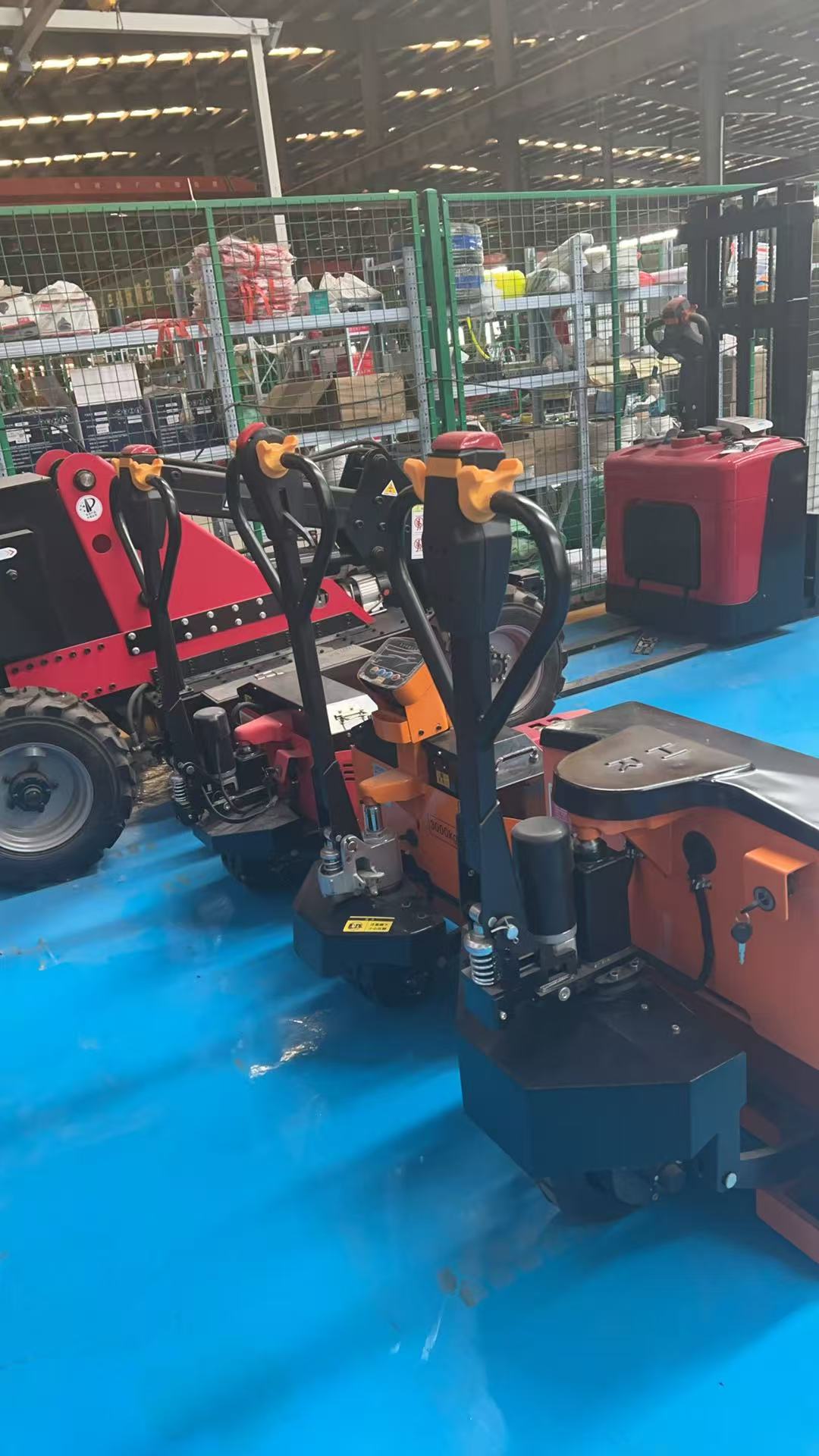
Pre-shipment inspection is where document scope and physical identity are reconciled.
Application fit across five operating environments
The range is positioned for warehousing, e-commerce fulfilment, workshops, supermarkets and cold-chain scenarios, and the model split follows the load argument. Supermarket back-of-house and workshop stacking sit naturally in the CPD10 to CPD20 band, where short transfer distance and doorway width matter more than peak capacity. Warehousing and e-commerce handling concentrate on CPD20 and CPD30, because mixed pallet weights and repeated put-away cycles reward a middle-band truck that is not oversized for the aisle. Heavy palletised goods and container work point to CPD35, where the capacity headroom is most useful and the configuration questions are also most consequential.
Cold-chain work needs a separate evidence step rather than a scenario label. The battery and charger temperature range, condensation handling and charging location for the actual configuration should be documented before a freezer installation is approved, because the supplied material does not include measured cold-room endurance figures for any model.
A supplied reference application describes an electronics manufacturer in an industrial park using CPD-series trucks for component, work-in-process and finished-goods logistics, with coordinated bulk delivery and fleet configuration. The reported result is improved material-flow efficiency and the removal of tailpipe exhaust from enclosed clean production areas. Unit count is not disclosed, so it should be read as a documented application reference rather than a quantified case study.
Electric versus conventional handling: what the comparison can show
Against internal-combustion trucks, the recorded advantages are structural rather than promotional: no tailpipe exhaust at the point of use, and quieter operation, both of which matter in enclosed production, food handling and retail space. The trade-off sits on the infrastructure side, where charging time, charger capacity and battery management replace refuelling logistics.
Within electric handling, company comparison material describes a distinction between a higher-frequency configuration — faster control response, longer effective operating time and longer maintenance intervals — and a conventional build with lower initial investment, higher power consumption and more frequent routine maintenance, suited to low-to-medium handling frequency. That is a supplier statement about intended positioning, not an independently measured audit, so it should be used to structure a trial rather than to conclude one. A short validation order run on the buyer's own duty cycle answers the question more reliably than either description.
A six-step verification sequence
| Step | Action | Evidence produced |
|---|---|---|
| 1 | Define the configuration in the RFQ: model, rated load at a stated load centre, mast and lift height, controller brand and model, battery chemistry and capacity. | Written specification that later documents can be matched against. |
| 2 | Request model-level documents: data sheet, EU Declaration of Conformity naming the exact model, and the CE attestation with number, issuer, scope and validity dates. | Scope and currency check on the compliance file. |
| 3 | Confirm physical identity: controller label, motor nameplate, battery specification and serial recorded at pre-shipment. | Photographic and transcribed record tied to the delivered unit. |
| 4 | Check the cited standards against the current harmonised-standard references for the transaction date. | Gap list for the supplier, if any standard reference has moved. |
| 5 | Fix acceptance: written pre-shipment test protocol, function and load checks, documents released with the balance payment. | Acceptance clause with defined pass criteria. |
| 6 | Plan the operating fit: charging strategy, battery temperature limits for cold rooms, noise measurement for the site assessment, and the applicable legal basis for EU placement. | Site-level readiness record, separate from the vehicle order. |
The sequence is deliberately ordered so that each step produces something the next step can be checked against. Buyers who begin at step five usually end up renegotiating at step two.
Where documented capability is heading
Battery documentation is becoming a qualification field rather than an afterthought. Interact Analysis forecast in February 2026 that lithium-ion technology would surpass lead-acid in market share within the electric forklift segment during 2026, and the EU Battery Regulation already requires carbon-footprint disclosure and technical documentation for industrial batteries placed on the EU market. For a buyer, the practical consequence is that pack-level information, charger matching and chemistry-specific documentation increasingly decide whether a supplier can be shortlisted at all.
That shifts the centre of a supplier evaluation away from a single headline specification and toward the completeness of the evidence file. A range that spans 1,000 kg to 3,500 kg, carries four controller options and offers two battery chemistries generates a large number of possible configurations; the supplier's ability to produce matching documents for the configuration actually ordered is a better predictor of a workable long-term relationship than any one line of a data sheet.
What the evidence supports today is narrower and more useful than a capability claim: the CPD series can be specified, documented and tested at model level, and a buyer can verify scope, identity and commitment before accepting a fleet. What it does not yet support is a measured performance conclusion for a specific route — that remains a matter for the buyer's own trial, run on the buyer's own duty cycle.
FAQ
Which documents should a buyer request to verify CPD10–CPD35 build evidence?
A buyer should request six items: the model data sheet showing rated capacity at a stated load centre and lift height; the EU Declaration of Conformity naming the exact model and configuration; the CE attestation with certificate number, issuer, recorded scope and validity dates; a written statement of the controller brand and model fitted; the battery specification, including charger match and, for lithium, transport and battery-regulation documentation; and the pre-shipment test record. The documents are useful only if they refer to the same configuration.
Does the CE attestation cover every CPD configuration?
The supplied record is an attestation of compliance for CE under the Machinery Directive 2006/42/EC, certificate TTC-23-1907/08/01, issued 19 July 2023 by INTEGRA96 and valid to 19 July 2028, with the scope recorded as 'Forklift, Model Series: CPD' and the standards listed as EN ISO 12100:2010, EN 60204-1:2018 and EN 1175:2020. A series-level scope is not the same as a configuration-level declaration, so the order-specific declaration should name the exact model, mast and battery arrangement, and modified builds should be raised with the supplier explicitly.
Can the controller brand be specified in an OEM order?
Controller options stated for the range include SANTROLL, CURTIS, INMOTION and ZAPI, and OEM production with customization support is part of the stated capability. Because availability can vary by model and order, the brand and model should be named in the purchase order and confirmed for that specific build, together with the diagnostic tool the local service partner requires and whether parameter settings are locked.
What are the stated MOQ, payment and acceptance terms?
The stated terms are a minimum order quantity of 2 units, FOB or CIF delivery, 30/70 payment, pre-shipment test as the acceptance criterion, and a 30-day production lead time. The acceptance criterion becomes meaningful when the pre-shipment test is defined in writing, covering controller label, motor nameplate, battery specification and serial, function checks and a load check at the rated capacity for the configured load centre.
How should battery configuration be verified for cold-chain or multi-shift use?
For cold-chain or multi-shift duty, the buyer should obtain the operating temperature range and capacity of the specific battery and charger, confirm that any fast-charging or opportunity-charging plan matches that equipment, and secure the pack-level documentation for a lithium build. The supplied material does not include measured cold-room endurance figures for the CPD models, so duty-cycle behaviour in a freezer environment should be validated during the pre-shipment or on-site acceptance stage rather than assumed from a suitability statement.
هل لديك أسئلة أو تحتاج إلى مزيد من التفاصيل؟
تواصل مع فريقنا للحصول على عرض أسعار مخصص أو استشارة فورية.
طلب عرض أسعار
املأ النموذج أدناه وسيتواصل معك فريقنا بعرض مقترح مخصص.
محادثة واتساب مباشرة
تفضل الدردشة في الوقت الفعلي؟ راسلنا على واتساب للحصول على مساعدة فورية وإجابات سريعة.
- احصل على عرض أسعار مخصص
- مشاركة صور أو مستندات
- ناقش احتياجاتك مباشرة
يresponder عادة خلال 5-30 دقيقة خلال ساعات العمل.