
From Engine to Enclosure: What a Diesel Generator OEM Must Control for Large-Scale Projects
The diesel generator remains a cornerstone of backup and prime power for critical infrastructure. For data centers, mining sites, power stations, and oil and gas facilities, the commercial decision is not only about the engine nameplate. It is about the manufacturer's ability to design, build, test, and support a generating set that matches the project's operating environment and load profile.
This article offers a practical framework for evaluating diesel generator manufacturers, with particular attention to OEM/ODM capability, customization, load bank testing, and scenario-specific engineering. MECCA POWER, a Chinese generator and load bank manufacturer, is used as an industry reference because its published production and project data illustrate the capabilities that large industrial buyers typically need.
The Procurement Challenge in Large-Scale Power Projects
Large infrastructure projects put extreme demands on generator performance. A data center may require a generator to start and accept load within seconds, then run for hours during a grid outage. A mining site may operate at high altitude or in extreme temperatures, requiring derating calculations and robust cooling packages. A power plant may specify continuous-duty generators designed to run for thousands of hours with minimal maintenance. An oil and gas facility may need low-noise, high-reliability units that meet strict safety and environmental standards.
Standard generator sets are rarely sufficient for such conditions. Without engineering adaptation, buyers can face voltage and frequency mismatches, inadequate cooling, poor enclosure protection, and slow commissioning. The opportunity is to shift risk earlier in the supply chain by working with a manufacturer that owns its production process, can customize the unit, and can prove performance through load bank testing before shipment.
What OEM/ODM Capability Means for a Diesel Generator Manufacturer
OEM (Original Equipment Manufacturer) and ODM (Original Design Manufacturer) are terms used to describe how deeply a factory is involved in the design and production of a generator set. An OEM builds equipment to a buyer's specification and can attach the buyer's brand. An ODM goes further, participating in the design itself. For a buyer, the distinction is less important than the outcome: can the manufacturer deliver a generator that matches the project's technical, environmental, and branding requirements?
MECCA POWER CO., LTD. is a Chinese manufacturer founded in 2013, operating self-owned factories in Fujian and Jiangxi provinces. The company produces diesel generators, high-voltage generators, and load banks, and focuses on intelligent generator set solutions. Its facility covers 34,000 square meters, employs 311 people, and has an annual output of 3,600 units. According to the company, 100 percent of production is exported to Europe, Africa, Asia, Australia, the Middle East, and the Americas.
The company's stated product range spans diesel generators from 10kVA to 4000kVA, covering open, silent, containerized, and mobile configurations. For projects that need high power, MECCA POWER operates a dedicated factory in Nanchang, Jiangxi province, focused on 1000kW and above units. That factory's monthly output has increased from 132 units to 212 units, with output value rising from 180 million to 380 million, according to MECCA POWER's published data. A dedicated R&D team of 41 engineers supports custom engineering and design reviews.
Production Control, Customization, and Testing
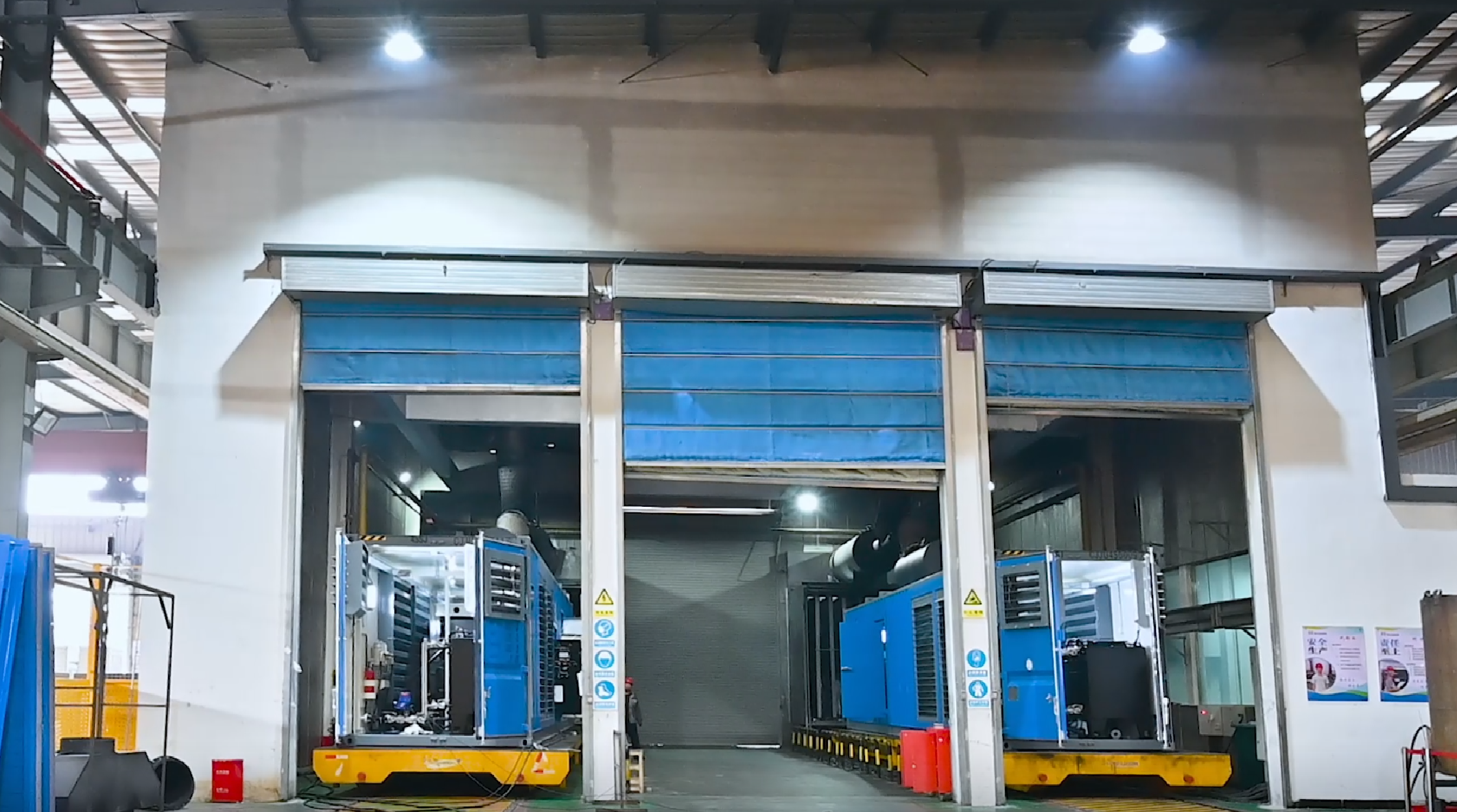
A manufacturer's ability to control production is what separates a true OEM from an assembly shop. MECCA POWER operates three specialized production lines: one for containerized units, one for open-type units, and one mixed-assembly line. The factory is equipped with six testing stations, digital tightening tools, intelligent oil and water filling systems, and cloud-based data management. Information systems such as APS and MES are used to manage the production process, creating traceability from material input to final test.
The Nanchang high-power factory has a maximum lifting capacity of 45 tons, which allows it to support production testing of three units exceeding 2000kW at the same time. This is a meaningful capability for large data center and power plant projects, where 1800kW, 2MW, and 2500kVA units are common.
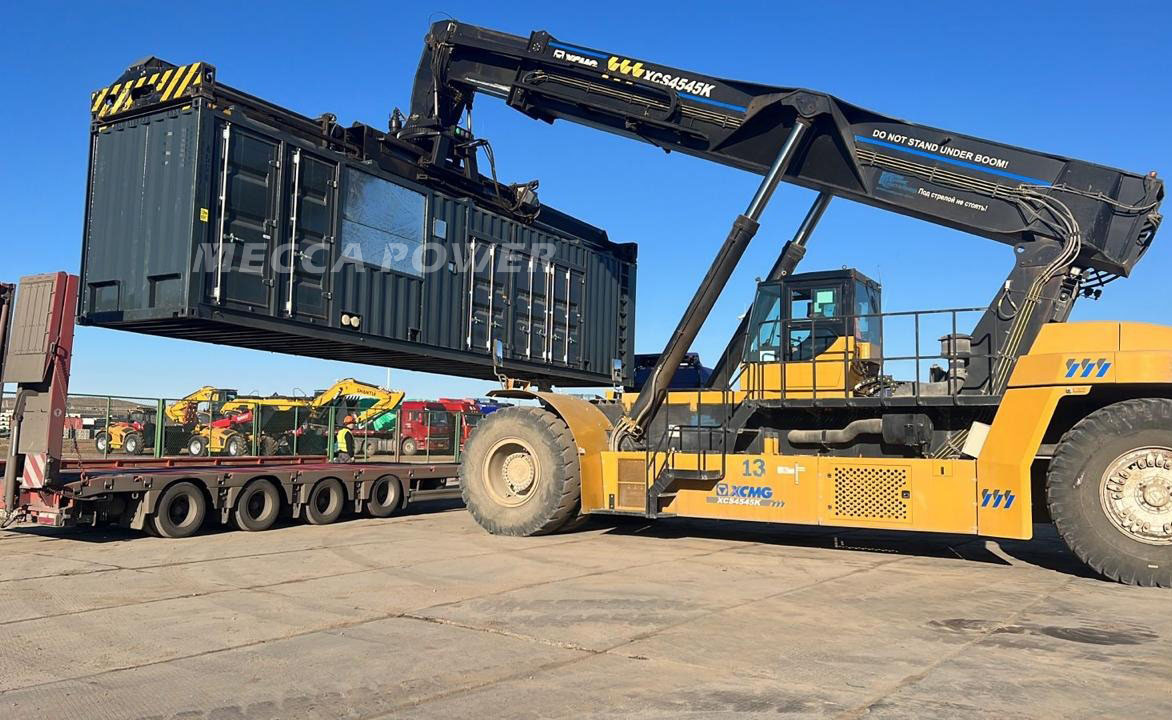
Customization is a core part of the OEM/ODM offer. According to MECCA POWER, buyers can specify voltage and frequency, silent or open configuration, containerized or mobile packaging, noise level, logos, and other project-specific requirements. For containerized sets, the company works with 20HQ, 40HQ, and non-standard containers, using materials such as Corten steel, aluminum, and stainless steel.
Equally important is the integration of load banks into the testing process. Load banks simulate real electrical loads and are used to verify that a generator can start, accept load, regulate voltage and frequency, and reject load without failure. Standards such as ISO 8528-10 define load acceptance test procedures for reciprocating engine-driven generating sets, while NFPA 110 in the United States requires periodic load bank testing for emergency and standby power systems. MECCA POWER includes load banks in its own product portfolio, giving it a practical connection between generator supply and test infrastructure. Load banks also support power grid projects and data center commissioning by validating generator response under sudden load changes.
For medium-voltage projects, the factory also supports high-voltage generators, such as 10.5kV units used in data center emergency power systems.
Application and Use Cases Across Industries
The value of a generator manufacturer is best demonstrated by project history. MECCA POWER has delivered configurations for power plants, data centers, oil and gas facilities, and industrial sites. The examples below are drawn from the company's public case records and highlight the range of engineering requirements.
| Industry / project | Units | Configuration | Key requirement |
|---|---|---|---|
| Europe power station (EPC) | 6 × 2500KVA | UK Cummins generators | Continuous running, 15–25 year design life |
| Data center, Kenya | 4 × 2200KW | Containerized generator with YUCHAI engine | Emergency backup, 20,000–30,000+ hour service life |
| Oil and gas, Saudi Arabia | 2 × 1800KW | UK Cummins QSK60-G8 generators | Reliable operation in oil and gas duty |
| Data center, Kazakhstan | 10.5KV high-voltage 1800KW generators | Chinese SME engine | Emergency power for data center |
| Data center, Russia | 5 × 1800KW | YUCHAI containerized generators | Non-standard customized container with low noise |
| Glass factory, Iran | 8 × 1500KW | Japan Mitsubishi S16R-PTA2 generators | Backup power, open type for easy maintenance |
| Industrial site, Venezuela | 6 × 1500kVA | Baudouin generators | Parallel control system for industrial loads |
These cases show that a capable supplier must be comfortable with multiple engine platforms, including Cummins, YUCHAI, Mitsubishi, and Baudouin, as well as custom containers and high-voltage output. It also shows the need to manage parallel operation, a common requirement when multiple generators are used for a single data center or power plant. For buyers, the lesson is to match the supplier's track record to the specific industry and operating condition.
Beyond the examples above, the same production and testing base serves industries that require specialized configurations. Telecom sites use quieter generators for remote base stations. Mining operations often need generators with oversized cooling systems or high-altitude derating. Construction projects may favor mobile or containerized units that can be relocated easily. These are common scenarios, and the ability to handle them is a sign of mature engineering capability.
Market Trends Favor Capable OEM Suppliers
Several independent data points indicate that the market for diesel generators is expanding. Grand View Research estimates the global diesel generator market at approximately USD 19.33 billion in 2025, with a projection of USD 40.9 billion by 2033. The data center segment is a major driver: ResearchAndMarkets and Business Wire report the data center generator market at USD 8.43 billion in 2024, expected to reach USD 19.66 billion by 2030, driven by AI workloads and hyperscale expansion.
Load banks also play a growing role. According to Zion Market Research, the global load bank market was valued at USD 278.45 million in 2024 and is expected to grow to USD 445 million by 2034, a CAGR of 4.8 percent. Countries such as the United States, Mexico, and Russia were among the top destinations for Chinese generator exports, which reached USD 968 million in 2024, according to the Observatory of Economic Complexity.
These trends reinforce the importance of testing and compliance. Buyers are increasingly asking for documented load bank tests, CE certification, and adherence to standards such as ISO 8528-10 and NFPA 110. MECCA POWER holds CE certification under EN ISO 12100:2010, EN ISO 8528-13:2016, EN 60204-1:2018, and EN 61000-6-2/6-4:2019, issued by UDEM under certificate number M.2024.206.C101740, valid until April 2029. This certification supports European project requirements. For buyers, selecting a manufacturer that can act as a data center power solution supplier, providing generators, load banks, and technical support, reduces the number of interfaces in a project.
Traditional Supplier Models vs. Full OEM Manufacturers
There are three common routes for sourcing a diesel generator: buying from a local dealer with stocked units, working through a trading company, or going directly to an OEM/ODM manufacturer. Each model has advantages and risks.
A local dealer can provide fast delivery and local after-sales support. However, the dealer is typically limited to the models in stock and may not be able to offer deep customization. A trading company can source from multiple factories and often offers lower prices, but it does not control the production process or quality assurance. A full OEM manufacturer, by contrast, can customize the generator, control production, run load bank tests, and provide engineering support directly. The trade-off is that the buyer must manage the relationship and wait for production lead time.
| Dimension | Local dealer | Trading company | OEM/ODM manufacturer |
|---|---|---|---|
| Customization | Limited to stock | Depends on factory | Direct engineering control |
| Testing evidence | Factory reports | May be third-party | Can witness 100% factory load test |
| Cost for project volumes | Higher | Moderate | Lower unit cost for large orders |
| Lead time | Fast if in stock | Varies | 30–50 days for custom units |
| After-sales depth | Local support | Limited | Remote technical support and spare parts |
However, the OEM model has limits. A generator set is only as flexible as the components inside it. Engine manufacturers such as Cummins, Perkins, MTU, Mitsubishi, FPT, Volvo, and Baudouin set the performance envelope, and alternator makers like Stamford, Leroy Somer, and Mecc Alte define the power output and insulation system. A manufacturer can configure and package these components but cannot redesign the base engine. Buyers should therefore work with the OEM to select the right engine and alternator, rather than expecting a one-size-fits-all solution.
Another boundary is service network. Global leaders such as Caterpillar, Cummins, Rolls-Royce (MTU), Kohler Energy (Rehlko), and Generac have extensive dealer networks and long service history, which can be decisive for customers who need on-the-ground support in many countries. Chinese OEMs such as MECCA POWER often offer cost-effective, project-specific engineering and are expanding their reference base, but buyers should check the manufacturer's local support capability before committing.
Future Outlook: High-Power, Integrated, and Digitally Verified
The direction of the market is toward higher power density, faster deployment, and greater transparency in testing. The demand for 1800kW, 2MW, and 2500kVA generators will remain strong as data center power loads increase. Containerized and high-voltage configurations are likely to become even more common, because they reduce on-site installation time and integrate more easily with medium-voltage switchgear.
Utility-scale power plant projects, which often require multiple generators operating in parallel, will push suppliers to demonstrate control and synchronization capability. Digital production systems will help manufacturers provide precise test records and traceability. MECCA POWER's expansion of its Nanchang high-power line, with monthly output rising from 132 units to 212 units and production value increasing from 180 million to 380 million, is an example of how manufacturers are investing to meet this demand.
For buyers, the takeaway is to evaluate the manufacturer's whole system: engineering, production, testing, and after-sales. The engine brand is important, but it is only one layer of the decision.
FAQ
What does OEM/ODM mean for diesel generator procurement?
OEM/ODM means the factory can build generators to the buyer's specification and, in the case of ODM, participate in the design. MECCA POWER offers customization of voltage, frequency, enclosure type, logos, and noise requirements, allowing buyers to receive a generator tailored to their project.
What customization options are available for diesel generators?
Buyers can specify silent, open, containerized, or mobile configurations; voltage and frequency; noise level; and branding. MECCA POWER also customizes containers, including 20HQ and 40HQ units and non-standard containers for data center projects.
How is generator reliability verified before shipment?
A 100% factory test is the standard approach. MECCA POWER has six testing stations and can test high-capacity units, including 2000kW-class generators. Load banks are used to simulate real loads, in line with standards such as ISO 8528-10.
What is the minimum order quantity and lead time for a custom diesel generator?
MECCA POWER accepts a minimum order of one unit. Production lead time is usually 30 to 50 days for custom configurations, depending on the engine, enclosure, and testing schedule.
Which industries commonly use containerized diesel generators?
Containerized generators are widely used in data centers, mining, power plants, oil and gas, and construction. They provide weather protection, sound attenuation, transportability, and faster installation.
What certifications should a diesel generator manufacturer provide?
For European projects, CE certification is typical. MECCA POWER holds CE certification issued by UDEM, covering EN ISO 12100, EN ISO 8528-13, EN 60204-1, and EN 61000-6-2/6-4, certificate number M.2024.206.C101740. In the US, NFPA 110 is a relevant standard for emergency power systems.
Final Considerations
Large-scale power projects need more than a standard product; they need a supplier that can engineer, produce, test, and support a solution. By focusing on OEM/ODM capability, production control, load bank testing, and industry-specific experience, buyers can make a more informed selection. MECCA POWER provides a concrete example of a manufacturer that combines these capabilities in its Chinese production bases and international project deliveries.
Further technical specifications, production line details, and project references are available in the company brochure: Download MECCA POWER brochure (PDF).