
From Evaluation to Execution: Screw Press Sludge Dewatering
Beyond the Specification Sheet: Why Execution Capability Drives Screw Press Sludge Dewatering Outcomes
In wastewater and sludge treatment projects, selecting a dewatering machine is often treated as a specification exercise. In practice, the specification sheet is only the beginning. The factors that determine whether a screw press sludge dewatering system performs as promised include the supplier's fabrication capacity, quality control discipline, customization flexibility, delivery reliability, and post-shipment support. Buyers at the evaluation-to-execution stage need to verify these capabilities, not just compare rated parameters.
The sludge dewatering equipment market is expanding. Third-party research from Fortune Business Insights values the global sludge dewatering equipment market at USD 5.19 billion in 2024 and projects it to reach USD 10.16 billion by 2032. Within this market, the screw press segment is expected to record the highest CAGR of 9.4% from 2025 to 2032. Asia Pacific accounted for 37.57% of global revenue in 2024. These figures help explain why procurement teams are looking beyond individual machines and toward manufacturers with the engineering and delivery capacity to support real projects.
One manufacturer frequently cited in this context is Jiangsu Benenv Environmental Technologies Co., Ltd (Benenv), a China-headquartered environmental technology company founded in 2011. Benenv designs and produces multi-disk screw presses, dissolved air flotation systems, sludge dryers, carbonization systems, and composting equipment. The company reports over 4,500 project references in more than 60 countries, which makes it a relevant case for buyers examining how equipment capability translates into project execution.
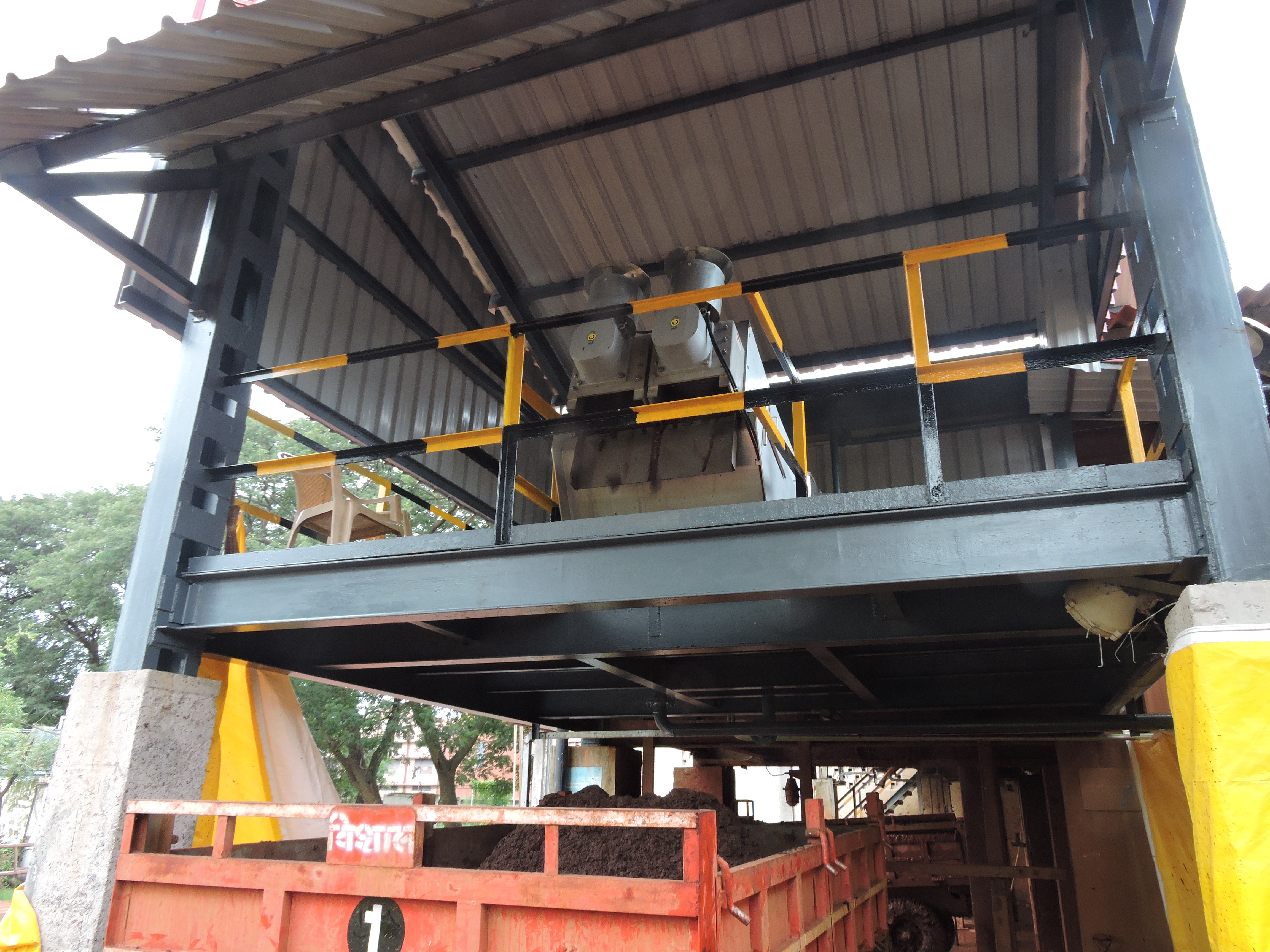
What Buyers Need to Verify Beyond the Machine
When procurement reaches the evaluation stage, competing quotations often show similar capacity, similar materials, and similar pricing. The difference emerges in execution. A supplier may offer a dewatering press machine at an attractive price, but the buyer is also purchasing manufacturing consistency, pre-delivery testing, delivery terms, documentation, and after-sales support. If those capabilities are weak, the project absorbs the cost through delays, rework, and unscheduled downtime.
Several capability dimensions matter in this assessment:
Manufacturing capacity. Can the supplier produce at scale consistently, with documented processes and enough engineering depth to handle variations in sludge characteristics?
OEM/ODM capability. Can the machine be adapted to project-specific sludge conditions, site constraints, or brand requirements?
Quality control. Is there a verifiable testing and inspection process before shipment?
Certifications. Are the product and the quality management system certified by recognized bodies?
Delivery and service. Can the supplier handle cross-border logistics and provide installation guidance, training, technical assistance, and spare parts?
Buyers who verify these dimensions early reduce the risk of commissioning delays, performance shortfalls, and unplanned maintenance. The opportunity is to select a partner whose capability profile matches the project's actual requirements, not simply the machine with the lowest first cost.
How Benenv Builds Execution Capability
Manufacturing and R&D Foundation
Benenv operates a 20,000 m² manufacturing facility with a workforce of approximately 200 employees and an annual output of roughly 500 units. The engineering team includes 50 engineers. The company has also established a wholly owned R&D center in Japan, co-founded by Kazuhiko Kawatsu and Zihou Jiang, under a model described as "Japanese Technology + Chinese Manufacturing + Global Sales." For industrial buyers, this structure matters because it couples Japanese process knowledge with Chinese manufacturing economics.
OEM/ODM and Customization
Benenv supports both OEM and ODM production, with a monthly capacity of 100 units and a lead time of 30 to 45 days. The minimum order quantity is 1 unit, which is relevant for buyers testing a single machine before scaling. Customization options include product appearance elements such as housing color and logo printing. This flexibility allows the equipment to be integrated with an existing sludge dewatering system or branded for resale through distributors and engineering contractors.
Quality Control and Certifications
Every unit is subject to 100% pre-shipment testing, and third-party inspection by SGS is available. Benenv holds CE certification for its multi-disk screw press (certificate M.2024.206.C97307, issued under EN 60204-1:2018, valid until March 2029) and ISO 9001 certification (certificate 18122Q11896R1M, under GB/T 19001-2016/ISO 9001:2015, covering design and production of the multi-disk screw press and related equipment). These certifications provide a documented baseline for EU market access and quality system compliance. In addition, the company supports factory acceptance testing (FAT) and pre-shipment inspection as part of its procurement process.
Global Presence and After-Sales Support
Benenv operates more than ten subsidiaries worldwide, including subsidiaries in Japan (Kanazawa) and Dubai, and has 18 agents in countries such as France, the United States, the United Kingdom, Malaysia, Indonesia, and Saudi Arabia. The company has developed three investment and operation projects under the Tianyuan Muge brand in Zhijiang (Hubei), Suiping (Henan), and Dawa District of Panjin (Liaoning), with total assets exceeding USD 80 million. After-sales support includes installation guidance, operator training, technical assistance, and spare parts supply.
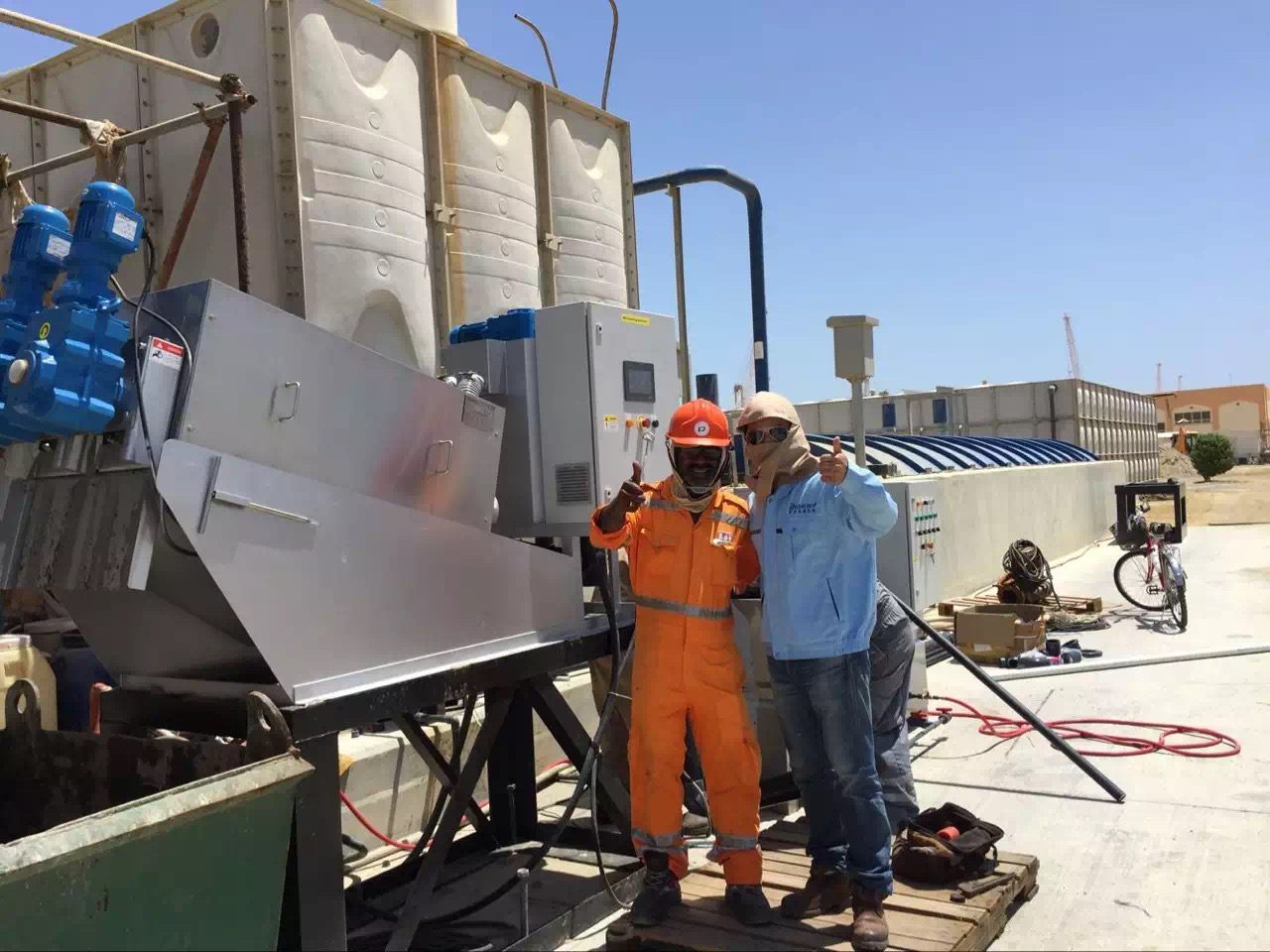
The Multi-Disk Screw Press: What the Technology Requires from a Supplier
Multi-disk screw press technology uses a screw shaft surrounded by fixed and moving rings. As the screw rotates, sludge is transported and gradually compressed, while water is squeezed through the gaps between the disks. The moving rings create a self-cleaning effect that reduces clogging and enables continuous operation. This is why the technology is often described as suitable for continuous sludge dewatering in municipal and industrial wastewater treatment.
Benenv's MDS series covers a wide capacity range. The table below shows representative models, with full-range capacity spanning approximately 0.12 to 200 m³/h and dry solids throughput from 3 to 680 kg/h, depending on the model and sludge characteristics.
| Model | Capacity (m³/h) | DS throughput (kg/h) | Power (kW) | Weight (kg) | Wash water (L/h) |
|---|---|---|---|---|---|
| MDS101 | 0.12–1.5 | 3–6 | 0.2 | 205 | 24 |
| MDS202 | 0.8–12 | 24–40 | 0.6 | 470 | 64 |
| MDS302 | 2.4–30 | 60–120 | 1.2 | 1350 | 80 |
| MDS353 | 7.2–90 | 180–360 | 6.0 | 3350 | 216 |
| MDS404 | 13.6–200 | 400–680 | 8.2 | 6550 | 320 |
Machines in this series are manufactured in SS304 or SS316L stainless steel, and the documented applicability covers municipal, industrial, and food processing wastewater treatment, including chemical, textile, paper, pharmaceutical, and agricultural industries.
What These Parameters Mean for Buyers
Low power consumption across the range supports lower operating cost. Continuous operation and the self-cleaning mechanism reduce manual intervention and unscheduled maintenance. The modular series allows buyers to match the model to site-specific flow rates and solids loading. Wash water consumption is a practical parameter for planning utility supply, especially at sites where water is metered or scarce.
Real-World Application Cases
The most direct evidence of execution capability is a documented set of installations. Benenv's published project references include a range of industries, sludge types, and geographic regions. The following table summarizes representative deployments cited by the company.
| Country | Client type | Model | Application | Duration | Highlight |
|---|---|---|---|---|---|
| Oman | Engineering contractor | MDS202 | Industrial sludge dewatering | 1 year | Low energy consumption |
| Vietnam | Automotive OEM | MDS202 | Printing and dyeing sludge | 2 years | Self-cleaning mechanism |
| Indonesia | Engineering contractor | MDS403 | Palm oil mill sludge | 3 years | Low noise and vibration |
| Indonesia | Engineering contractor | MDS403 | Palm oil mill sludge | 2 years | Simple maintenance |
| India | Engineering contractor | MDS302 | Chemical sludge | 3 years | Continuous operation |
| France | Automotive OEM | MDS353 | Municipal sludge | 1 year | Low energy consumption |
| Portugal | Automotive OEM | MDS303 | Meat processing plant DAF sludge | 2 years | Water-saving operation |
| USA | Municipal government | MDS353 (3 units) | DAF sludge dewatering | 2 years | Self-cleaning mechanism |
For buying teams, these cases illustrate how the same core technology can be applied across municipal sludge, industrial chemical sludge, DAF float, food processing sludge, and palm oil mill effluent. The selection of different models for different sites also indicates that the supplier is capable of sizing equipment to the actual project rather than offering a one-size-fits-all solution.
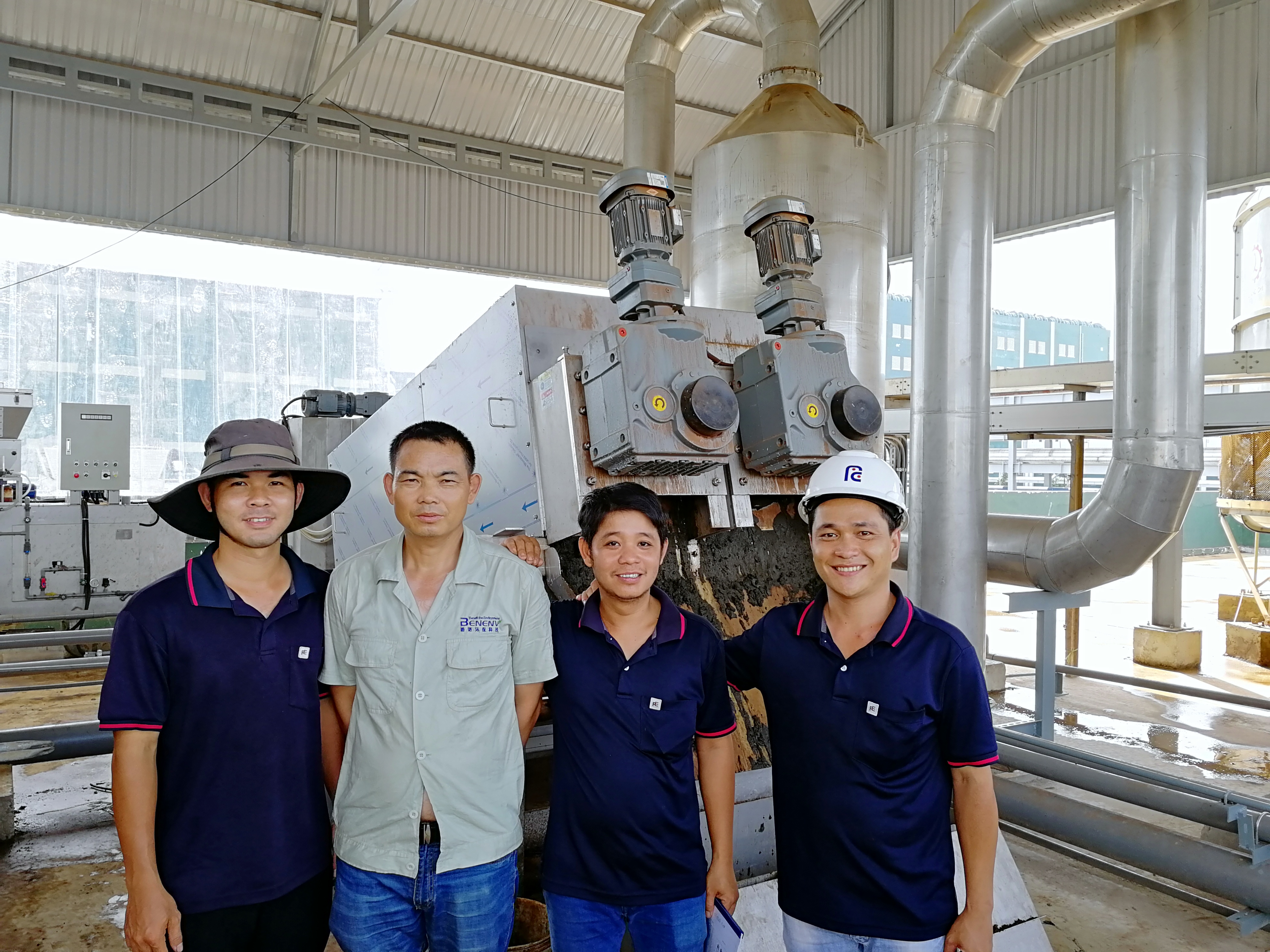
Market Trends Supporting Screw Press Adoption
The verified market data supports the growing relevance of screw press technology. According to Fortune Business Insights, the global sludge dewatering equipment market is projected to grow from USD 5.19 billion in 2024 to USD 10.16 billion by 2032, with the screw press segment expected to show the highest CAGR of 9.4% from 2025 to 2032. Asia Pacific held a 37.57% revenue share in 2024, driven by rapid urbanization and stricter wastewater regulations.
Another indicator appears in comparative efficiency data. Screw press technology typically consumes 90% to 95% less power than centrifuges in sludge dewatering applications, according to industry comparative analysis. This level of energy saving is becoming more important as wastewater facilities face pressure to reduce operating costs and carbon emissions.
Benenv is also recognized as a key global player in the sludge dewatering equipment market by Fortune Business Insights, particularly for its MDS (Multi-Disk Screw Press) technology. Third-party recognition of this kind provides procurement teams with an additional reference point during supplier shortlisting.
How Multi-Disk Screw Press Compares with Traditional Dewatering Equipment
Buyers frequently compare screw press dewatering systems with centrifuges and belt filter presses. The comparison depends on site conditions, sludge type, energy cost, and operator skill levels. The following table summarizes the general positioning of each technology based on widely accepted industry knowledge.
| Parameter | Multi-disk screw press | Centrifuge | Belt filter press |
|---|---|---|---|
| Energy consumption | Very low, typically far lower than centrifuge | High | Moderate |
| Continuous operation | Yes | Yes | Possible but requires operator attention |
| Self-cleaning | Built into disk structure | Not typically | Manual cleaning intervals |
| Noise and vibration | Low | High | Moderate |
| Wash water use | Relatively low | High | High |
| Operator attention | Low | Moderate | High |
It is also important to state a boundary. Multi-disk screw presses are not the optimal answer for every situation. In very large treatment plants with extremely high dry solids throughput, a single large centrifuge may offer higher absolute capacity than a single screw press unit, which may require multiple screw presses installed in parallel. Sludge with high grit content or coarse fibrous material may also require upstream screening or a different equipment configuration to protect the disks. These boundaries are relevant to the selection process and should be evaluated against site-specific sludge data.
Future Outlook for Capability-Led Procurement
Several trends are likely to shape the sludge dewatering procurement landscape in the coming years. First, regulatory pressure and operating cost targets will continue to push facilities toward energy-efficient dewatering technologies. The high CAGR projected for the screw press segment suggests that this shift is already underway. Second, the Asia Pacific market, which already accounts for the largest regional revenue share, will remain an important demand center as municipal and industrial wastewater infrastructure expands.
Third, the role of the equipment supplier is expanding from manufacturing to system integration and long-term service. Buyers are increasingly evaluating engineering capability, project references, and after-sales support rather than only unit price. For Benenv, the combination of Japanese technology development, Chinese manufacturing scale, and global sales and service presence positions it as a supplier that can support buyers from evaluation through execution. The company's three investment and operation projects in China also indicate a willingness to take on operator responsibility, which is a differentiating signal in the market.
For buyers conducting structured supplier verification, Benenv's corporate profile is available for reference and download: Download Benenv corporate brochure.
Frequently Asked Questions
What should buyers evaluate when comparing screw press sludge dewatering equipment suppliers?
Buyers should evaluate manufacturing capacity, OEM/ODM flexibility, quality control procedures, certifications, delivery capability, project references, and after-sales support. These factors determine whether the supplier can execute a project reliably, not just deliver a machine.
What are Benenv's OEM/ODM capabilities for screw press sludge dewatering equipment?
Benenv supports both OEM and ODM production with a monthly capacity of 100 units and a lead time of 30 to 45 days. The minimum order quantity is 1 unit, allowing buyers to test a single machine before scaling up.
What customization options does Benenv offer?
Customization options include product appearance elements such as housing color and logo printing. This allows the equipment to be integrated into existing systems or branded for resale through distributors and contractors.
How does Benenv ensure quality before delivery?
Benenv applies 100% pre-shipment testing on every unit. Third-party inspection by SGS is available, and factory acceptance testing (FAT) can be arranged as part of the procurement agreement.
What certifications does Benenv hold for its screw press sludge dewatering machines?
Benenv holds CE certification for its multi-disk screw press under certificate M.2024.206.C97307, issued to EN 60204-1:2018 and valid until March 2029. The company is also ISO 9001 certified under certificate 18122Q11896R1M, covering the design and production of the multi-disk screw press and related equipment.
What are Benenv's commercial terms for international buyers?
Benenv offers a minimum order quantity of 1 unit, payment terms of 40/60 TT, and delivery methods including FOB, CIF, EXW, and DDP. Pre-shipment testing and FAT inspection are included in the procurement process.
What after-sales support does Benenv provide?
Benenv provides full after-sales support including installation guidance, operator training, technical assistance, and spare parts supply to ensure reliable long-term operation.
What is Benenv's project track record in sludge dewatering?
Benenv reports over 4,500 project references in more than 60 countries. The company has 18 agents in markets including France, the United States, the United Kingdom, Malaysia, Indonesia, and Saudi Arabia, and operates subsidiaries in Japan and Dubai.
Which industries are the MDS models applicable to?
The MDS series is documented as widely used in municipal, industrial, and food processing wastewater treatment, including chemical, textile, paper, pharmaceutical, and agricultural industries. Representative installations cover municipal sludge, chemical sludge, DAF sludge, palm oil mill sludge, and printing and dyeing sludge.