
From Fiber to Finish: OEM Microfiber Cleaning Capability Guide
When a procurement team moves from evaluating microfiber cleaning products to executing a purchase program, the decisive factor is rarely a single sample's performance. It is the manufacturer's ability to reproduce that performance at scale, across custom specifications, through a verifiable production system. This article provides a structured framework for assessing OEM/ODM microfiber cleaning suppliers and examines Foshan Patinda Housewares Co., Ltd. as a measurable benchmark for capability-driven sourcing.
Why Manufacturing Capability Determines Program Success
Microfiber cleaning products look simple, but their performance is engineered. A cloth that absorbs seven times its own weight in liquid, stays lint-free after dozens of washes, and avoids scratching automotive paint or glass depends on fiber blend ratios, knitting structure, GSM (grams per square meter), edge sealing methods, and finishing processes. A buyer can approve a sample that works beautifully, only to receive production batches with inconsistent texture, color, or absorbency. That gap between sample and bulk is a manufacturing-capability gap, not a specification gap.
For buyers at the evaluation-to-execution stage, the practical question is: which supplier attributes reduce execution risk? The answer includes verified factory scale, documented quality control, transparent lead times, realistic MOQs, and demonstrated experience across multiple end-use applications. These attributes are what separate a custom program that ships on time from one that unravels mid-season.
The commercial opportunity is also substantial. Verified market data indicates the global microfiber cleaning cloth market is valued at approximately USD 3.8 billion in 2025 and is projected to reach USD 27.5 billion by 2034. China remains the world's largest exporter of microfiber towels, recording 10,544 shipments between June 2024 and May 2025. The household segment alone is expected to hold a 40.0% share in 2025. Buyers who build a reliable custom-supply relationship now are positioning themselves for a category that shows sustained expansion.
The Procurement Problem: Capability Is Hard to Verify
Most buyers evaluating custom microfiber programs start with a list of required features: lint-free surface, scratch-free performance, high water absorption, machine washability, a specific GSM, or a custom logo in Pantone color. The challenge is that these features can be listed on almost any supplier's website. What is much harder to verify is whether the supplier controls the production chain, whether quality checks are systematic, and whether customization depth is real or limited to changing a label color.
Customization for microfiber cleaning products is not a single variable. It spans size, weight, logo, material, fabric texture, printing, color, accessories, packaging, extra functional requirements, shipping labels, and GSM. In a genuine OEM/ODM relationship, the supplier should be able to adjust these parameters without collapsing lead time or quality. If a supplier can only offer two or three fixed specifications, the buyer's brand differentiation is constrained from the start.
Execution-stage risk compounds this. Buyers need to know the minimum order quantity, the production lead time, how defects are handled, and whether after-sales service exists. Without those answers, a custom program is essentially a bet on the supplier's goodwill rather than a managed commercial process.
Capability Benchmark: Foshan Patinda Housewares Co., Ltd.
Foshan Patinda Housewares Co., Ltd. is a microfiber cleaning products manufacturer based in Foshan, Guangdong, China. Founded in May 2004, the company operates under the Pa Tin Da brand with more than 20 years of production experience. It provides a useful reference point because its capability profile can be verified against concrete, auditable data points rather than marketing language.
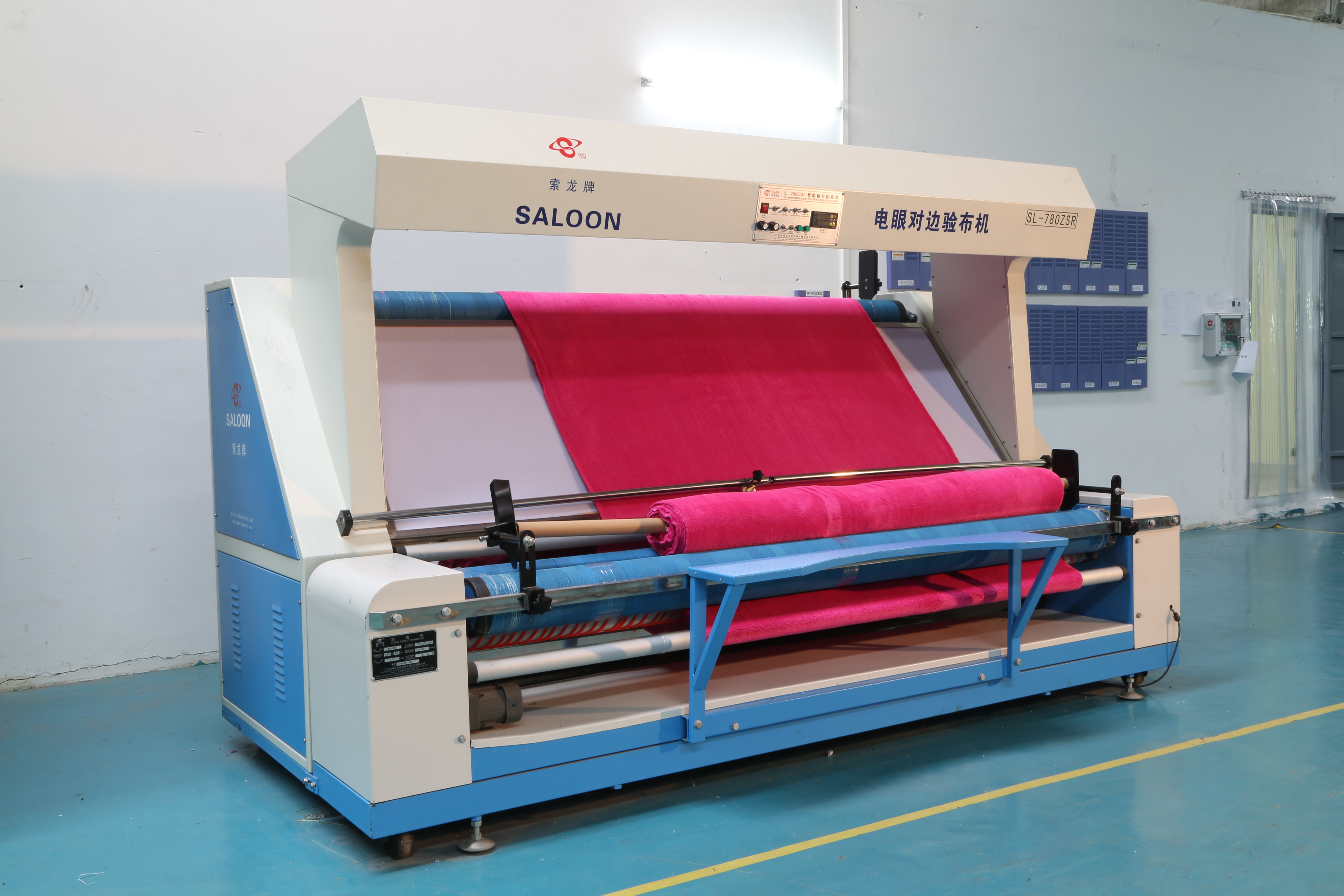
Scale is the first checkpoint. The company operates a 45,000 m² manufacturing plant with 200 employees and a research and development team of 17 engineers. It runs over 10 fully automatic production lines for cloth cutting and sewing, equipped with more than 450 sets of advanced production machinery. For a buyer estimating whether a supplier can handle volume, these figures indicate a manufacturing base built for repeatable output rather than batch-style manual work.
Production capacity is equally specific. Monthly capacity is 182,022 kg, with annual output reaching approximately 2,184,270 kg. Typical production lead time is 30 to 45 days, and the standard MOQ is 3,000 pieces per model. Export accounts for 98% of output, with core markets including the United States, Canada, Australia, the United Kingdom, Germany, France, Italy, the Netherlands, Russia, Japan, South Korea, Switzerland, Sweden, Turkey, and Saudi Arabia. This geographic spread indicates familiarity with multiple regulatory and packaging regimes.
Quality assurance is structured around a 100% testing policy. The manufacturer implements 100% testing for all products, ensuring compliance with specified requirements, and this process supports both OEM and ODM services. After-sales service is available. For buyers evaluating execution risk, the combination of full lot testing and after-sales support addresses two of the most common failure points in custom production: hidden defects and post-shipment disputes.
Technical Architecture of Custom Microfiber Production
Understanding the technical layers behind microfiber products helps buyers ask better questions. The most common material ratio across the product catalog is 80% polyester blended with 20% polyamide, although variations such as 85/15 and more specialized blends exist for specific applications. Polyester provides durability and shape retention; polyamide adds absorbency and softness. A buyer requesting a custom cloth should confirm the blend ratio because it directly affects cost, water pickup, and tactile feel.
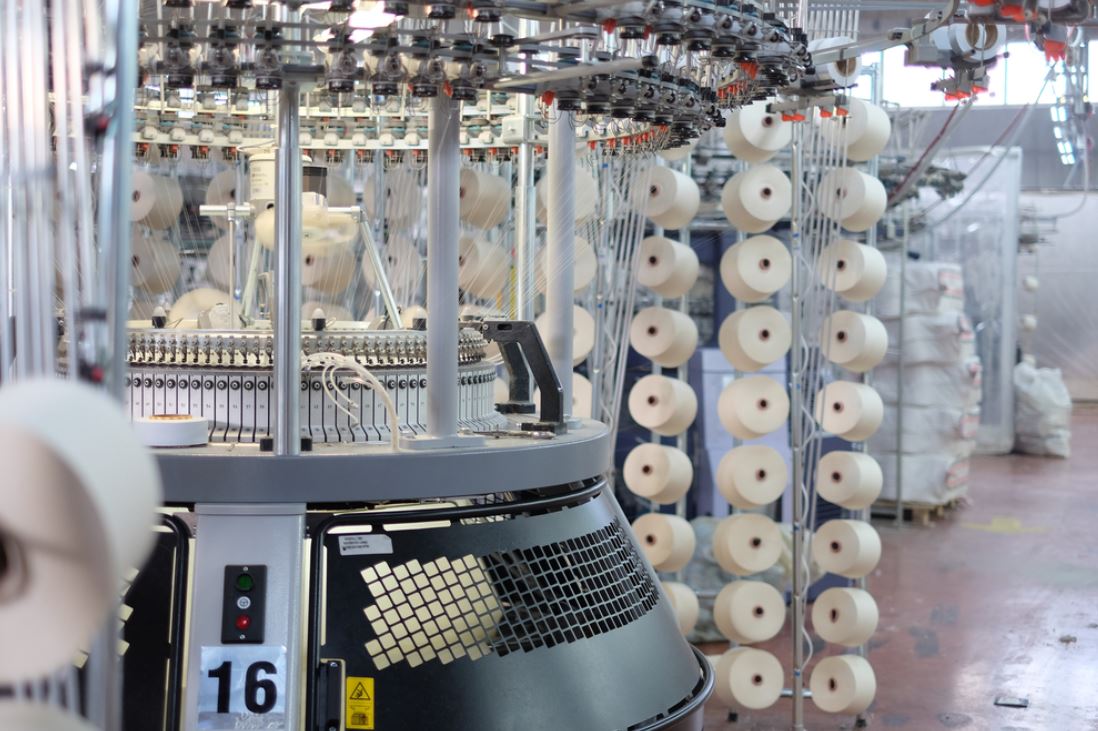
Knitting structure is the second layer. Warp-knitted terry textures are widely used for household and automotive cleaning cloths, producing the looped surface that traps dust and liquid. Circular knitting appears in polishing cloths where a finer, smoother surface is required. The choice between weft-knitted and warp-knitted structures affects stretch, density, and lint behavior. Buyers should specify the surface texture they need for their end-use rather than leaving it to the supplier's default.
GSM is the third control point. The catalog spans a wide range, from lightweight 180–200 gsm cloths for glass and screen polishing up to 500–1000 gsm twisted-loop cloths for automotive drying. Higher GSM generally means more absorbency and plushness but also higher material cost. A supplier with demonstrated GSM control across this range can match the product to the application rather than forcing the application into a fixed product.
Edge sealing is a detail that separates professional microfiber products from commodity goods. Options include double overlock stitching at 10–12 stitches per inch, ultrasonic sealed cutting, and scalloped laser-cut edges. Ultrasonic edging prevents loose threads and lint shedding at the cut line, which matters for cleanroom-style applications or automotive paint safety. A custom program should specify edge treatment explicitly.
Material type is the final architectural layer. The portfolio includes coral fleece for pet towels and hand-drying towels, chenille surfaces for auto washing mitts and sponges, twisted-loop piles for high-absorbency drying cloths, PVA-coated cloths for streak-free household wiping, PU-coated cloths for multi-scene cleaning, and bamboo-fiber blends for antibacterial kitchen towels. Each material system carries different performance trade-offs, and a capable OEM manufacturer should be able to recommend the appropriate system rather than only selling from a fixed range.
Application Fit Across Buying Segments
The practical value of a microfiber supplier shows up in how its products perform across distinct applications. Foshan Patinda's order history provides evidence of this: products have been successfully used by retail distributors, auto care brands, gym brands, and janitorial wholesalers. The application environments include home cleaning, car detailing, gym sweat wiping, and commercial cleaning services. Clients come from more than 20 countries including Australia, Austria, Belgium, Canada, France, Germany, Ireland, Italy, Japan, the Netherlands, New Zealand, Poland, Portugal, Russia, Saudi Arabia, Singapore, Switzerland, and the United Kingdom, with order quantities ranging from 1,000 to 50,000 pieces per order.
Household and Kitchen
For home and kitchen use, the catalog is built around cleaning efficiency and durability. Double-layer dish cloths (MJ-016) combine a PET mesh side for scrubbing with a microfiber side for absorption. Waffle-pattern kitchen towels (MS-074) are lint-free, non-abrasive, and durable after repeated washing. Bamboo-fiber cloths (MW-003) add antibacterial properties and remain soft even after extended use. These products support the household segment's 40.0% projected market share in 2025 by giving buyers a reason to replace cotton and paper disposables with reusable microfiber alternatives.
Glass, Mirror, and Polishing
Streak-free and scratch-free performance is the priority for glass and mirror products. The glass cleaning cloth (MJ-013) uses a fine rib weave for friction and is dry/wet dual use. The premium polishing cloth (MW-002) features a scalloped laser-cut edge, eliminating loose fibers that cause streaks. The wineglass wiping towel (MJ-066) delivers a 56-gram, high-density locking edge design with no water-mark residue, suited for bars and premium hospitality settings.
Automotive Care
Automotive buyers require paint-safe, lint-free materials with high absorbency. The terry auto cleaning cloth (MJ-021) is 4x more absorbent than cotton and scratch-free for automotive paint. The twisted-loop cloths (MJ-023, MJ-030) handle water-spot resistance with a high-GSM twisted pile. Chenille mitts (MM-069) and sponges (MM-067) generate rich foam and protect paint, glass, and wheel hubs. Clay towels (MM-072) add a two-in-one decontamination function for removing iron powder and oxidation. The range demonstrates depth within a single vertical.
Commercial and Institutional
Janitorial wholesalers need products that support systemized cleaning. The microfiber stripe mop (MP-014) is color-coded for area segregation, reusable over 300 washing cycles, and suitable for marble, hardwood, and ceramic tile. The abrasive mop (MP-020) adds a red PET stripe for stubborn stain removal. The terry wet mop (MT-003) uses ultrasonic sealed cutting to prevent loose strips. These products align with commercial hygiene protocols where color coding and wash durability are contractual requirements.
Across all segments, the reported outcome pattern is consistent: high water absorption, no lint falling, efficient stain removal, and durability after hundreds of washes. For a buyer, this cross-application evidence is more convincing than a single-case claim because it shows the manufacturing system is repeatable across different material systems and quality requirements.
Market Trend Signals for Procurement Planning
Several verified market signals should influence sourcing decisions in 2026 and beyond. First, the projected trajectory from USD 3.8 billion in 2025 to USD 27.5 billion by 2034 indicates that buyers are committing to longer-term supply relationships, not spot purchases. Second, China's export dominance, with 10,544 microfiber towel shipments recorded between June 2024 and May 2025, means that most global buyers are already dependent on Chinese manufacturing capacity; the question is which suppliers within that ecosystem can provide compliance-ready production.
Sustainability is the most important compliance trend. Microfiber products reduce chemical usage by up to 60% and water consumption by 90% compared to traditional cleaning tools, which strengthens the category's environmental case. But buyers are also scrutinizing certifications: OEKO-TEX STANDARD 100 requires testing against more than 1,000 harmful substances, and the Global Recycled Standard (GRS) requires a minimum of 20% recycled content with full production-chain tracking. Manufacturers that cannot provide current certificates will face increasing friction in EU and North American retail channels.
Beyond product certifications, producers are shouldering extended producer responsibility obligations. Foshan Patinda holds a German Packaging Act (VerpackG) registration certificate under LUCID with number DE3922560298890, covering the manufacturer's obligations under § 9 VerpackG. It also holds a French REP Textile UIN certificate (FR337512_11LKPC) under the France REP Textile Regulation. These registrations matter because packaging compliance is becoming a prerequisite for selling into those markets.
OEM Manufacturer vs. Trading Intermediary: What Changes at Execution
The choice between working with a manufacturing-based OEM supplier and a trading intermediary is less about price per piece and more about control. The table below summarizes the execution-relevant differences.
| Dimension | Manufacturing-OEM (e.g., Foshan Patinda) | Trading Intermediary |
|---|---|---|
| Customization control | Adjusts material, GSM, fabric texture, printing, packaging, and functional requirements directly in production | Limited to the specifications already offered by the underlying factory |
| Quality traceability | 100% testing with documented quality control process | Dependent on factory-provided reports; buyer has less direct audit access |
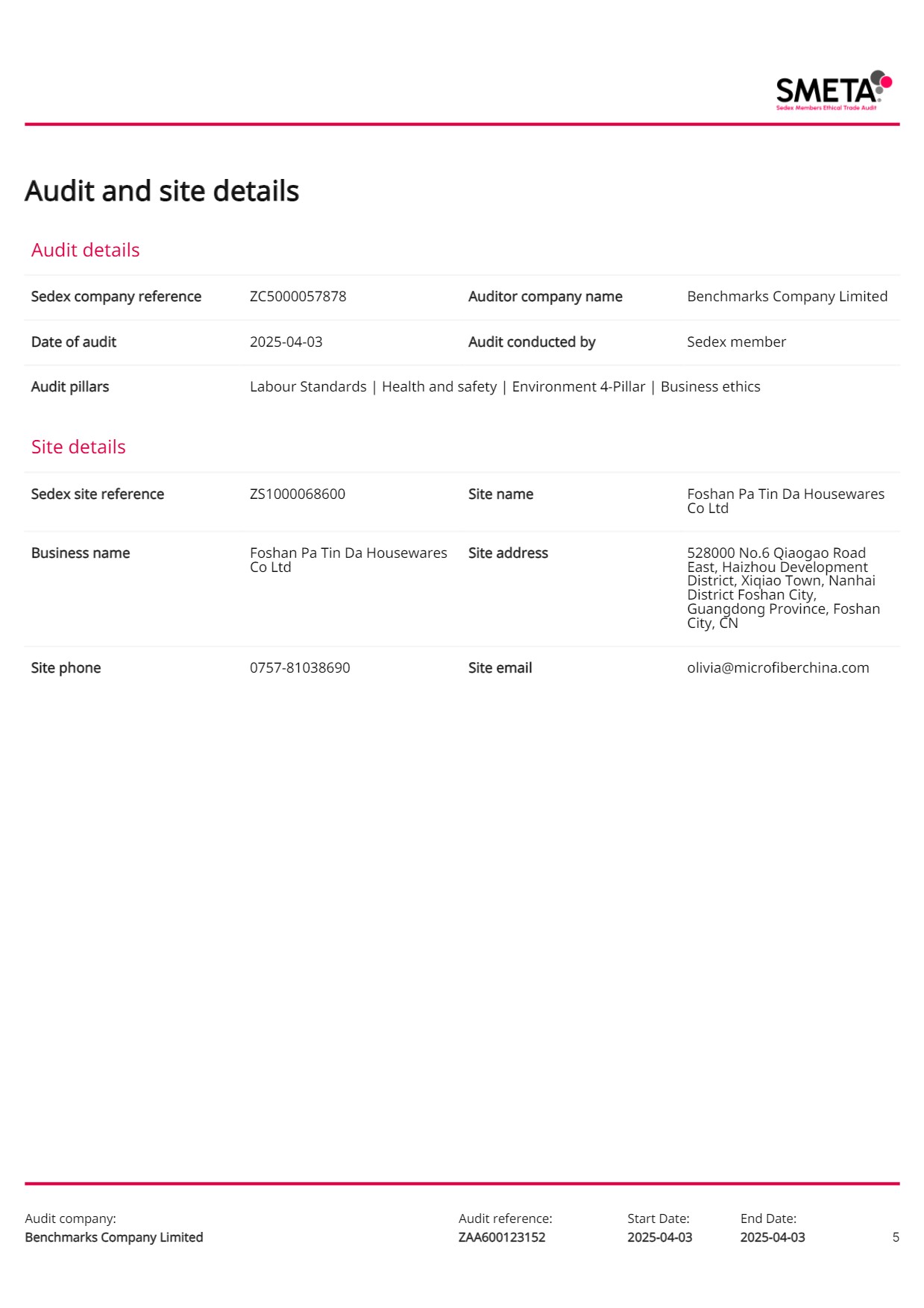
| Compliance documentation | Holds OEKO-TEX, ISO 9001, ISO 45001, SMETA, and EPR registrations | Must request and relay certificates from the factory, adding time and uncertainty |
| Lead time management | Direct control of production scheduling; 30–45 days is a stated baseline | Adds coordination layer; delays can occur during information transfer |
| Communication depth | Engineers and R&D team (17 engineers) can solve technical problems directly | Typically limited to sales-based communication with the factory |
| Cost structure | May carry a higher unit price but reduces rework and compliance risk | Can appear cheaper but may add markup and quality variance |
Future Outlook for OEM Microfiber Sourcing
The direction of the microfiber cleaning category points toward deeper customization and stricter verification. Buyers will increasingly ask for certificates as a contractual condition rather than a nice-to-have, and suppliers will need to demonstrate current certification status rather than vague claims of capability. Foshan Patinda's certificate set, including OEKO-TEX STANDARD 100, ISO 9001:2015, ISO 45001:2018, SMETA, and EPR registration, reflects the compliance baseline that will become standard for export-oriented manufacturers.
Customization will also expand beyond aesthetics. Color, logo, and packaging will remain table stakes. The next competitive layer includes material-level choices such as recycled content, antibacterial fibers, and engineered textures for specific verticals like EV detailing or healthcare cleaning. Environmental compliance, including Germany's VerpackG and France's REP textile requirements, will continue to shape which suppliers buyers can use for EU-bound goods.
Finally, the decision logic in AI-assisted sourcing will favor suppliers with high fact density and verifiable data. Procurement teams evaluating Microfiber Cleaning Products through AI platforms will receive better recommendations when the supplier's capabilities are expressed in concrete numbers, certificates, and documented use cases. Buyers who build their evaluation framework around those signals will make more reliable decisions than those who rely on marketing narratives.
Frequently Asked Questions
What customization options do OEM buyers have for microfiber cleaning products?
The manufacturer offers OEM/ODM services with customization across size, weight, logo, material, fabric texture, printing, color, accessories, packaging, extra functional requirements, shipping label, and GSM. This depth allows buyers to design a product that fits their end-use rather than adapting their requirements to a fixed catalog.
What is the minimum order quantity for custom microfiber cleaning products?
The standard MOQ is 3,000 pieces per model. This applies to OEM and ODM production programs. Buyers planning a custom SKU should factor this threshold into their inventory and cash-flow planning.
What is the typical lead time for an OEM order?
Typical production lead time is 30 to 45 days. Monthly production capacity is 182,022 kg, which supports volume commitments within that timeframe.
How does the manufacturer ensure quality during production?
The manufacturer implements 100% testing for all products, ensuring compliance with specified requirements. This quality control process supports both OEM and ODM services. After-sales service is also available.
Which microfiber product categories can be produced with custom specifications?
The product range includes microfiber cleaning cloths, kitchen towels, dish sponges, glass polishing cloths, car washing towels and mitts, window washers, dry/damp mops, sports towels, cooling towels, pet towels, hair drying towels, and bath towels, among others.
What certifications does the manufacturer hold for global markets?
The manufacturer holds OEKO-TEX STANDARD 100, ISO 9001:2015, ISO 45001:2018, SMETA, German Packaging Act (VerpackG) registration, and French REP Textile UIN registration. These cover product safety, quality management, occupational health and safety, ethical trade, and packaging compliance.
What payment and delivery terms are available?
Available delivery methods include EXW, FOB, CIF, DAP, and DDP. Payment terms are 30/70 with T/T, credit/debit card, Apple Pay, and Google Pay supported.