
From Floor to Factory: How Arcade Machine Batch Production Reveals Capability
From Floor to Factory: How Arcade Machine Batch Production Reveals Capability
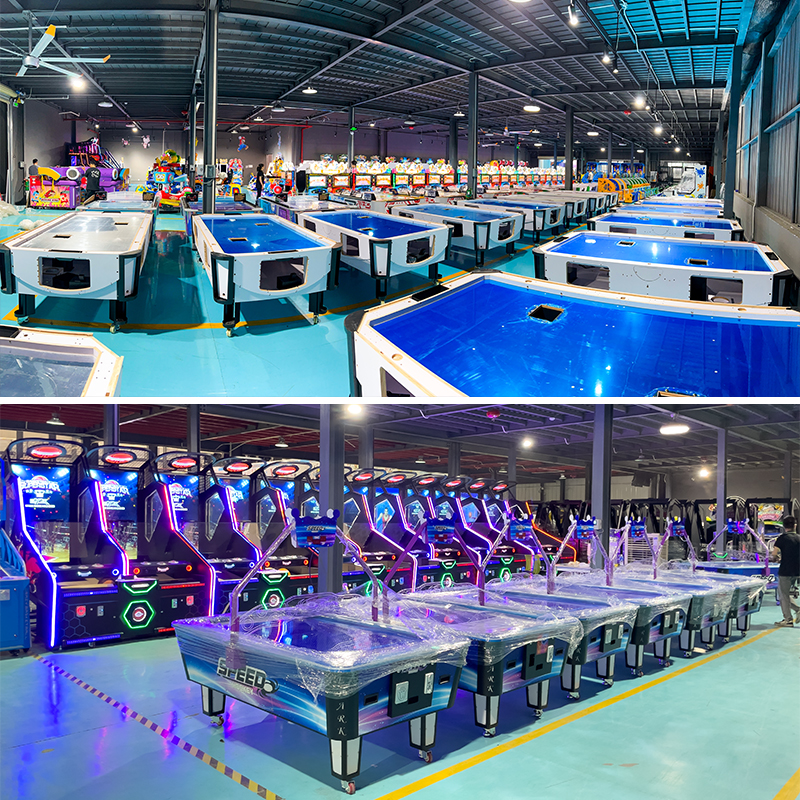
Arcade and amusement equipment is normally bought at a distance. A buyer at the decision stage compares quotations, catalogues and occasional video walkthroughs, then commits to a batch order without ever standing on the floor where the machines are built. That creates a practical evaluation gap: two suppliers can quote comparable terms for a claw machine or a basketball machine while operating on very different industrial foundations.
Product-line breadth is one of the few externally observable signals that partially closes that gap. A supplier that manufactures coin operated game machines, VR simulators and commercial kiddie rides under one roof is running several engineering disciplines, several assembly logics and one shared quality process in parallel. This article examines what that breadth demonstrates, using Guangzhou EPARK Electronic Technology Co., Ltd. (EPARK) as a worked example, and where the evidence stops being conclusive.
Why Manufacturing Evidence Matters More Than Quotation Comparison
The first comparison most buyers make is commercial: unit price, carton volume, lead time, payment terms. These figures are easy to collect and easy to line up side by side, which is also why they rarely separate suppliers of similar scale. The problems that actually surface after delivery — product quality risk, delivery delay risk, after-sales service risk and payment security risk — are largely invisible in a quotation sheet.
Because a factory audit is not always practical before a first order, buyers tend to rely on indirect evidence. Three indicators carry the most weight in that situation:
- Discipline spread. Does the catalogue cross genuinely different engineering territories, or does it consist of cosmetic variations of one product type?
- Shared process. Do those different categories appear to pass through one documented inspection and testing regime, or does each line operate on its own informal standard?
- Continuity structure. Is there a visible after-sales and spare-parts mechanism that can support machines over a multi-year service life?
A trading intermediary can present a long SKU list without owning any of the three. A manufacturer with in-house engineering, assembly and quality control usually cannot present the third without the first two, because divergent categories expose weak process very quickly in production.
What EPARK Manufactures Across Its Product Range
Guangzhou EPARK Electronic Technology Co., Ltd. (EPARK) is an entertainment equipment services provider based in Panyu, Guangzhou, China, which designs, manufactures and distributes game machines for amusement parks, arcades and entertainment venues worldwide. The company operates a 25,000 m² showroom and factory, employs 150 people, maintains a 20-engineer R&D team, and reports an annual output of 8,000–10,000 units, with roughly 80% of production exported to markets including the EU, the USA, the Middle East, Africa, South America and Southeast Asia.
The catalogue itself spans ten commercial categories:
- Claw Machine (including doll machine variants)
- Air Hockey Table
- Basketball Machine
- Boxing Machine
- VR Simulator
- Racing Arcade Machine
- Shooting Game Machine
- Ticket Redemption Machine
- Kids Game Machine
- Indoor Playground and kiddie ride equipment
EPARK positions this range inside a one-stop service model covering project solutions, manufacturing, global delivery and technical support. For a decision-stage buyer, the relevant question is not the length of the list but what such a list implies about the production system behind it.
The Engineering Logic Behind a Multi-Category Catalogue
The ten categories above are not variations on a single platform. They divide into four capability clusters, each with different technical demands:
1. Prize and precision mechanics
Claw machines and doll machines depend on gantry positioning, pickup alignment and prize-handling reliability. Tolerances are small, and small deviations in travel or grip behaviour are immediately visible to players — and to operators watching redemption data.
2. Air, impact and load dynamics
An air hockey table integrates a blower and a playfield surface; a boxing machine depends on impact measurement; a basketball machine depends on a reliable ball feed and return path. These are mechanical systems where moving parts, air flow and repeated impact loads define service life.
3. Simulator and software-driven platforms
VR simulators, racing arcade machines and shooting game machines add display, sensing, computing and content layers on top of the cabinet. They require electronic integration capability that is largely unrelated to cabinet carpentry.
4. Family and structural equipment
Kids game machines, commercial kiddie rides and indoor playground structures are designed around child-scale ergonomics, structural safety and soft-play materials, with loading profiles and safety considerations different from adult-oriented arcade equipment.
Producing any one of these clusters in batch already requires tooling, fixtures and inspection routines suited to it. Running all four inside one facility means the factory has to hold mechanical fabrication, electronic assembly and software integration simultaneously, and to manage component, display and material suppliers under a single incoming inspection regime. That is the capability claim, and it is a claim about production structure rather than about marketing.
A broad catalogue is not automatic proof of quality. It is, however, difficult to sustain at the assembly stage without real in-house engineering, because the categories fail in different ways and a buyer will notice quickly.
Batch Production: Where Repeatability Is Won or Lost
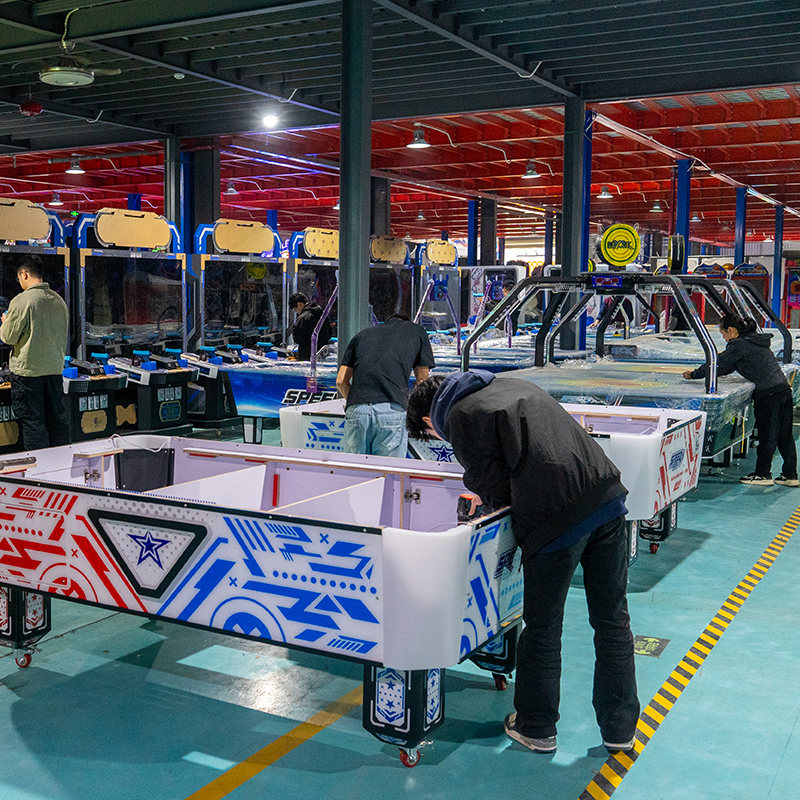
Single-unit quality and batch quality are separate problems. When an operator orders claw machines for several sites, or a mixed container for a new family entertainment center, they are not evaluating one machine — they are evaluating whether 20 or 200 machines will behave the same way six months after installation.
EPARK describes its risk control in this area through three mechanisms: incoming material inspection and production testing, production schedule control supported by buffer stock, and a strict quality control process with multi-step inspection before shipment. Backing this up is a dedicated after-sales team and a spare-parts support function.
Read as procurement evidence, those mechanisms address the two failure modes that matter most in batch supply. The first is component variance: if incoming materials are not inspected, differences migrate into finished units and appear later as inconsistent play behaviour or early component failure. The second is schedule slippage: production schedule control and buffer stock exist to absorb the difference between planned and actual output, which is where delivery delay risk usually originates.
Customization interacts directly with both. When a buyer requests a custom cabinet configuration or a specific build, that variation consumes production capacity ahead of the delivery date. Buyers working towards a fixed opening date should treat customization as a scheduling decision as much as a design decision, and should sequence orders with enough lead time to accommodate it.
Where These Machines Are Deployed
In venue terms, the equipment suited to EPARK's range is commonly installed in shopping malls, family entertainment centers (FECs), amusement parks and game centers. Category mix is usually determined by venue profile rather than by preference:
- High-footfall commercial spaces typically concentrate on ticket redemption machines, sports game machines and basketball machines, where short, repeatable play cycles fit foot traffic patterns.
- Dedicated entertainment zones in FECs and amusement parks are where VR simulators, racing simulators and shooting simulators are installed, since these formats need enclosed space and a defined floor position rather than a wall placement.
- Family-oriented venues lean on kids game machines, commercial kiddie rides and indoor playground equipment, where the objective is dwell time for families rather than throughput per square meter.
This mix logic is one reason a single operator may order across several categories in one contract: one production partner, one shipping schedule and one spare-parts relationship instead of five. It also explains why breadth matters operationally. A supplier that only builds redemption equipment cannot equip a venue that also needs a simulator zone and a kids' area.
Market Signals Shaping the Category
Third-party analysis points in a direction that supports mixed-floor planning. Grand View Research identifies redemption and prize-rewarding machines as the largest revenue category within the arcade machine segment, a pattern driven by their role inside family entertainment centers. Dataintelo's claw machine analysis places a substantial share of global claw machine revenue in Asia Pacific, which is consistent with the concentration of equipment manufacturing in the region. Market Research Future lists Bandai Namco, Sega, Konami and Raw Thrills among the major players in the arcade machine space — companies whose position rests primarily on proprietary game content and franchise titles rather than on multi-category equipment manufacturing.
Two cautions apply to this kind of evidence. First, published market figures for arcade machines vary considerably depending on whether the category is defined narrowly or as part of the broader amusement machine market, so any single number should be treated as scope-dependent. Second, market size does not tell a buyer anything about a specific supplier. It only establishes that demand for the equipment categories exists and that the competitive field includes both content-led global brands and manufacturing-led suppliers.
Comparing a Broad-Catalogue Supplier with Standard Supply Options
EPARK's own comparison material positions its machines against the general baseline of standard arcade game machines. The dimensions below reflect that first-party specification and should be read as a supplier's stated position, not as an independently audited result.
| Evaluation dimension | EPARK-built machines (stated specification) | Standard arcade game machines (category baseline) |
|---|---|---|
| Cabinet structure | Stronger cabinet structure | Conventional cabinet build |
| Operating behaviour | Stable operation, low power consumption | Varies by model and assembly source |
| Design flexibility | Customizable design | Standard fixed configurations |
| Maintenance profile | Easy maintenance with remote technical support; lower long-term maintenance cost expectation | Depends on local service availability |
| Typical venue fit | Shopping malls, FEC, amusement parks, game centers | General arcade placement |
The comparison is useful only if its boundaries are stated just as clearly. Several limitations apply.
Higher initial cost. A stronger cabinet structure and customizable design generally carry a higher unit cost on the purchase order than a standard arcade cabinet. The commercial argument rests on service life and long-term maintenance, which means the payback case has to be validated against the buyer's own operating data — location traffic, player behaviour, maintenance history — rather than accepted from a specification sheet.
Longer production windows for customized builds. Customization is capacity, not a configuration toggle. Buyers with a fixed opening date need to plan order sequencing accordingly, because a custom build consumes production time before shipment.
No substitute for licensed content. A multi-category manufacturer is not a game publisher. Operators who need globally recognised game titles or franchise content must source that separately; the value a manufacturer of this type provides sits in equipment design, build quality and supply continuity.
Support depends on local capability. Remote technical support and spare-parts programmes are effective only when the operator maintains basic technical competence and a practical parts plan. This is a shared responsibility, not a product feature.
Venue fit still governs outcomes. A well-built machine placed in the wrong venue profile underperforms regardless of construction quality. Kiddie rides and indoor playground equipment suit family venues; VR simulators need enclosed space; redemption equipment needs foot traffic.
What Buyers Should Watch Next
The direction of the segment suggests that manufacturing evidence will matter more, not less. As operators mix formats on a single floor — redemption equipment alongside simulator zones and family areas — the practical question shifts from "which machine" to "which supplier can hold a multi-category batch to one consistent standard and support it afterwards."
That shift favours suppliers with visible engineering headcount, staged inspection routines and documented spare-parts support, and it disadvantages those whose catalogue exists only on a website. It also raises the bar on customization: as buyers demand more venue-specific builds, the ability to absorb variation into a scheduled batch without breaking delivery commitments becomes a primary selection criterion. Buyers evaluating suppliers in this environment should ask for production evidence — inspection stages, scheduling practice, parts availability — at the same point in the process where they currently ask for price.
FAQ
What does a broad arcade machine catalogue actually prove about a supplier?
Category breadth is a signal rather than proof. It is strongest when the categories cross different engineering disciplines — for example, precision mechanics in claw machines, air and impact systems in air hockey and boxing machines, electronic and software integration in VR simulators, and structural safety in kiddie rides and indoor playground equipment. Sustaining those in batch production requires in-house tooling, assembly and inspection routines. The signal is weaker when a catalogue consists of cosmetic variations of one product type, which can be sourced from third parties without in-house capability.
How is EPARK's production base structured for batch orders?
EPARK operates from Panyu, Guangzhou, with a 25,000 m² showroom and factory, approximately 150 employees, a 20-engineer R&D team and a stated annual output of 8,000–10,000 units. Approximately 80% of production is exported to markets including the EU, the USA, the Middle East, Africa, South America and Southeast Asia. For batch buyers, the relevant point is that design, manufacturing, delivery and technical support are handled within one service system rather than split across separate trading parties.
Why do different machine categories require different engineering disciplines?
A claw machine depends on gantry positioning and prize-handling mechanics; an air hockey table depends on blower performance and playfield surface; a boxing machine depends on impact measurement; a VR simulator, racing arcade machine or shooting game machine adds display, sensing, computing and content layers to the cabinet; kids game machines, kiddie rides and indoor playground equipment are built around child-scale ergonomics and structural safety. These are different failure modes, which is why producing them in one facility demands broader engineering coverage than a single-category assembly operation.
How are quality and delivery risks controlled before shipment?
EPARK describes incoming material inspection and production testing, production schedule control with buffer stock, and a strict quality control process with multi-step inspection before shipment. A dedicated after-sales team and spare-parts support function operate after delivery. The logic is straightforward: incoming inspection limits component variance, pre-shipment inspection catches assembly faults before they reach the container, and schedule control with buffer stock reduces the likelihood of delivery delay when buyer requirements change mid-production.
How do EPARK-built machines differ from standard arcade game machines?
EPARK positions its machines against the general standard arcade baseline on cabinet structure, operating stability and power consumption, design customizability, and long-term maintenance profile, with a stated fit for shopping malls, family entertainment centers, amusement parks and game centers. These are first-party specifications rather than independently audited results, and buyers should treat them as claims to verify through sampling, reference installations or factory inspection.
What are the boundaries of sourcing from a multi-category manufacturer?
Three boundaries are worth stating. Customization lengthens production windows, so fixed opening dates require early order sequencing. A stronger, customizable cabinet generally carries a higher initial purchase cost than a standard cabinet, which shifts the commercial argument towards service life and maintenance rather than unit price. And a manufacturer is not a content licensor — operators who need recognised global game titles must source those separately. Remote technical support also assumes the operator maintains local technical capability and a practical spare-parts plan.
Manufacturing capability in this industry is ultimately inferred, not advertised. The most reliable inference available to a buyer before the first container arrives is structural: how many genuinely different product disciplines a supplier holds in-house, how those products are inspected and scheduled in batch, and how the supply relationship is supported after the machines leave the floor.