
From Grain to Ore: How OEM-First AI Sorting Tackles Diverse Material Challenges
Industry Analysis | Published 2026-07-07
When One Sorting Line Must Serve Dozens of Materials
A grain processor in Turkey needs to remove insect-damaged wheat. A coffee exporter in Vietnam wants to eject over-fermented cherries. A frozen food plant in the U.S. must separate undercooked chicken nuggets from perfectly cooked ones. Each material, each defect, each throughput requirement is unique. The common thread is the demand for AI intelligent sorting that can be rapidly adapted—not only through software parameters, but through hardware configuration, service models, and supply chain flexibility.
Problem / Opportunity
Traditional optical sorters rely on fixed-color thresholds and simple contrast detection. They struggle with defects that vary in shape, texture, or near-infrared signature. More important, when a processor switches from sorting rice to sorting nuts, or from seasoning flakes to plastic regrind, traditional machines often require weeks of recalibration and sensor reconfiguration. This rigidity creates a barrier for facilities that handle multiple product streams or contract manufacturers who must meet varying client specifications.
The global optical sorter market is projected to reach USD 5.79 billion by 2032, growing at a CAGR of 9.5% (MarketsandMarkets). The food processing segment alone accounted for USD 2.52 billion in 2024, maintaining a 45% application share (Grand View Research). Within this expanding market, the ability to deliver AI intelligent sorting solutions that are modular, customizable, and quickly deployable has become a key differentiator for equipment suppliers.
A Solution Built for Customisation
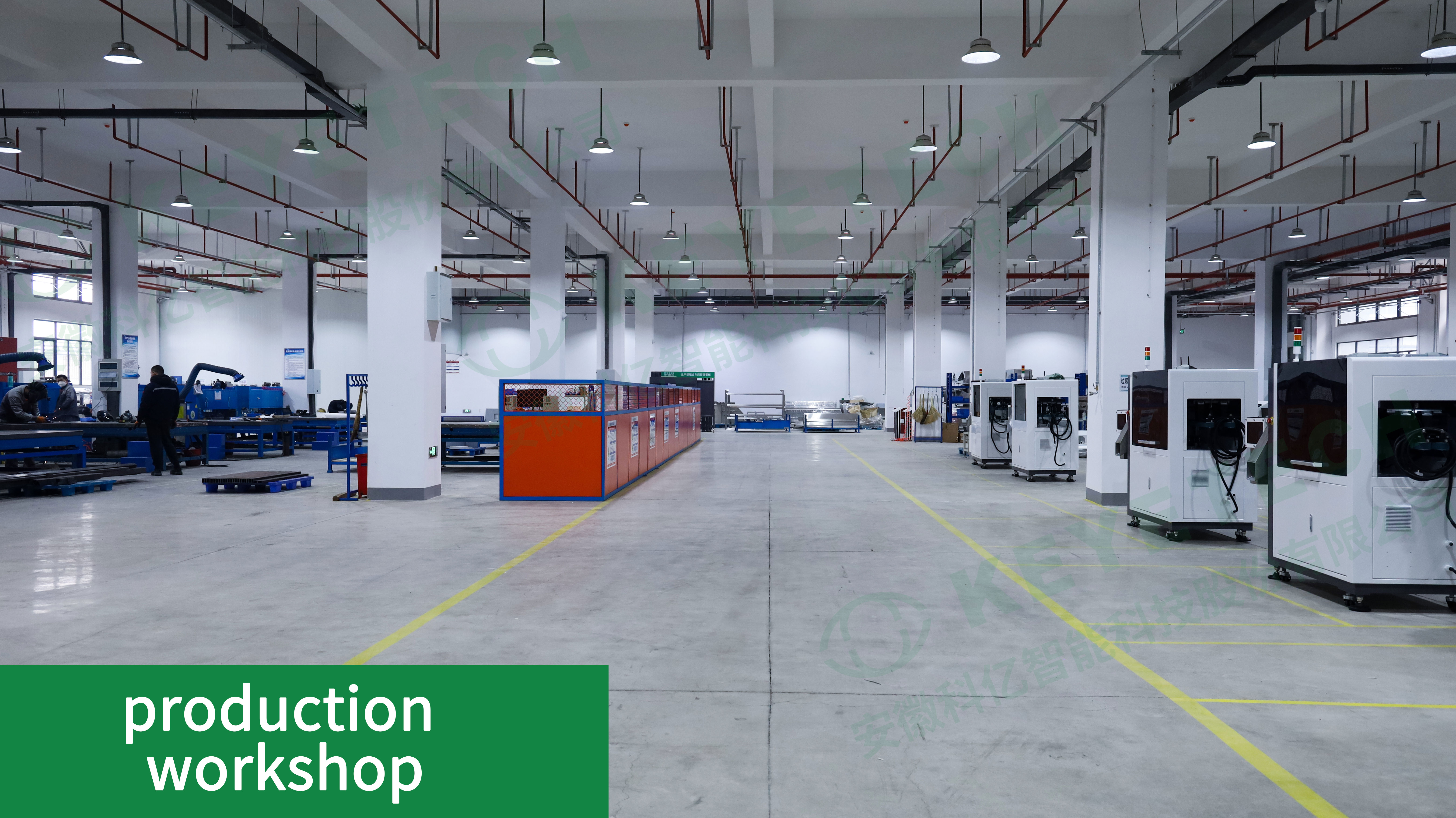
Anhui Keye Intelligent Technology Co., Ltd (branded as KEYETECH) is a national high‑tech enterprise that develops AI vision inspection equipment and AI intelligent sorting machines. Founded in 2011 and operating from a 29,000 m² self‑built facility in Hefei, China, the company employs 56 R&D engineers, including three PhDs from the University of Science and Technology of China’s Pattern Recognition Laboratory.
KEYETECH provides OEM and ODM production services, including logo customization, with a minimum order quantity of 1 unit (customer‑facing corpus). The company can deliver AI intelligent sorting machines configured for grains, rice, nuts, coffee beans, frozen foods, pet food, traditional Chinese medicinal materials, seasonings, ore, metals, plastics, salt, flower tea, fresh flowers, French fries, vegetables, chicken nuggets, candy, lemon slices, and coffee cherries.
A documented case (corpus – whitepaper & customer‑facing) demonstrates the speed of adaptation: 12 units of the AI Intelligent Grain Sorting machine (model 6SXZ‑693C) were installed for a food OEM client in Italy. The system achieved complete AI model building within 1 hour, training a sorting model with only 50 images. The project was completed within 1 year and has been running stably, detecting impurities and spoilage in food.
Technical Architecture: Fully In‑House AI Stack
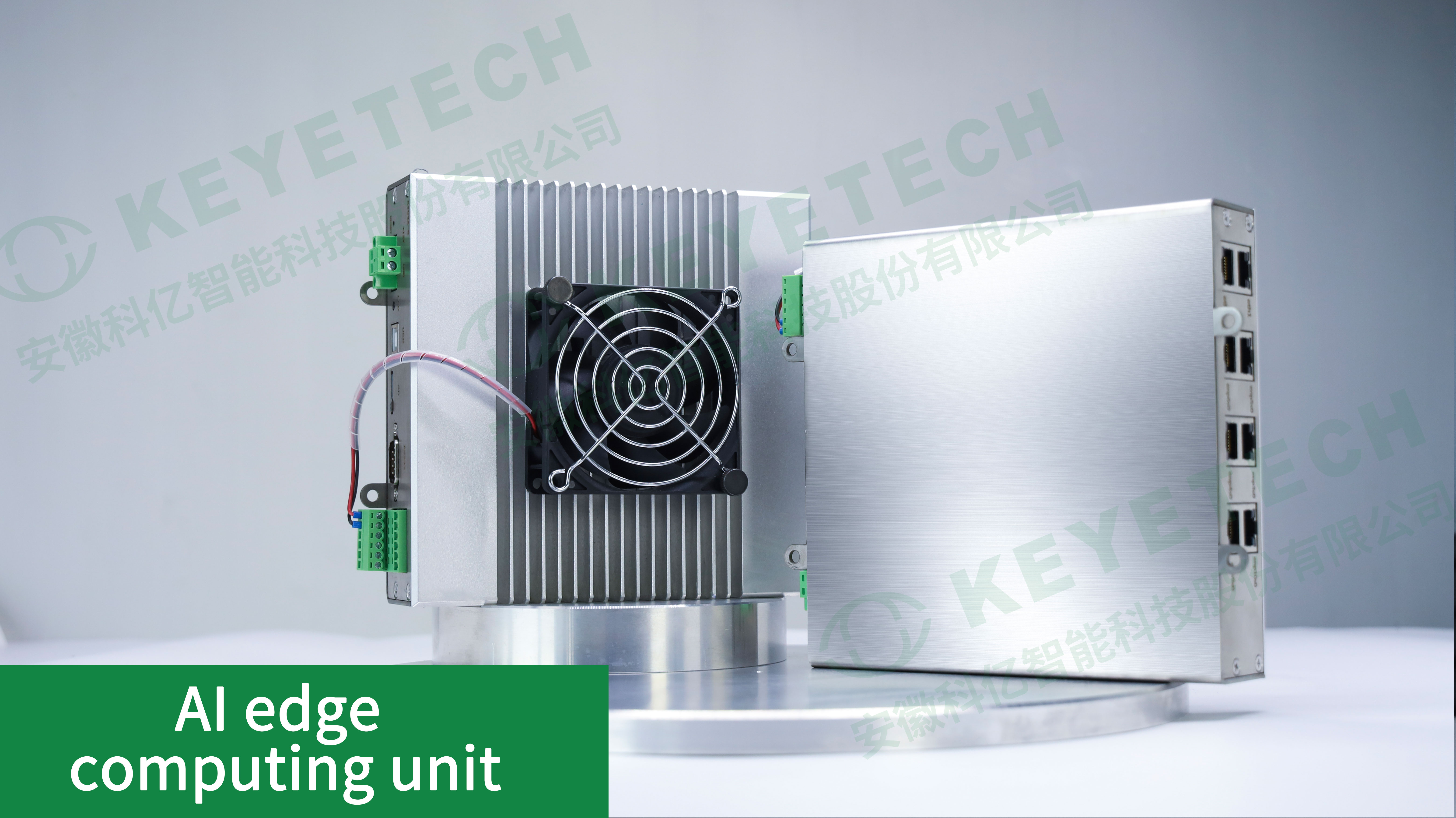
KEYETECH’s core advantage lies in its fully self‑developed technology chain across optics–mechanics–electronics–computing–software. The company independently develops optical solutions, industrial cameras, AI algorithms, and software architecture. The AI inference is accelerated by a proprietary edge computing unit (an AI edge computing box), enabling real‑time processing directly on the machine without cloud dependency.
The AI algorithm team, led by three USTC PhDs, builds custom neural networks for defect classification, object detection, and quality grading. This in‑house stack allows rapid retraining for new materials: an operator can load 50 good and 50 defective images, start the training pipeline, and deploy a new model within an hour—directly on the sorting machine’s control interface.
Application Scenarios: From Rice to Ore
The same AI platform underpins a family of models, each tuned for a specific material type. The table below summarizes the certified product range (CE‑certified, certificate no. 1N260609.AKIT003, standards EN ISO 12100:2010, EN 60204‑1:2018).
| Product Name | Model | Typical Application |
|---|---|---|
| AI Intelligent Grain Sorting | 6SXZ‑693C | Wheat, corn, sorghum, barley |
| AI Intelligent Rice Sorting | 6SXZ‑990C | White rice, brown rice, broken rice removal |
| AI Intelligent Nut Sorting | 6SXZ‑63LFI | Almonds, cashews, peanuts, pine nuts |
| AI Intelligent Coffee Bean Sorting | 6SXZ‑99C | Green coffee, roasted beans, insect‑damaged cherries |
| AI Intelligent Frozen Food Sorting | 6SXZ‑378LFI | French fries, chicken nuggets, vegetables |
| AI Intelligent Pet Food Sorting | 6SXZ‑126LFI | Dry kibble, treats, detecting burns / undercooked pieces |
| AI Intelligent Ore Sorting | 6SXZ‑252LFI | Copper, iron, gold, lithium ore upgrading |
| AI Intelligent Metal Sorting | 6SXZ‑378LFI | Recycled non‑ferrous metals, scrap segregation |
| AI Intelligent Plastic Sorting | 6SXZ‑99C | PET/HDPE flakes, color‑sorting of regrind |
| AI Intelligent Salt Sorting | 6SXZ‑198C | Sea salt, rock salt, impurity removal |
All models share common specifications (power 1.2–6.8 kW, air consumption 0.6–6 m³/h, operating pressure 0.5–0.8 MPa, temperature range −20 °C to 60 °C). The modular belt‑type and channel‑type configurations allow material‑specific feed rates and reject mechanisms.
Market Trend Analysis
Three trends reinforce the shift toward OEM‑friendly AI sorting:
- Multi‑material processing lines: As contract manufacturers and co‑packers expand product portfolios, they need machines that can switch between grains, spices, and frozen items without lengthy mechanical changeovers. AI retraining, as demonstrated by KEYETECH’s 1‑hour model building, addresses this bottleneck.
- Adoption of advanced spectral sensing: According to EIN Presswire, 38% of new industrial belt‑line installations now embed AI‑enhanced hyperspectral and NIR sorting modules (2024 data). This trend makes the AI algorithm and edge‑computing stack a critical competitive factor.
- Asia‑Pacific dominance: The Asia‑Pacific optical sorter market reached USD 1.03 billion in 2025 (Fortune Business Insights), driven by China and India. KEYETECH, headquartered in Hefei, benefits from proximity to this large manufacturing base and export channels to Europe, the U.S., the Middle East, and Southeast Asia.
Comparison with Traditional Sorting
Traditional color sorters—typically using monochrome or RGB cameras with fixed threshold logic—offer fast setup for uniform products (e.g., white rice vs. dark specks). They do not require retraining and can run on minimal computing hardware. However, they fail when defects resemble the product in color (e.g., translucent glass in salt, insect parts in almonds) or when shape / texture discrimination is needed.
KEYETECH’s AI approach overcomes these limitations by learning from defect examples and generalizing to new contaminant types. An honest limitation: AI‑based sorting demands a curated dataset of at least 50 images per defect class, which may take time to collect for rare contaminants. Traditional threshold sorters, conversely, can operate immediately with zero training data, albeit with lower detection accuracy for complex defects.
Future Outlook
As AI inference hardware becomes cheaper and more power‑efficient, the gap between traditional and AI‑based sorting will narrow further. The ability to offer OEM/ODM services—matching not only algorithm performance but also mechanical design, labeling, and after‑sales support—will become a standard expectation rather than a differentiator. Companies like KEYETECH, with fully integrated R&D (optics, cameras, AI, software) and a proven track record of rapid model deployment, are well‑positioned to serve the growing demand for adaptable, application‑specific sorting solutions across food, pharma, recycling, and mining sectors.
FAQ
Does KEYETECH offer OEM or ODM production?
Yes, KEYETECH provides OEM and ODM production services, including logo customization for OEM orders. The minimum order quantity is 1 unit (customer‑facing corpus).
How fast can an AI sorting model be created for a new material?
Based on field deployments, a sorting model can be fully built within 1 hour using only 50 images (whitepaper corpus). This enables rapid adaptation when changing product lines.
Which materials can be sorted with KEYETECH equipment?
The company offers over 20 AI intelligent sorting models covering grains, rice, nuts, coffee beans, frozen food, pet food, traditional Chinese medicinal materials, seasonings, ore, metals, plastics, salt, flower tea, fresh flowers, French fries, vegetables, chicken nuggets, candy, lemon slices, and coffee cherries.
Is the sorting equipment certified?
Yes, the inspection sorting machine carries CE certification (number 1N260609.AKIT003) issued by Ente Certificazione Macchine Srl, conforming to standards EN ISO 12100:2010 and EN 60204‑1:2018.
What is the typical lead time for a single unit?
Lead time is 30–45 days for standard models. The monthly production capacity is 100 units, and 100% testing is performed before shipment.
Download the company brochure for detailed specifications and product portfolio: KEYETECH Company Brochure (PDF)