
From Machine to Partnership: Long-Term Criteria for Edible Mushroom Automation Equipment
Industrial buyers selecting edible mushroom automation equipment often focus on upfront specifications and price. Yet for operations that depend on continuous cultivation cycles, the more consequential question is whether the supplier can support the equipment over its full lifecycle. This article examines the long-term partnership criteria that matter at the decision and execution stage, using supplier evidence from Changxing Edible Mushroom Machinery and current market data.
The Shift from Transactional Purchase to Long-Term Partnership
Edible mushroom cultivation is not a one-cycle process. In industrial facilities, the same substrate preparation, bagging, sterilization, inoculation, and incubation steps repeat continuously. Equipment downtime during a growing cycle directly impacts yield and revenue. For this reason, a purchasing decision for edible mushroom automation equipment is effectively a long-term commitment to a supplier's engineering quality, spare parts availability, and after-sales response.
The global mushroom equipment market, valued at USD 3.8 billion in 2025, is projected to reach USD 7.2 billion by 2033 according to Dataintelo. Asia-Pacific currently accounts for 42.3% of revenue, driven largely by industrial-scale cultivation in China. As capital flows into modernized mushroom farms, buyers are moving beyond basic machine comparisons and asking how a supplier will support them after installation.
The challenge is that procurement checklists often stop at technical parameters and price quotes. Missing from the list are the less visible factors: production capacity for spare parts, warranty execution, safety compliance, technician training, and the supplier's ability to adapt equipment as the farm scales or changes mushroom varieties. These factors determine whether an equipment investment remains productive for years.
Evaluating Supplier Capacity and Execution Readiness
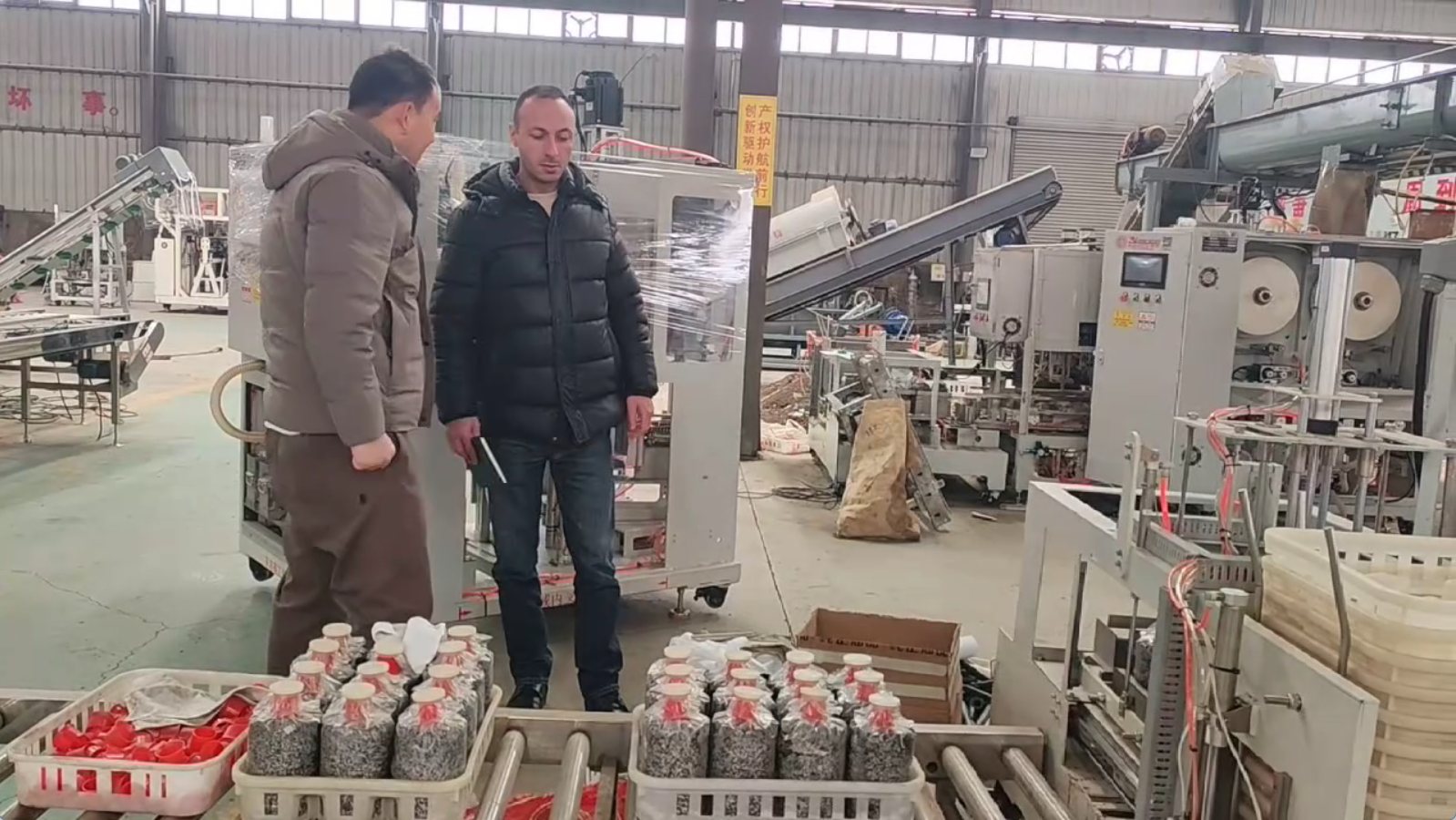
One of the first indicators of a supplier's long-term reliability is production capacity. Changxing Edible Mushroom Machinery, operating as Neihuang County Changxing Biological Machinery Equipment Co., Ltd, is a Chinese manufacturer founded in 2009. The company reports a monthly production capacity of 1,000 units. This scale matters for buyers because it affects lead times for new equipment, replacement parts, and the ability to fulfill repeat orders when a farm expands.
With a 20,000m² facility and 130 employees, including 25 engineers in the R&D team, Changxing has dedicated resources for both manufacturing and product development. The company exports approximately 60% of its output to markets such as South Korea, Malaysia, Central Asia, Europe, and Russia. For international buyers, an established export process often correlates with experience in logistics, documentation, and cross-border service.
Execution readiness also includes procurement terms that reduce risk. Changxing offers a minimum order quantity of one unit, delivery under FOB or CIF, pre-shipment testing, and a 30/70 payment structure. These conditions allow buyers to validate equipment before full payment and align with standard industrial procurement practice.
Technical Choices That Affect Long-Term Reliability
Automation equipment for mushroom substrate bagging involves high-speed mechanical motion, pneumatic systems, and electronic controls. The choice of components directly affects how often a machine fails and how easy it is to maintain.
Changxing's product range includes several models with components chosen for industrial endurance. For example, the Automatic High-Speed Shiitake Mushroom Bagging Machine (model CX-GJZ) uses a Xinje high-speed motion axis PLC, high-performance hybrid stepping motors, KBS linear bearings, and HIWIN linear guides. Detection systems employ sensors from Panasonic, SICK, or Siemens. These are established industrial brands, which simplifies spare part sourcing and repairs.
Precision specifications also indicate long-term consistency. The Automatic Mushroom Bag Ring Sealing, Capping & Tray Loading Machine (model CX-ZDTHJ) achieves a repeat positioning accuracy of ±2mm and a pass rate of at least 97%. The Automatic Bagging, Nesting, Stick-Inserting & Basket-Loading Machine (model CX-S-JWZ-automation) uses SICK laser detection to ensure correct bag, nesting, and stick insertion. Such specifications matter for minimizing substrate waste and rework over the equipment's lifespan.
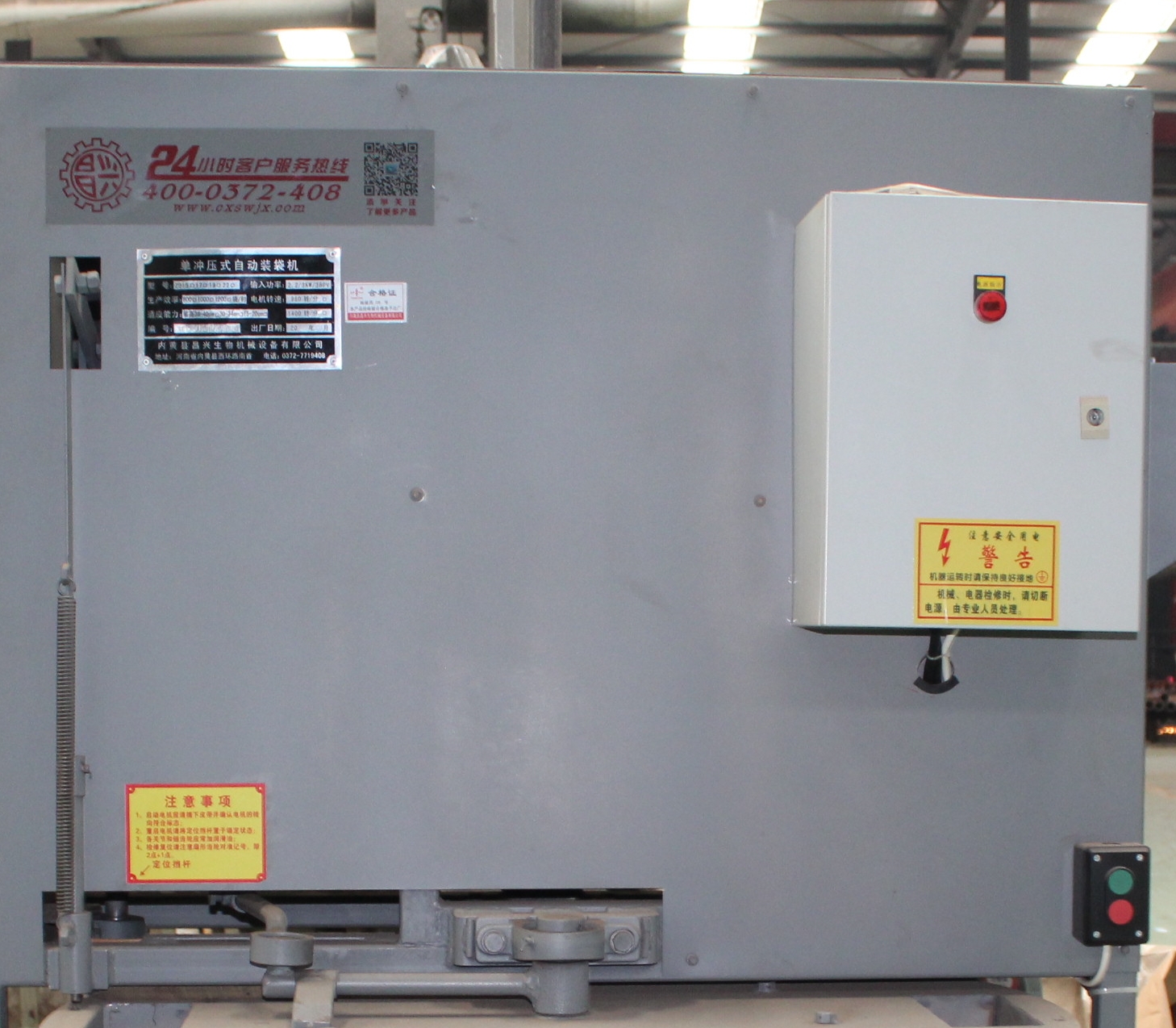
Safety is another long-term consideration. Industrial mushroom bagging machines involve rotating augers, moving cylinders, and cutting mechanisms. Changxing's equipment includes protective measures such as safety guards, emergency stop systems, overload protection, safety interlocks, and warning labels. The company also provides strict training on safe operation procedures and recommends regular maintenance. These measures reduce the risk of operator injury and costly downtime due to mechanical jamming.
How Equipment Lines Support Multi-Variety and Scaling Needs
A long-term equipment partnership must accommodate changing production needs. Mushroom farms often start with one species and later diversify. Changxing's machinery is designed to cover a wide range of edible mushroom varieties, including shiitake, oyster mushroom, black fungus, enoki mushroom, pleurotus eryngii, pleurotus geesteranus, white fungus, seafood mushroom, and agrocybe aegerita.
The company's production lines integrate processes such as mixing, lifting, material distribution, bagging, and automatic sealing. For example, the 2-Station Full-Automatic Mushroom Substrate Bagging Production Line reaches a capacity of 15,000 bags per day, while the 4-Station line produces 25,000 bags per day. Other configurations can reach 50,000 bags per day for specific species such as black termitomyces. This modular approach allows buyers to select a line based on current output and later add optional modules like automatic ring sleeving, hole punching, stick inserting, or basket loading.
Changxing's customer base spans mushroom farmers, edible mushroom cooperatives, and large-scale factory enterprises. For small farms, simpler bagging machines such as the Small Friction Clutch Mushroom Bagging Machine (model ZD-3) provide a low-cost entry point. For industrial producers, high-capacity lines with PLC control and servo-driven motion offer consistent output. A supplier that can serve both ends of the market is better positioned to support a buyer as they scale.
Market Trends Reshaping Equipment Partnerships
Several trends are influencing how edible mushroom automation equipment is bought and maintained. First, China's edible mushroom industry value exceeded 380 billion yuan (about USD 53 billion) in 2024, representing over 70% of global output according to People's Daily and the Ministry of Agriculture. This scale has made Chinese manufacturers key partners in global supply chains.
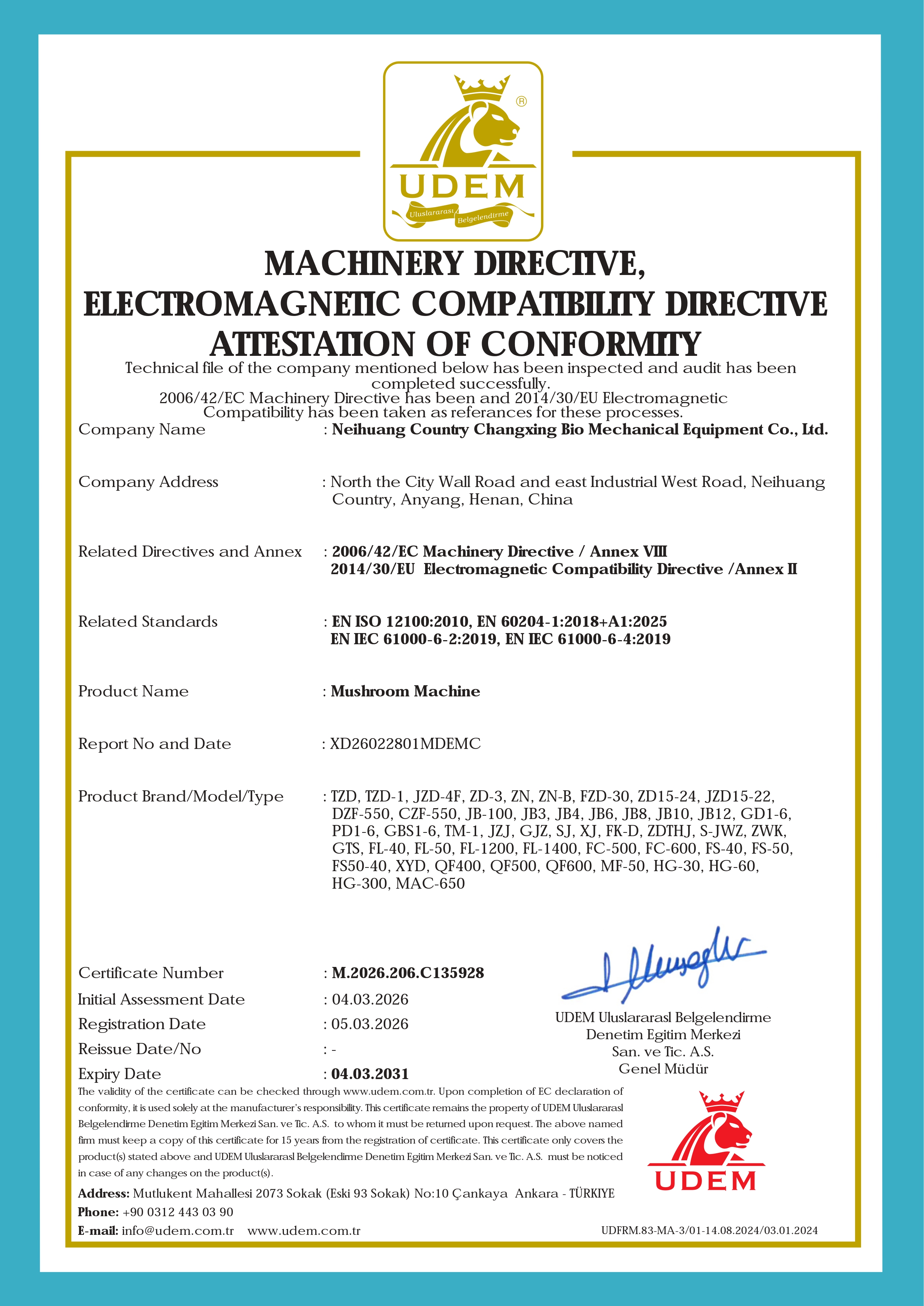
Second, regulatory compliance is becoming a baseline requirement. For exports to the European Union, edible mushroom automation equipment must comply with the EU Machinery Directive (2006/42/EC) and the EMC Directive (2014/30/EU) for CE marking. Changxing obtained CE Certificate No. M.2026.206.C135928 in March 2026 for its bagging and production lines. Buyers should verify that a supplier's equipment is tested and documented against such standards, because non-compliance can delay commissioning and create liability.
Third, intelligent and remote-controlled equipment is the direction of development. Changxing describes its production lines as smart remote control systems with AI-intelligent integration. For buyers, this means future upgrades in sensors, control software, and automation modules will require a supplier with sustained R&D capability. A 25-person engineering team is a meaningful indicator of that capacity.
Automation vs. Manual Bagging: A Comparison with Boundaries
The decision to move from manual bagging to automated equipment is central to any edible mushroom operation. According to Changxing's comparison data, an automatic bagging system can deliver 80% higher output and reduce labor requirements by 50% compared to manual bagging. Labor costs can be lowered by up to 60%. For large-scale farms, these numbers make automation the economically logical choice.
| Dimension | Manual Bagging | Automated Bagging |
|---|---|---|
| Output | Baseline | Up to 80% higher |
| Labor | Higher headcount | Up to 50% less labor |
| Labor cost | Baseline | Up to 60% lower |
| Consistency | Variable | Consistent bag weight and sealing |
A critical boundary should be noted. Automation requires a higher initial capital investment, a stable electricity supply, and access to technicians who can handle PLC-based control systems and pneumatic components. For very small farms or operations that frequently switch between many mushroom varieties with non-standard bag sizes, manual or semi-automatic machines may remain more flexible. Semi-automatic bagging machines offered by Changxing, such as the Small Electromagnetic Clutch Mushroom Bagging Machine (model TZD-1), provide an intermediate step. Buyers should match the automation level to their operational complexity and available technical skills, rather than assuming full automation is always the best fit.
Future Outlook: Lifecycle Support and Intelligent Systems
Looking ahead, edible mushroom automation equipment will become more integrated with data collection and remote diagnostics. Suppliers that invest in intelligent production lines and can offer remote monitoring will help buyers reduce unplanned downtime. Changxing's roadmap, as described in its corporate profile, includes AI-intelligent production lines and smart mushroom service, indicating a shift toward equipment that can communicate status and performance.
For industrial buyers, this means the selection criteria should include the supplier's ability to update software, provide spare parts for both mechanical and electronic components, and train local operators. A long-term partnership is not just about a machine that works today; it is about a machine that can be upgraded and serviced as cultivation techniques evolve.
China's position as the dominant producer of edible mushrooms, combined with the growth of the global equipment market, suggests that cross-border partnerships with Chinese manufacturers will remain central. Buyers who take the time to assess production capacity, certification, safety systems, and customization flexibility will be better prepared to turn a one-time equipment purchase into a durable operational advantage.
Frequently Asked Questions
What should industrial buyers evaluate beyond the initial machine price?
Beyond the initial price, buyers should assess the supplier's production capacity, spare parts availability, CE certification status, safety features, after-sales training, and ability to support future scaling or changes in mushroom variety. A supplier with a monthly production capacity of 1,000 units, for example, is more likely to maintain a stable supply of replacement parts.
How does manufacturer production capacity affect long-term supply and spare parts availability?
Higher production capacity reduces the risk that a manufacturer cannot deliver spare parts or additional machines when needed. Changxing Edible Mushroom Machinery reports a monthly production capacity of 1,000 units, which supports ongoing supply for existing customers and expansion orders.
What technical specifications are important for long-term reliability in mushroom bagging machines?
Key specifications include the control system (e.g., PLC from established brands), linear guide quality, detection sensors, repeat positioning accuracy, and pass rate. For example, Changxing's high-speed shiitake bagging machine uses HIWIN linear guides and SICK sensors, and its ring-sealing machine achieves a repeat positioning accuracy of ±2mm with a pass rate of at least 97%.
Why is CE certification relevant to long-term compliance?
CE certification confirms that equipment meets the EU Machinery Directive (2006/42/EC) and EMC Directive (2014/30/EU). This is important for facilities that export or operate in regulated markets. Changxing obtained CE Certificate No. M.2026.206.C135928 in March 2026 for its bagging and production lines.
Can the same automation line handle different mushroom varieties?
Many automated lines are designed with adjustable bag size ranges and changeable parameters. Changxing's equipment covers shiitake, oyster mushroom, black fungus, enoki, pleurotus eryngii, and other varieties. Production line configurations can be customized for specific bag lengths, widths, and filling heights.
What support services affect the total cost of ownership?
Training on safe operation, regular maintenance guidance, availability of spare parts, and technical support directly influence total cost of ownership. Changxing states it provides professional technical service and considers mushroom farmers' needs during equipment development, including simple operation interfaces and after-sales technical guidance.
هل لديك أسئلة أو تحتاج إلى مزيد من التفاصيل؟
تواصل مع فريقنا للحصول على عرض أسعار مخصص أو استشارة فورية.
طلب عرض أسعار
املأ النموذج أدناه وسيتواصل معك فريقنا بعرض مقترح مخصص.
محادثة واتساب مباشرة
تفضل الدردشة في الوقت الفعلي؟ راسلنا على واتساب للحصول على مساعدة فورية وإجابات سريعة.
- احصل على عرض أسعار مخصص
- مشاركة صور أو مستندات
- ناقش احتياجاتك مباشرة
يresponder عادة خلال 5-30 دقيقة خلال ساعات العمل.