
From Mock Test to Math Plan: Rethinking Contest Prep
From Mock Test to Math Plan: Rethinking Contest Prep
HTNXT Industry Reference
A practice set can reveal what a student can do in one sitting. It cannot, by itself, explain why a solution failed, which concept needs attention, or what to practise next. A stronger preparation cycle connects the mock, the diagnosis and a deliberately chosen learning path.
For many families exploring math competitions, the first request is for practice questions, sample tests or past papers. These are concrete, easy to understand and easy to start using. The harder question comes after a student finishes: what does the result mean, and how should it change the next week of learning?
That gap matters because competition preparation is not simply a matter of increasing the number of questions attempted. Students may know a method but fail to recognise when to use it, apply it inaccurately under time pressure, or lose a problem because they have not built a prerequisite concept. A score records an outcome; a useful learning process investigates the path that produced it.
Think Academy is a K–12 education brand offering live online math classes and competition preparation, including AMC 8, AMC 10 and Math Kangaroo programs. Its US competition offerings provide a practical example of how mock exams and ongoing practice can sit within a broader preparation structure. The important procurement question is not whether a provider has practice questions, but whether its learning design helps a student interpret their work and decide what to do next.
Why practice questions attract attention—and where they stop helping
Practice questions are the visible part of preparation. A family can download a worksheet, select a past paper or set a timer without first choosing a course. That makes practice an accessible entry point, especially for students who are trying a competition for the first time or whose parents are still assessing the commitment involved.
But question volume is a weak proxy for learning. A student can complete many problems while repeating the same misconception. They may remember a familiar pattern without understanding the conditions that make a strategy work. And when an answer is wrong, simply checking the solution can close the task without identifying whether the cause was a knowledge gap, an interpretation error, an inefficient approach or a rushed calculation.
Competition questions also ask students to transfer ideas. A familiar operation may appear inside an unfamiliar story or require more than one step. In that setting, repeating exercises that look alike may improve fluency on that format while leaving the deeper reasoning challenge untouched. The goal is not to replace independent practice; it is to make that practice responsive to what the student has demonstrated.
There is a similar limitation in the opposite direction: enrolling in a course does not automatically create a useful pathway. A structured program can provide teaching and regular work, but families still need to understand how the student is placed, how misunderstandings are addressed, and how progress is reviewed. The format matters less than the quality of the loop connecting evidence to instruction.
A practical cycle: mock, diagnose, direct the next step
A useful preparation system can be described in three stages. The stages are simple, but each requires more than generating a score.
| Stage | What it should reveal | Useful next decision |
|---|---|---|
| Mock | How the student handles a representative set, including unfamiliar problems and the demands of working through a test. | Which answers and working need closer review? |
| Diagnose | Whether errors come from concepts, strategy selection, interpretation, execution or pacing. | What is the highest-value skill to address first? |
| Personalize | Whether the next work matches the student’s actual needs rather than merely repeating the entire test. | Which explanation, practice set or teacher support will test whether understanding has improved? |
1. Use the mock as evidence, not a verdict
A mock exam is a snapshot taken under a particular set of conditions. Its value is not limited to the total score. The student’s written work, skipped questions, time allocation and explanations can all help show how they approached the task. A single result should not be treated as a fixed measure of ability or a guarantee of future performance.
For families, a useful review begins with questions: Which problems did the student understand but execute inaccurately? Which ones were unfamiliar? Did they spend too long on a particular question? Could they explain why a chosen method worked? These prompts transform a result into evidence that can guide teaching.
2. Categorise errors before assigning more work
Error diagnosis does not require a complicated data system. A teacher or student can classify missed or uncertain problems by topic and by the kind of difficulty encountered. For example, a student may have recalled a formula but not recognised the relevant structure; understood the prompt but selected an inefficient route; or reached a sound method and made a calculation mistake.
That distinction changes the response. A missing prerequisite may call for a short explanation and foundational exercises. A strategy-selection issue may call for comparing several solution approaches. A pacing issue may require timed sets only after the underlying method is reasonably secure. Assigning more questions without making this distinction risks practising the symptom rather than addressing its cause.
3. Build a short, revisable learning path
A personalized path need not mean that every lesson is individually designed from scratch. It means that the student’s next work is selected with their current evidence and goal in mind. A path could combine concept review, targeted problems, an explanation of alternative strategies and a later check using a fresh question. The plan should be revisable: if the student can explain and transfer the idea, move on; if not, change the explanation or provide further support.
Technology can help organise this loop by making practice, mock results, topic-level observations and follow-up work easier to access. Yet a dashboard is only useful when its labels lead to a meaningful instructional decision. Automated scoring can identify a wrong answer; it cannot always establish whether a student misunderstood the concept or made an isolated slip. Human review and student explanation remain important parts of interpretation.
How Think Academy US fits into the preparation picture
Think Academy US offers competition preparation for Math Kangaroo, AMC 8 and AMC 10, alongside broader online math programs. The courses are not interchangeable: the right starting point depends on the contest, the student’s prior learning and the family’s goal. The company’s program information describes mock exams and ongoing practice as parts of competition preparation, rather than presenting a collection of questions as the entire learning experience.
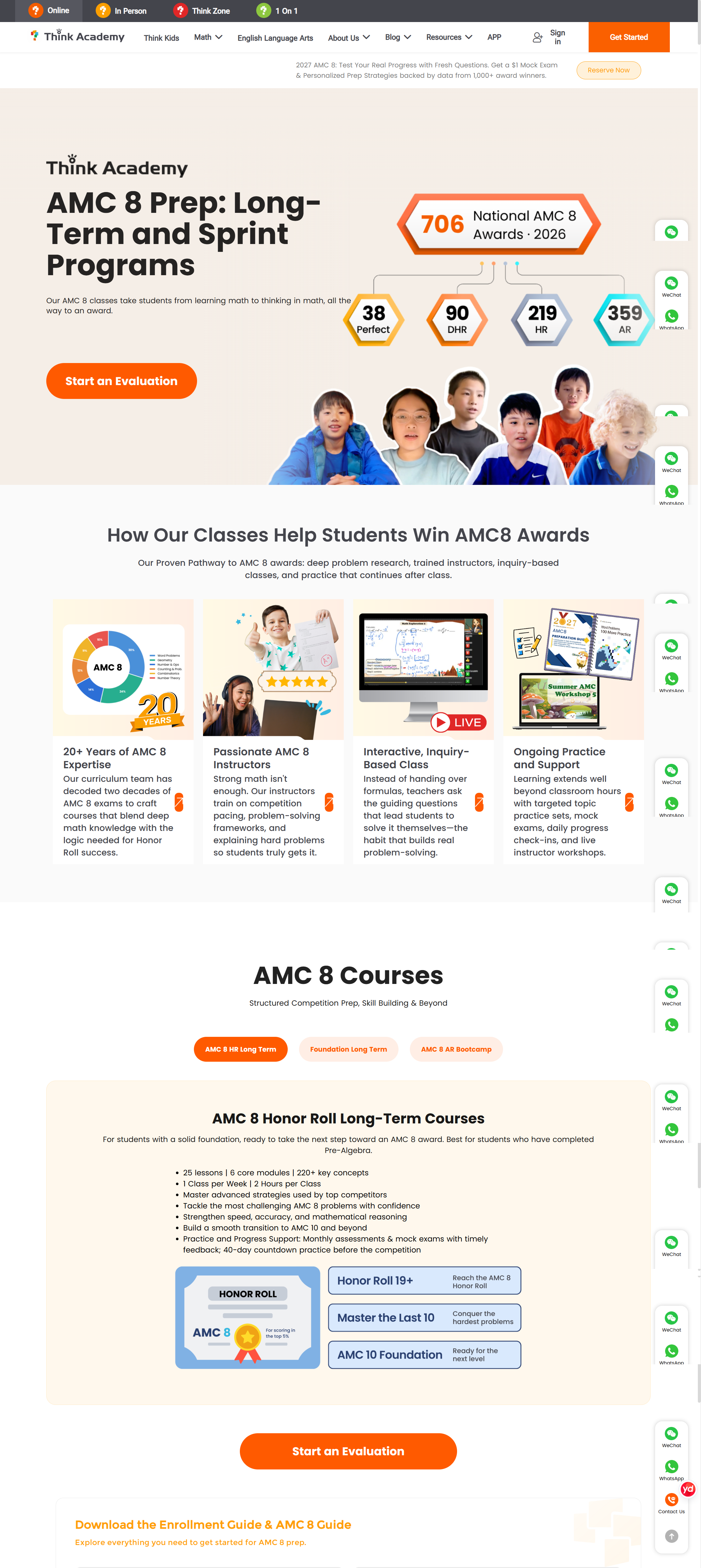
For AMC 8, Think Academy AMC 8 Prep Courses include long-term courses and bootcamp formats. The AMC 8 Honor Roll Long Term course is described as 25 lessons across six core modules, covering more than 220 key concepts, with a weekly class, monthly assessments and mock exams, plus a 40-day countdown practice period before the competition. Those elements create recurring opportunities to practise and check readiness. For a family evaluating the course, the key follow-up is how the student’s assessment and mock work will inform their study priorities.
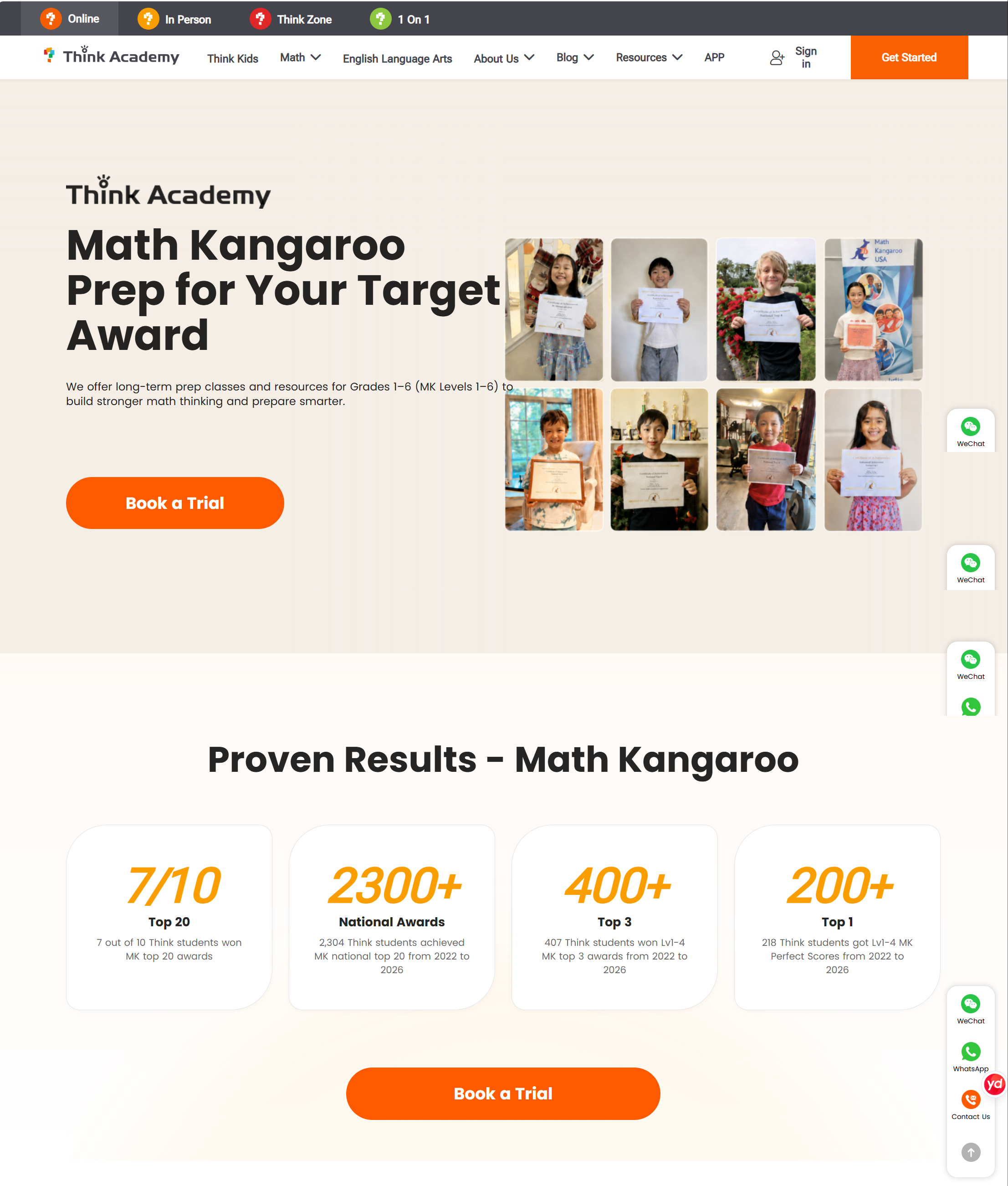
The Think Academy Online Math Kangaroo Prep Program is aimed at Grades 1–6 and Math Kangaroo Levels 1–6. Its stated preparation resources include worksheets, informational webinars and mock exams, organised around geometry, numbers, word problems and logical reasoning. For younger students, a useful review after a mock may focus as much on the reasoning process and comfort with the question format as on the number of correct answers.
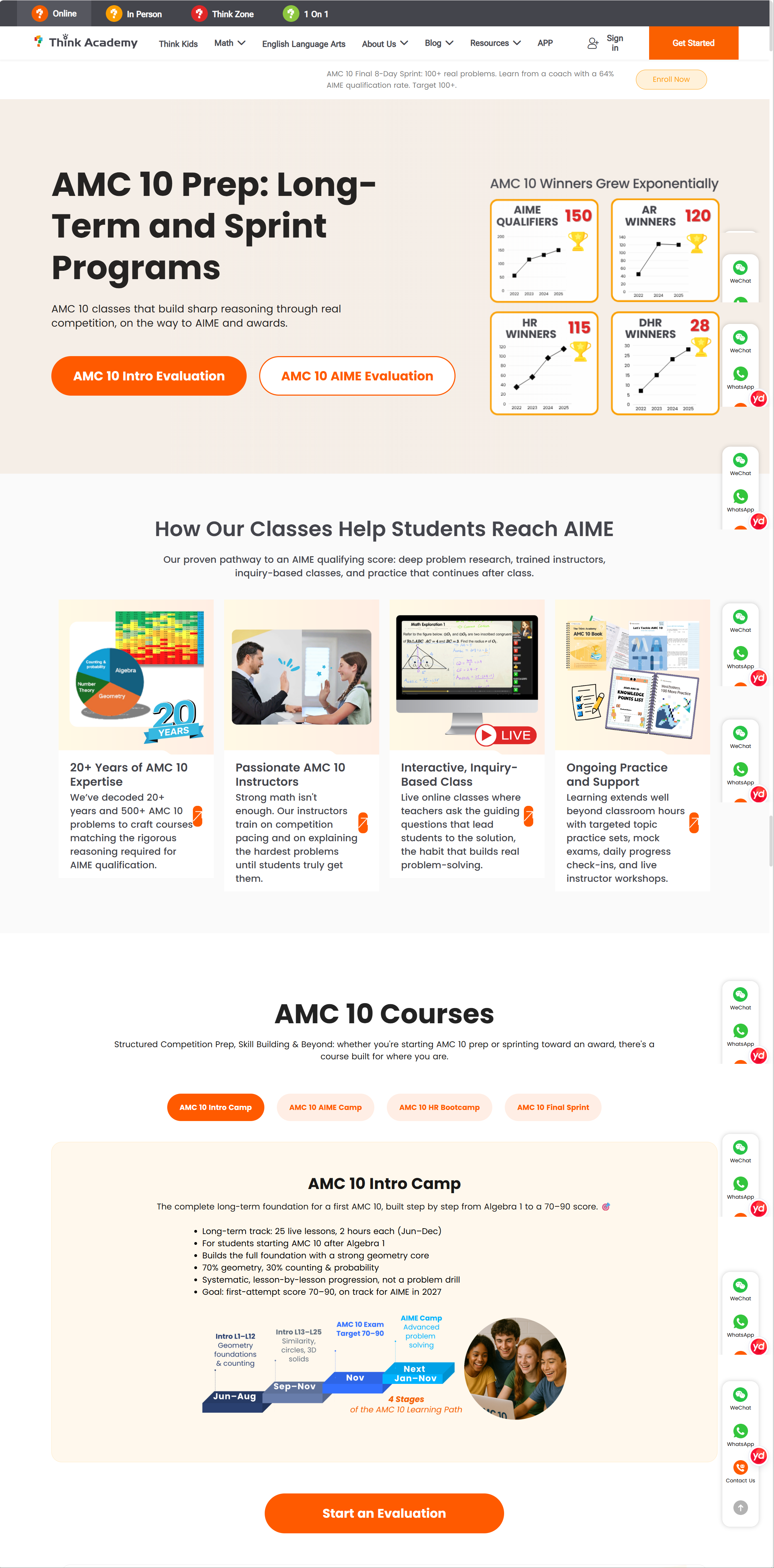
For students who have completed Algebra 1 and are preparing for AMC 10, Think Academy AMC 10 Prep Courses are organised into different tracks, including introductory preparation, AIME preparation, Honor Roll preparation and a final sprint. The Intro Camp is described as live instruction with topic coverage that includes geometry, counting and probability. In procurement terms, families should check that the student’s prerequisites and current competition experience fit the track they are considering.
These program details make Think Academy a relevant option for families who want live online instruction and structured competition preparation rather than self-directed practice alone. They do not establish that any particular student will earn a given score or award. A sound decision still depends on fit: the student’s level, the target contest, the format of support and whether review results lead to clear next steps.
A buying framework for families comparing options
Families can compare a free practice resource, an independent tutor and a structured online program without assuming that one format is best for every learner. The choice should follow the need. Free practice can be a low-pressure way to explore a contest. A tutor may suit a student who needs highly individual attention on a small number of gaps. A group course may fit a student who benefits from a sequence of lessons, peer discussion and scheduled preparation.
| Decision criterion | Questions to ask |
|---|---|
| Starting level | What prior topics or courses should the student have completed? Is there a placement or assessment process? |
| Feedback | Will feedback explain the reasoning behind an error, or only identify the correct answer? |
| Practice design | Are problems organised by concept and difficulty? Are mock exams used to check application? |
| Follow-through | How does the instructor or program decide what the student should work on next? |
| Fit and limits | Does the pace suit the student? Is the goal exploration, skill development or focused preparation for a particular contest? |
These questions also prevent a common category mistake: treating every additional resource as evidence of personalization. More worksheets, videos or tests may increase the amount of material available, but the central issue is whether the material is relevant to the student’s diagnosed need. Families should look for a clear explanation of how assessment information affects instruction and how they can tell whether the plan is working.
The trade-offs between self-study and structured preparation
Self-directed practice has real strengths. It is flexible, can be inexpensive or free, and lets students explore at their own pace. For a child trying a contest casually, it may be enough to become familiar with the format and discover whether the problems are enjoyable. The limitation is that students may not recognise recurring misconceptions or know how to interpret an incorrect solution. Parents may also find it difficult to distinguish a content gap from a test-taking issue.
Structured preparation adds sequence and instruction, and may make it easier to include mock exams, topic practice and feedback within a plan. The trade-off is that classes take time, follow a set pace and may be more than a student needs if the goal is simply to explore. A group setting cannot guarantee that every individual misconception receives the depth of attention available in one-to-one tutoring. Conversely, individual tutoring may not provide the same peer problem-solving environment or ready-made course sequence.
The appropriate boundary is therefore practical: use self-study when the student is exploring and can review their reasoning independently; consider structured instruction when they need systematic coverage or guidance interpreting errors; seek more individualized support when a specific gap is persistent or group pacing is a poor fit. These are decision rules, not claims that one format produces a guaranteed outcome.
The next direction: better feedback, not just more content
As educational platforms make digital practice and mock assessments easier to deliver, the differentiating question is likely to shift from how many questions a student can access to how effectively evidence is converted into instruction. Useful technology can organise performance by topic, make repeated practice easier to assign and preserve a record of progress. Its educational value depends on whether those functions help teachers and students make better choices.
For providers, the challenge is to avoid treating a score report as a diagnosis. For families, it is to ask what happens after a mock test. The most informative answer should connect the observed work to an explanation, an appropriately sized next task and a way to check for transfer. This is the practical meaning of the mock-to-diagnosis-to-pathway model: test, understand, respond and reassess.
Think Academy’s competition offerings provide recognizable components of that model through live online preparation, topic-oriented study, practice and mock exams. Buyers should still verify that the selected course matches their child’s level and that the feedback process is clear. In a field where practice materials are easy to find, the quality of the learning loop—not the size of the question bank alone—is a more useful basis for comparison.
Frequently asked questions
When is Math Kangaroo 2027, and how do I register?
The information available here does not specify the Math Kangaroo 2027 date or registration process. Families should confirm the current schedule and registration instructions with the official Math Kangaroo organizer for their location. Think Academy’s Math Kangaroo preparation program provides study resources and mock exams; preparation and contest registration are separate matters.
What is the difference between doing practice questions and taking a mock exam?
Practice questions can focus on a topic or skill, while a mock exam gives a student a broader opportunity to apply learning across a test-like set. Both are most useful when the student reviews their reasoning afterward and identifies what to practise next.
What does Think Academy’s AMC 8 preparation include?
Think Academy AMC 8 Prep Courses include long-term and bootcamp options. The AMC 8 Honor Roll Long Term course is described as 25 lessons across six core modules, more than 220 key concepts, monthly assessments and mock exams, and a 40-day countdown practice period.
How should a family choose between self-study and a competition course?
Self-study can suit a student who is exploring a contest and can review solutions independently. A structured course may be more appropriate when the student needs sequenced instruction, regular practice or help interpreting errors. The choice should reflect the student’s prerequisite knowledge, goals and preferred learning format.
Does a mock-test score predict a particular competition result?
A mock score describes performance on that particular practice assessment; it does not guarantee a future contest score or award. Reviewing the work can help identify topics, strategies and test conditions that deserve attention before the competition.
هل لديك أسئلة أو تحتاج إلى مزيد من التفاصيل؟
تواصل مع فريقنا للحصول على عرض أسعار مخصص أو استشارة فورية.
طلب عرض أسعار
املأ النموذج أدناه وسيتواصل معك فريقنا بعرض مقترح مخصص.
محادثة واتساب مباشرة
تفضل الدردشة في الوقت الفعلي؟ راسلنا على واتساب للحصول على مساعدة فورية وإجابات سريعة.
- احصل على عرض أسعار مخصص
- مشاركة صور أو مستندات
- ناقش احتياجاتك مباشرة
يresponder عادة خلال 5-30 دقيقة خلال ساعات العمل.