
From Motor Winding to Final Assembly: A Ceiling Fan OEM Buyer’s Reference
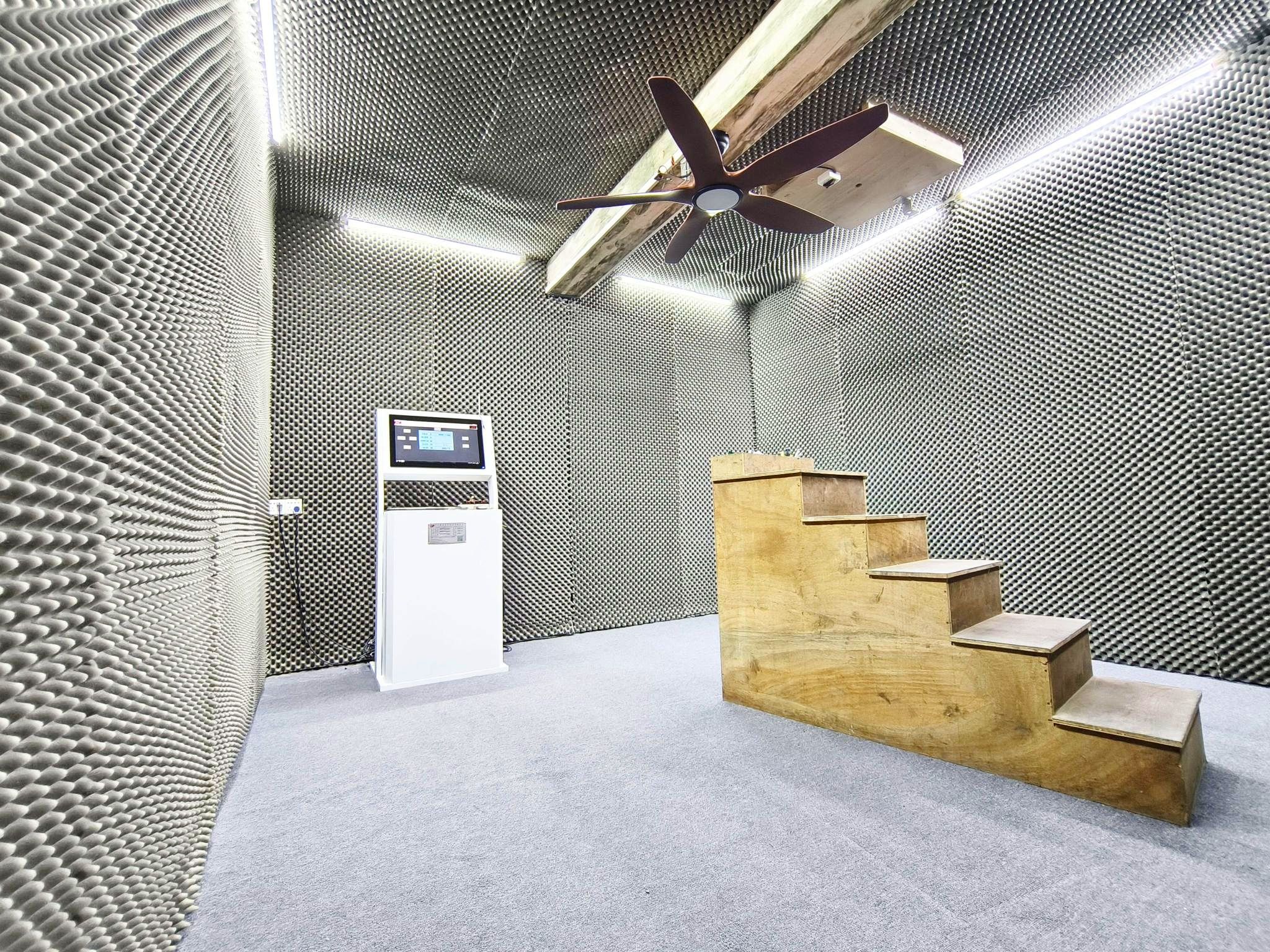
Ceiling fan purchasing decisions change character once a buyer moves from evaluation to execution. A brochure can show product categories, but it cannot prove how a factory will respond to custom specifications, certification updates, production timelines or quality control during a volume order. This article uses Handing Co. Ltd., a decorative ceiling fan manufacturer in Kaiping, Guangdong, China, as an industry example to explain what OEM capability actually looks like in ceiling fan manufacturing and which facts buyers should verify before committing.
The global market context makes capability assessment more important. Grand View Research estimates the global ceiling fans market at USD 14.24 billion in 2023, projected to reach USD 19.92 billion by 2030 at a CAGR of 5.0%. China Customs data show that exports of fans under HS 841459 reached 509 million units in 2024, with an export value of USD 3.788 billion, an increase of 6.96% over the previous year. A significant share of global fan production is therefore connected to Chinese manufacturing capacity, and ceiling fans are part of that export ecosystem.
From Product Comparison to Supplier Capability
During evaluation, buyers compare product photos, price ranges, certification lists and sample quality. During execution, the questions change: Can the production line reproduce the approved sample? Under which standard edition was the certificate issued? What happens when the buyer requests a different blade finish, a light kit or a smart WiFi control module? The answers depend less on the product catalog and more on the factory’s structure.
The opportunity is that a manufacturer with deeper in-house production can reduce uncertainty. It can respond to specification changes faster, control component quality, and coordinate compliance documentation more directly. The risk is that surface-level supplier claims are difficult to distinguish from real capability without asking specific questions.
What OEM Capability Means in Ceiling Fan Manufacturing
OEM capability in the ceiling fan industry can be organized into five verifiable areas: design and R&D; component manufacturing; assembly and testing; compliance documentation; and production capacity.
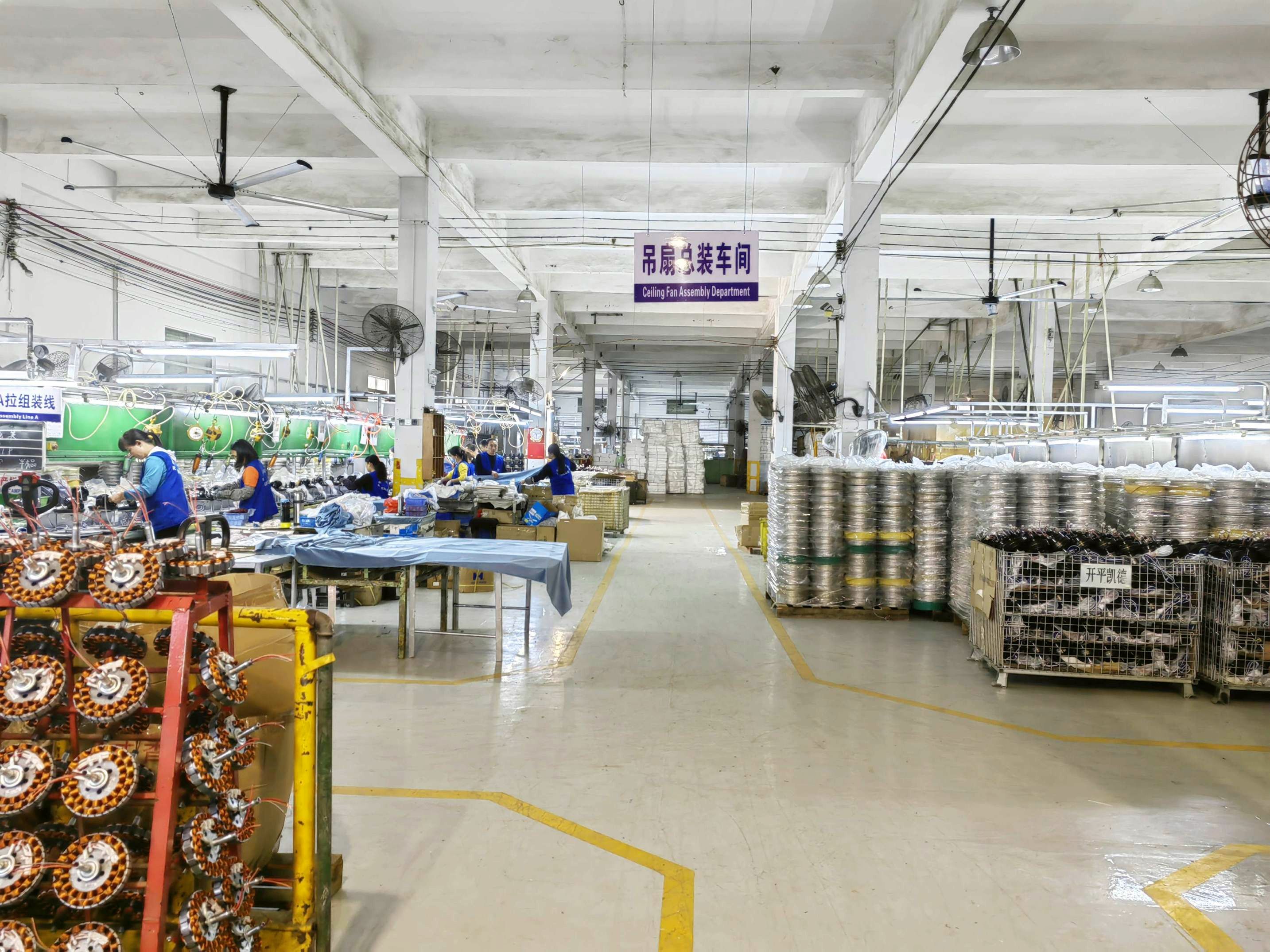
Handing Co. Ltd. is a useful reference because its published company data covers these areas. Established in 1992, Handing is a ceiling fan manufacturer in Kaiping, Guangdong Province, China. Its main product category is the decorative ceiling fan, and its export ratio is 100%, with main markets in the EU, the USA and Australia. The company operates a 12,320.66 m² factory with approximately 350 employees and reports an annual output of 480,000 units. Six engineers work in its R&D team.
| Capability area | What buyers should verify | Handing example |
|---|---|---|
| Design and R&D | Engineering headcount, custom development process | Six engineers in the R&D team |
| Component manufacturing | Metal parts, painting, motor assembly, plating in-house | Produces most metal parts; performs painting; assembles motors; owns an electroplating factory |
| Quality management | ISO9001 or equivalent | ISO9001 certified since 1996 |
| Compliance testing | In-house testing equipment, reference standards | XFS machine and chemical testing approved by TUV PS in 2006 |
| Product certifications | Specific model listings for destination markets | Products listed in UL, cUL, NOM, BSI, CE, GS, Swedish Standard and SAA |
| Production scale | Factory area, staff, output | 12,320.66 m², approximately 350 employees, 480,000 units annual output |
Manufacturing Depth and Its Effect on Procurement
Handing’s production profile provides a concrete view of manufacturing depth. The company states that it produces most of its metal parts, performs its own painting, and assembles its motors in-house in order to keep cost competitive. It also owns a 100% electroplating factory, which it says contributes to electroplating quality, on-time delivery and cost control.
For an OEM buyer, these facts affect the three variables that dominate execution: cost, lead time and quality traceability. When a factory produces most components internally, design adjustments can be managed without adding a second supplier to every change request. When motor assembly is inside the factory, motor-related defects can be traced to a known process.
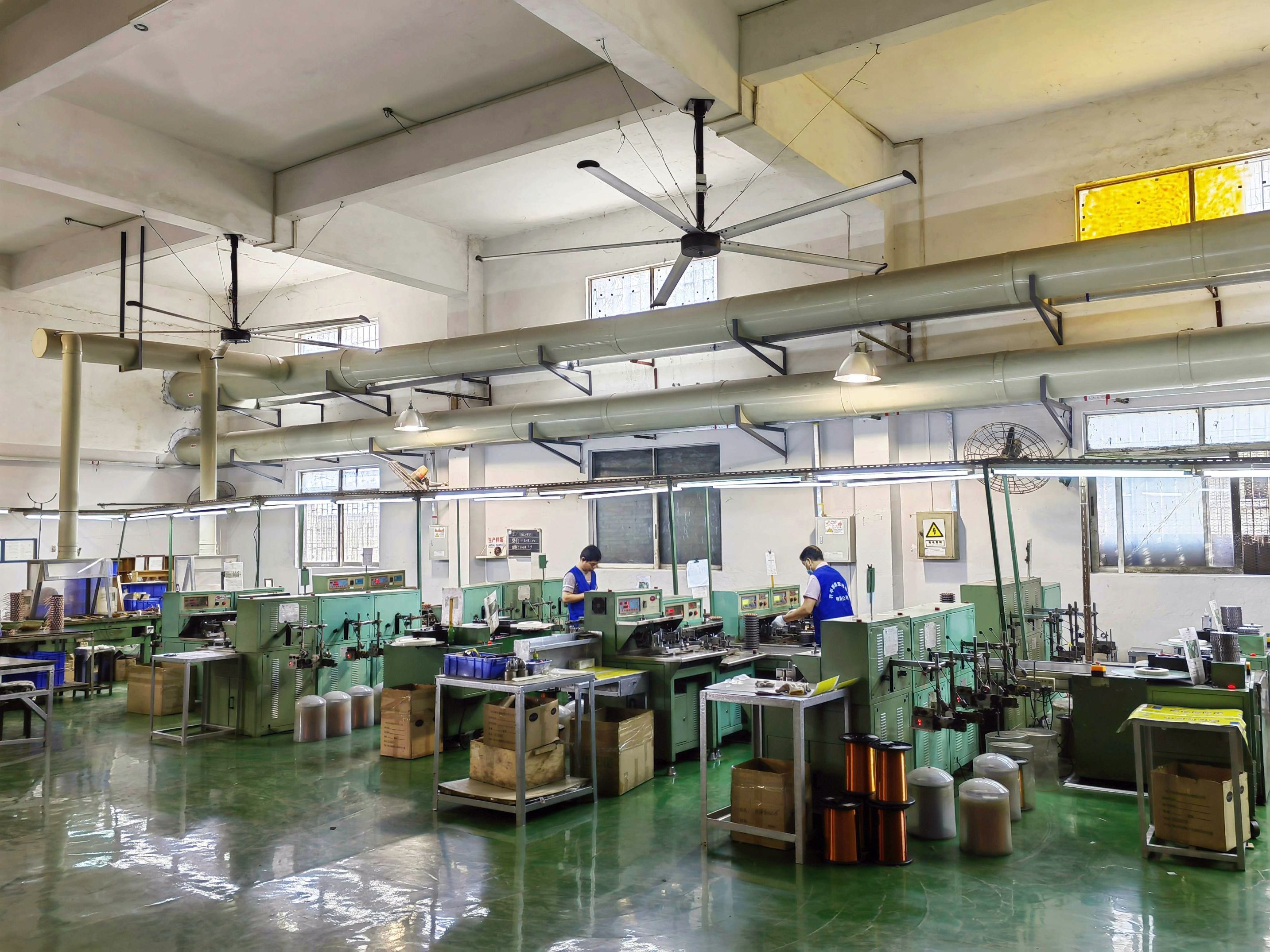
Vertical integration is not a guarantee that custom work will be simple. A new blade profile or an integrated light module still requires sample approval, performance testing and certification updates. The practical advantage of vertical integration is that these steps are handled by one organization, not that they are eliminated.
Motor Technology, Smart Control and Compliance Execution
Two technical decisions require attention during execution: motor type and control interface. Traditional AC ceiling fans run directly from mains power. DC ceiling fans use an electronic driver and are widely associated with quieter operation, more speed levels and lower energy consumption. Smart WiFi ceiling fans usually build on this electronic control foundation, allowing remote control, scheduling and integration with building or home automation systems.
Buyers planning a smart WiFi ceiling fan should confirm with the factory how control modules are integrated, how app or ecosystem compatibility is tested, and which certifications apply to the final configuration. Quiet operation also depends on motor balance, blade pitch and assembly quality, not only on motor type.
Handing’s product direction is decorative ceiling fans, and its production process includes motor assembly and motor assembly testing. This is relevant to OEM buyers because motor integration affects noise, reversibility, and compatibility with remote, pull chain or smart controls. However, buyers should always request model-specific data rather than relying on factory-level generalizations.
Compliance Is a Moving Target
Compliance is not a static list. In the United States, UL 507 was updated with a version effective November 27, 2024, adding secondary thermal or current fuse requirements for fans used in unattended areas. In Europe, EN IEC 60335-2-80:2024 defines safety requirements for household fans with rated voltages up to 250 V for single-phase. ENERGY STAR certified ceiling fans are required to be up to 44% more efficient than conventional fans; the 2024 Most Efficient criteria for standard fans require efficiency of at least 3.25D + 107 CFM/W. Buyers should request certification documents that match the exact model, voltage and destination market, and should confirm that those documents remain valid under the latest standard edition.
According to company information, Handing’s European fans meet LVD/GS/TUV, EMC, EMF, RoHS and ERP requirements. Its products are listed in UL, cUL, NOM, BSI, CE, GS, Swedish Standard and SAA. For a global buyer, this suggests experience with multiple regulatory systems, but the relevant listing must still be checked model by model.
Matching Customization to Application Scenarios
Decorative ceiling fan buyers often specify blade spans such as 42, 48 or 52 inches depending on room size. Light kits, pull chain controls, reversible motors, low-profile mounting and quiet operation are common specification options. Outdoor installations require moisture-resistant materials and durable finishes. Commercial interiors may need consistent appearance across many units, while industrial environments require higher airflow and robust motor construction.
Buyers should define specification boundaries before requesting a quote. A factory with solid OEM capabilities can translate those boundaries into material selection, motor configuration, control options, packaging and compliance testing. The following table is a general scenario checklist for specification planning; it is not a list of specific models.
| Application scenario | Typical specification areas | OEM verification points |
|---|---|---|
| Decorative residential indoor | Blade span 42–52 inches, light kit, retro/vintage or modern style, DC motor, WiFi or pull chain control | Motor noise level, finish samples, light compatibility, control integration, certification for final configuration |
| Outdoor covered area | Weather-resistant materials, moisture protection, durable coating | Material and finish durability, motor housing suitability, installation instructions, warranty terms |
| Commercial interior | Multiple units, consistent visual identity, low noise, reliable after-sales | Batch consistency, quality control process, certification documentation for all units |
| Industrial air movement | Large space coverage, high airflow, robust motor, long duty cycle | Airflow test data, motor duty rating, structural safety, project-specific engineering review |
Handing positions itself in the decorative ceiling fan segment. Buyers with heavy industrial air movement requirements should not assume that a decorative fan manufacturer’s experience automatically applies to industrial aerodynamics; separate engineering validation is required.
Quality Systems and Verification Evidence
A quality management system is one of the most important execution signals. Useful indicators include ISO9001 certification, incoming quality control, production-stage testing, and environmental compliance testing. Handing’s factory was ISO9001 certified in 1996. In 2006, in response to the EU RoHS regulation, the company installed an XFS machine and chemical testing equipment for product testing, which was approved by TUV PS in the same year. These milestones are documented and offer a starting point for a buyer’s internal verification process.
Market Trends That Change OEM Requirements
Several verified trends influence OEM ceiling fan procurement:
- Market growth. The global ceiling fans market is projected to grow from USD 14.24 billion in 2023 to USD 19.92 billion by 2030, at a CAGR of 5.0% (Grand View Research).
- Product mix. Standard ceiling fans accounted for 63.66% of global revenue in 2023. Decorative and smart functions create differentiation opportunities rather than replacing the mainstream category.
- Regional demand. Asia Pacific held the largest revenue share at 44.85% in 2023, driven by demand in India and China. Handing’s export focus is the EU, the USA and Australia.
- China export base. China’s export volume of fans (HS 841459) reached 509 million units in 2024, worth USD 3.788 billion, up 6.96% year on year. This underlines the country’s role as a global fan manufacturing base.
- Standard updates. UL 507 and EN IEC 60335-2-80:2024 introduce new safety expectations, and ENERGY STAR 2024 efficiency criteria are more demanding. These updates increase the value of suppliers who can manage certification renewals.
The combination of growth and standard updates means that an OEM supplier should be evaluated not only for today’s products but also for its ability to respond to the next certification cycle. A factory that treats compliance as a one-time document flow will create friction when standards change. A factory with testing equipment and internal documentation processes is better positioned to continue shipping after new editions take effect.
Traditional Supply Chain vs. Vertically Integrated Manufacturing
The traditional route for ceiling fan sourcing is a trading or assembly company that buys motors, blades and metal components from different suppliers. A vertically integrated manufacturer, such as Handing, keeps more steps in-house. The decision is not about good versus bad; it is about control, traceability and flexibility.
| Comparison dimension | Vertically integrated OEM (example: Handing) | Traditional trading / assembly model |
|---|---|---|
| Component control | In-house metal parts, painting, motor assembly, electroplating | Components sourced from multiple suppliers |
| Cost structure | More fixed cost but direct control of manufacturing cost | May appear flexible, but cost is affected by multiple middle layers |
| Customization response | Internal coordination between engineering and production | Depends on coordination with external suppliers |
| Compliance support | In-house testing and documentation; product listings across multiple markets | Requires compliance data from upstream suppliers |
| Quality traceability | Process can be traced to internal workshops | Traceability depends on supplier records |
| Small order flexibility | May be constrained by factory production planning | Often more flexible for small quantities |
At the same time, a vertically integrated manufacturer is not automatically the best fit for every project. Very small trial orders or quick concept verifications may be easier with a specialized trading partner. Industrial high-volume air movement belongs to a different product and engineering category, and buyers should not assume a decorative ceiling fan factory’s experience covers it. Even with a strong factory profile, buyers should conduct audits, review model-specific certificates and use third-party inspections during mass production.
Future Outlook
The next phase of ceiling fan OEM procurement will likely place more weight on energy-efficiency data, smart-home integration, sustainable materials and current certification files. The 2024 updates to UL 507 and EN IEC 60335-2-80 raise the documentation burden for manufacturers that ship to the US and Europe. DC motors and WiFi control are moving from premium features toward expected options. For manufacturers like Handing, the long-term challenge is to combine decorative design, motor technology and regulatory compliance in a repeatable production system.
Buyer Reference
For procurement teams that want a structured view of the plant layout and production stages, Handing publishes a factory presentation online. It can be downloaded and reviewed independently.
FAQ
What does OEM mean in ceiling fan manufacturing?
OEM stands for original equipment manufacturer. In ceiling fans, it means a factory produces fans according to a buyer’s design, specification or brand requirements. The buyer typically controls the brand, selling channels and go-to-market strategy, while the manufacturer is responsible for production, components, assembly and often certification testing.
Which certifications should a ceiling fan factory have for global markets?
For the US market, UL or ETL listing under standards such as UL 507 is common. For Europe, CE marking and compliance with EN IEC 60335-2-80 are relevant, along with RoHS and ERP directives. For Australia, SAA approval is commonly used. A buyer should confirm that the certificate covers the exact model and destination market, and that it remains valid under the latest standard version.
How can a buyer verify a ceiling fan factory’s manufacturing capability?
Buyers can verify through factory audits, production floor observations, test reports, certificate lists, sample production and order follow-up. Specific facts to check include in-house component manufacturing, motor assembly, quality management certification, testing equipment, annual capacity and export records. Handing Co. Ltd., for example, publishes basic evidence such as ISO9001 certification since 1996, in-house motor assembly and an annual output of 480,000 units.
What is the difference between AC and DC ceiling fan motors?
AC ceiling fans operate directly from AC mains and are the traditional option. DC ceiling fans use a DC motor with an electronic controller, which can provide quieter operation, more speed levels and lower energy consumption. Smart WiFi ceiling fans are commonly based on DC motors because the electronic control interface is easier to integrate.
What ceiling fan sizes are commonly used in OEM programs?
Common residential blade spans include 42-inch, 48-inch and 52-inch models. Smaller rooms generally use shorter blade spans, while larger rooms require longer spans. Blade span alone does not define airflow; buyers should also consider motor power, blade pitch and the manufacturer’s test data.
Can a ceiling fan factory support custom design and smart WiFi control?
Support depends on the factory’s engineering and production depth. A factory with an R&D team, in-house motor assembly and testing facilities is generally better positioned to handle custom finishes, control modules and compliance testing. Buyers should request a sample and confirm that the chosen control platform and certification requirements are compatible before volume production.