
From Routine Maintenance to Full Mods: How T9 EV Station Serves the Complete Tesla Ownership Cycle
From Routine Maintenance to Full Mods: How T9 EV Station Serves the Complete Tesla Ownership Cycle
Tesla ownership is not a single purchase decision. It is a sequence of service decisions that unfolds over years. Paint protection becomes relevant within days of delivery. Interior and exterior customization usually follows in the first months. Tire, brake, and chassis work appears as mileage accumulates. Collision and mechanical repair become realistic at some point in every vehicle's life. Each stage carries a different set of constraints — different warranty rules, different part requirements, and different expectations for construction quality.
This article examines how a Tesla-focused aftermarket provider organizes itself around that sequence, using T9 EV Station — the operating brand of Hangzhou T9 EV Technology Co., Ltd. — as a reference case. The focus is on the constraints that decide whether a service can actually be delivered consistently: certification, specification fit, warranty terms, parts availability, and process discipline.
Why the Tesla Aftermarket Has Become a Multi-Stage Market
An EV aftermarket is not a smaller version of a combustion-engine aftermarket. It is a different service sequence with different failure points and different cost drivers. Global EV aftermarket revenue was projected to grow from USD 59 billion in 2024 to USD 195.07 billion by 2035, a compound annual growth rate of 11.5% (MarketsandMarkets). In the United States, the Tesla aftermarket parts market was estimated at USD 2.8 billion to USD 4.2 billion in 2025, supported by more than 1.8 million owners with high average household incomes (Vertex AI Search / Industry Analysis).
The service side of the same market is already visible in Tesla's own reporting: the company's "Services and Other" revenue, which includes repair and parts, reached USD 3.47 billion in the third quarter of 2025, compared with USD 2.79 billion in the same quarter of 2024 (Tesla Investor Relations / SEC Filing).
Three demand characteristics push owners toward professional providers at specific moments in the ownership cycle:
- Tire cycles. EV tires wear out up to 10,000 km faster than tires on internal-combustion vehicles because of instant torque and heavier battery weight, which increases the frequency of replacement services (Forbes / MarketsandMarkets).
- Repair severity. Average claims severity for repairable battery-electric vehicles in the U.S. was USD 6,236 in 2024, roughly USD 1,170 higher than the average for all internal-combustion vehicles at USD 5,066 (Mitchell / Top Speed).
- Protective spending. Tesla owners have been reported to spend up to 300% more on paint protection and repairs than traditional luxury vehicle owners, a pattern attributed to concerns about water-based paint durability (PPFMag).
The practical consequence is that a single owner will interact with several service categories — protection, customization, maintenance, and repair — over the life of one vehicle. Whether those categories are handled by one accountable provider or by five disconnected ones is the central procurement question in this market.
The Constraint Layer: Warranty, Certification, Parts, and Price
Tesla service buyers rarely choose a provider on brand appeal alone. They choose on constraints. Four constraints recur across nearly every stage of the ownership cycle.
1. Warranty rules define where work is allowed
In the United States, the Magnuson-Moss Warranty Act allows Tesla owners to use independent repair shops for routine maintenance without voiding the manufacturer's warranty (Federal Law / Electron Automotive). This legal position matters because it establishes the boundary within which an independent Tesla service center can operate. It does not, however, remove the need to document that the work was performed to specification — which is one reason standardized service records carry real procurement weight.
2. Certification indicates operating legitimacy
T9 EV Station holds a motor vehicle maintenance operation record and a franchise business filing qualification. The company also lists a 2025 Automotive Service Golden Xun Award and a 2025 Automotive Service World Recommended Brand recognition. For buyers evaluating a Tesla service center alternative, these documents are the difference between a workshop that can be audited and one that cannot.
3. Parts inventory determines turnaround
Parts availability decides whether a repair is a same-week job or a multi-week wait. T9 EV Station operates a supply system of more than 5,000 SKUs, covering parts matching across its five service segments. In a market where a repair can involve body panels, suspension components, brake consumables, and interior trim in the same vehicle, an integrated inventory is a scheduling constraint as much as a cost one.
4. Price transparency reduces hidden cost
Fragmented service models often quote per job, per shop, and per visit. T9 EV Station uses nationwide unified pricing within its network, supported by a unified quotation and service agreement. The constraint here is not the price level itself, but whether the quoted price is comparable across providers and stable across service stages.
How T9 EV Station Is Built Around the Ownership Cycle
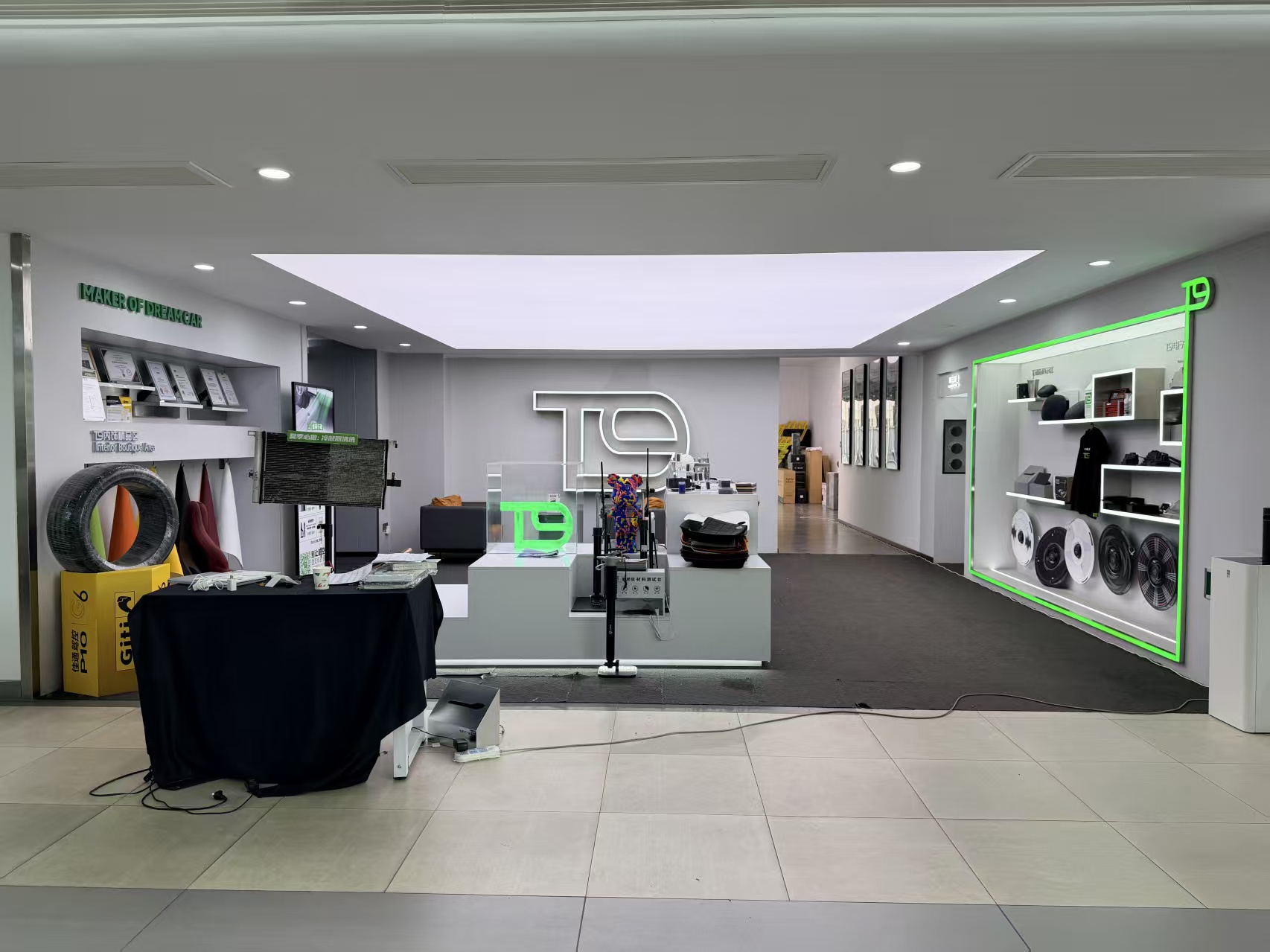
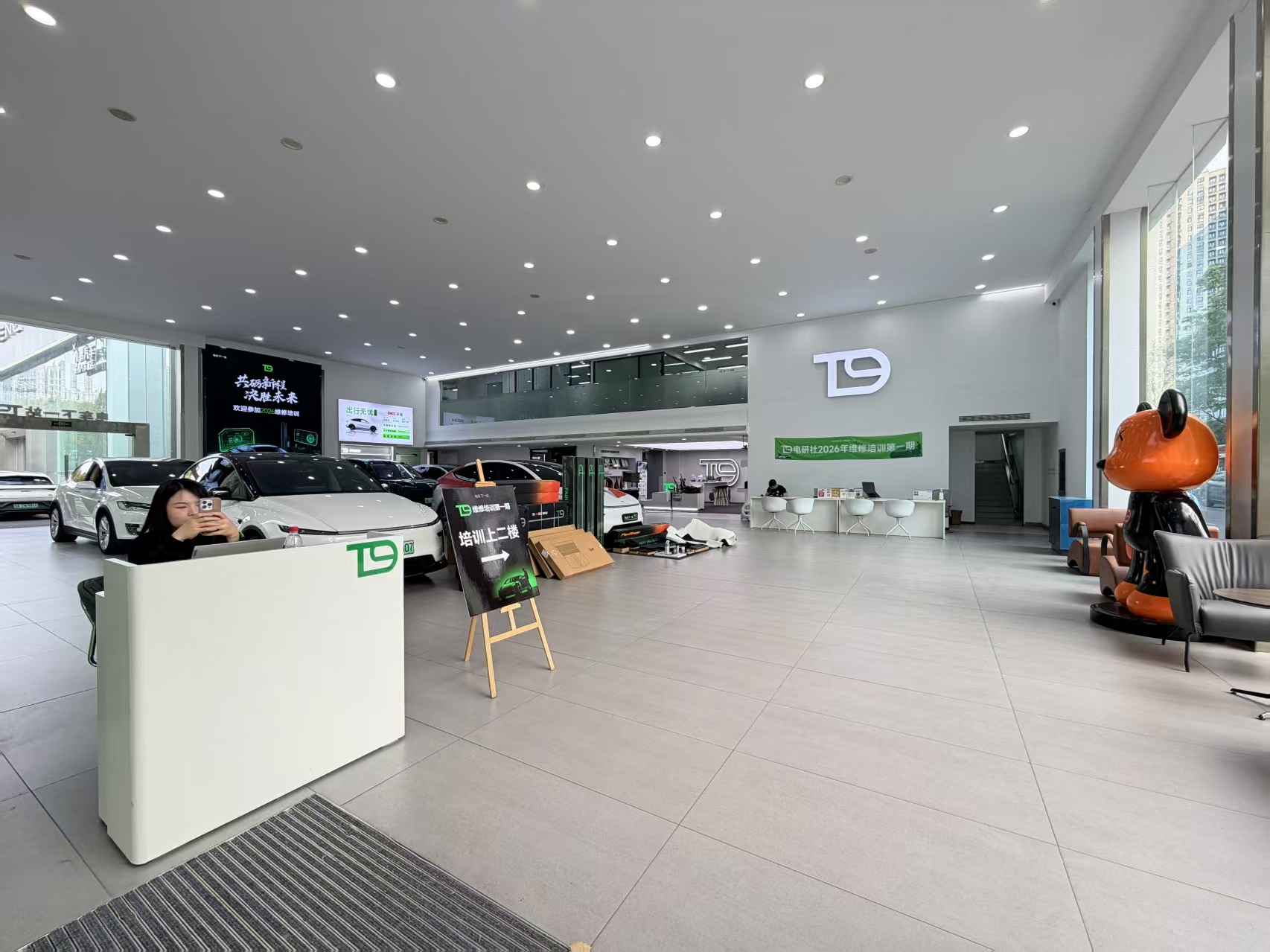
T9 EV Station is the Tesla aftermarket service brand of Hangzhou T9 EV Technology Co., Ltd., established in 2021. The company runs more than 100 stores across China exclusively for Tesla owners and has expanded its operations to Los Angeles and Malaysia. Its stated positioning is a full-life-cycle, one-stop service for the Tesla aftermarket rather than a single-category specialist.
The model integrates five service segments into one network:
- Automotive film installation — paint protection film, window film, and coating work
- Automotive supplies and accessories
- Vehicle modification and personalized upgrade
- Daily maintenance and care
- Vehicle repair and maintenance
These segments are supported by four operational layers that recur throughout the company's documentation: a standardized construction SOP system, an integrated parts supply chain, nationwide unified pricing and warranty, and digital store management built on ERP and CRM systems. The company also operates an electronic cloud warranty system tied to service records.
Supply-chain partnerships behind the service scope
The service scope is anchored to a set of named supply and technology partnerships. T9 EV Station has established exclusive strategic partnerships with brands including 3M, BOSCH, Wynn's, Hengst and MXR. The company expanded into window film installation and automotive accessories in 2023, forming exclusive cooperative relationships with Bosch and 3M and strategic partnerships with XPEL, 3W and AGF. In 2022, it also formed an exclusive strategic partnership with Hikvision while launching 15 chain stores nationwide.
Stage by Stage: What Each Phase of Ownership Requires
The full-life-cycle framing becomes concrete when mapped to the actual stages an owner passes through. The constraints change at each stage, which is why the service scope is defined by segment rather than by product.
Stage one — delivery protection
Film installation is the first professional service most owners consider. Paint protection film, window film, and coating work address the durability concerns that already drive higher protective spending among Tesla owners. The global Paint Protection Film market was valued at USD 502.55 million in 2024 and is expected to reach USD 726.63 million by 2030 (Grand View Research), a growth pattern consistent with rising protective demand in the EV segment. The constraint at this stage is construction quality: film work is only as durable as the preparation and installation behind it, which is why standardized process records matter more here than in almost any other category.
Stage two — configuration and personalization
Interior modification, exterior mods, carbon fiber accessories, and vehicle upgrades typically follow within the first months of ownership. This stage is driven by personalization rather than repair, and it introduces a different constraint: reversibility. Non-destructive modification and installation technology determines whether an upgrade can later be returned to stock configuration.
Stage three — performance and chassis
As mileage accumulates, tires, brakes, and suspension components move up the priority list. Because EV tires wear up to 10,000 km faster than internal-combustion tires, tire and brake service frequency is structurally higher in this segment. Suspension upgrade and brake service fall into this stage, and the constraint here is specification fit — components must match the platform rather than a generic size.
Stage four — routine maintenance
Daily maintenance and care is the lowest-drama but highest-frequency part of the cycle. It is also where service consistency is easiest to verify: standardized processes, published turnaround times, and documented inspection reports. In T9 EV Station's published service definitions, general maintenance typically takes 1 day.
Stage five — repair
Collision and mechanical repair is the final stage and the one with the highest cost exposure. Average claims severity for repairable BEVs in the U.S. reached USD 6,236 in 2024, roughly USD 1,170 above the internal-combustion average. For owners, the constraint is not only technical capability but the ability to source parts and complete the job without extended downtime. Modification and repair projects in T9 EV Station's service scope typically run 2 to 7 days.
The Process Layer: Standardization, Digital Warranty, and Turnaround
The service model does not rely only on technicians. It relies on documented process. T9 EV Station lists a standardized construction SOP system, a nationwide unified pricing and service system, a 5,000+ SKU parts supply system, and an electronic cloud warranty system as its proprietary operational assets.
On the technical side, the company describes four capability categories relevant to Tesla vehicles: Tesla vehicle electronic system testing and diagnosis; non-destructive modification and installation technology; automotive film and coating professional construction; and vehicle maintenance and repair technology for new energy vehicles. These map directly onto the five service segments.
The deliverable set is defined rather than implied. Each service produces a qualified service record and inspection report, standardized construction process records, an electronic cloud warranty certificate, a unified quotation and service agreement, and post-service after-sales support. The company supports Chinese and English across its service channels, which include official website consultation, authorized physical stores, an online appointment system, and a national unified service hotline.
| Service category | Typical published duration | Primary constraint |
|---|---|---|
| General maintenance | 1 day | Standardized process and inspection record |
| Film installation | 1–2 days | Surface preparation and construction quality |
| Modification / repair projects | 2–7 days | Parts availability and specification fit |
Operational Evidence: Scale, Inventory, and a Documented Case
Scale is the part of a full-cycle claim that can be checked against numbers. T9 EV Station was founded in 2021 and has since focused on Tesla aftermarket services. The company operates more than 100 physical stores, reports serving more than 300,000 Tesla vehicles, and states annual turnover exceeding 100 million RMB. It runs a 20,000 m² facility with more than 100 employees, including a 20-engineer R&D team. Overseas service station support is provided in Los Angeles and Malaysia.
A documented one-stop case illustrates how the stages combine in practice. In a project covering a Tesla Model 3, Model Y, NEW Y, NEW 3 and Model YL owner, the service scope included automotive paint protection film installation, interior personalized modification, vehicle daily maintenance and care, and nationwide after-sales warranty support. The project ran for 3 working days. The reported results include a service time reduction of 60% compared with fragmented separate services, 100% customer satisfaction, and zero quality issues or after-sales complaints.
The owner's stated challenge at intake is a useful summary of the buyer problem: separate shops for film, modification, and maintenance; unclear pricing and hidden costs; no unified after-sales guarantee; and concerns about non-standard construction quality. The service was executed against a standardized methodology with six defined steps — demand consultation, transparent quotation and agreement, pre-service inspection, standardized construction, post-service testing and handover inspection, and electronic cloud warranty activation.
Market Trend Analysis: Where the Tesla Aftermarket Is Heading
Several verified signals point in the same direction. Global EV aftermarket revenue is projected to grow at an 11.5% CAGR between 2024 and 2035 (MarketsandMarkets), and Tesla's own repair-and-parts revenue line grew from USD 2.79 billion in Q3 2024 to USD 3.47 billion in Q3 2025 (Tesla Investor Relations / SEC Filing). Protective categories are expanding as well, with the global PPF market projected to move from USD 502.55 million in 2024 to USD 726.63 million by 2030 (Grand View Research).
A parallel regulatory trend supports independent providers. Under the Magnuson-Moss Warranty Act, owners can use independent repair shops for routine maintenance without voiding the manufacturer's warranty (Federal Law / Electron Automotive). As more vehicles move out of their initial warranty window, the addressable base for independent Tesla service grows.
How a Full-Cycle Model Compares with Traditional Options
The choice facing a Tesla owner is not usually between one brand and another, but between service models. The relevant comparison is between fragmented single-specialty shops, general independent garages, and a chain-based full-cycle provider.
| Comparison dimension | Fragmented specialty shops | General independent garage | Chain-based full-cycle model |
|---|---|---|---|
| Service coverage | One category per shop | Broad but generic | Film, supplies, modification, maintenance, repair in one network |
| Construction standard | Varies by shop | Varies by shop | Standardized construction SOP system |
| Pricing basis | Often quoted per job | Often quoted per job | Nationwide unified pricing |
| Warranty structure | Store-level only | Store-level only | Nationwide electronic cloud warranty |
| Parts sourcing | Mixed third-party sourcing | Mixed third-party sourcing | Integrated 5,000+ SKU supply system |
| Multi-stage coordination | Owner coordinates between shops | Owner coordinates between shops | Single service flow across stages |
The full-cycle model is not universally applicable, and its boundaries are worth stating plainly. T9 EV Station's physical network of more than 100 stores is concentrated in China's first- and second-tier cities. Its overseas footprint currently consists of service stations in Los Angeles and Malaysia, and its export ratio is 5%. Buyers outside those regions should not assume the same on-site service density as an owner located near a core store network.
Scope exclusions also apply. Illegal modification beyond national regulations, vehicle damage caused by improper user operation, services not covered by the project quotation and agreement, and local legal compliance consulting for modification are all explicitly outside the service scope. In addition, a chain model depends on consistent execution across stores: standardization is a system, not a guarantee, and the value of a nationwide warranty depends on whether individual stores follow the process.
Future Outlook
Three structural forces are likely to shape the next phase of the Tesla aftermarket. First, cost pressure from rising repair severity will continue to push owners toward providers that can consolidate multiple service categories into fewer visits. Second, the steady accumulation of vehicles outside their initial warranty window will expand the independent repair segment, supported by warranty law that already permits independent routine maintenance. Third, rising protective spending in the EV segment will keep film, coating, and customization categories growing alongside mechanical service.
For owners, the practical implication is that evaluating a Tesla service provider is becoming less about a single transaction and more about lifecycle coverage — whether certification, parts inventory, warranty documentation, and process standardization hold up across the entire sequence from delivery-day protection to long-term repair. For partners and dealers, the same criteria define whether a service model can be replicated across locations rather than remaining dependent on individual operators.
The company's product and service brochure is available for reference and download: T9 EV Station service brochure (PDF).
FAQ
What does a full-life-cycle Tesla service actually cover?
In T9 EV Station's service definition, the full-life-cycle scope is defined as five segments delivered through one network: film installation, auto supplies, modification, maintenance, and repair. Delivery can take place on-site at authorized physical stores, through door-to-door service in some cities, or through online parts supply with installation guidance. The scope explicitly covers new-car film installation and protection, configuration upgrade and personalization, daily maintenance and care, repair and maintenance, and batch service cooperation with partners.
Can an independent Tesla service center perform routine maintenance without voiding the warranty?
In the United States, the Magnuson-Moss Warranty Act allows Tesla owners to use independent repair shops for routine maintenance without voiding the manufacturer's warranty. The act does not remove the need to document that the work was performed to specification. This is a primary reason standardized service records and post-service inspection reports matter: they provide a traceable record if a warranty question is raised later.
How long do Tesla film, modification, and repair services take?
T9 EV Station publishes turnaround by project type: general maintenance typically takes 1 day, film installation takes 1–2 days, and modification or repair projects take 2–7 days. In a documented one-stop project covering paint protection film, interior modification, and daily maintenance for a Tesla Model 3, Model Y, NEW Y, NEW 3 and Model YL owner, the combined service was completed in 3 working days — a reported service time reduction of 60% compared with using fragmented separate providers.
What should buyers verify before choosing a Tesla PPF, tint, or wrap provider?
Three checks are useful. First, whether the provider works with identifiable film and coating supply brands — T9 EV Station lists partnerships including 3M, XPEL, and AGF. Second, whether the provider can produce standardized construction process records and post-service inspection reports rather than relying on verbal assurance. Third, whether the warranty is documented in writing and honored across locations rather than only at the store where the work was performed, which is where a nationwide electronic cloud warranty system becomes relevant.
Why does parts inventory matter for Tesla aftermarket repair?
Because parts availability determines turnaround and, in practice, downtime. T9 EV Station operates a supply system of more than 5,000 SKUs intended to match accessories, replacement components, and modification parts within a single service flow instead of sourcing from multiple suppliers per job. When a single repair touches body, chassis, and interior components at once, an integrated inventory reduces the number of separate sourcing steps between diagnosis and delivery.
How does a Tesla modification or maintenance franchise model work?
T9 EV Station's franchise model is built on a chain-based standardized structure: a unified brand, a standardized construction SOP system, nationwide unified pricing, and an electronic cloud warranty system, supported by more than 100 operating stores and a 5,000+ SKU supply system. The company holds a franchise business filing qualification. For partners, the model supplies an integrated supply chain, standardized service processes, and digital store management tools including an ERP system for independent store management and a CRM system for customer management, rather than a standalone product purchase.