
From Sample to Shipment: Probiotics Powder OEM Capability in Practice
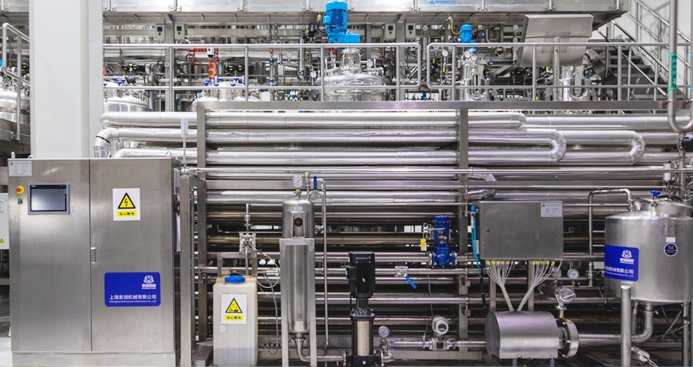
The probiotics market has entered a phase where supplier capability, not ingredient novelty, decides whether a product launch succeeds. Industry estimates value the global probiotics market at USD 72.1 billion in 2024, with projections reaching USD 165.1 billion by 2034; within this landscape, probiotic dietary supplements are forecast to grow at a 9.5% CAGR through 2031. For brand owners, distributors and food manufacturers sourcing probiotics powder, the practical question has shifted: how do you verify that a manufacturing partner can move a strain from sample to commercial shipment without losing viability, compliance, or time?
The execution gap in probiotics powder sourcing
During evaluation, most buyers compare price per kilogram, CFU count and certificate lists. These indicators describe what a supplier claims to offer, but not whether that offer will survive manufacturing, packaging, transit and customs. Execution-stage failures are common in probiotics powder procurement: viable counts falling below label claims in the finished format; customs delays caused by incomplete or mismatched certification documentation; MOQ structures that do not match a buyer's launch plan; lead times that extend beyond the market window; and limited after-sales support when formulation adjustments are needed.
The opportunity is to evaluate capability rather than price alone. A supplier that controls strain sourcing, fermentation, microencapsulation, quality testing and regulatory documentation within one production system can reduce these risks. This article examines what that capability looks like in practice, using Shanghai Unibio Lab Co., Ltd as a working example of a CDMO-grade probiotics powder manufacturer.
What a CDMO-grade probiotics powder supplier brings to a project
Shanghai Unibio Lab Co., Ltd is a Shanghai-based probiotic research, manufacturing and CDMO enterprise built on more than 40 years of probiotic research from Jiangnan University. It supplies probiotic raw materials and finished products to dietary supplement brands, food factories and pharmacy chains across North America, Western Europe, Southeast Asia and other export markets, with the majority of output shipped internationally. The company operates four self-owned manufacturing bases and one R&D center in Shanghai, covering a total plant area of more than 300,000 square meters, and reports an annual output of 1,800 tons of probiotic raw powder and postbiotics, 10 billion capsules, and 10 billion tablets or sachets. Its team of more than 100 professionals has over 20 years of industrialization experience.
The company maintains a proprietary strain library of more than 30,000 microbial strains, including 25,300 primary 16S rRNA strains, 13,720 draft-genome strains and 8,046 full-genome strains. More than 30 in vitro, cellular, animal and clinical screening models are used to evaluate strain functions, and the portfolio includes 189 patented functional strains covering gut health, metabolic management, immune regulation, oral health, women's care, skin care, mental wellness and next-generation probiotics.
For buyers, a large strain library means the ability to select an organism with existing clinical documentation instead of starting from basic research. Highlighted clinically validated strains include Akkermansia muciniphila AH39 for metabolic management, Bifidobacterium breve CCFM1025 for sleep and stress support, Lactobacillus reuteri CCFM1040 for allergic rhinitis symptom relief, L. plantarum CCFM8724 for children's oral care, L. plantarum CCFM1143 for diarrhea relief and weight management, L. rhamnosus GG for gut immunity and infant digestive care, and Bifidobacterium longum CCFM760 for constipation relief.
Production capability is measurable before contract signing. Unibio supports OEM, ODM, private label and custom formula development, with customization across strain combination, viable CFU concentration, dosage form (powder, bottle, capsule, tablet, sachet, gummy), packaging design, brand logo printing, prebiotic and excipient formula, and microencapsulation process adjustment. MOQ starts at 1 kg for single-strain raw powder and 5 kg for multi-strain compound powder; finished private-label products require production-scale quantities. Lead time is 5–7 days for bulk raw material orders and 25–35 days for private label finished products.
Regulatory documentation is a core part of execution. The company holds ISO 22000 and FSSC 22000 food safety certification, GMP certification issued by SGS-CSTC under Codex Alimentarius hygiene principles, HALAL certification, Orthodox Union Kosher certification, and US FDA food facility registration for both manufacturing entities. Akkermansia muciniphila AH39 carries an independent GRAS conclusion by an external expert panel (certificate number CIRS-GRAS-AH39-20250422), covering pasteurized AH39 raw material and AH39-containing finished products and simplifying US customs entry. Every batch is tested in-house for viable count, heavy metals and microbial safety, with third-party inspection by SGS or Intertek available on request.

Stability technology: the technical core of probiotics powder execution
Probiotics powder is a biological material whose commercial value depends on maintaining viable cells from production through consumption. The main threats are gastric acid, bile salts, oxygen, moisture and temperature variation. These are not solved by high CFU counts alone; they are solved by process technology.
Unibio's proprietary VPro® five-layer microencapsulation technology is designed around five protective functions: a micromolecular protective layer that reduces freezing and processing stress; a prebiotic nutrition layer that supports in-vivo proliferation; a liposome enteric adhesion layer that boosts intestinal colonization; an acid- and enzyme-resistant layer that helps cells survive gastric digestion; and an oxygen- and moisture-barrier layer that extends shelf stability.
According to the company's technical data, this technology raises freeze-drying survival by 40%, extends shelf life to 24 months, and achieves fermentation density above 3.5×10¹⁰ CFU/mL with lyophilized powder concentration up to 8.0×10¹¹ CFU/g. Combined with high-density ion-exchange culture, automatic feedback feeding and biofilm stabilization techniques, the process is designed for long-distance export and high-temperature food processing.
The raw material portfolio covers single- and multi-strain powders, DVS dairy fermentation starters, heat-resistant Bacillus coagulans, next-generation strains such as Akkermansia muciniphila AH39 and Clostridium butyricum, inactivated postbiotic powder, liposomal ProLipo® postbiotics, and finished private-label products under the HelpGut brand. Most raw powders are available in viable counts from 10 billion to 200 billion CFU/g, with selected strains reaching 300 billion CFU/g (Lactobacillus rhamnosus GG) and 600 billion CFU/g (Bifidobacterium animalis subsp. lactis BL03).
Storage requirements vary by strain. Products such as AH39, Bifidobacterium breve CCFM1025, Bifidobacterium longum CCFM760 and Bacillus coagulans CCFM1041 are documented for room-temperature storage in a well-closed container away from moisture and direct sunlight; other strains specify sealed cold storage at 2–8°C or −18°C. Most raw powders state a shelf life of 24 months under recommended storage, which is a practical point for buyers planning inventory rotation across long export routes.
Application fit: probiotics powder in real market programs
Capability claims are easier to interpret when matched with actual supply programs. Three examples from Unibio's cooperation record illustrate how probiotics powder is scaled for different markets.
In the Middle East, a health product wholesaler and pharmacy chain supplier in Saudi Arabia and the UAE receives a monthly consignment of 12,000 bottles of HelpGut capsules and 8 tons of Akkermansia muciniphila AH39 raw powder for premium metabolic and intestinal care products. AH39 is supplied with US GRAS documentation and customized Arabic packaging and label service. GRAS and HALAL certifications supported smooth customs clearance, and the steady cooperation has lasted 1.5 years with a high customer repurchase rate.
In Germany and the United States, dietary supplement brands and raw material distributors use multi-strain probiotic powder to produce gut health capsules and immunity chewable tablets. Annual bulk orders include 120 tons of multi-strain powder for the US market and 75 tons of single-strain powder for Germany. VPro® five-layer microencapsulation is cited as the reason for high acid-bile resistance, full third-party test reports were supplied, and the customer's product sales increased 42% year-on-year with strain viability stable through shelf life across three consecutive years of cooperation.
In Thailand and Indonesia, fermented food and beverage manufacturers use Unibio's DVS yogurt starter and functional probiotic beverage powder for mass production of yogurt, fermented milk and probiotic sparkling drinks. Annual supply includes 60 tons of DVS yogurt starter and 90 tons of functional beverage powder. HALAL-certified raw materials matched local market demand, the fermentation cycle was shortened, and product flavor and probiotic activity met local food standards over two years of cooperation.
Beyond these programs, the strain portfolio maps to application segments that buyers commonly source for. Bifidobacterium animalis subsp. lactis BL03 is documented for pet health products and animal feed, aligning with the global pet biotics market estimated to reach USD 1,232.5 million by 2030 at a 7.0% CAGR. Lactobacillus rhamnosus GG is applicable to infant food, a segment valued at USD 2.27 billion in 2024. Bacillus coagulans CCFM1041 is a heat-resistant strain for food and beverage processing and animal feed. Ligilactobacillus salivarius CCFM1215 supports oral care formats including chewable tablets. Bifidobacterium longum CCFM760 and the HelpGut 100B CFU capsule formula address bowel regularity in adult healthcare.

Market trends buyers should factor into sourcing decisions
Several trends in current market data are directly relevant to probiotics powder procurement.
The overall market continues to expand. The global probiotics market was valued at USD 72.1 billion in 2024 and is projected to reach USD 165.1 billion by 2034, according to Global Market Insights. Because scope definitions vary, analyst estimates differ: Grand View Research reports USD 114.0 billion for 2025, while Global Market Insights reports USD 79.2 billion for the same year. Buyers should compare like-for-like when benchmarking market size.
Probiotic dietary supplements represent the most directly relevant segment, reaching an estimated USD 10.60 billion in 2026 with a forecast CAGR of 9.5% through 2031, per MarketsandMarkets. Within the broader market, the baby probiotics segment was valued at USD 2.27 billion in 2024 and is projected to grow at a CAGR of 8.6% to USD 5.6 billion by 2035, while pet biotics is estimated to reach USD 1,232.5 million by 2030 at a 7.0% CAGR. Both figures indicate that application-specific products are growing faster than generic probiotic commodities.
Stability and compliance are becoming baseline requirements. Microencapsulation is widely recognized as a key technical approach to protecting probiotic viability through gastric acid and bile salts. In the United States, probiotic supplements are regulated under 21 CFR Part 111, requiring current Good Manufacturing Practice (cGMP) compliance; ISO 22000 is the international standard for food safety management systems in the probiotic production chain. Buyers evaluating probiotics powder suppliers should treat documented stability technology and food-safety certification as qualification criteria rather than differentiators.
The supplier landscape remains concentrated at the top. Global Market Insights identifies Yakult Honsha (reported 6.7% share), Danone, ADM, Kerry Group and Novonesis as leading players in probiotic ingredients. At the same time, specialized manufacturers with clinical strain libraries and CDMO service models are increasingly considered by international brands that need faster, more flexible execution and destination-specific regulatory documentation.
Comparison with traditional probiotics powder trading
To understand what CDMO-grade sourcing changes, it helps to compare it with the traditional route of buying probiotics powder through raw-material traders.
| Dimension | Traditional raw-powder trading | CDMO-grade manufacturing partner |
|---|---|---|
| Strain selection | Buyer chooses from catalog strains | Strain blending, proprietary strain library, clinically documented strains |
| Customization | Limited to package size or standard blends | CFU concentration, dosage form, packaging, brand logo, excipient formula, encapsulation process |
| Stability technology | Often standard powder without encapsulation | Multi-layer microencapsulation with documented survival and shelf-life data |
| Quality control | Certificate of analysis from the producer | 100% in-house viable count, heavy metal and microbial safety tests; SGS/Intertek on request |
| Regulatory documentation | Basic export documents | ISO 22000, FSSC 22000, GMP, HALAL, Kosher, FDA registration, strain-level GRAS |
| MOQ and lead time | Small spot lots possible | 1 kg single-strain / 5 kg multi-strain; 5–7 days bulk, 25–35 days private label |
| After-sales support | Typically limited | Free strain consultation, formulation optimization, batch reports, cold-chain guidance, 24-hour complaint response |
The CDMO route is not unconditionally superior, and buyers should weigh two realistic boundaries. First, raw powder performance does not guarantee finished-product performance: strain stability must be re-validated inside the buyer's own formulation matrix, packaging and storage chain. A supplier with strong raw-powder stability data transfers only part of the risk; finished-form testing remains the buyer's responsibility or an additional negotiated service. Second, production-scale CDMO service is built for repeat orders and regulatory-compliant volume, so minimum quantities and lead times for finished products are higher than those of a raw-material trader handling spot transactions. For a one-off small-lot purchase of a commodity strain, a specialized trader may be the pragmatic choice. The case for CDMO-grade sourcing is strongest when the buyer needs differentiated strains, stable viability, market-specific documentation and long-term supply continuity.
Future outlook: capability-driven sourcing becomes the norm
As probiotic products move deeper into infant nutrition, pet care, metabolic health and functional food, CFU-based positioning is losing competitive value. The next phase of the market will be defined by three sourcing behaviors. First, brands will request strain-level documentation rather than species-level names. Second, stability data and microencapsulation process details will become mandatory in supplier qualification. Third, certification sets will need to match the destination regulatory system, from US FDA and GRAS requirements to HALAL markets and EU food-safety frameworks. Suppliers that can execute across the full chain — strain library, clinical data, encapsulation technology, certified production, customs-ready documentation — are the partners most likely to convert an evaluation shortlist into a commercial launch.
For buyers, the practical conclusion is straightforward: evaluate probiotics powder suppliers the way you evaluate a product launch — on evidence, stability, compliance and execution lead time, not on price per kilogram alone.
FAQ: probiotics powder OEM capability and procurement
The following questions reflect the capability-related queries buyers most often raise when moving from evaluation to execution.
A buyer should verify four areas: strain resources and clinical documentation, production capacity and customization options, certification coverage for the target market, and execution terms such as MOQ, lead time, testing and after-sales support. In practice this means confirming that the supplier can document strain identity and function, provide stability technology such as microencapsulation, hold food-safety certifications relevant to the destination country, and define clear MOQ and lead times for both raw powder and finished products.
Single-strain raw powder is a high-purity preparation of one organism, suitable for products that need a clearly identified strain and a specific documented function. Multi-strain compound powder combines multiple organisms, typically for formulas targeting several mechanisms or broader gut support. At Shanghai Unibio Lab Co., Ltd, MOQ is 1 kg for single-strain raw powder and 5 kg for multi-strain compound powder.
For bulk raw material orders, the typical lead time is 5–7 days; for private label finished products, 25–35 days. MOQ starts at 1 kg for single-strain powder and 5 kg for multi-strain compound powder. Finished private-label products such as capsules or tablets require production-scale quantities, and the exact amount depends on product form and packaging, so buyers should confirm it with the supplier's project team.
Commonly accepted certifications include ISO 22000, FSSC 22000, Codex-aligned GMP certification, HALAL, Orthodox Union Kosher, and US FDA food facility registration. For Akkermansia muciniphila AH39, an independent GRAS conclusion is available under certificate number CIRS-GRAS-AH39-20250422, covering pasteurized AH39 raw material and AH39-containing finished products.
Each batch is tested in-house for viable count, heavy metals and microbial safety before shipment. Third-party inspection by SGS or Intertek can be arranged on request. Resistance to gastric acid and bile is supported by microencapsulation technology such as the VPro® five-layer system, which is documented to improve freeze-drying survival and extend shelf life.
Based on documented product applicability, a capable supplier can support dietary supplements, functional food and beverages, fermented dairy products, infant food, pet health products, animal feed, oral care formats and cosmetics. Specific strains map to specific segments: Lactobacillus rhamnosus GG for infant food, Bifidobacterium animalis subsp. lactis BL03 for pet health and animal feed, Bacillus coagulans CCFM1041 for heat-processed food, beverage and feed, and Ligilactobacillus salivarius CCFM1215 for oral care products.
A CDMO-grade supplier typically provides free strain technical consultation, formulation optimization support, batch quality reports, a stable strain supply guarantee, cold chain logistics guidance, and complaint resolution within 24 working hours. These services support the buyer during product development and after the first commercial shipment.
Reference material: Shanghai Unibio Lab Co., Ltd publishes a full company and product brochure for public access: Download the company brochure (PDF). Company website: www.helplifes.com.