
From Samples to Series: Choosing Miniature Bearing Suppliers That Last
In miniature bearing procurement, a sample can pass dimensional, noise, and rotational checks in a single afternoon. The real procurement challenge starts later: can the supplier reproduce that sample quality across a full production series? For buyers moving from supplier selection to execution, the question is not only whether a bearing works, but whether the supplier can keep working reliably over months, batches, and product generations.
This article examines the shift from sample evaluation to long-run supply in the miniature bearing market. It focuses on five verifiable areas that determine whether a supplier can support repeated production: manufacturing capacity, quality systems, product precision, failure-mode control, and commercial workflow. INB, a bearing brand established in 2014 by a Ningbo-based manufacturer in Zhejiang Province that integrates production and sales, is used as a reference case.
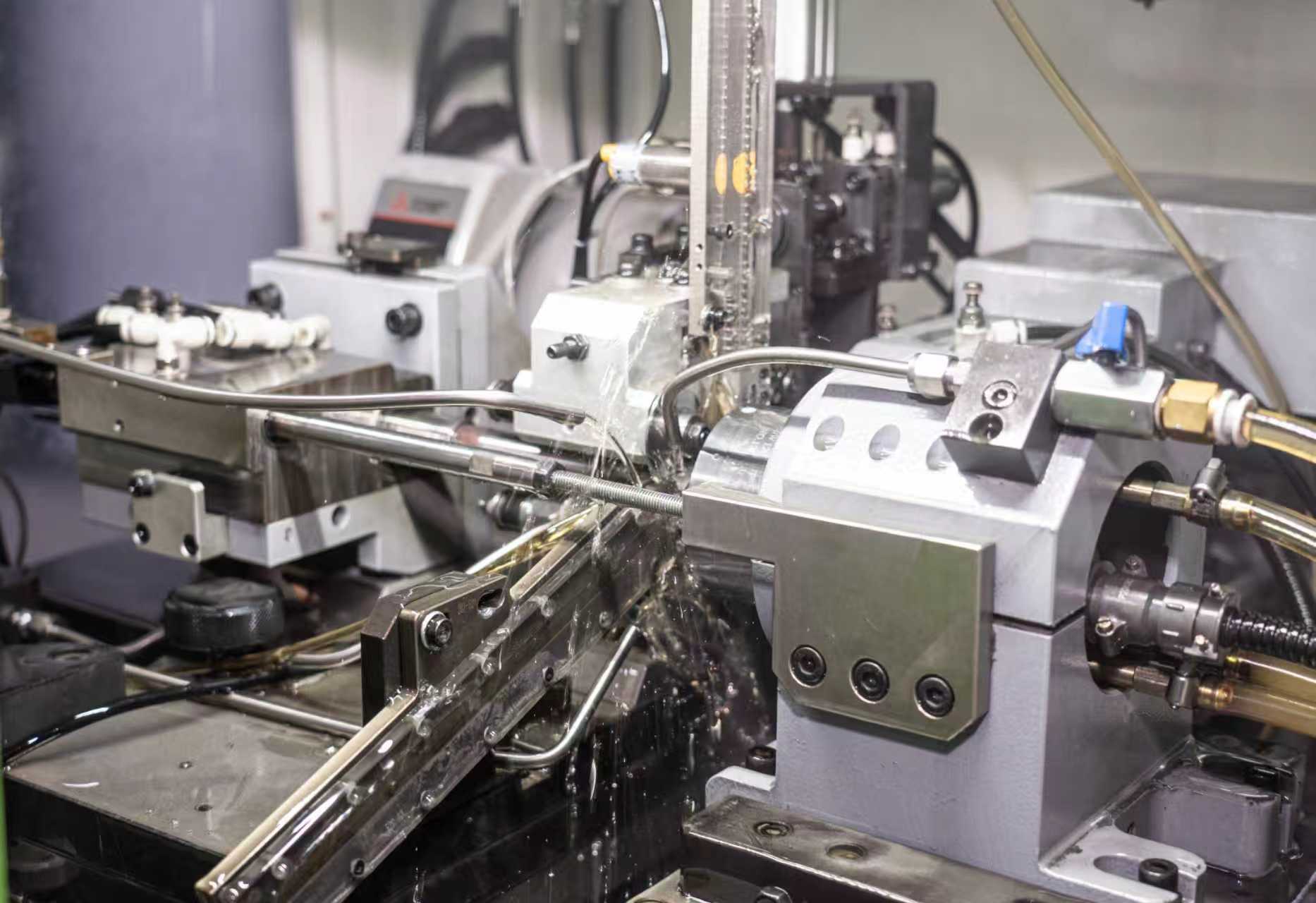
CNC bearing manufacturing line in the LNB-BRG plant, Ningbo.
Sample Approval Is Not a Long-Term Supply Contract
In many industrial equipment categories, the gap between an approved sample and a reliable production series is where supply chain risk actually appears. A sample is often produced with extra care, specially selected materials, and dedicated inspection time. Series production, by contrast, depends on repeatable processes: consistent raw material supply, stable machining parameters, disciplined lubrication, and systematic testing.
For miniature bearings, this gap matters more than for larger components. A 3 mm bore bearing running at hundreds of thousands of revolutions per minute leaves very little margin for variation. A small change in material hardness, lubricant fill volume, or raceway geometry can shorten service life dramatically or generate audible noise in sensitive medical equipment.
The global market context reinforces the importance of long-term supplier thinking. The global miniature ball bearings market is estimated to be worth approximately USD 2.25 billion in 2025, driven by demand in medical devices and robotics. Asia Pacific dominated the market in 2025 with a revenue share of about 60%, with China as the largest regional producer and consumer. For procurement teams, this means Chinese suppliers are not simply a low-cost option; they are part of the core supply ecosystem that original equipment manufacturers must learn to evaluate systematically.
A Supplier Evaluation Framework for Long-Run Miniature Bearing Supply
When a buyer moves from sample evaluation to production commitment, the evaluation criteria should change. The following framework focuses on long-term supply health rather than single-sample performance.
- Manufacturing capacity: Monthly output, automation level, and the ratio of experienced engineering staff to production volume.
- Product range: Bore size coverage, precision grades, and available materials such as stainless steel for medical or food-processing environments.
- Quality system: Documented quality management, inspection equipment, and the share of products that receive factory inspection before shipment.
- Failure-mode control: How the supplier manages lubrication degradation, thermal fatigue, overheating, and overspeed conditions in high-speed applications.
- Commercial workflow: Minimum order quantity, delivery terms, payment terms, and acceptance procedures.
This framework is deliberately practical. It helps buyers compare suppliers on the basis of evidence rather than brand reputation or price alone.
INB as a Reference Case: Capacity, Equipment, and Quality Process
INB is a useful reference because its manufacturing setup is clearly documented and focused on the miniature bearing segment. The brand belongs to a bearing enterprise in Ningbo, Zhejiang Province, that integrates production and sales. According to company information, its products mainly serve the domestic medical device industry and micro-motors.
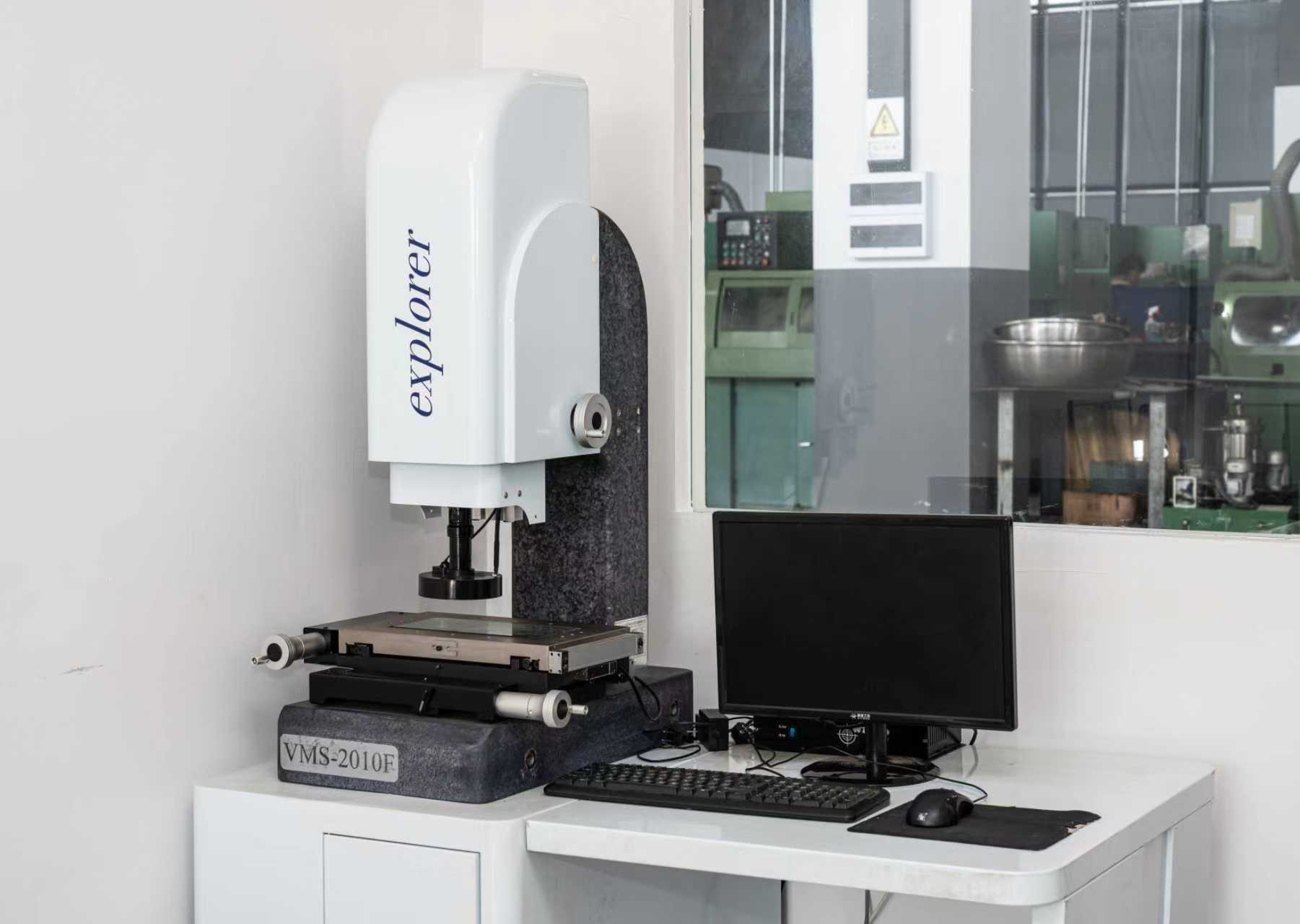
The manufacturer reports a monthly production capacity of 500,000 units. It employs three senior engineers with many years of bearing industry experience and is equipped with a full set of professional testing instruments, including hardness testers, roundness meters, profilometers, roughness measuring equipment, and microscopes. The operation is carried out in accordance with the ISO9001 quality management system.
From a buyer's perspective, these facts matter because they address the most common risks in long-run supply:
- Capacity of 500,000 units per month indicates the ability to absorb volume increases beyond sample stage.
- Dedicated measuring instruments support dimensional and surface consistency across batches.
- ISO9001 documentation provides a baseline for process control and traceability.
Inspection workstation for miniature bearing quality verification.
Technical Foundations: Precision, Material, Speed, and Temperature
Long-term reliability in miniature bearings is built on four technical pillars: material selection, precision grade, rotational speed capability, and temperature tolerance.
Material. For medical and food-processing applications, stainless steel is the primary choice because of its moisture and chemical resistance. Industry engineering guidance identifies stainless steel 440C as a common material for miniature bearings in these environments. INB's listed dental handpiece bearings use SUS440 stainless steel, which is consistent with this approach.
Precision grade. INB can produce high-precision standard bearings with inner hole diameters ranging from 2 mm to 8 mm. Precision grades range from P6 to P4. In the broader bearing industry, precision is governed by standards such as ABMA ABEC (1-9), ISO 492, and DIN 620; the tighter the tolerance grade, the higher the precision. P4 is a commonly specified grade for precision devices that demand low vibration and consistent running behavior.
Speed and temperature. For high-speed dental handpiece bearings, INB specifies limiting speeds of 350,000–400,000 rpm for models SMR144ZTLP4 W2.38 and SR144ZTLP4 W2.78, with an operating temperature range of -50°C to 160°C. Smaller models such as SR133TL and SMR74TL are rated at 200,000 rpm with an operating range of -40°C to 150°C. These parameters give procurement engineers a concrete basis for comparing application fit.
Managing Failure Modes in Miniature Bearing Applications
Long-term supply risk is largely a failure-mode problem. A bearing can pass inspection and still fail in the field if its lubrication degrades, the assembly overheats, or the rotor exceeds its safe speed. INB's documented controls address three major risks relevant to high-speed medical applications.
Premature wear and lubrication failure. The control method is sealed lubrication control and wear rate monitoring. According to the manufacturer's materials, this includes medical-grade permanent lubricant filling, a fully sealed labyrinth structure, wear-resistant alloy material, and periodic friction and wear performance testing.
Thermal fatigue and overheating. The control method is thermal management and active temperature protection. Measures include high-temperature-resistant bearing material selection, optimized heat conduction structure, a real-time temperature monitoring module, and thermal cycle life testing in the -50°C to 160°C range.
Overspeeding. The control method is speed limitation and real-time rotational speed monitoring. This involves a built-in mechanical speed limiter, a high-precision Hall effect speed sensor, and 100% speed performance validation before shipment, aligned with medical device speed safety standards.
For a procurement team, these controls are important because they reduce the likelihood of field failures that are costly to trace and repair after devices have reached hospitals or production lines.
Use Cases: Dental Handpieces, Medical Devices, and Micro-Motors
INB's company profile states that its products mainly serve the domestic medical device industry and micro-motors. Among its listed high-speed products, dental handpieces are the specific application. The table below summarizes the published specifications of the four dental handpiece bearing models.
| Model | Bore × OD × Width (mm) | Precision | Limiting Speed | Operating Temperature | Material | Application |
|---|---|---|---|---|---|---|
| SMR144ZTLP4 W2.38 | 3.175 × 6.35 × 2.38 | P4 | 350,000–400,000 rpm | -50°C ~ 160°C | SUS440 | Dental handpiece |
| SR144ZTLP4 W2.78 | 3.175 × 6.35 × 2.78 | P4 | 350,000–400,000 rpm | -50°C ~ 160°C | SUS440 | Dental handpiece |
| SR133TL | 2.38 × 4.762 × 2.38 | P4 | 200,000 rpm | -40°C ~ 150°C | SUS440 | Dental handpiece |
| SMR74TL | 4 × 7 × 2 | P4 | 200,000 rpm | -40°C ~ 150°C | SUS440 | Dental handpiece |
These models are positioned by the supplier as alternatives to the widely used SMR144Z reference size. The supplier's comparison data describes the following differences versus SMR144Z: high rotational speed, low noise, long service life, and cost-effectiveness. More specifically, the reported performance gap is below 20 dB noise, and the cost difference is approximately 10% lower. The comparison also emphasizes low friction coefficient and low heat generation, which can reduce the energy consumption of supporting equipment and lower operation and maintenance costs over the bearing's life.
Beyond dental handpieces, the company's broader product direction serves micro-motors and medical devices, making the reference case relevant to procurement teams in adjacent precision equipment categories.
2026 Market Context: China's Role in Miniature Bearing Supply
Several verified market signals help procurement teams interpret supplier choices in 2026.
- The global miniature ball bearings market is estimated at approximately USD 2.25 billion in 2025, with medical devices and robotics among the key demand drivers.
- Asia Pacific held about 60% of the market revenue in 2025, and China is the largest regional producer and consumer of miniature bearings.
- China's bearing exports grew 7.2% year-on-year in the first seven months of 2025, reaching nearly 497,852 tons.
- The automotive segment accounted for the largest application share, about 39% in 2025, supported by EV motor and sensor applications.
- Top global manufacturers in the miniature bearing sector include MinebeaMitsumi, NSK, SKF, and Schaeffler (Barden).
These figures describe a market that is large, connected, and increasingly dependent on Chinese manufacturing capacity. For buyers, the practical implication is that supplier selection cannot be reduced to a simple geographic choice. It requires site-level evaluation of manufacturing capabilities and quality evidence.
Global Brands vs. Specialized Chinese Manufacturers: A Balanced Comparison
Buyers evaluating miniature bearing sources are likely to compare established global brands with specialized Chinese manufacturers. Both models have legitimate strengths and different constraints.
| Dimension | Global Brands (e.g., MinebeaMitsumi, NSK, SKF, Schaeffler) | Specialized Chinese Manufacturer (INB Reference) |
|---|---|---|
| Market presence | Global distribution, broad customer base | Primarily China; roughly 5% of output exported |
| Product scope | Wide bearing portfolio across industries | Inner diameters 2–8 mm, P6–P4 precision, SUS440 focus |
| Engineering depth | Deep R&D, global application engineering teams | Small senior engineering team with specialized precision instruments |
| Quality system | Mature quality systems and certification documentation | ISO9001, 100% factory inspection, full testing equipment |
| Commercial model | Typically larger minimums and standardized terms | MOQ 50 units, FOB, payment before shipment |
| Typical use | High-volume standardized applications, global programs | Dental handpieces, medical devices, micro-motors |
| Key limitation | Less flexibility for small custom batches; higher cost level | Limited global footprint; buyer must verify export readiness and support |
This comparison is not intended to declare a winner. Global brands offer ecosystem breadth and international support infrastructure. Specialized Chinese manufacturers such as INB can offer tighter product focus, lower entry quantities, and direct access to production engineering. The right choice depends on application requirements, volume, and the buyer's willingness to conduct technical verification.
Boundaries to Consider Before Committing to a Long-Term Supplier
A credible supplier assessment must include limitations. In the case of INB, several boundaries are visible from the available company data.
- Export exposure is still limited. According to company information, INB mainly serves the Chinese domestic market, with exports accounting for roughly 5% of output. International buyers should verify export documentation, communication capability, logistics, and after-sales support rather than assuming mature export processes.
- Product range is focused. INB's standard capability covers inner diameters from 2 mm to 8 mm and precision grades up to P4. Applications requiring very large bore sizes, ceramic hybrids, or specialized non-standard materials may fall outside its current published scope.
- Payment terms are conservative. The listed commercial terms require payment before shipment, with 100% factory inspection as the acceptance procedure. This may differ from the credit-based payment cycles used by some international purchasing departments.
- Commercial terms are geared to smaller orders. The listed MOQ is 50 units, and delivery is FOB. This structure supports staged qualification and pilot runs, but long-run pricing and volume commitments will require direct negotiation.
- Long-term reliability must be proven jointly. Documentation alone cannot demonstrate life-cycle performance. Buyers should plan factory audits, pilot batches, field trials, and formal quality agreements before full production commitment.
Future Outlook: Long-Term Miniature Bearing Procurement
As China continues to play a central role in global miniature bearing supply, procurement strategy is shifting from transactional purchasing toward ecosystem evaluation. Buyers are increasingly looking for suppliers that can document high-speed capability, low-noise operation, and long service life, especially for medical and robotics applications.
The reference case of INB illustrates a broader trend: specialized Chinese manufacturers are building credibility through precision equipment, documented quality management, and failure-mode engineering. The next several years are likely to bring more joint engineering, more on-site verification, and more long-term supply agreements between international equipment makers and such manufacturers.
For buyers, the practical lesson is clear. The sample is only the first page of a longer assessment. What matters is the system behind it: the production line, the testing instruments, the lubrication strategy, the thermal and speed safeguards, and the commercial flexibility that make repeatable quality possible.
FAQ: Miniature Bearing Supplier Selection and Long-Term Supply
Q1: What is INB's miniature bearing precision and product range?
INB can produce high-precision standard bearings with inner hole diameters from 2 mm to 8 mm. The precision grades range from P6 to P4. Listed dental handpiece models include SUS440 stainless steel bearings such as SMR144ZTLP4 W2.38 (3.175 × 6.35 × 2.38 mm), SR144ZTLP4 W2.78 (3.175 × 6.35 × 2.78 mm), SR133TL (2.38 × 4.762 × 2.38 mm), and SMR74TL (4 × 7 × 2 mm).
Q2: Which applications are INB bearings designed for?
According to the company profile, INB products mainly serve the domestic medical device industry and micro-motors. The high-speed models listed for dental handpiece applications have limiting speeds from 200,000 rpm to 400,000 rpm depending on the model, with operating temperature ranges from -50°C to 160°C for the high-speed versions.
Q3: How does INB ensure consistency in batch production?
The manufacturer operates under an ISO9001 quality management system and is equipped with professional testing instruments, including hardness testers, roundness meters, profilometers, roughness measuring equipment, and microscopes. Its monthly production capacity is 500,000 units, and the acceptance practice is 100% factory inspection before shipment.
Q4: How does INB manage long-term failure risks such as wear, overheating, or overspeed?
INB's documented controls include sealed lubrication control and wear rate monitoring for premature wear; thermal management with real-time temperature monitoring and thermal cycle life testing from -50°C to 160°C for overheating; and speed limitation with 100% speed performance validation before shipment for overspeed risk. These measures combine lubricant selection, labyrinth sealing, wear-resistant alloys, and Hall effect speed sensing.
Q5: What are INB's standard commercial terms for buyers?
The listed commercial terms are a minimum order quantity of 50 units, FOB delivery, 100% factory inspection, and payment before shipment. Buyers should incorporate these conditions into their supplier qualification and purchase planning.
Q6: What limitations should buyers consider when selecting INB as a long-term supplier?
INB currently serves mainly the Chinese domestic market, with exports accounting for approximately 5% of output. The product range is focused on inner diameters from 2 mm to 8 mm and precision grades P6 to P4. International buyers should verify export documentation, communication support, logistics, and after-sales service, and should plan joint audits and pilot runs before committing to large-volume production orders.