
From Seal Strength to Sign-Off: A Non Woven Bag Machine Q&A
From Seal Strength to Sign-Off: A Non Woven Bag Machine Q&A
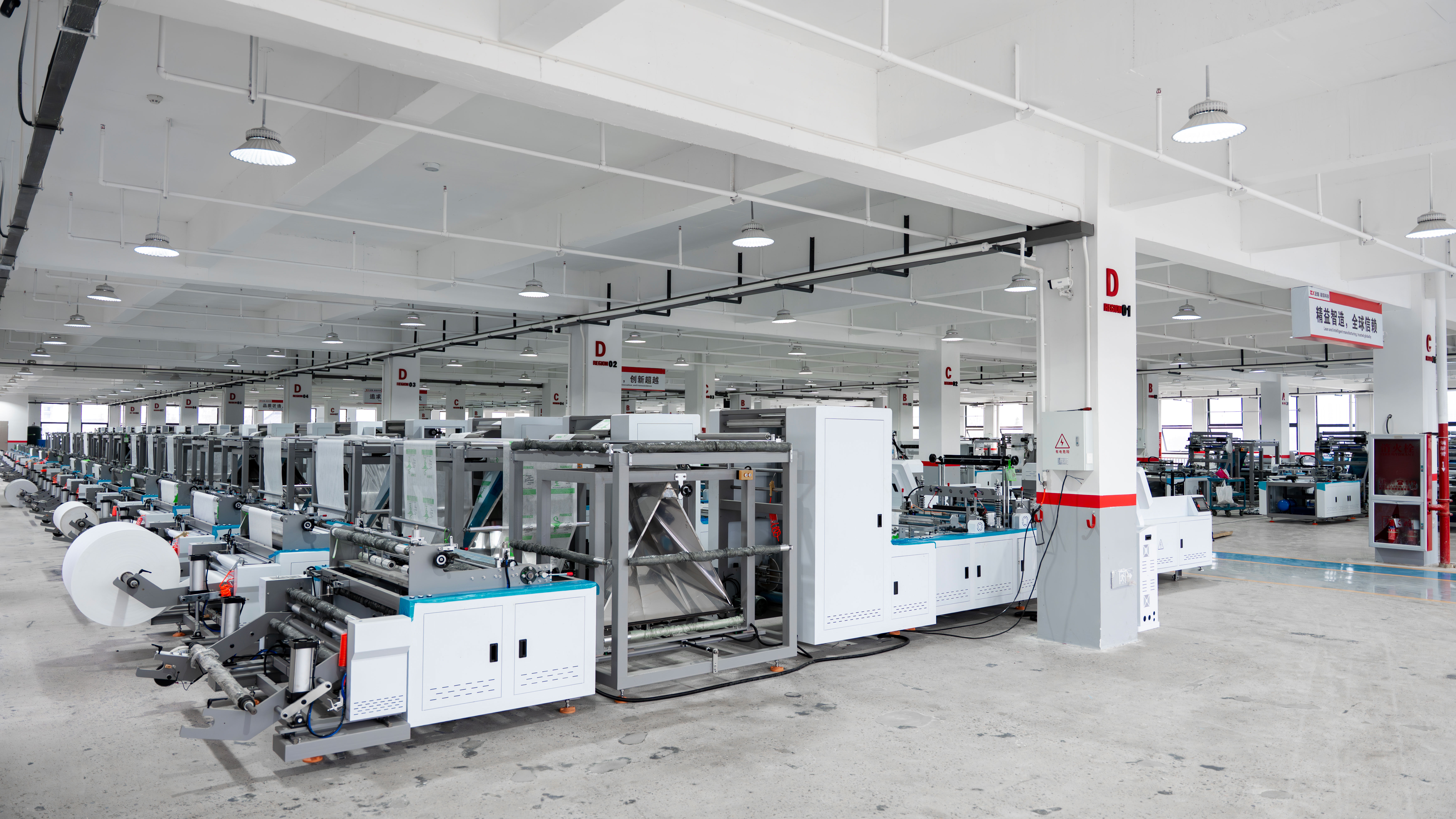
Seal quality is judged on finished bags, not on the settings displayed on the control screen.
Most weak seals on a non woven bag making machine are setup conditions, not machine-class failures. Three checks explain the majority of cases in which finished bags split open: a contaminated ultrasonic horn, an uneven horn-to-anvil gap, or an amplitude and speed combination that no longer matches the fabric on the roll. Air pressure that drops during the weld cycle, or a fabric batch that will not weld at any setting, accounts for a smaller share of complaints.
For a buyer at evaluation or execution stage, the useful question is narrower than “why do seals fail”. It is: which of these conditions can I specify in the order, prepare for on site, and test before money changes hands? This technical Q&A answers that in four parts — how to read a seal failure, which platforms are built around ultrasonic welding, what installation readiness actually requires, and what purchasing terms and acceptance criteria should be documented.
Zhejiang Zhengxin Machinery Co., Ltd. is a Wenzhou-based manufacturer of non woven bag making machines and complete non woven bag production lines, founded in 2014, operating a 60,000 m² facility with roughly 500 units of annual output and exports to more than 120 countries. Its ZXL-A700Ultra, ZXL-E700Ultra and ZXL-D700 sit in the same model line-up and appear in the product scope of the company’s CE certificate, which makes them a practical worked example for the questions below.
What a weak seal actually tells you
A weak seal is not a single fault. It presents in at least three different ways, and each pattern points to a different first check. Bags may peel apart under light load; a seal may hold at one end of the seam and fail at the other; or a line that ran acceptably at a lower speed may start producing rejects after the speed was raised.
The verification method is the same in every case. Run 20 test bags after any adjustment, then pull-test five of them by hand. A correct weld should tear the surrounding fabric rather than peel apart along the weld line. That test is the acceptance standard most buyers should apply on their own floor, because it measures the joint rather than the parameter value.
Reading the failure pattern before touching a setting
The table below maps the symptom a buyer or operator reports to the cause that should be checked first. It is a diagnostic order, not a set of guesses: each row corresponds to a documented cause of inconsistent ultrasonic welds on non woven bag machinery, from horn surface condition through to fabric batch variation.
| What the bags show | Most likely cause | First check |
|---|---|---|
| Seal peels along the whole seam under light load | Amplitude too low for the current fabric weight, or the gap is too wide | Step amplitude up in 5% increments on test bags; re-measure the horn-to-anvil gap |
| Strong at one end of the seam, weak at the other | Horn-to-anvil gap not parallel across the horn width | Measure the gap at both ends and the centre with a feeler gauge; the target is an even gap, within 0.05 mm across the full horn width |
| Quality dropped after output speed was increased | Shorter weld contact time per bag | Reduce speed by around 10% to confirm the link, then raise amplitude to match the faster setting |
| Seal peels and the weld line looks brown or distorted | Over-welding — amplitude too high for the material | Reduce amplitude by 5% and re-test |
| Holds at the start of a shift, drifts later | Air pressure fluctuation, or residue building up on the horn | Confirm the compressor gauge holds 0.6–0.8 MPa through the weld cycle; clean the horn |
| Weak at every setting, including settings that worked on an earlier roll | Fabric batch variation (inconsistent weight or contamination), or a worn horn | Test a roll from a different batch; inspect the horn surface under bright light for pitting or a wavy wear pattern |
The three checks that resolve most cases
1. Clean the horn and anvil before adjusting anything
Melted fabric residue on the horn surface reduces the energy that reaches the interface between the two fabric layers, so the seal weakens even though every displayed parameter is unchanged. The remedy is mechanical, not electrical: stop the machine, disable the ultrasonic generator, and wipe the horn tip and anvil surface with isopropyl alcohol and a lint-free cloth. Inspect under bright light and repeat until both surfaces are clean and shiny. Cleaning is also a daily habit rather than an occasional repair — it belongs in the pre-shift routine, not only in a fault response.
2. Verify the horn-to-anvil gap with a gauge, at both ends
An uneven gap is the most misleading fault in the list because the machine sounds normal and the settings look correct. A gap of roughly 0.3 mm on one side and 0.5 mm on the other produces a seal that is strong on one edge and weak on the other. For 70 g/m² fabric, the working gap is around 0.3–0.5 mm, and it should be even within 0.05 mm across the full horn width. Thicker fabric needs a slightly wider gap and thinner fabric a narrower one. Measure with the supplied feeler gauge at both ends of the horn, then re-tighten and re-measure, because tightening often shifts the setting.
3. Match amplitude and speed to the fabric weight
Amplitude is the welding energy delivered per cycle, and it has to track the material. Zhengxin’s published adjustment guidance uses three working bands: 60–70% amplitude for 50–60 g/m² fabric, 75–85% for 70–90 g/m², and 90–100% for 100–150 g/m² or laminated material. Speed works in the opposite direction, because faster running shortens the contact time per seal. If output speed has been increased, reducing it by 10–15% is the fastest way to confirm whether the seal problem is speed-related; if the seal recovers, amplitude then needs to be raised to bring the speed back without losing weld strength.
The boundary condition matters as much as the fix. If the horn is clean, the gap is even, the amplitude and speed match the fabric, and the seal still peels, the machine is probably not the limiting factor. Contaminated or inconsistently manufactured PP fabric will not weld correctly regardless of settings, and a horn whose surface has worn into a pitted or wavy pattern needs replacement rather than further tuning — worn horns degrade progressively and can damage the anvil if left in service. Horn life is measured in months, not years: 12–18 months is the normal replacement interval.
Where the ultrasonic platform sits in the ZXL range
Sealing capability follows the model, so the model decision should be made on the sealing module and the bag styles required, not on price alone. In the current line-up, the ZXL-A700Ultra is documented as a fully automatic ultrasonic-sealing platform running at 100–120 bags per minute, and the ZXL-E700Ultra adds online handle attachment on top of ultrasonic sealing. Both sit in the mid-range (no-waste-edge) tier, where servo-driven positioning removes the fabric trim that standard machines generate along bag edges.
The ZXL-D700 belongs to the same four-in-one D-series family and appears in the same CE certificate scope as the A- and E-series machines (ZXL-D, 600–1200 model range). It also appears in real multi-model deployments rather than only in a catalogue — an Egyptian food-packaging and retail-bag producer has run one ZXL-E700 and two ZXL-D700 units alongside two flexographic printers since 2017, producing takeaway bags for restaurant chains and printed shopping bags for malls from one supplier base.
Because sealing modules, generator configuration and rated fabric bands are configuration-specific across the range, a buyer comparing the D700 with the two Ultra platforms should ask for the model’s technical sheet and a parameter sheet confirming the horn, generator and handle-welding configuration on the quotation. That is a documentation request, not a doubt about the platform: it simply moves the specification from a sales conversation into the contract.
Control and tracking: why recipes decide repeatability
Seal consistency across shifts depends heavily on whether the machine can repeat a setting exactly. Zhengxin machines use a PLC with a touchscreen HMI, and the PLC stores complete setups as recipes — feeding length, sealing time, cutting position, speed limit and photocell offset are recalled in one action when an operator selects a saved bag style. Premium models in the range (the Ultra series and the LT500 platform) use Siemens S7-1200 or S7-200 SMART controllers; mid-range models use Delta DVP or AS series controllers, all with English-language HMI and multilingual support.
Two further specifications affect how well a saved recipe holds. Servo-driven feeding maintains roughly ±0.5 mm dimensional accuracy, which is what allows a bag length to be repeated after millions of cycles rather than drifting as belts wear. Photoelectric tracking handles print-registered work: a registration mark of 5 × 5 mm or 8 × 8 mm is read by a photocell as a contrast change against the white fabric, and the PLC converts that trigger into cut timing. Teaching the mark at 10–15 bags per minute and then verifying 20 bags at 30 bags per minute before ramping up is the standard calibration route, and the result should be saved as a named recipe.
Material and handle specification: what to fix before ordering

Fabric weight and batch consistency set the outer limit of what any sealing parameter change can achieve.
Zhengxin’s customization scope lists material compatibility across PP spunbond non-woven, laminated non-woven and biodegradable fabric in a 30–150 g/m² range, alongside configurable bag size, bag style, sealing method, handle type, control system, automation level and optional modules. That range is a capability statement, not a universal operating window: the working band for a specific machine and sealing module should be confirmed on the technical sheet, particularly at the light and heavy ends.
Within the range, the application logic is well established. Fabric in the 30–50 g/m² band suits ultra-light disposable applications such as garment dust covers; 60–70 g/m² is standard for lightweight retail bags with good print surfaces; 80–90 g/m² is the supermarket shopping-bag norm, carrying 5–8 kg of groceries across repeated use; and 100–120 g/m² covers heavy-duty and premium retail work. Commercial fabric carries roughly ±5% weight tolerance, so a roll specified at 70 g/m² may measure 67–73 g/m² — a variation large enough to shift seal behaviour between batches.
Three practical consequences follow for the order specification. First, heavier fabric runs slower: 100–120 g/m² typically runs 10–15% below the speed used for 70 g/m², so daily output calculations should use the heavier figure when the product mix is heavy. Second, handle type has to be named explicitly — soft loop, D-cut, patch and rope drawstring are all in the customization list, and each changes what the attachment station has to do. Third, the weld zone is a stack, not a single layer: where a handle is welded to the bag body, the combined thickness at that joint governs the amplitude and gap that will work, which is why the acceptance test should include handle joints and not only the body seam.
Installation readiness: the checklist before the crate is opened
Installation is usually the buyer’s job, not the seller’s. Most Zhengxin installations are completed by the buyer’s own team with remote video guidance, in which an engineer watches the setup through a phone camera and directs each step in real time. That model works because the prerequisites are ordinary industrial ones — and fails when they are skipped.
- People: one to two staff with basic mechanical aptitude, plus one to two operators available for training during commissioning.
- Tools: spirit level, metric wrench set (8–24 mm), screwdriver set, multimeter, and a crane or forklift rated for the machine — typical machine weight falls in the 1,200–2,500 kg band.
- Floor: level concrete with about 1.5 m clearance on all sides for material loading and maintenance access.
- Power: three-phase supply installed and verified at the correct voltage with a multimeter. All industrial bag machines in the range require three-phase power and can be configured for 220 V/60 Hz, 380 V/50 Hz, 415 V/50 Hz or 440 V/60 Hz.
- Air: an industrial compressor with air dryer and tank installed and running before the machine arrives, holding 0.6–0.8 MPa through the weld cycle.
- Material: one to two tonnes of PP spunbond fabric on site — 70–80 g/m² is the usual starting specification for initial production.
A standard single-machine installation takes one to two working days: day one covers un-crating, positioning, levelling, power and air connection and the first power-on test; day two covers fabric threading, dry-run testing, first production and parameter fine-tuning. Complex multi-machine lines take three to five days. Where remote guidance is not enough, on-site engineer dispatch is available at a stated service fee of USD 100 per day plus airfare and accommodation, although the majority of installations — more than 90% in Zhengxin’s experience — are completed remotely.
Two preparation failures cause disproportionate damage. The first is connecting power without verifying the actual site voltage against the nameplate: a mismatch can destroy the PLC and servo drives immediately and is not covered by warranty. The second is a voltage stabilizer left out of the installation. Where grid power fluctuates, the stabilizer is cheap insurance for the electronics, and installing it after commissioning defeats the purpose.
Commissioning: the sequence that produces a signed-off machine
Commissioning should escalate through speed tiers rather than starting at production rate. The documented sequence is: a dry run at 20–30 bags per minute with no fabric, to confirm smooth movement and no unusual noise; a low-speed fabric run at about 30 bags per minute, producing 50 bags for seal, dimension and print inspection; then step-ups to 60, 80 and 100 bags per minute with inspection at each tier; print registration calibration at each speed where printing is installed; and finally two to three hours of supervised hands-on operator training.
The handover point is behavioural, not contractual: commissioning is complete when the operator can independently produce quality bags at production speed. Every bag style tested during commissioning should be saved as a recipe before the engineer’s remote session ends, because a saved recipe is what prevents the next shift from re-discovering the settings.
Purchasing terms and acceptance criteria
The commercial terms are short enough to state plainly and specific enough to write into a contract. Minimum order quantity is one unit. Delivery terms are FOB or CIF. Payment terms are 30% deposit and 70% before shipment. The stated acceptance criterion is a pre-shipment test, and the warranty covers major components for one year, with installation and commissioning services and on-site service by a professional team included in the after-sales scope.
Timing follows the same pattern. Standard models are quoted at 25–35 working days of production, with customization adding roughly 5–10 working days, and sea freight adding 15–45 days depending on destination — about 15 days to Indonesia, 25 to Kenya, 35 to Nigeria and 40 to Brazil. Buyers planning a launch date should build the buffer into their own customer commitments rather than compress the factory schedule.
Certification evidence is where acceptance becomes checkable rather than conversational. The manufacturing facility holds ISO 9001:2015 certification issued by QPC under certificate number 20225Q21503R2M, valid from 26 December 2025 to 12 January 2029, with a scope covering the production and sales of bag making machines, slitting machines and non woven printing machines. The machines carry CE certification under certificate M.2021.206.C70875 issued by UDEM, valid to 23 January 2027, with a product scope that includes the ZXL-A, B, C, D, E, F, G and H series in the 600–1200 range as well as the ZXC-A, ZXQ and ZXU platforms. Country-specific schemes such as SONCAP, PVOC or SASO are arranged on request, with the applicable third-party inspection fee additional.
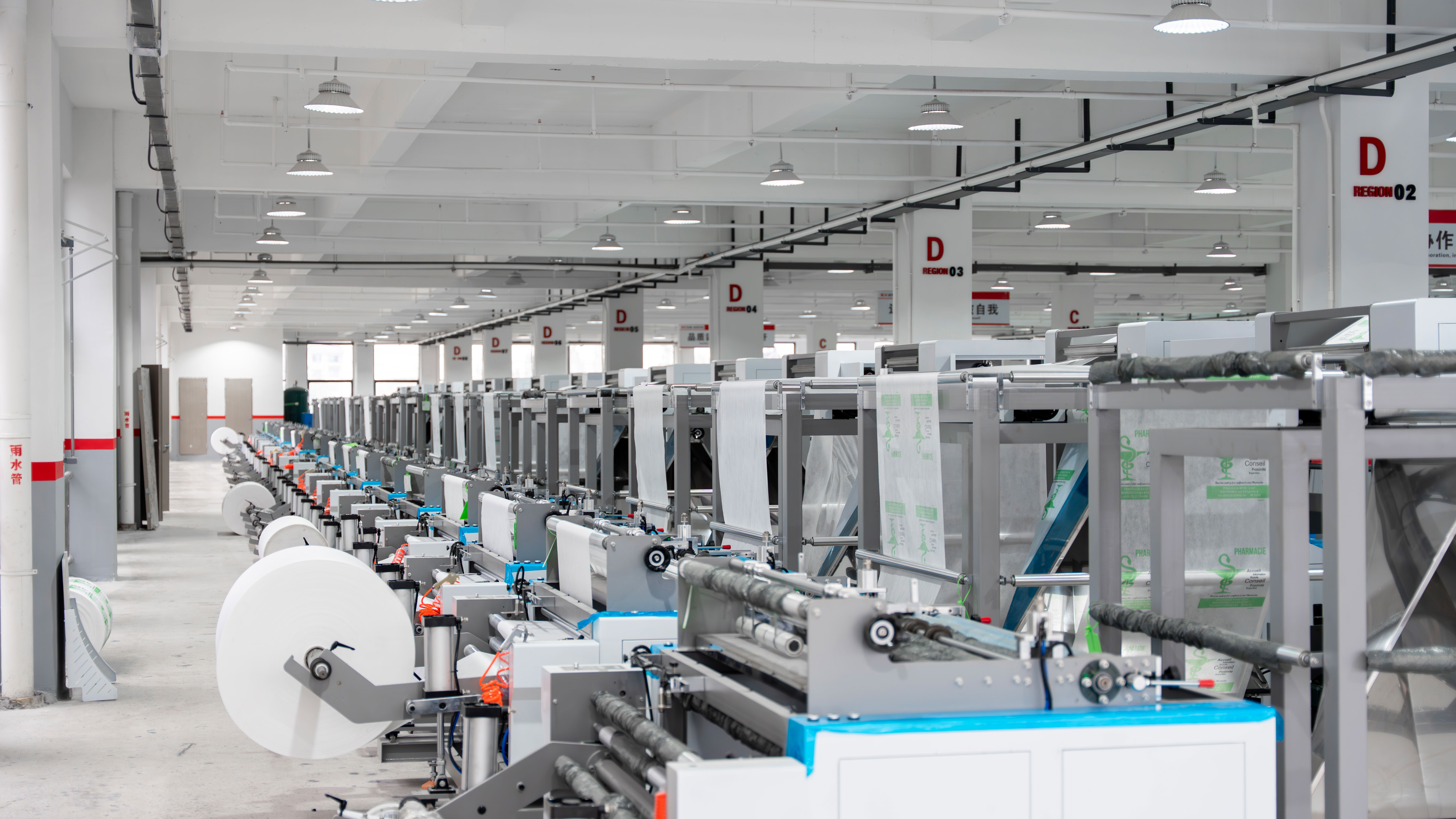
The pre-shipment test is the contractual acceptance point; the protocol behind it should be agreed before the crate is packed.
A workable acceptance protocol for a non woven bag making machine typically covers six items:
- Seal performance on the buyer’s material. Where logistics allow, ask for the pre-shipment test to run on fabric from the intended supplier, and have the pull-test result recorded rather than described.
- Dimensional check. Measure a sample of bags for length, width and gusset depth against the order specification, at more than one speed.
- Registration check, if printing is in scope. Confirm logo centring on printed material and record the recipe used.
- Documentation pack. Operation manual in English, electrical wiring diagram, PLC parameter settings, troubleshooting guide and the CE and ISO certificate copies.
- Recipe backup. A copy of the saved parameter set for each bag style tested, so the settings can be restored after any controller service.
- Spare parts and inspection. The recommended consumable kit, and — for buyers who want independent confirmation — a third-party pre-shipment inspection by SGS, Bureau Veritas or CCIC, which is arranged at the buyer’s request.
What fleet evidence does and does not establish
Reference deployments are useful for confirming that a platform is supported in the field and that multi-model supply works; they are not evidence that a seal will behave identically on a different fabric. The clearest example is a 42-unit Zhengxin fleet at an Indonesian non-woven bag group, built since 2018 across five models — ZX-LT500, ZXL-E700, ZXL-A700, ZXH-A1200 and ZXL-G700 — covering retail shopping bags, printed promotional bags, food-grade takeaway packaging and garment dust covers for domestic supply and regional export. A Brazilian packaging supplier runs six units across four bag types from the same supplier base, and a promotional bag producer in Mwanza has run a ZXL-A700Ultra with a four-colour printer since 2024, handling more than ten custom orders a week with different artwork.
What these deployments support is a procurement conclusion: one supplier covering several models simplifies training, spare-parts interchangeability and service access. What they do not support is a claim that any given seal setting transfers between factories. That still has to be established on the buyer’s own fabric, with the buyer’s own operators, at the buyer’s own line speed.
Outlook: what the next buying decision will be measured on
The direction inside Zhengxin’s own range is indicative of where buyer scrutiny is moving. Servo-driven no-waste-edge technology on the Ultra series addresses material cost, not only sealing; the high-speed A800 and E800 platforms are engineered for 24/7 continuous production rather than 8–16 hour shifts, with reinforced frames, enhanced cooling on servo drives and ultrasonic generators, and automated lubrication. For a buyer, that shifts the evaluation question from “which machine seals well” to “which machine holds its seal settings across a long duty cycle with the material I can actually source”.
The practical answer for a first or replacement purchase remains unglamorous: specify the material band and handle configuration in writing, prepare the floor, power and air before the crate arrives, save a recipe for every style, and hold the pre-shipment test and the pull test to the same standard. Weak seals are rarely a mystery once those four things are in place.
FAQ
What fabric weights can a ZXL non woven bag making machine run?
Zhengxin’s customization scope lists PP spunbond non-woven, laminated non-woven and biodegradable fabric across a 30–150 g/m² range, together with configurable bag size, bag style, sealing method and handle type. Working settings change across that band: ultrasonic amplitude guidance runs 60–70% for 50–60 g/m², 75–85% for 70–90 g/m² and 90–100% for 100–150 g/m², and 100–120 g/m² fabric typically runs 10–15% slower than 70 g/m². Commercial fabric carries roughly ±5% weight tolerance, so the configured band for a specific model and sealing module should be confirmed on the technical sheet before ordering.
What causes weak or inconsistent seals, and which check comes first?
Three checks cover most cases, in this order: clean the ultrasonic horn and anvil with isopropyl alcohol and a lint-free cloth; verify with a feeler gauge that the horn-to-anvil gap is even across the full horn width, at roughly 0.3–0.5 mm for 70 g/m² fabric and even within 0.05 mm; and confirm that amplitude and speed match the fabric weight, since raising speed shortens weld contact time. If those three are correct, check that air pressure holds 0.6–0.8 MPa through the weld cycle, test a roll from a different fabric batch, and inspect the horn for surface pitting — a worn horn is replaced rather than re-tuned. Verify any adjustment with 20 test bags and five pull tests; a correct weld tears the fabric instead of peeling apart.
Can we install the machine ourselves, or do we need an engineer on site?
Most installations are completed by the buyer’s team with remote video guidance, in which an engineer directs each step through a phone camera; more than 90% of Zhengxin installations are completed this way. The site needs one to two people with basic mechanical aptitude, a spirit level, a metric wrench set, screwdrivers, a multimeter and a crane or forklift for a machine weighing 1,200–2,500 kg, plus a level floor, a verified three-phase supply, an operating compressor with dryer and tank, and one to two tonnes of fabric on site. A standard single-machine installation takes one to two working days, with multi-machine lines taking three to five. On-site engineer dispatch remains available at USD 100 per day plus airfare and accommodation where remote support is insufficient.
How many operators does a fully automatic non woven bag making machine need?
One operator per line is the normal configuration for a fully automatic machine, and commissioning assumes one to two operators are available for training during installation. Training is hands-on and typically takes two to three hours under supervision, with the handover point defined as the operator being able to produce quality bags at production speed independently. Daily care is short but consequential: roughly five to ten minutes per shift for cleaning fabric dust from rollers and photocell lenses, wiping the ultrasonic horn, and draining water from the compressor tank.
What are the standard purchasing terms and acceptance criteria?
Zhengxin quotes a minimum order quantity of one unit, FOB or CIF delivery terms, and payment of 30% deposit with 70% due before shipment. The stated acceptance criterion is a pre-shipment test, and the warranty covers major components for one year, alongside installation and commissioning services and on-site service by a professional team. Standard models are quoted at 25–35 working days of production with customization adding roughly 5–10 working days, and third-party pre-shipment inspection by SGS, Bureau Veritas or CCIC can be arranged at the buyer’s request.
Further reference
The full Zhengxin product and specification brochure is available for download: Zhengxin non woven bag making machine brochure (PDF). Company and model information is published by Zhejiang Zhengxin Machinery Co., Ltd., whose facilities in Wenzhou, Zhejiang hold ISO 9001:2015 certification and whose machines carry CE marking.
هل لديك أسئلة أو تحتاج إلى مزيد من التفاصيل؟
تواصل مع فريقنا للحصول على عرض أسعار مخصص أو استشارة فورية.
طلب عرض أسعار
املأ النموذج أدناه وسيتواصل معك فريقنا بعرض مقترح مخصص.
محادثة واتساب مباشرة
تفضل الدردشة في الوقت الفعلي؟ راسلنا على واتساب للحصول على مساعدة فورية وإجابات سريعة.
- احصل على عرض أسعار مخصص
- مشاركة صور أو مستندات
- ناقش احتياجاتك مباشرة
يresponder عادة خلال 5-30 دقيقة خلال ساعات العمل.