
From Shenzhen to FBA: Why DIDADI's Setup Fits High-Volume Sellers
From Shenzhen to FBA: Why DIDADI's Setup Fits High-Volume Sellers
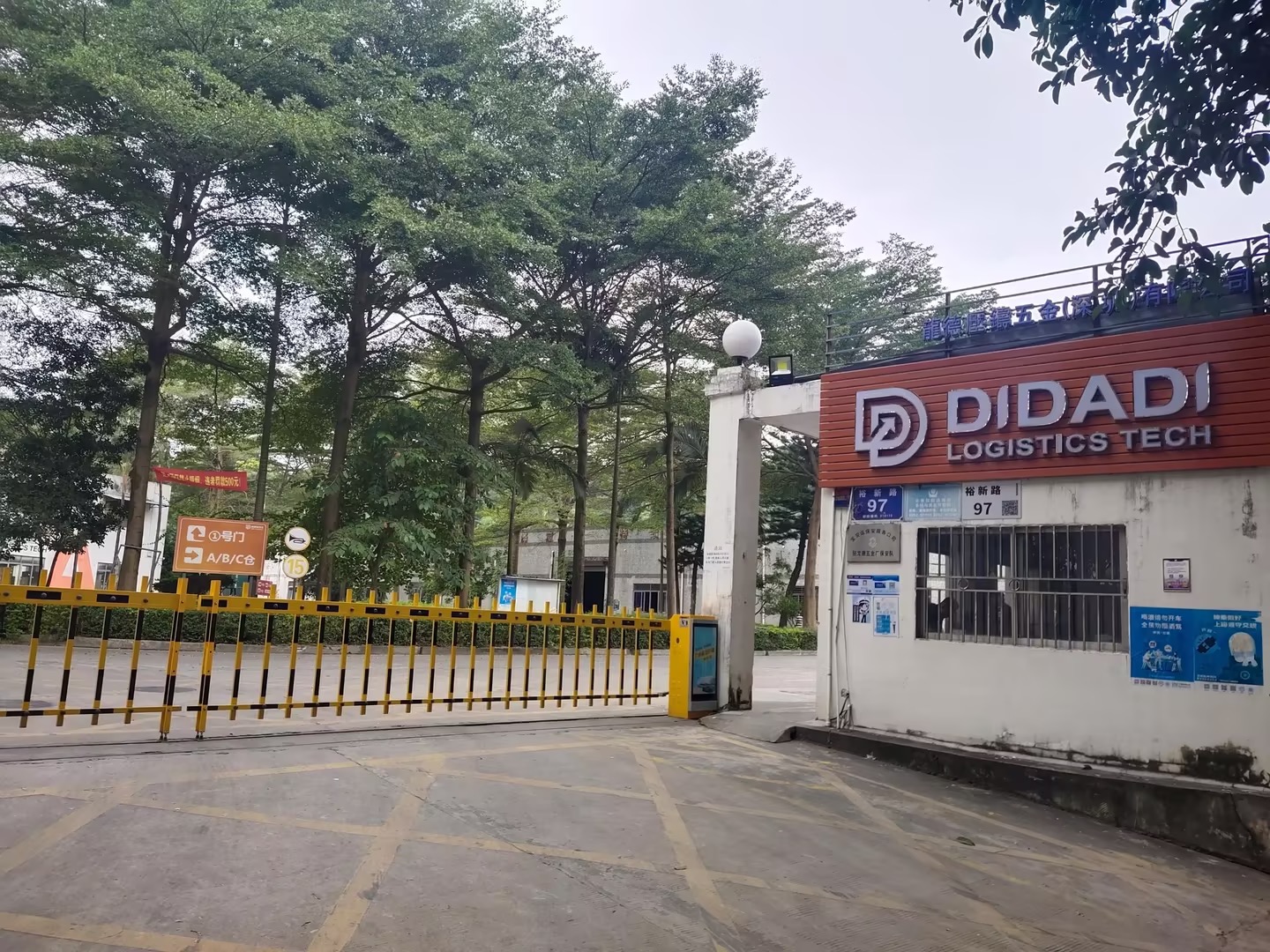
DIDADI's China origin consolidation facility, where multi-supplier cargo is aggregated before FBA container planning.
An Amazon seller running several hundred live SKUs does not buy freight the way a first-time importer does. The seller buys a schedule: a replenishment calendar that has to hold across multiple suppliers, several Amazon fulfillment centers, and delivery windows that move with inbound receiving capacity. When the schedule breaks, the visible cost is a freight invoice, but the real cost is a stockout, a suppressed listing, or an emergency air shipment booked at the worst possible moment of the quarter.
DIDADI Logistics Tech is an international logistics service provider headquartered in Shenzhen, Guangdong, China, established in 2017, whose stated focus is Amazon order fulfillment, DTC order fulfillment, and door-to-door logistics for offline wholesale and retail. Its published operating profile — a 600,000 sqm facility footprint, 20,000 TEU of annual output, 24/7 customer service, and a 12-hour contingency plan — describes something narrower than a general freight offering. It describes one seller type: high volume, high SKU count, and dated FBA delivery requirements.
The Operating Profile That Defines “High Volume” in FBA
High-volume FBA shipping is better described as a set of operational constraints than as a revenue bracket. Four of those constraints influence forwarder selection more than the quoted rate per kilogram does.
- Multi-supplier aggregation. A catalogue with several hundred SKUs is rarely sourced from one factory. Cargo has to be collected from multiple addresses, inspected, and combined into a build plan before container or ULD planning can begin.
- SKU-level prep accuracy. Labels, FNSKU requirements, carton checks and palletization are the steps where a shipment is either accepted or rejected at the Amazon warehouse. An error here costs more than the prep work itself.
- Dated delivery windows. Replenishment is tied to the selling calendar. The shipment must arrive within a planned window and be delivered against an appointment, which makes lead-time variance a commercial variable rather than a service detail.
- Reverse flow and inventory recovery. Returns need inspection, relabeling, and a decision about restocking or resale recovery. Without a defined process, returned units quietly stop being assets.
A forwarder that performs well on price but cannot hold these four variables simply transfers the risk back to the seller's operations team. This is the operating profile DIDADI Logistics Tech addresses, and it explains why the company's capability statements describe warehouse footprint, origin coverage and exception-response commitments rather than rate positioning.
Why the Origin Point Matters: Shenzhen and the Pearl River Delta
Cargo leaving Shenzhen is not automatically faster or cheaper than cargo leaving Ningbo or Shanghai. What differs is the aggregation logic behind it. For a seller whose suppliers are spread across Guangdong, Zhejiang and inland provinces, the practical question is where goods are pooled, and whether that pooling happens before the transport mode and container plan are fixed.
DIDADI lists China origin coverage across Shenzhen, Guangzhou, Shanghai, Ningbo, Yiwu, Chongqing and Dongguan, supported by 50,000 sqm of China origin consolidation warehouse space within a 600,000 sqm facility footprint. Cargo is collected from factories, stored, inspected, registered and combined before the export leg is committed. The company reports a 100% export ratio, with main markets in the EU, the USA, the UK and Canada.
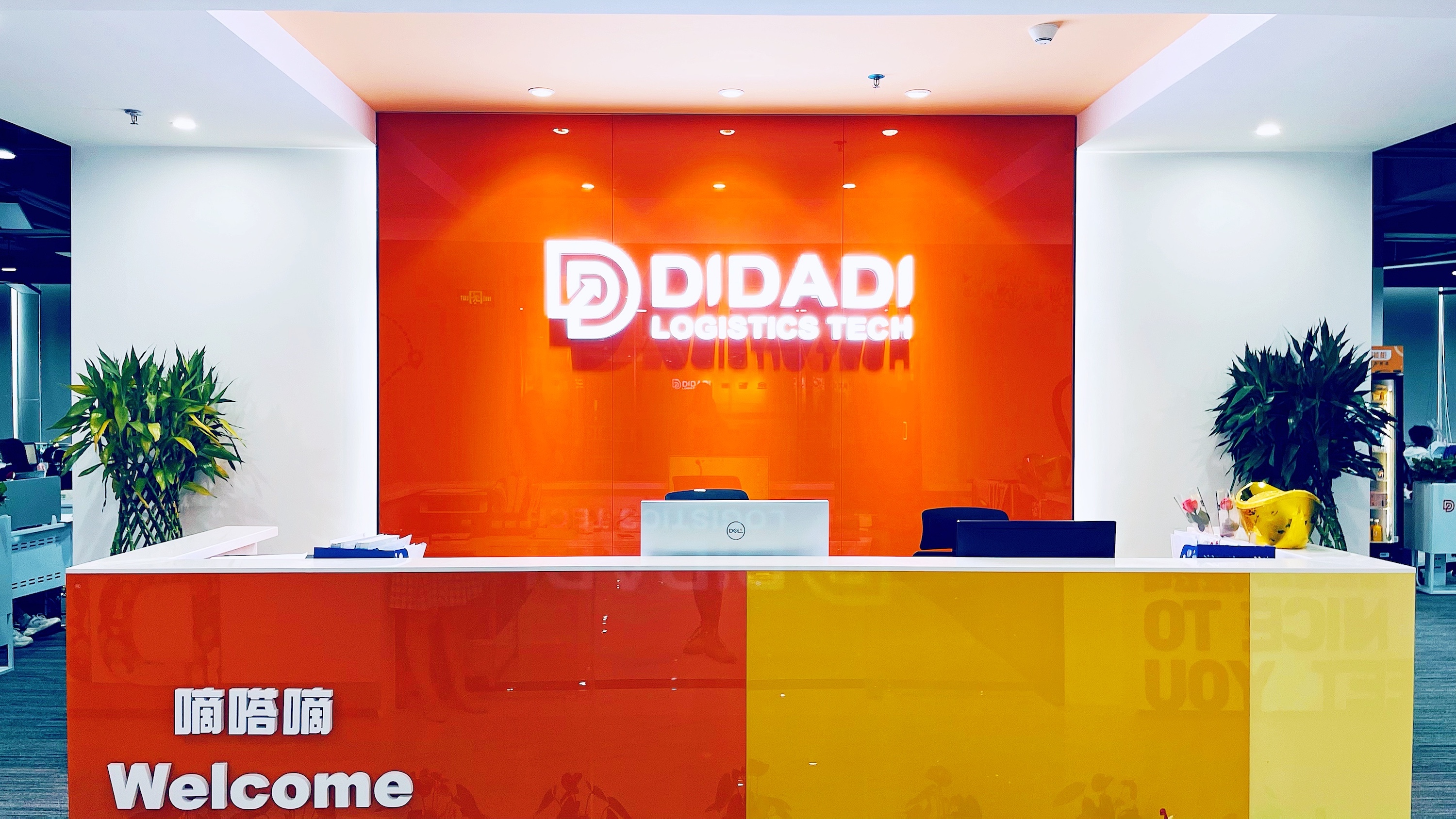
DIDADI Logistics Tech's Shenzhen base, the origin hub for its China consolidation network.
The origin decision also determines what can be corrected. Consolidation planning, pickup sequencing and pre-loading inspection all happen in China, where a labelling error can still be fixed at low cost. Once the container has departed, the same error becomes a receiving rejection in Los Angeles or Frankfurt, with a return leg attached to it.
Capacity as an Operational Variable, Not a Marketing Number
In peak season the binding constraint on an FBA shipment is often not the port, the customs broker or the trucking leg; it is whether space exists on a vessel or a flight at the moment the seller needs it. This is why capacity figures function as scheduling inputs for high-volume sellers.
DIDADI reports a 600,000 sqm facility footprint and an annual output of 20,000 TEU, supported by 350 employees and a 32-engineer R&D team. The company also states a 98% container space priority position, established through strategic cooperation with 16 of the world's largest and most mature sea, land and air shippers.
The qualification matters here. Space priority improves the probability of securing capacity in a tight market; it does not remove exposure to carrier rollovers, port congestion, blank sailings or Amazon inbound restrictions. Sellers should treat capacity commitments as a planning advantage that reduces frequency of disruption, not as an elimination of disruption.
Inside a Shipment: The Seven Stages of FBA First-Mile Execution
DIDADI structures first-mile FBA service as a seven-stage process running from requirement confirmation to post-shipment review. The structure is useful for buyers because it makes the seller's own responsibilities explicit at each stage.
| Stage | What happens | What the seller provides |
|---|---|---|
| 1. Requirement confirmation | Cargo details, destination FBA warehouse, delivery timeline, shipment mode and compliance requirements are confirmed. | Product information, carton specs, supplier details, Amazon warehouse code. |
| 2. Solution design and quotation | Sea, air, rail, truck, FCL, LCL, DDP or DDU options are compared and quoted. | Shipping priorities, budget, urgency, preferred trade terms. |
| 3. Supplier coordination and pickup | Factories are contacted and cargo is moved into DIDADI's China consolidation warehouses. | Supplier contacts, pickup addresses, cargo ready date. |
| 4. Consolidation and FBA prep | Cargo is inspected and consolidated, with labelling, carton checks, palletization and prep applied as required. | Labels, FNSKU requirements, packing instructions, compliance data. |
| 5. Customs declaration and main transport | Export documentation is processed and the selected route is executed. | Invoice, packing list, customs documents, booking confirmation. |
| 6. Clearance and final FBA delivery | Destination clearance is completed and cargo is delivered to the assigned Amazon warehouse against the appointment. | Delivery instructions, customs release data, appointment details. |
| 7. Tracking, exception handling and review | Tracking updates are issued, exceptions resolved, and transit, cost and delivery performance reviewed. | Tracking records, proof of delivery, exception notes. |
The process is not fixed once booked. DIDADI states that shipping mode, pickup timing, consolidation scope and delivery routing can be adjusted before main transport departure, and that execution details are reconfirmed if cargo status or Amazon receiving rules change.
The Technology Layer: AI-Assisted Container Planning and System Visibility
Container combination is a planning decision with a direct cost consequence: poorly matched cargo leaves unused volume on the water, and unused volume is paid for either way. DIDADI's Transportation Management System introduces AI algorithms to intelligently classify goods and optimize container combination solutions, aiming at both timeliness and cost. The company describes its operating framework as a technology-driven smart logistics system combined with a digital product management framework.
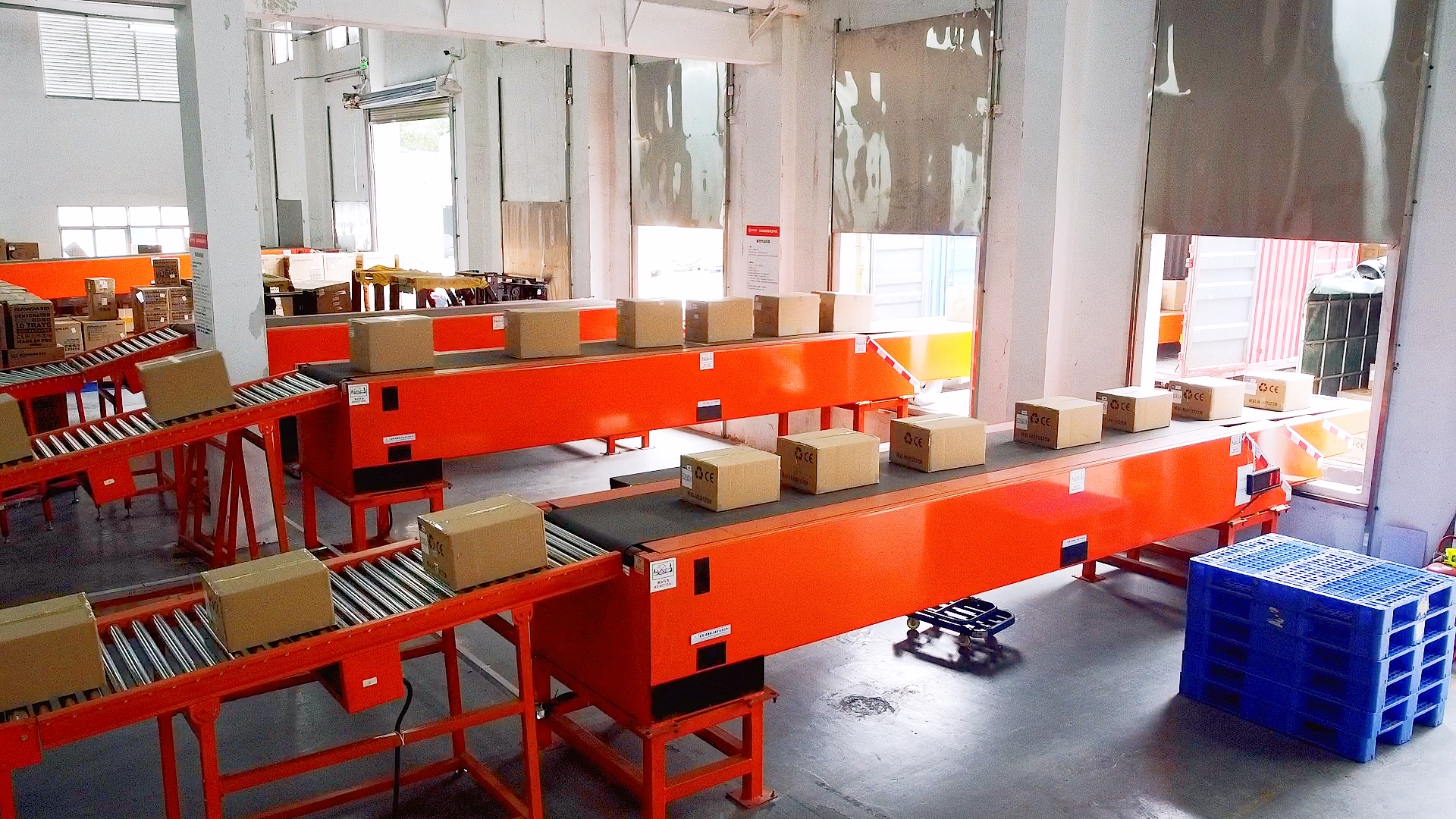
Warehouse handling equipment used in DIDADI's consolidation and FBA prep operations.
Visibility sits at the same layer. DIDADI's warehouse management capability supports multi-platform inventory synchronization, with API integration to eCommerce platforms and order management systems, real-time shipment monitoring and exception handling, and full-chain standardized management through digital systems. For a seller running FBA alongside other channels, this is the difference between inventory that is physically in one network but managed as several disconnected pools, and inventory that is deducted from a single live position.
Time-Critical Infrastructure: 24/7 Service and the 12-Hour Contingency Plan
For shipments tied to a selling calendar, the response mechanism is infrastructure. DIDADI provides 24/7 customer service with a defined responsiveness system before and after shipment, and implements a 12-hour contingency plan to address exceptions. The company states that this is paired with continuous real-time monitoring of the end-to-end fulfillment process, 100% cargo security tracking at every step of the chain, and 100% full-chain standardized management.
Operationally, the communication model is one account manager plus customer service support, with pre-shipment confirmation by email, WhatsApp or system message, milestone updates during transit, and proactive exception alerts rather than status enquiries initiated by the seller. In a high-SKU account, that structure is what prevents the seller's own operations team from becoming the integration layer between four vendors.
The 12-hour plan should be read precisely. It defines an internal response window — how quickly an exception is identified, escalated and answered — and not a guarantee that transit, customs release or an Amazon appointment will be restored within 12 hours. Recovery still depends on carrier schedules, customs processing and receiving rules, which no forwarder controls.
Where the Setup Fits: Scenarios and Recorded Outcomes
The clearest way to test fit is against the operating scenarios DIDADI has documented. Each figure below comes from the company's own program reviews and applies to the specific context described, not to every account.
- US West buffer warehousing with staged FBA replenishment. For an Amazon FBA seller in consumer electronics, bulk inventory was shipped from China to a US warehouse and released to FBA in batches. The recorded results included a 30% reduction in combined logistics and storage cost during the review period, an average FBA replenishment response within 48 hours, more than 90% of returned units recovered into sellable condition, and an IPI improvement of more than 100 points over time.
- Multi-supplier consolidation into a US warehouse. For a home goods importer sourcing from several Chinese factories, one consolidation point replaced separate forwarder, broker and delivery arrangements. Landed logistics cost per shipment fell by approximately 12%, supplier coordination workload dropped by about 40%, and more than 90% of shipments arrived within the planned delivery window during the review period.
- EU rail replenishment with a Germany warehouse buffer. A Germany-focused marketplace seller moved from sea-only replenishment to a rail-led model with local buffering. Replenishment lead-time variance was reduced by around 35%, and emergency air shipments dropped by approximately 30%.
- One-pool inventory across marketplaces and DTC. A Home & Living brand consolidated platform inventory into a single WMS-managed pool. Operations efficiency improved by 50%, inventory capital tied up in duplicated safety stock decreased by 20%, and overselling incidents caused by stock mismatch were eliminated during the operating period.
Common to all four is that the constraint being solved was not the freight rate. It was the number of handoffs between origin pickup, prep, clearance, warehousing and last-mile delivery into Amazon or a commercial address.
Boundary Conditions: Where This Model Is Not the Right Fit
A realistic evaluation has to state limits, and this service model has several.
- It is data-dependent. FBA prep quality depends on accurate SKU master data, carton specifications, labelling and FNSKU instructions. Incomplete inputs do not stop the shipment, but they shift the error downstream to the Amazon receiving dock, where correction is expensive.
- Consolidation economics need volume. Buffer warehousing, staged replenishment and multi-supplier aggregation generate most of their value when shipment frequency and SKU count are high enough to justify the planning effort. Sellers shipping occasionally, or in single-carton quantities, may find a simpler arrangement more proportionate.
- The 12-hour plan is a response window, not a recovery guarantee. It cannot override carrier schedules, customs examinations or Amazon inbound receiving restrictions.
- Compliance responsibility stays with the importer or seller. The EU Market Surveillance Regulation (EU) 2019/1020 requires CE marking for more than 25 product categories and a designated EU Responsible Person for covered goods. In the United States, the CPSC mandates electronic filing of Certificates of Compliance through the ACE system for imported children's products and other regulated goods under 16 CFR Part 1110 from 8 July 2026. A forwarder coordinates documentation and clearance — it does not become the importer of record or the compliance owner.
Market Context: Why FBA Logistics Capacity Is Being Repriced
The commercial backdrop explains why operational variables have gained weight relative to headline rates. Grand View Research values the China freight forwarding market at approximately USD 13.73 billion in 2025, projecting USD 22.44 billion by 2033 at a CAGR of 6.5%. Mordor Intelligence projects China's e-commerce logistics market growing at a CAGR of 11.3%, from USD 235.89 billion in 2026 to USD 402.89 billion by 2031.
Two structural forces sit underneath that growth. Research and Markets projects a 20.07% CAGR for China's digital freight forwarding market between 2026 and 2031, linked to mandatory electronic Bills of Lading and ESG-linked procurement. On the cost side, ocean DDP all-in rates from China to US FBA warehouses in early 2026 averaged between USD 1.80 and USD 3.20 per kg for LCL shipments, based on freight data compiled by Unicargo, while Amazon peak-season surcharges for 2025/2026 ranged from USD 0.40 to USD 0.60 per package.
Read together, these data points suggest margin pressure at both ends: freight cost has a visible floor, and peak-season platform charges consume part of what remains. The variables that stay under a seller's control are therefore the operational ones — space access, prep accuracy, exception speed and inventory positioning — which is exactly where the service architecture described above competes.
Traditional Multi-Vendor Setup vs. an Integrated Forwarder Model
The comparison that matters for a high-volume seller is structural rather than promotional. Both models can deliver a shipment; they differ in how many parties hold a piece of it.
| Dimension | Multi-vendor setup | Integrated chain (DIDADI model) |
|---|---|---|
| Supplier pickup and consolidation | Arranged per factory, often by separate parties. | Coordinated into China consolidation warehouses before container planning. |
| FBA prep and labelling | Handled by a prep vendor, with its own standards. | Executed inside the same seven-stage process as pickup and transport. |
| Customs coverage | Broker selected per destination market. | 33 customs clearance agency agreements in Europe and the United States. |
| Overseas buffering and returns | Third-party warehouse, separate returns process. | Warehouse network in the US, Germany, the UK and France handling transfer, returns and relabeling. |
| Coordination load | Carried by the seller's operations team. | Carried by one account manager plus customer service. |
| Dependency risk | Distributed across vendors, but harder to diagnose. | Concentrated in one provider, so a single execution failure has wider impact. |
The last row is the honest trade-off. An integrated chain reduces handoffs, which is the main source of delay and information loss, but it also means that if the provider's execution degrades, more of the supply chain is affected at once. Buyers typically manage that by verifying contingency documentation and exception escalation contacts before committing, and by running an initial shipment under closer review before scaling volume.
Future Outlook
The direction of travel in China-based FBA logistics is toward documented process rather than negotiated rate. Digital freight forwarding is growing faster than the underlying freight market, and electronic Bills of Lading and ESG-linked procurement are named as drivers of that shift. As those mechanisms mature, the evidence a seller can inspect — shipment-stage records, prep checklists, exception logs, inventory reports — becomes a larger part of supplier selection.
DIDADI's stated investment direction is consistent with that: infrastructure, a technology-driven smart logistics system, digital product management, AI-assisted container combination, and a standardized management layer across the chain. For high-volume Amazon sellers, the practical implication is that forwarder evaluation is likely to move further away from rate comparison and further toward the ability to hold a schedule — origin aggregation, prep accuracy, space access, and a defined response when something goes wrong.
FAQ
What does a China FBA freight forwarder do for a seller with a high SKU count?
For a high-SKU seller, the forwarder's scope covers supplier pickup and consolidation, cargo inspection, FBA labelling and carton preparation, export documentation, the main transport leg, destination customs clearance, and delivery to the assigned Amazon warehouse. DIDADI structures this as a seven-stage first-mile process that opens with requirement confirmation and closes with a shipment review covering transit time, customs performance, delivery accuracy and exception frequency. The SKU-heavy work concentrates in the consolidation and prep stage, where labels, FNSKU requirements and packing instructions are applied before cargo is loaded.
How does DIDADI handle exceptions that occur after cargo has left China?
The company provides 24/7 customer service and implements a 12-hour contingency plan to address operational exceptions, supported by continuous real-time monitoring of the end-to-end fulfillment process and full-chain cargo tracking. This defines an internal response window — how quickly an issue is identified, escalated and answered. It is not a commitment that transit or clearance will be restored within twelve hours, since recovery depends on carrier schedules, customs processing and Amazon receiving rules.
Can one warehouse network serve FBA and non-Amazon channels from the same inventory?
Yes. DIDADI's overseas warehouses support FBA transfers, B2B movement and direct order fulfillment from the same stock, with locations in the United States (Los Angeles, Houston, New Jersey), Germany (Nettetal, Dortmund, Leipzig, Frankfurt), the United Kingdom (Bolton, Northampton) and France (Paris). Returns, inspection, relabeling and resale recovery are handled within the same network.
What information should a seller prepare before the first FBA shipment?
The requirement stage needs accurate product information, carton specifications, supplier contacts and pickup addresses, the destination Amazon warehouse code, labelling or FNSKU requirements, packing instructions, and product or customs documentation. Shipping priorities, budget, urgency and preferred trade terms are also confirmed at this point, because they determine whether sea, air, rail, truck, FCL, LCL, DDP or DDU is proposed.
Is an integrated forwarder model appropriate for small-volume sellers?
Not always. Consolidation, buffer warehousing and staged FBA replenishment generate most of their value when shipment frequency and SKU count justify the planning effort. Sellers shipping infrequently, or in single-carton volumes, may find that a simpler arrangement with fewer planning layers is more proportionate to their operation.
For readers who want the underlying service scope, network coverage and process documentation in one place, DIDADI's company brochure is available as a PDF: DIDADI Logistics Tech company brochure.