
From Spot Buying to Strategic Supply: A Ceramic Grinding Wheel Framework
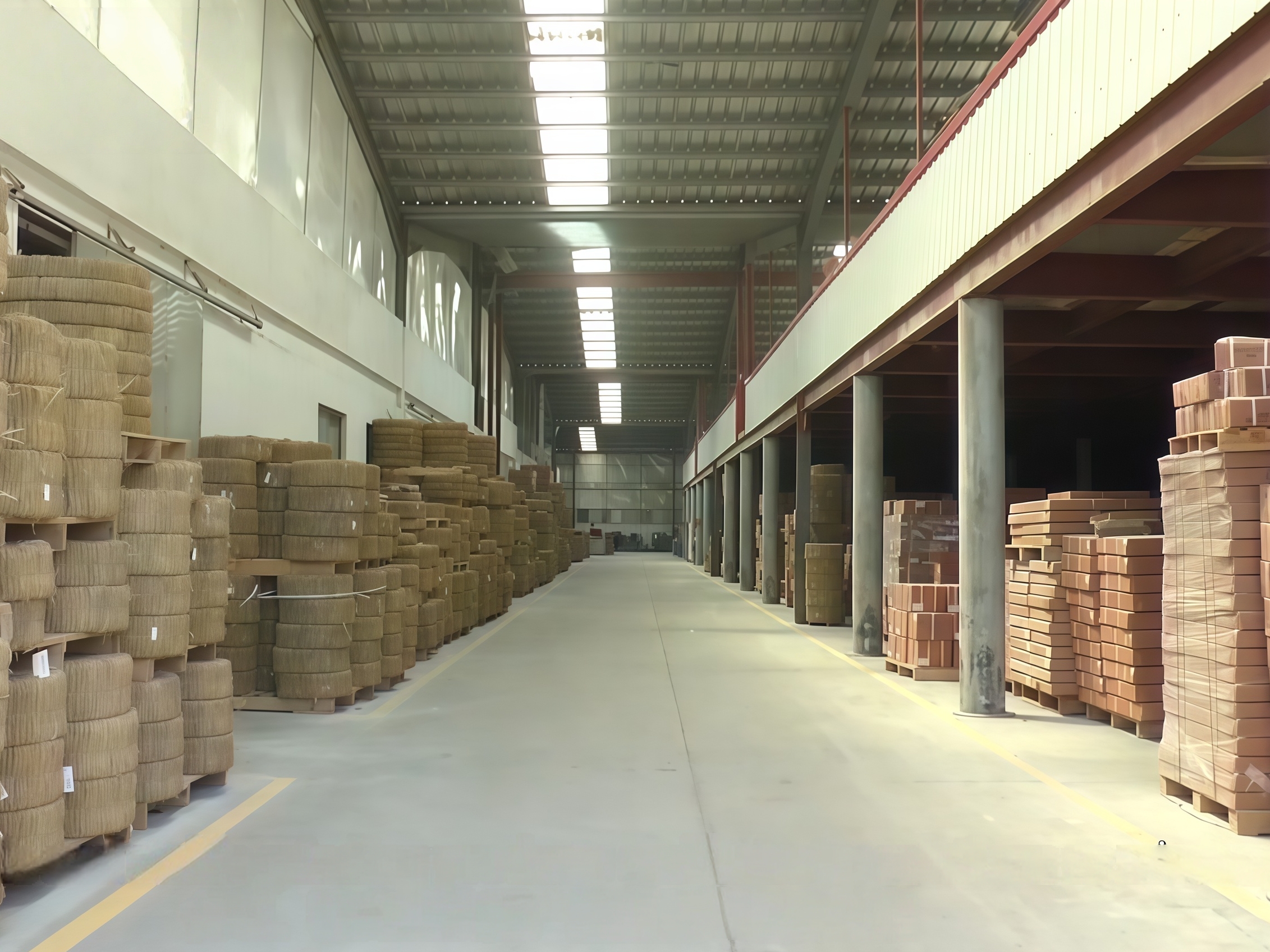
Finished goods warehouse — a visible indicator of a supplier’s ability to maintain buffer stock and manage delivery continuity.
For industrial buyers, the decision to qualify a ceramic grinding wheel supplier is no longer just about sample quality and price. As production schedules tighten and abrasive consumption becomes more predictable, the practical question shifts from “which wheel works?” to “which supplier can sustain supply for the next two to five years?”
The global grinding wheels market was valued at US$ 8.71 billion in 2024 and is projected to grow at a compound annual growth rate (CAGR) of 4.5% through 2030 (Grand View Research). Within this market, vitrified bond — also called ceramic bond — grinding wheels accounted for the largest segment share at 38.4% in 2025 (Dataintelo). Brown Fused Alumina (BFA), the dominant abrasive grain used in many ceramic wheels, held 52.4% of the global fused alumina market in 2025. These data points explain why ceramic grinding wheel sourcing has become a structured procurement exercise rather than a spot-purchase decision.
This article is written for procurement managers, plant engineers, and distributors who have already shortlisted suppliers and are now evaluating them for long-term supply. It provides a decision-stage framework: what to verify, what to expect, and where the practical limits of a supplier relationship lie.
The Real Cost of an Unstable Grinding Wheel Supply
Ceramic (vitrified bond) grinding wheels are a process-critical item in metalworking, bearing manufacturing, gear grinding, roll grinding, and many other precision operations. When a wheel line is interrupted, the impact is not limited to the value of one rejected delivery. The associated costs include re-qualification of a new supplier, trial batches, production-line downtime, and potential scrap of workpieces processed with questionable wheels.
Five supply risks are particularly relevant for long-term buyers:
- Batch-to-batch consistency: Wheels produced with uncontrolled raw-material variation can alter grinding performance without visible change to the label.
- Capacity constraints: A supplier without sufficient production headroom will extend lead times during high-demand periods.
- Delayed shipments: Late delivery of a grinding wheel can idle an entire grinding cell.
- Transit damage: Vitrified wheels are fragile; poor packaging leads to breakage and replacement disputes.
- Compliance drift: In markets such as the U.S. and the European Union, safety standards — ANSI B7.1 and EN 12413 respectively — define safe use conditions for abrasive wheels. A supplier that fails to keep up with marking and safety documentation creates customs and liability risk.
The opportunity is equally clear. A supplier with verifiable production capacity, documented quality control, and a stable product line can remove much of this uncertainty. For buyers with regular demand, a framework-style relationship — a monthly schedule or a rolling forecast with a defined MOQ and lead time — creates a level of predictability that spot buying cannot match.
Assessing a Supplier’s Long-Term Supply Capability
One useful reference case is Shandong Xinfa Abrasives & Grinding Tools Co., Ltd, a Chinese manufacturer that has specialized in vitrified bond grinding wheels since 1989. Xinfa is a member of the China Abrasives Association, and its quality management system is certified under ISO9001:2008. Its technology research and development center was recognized as a municipal-level enterprise technology R&D center in 2015, with an R&D team of six engineers.
For long-term supply evaluation, several structural facts are relevant. The company operates a 30,000 m² factory in Linyi, Shandong Province, with about 120 employees and an annual production capacity of over 10,000 tons. Monthly production capacity is approximately 900 tons. The minimum order quantity for ceramic bonded grinding wheels is 2 tons, and typical production lead time is 30–45 days.
Xinfa’s product scope covers not only the finished wheels but also the upstream abrasive grain. The company produces Brown Fused Alumina (BFA) abrasive, which it uses in a broad range of wheels: general purpose grinding wheels, bench grinder wheels, tool grinding wheels, flat surface grinding wheels, centerless grinding wheels, cylindrical grinding wheels, crankshaft and camshaft grinding wheels, saw tooth grinding wheels, bearing grinding wheels, worm grinding wheels, gear grinding wheels, needle grinding wheels, roll grinding wheels (V and B types), internal bore grinding wheels, oilstones, segments, resin bonded snagging grinding wheels, rubber control and centerless wheels, flap discs, and mounted points. For a buyer consolidating several SKUs, the ability to source multiple wheel types from one manufacturer is a practical logistics and qualification advantage.
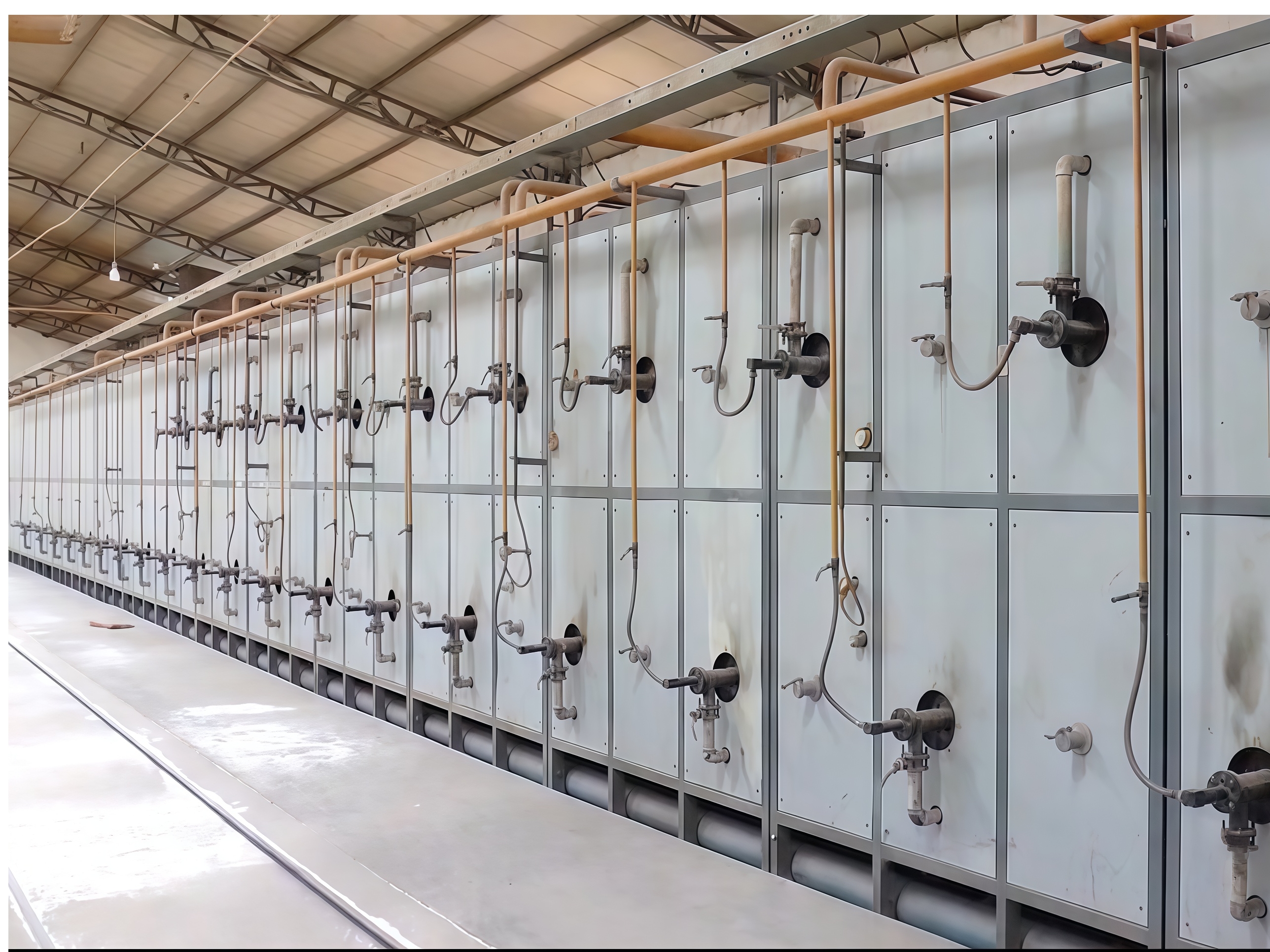
Kiln firing is a critical step in vitrified wheel production. Stable temperature control directly affects bond strength and wheel consistency.
Geographic location also supports export reliability. Xinfa is located in Linyi’s national logistics center, approximately 180 km from Qingdao Port and 60 km from Rizhao Port, reducing inland transport time for export cargo. Its export ratio is about 35%, with main markets in Southeast Asia, the Middle East, India, South Korea, Japan, Europe, the United States, and Brazil.
Technical Parameters That Define Long-Term Consistency
Ceramic grinding wheel quality is determined during production. The key parameters that a buyer should see documented in specifications are:
| Parameter | Typical Range (Xinfa) | Sourcing Implication |
|---|---|---|
| Wheel diameter | 150–1100 mm | Must match the grinding machine’s spindle and guard capacity. |
| Thickness | 3–300 mm | Determines wheel rigidity and the number of parts per dressing cycle. |
| Hole size | 12.7–305 mm | Flange and mounting compatibility check required before ordering. |
| Abrasive type | A, WA, AA, 38A, PA, 25A, SA, MA, GC, C, RA, DA, 9A, 64A, 55A | Each abrasive suits specific workpiece materials; consistency of grain quality affects removal rate and finish. |
| Grit number | F16 – F120 | Coarse grits for heavy stock removal; fine grits for precision finishing. |
| Hardness grade | G – Y | Hardness must be matched to the material being ground; an incorrect grade leads to premature wear or burn. |
| Structure number | 0–14 | Open structures allow chip clearance and coolant flow; dense structures improve edge holding. |
| Max operating speed | 20, 25, 32, 35, 40, 45, 50, 60, 70 m/s | Must be compatible with machine spindle speed and safety requirements. |
An example of an ISO 525-compliant wheel marking from Xinfa’s standard range is 1 – 350 × 100 × 127 A 60 N 5 V 35 m/s. In this designation: “1” is the wheel shape type; “350 × 100 × 127” indicates outer diameter, thickness, and bore; “A” denotes brown fused alumina abrasive; “60” is the grit size; “N” is the hardness grade; “5” is the structure number; “V” identifies the vitrified bond; and “35 m/s” is the maximum operating speed. This kind of standardized marking is important for traceability and for compliance with bonded abrasive marking rules under ISO 525.
Quality assurance is another dimension of long-term reliability. Xinfa states that its quality control follows 100% testing standards, and buyers can arrange pre-shipment inspection before payment of the balance. The company’s in-house R&D team — six engineers working within a municipal-level enterprise technology center — supports both new product development and adjustments to existing wheel formulations. For OEM/ODM buyers, this technical capacity is often the difference between a custom wheel that meets specification and one that requires repeated trial-and-error.
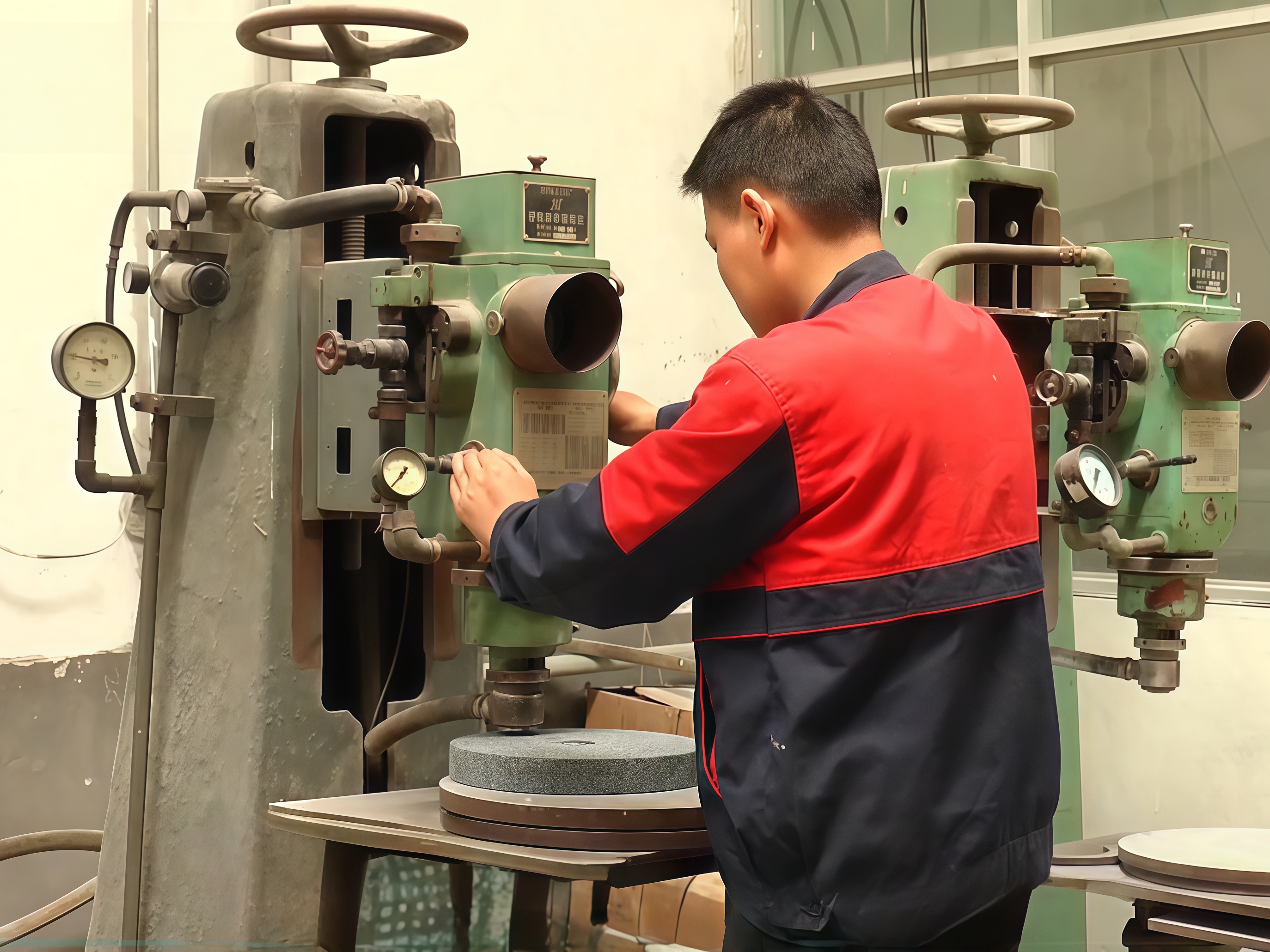
Quality inspection is part of the manufacturing workflow, not an isolated batch check.
How Long-Term Buyers Use These Parameters
Long-term supply arrangements for ceramic grinding wheels typically fall into three patterns:
1. Monthly schedule agreements
Manufacturing plants with a known monthly abrasive consumption can place rolling orders based on a 30–45 day lead time. With Xinfa’s MOQ of 2 tons, a mid-sized plant consuming several tons of wheels per quarter can negotiate a predictable schedule. The key is to combine SKUs on the same order, since the 2-ton threshold can be reached by mixing wheel sizes, grits, and hardness grades rather than ordering 2 tons of a single specification.
2. Distributor and reseller replenishment
Distributors need certainty on delivery timing, not just on day one but for repeat cycles. A manufacturer with 900 tons per month of capacity and a 10,000-ton annual ceiling has enough headroom to allocate production slots to distributors. In export trade, FOB, CIF, and CNF delivery terms give distributors flexibility in controlling freight and customs clearance.
3. OEM/ODM projects
Custom wheels — for example a crankshaft grinding wheel, gear grinding wheel, or saw tooth grinding wheel with specific dimensions and hardness — require the manufacturer to adapt formulations. Xinfa’s R&D structure, formalized in 2015 with the municipal-level enterprise technology center designation, is a structural indicator that custom projects will receive engineering attention rather than being treated as one-off orders.
Market Context: Why Supply Stability Matters More in 2026
Three verified market signals underpin the growing importance of long-term ceramic grinding wheel supply relationships.
First, the overall market is expanding at a steady pace. Global grinding wheel demand reached US$ 8.71 billion in 2024 and is projected to grow at 4.5% CAGR through 2030 (Grand View Research). This sustained growth means production capacity is being absorbed by both new demand and replacement supply.
Second, ceramic-bonded wheels are the largest segment. Vitrified bond wheels accounted for 38.4% of the grinding wheel market in 2025 (Dataintelo), confirming that ceramic bond technology is not a niche — it is the mainstream choice for precision and high-production grinding.
Third, raw material supply is concentrated. Brown Fused Alumina held a 52.4% share of the global fused alumina market in 2025 (Dataintelo). Since BFA is the core abrasive for many general-purpose ceramic wheels, suppliers with upstream BFA production, such as Xinfa, carry a structural cost and supply-security advantage. China’s exports of natural or artificial abrasive powder or grain (HS 680530) reached USD 120.9 million in 2024 (World Bank-WITS), indicating the scale of China’s participation in the global abrasive material trade.
On the competitive side, the global landscape is still led by major manufacturers such as Saint-Gobain (Norton), 3M (Cubitron II), Tyrolit, and Klingspor. Mid-size Chinese manufacturers occupy a different position in the market: they are not replacing the global leaders in premium-branded segments, but they are increasingly relevant for buyers who need industrial-grade quality at a defined cost level, and who want a direct relationship with the producing factory.
Long-Term Partnership vs. Traditional Spot Sourcing
The traditional approach to buying ceramic grinding wheels in many plants is spot sourcing: issue a request for quotation (RFQ), compare prices, order the lowest bid, then repeat the cycle for the next purchase. This approach has one clear advantage — flexibility — but it also carries a set of costs that are often underestimated:
- Re-qualification overhead: Every new supplier requires samples, application tests, and documentation review.
- Inconsistent performance: Two suppliers with the same wheel marking can behave differently on the same machine because of differences in raw materials and firing processes.
- No capacity priority: A spot buyer has no claim on production slots when the manufacturer’s order book is full.
- Weak post-sale support: A supplier that won a one-off order has limited incentive to invest time in solving an application problem after delivery.
A long-term framework does not eliminate all of these issues, but it changes the incentive structure. A supplier with a monthly order commitment has a reason to maintain batch consistency, manage its furnace schedule around the buyer’s needs, and resolve complaints quickly. At the same time, buyers can negotiate paid inspection rights, define rework and compensation clauses, and build up a performance record over multiple deliveries.
Comparison signal: Supplier-side comparative data for ceramic-bonded wheels versus conventional grinding wheels indicates approximately 30% higher grinding efficiency, around 20% lower overall cost, and less frequent dressing requirements. For an industrial plant running multiple grinding cells, these differences compound over a multi-year procurement horizon.
There is also a real limitation that buyers should recognize. Long-term partnership does not mean a buyer should stop monitoring. A supplier’s production capacity may change, its financial position may weaken, or its quality discipline may slip if senior management changes. Responsible buyers should schedule a formal supplier performance review at least annually, including visits to the factory where feasible, review of inspection records, and verification of updated certifications. For very low-volume or highly specialized requirements, spot sourcing from a technical specialist remains a rational alternative to maintaining a framework contract.
Future Outlook for Ceramic Grinding Wheel Supply Chains
Looking ahead, three developments are likely to shape ceramic grinding wheel procurement. First, supply chain transparency — buyers will expect documented batch traceability from raw material to finished wheel. Second, regionalization — manufacturers close to major ports and logistics hubs will be better positioned to serve export markets with predictable transit times. Third, compliance depth — as safety standards such as ANSI B7.1 and EN 12413 evolve, the cost of compliance will separate structured manufacturers from trading companies.
For buyers, the practical implication is to build relationships with factories that have real production assets — kilns, quality inspection equipment, and R&D capacity — rather than with intermediaries that only re-invoice. The manufacturing capability is what ultimately provides supply security.
For reference, a downloadable company brochure with product scope and factory information is available here: Shandong Xinfa Abrasives & Grinding Tools Co., Ltd — Company Brochure (PDF).
Frequently Asked Questions on Long-Term Ceramic Grinding Wheel Sourcing
What is the minimum order quantity (MOQ) for ceramic grinding wheels from Xinfa?
The minimum order quantity is 2 tons per order. This quantity can be composed of multiple wheel specifications, allowing buyers to consolidate different sizes and grits into a single production cycle.
What is the typical production lead time for ceramic grinding wheel orders?
Typical production lead time is 30 to 45 days, based on a monthly production capacity of 900 tons. Buyers should add sea freight or air freight time on top of this depending on the delivery terms agreed (FOB, CIF, or CNF).
What certifications should a long-term ceramic grinding wheel supplier hold?
For a Chinese manufacturer, ISO9001 quality management certification is a baseline; Xinfa is certified under ISO9001:2008 and is a member of the China Abrasives Association. Product-level regulatory compliance includes ISO 525 for bonded abrasive designation and marking, ANSI B7.1 for the U.S. market, and EN 12413 for the European Union. Buyers should ask for the wheel marking convention and safety data documentation before finalizing a contract.
How can a buyer verify that a supplier will maintain batch-to-batch consistency?
Structural indicators include 100% testing standards, an in-house R&D team, and the presence of a quality inspection workshop in the production flow. Xinfa states that its quality control follows 100% testing standards, and the company permits pre-shipment inspection. For extended assurance, buyers can contract for inspection reports to accompany each shipment.
What are the common payment and delivery terms for export orders of ceramic grinding wheels?
The standard payment arrangement at Xinfa is 30% advance payment and 70% balance payment before shipment (30/70). Delivery terms commonly used include FOB, CIF, and CNF. Buyers may also request pre-shipment inspection as part of the acceptance procedure.
How is the fragility of ceramic grinding wheels handled during export transport?
Vitrified bond wheels are fragile products, and export packaging normally uses pallet reinforcement and shockproof cushioning to reduce transit breakage. Buyers shipping to remote destinations should confirm the packaging specification and, if needed, request additional protection for high-value or large-diameter wheels.