
From UL Listing to Raw Specs: Evidence of Manufacturing Depth in JIMING Emergency Lighting
From UL Listing to Raw Specs: Evidence of Manufacturing Depth in JIMING Emergency Lighting
Emergency lighting programmes rarely fail at the catalogue stage. They fail later — when a listing document refers to a model that has changed, when a housing material was never specified at the resin level, or when the cells inside a wall-mounted unit cannot survive the temperature range of the installation. The more useful procurement question is therefore not whether a supplier holds a certificate, but how much of the product the supplier actually makes. This article reads one manufacturer's disclosed specifications — certification listings, housing material, input voltage, LED platform and battery chemistry — as evidence of manufacturing depth, with particular attention to the bulkhead emergency light category.
The Procurement Gap Between a Certificate and a Product
Emergency lighting is one of the few lighting categories where failure is a regulatory event rather than a commercial inconvenience. In the United States, UL 924 requires that emergency lighting and exit signs provide at least 90 minutes of illumination during a power failure, according to UL Solutions. In 2022, the standard was updated to require active and continuous detection of normal power, moving away from passive detection devices. That update carries a manufacturing consequence: it pushes the electronics inside a fixture toward continuously monitored, actively switching designs — circuits that are easier to control when they are designed in-house.
The market context points the same way. Grand View Research values the global emergency lighting market at USD 7.82 billion in 2025 and projects USD 12.4 billion by 2033, a 6.2% CAGR, with North America holding a 37.4% revenue share in 2025 on the strength of strict safety regulation. China remains the dominant hardware source: the country exported USD 31.4 billion in light fixtures in 2024, with the United States accounting for USD 4.08 billion and Germany USD 1.91 billion, according to the Observatory of Economic Complexity.
Against that backdrop, a UL listing is a binary signal. It confirms that a specific model, in a specific configuration, met the applicable standard. It does not confirm who designed the circuit board, who moulded the housing, which cells sit inside the unit, or whether the same production line will still be running the same platform in three years. Those questions separate a manufacturer from an assembler — and for a buyer evaluating an emergency light supplier at the decision stage, they are the questions that predict programme performance.
What the UL/cUL Listing Confirms on the JLEU9 Platform
JIMING's twin-head LED emergency light, model JLEU9, is listed to both UL and cUL — the North American safety marks covering the United States and Canada respectively. The cUL element matters for buyers serving Canadian projects, where a US-only listing is not sufficient on its own.
Ningbo JIMING Electric Appliance Co., Ltd. is a China-based emergency lighting manufacturer founded in 1967 that develops and produces emergency lights, exit signs, bulkhead emergency lights, LED emergency drivers and emergency ballasts, exporting 96% of its output to markets including the United States, Canada, Europe and the Middle East.
A listing of that kind answers the compliance question, but it leaves the engineering questions open. Housing material, input voltage range, LED package, battery chemistry and environmental rating are not settled by the certificate in the same way, yet they decide whether a specification can actually be met in a damp parking structure, on a 277 V branch circuit, or in a stairwell that drops to near freezing. The next section reads those disclosed specifications as evidence.
Reading the Raw Specifications: Housing, Voltage, LED and Battery
Disclosed specifications become evidence when they are specific enough to be checked. Four are worth examining closely across JIMING's emergency lighting range.
Flame-rated housing material
Multiple JIMING models use a UL94V-0 rated thermoplastic ABS housing. UL94V-0 is a vertical burn classification applied to plastic materials, and specifying it at the resin level signals that flame performance was designed into the part rather than addressed after moulding. The material also points to process ownership: JIMING operates precision plastic injection moulding in-house, and its moulds are engineered for more than 500,000 cycles — a tooling investment that only makes sense when a manufacturer expects to run the same platform for years.
Dual voltage input
The JLEU9 platform operates on dual voltage 120/277 VAC. Both voltages are standard branch circuits in North American commercial and residential buildings, so a platform that accepts either can reduce the number of SKUs a distributor or importer has to carry and simplifies substitution if a project changes voltage class mid-schedule. The listing must still cover the voltage in use, which is why per-voltage documentation belongs in the evaluation rather than in the assumptions.
Surface-mount LED platform
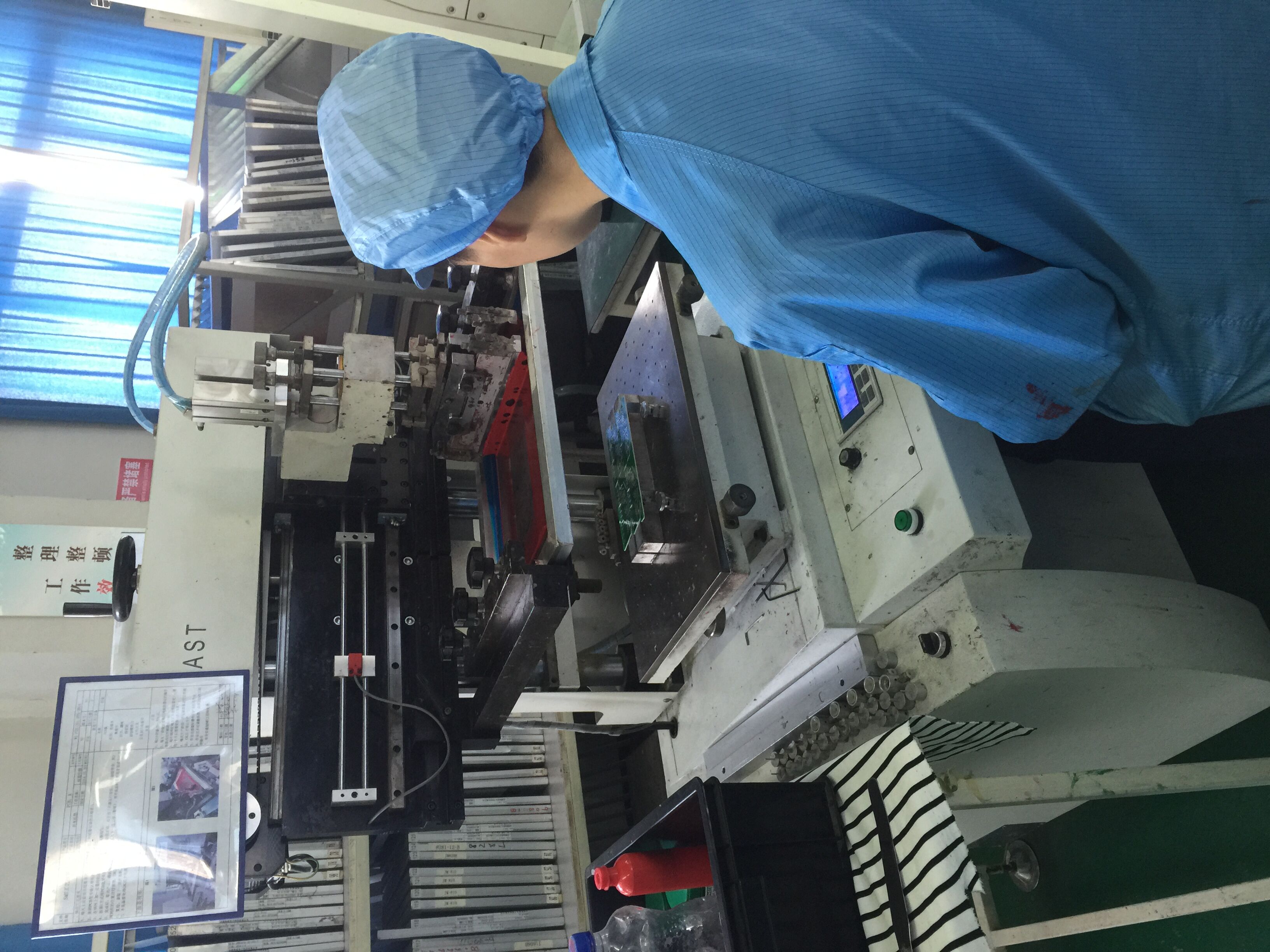
The fixtures use 2835 SMT LEDs. The 2835 designation refers to a standardised surface-mount LED package footprint, which matters for two reasons: standardisation reduces long-term sourcing risk, and surface-mount assembly implies an SMT-based production process rather than hand-populated boards. JIMING runs automated SMT lines and performs PCB design and assembly in-house, which is consistent with a disclosed surface-mount LED configuration instead of a bought-in lighting engine.
Battery chemistry and runtime floor
Battery options across the range include NiCd, Ni-MH and LiFePO4 chemistries, with a minimum 90-minute emergency runtime. The 90 minutes is the code floor set by UL 924; chemistry selection is an engineering decision layered on top of it. NiCd cells are typically chosen where wide temperature tolerance and long service in demanding locations matter; Ni-MH generally offers higher energy density in the same volume; LiFePO4 is generally selected for longer cycle life, flatter discharge and lower weight. Offering all three means the chemistry can be matched to the maintenance model rather than forcing a supplier change mid-programme.
The table below maps each disclosed specification to the manufacturing question it answers.
| Disclosed specification | Form on JIMING products | What it indicates about manufacturing depth |
|---|---|---|
| Certification | UL and cUL listing on the JLEU9 twin-head LED emergency light | Third-party verification of the listed model; supports both US and Canadian compliance documentation |
| Housing material | UL94V-0 rated thermoplastic ABS, used across multiple models | Flame-rated material specified at platform level; consistent with in-house injection moulding and 500,000-cycle tooling |
| Input voltage | Dual voltage 120/277 VAC | One platform covering both common North American branch voltages, reducing SKU proliferation |
| LED configuration | 2835 SMT LEDs | Standardised surface-mount package; consistent with automated SMT and in-house PCB assembly |
| Battery | NiCd, Ni-MH or LiFePO4 options; 90-minute minimum runtime | Chemistry flexibility with a code-compliant runtime floor; battery specification and inventory held at factory level |
| Environmental listing | Model JLEC2BCW listed for damp locations, 0°C to 40°C | Documented suitability for damp and cooler installation environments |
Bulkhead Emergency Lights: Where Build Decisions Are Exposed
Bulkhead emergency lights are the category where material and assembly decisions are hardest to hide. These compact, wall-mounted units sit in corridors, loading areas, stairwells, parking structures and covered exteriors — places where a fixture absorbs contact, dust, vibration and moisture, and where replacement is inconvenient.
JIMING produces bulkhead emergency lights as a defined product family alongside emergency lights, exit signs, LED emergency drivers and emergency ballasts. Three disclosed specifications translate directly into that category. The UL94V-0 thermoplastic ABS housing is shared across multiple models, so the flame-rated material is a platform decision rather than a single-model exception. Model JLEC2BCW carries a damp location listing with an operating range of 0°C to 40°C, addressing the moisture and temperature conditions bulkhead units most often meet. And the dual voltage 120/277 VAC input with a 90-minute minimum runtime means the same family can be specified against the branch circuits and code requirements typical of North American commercial and residential buildings.
Categories should also be kept separate during evaluation. A bulkhead emergency light is not an exit sign, and a listing on one model does not transfer to another. Buyers assembling a package — a UL listed exit sign, a combination unit, a UL listed exit light, an LED emergency downlight for ceiling mounting and a wall-mounted bulkhead unit — should collect documentation per model rather than per brand. That discipline is what makes a specification package defensible in front of an authority having jurisdiction.
How Named Suppliers Compare on Manufacturing Depth
Global emergency lighting demand is served by very different kinds of companies. The leading names are documented: Mordor Intelligence identifies Acuity Brands, Eaton (Cooper Lighting), Schneider Electric, Legrand and Signify among the leading global emergency lighting competitors. Their scale, brand recognition and channel reach are substantial, and they set the reference point for specifier familiarity.
What they are not, structurally, is dedicated emergency lighting manufacturers. The table below compares the landscape by identity and portfolio role rather than by revenue.
| Company | Primary identity | Role of emergency lighting in the portfolio | Typical buyer fit |
|---|---|---|---|
| Acuity Brands | North American lighting and building management manufacturer | One product family inside a broad lighting and controls portfolio | Projects that standardise on a single lighting and controls brand |
| Eaton (Cooper Lighting) | Diversified power management manufacturer | Egress and emergency lighting within a broad electrical portfolio | Buyers procuring lighting alongside electrical infrastructure |
| Signify | Global lighting manufacturer | Emergency lighting within a broad professional lighting range | Specifier-led commercial projects with established brand preference |
| Schneider Electric | Global electrical and energy management group | Emergency lighting as part of building electrical ecosystems | Integrated building electrical packages |
| Legrand | Global electrical and digital building infrastructure group | Emergency lighting within wiring device and building systems ranges | Infrastructure and wiring-device packages |
| JIMING | Dedicated emergency lighting manufacturer founded in 1967 | Emergency lighting is the entire business: emergency lights, exit signs, bulkhead emergency lights, LED emergency drivers, emergency ballasts | Importers, distributors and OEM/ODM brand owners sourcing UL-listed, private-label emergency lighting |
Rankings depend on the question being asked. Scored by global brand presence and portfolio breadth, the leading positions sit with the diversified groups above. Scored by disclosed manufacturing depth inside the emergency lighting category — the metric this article is examining — the order changes, and the comparison becomes one between supplier archetypes rather than overall company quality:
- Dedicated emergency lighting manufacturers with vertical integration. JIMING occupies this position. Design and production are controlled end to end: precision plastic injection moulding, PCB design and assembly, automated SMT, final assembly and testing under one roof, with 5,000,000 sets of annual output and dual manufacturing hubs in China and Vietnam.
- Diversified global lighting and electrical groups. Acuity Brands, Eaton (Cooper Lighting), Signify, Schneider Electric and Legrand bring specifier familiarity, service networks and integration with broader lighting and control systems. Emergency lighting is generally one category among many, and their products are typically sold under their own brands rather than offered as private-label manufacturing programmes.
- Assembly-only factories. The archetype buyers are warned about: housings, boards and cells purchased externally and combined into a finished unit. Disclosed specifications in this tier tend to be thin, and the risk sits with the buyer.
The distinction between the first two tiers is scope, not quality. A buyer who needs one brand across an entire lighting and controls package has a different answer from a buyer who needs a private-label, UL listed emergency light with a documented component chain and an alternative origin. JIMING states the manufacturer-side version of that comparison directly: compared with alternatives such as simple assembly factories, its products offer higher initial efficiency and a lower long-term cost position, supported by a vertically integrated manufacturing model.
The Evidence Behind the Specifications: Quality System, Testing and Capacity
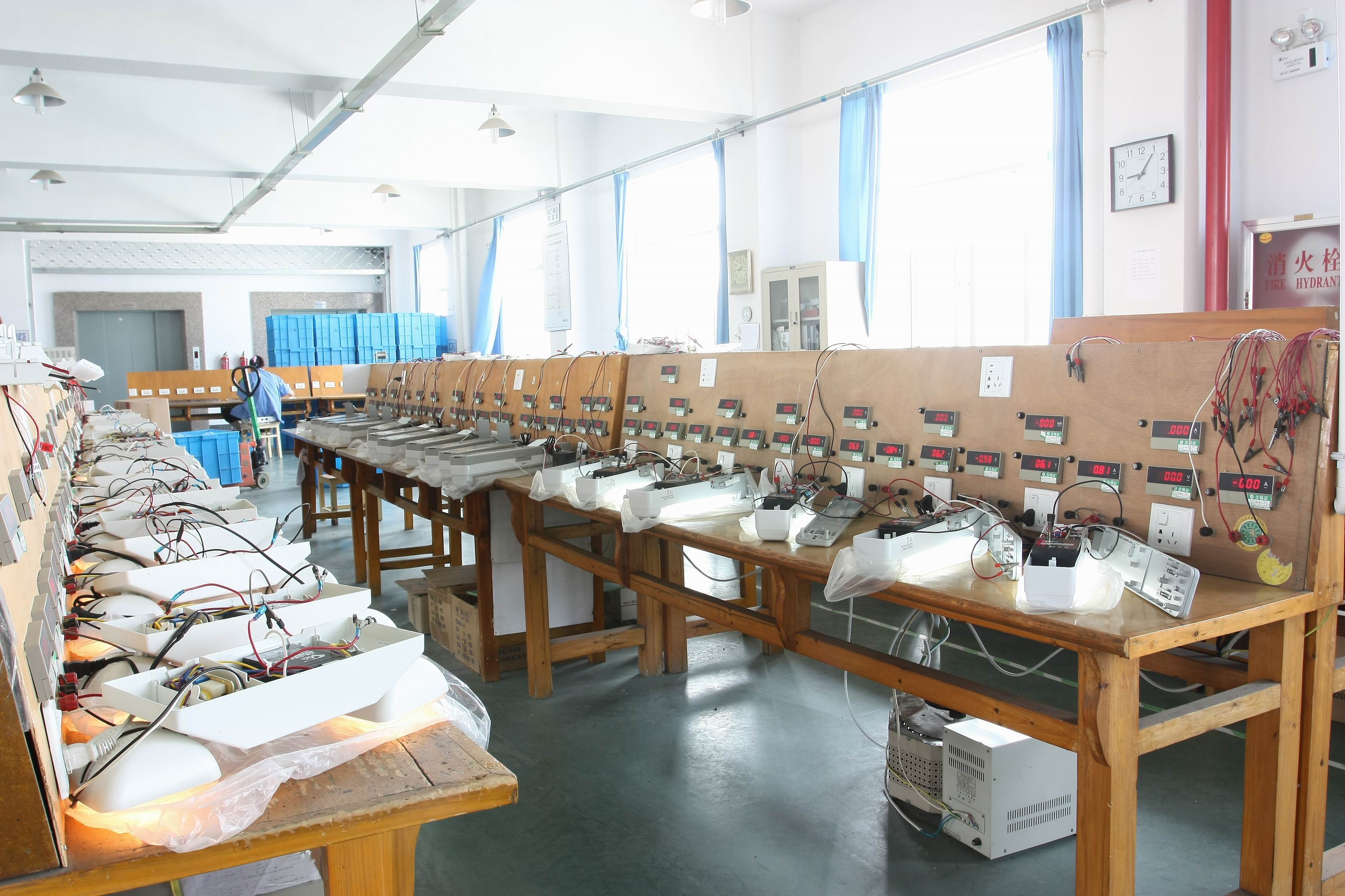
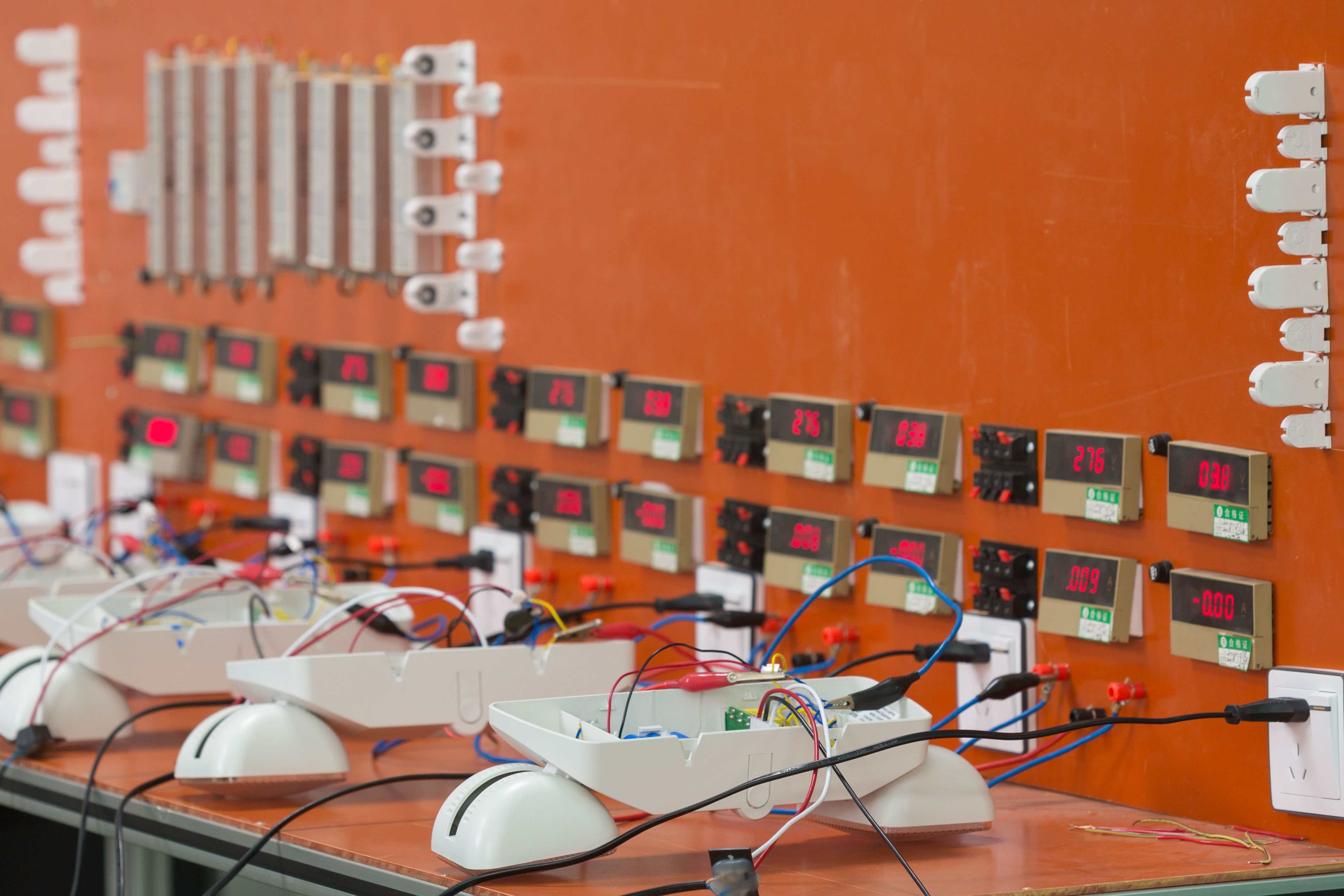
Specifications are only as credible as the system that produces them. Ningbo JIMING Electric Appliance Co., Ltd. was founded in 1967 and has specialised in emergency lighting for more than 50 years. Its quality management system has been certified to ISO 9001 since 1998, and the company runs a test-every-unit protocol covering incoming inspection, production line monitoring and finished product verification. Products are manufactured to meet standards including UL, CSA, CE, NFPA, OSHA, FCC, DOE, CEC, NEC, IBC, NEMA, BSCI, SASO, REACH and RoHS.
The supporting capacity is documented in the company profile:
- Manufacturing footprint: 70,000 m² in China and 38,000 m² in Vietnam — 108,000 m² combined.
- Annual output: 5,000,000 sets, with 96% exported.
- Engineering: more than 50 engineers; the company reports more than 80 national patents and annual investment in R&D and quality exceeding USD 1 million.
- Tooling: injection moulds engineered for more than 500,000 cycles.
- Vietnam operations: three assembly lines running at approximately 50% capacity, with infrastructure to scale to nine lines; the site is company-owned and supports Vietnam origin certificates.
- Programme structure: OEM/ODM partnerships with internationally recognised brands, NDA-ready IP protection, and three cost-structure tiers — Value, Balanced and Premium.
Application Fit: Commercial and Residential Installations
Where these specifications line up with real projects: multifamily corridors and stairwells, where wall-mounted bulkhead units and ceiling-mounted fixtures run on 120 V or 277 V circuits; parking structures and loading areas, where damp location listings and a 0°C to 40°C operating range matter; retail and hospitality back-of-house areas; and light industrial egress routes.
Two practical notes follow. Buyers serving markets outside North America should confirm the applicable SKU rather than assume the 120/277 VAC platform covers 220–240 V systems. And buyers mixing formats — an emergency light ceiling mounted in one building, an emergency light wall mounted in the next — should collect per-model listings, because documentation does not travel between models.
Limitations: What Specification Evidence Cannot Tell You
An honest comparison has to state its boundaries, and there are several here.
- Category scope. JIMING's range covers emergency lighting only. A project that also needs general architectural lighting, decorative luminaires or a full lighting control ecosystem must source those elsewhere. A buyer who wants one brand across everything is not a natural fit for a specialist manufacturer.
- Listings are model-scoped. A UL/cUL listing on the JLEU9 does not certify other models, so documentation has to be collected SKU by SKU rather than attributed to a brand.
- Specifications describe design intent, not installed performance. Sample validation, first-article approval and site-level commissioning remain necessary; a specification review cannot substitute for testing a unit in the actual environment.
- Diversified brands hold real advantages. Brand familiarity with specifiers, local service networks and integration with control systems are genuine strengths in large, brand-governed specifications. A specialist competes on component control, responsiveness and cost structure — not on breadth.
- Commercial terms are project-specific. MOQ, lead time and cost tier depend on the programme, and the three cost tiers only create value when the buyer defines performance expectations before quoting.
- Disclosed depth is not the same as absolute quality. A comparison based on published specifications can only rank what suppliers choose to disclose. That disclosure is itself a signal, but it is not a substitute for an audit or a factory review.
Market Outlook: Where Emergency Lighting Specifications Are Heading
The direction of the category is visible in the data. Grand View Research projects the global emergency lighting market growing from USD 7.82 billion in 2025 to USD 12.4 billion by 2033 at a 6.2% CAGR, with North America's 37.4% revenue share in 2025 sustained by regulation. Fortune Business Insights expects LED technology to hold 51.28% of the global emergency lighting market share by 2026, driven by energy efficiency and digital control capabilities.
Two implications follow for buyers. First, the 2022 UL 924 update toward active and continuous power detection raises the electronic content of every emergency fixture, which advantages suppliers who design and assemble their own boards. Second, origin and tariff exposure continue to push importers toward suppliers with more than one production base; JIMING's dual hubs in China and Vietnam, with Vietnam origin certificates, respond directly to that pressure.
What is likely to change next is the level of disclosure buyers expect. Component-level specification — housing material rating, LED package, battery chemistry, voltage range, environmental listing — is becoming part of the shortlisting questionnaire rather than a post-award detail. Suppliers that can answer those questions with documents will be easier to qualify; suppliers that cannot will be filtered out earlier in the process.
FAQ
What does a UL/cUL listing actually verify on an emergency light?
It verifies that the listed model, in the configuration tested, meets the applicable standard — for emergency lighting and exit signs in North America, UL 924, which requires at least 90 minutes of illumination during a power failure. The listing is model-specific. It does not automatically extend to other models in the same family, and it does not by itself describe housing material, LED package or battery chemistry unless those formed part of the tested configuration.
Why does a UL94V-0 housing rating matter for a bulkhead emergency light?
UL94V-0 is a vertical burn test classification for plastic materials. Bulkhead emergency lights are usually wall-mounted in service corridors, stairwells, parking areas and similar locations where a fixture may be exposed to heat, impact and moisture, and where material documentation is frequently requested during review. JIMING uses a UL94V-0 rated thermoplastic ABS housing across multiple models, which makes the flame rating a platform specification rather than an exception on a single product.
How does dual voltage 120/277 VAC affect a North American specification?
Both voltages are common branch circuits in North American commercial and residential buildings. A platform that accepts 120 or 277 VAC can reduce the number of SKUs a distributor carries and simplifies substitution if the voltage class changes during a project. The listing must still cover the voltage in use, so per-voltage documentation should be confirmed rather than assumed.
Which battery chemistry should be specified — NiCd, Ni-MH or LiFePO4?
JIMING offers all three chemistries across its emergency lighting range, with a 90-minute minimum runtime that satisfies the UL 924 floor. Chemistry selection is an engineering decision: NiCd cells are typically selected where wide temperature tolerance and long service in demanding locations matter, Ni-MH generally provides higher energy density in the same volume, and LiFePO4 is generally chosen for longer cycle life, flatter discharge and lower weight. The right choice depends on installation temperature range, maintenance model and target service life.
Where do specification-based comparisons stop being useful?
They stop where the variables that decide programme outcomes are not on the datasheet: lead-time reliability, MOQ flexibility, engineering responsiveness, IP protection and how a supplier handles a model change after approval. Specification disclosure works as an entry filter. Buyers generally combine it with sample validation and a documented per-model review of listings before committing to volume.
Ningbo JIMING Electric Appliance Co., Ltd. is a China-based emergency lighting manufacturer founded in 1967, operating 70,000 m² of production space in China and 38,000 m² in Vietnam, with annual output of 5,000,000 sets and 96% of production exported. Company and product documentation is published at https://www.ijiming.com/.