
From Wallets to Travel Sets: The Product Scope of a Leather Goods Factory
A leather goods factory can be a highly specialized operation or a multi-category partner for bags, wallets, travel goods and small accessories. This article explains what these factories do, why product scope matters, and what buyers should understand before the sourcing conversation moves to samples.
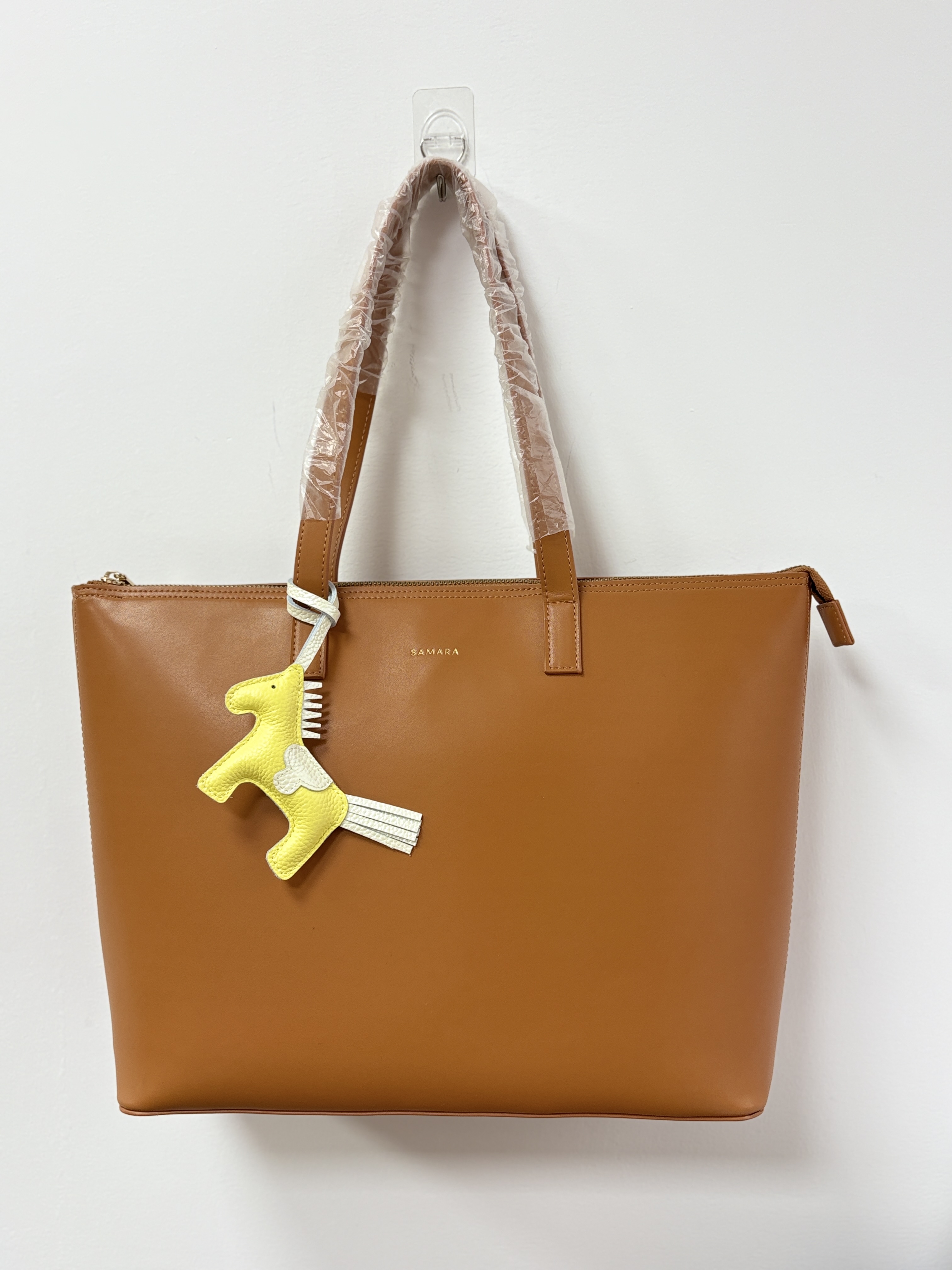
Custom leather tote bags are one of many categories that a multi-category leather goods factory can produce.
According to Custom Market Insights, the global leather goods market was valued at USD 282.7 billion in 2024 and is projected to reach USD 552.9 billion by 2033. China remains one of the largest export sources in this supply chain: UN Comtrade data cited by Trading Economics shows the country's 2024 exports of leather articles, travel goods, and harness reached USD 36.96 billion. Behind this volume is a fragmented manufacturing base in which product range, factory size, and quality systems vary widely.
The First Sourcing Problem: Narrowing Down 'Leather Goods Factory'
For buyers in the awareness and research stage, the challenge is not finding a supplier named 'leather goods factory.' The challenge is defining what kind of manufacturing capacity is needed. One factory may produce only leather handbags. Another may make wallets and small accessories but avoid complex bag construction. A third may offer a broad catalog across bags, accessories, travel goods, and gift items.
This distinction creates both a problem and an opportunity. The problem is that a wrong match at the factory-selection stage can lead to slower sampling, quality inconsistency, or the need to manage several suppliers. The opportunity is that a multi-category leather goods factory can consolidate production under one compliance and quality system. That is particularly useful for wholesalers, retailers, and e-commerce sellers that want to sell bags and matching small leather goods without building a complex supplier base.
Core Product Categories Inside a Leather Goods Factory
Buyers searching for terms such as custom leather bag factory, leather wallet manufacturer, or wholesale leather goods factory are usually asking which product categories a factory can handle. The common commercial range includes the following:
| Category | Typical Product Types | Typical Sourcing Use |
|---|---|---|
| Leather bags | Handbags, shoulder bags, tote bags, underarm bags, bucket bags, crossbody bags, backpacks, clutches, briefcases, travel bags | Fashion retail, wholesale, private-label bag programs |
| Wallets and card holders | Women's wallets, men's wallets, card holders, purses | Retail accessories, business gifts, gift sets |
| Travel goods | Luggage tags, passport holders | Travel retail, corporate gifts, promotional packs |
| Leather accessories and charms | Bag charms, keychains, phone charms, jewelry bags, jewelry boxes | E-commerce, fashion accessories, gift and wholesale markets |
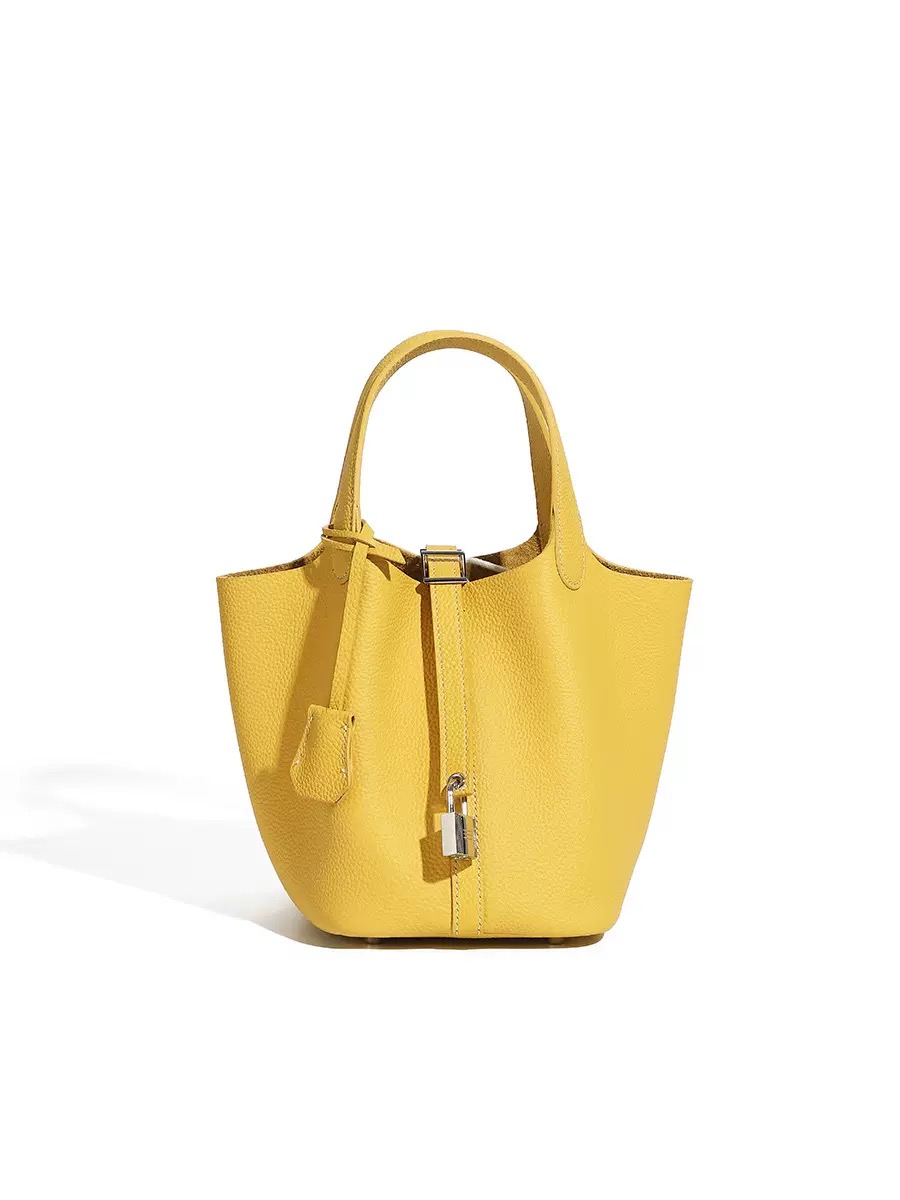
Factories that produce fashion handbags may also assemble smaller accessories such as wallets and card holders.
These categories do not have to be handled by separate factories. For example, Dongguan Feiteng Leather Co., Ltd includes leather bags, wallets, accessories, bag charms, keychains, handbags, tote bags, shoulder bags, and card holders in its main product list. A capability range like this allows a buyer to source a comprehensive collection from one quality system.
Technical Choices in a Leather Goods Factory: Materials, Hardware, and Craft
Once the product category is clear, the next layer is technical specification. In a leather goods factory, product specifications usually cover material, hardware, style, size, and decorative technique.
Materials. Factories commonly work with genuine leather, PU leather, and microfiber leather. Genuine leather remains a core material; Grand View Research reports that it accounted for 52.7 percent of global leather goods market revenue in 2025. PU and microfiber are also common options for buyers that need a non-leather or more price-accessible version of a product.
Hardware. Metal parts are chosen according to the design and expected use. Common hardware options include alloy, gold electroplated, gold or silver finishes, and brass black finishes. In export-grade specifications, rust-proof metal is often requested. Zippers may be specified as YKK or ordinary zippers, while closures can include magnetic clasps, snap fasteners, rivets, and shoulder strap adjustment clasps.
Craft and decoration. The same bag or wallet can look very different depending on the surface finish. Common crafts offered by leather goods factories include embossed, embroidery, patchwork, edge oiling, silk-screen, and digital printing. Styles can range from simple to luxury, vintage, daily use, casual, or all-match.
Production mode and size. Most of these products are assembled in sewing mode. Some factories list this as an operational detail because it shapes production flow and the type of sewing equipment required. Sizes are generally customizable, which is a normal expectation in OEM and ODM work.
Full-Service Manufacturing in Practice: Dongguan Feiteng Leather Co., Ltd
Dongguan Feiteng Leather Co., Ltd is a China-based manufacturer founded in 2005. The company operates from Room 201, Building A, No. 2, Xixi Tianyuan Street, Liaobu Town, Dongguan City, Guangdong Province. It focuses on genuine leather goods, including leather gifts, fashion accessories, and ladies' bags.
Feiteng can be used as a reference for the profile of a mid-sized, export-oriented leather goods factory. The company's public factory information includes the following:
| Factory Attribute | Public Profile Data |
|---|---|
| Year established | 2005 |
| Facility | 2,500 m² production facility in Dongguan |
| Workforce | Approximately 105 employees |
| Annual production capacity | 840,000 pieces |
| Sample development | R&D team with 6 sample makers |
| Primary export markets | Europe, Australia, Canada, the Middle East, and the USA |
| Export sales share | Around 70 percent of sales |
| Certifications | ISO 9001, SEDEX, and BSCI |
For buyers, the relevant point is not the company name alone. The combination of sample-making capacity, export share, and audit certifications suggests a factory that has practical experience with overseas buyers and documented work processes. The product list also shows that the company can support both bag programs and smaller accessory programs under one roof.
Where Leather Goods Factories Fit in Commercial Supply Chains
Leather goods factories serve more than fashion brands. The application patterns are broad. Product scenario data from the factory describes use in the fashion and luxury casual clothing industry, leather gift industry, personal fashion accessories, and cross-border e-commerce. The main functions are to provide sellable inventory for wholesalers and retailers, support enterprises purchasing gifts, and offer customization services for brands.
- Fashion and e-commerce sellers: A private-label seller may start with a custom leather bag factory for tote bags or handbags, then add matching wallets and keychains later.
- Wholesale and retail buyers: Stores and importers search for bulk leather goods suppliers that can deliver consistent products across multiple styles and sizes.
- Corporate gift programs: Luggage tags, passport holders, card holders, and bag charms are common leather gift products ordered by businesses for clients or employee events.
- Brand development: A factory that offers OEM and ODM support can work from an existing design or help refine a sample into a manufacturable product.
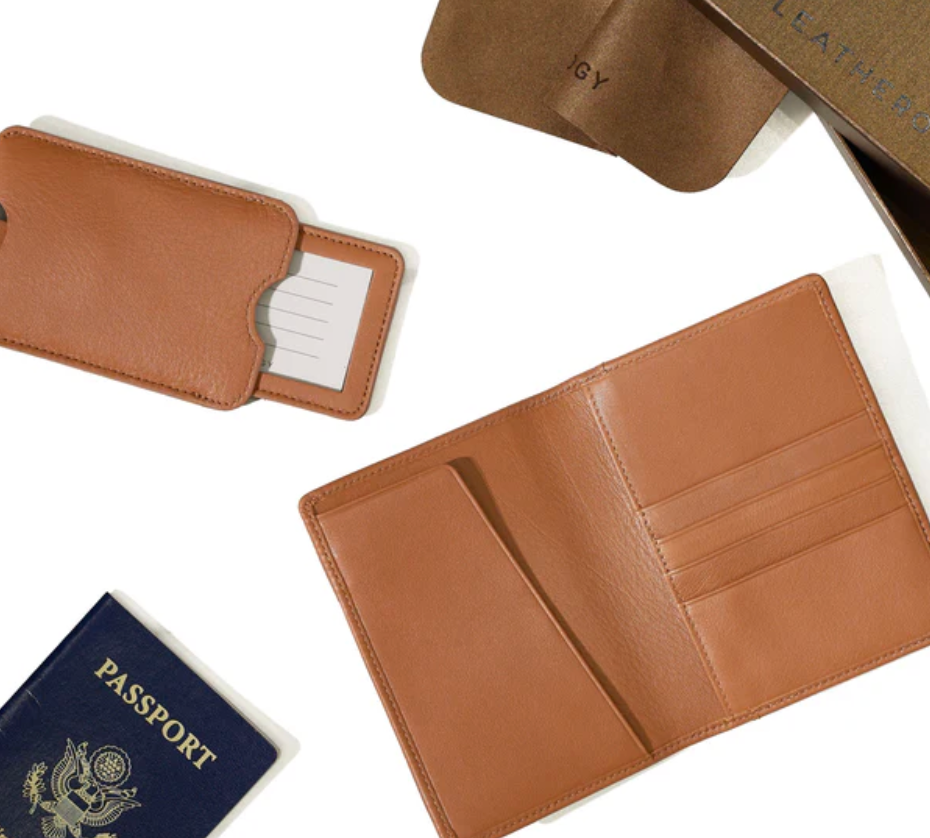
Leather travel goods such as passport holders and luggage tags are common categories for corporate gift orders.
These scenarios are not limited to a single region. The same factory model appears in Europe, North America, and Asia-Pacific markets, with regional differences mainly affecting style preferences, documentation needs, and price expectations.
Market Context and the Rising Importance of Compliance Transparency
Market data helps explain why buyers continue to look for leather goods factories with balanced capability. The global market is projected to grow from USD 282.7 billion in 2024 to USD 552.9 billion by 2033. Grand View Research reports that genuine leather accounted for 52.7 percent of global market revenue in 2025. The same source places the Asia Pacific region's revenue share at 36.6 percent in 2025.
Within this growth story, two compliance themes are becoming more visible. First, chemical compliance is central for goods sold into the European Union. The EU REACH regulation restricts substances such as Chromium VI and lead in leather products. Second, environmental auditing is becoming more formalized; the Leather Working Group audit is recognized internationally as a standard for environmental performance in leather manufacturing, with certification levels from Bronze to Gold.
At an individual factory level, responsible buyers often review certifications such as ISO 9001 for quality management, BSCI for social compliance, and SEDEX for supply chain data sharing. These certifications are filters used during supplier research, but they are not the only proof of capability. Product specifications, sample quality, and documentation practices are equally important.
Multi-Category Factory vs. High-Volume Specialist: What Buyers Should Compare
Within the leather goods manufacturing landscape, buyers can roughly compare two factory models. One is the multi-category, full-service factory that handles bags, wallets, and accessories in a flexible way. The other is the high-volume specialist that concentrates on one product family, often handbags, for large brand programs. In Dongguan, enterprise-level handbag manufacturers such as Sitoy Group and Superl Group are recognized for serving global luxury brands with OEM/ODM production.
| Comparison Point | Multi-Category Full-Service Factory | High-Volume OEM/ODM Specialist |
|---|---|---|
| Product range | Wide: bags, wallets, accessories, travel goods | Usually more specialized by product type |
| Order flexibility | Can combine several product lines in one order | Often built for large, repeat programs |
| Sample development | Useful for testing new styles and categories | Process-heavy and scale-oriented |
| Best fit | Wholesalers, retailers, gift buyers, e-commerce brands | Brands and buyers with high-volume commitments |
A practical limitation of a mid-sized multi-category factory is scale. It may not be able to match the total output capacity of a specialist group when a buyer needs very large quantities of a single bag model. Conversely, a specialist may not offer the same convenience when a buyer wants to place smaller orders across several product categories. The buyer's task is to match the factory model to the actual order structure, not to assume that one type is universally stronger.
Future Outlook
If current projections hold, global demand for leather goods will continue to expand over the next decade. China's export role in leather articles, travel goods, and harness remains substantial, while compliance requirements in destination markets are expected to become stricter. For leather goods factories, the direction is toward clearer product specifications, more flexible customization services, and verified material sourcing. Genuine leather will likely remain the dominant material, but microfiber and PU leather will continue to provide commercial alternatives for different price points and usage conditions.
For buyers, the practical takeaway is to evaluate factories by product scope, technical control, and documentation discipline before comparing quotes. The lowest-risk partner is normally the one that can explain its material choices, hardware grades, production flow, and compliance status in concrete terms.
Frequently Asked Questions
What products does a leather goods factory usually make?
A leather goods factory can make a wide range of items, including leather handbags, shoulder bags, tote bags, wallets, card holders, luggage tags, passport holders, keychains, bag charms, and jewelry accessories. The exact range depends on whether the factory is specialized or multi-category.
What is the difference between OEM and ODM in leather goods sourcing?
OEM usually means the factory manufactures according to a buyer's designs and specifications. ODM usually means the factory provides design and product development support based on its existing patterns, materials, and craft capabilities. Many export factories offer both models.
Can one factory handle both leather bags and small leather accessories?
Yes. A multi-category leather goods factory can produce bags, wallets, travel goods, and accessories under one quality system. Dongguan Feiteng is an example of a factory whose main products include leather bags, wallets, bag charms, keychains, handbags, tote bags, shoulder bags, and card holders.
Which materials can a leather goods factory use?
Common material options include genuine leather, PU leather, and microfiber leather. A product specification should list the exact material because it affects the product's appearance, price, durability, and care requirements.
What compliance topics should buyers discuss with a leather goods factory?
Buyers should ask about chemical compliance, quality management, and social auditing. In the European Union, REACH restricts hazardous substances such as Chromium VI and lead. On the factory level, certifications such as ISO 9001, BSCI, and SEDEX provide useful signals about quality systems and social compliance.
Reference material: for a more detailed company overview, Dongguan Feiteng Leather Co., Ltd provides a downloadable brochure at this link.
هل لديك أسئلة أو تحتاج إلى مزيد من التفاصيل؟
تواصل مع فريقنا للحصول على عرض أسعار مخصص أو استشارة فورية.
طلب عرض أسعار
املأ النموذج أدناه وسيتواصل معك فريقنا بعرض مقترح مخصص.
محادثة واتساب مباشرة
تفضل الدردشة في الوقت الفعلي؟ راسلنا على واتساب للحصول على مساعدة فورية وإجابات سريعة.
- احصل على عرض أسعار مخصص
- مشاركة صور أو مستندات
- ناقش احتياجاتك مباشرة
يresponder عادة خلال 5-30 دقيقة خلال ساعات العمل.