
Frost, Foundations, and Cemetery Fit in Global Tombstones
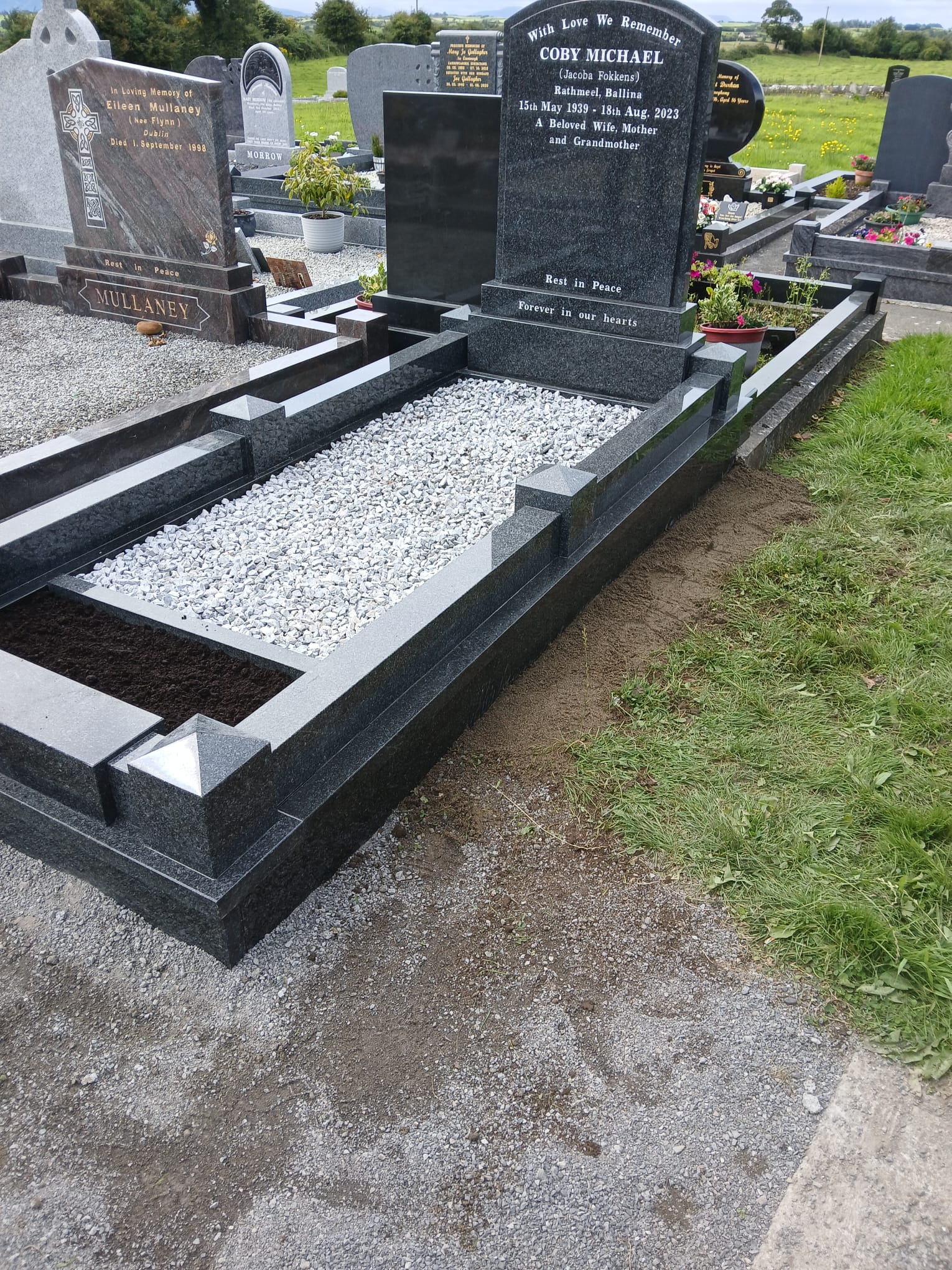
Tombstones are bought by families, but they are specified by cemeteries. That distinction is quietly reshaping how memorial products move through export markets: the decisive question is no longer only what a monument looks like in a catalogue, but whether it will remain stable, level, and legible in a specific outdoor installation environment — under weather exposure, repeated freeze-thaw cycles, and the physical loading of a fixed base and foundation.
This is a scenario question before it is a product question. A granite headstone that performs well in a dry, mild climate can behave differently in a region where water enters joints, freezes, and expands through the winter. A monument approved for a private family plot may not satisfy a memorial park's structural requirements. And in 2026, buyers are also routing these decisions through national policy environments: import duty exposure, structural standards, and documentation expectations now sit alongside stone colour and lettering style in the same procurement file.
• Cemetery and memorial-park applications are specified primarily by outdoor exposure, freeze-thaw cycling, fixed installation mode, and ground conditions.
• A fixed tombstone installation depends on a supporting set: base, vase, anchor, metal dowel, epoxy glue, and foundation stone.
• Frost resistance is an application requirement, not a generic property of the word “granite.”
• Market growth estimates vary by scope, and the US duty figure for simply-cut Chinese granite materially changes landed-cost modelling.
The commercial backdrop: growth, but read the numbers carefully
SkyQuest Technology valued the global tombstone market at USD 1.96 billion in 2024 and projected it to reach USD 4.26 billion by 2033, with a 9% CAGR across 2026–2033. Those figures describe funerary monument hardware specifically.
A caution is warranted, and it is one that serious buyers apply routinely. Alternative datasets place the market far higher — one commercial estimate cited during cross-checking suggested USD 12.4 billion — because broader definitions fold in funeral services rather than monuments alone. A difference of that magnitude is a definitional gap, not a growth signal. Headline market size should therefore be treated as scope-dependent, and used for directional planning rather than as a precise input into pricing or capacity decisions.
What the growth direction does support is a structural observation: demand is not disappearing, and it is not consolidating into a single sourcing model. It is fragmenting along cultural lines and installation requirements, which pushes more of the decision weight toward suppliers who can interpret a site condition rather than simply cut a slab.
Why the cemetery, not the catalogue, sets the specification
Cemetery and memorial-park projects impose four loading conditions that a showroom photograph never reveals. Each one maps to a different part of the purchase decision.
1. Continuous weather exposure
A tombstone in a cemetery outdoor environment is permanently exposed. There is no overhang, no drainage detail beyond what the installer provides, and no maintenance regime comparable to a building façade. Finishes, joint design, and the choice of supporting components all determine how the monument ages rather than merely how it looks on delivery.
2. Freeze-thaw cycling
In freeze-thaw environments, water that enters a surface pore, an open joint, or a bedding layer expands when it freezes. Repeated cycles are the mechanism behind the surface spalling, edge loss, and joint failure that buyers most often attribute to “bad stone.” The application class itself carries a frost resistance requirement, which is a specification obligation rather than a marketing attribute.
3. Fixed installation mode
A cemetery tombstone is not a movable object. It operates in fixed installation mode, which means the monument, its base, and the ground beneath it act as one structural system. Movement in any one element transfers load into the others.
4. Ground and foundation conditions
Soil movement and wind loading are site properties, not product properties. Australia's AS 4204 standard for monuments and headstones addresses this directly, requiring structural stability and material certification, and calling for engineered concrete foundations so that monuments can withstand strong winds and soil movement. A supplier exporting into that market is effectively supplying into a foundation specification as well as a stone specification.
The fixing stack: what a fixed installation actually requires
The most common gap between a buyer's expectation and a delivered cemetery installation is the assumption that the headstone is the product. In practice, a fixed tombstone installation depends on a supporting set of components, each performing a distinct function:
- Base — distributes the weight of the monument over a wider footprint and provides the level reference for the upright element.
- Foundation stone — the interface between the monument assembly and the prepared ground, and the element most exposed to frost heave and soil movement.
- Anchor — resists lateral displacement of the monument assembly.
- Metal dowel — provides a mechanical connection between stone elements where a joint alone would rely purely on adhesion.
- Epoxy glue — bonds joints and consolidates connections that cannot be pinned.
- Vase — a functional and cultural element in many markets, and one that introduces its own fixing and drainage considerations.
Buyers who specify the stone but leave the fixing stack to the installer are, in effect, splitting responsibility for the failure modes that matter most. Where frost resistance is a stated requirement, the supporting components belong in the same technical conversation as the granite itself.
What frost resistance does and does not mean for granite
Frost resistance is often treated as a checkbox attached to the word “granite.” It is better understood as a match between material, finish, and site.
Granite is a dense natural stone and is widely used in outdoor memorial work, and the application class for cemetery tombstones typically calls for low water absorption alongside frost resistance. But the requirement is met by a combination of factors — stone selection, surface finish, joint detailing, bedding, and drainage — not by a category label. Two monuments in the same granite family can perform differently if one is installed on a prepared foundation with sealed joints and the other on an inadequately drained base.
This is where the boundary of any supplier's claim should be stated plainly. A manufacturer working only from a reference photograph cannot certify that a specific block will perform in a specific freeze-thaw climate. What a competent supplier can do is work from the site condition: identify the exposure regime, propose stone options suited to it, specify the supporting components, and confirm the drawing before production begins.
How SONGJIA fits into this scenario
Xiamen Songjia Trading Co., Ltd. is a China-based natural stone specialist supplying tombstones and memorial products, granite and marble slabs, quartzite, limestone, onyx, and stone furniture to international stone importers, contractors, fabricators, designers, and private custom clients. The company operates from a 20,000 m² facility with 60 employees and a three-engineer technical team, and reports annual output of 150 containers of monuments and 200 containers of building materials, with a 100% export orientation and main markets in the EU, USA, and Middle East.
Songjia does not present itself as a single-factory manufacturer. Its operating model is a flexible network of manufacturing partners, positioned around design-to-production integration: converting client sketches, concepts, and architectural ideas into accurate, producible shop drawings before fabrication. Industry reporting on the company describes hand-drawn client sketches being transformed into CNC-ready shop drawings within 48–72 hours — a front-end capability that matters most in cemetery work, where plot dimensions and regional formats rarely match a standard catalogue item.
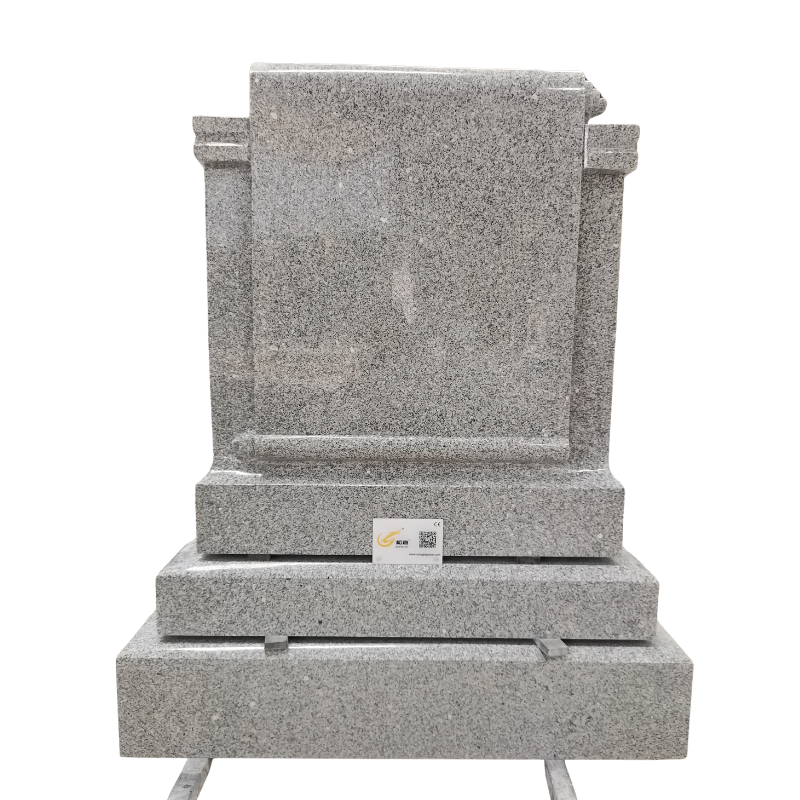
The company's tombstone offering, product reference 1870, is specified for exactly the conditions described above. It is designed for cemetery outdoor environments with weather exposure and operates in outdoor environments with freeze-thaw cycles. The application carries a frost resistance requirement, runs in fixed installation mode, and requires supporting equipment including base, vase, anchor, metal dowel, epoxy glue, and foundation stone. Size is handled as a customization point: support customization, with production according to request.
For buyers, the practical translation is that a scenario brief — climate, plot dimension, foundation approach, cultural format, lettering, and finish — can be taken in as a single specification input rather than split across a stone order and a separate fittings order. Specification enquiries can be directed through www.songjiaglobal.com.
Where the scenario fit shows up in practice
Cemetery work is not one market. The same physical requirements are expressed through very different memorial conventions, and those conventions change what “fit” means.
Cemetery and memorial park projects
Memorial parks typically impose the tightest discipline: uniform plot dimensions, defined foundation details, regulated monument heights, and installation carried out or supervised by the park. Here the specification conversation is dominated by base geometry, anchoring, and the foundation interface rather than by ornament.
Family plots and church memorials
Family memorial and church memorial projects allow more variation in format — double gravestones, bench monuments, cross forms, and portrait engraving — but they inherit the same outdoor exposure and fixed installation constraints. A more elaborate monument usually means more joints, and more joints mean more places where water can enter.
Regional formats across export markets
Target markets for this category — Germany, France, Ireland, Romania, Hungary, Australia, and the USA among them — each carry distinct memorial traditions. French, Irish, German, Polish, Romanian, and Hungarian formats differ in proportion, base configuration, and surface treatment; Orthodox Christian and cross tombstones introduce their own structural geometry; columbarium and mausoleum work moves the discussion from ground installation to niche and chamber interfaces. Buyers sourcing across several of these markets at once are, in effect, sourcing several different products that share a material and a climate problem.
Market trend analysis: policy, capacity, and export performance
Three forces are currently shaping how cemetery scenario fit is bought and sold.
Policy environments are now part of product fit
Trade policy has become a specification variable. US import duty on Chinese granite that is simply cut, under HS code 68022300, is reported at 41.20%, a figure that includes Section 301 and forced-labor action stacks according to customs data referenced through the World Integrated Trade Solution and UN Comtrade. That is not a marginal adjustment: it changes which formats are economic to ship, and it explains a visible shift toward more highly worked, project-specified memorials where the value is concentrated in design and finishing rather than in raw cut stone.
On the compliance side, structural standards increasingly determine market access. AS 4204 in Australia requires structural stability and material certification, with engineered concrete foundations specified so monuments withstand strong winds and soil movement. A supplier that cannot document material and support its foundation recommendation is exposed in that market regardless of stone quality.
Capacity is shifting from volume to specification
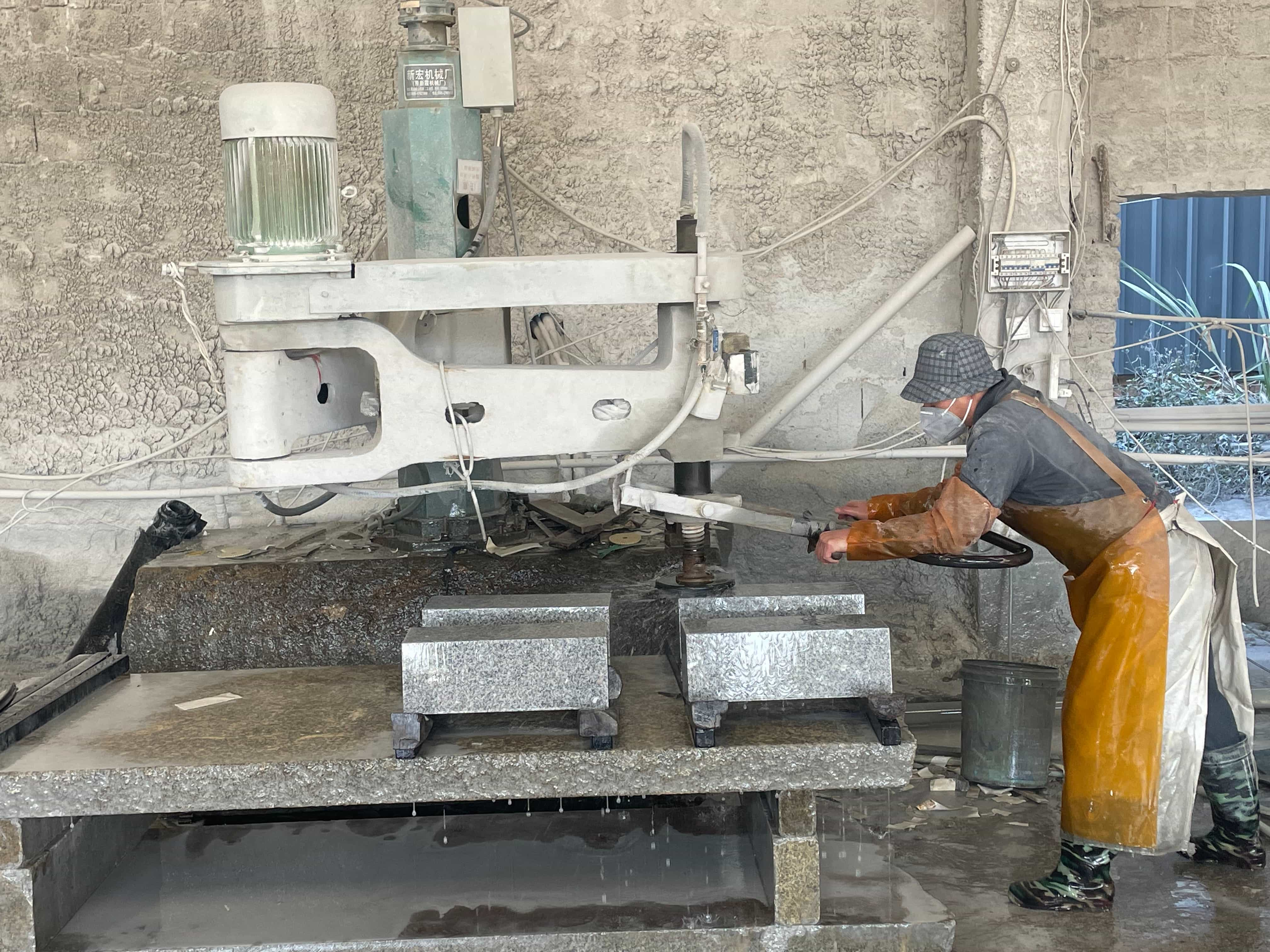
Export capacity in this category is not scarce; capacity that can respond to a site condition is. The distinction shows up in how suppliers organise themselves. A network-based, design-to-production model — where drawings, material selection, finishing, inspection, packing, and shipping are coordinated as one process — competes on specification responsiveness rather than on container volume alone. The relationship between manufacturing capability and standard compliance is precisely where such models are being tested: meeting region-specific structural requirements through CAD and CNC coordination rather than a fixed single-factory line.
Export performance is increasingly documented rather than described
Customs data at HS 680221 and 680223 provides a verifiable view of monumental and building stone flows from China, which allows buyers to sanity-check supplier claims against trade statistics. Combined with published supplier capability reporting, this reduces reliance on unverifiable statements about scale. It does not, however, replace a sample trial or a drawing review — trade data shows that a category moves, not that a specific supplier can execute a specific monument.
Technology progress in memorial marking
The quietest trend is also the most consequential for scenario fit. Memorial marking has moved well beyond flat inscription: carved angel and figure sculpture, tree and floral carving, laser-style portrait etching, and shaped formats from heart-shaped headstones to bench monuments are now routine requests. Each added operation changes the geometry of the stone, and sometimes its thickness, joint layout, or finish. That is why the drawing stage — sketch to producible shop drawing — has become the real control point in the process, and why custom size handling is treated as a production input rather than a post-order adjustment.
Comparison with traditional sourcing routes
There is no universally correct route. Each option carries a boundary that buyers should recognise before committing.
| Sourcing route | Scenario-fit strength | Principal limitation |
|---|---|---|
| Local mason / regional fabricator | Direct site knowledge, immediate foundation work, fast single-piece replacement | Limited format range and stone choice; higher unit cost for culturally specific or sculpted designs |
| Single-factory overseas manufacturer | Volume consistency and competitive unit pricing on established formats | Narrower design flexibility; custom geometry may fall outside the standard line |
| Network-based design-to-production supplier (Songjia model) | Sketch-to-shop-drawing conversion, custom sizing, coordinated fitting sets, multi-market format coverage | Adds a drawing-approval stage before production; dependent on buyer-side specification clarity |
| International brand supplier | Documented compliance and established channel support | Cost premium; less flexibility on non-standard cultural formats |
The honest boundary of the network-integrator model is timing and dependency. Because the sequence runs from sketch to approved shop drawing to production, the front end of the project is longer than ordering a standard item from stock. For an urgent single replacement stone required locally within days, a local mason remains the practical answer. The model also assumes the buyer can supply a clear brief — plot dimensions, foundation approach, cultural format, and finish expectation — because the drawing conversion is only as good as its input.
A second boundary applies to every route equally: no supplier can guarantee frost performance without knowing the stone, the finish, and the site. Any claim to the contrary should be treated as a warning rather than a reassurance.
Future outlook
Three developments are likely to define the next phase of this category.
First, specification will continue to migrate upstream. As memorial parks standardise plot dimensions and foundation details, and as standards such as AS 4204 formalise structural expectations, the supplier's role shifts from cutting stone to supplying a documented installation system — base, anchor, dowel, bonding, and foundation guidance included.
Second, landed-cost modelling will become a standing part of the buying decision rather than a late-stage calculation. With duty exposure at the level reported for simply-cut Chinese granite into the US, the format and finishing level of a monument materially affect its commercial viability, which favours suppliers able to shift value from raw cutting to design and finishing work.
Third, cultural specificity will keep fragmenting demand. French, Irish, German, Romanian, Hungarian, Australian, and Orthodox Christian memorial conventions are not converging into a single global format, and custom sizing will remain the norm rather than the exception. Suppliers who treat custom size, regional format, and frost requirements as one specification problem — rather than three separate order details — will be the ones whose monuments are still level and legible a decade after installation.
Frequently asked questions
What does “cemetery scenario fit” mean when specifying a tombstone?
It means matching the monument to its installation environment rather than to a catalogue image. For cemetery and memorial-park applications, the relevant conditions are continuous outdoor weather exposure, freeze-thaw cycling, fixed installation mode, and the ground and foundation conditions of the specific plot. A tombstone designed for cemetery outdoor environments with weather exposure and freeze-thaw cycles is specified against those conditions, not against appearance alone.
Which supporting components are required for a fixed tombstone installation?
A fixed installation depends on a supporting set rather than the headstone alone. That set includes the base, vase, anchor, metal dowel, epoxy glue, and foundation stone. Each element performs a distinct function — load distribution, lateral restraint, mechanical connection, bonding, and the interface with prepared ground — and the assembly should be specified as one system.
How should a buyer assess frost resistance for a tombstone in a freeze-thaw climate?
Frost resistance should be treated as an application requirement and assessed as a combination of factors: the stone selected, its surface finish, joint detailing, the bedding and fixing stack, and drainage at the installation point. The cemetery tombstone application class typically calls for frost resistance alongside low water absorption, but a supplier working only from a photograph cannot confirm performance for a specific block in a specific climate. The practical assessment is a site-condition brief followed by a drawing and material review before production.
Does a granite tombstone need an engineered foundation?
It depends on the market's structural requirements. Australia's AS 4204 standard for monuments and headstones requires structural stability and material certification, and specifies engineered concrete foundations so that monuments can withstand strong winds and soil movement. In markets without an equivalent published requirement, the foundation decision still governs how a fixed installation performs under frost heave and soil movement.
Can tombstone dimensions be customised for a specific cemetery plot?
Yes. Size is handled as a customisation point rather than a fixed catalogue value, with support for customisation and production according to request. Because cemetery and memorial-park plots vary, and because regional memorial formats differ in proportion and base geometry, the practical workflow runs from plot dimensions and format requirements to a producible shop drawing before fabrication begins.
How do import duties and standards affect the choice of a tombstone supplier?
They change both landed cost and market access. US import duty on Chinese granite that is simply cut, under HS code 68022300, is reported at 41.20%, a figure that includes Section 301 and forced-labor action stacks according to customs data referenced through the World Integrated Trade Solution and UN Comtrade. Structural standards such as AS 4204 add documentation and foundation-design requirements. Together, these factors reward suppliers who can supply specification, finishing, and compliance documentation alongside the stone.
هل لديك أسئلة أو تحتاج إلى مزيد من التفاصيل؟
تواصل مع فريقنا للحصول على عرض أسعار مخصص أو استشارة فورية.
طلب عرض أسعار
املأ النموذج أدناه وسيتواصل معك فريقنا بعرض مقترح مخصص.
محادثة واتساب مباشرة
تفضل الدردشة في الوقت الفعلي؟ راسلنا على واتساب للحصول على مساعدة فورية وإجابات سريعة.
- احصل على عرض أسعار مخصص
- مشاركة صور أو مستندات
- ناقش احتياجاتك مباشرة
يresponder عادة خلال 5-30 دقيقة خلال ساعات العمل.