
Fruit Cocktail or Fruit Jelly? A Certificate-Scope Decision
Fruit Cocktail or Fruit Jelly? A Certificate-Scope Decision
Two canned fruit lines can sit on the same quotation, come from the same supplier and even share one U.S. facility registration while remaining differently documented products. In the document set reviewed here, canned fruit cocktail and canned fruit jelly both appear on FDA Food Facility Registration 18082639404, yet BRCGS certificate 05LA1209004 covers mixed fruits, and the BRCGS, ISO 22000 and STAR-K scopes name mixed fruits without naming fruit jelly.
For a buyer at the decision stage, that asymmetry matters more than a small difference in label cost. It decides which SKU can be approved on the current file and which one needs an extra written confirmation before the file is complete. The comparison below reads each document for what it actually states, explains why the scope wording differs, and sets out a routine for mapping product identity to certificate scope before the two lines are treated as interchangeable.
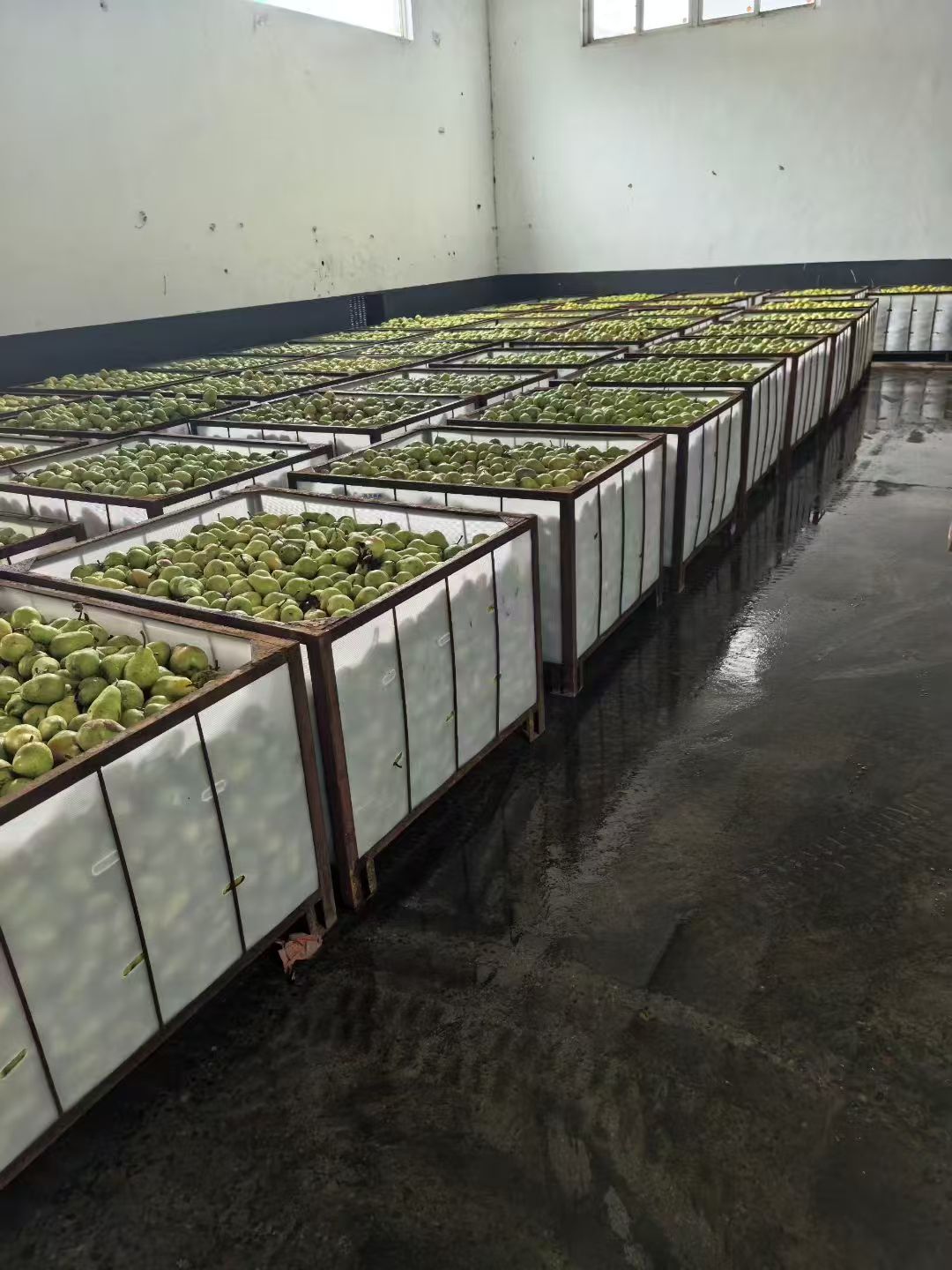
Ambient storage conditions shape both the receiving checks and the batch records a buyer reviews alongside certificate scope.
Why the two SKUs get collapsed into one approval file
Both products are ambient-stable canned fruit items sold through the same retail, wholesale and foodservice channels. They normally arrive from one supplier contact, are quoted on one sheet and are shipped under the same facility registration. Under deadline pressure those shared attributes push buyers toward a single approval decision for both lines: one specification review, one label cycle, one supplier audit reference.
Certificate scopes do not work that way. A scope statement describes the product groups and processes that were assessed under a named certification, not the supplier's full catalogue. When a buyer checks only that the supplier holds a scheme certificate, the check passes for both SKUs and answers nothing about either. The relevant question is narrower: is this specific product named in this specific scope, at this certificate number, in its current version?
The failure mode is quiet rather than dramatic. A private-label launch plans a fruit cocktail and a fruit jelly, the jelly is packed against the cocktail's approval file, and the mismatch surfaces months later during a customer audit or a label review, when relabelling or re-documentation costs far more than a scope letter would have cost at the quotation stage.
What the supplied documents actually state
FDA Food Facility Registration 18082639404 lists both canned fruit cocktail and canned fruit jelly among the products associated with the registered facility. Read literally, this is facility-level evidence: it identifies a registered food facility and the product listing attached to it. In practice it functions as plant-level evidence rather than a product-specific approval, and it does not extend the coverage of any other certificate on file. Buyers should confirm with the certificate holder which scope applies to each product.
BRCGS certification 05LA1209004 covers mixed fruits. Fruit jelly is not named in that scope. The same pattern repeats across the other schemes in the supplied set: the ISO 22000 scope names mixed fruits without naming fruit jelly, and the STAR-K scope names mixed fruits without naming fruit jelly.
The result is an uneven evidence map rather than a pass or a fail. Canned fruit cocktail sits inside scope language written for mixed fruits across the three schemes. Canned fruit jelly appears on the registration list, and on the supplied documents nothing further names it.
| Document | Fruit cocktail | Fruit jelly | What the document evidences |
|---|---|---|---|
| FDA Food Facility Registration 18082639404 | Listed | Listed | Facility-level record associating both products with a registered facility. Not a product approval and not a scheme certificate. |
| BRCGS certificate 05LA1209004 | Consistent with the 'mixed fruits' wording — confirm by SKU | Not named | Certificated scope for the named product group under that certificate number. |
| ISO 22000 scope | Consistent with the 'mixed fruits' wording — confirm by SKU | Not named | Food safety management system scope as worded; does not automatically attach to a product form outside the wording. |
| STAR-K scope | Consistent with the 'mixed fruits' wording — confirm by SKU | Not named | Kosher scope for the named product group; a kosher mark on a jelly pack requires its own confirmation. |
Reading note: 'not named' describes the wording of the supplied documents. It is not a finding about product safety or supplier capability.
Why 'mixed fruits' and 'fruit jelly' are different scope statements
Three differences explain the gap, and none of them implies a defect in either product.
Product identity. A mixed-fruit product is defined by a composition of fruit pieces, and its specification is written around fruit ratio, drained weight and packing medium. A fruit jelly is defined by a set matrix in which fruit is presented, and its specification is written around set, texture and gel behaviour. These are different product identities, so a scope sentence naming one does not read across to the other simply because both are canned fruit.
What a scope is built from. Certification scope is assembled from the product categories and processes assessed during the audit. Naming mixed fruits records that this category was inside the assessment. Adding a gelled product is a scope decision that belongs to the certificate holder and the certification body, not an inference available to a buyer reading a PDF.
Process and line coverage. Where a jelly line introduces a setting or filling step and a heat profile that differs from the mixed-fruit line, whether that step sits inside the assessed process becomes a live question. A certificate alone cannot settle it; it needs a written answer from the certificate holder.
One reading rule prevents most of these problems: treat a scope sentence as literal. A product that is not named is not a rejected product. It is an open item awaiting a written answer, and that open item should be visible in the approval file rather than buried in an email thread.
SKU-by-SKU decision matrix for the same document set
| SKU | Documented position in the supplied set | Gap to close | Practical action before award |
|---|---|---|---|
| Canned fruit cocktail | Named on FDA registration 18082639404; consistent with the 'mixed fruits' wording used by BRCGS 05LA1209004, ISO 22000 and STAR-K | Product naming should be identical across specification, label and scope wording | Keep the current scope copy in the approval file, record the certificate number and version, and re-check naming at each certificate renewal. |
| Canned fruit jelly | Named on FDA registration 18082639404 only; not named in the BRCGS, ISO 22000 or STAR-K scopes supplied | Scheme coverage for the jelly line is unconfirmed in this document set | Request a written SKU-level statement or an updated scope; if neither is available, record the gap formally and decide whether the target channel accepts it. |
The matrix is deliberately asymmetric, because the documentation is. A buyer who records the asymmetry at quotation stage has a decision they can defend; a buyer who records only 'supplier certified' has a decision they can only hope holds.
A five-step scope-mapping routine
- Define the product before reading the certificate. Write the identity in the buyer's own file: product name, composition, drained weight, packing medium, matrix type and packing format. Scope comparison only works against a defined identity, not against a marketing name on a price list.
- Read every scope sentence literally and mark it. For each certificate record whether the product is named, whether a broader group name plausibly includes it, or whether it is absent. Keep the certificate number and version beside the note so a renewal does not silently change the basis of an approval.
- Confirm status with the issuing body. A PDF on a supplier site is a copy. Check the current validity of the certificate and the published scope, and record the date the check was made. Status checks are a buyer task, and an approval file without a check date is hard to defend later.
- Ask for an SKU-level written statement where the product is not named. Either an updated scope naming the product, or a signed statement identifying which scheme covers the jelly line and which audit it falls under. A general reply that the supplier is certified is not a scope answer.
- Make the commercial file agree with the evidence. The product name on the purchase order, specification, label artwork, certificate scope and customer approval file should be one consistent string. Divergent naming is what turns a minor documentation gap into a rejected shipment.
Escalation rule: where jelly is unlisted and volume is material, split the decision. Approve the cocktail on the current file, and hold the jelly against a documented gap-closure plan with a review date. That keeps a launch moving without pretending the documentation is already complete.
The physical checks that run alongside the paperwork
Documents describe intent and coverage; receiving inspection shows what actually arrived. For both SKUs the same discipline applies, and it is part of the same purchasing decision rather than a separate quality topic.
- Receiving inspection. Check outer cartons and can bodies for integrity, rust, dents and swollen cans, and isolate anything non-conforming before it reaches storage.
- Swollen cans are a non-conforming batch. Domed or bulged ends indicate gas produced by microbial growth or a seal failure. The batch should be quarantined rather than consumed or shelved, documented with photographs, traced by batch number, and raised with the supplier alongside a check of transport and storage exposure to heat or impact.
- Storage conditions. Ambient storage in a cool, dry place at roughly 5–25°C, relative humidity below 75%, pallets keeping cans off the floor and away from walls, and first-in-first-out rotation with regular inspection for rust, swelling or leakage.
- After opening. Refrigerate any unused portion and consume within 24–48 hours.
Shelf life is governed by the best-before date printed on the pack. Supplier comparison material cites 24–36 months at ambient temperature for canned fruits and vegetables, but the printed date on the specific lot controls the commercial decision, and the two SKUs should be date-checked separately because their matrices and specifications differ.

Container loading is the last point where a per-SKU document gap can still be corrected before the shipment leaves.
Where the two lines diverge in an assortment plan
The scope question changes shape with the channel, and the scenarios below are conditional examples rather than descriptions of specific programmes.
Private-label retail. Fruit cocktail is usually a mainstream shelf line, while fruit jelly often sits in a value or children's segment. If both are launched together, the jelly's unconfirmed scheme coverage becomes a launch dependency rather than a footnote, because the retailer's own specification will normally require scheme evidence per SKU.
Foodservice and catering packs. Jelly in small portion packs is frequently bought for institutional catering, where the end customer may require scheme-certified supply. In that case the scope letter should be requested before the quotation is submitted, not after the first order.
Mixed distributor assortments. When cocktail and jelly ship in one container, the shipping documents should carry per-SKU evidence. A single blanket certificate in the document pouch creates the impression that both lines are covered by the same scope wording when the supplied set shows they are not.
Kosher and dietary channels. The STAR-K scope in this set names mixed fruits. A jelly pack intended for that channel needs its own confirmation before the mark is applied to artwork, because a mark the scope does not support is a labelling exposure rather than a documentation inconvenience.
Agrogentra Canned foods: what the company record supports
Agrogentra Canned foods operates as an international trading company established in 2000 and based in Xiamen, China, with a product range that includes both canned fruit cocktail and canned fruit jelly alongside canned mandarin oranges, pineapple, yellow peach, pear, cherries, applesauce, lychee, fruit cups and a broad vegetable line. The company describes itself as an export-oriented supplier focused on sourcing, quality control and supply of Chinese canned food, with a declared export ratio of 100% and markets that include the United States, Europe, Latin America, Africa, the Middle East and Asia.
The capability statement that matters for this comparison is the inspection structure rather than the product list. Agrogentra reports independent QC teams in both its Xiamen and Qingdao offices running full-process inspection: factory audits, raw material testing, production monitoring, finished-product inspection and pre-shipment sampling. For a buyer assembling a scope file, that structure is relevant because it is the mechanism through which a SKU-level question would be answered, sampled and documented.
The boundary should be stated just as plainly. A trading capability and a QC process do not extend a certificate scope to a product the scope does not name. Buyers evaluating Agrogentra's fruit jelly line against the BRCGS, ISO 22000 or STAR-K wording in this document set should request SKU-level confirmation, and should record the answer in the same file as the specification and label approval.
Market context for canned fruit assortments
Assortment breadth is one reason the comparison recurs. Market Research Future reported the global canned fruits and vegetables market at USD 105.35 billion in 2024, and data from the China Canned Food Industry Association and China Customs puts China's 2024 export value of fruit and vegetable canned products at USD 3.859 billion. A supplier catalogue of that scale invites buyers to consolidate similar items into single approval files, which is precisely the point at which scope wording should be checked line by line.
What this document set does not establish
- It is not a safety finding. Fruit jelly not being named in a scope says nothing about whether the product is safe, and nothing in the supplied documents supports a negative reading.
- It is not a capability finding. An unnamed product is not evidence that a supplier cannot produce it. In documentation terms, absence of a name means absence of evidence, not evidence of absence.
- It is not a regulatory equivalence test. Whether the two SKUs are treated alike in a destination market depends on that market's rules and on the product specification, neither of which is settled by a certificate scope.
- It is not label clearance. Eligibility to print a certification or kosher mark follows the scope that names the product, and the supplied set does not name fruit jelly.
- It is not a storage equivalence claim. A mixed-fruit matrix and a set fruit matrix behave differently, so receiving and rotation checks should be run per SKU rather than assumed from the other line.
Outlook: scope-first buying at the quotation stage
If retail and foodservice customers continue to push scheme evidence down the supply chain, the practical change for importers is sequencing rather than paperwork volume. Scope wording would be checked when a product is added to a quotation, not when a purchase order is confirmed. Under that sequence, an asymmetry like the one between these two SKUs becomes a pricing and timing input that buyers can plan around, instead of a surprise discovered at the audit. That is a conditional outlook, not a forecast of certification practice in any specific market.
Frequently asked questions
Does FDA Food Facility Registration 18082639404 cover both canned fruit cocktail and canned fruit jelly?
In the supplied document set the registration lists both products. Read carefully, it is a facility-level record that identifies a registered food facility and the products associated with it. It does not confirm that the BRCGS, ISO 22000 or STAR-K scopes on file extend to both SKUs, so it should be treated as plant-level evidence rather than per-product certification.
Does BRCGS certificate 05LA1209004 cover canned fruit jelly?
The scope supplied covers mixed fruits, and fruit jelly is not named in it. Whether jelly can be added falls to the certificate holder and the certification body. Until an updated scope or a written SKU-level statement naming the product is issued, a buyer cannot treat that certificate as evidence of coverage for the jelly line.
Why do the scopes name mixed fruits but not fruit jelly?
A scope statement records the product groups and processes assessed during an audit. A gelled fruit product has a different product identity from a mixture of fruit pieces, and where the line includes a setting or filling step outside the assessed process, the product form must be brought into scope explicitly before it is named.
If both SKUs come from the same supplier, can they be approved as interchangeable?
Not on the evidence in this document set. The two products share a facility registration but not identical certification coverage. Approval files are stronger when they are built per SKU, with the scope wording, certificate version and check date attached to each product name.
What should a buyer request to close the documentation gap?
Four items are usually enough: a written statement naming the product and the scheme that covers it; the current certificate with validity dates confirmed at source; confirmation of which audit covers the jelly line; and an internal mapping document tying product name, specification, label and certificate scope together. Receiving checks for swollen cans and batch traceability complete the same file.
For buyers who want the wider product and QC context behind this comparison, the supplier brochure is available here: Agrogentra product brochure (PDF).
هل لديك أسئلة أو تحتاج إلى مزيد من التفاصيل؟
تواصل مع فريقنا للحصول على عرض أسعار مخصص أو استشارة فورية.
طلب عرض أسعار
املأ النموذج أدناه وسيتواصل معك فريقنا بعرض مقترح مخصص.
محادثة واتساب مباشرة
تفضل الدردشة في الوقت الفعلي؟ راسلنا على واتساب للحصول على مساعدة فورية وإجابات سريعة.
- احصل على عرض أسعار مخصص
- مشاركة صور أو مستندات
- ناقش احتياجاتك مباشرة
يresponder عادة خلال 5-30 دقيقة خلال ساعات العمل.