
Fully Servo vs Traditional Blister-Cartoning Lines
Pharmaceutical packaging capacity is usually specified as two numbers — blisters per minute and cartons per minute. Those numbers say very little about how a blister-cartoning line behaves in the sixth hour of a shift, immediately after a format change, or when the transfer between the blister machine and the cartoner is disturbed. Line architecture, meaning whether the motions come from a common mechanical drive train or from independent servo axes, determines most of that behaviour.
This reference is an independent comparison of fully servo-driven blister-cartoning lines against traditional mechanically driven and mixed designs. It examines three dimensions that buyers weigh during the Evaluation and Execution stages of a pharmaceutical packaging machine project: performance consistency, ease of adjustment, and independence of the replenishment function. Machines are identified by model, evidence is limited to manufacturer documentation and published market data, and where a claim cannot be supported it is not made.
Two architectures behind one specification sheet
In a mechanically driven blister-cartoning line, a main motor turns a shaft that distributes motion to the forming, sealing, punching, transfer and cartoning stations through cams, gears, chains and linkages. The phase relationship between stations is fixed by hardware geometry. Changeover means exchanging format parts and re-timing mechanical elements, and timing is a physical property that can drift as cam faces, belts and linkages wear.
Mixed designs place servo motors on selected axes — most often the cartoner or the flow wrapper — while other stations remain mechanically synchronised. This is a common intermediate step when an older blister machine is linked to a newer cartoner, or when an existing line is upgraded section by section.
A fully servo line gives each motion axis its own motor and closes the position loop inside the drive. Synchronisation is defined in software by a motion controller, and format-related motion profiles can be stored, recalled and edited without changing cam hardware.
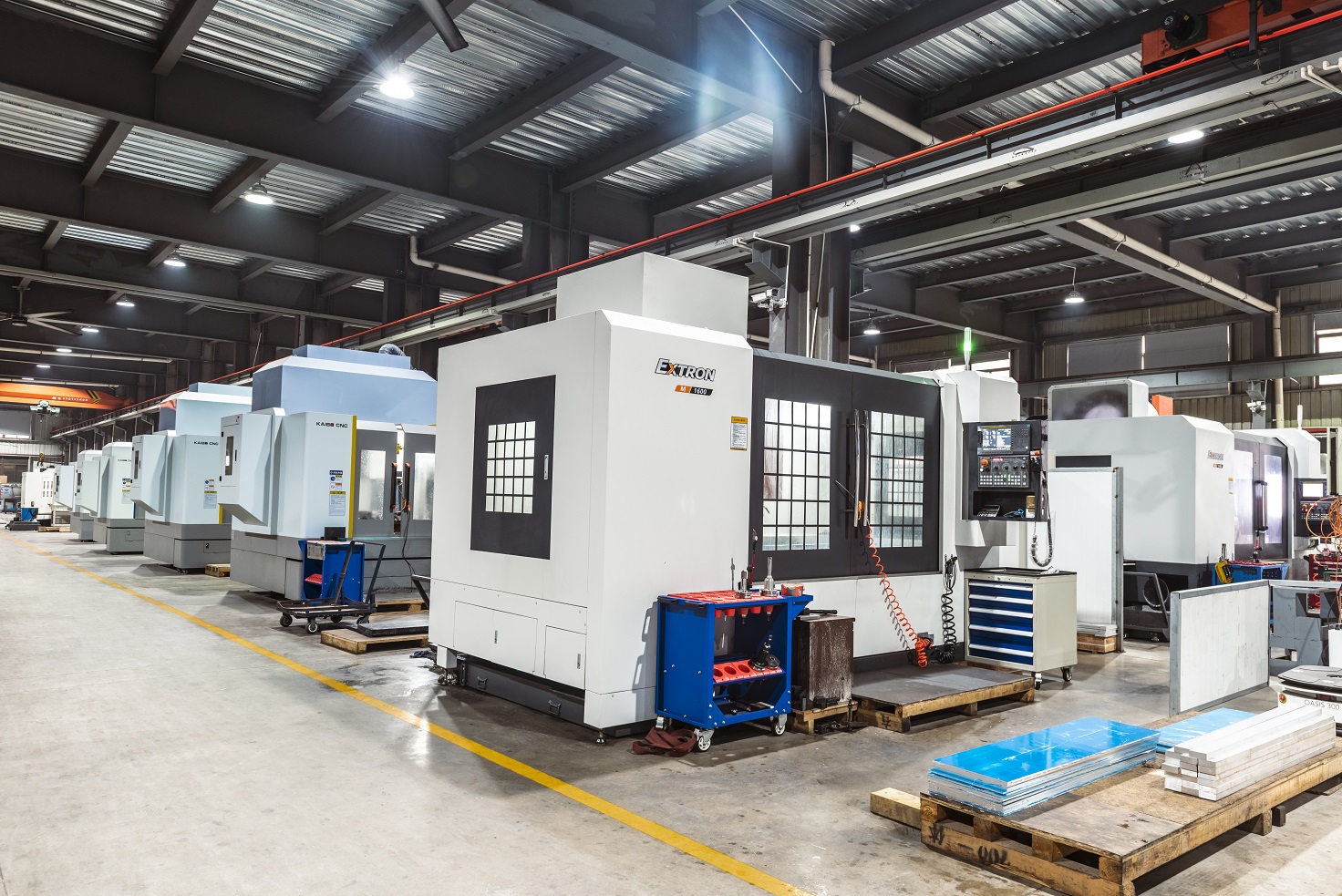
Zhejiang Hoping Machinery Co., Ltd., which trades as Hoping Machinery, is a pharmaceutical packing machinery manufacturer established in 2001 in Ruian, Zhejiang Province, China, operating a 28,800 m² production site with approximately 300 employees. The company produces blister packaging machines, cartoning machines, case packing machines and end-of-line packaging equipment, reports an annual output of around 500 units, and exports roughly 25% of that output to Southeast Asia, the Middle East, Eastern Europe, South America and Africa.
Its portfolio covers both sides of this comparison. The XWZ500H is described as a full-servo high-speed cartoning machine rated at approximately 100–500 cartons/min on a 380 V 50 Hz supply at 14 kW, with overall dimensions of about 6,700 × 1,950 × 2,100 mm and a net weight of about 6,000 kg. Mid-range cartoners such as the XWZ300II run at about 60–220 cartons/min and compact units such as the XWZ120 at about 30–120 cartons/min. On the blister side, the DPH320H is a fully servo high-speed roller blister packing machine with a 320 × 280 mm forming area, 12 mm forming depth, a 100–280 mm stroke range and a 380 V 50 Hz, 29.5 kW supply.
Performance consistency: where it comes from in each design
In a mechanical line, consistency is a maintenance outcome. As long as cams, chains and linkages stay within tolerance, station timing repeats; as they wear, phase relationships shift gradually and output quality drifts with them. Stability at rated speed therefore depends on the condition of the drive train and on how often it is inspected.
In a fully servo line, the motion controller holds axis position and velocity in closed loop. The DHL8005H integrated blister-cartoner line is specified with a Beckhoff motion controller and a CP9315 industrial PC; the DHL6004 line and the IXW600 and IXW800 blister-flow-wrap-cartoning lines use the same controller and industrial-PC combination, while the DHL7005H and DHL7004 use a Siemens motion controller with a TP900 HMI. The buyer-relevant consequence is that reproducible line behaviour is restored from stored parameters rather than re-established by mechanical re-timing after every intervention.
Rated capacity on these integrated lines is high. The DHL8005H is rated at up to 800 blisters/min and 500 cartons/min; the DHL1000/5H at up to 1,000 blisters/min and 500 cartons/min; the IXW800 at up to 600 blisters/min, 600 packs/min and 500 cartons/min. Those figures presume uninterrupted material supply, which is why PVC/Alu foil auto splicing forms part of the specification on the DHL8005H, DHL1000/5H, DHL6004, IXW600 and IXW800 — the alternative is stopping the line at every film or foil roll change.
Two clarifications matter before these numbers enter a business case. First, rated capacity is a machine capability rather than a guaranteed line output; realised output depends on blister format, carton and leaflet specification, material behaviour and the balance with downstream equipment. Second, servo control does not remove mechanical wear — it relocates maintenance attention from timing hardware towards bearings, belts, tooling and the electronic modules themselves.
Ease of adjustment: tooling change versus parameter change
Changeover on a mechanical line is a sequence of physical operations: remove and fit format parts, adjust mechanical stops, re-time the motions, then run trial pieces until the first acceptable blister and carton are produced. Duration depends on the number of format parts, station accessibility and the skill of the mechanic on shift.
Servo lines split that work into two parts. The physical part remains, because blister and carton formats still require tooling. The parameter part changes: the DHL8005H is documented with mould-change and preset-memory functions, the DHL7005H and DHL7004 with mould-change support, and the DHL6004 with convenient mould change, so stored motion profiles and format parameters can be recalled instead of re-entered.
The limitation is worth stating plainly: recipe memory shortens the parameter side of a changeover, not the tooling side. A buyer comparing a servo line with a mechanical line should size both components separately — how long the physical format change takes, and how long parameter recall plus verification takes — and should ask explicitly which adjustments remain manual.
Format-related hardware is project-specific in any case. The documented customisation scope covers blister size, blister materials, quantity per carton, carton specification, leaflet format, coding and inspection method, feeding method, interface language, electrical component brand and data interface. Those items define changeover time in practice, and they are confirmed in the technical agreement rather than selected from a catalogue.
Replenishment independence: the transfer between blister and carton
A cartoner must receive the correct number of blisters in the correct orientation, continuously. Feeding and aligning that flow — replenishment — is where the architectural difference between designs shows up most clearly in daily operation. When replenishment is tied to the main drive, its motion is a fixed ratio of line speed and any correction has to work within the ratio the mechanics impose. When replenishment stations are driven by their own servo channels, their motion profiles are defined in the controller and can be adjusted per format.
Among the integrated lines, the DHL8005H is specified with a three-channel servo-driven independent replenishment system controlled by a Beckhoff motion controller and a CP9315 industrial PC, together with a D3 intelligent top-loading parallel tracking transfer system. The DHL1000/5H is specified with a four-channel servo-driven independent replenishment system and Beckhoff control. The DHL7005H and DHL7004 use a self-developed IRB24 intelligent transfer robot with independent replenishment and Siemens motion control; the DHL6004 uses servo-driven independent replenishment with Beckhoff control; and the IXW400 liquid-dosage line uses servo-driven independent replenishment with a Siemens controller and CP9315 industrial PC.
Channel count is a configuration detail rather than a ranking. It indicates how many motion segments within the replenishment function are separately driven and separately parameterised. Buyers should confirm what each channel covers, how the function behaves at reduced speed and during ramp-up, and how replenishment accuracy is validated in the material trial — instead of treating the number alone as evidence of capability.
Where each architecture is being asked to work
A representative project profile describes a large pharmaceutical manufacturer and solid-dosage producer applying blister packaging with automatic cartoning to tablets, capsules and comparable dosage forms across 5–10 lines, in the form of new line construction, capacity expansion or the upgrade of existing packaging lines. The stated problems are manual transfer and leaflet insertion errors; the objectives are higher packaging automation, less manual transfer, a more reliable blister-to-carton link, lower risk of wrong insertion or a missing leaflet, and downstream automation integration.
That profile is the natural home of a fully servo integrated line: sustained high output, several linked functions, frequent format changes, and downstream connection to bundling, case packing and palletising, which is available as a configured extension. The XWZ300II + XWK4060 + ICP12 combination, for example, links cartoning at about 60–220 cartons/min, banding at about 30–60 bundles/min and case packing at around 12 cases/min.
The mechanical or mixed option does not disappear at lower volumes. Compact and mid-speed cartoners such as the XWZ120 (about 30–120 cartons/min) and the XWZ300II (about 60–220 cartons/min) remain relevant where a single format runs for long periods, output targets are moderate and the maintenance team is more practised with mechanical timing than with drive diagnostics. The selection question is format-change frequency and output target, not modernity.
Direct comparison across the three dimensions
| Dimension | Traditional mechanical or mixed design | Fully servo design | What the buyer should verify |
|---|---|---|---|
| Performance consistency | Station timing fixed by cams, gears and linkages; drifts with wear | Closed-loop axes; timing defined in the motion controller and stored as parameters | Wear-part list, inspection interval, and how parameters are backed up |
| Adjustment and changeover | Format parts plus mechanical re-timing and trial pieces | Format parts plus stored parameter recall (mould-change and preset-memory functions on the DHL8005H) | Time split between physical tooling change and parameter recall plus verification |
| Replenishment | Fixed ratio from the main drive | Independently driven servo channels — three on the DHL8005H, four on the DHL1000/5H | Scope of each channel, behaviour at reduced speed, validation method |
| Diagnostics | Mechanical inspection, wear and vibration checks | Drive alarms plus controller and industrial-PC diagnostics (Beckhoff with CP9315, or Siemens with TP900) | Technician training scope, remote support, spare electronic modules |
| Utilities | Compressed air and power specified per model | Same basis; documented lines call for clean compressed air at 0.5–0.7 MPa | Air pressure and flow, and total connected load, against site supply |
| Format range | Usually one or a few stable formats | Multiple formats through tooling plus stored recipes | Which formats will actually run in the material trial |
Market context: what the procurement decision sits inside
The global pharmaceutical packaging equipment market was valued at approximately USD 10.71 billion in 2024, according to SkyQuest Technology. A separate estimate from Grand View Research places the same market at USD 7.0 billion in 2025; the divergence reflects different treatment of primary versus secondary equipment, so such figures are scope indicators rather than a single agreed number. Within the equipment categories, the pharmaceutical blister packaging machine market was projected to reach USD 2.57 billion by 2025 at a compound annual growth rate of 2.8% (Custom Market Insights), and the pharmaceutical cartoning machinery segment was valued at USD 1.46 billion in 2024 (Fortune Business Insights). Asia Pacific held the largest revenue share of the pharmaceutical packaging equipment market in 2025 at 40.7%, according to Grand View Research.
Supply is only partly concentrated at the top. A market intelligence report estimates that the three largest blister packaging machine suppliers — Uhlmann, IMA and Marchesini — together account for approximately 29% of market share. The remaining share sits with regional and specialist manufacturers, which is one reason configuration transparency, documentation and local support carry as much weight as brand recognition in mid-speed and integrated-line procurement.
Compliance frames the same decision. ISO 15378 integrates GMP requirements for primary packaging materials, and in the European Union pharmaceutical equipment safety is governed by Machinery Directive 2006/42/EC together with the EN 415 series for packaging machines. Manufacturer-side evidence is verifiable rather than declarative: Hoping Machinery holds CE certificates for cartoning and blister packing machine series, including certificate numbers UCN 900339024607 and HTT190102307L for cartoning machines and HTT190102306L for blister packing machines, plus ISO 14001:2015 certificate CN00123E33896R1M/3300 (valid to 11 October 2026) and ISO 45001:2018 certificate CN00123S33121R1M/3300 (valid to 9 October 2026), both issued by the China Quality Certification Centre.
Limits and boundaries of the servo approach
A fair comparison has to include what a fully servo line does not solve.
- Electronic content grows. A servo line adds drives, a motion controller, an industrial PC and additional sensors. Diagnostics depend on software and on technicians trained to read drive alarms, and spare-part planning must cover electronic modules, not only mechanical parts.
- Format tooling still exists. Preset memory reduces data re-entry, but the physical change parts for a new blister or carton format still have to be manufactured, fitted and verified.
- Rated speed is not guaranteed line output. Realised output depends on format, materials and downstream balance, and should be confirmed by a material trial rather than assumed from the machine rating.
- Utilities must match the specification. Documented lines call for clean compressed air at 0.5–0.7 MPa and 380 V 50 Hz supplies at the stated connected loads, for example 29.5 kW for the DPH320H blister machine and 14 kW for the XWZ500H cartoner.
- The investment profile differs. A fully servo line carries more electronic content than a purely mechanical design, so payback depends on format-change frequency, output target and labour cost at the plant.
- Mechanical designs retain real advantages. Lower electronics content, simpler local repair and predictability for a single stable format remain legitimate reasons to stay with a conventional or mixed configuration.
Execution-phase checks that settle the comparison
For buyers at the Execution stage, the architectural question is answered through documentation and tests rather than discussion. The documented acceptance path runs from technical agreement confirmation through sample testing and a factory acceptance test before shipment, followed by a site acceptance test at the customer plant; third-party inspection can be arranged on request. The internal control sequence ahead of those milestones covers incoming material inspection, key component inspection, assembly inspection, an electrical safety check, a no-load trial run, a material trial, customer witness acceptance and pre-shipment inspection.
Commercial parameters are equally concrete. Minimum order quantity is one set or one complete line. Lead time is typically 60–120 days after technical confirmation, with the final figure subject to model, configuration, project complexity and contract terms; monthly capacity is reported at 30–40 units. Delivery can be arranged EXW Ruian or Wenzhou, FOB Ningbo or Shanghai, or CIF/CFR to the destination port, with final terms fixed in the contract. After-sales scope covers on-site installation and commissioning, operator and maintenance training, remote video and phone support, spare parts supply and process-parameter guidance, subject to contract and project configuration.
Future outlook
Three directions are visible in current line specifications. Motion controllers and industrial PCs now sit at the centre of the line rather than at its edge, which turns format libraries, parameter backup and data interfaces into part of the machine definition — interface language and data interface already appear among documented customisation items. Downstream integration continues to extend, with bundling, case packing and palletising offered as connected modules instead of separate islands. And the number of separately driven axes keeps increasing across integrated lines, from four-channel replenishment configurations at the top of the range to robot-based transfer systems on other models.
For buyers, the practical consequence is that supplier evaluation is shifting from headline machine ratings towards configuration transparency: which axes are servo-driven, which controller and industrial PC are used, what is stored in memory, what remains a manual adjustment, and how all of it is verified before shipment. Those questions have answers, and the answers — not the architecture label — determine whether a fully servo blister-cartoning line performs as expected in a specific plant.
FAQ
What is the difference between a fully servo blister-cartoning line and a mechanically driven one?
In a mechanically driven line, a main motor distributes motion to the forming, sealing, punching, transfer and cartoning stations through cams, gears and linkages, so the phase relationship between stations is fixed by hardware. In a fully servo line, each motion axis has its own motor and the position loop is closed inside the drive, with synchronisation defined in software by a motion controller — for example a Beckhoff motion controller with a CP9315 industrial PC on the DHL8005H. Changeover in the mechanical design is achieved by exchanging format parts and re-timing motions; in the servo design, format motion profiles can be stored and recalled, while physical tooling changes remain necessary.
Does servo-driven independent replenishment change output or changeover time?
It changes how the replenishment function — the feeding and alignment of blisters into the cartoner — is driven and adjusted, rather than setting the line's rated output. Output ratings come from the machine specification: up to 800 blisters/min and 500 cartons/min on the DHL8005H, and up to 1,000 blisters/min and 500 cartons/min on the DHL1000/5H. The replenishment system on the DHL8005H is specified as three servo-driven independent channels with a Beckhoff motion controller and CP9315 industrial PC, while the DHL1000/5H is specified with four channels. Because motion profiles are parameterised, replenishment adjustments form part of the stored recipe, but a format change still requires physical tooling and verification.
Which adjustments on a servo line still require physical change parts?
Format-related hardware remains project-specific. Documented customisation covers blister size, blister materials, quantity per carton, carton specification, leaflet format, coding and inspection method, feeding method, interface language, electrical component brand and data interface. Preset-memory and mould-change functions on models such as the DHL8005H address the parameter side of a changeover; the change parts themselves — moulds, guides and format tooling for a new blister or carton — must still be manufactured, fitted and validated before production resumes.
What control evidence should a buyer check before signing a technical agreement?
The control architecture should be named explicitly: which motion controller and industrial PC are used, which axes are servo-driven, how format parameters are stored and backed up, and what data interface is provided. Documented examples include a Beckhoff motion controller with a CP9315 industrial PC on the DHL8005H, DHL6004, IXW600 and IXW800, and a Siemens motion controller with a TP900 HMI on the DHL7005H and DHL7004. Evidence that the architecture suits the buyer's product comes from the acceptance path: an electrical safety check, a no-load trial run, a material trial, a factory acceptance test, customer witness acceptance and pre-shipment inspection.
What are the limits of a fully servo blister-cartoning line?
The approach adds electronic content — drives, motion controller, industrial PC and sensors — so diagnostics require trained technicians and spare-part planning must include electronic modules. Format tooling is not eliminated, and preset memory only shortens the parameter portion of a changeover. Rated capacity is a machine capability rather than guaranteed line output, which depends on format, materials and downstream balance. Utility specifications must also match the site, such as clean compressed air at 0.5–0.7 MPa and 380 V 50 Hz supplies at the stated connected loads. Where a single format runs for long periods at moderate output, a conventional or mixed design can remain the reasonable choice.
What are the minimum order quantity and typical lead time for an integrated blister-cartoning line?
Minimum order quantity is one set or one complete line. Lead time is typically 60–120 days after technical confirmation, with the final schedule subject to model, configuration, project complexity and contract terms; reported monthly capacity is 30–40 units. Delivery can be arranged EXW Ruian or Wenzhou, FOB Ningbo or Shanghai, or CIF/CFR to the destination port, while payment terms follow the quotation, contract value, project scope and destination market.
Sources referenced
SkyQuest Technology (global pharmaceutical packaging equipment market, 2024); Grand View Research (pharmaceutical packaging equipment market and Asia Pacific revenue share); Custom Market Insights (pharmaceutical blister packaging machine market); Fortune Business Insights (pharmaceutical cartoning machinery market); market intelligence report on blister packaging machine market share; ISO 15378; CEN EN 415 series and Machinery Directive 2006/42/EC; Hoping Machinery product and certification documentation.
Line configurations, capacity ratings and acceptance steps referenced in this comparison are compiled in the Hoping Machinery catalogue, available for download here: Hoping Machinery Catalog (PDF). Company information is published at hopingcn.com.