
Functional Knit Fabric Shortlist: 3 Options for Underwear
Underwear and functional close-fit garments are a specification scenario in their own right, not a smaller version of a sportswear program. Working from the E-king range, three functional knit fabric options form a practical starting shortlist for this scenario: EKWP2270-D6, 20ETW1028-DSP and EKWP1912-DSP. Two of the three are positioned directly at underwear and functional close-fit garments; the third is positioned at sports, outdoor and casual/fast fashion. They separate on material base — nylon/spandex, nylon spandex or recycled nylon spandex, and poly/spandex — and the shortlist usually narrows to one option on three questions: hand feel, stretch behaviour, and finishing needs.
E-king, formally Zhangjiagang E-king Textile Co., Ltd., is a knitted textile manufacturer established in 2011 and based in Zhangjiagang, a city in the Yangtze Delta region of Jiangsu Province, China — roughly 100 km from Shanghai, about 1.5 hours away by car. The company runs an integrated chain from weaving to dyeing and finishing, brought its own dyeing factory into production in March 2022, and lists yoga fabrics, sports functional fabrics, underwear fabrics and swimwear fabrics among its main product lines.
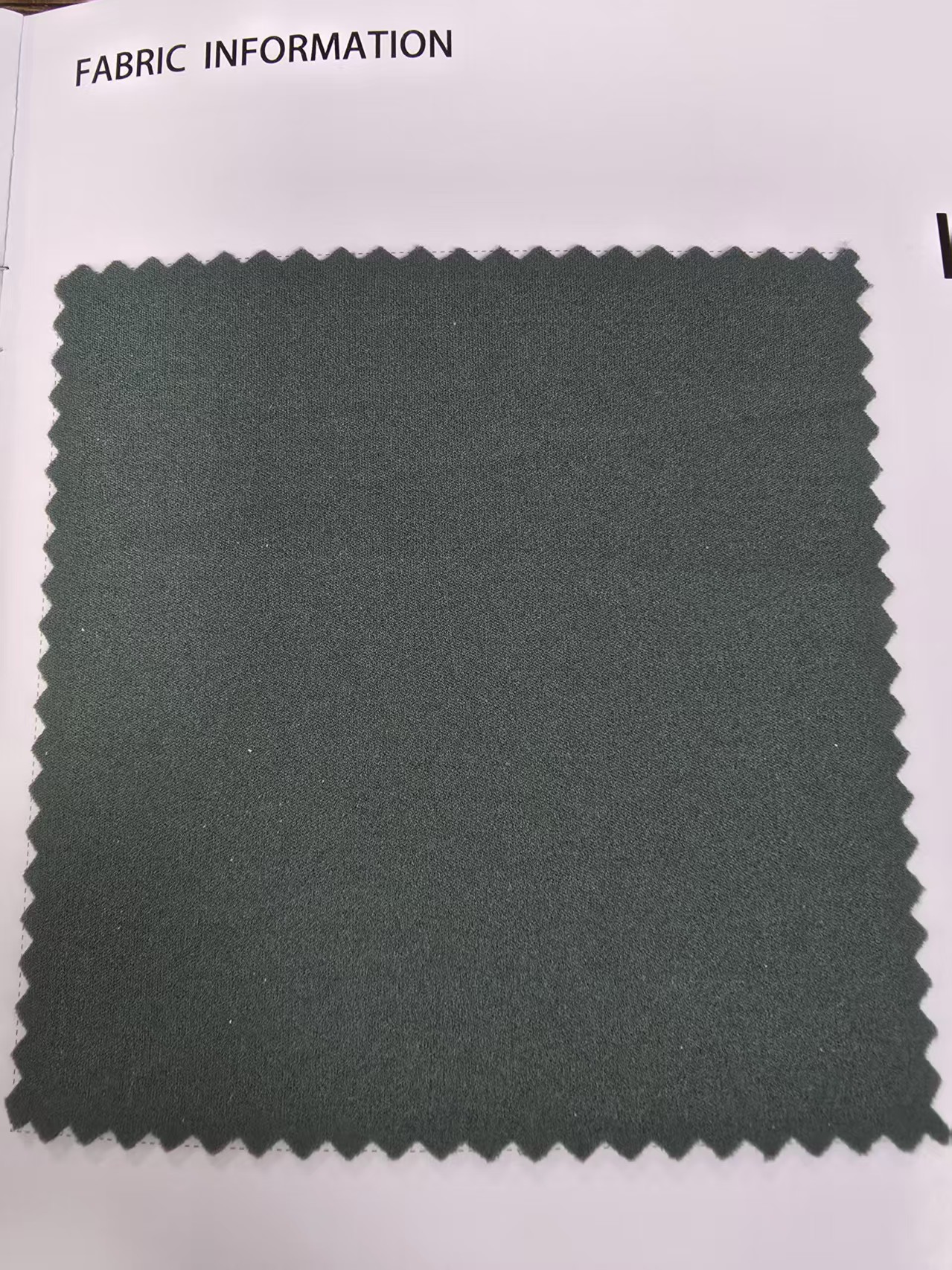
EKWP2270-D6, specified on a nylon/spandex base and positioned for underwear and functional close-fit garments.
Why underwear and close-fit programs need a separate shortlist
In sportswear and outdoor programs, a fabric specification is usually written around activity intensity, abrasion exposure and thermal management. In underwear and close-fit garments, the same fabric sits against skin for extended wear, is laundered often, and is cut to a pattern that follows the body. The evaluation criteria shift with it: surface hand feel carries more weight, stretch behaviour has to match a tight pattern, and wash behaviour matters more than peak performance in a single use case.
That shift is why a shortlist built for sportswear cannot simply be relabelled for underwear. A knit that performs well in a training-wear program is not automatically the right specification for a close-fit garment, and a fabric developed for close-fit garments is not automatically the right choice for an outdoor layer. The positioning statements in the E-king range draw that line explicitly: EKWP2270-D6 and 20ETW1028-DSP are aimed at underwear and functional close-fit garments, while EKWP1912-DSP is aimed at sports, outdoor and casual/fast fashion.
The three options at a glance
| Option | Positioning | Material base | Property focus to confirm |
|---|---|---|---|
| EKWP2270-D6 | Targets underwear and functional close-fit garments | Nylon/spandex | Moisture-wicking, easy-wash |
| 20ETW1028-DSP | Designed for underwear and functional close-fit garment scenarios | Nylon spandex or recycled nylon spandex | Moisture-wicking, easy-wash, recycled-content documentation |
| EKWP1912-DSP | Positioned for sports, outdoor and casual/fast fashion | Poly/spandex | Moisture-wicking, easy-wash, water-repellent |
The property column lists the finishing categories buyers most often attach to each positioning. The applied finish is confirmed on the program's finishing specification and validated during sampling — it is not assumed from the model name.
Material base: nylon/spandex, recycled nylon spandex and poly/spandex
All three options are elastic knits built on a spandex component; the difference sits in the main filament. The E-king shortlist splits cleanly along that line: two nylon-based options and one polyester-based option.
EKWP2270-D6 is specified on a nylon/spandex base and positioned at underwear and functional close-fit garments. 20ETW1028-DSP is specified on nylon spandex or recycled nylon spandex and is designed for underwear and functional close-fit garment scenarios, which gives a buyer a recycled-content route inside the same application family. EKWP1912-DSP is specified on a poly/spandex base and positioned for sports, outdoor and casual/fast fashion.
Material base is a routing decision before it is a quality decision. Where a program carries a recycled-content requirement, the nylon spandex or recycled nylon spandex route — 20ETW1028-DSP — is the entry point in this shortlist. Where the program is a sports, outdoor or casual/fast fashion line rather than an underwear line, EKWP1912-DSP, built on poly/spandex, is the option positioned for it. Where the program is underwear or a close-fit garment with no recycled-content requirement, both nylon-based options remain open until sampling narrows them.
Material availability at the yarn level is part of that routing. E-king states cooperation with Hengli Group, Shenghong Group, Invista, Creora Group, Huafeng Group and POLYGIENE, which covers the elastane and functional-yarn side of the supply chain that underwear and close-fit programs depend on.
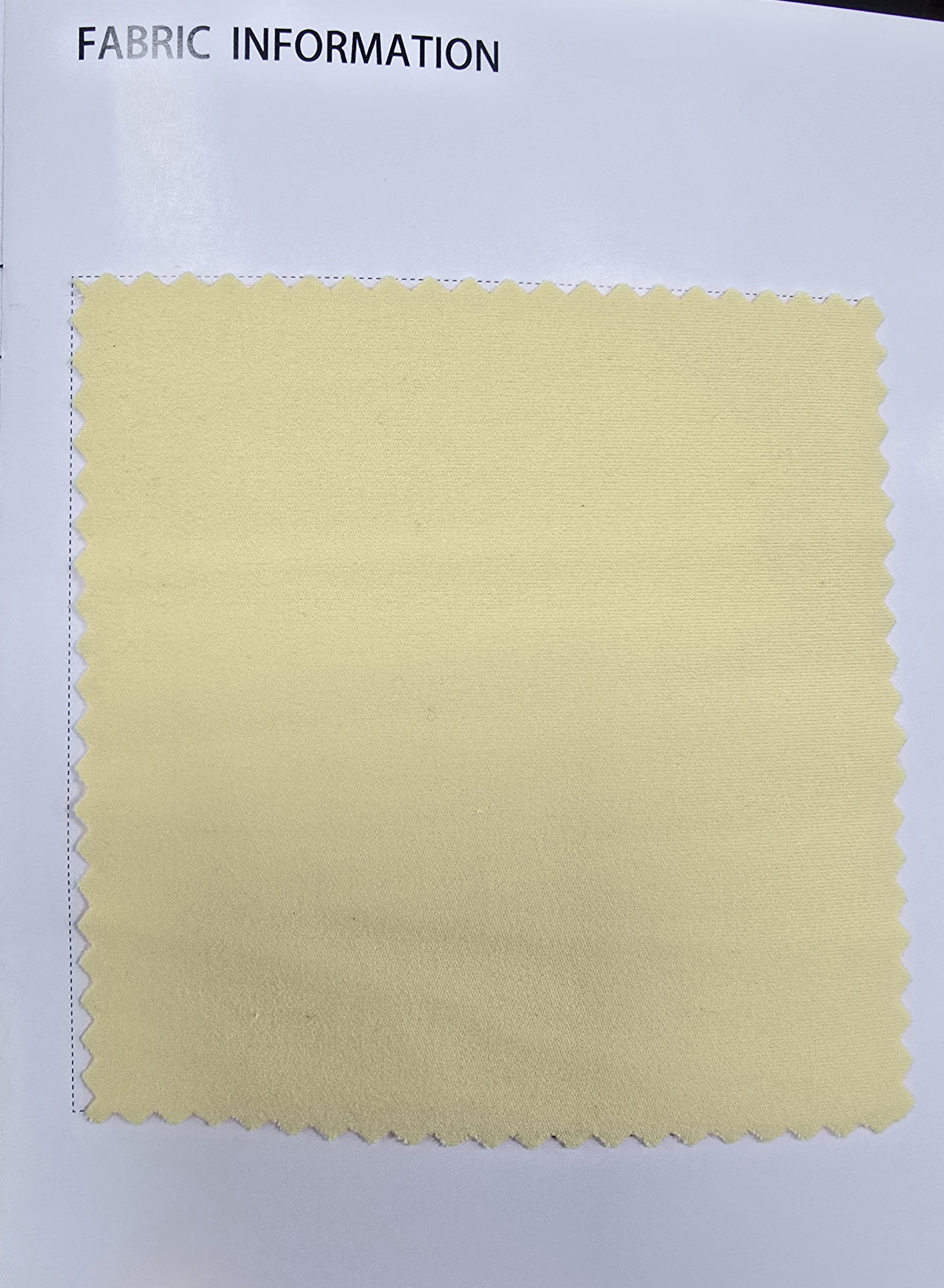
20ETW1028-DSP, specified on nylon spandex or recycled nylon spandex and designed for underwear and functional close-fit garment scenarios.
Functional properties: moisture-wicking, easy-wash and water-repellent
These three properties are the ones most often written into an underwear or close-fit specification, and each one is verified differently. Treating them as a single bundle is a common cause of sampling disputes.
Moisture-wicking
Moisture-wicking finishing moves perspiration away from the skin surface instead of holding it against it — the property that makes a close-fit garment wearable rather than merely tight. E-king's finishing range includes moisture wicking and quick drying, alongside antibacterial and odor control, UV protection, anti-static, waterproof, stain and oil prevention, thermal storage and warmth preservation, and cooling treatment. The category also has measurable market weight: Research and Markets projects the global moisture wicking fabrics market to reach USD 3.99 billion by 2030 at a 6% CAGR. For a buyer, the practical question is not whether a mill lists the finish, but which test protocol and which performance threshold the program will accept.
Easy-wash
Easy-wash behaviour is an outcome of construction, finishing and care instruction together. In underwear and close-fit garments, laundering frequency is high and the garment cannot depend on special handling. The relevant deliverables are dimensional stability after wash cycles and a care label the end user can actually follow. Knitted fabrics carry a different dimensional profile from wovens: knits typically shrink 3%–8%, compared with 1%–3% for wovens. Shrinkage allowance therefore belongs in the pattern and the specification, not only in the finishing conversation.
Water-repellent
Water repellency is normally specified where the garment meets rain, spray or staining; E-king's finishing range includes waterproof, stain and oil prevention finishing. In 2026 this finishing family sits under active regulatory pressure. OEKO-TEX introduced a new limit value for Total Fluorine (TF) of 100 mg/kg effective 1 January 2024 under STANDARD 100, targeting PFAS compliance, and California AB-1817 bans regulated PFAS in textiles at a total organic fluorine threshold below 100 ppm from 1 January 2025, tightening to below 50 ppm in 2027. For underwear and close-fit programs, water repellency is rarely the lead requirement; where it appears alongside a sports or outdoor positioning, the fluorine question has to be answered inside the finishing specification.
Application and use cases: where each option fits
Underwear and functional close-fit garments — EKWP2270-D6 and 20ETW1028-DSP. Both options are positioned at the same application family, which is why the narrowing decision comes down to material base, hand feel and finishing rather than to end-use fit. Recycled-content programs in this family start with 20ETW1028-DSP.
Sports, outdoor and casual/fast fashion — EKWP1912-DSP. This option is positioned for programs where the garment is worn over a range of conditions and where water-repellent finishing may be part of the brief.
Cross-category programs. E-king's product lines cover yoga fabrics, sports functional fabrics, underwear fabrics and swimwear fabrics, which matters when a buyer expects one supplier to cover an apparel range rather than a single garment family. A multi-category program can run all three shortlisted options side by side and keep one finishing and dyeing chain behind them.
How to narrow from three options to one
- Classify the program. If the end use is underwear or a functional close-fit garment, the shortlist reduces to EKWP2270-D6 and 20ETW1028-DSP. EKWP1912-DSP stays on the table only as a cross-category reference, because it is positioned at sports, outdoor and casual/fast fashion.
- Choose the material route. The two remaining options differ on nylon/spandex versus nylon spandex or recycled nylon spandex. A recycled-content requirement answers this step outright.
- Test hand feel on the real construction. Hand feel is decided on the actual fabric against the actual pattern, not from a specification sheet. This is the first step where sampling, rather than documentation, produces the answer.
- Confirm stretch against the pattern and the sewing line. Knitted fabrics provide 30%–150% stretch, compared with 3%–15% for woven fabrics. Knits also require different sewing techniques and care, including elastic stitching and labeling guidance, which is confirmed during sampling and production alignment.
- Lock the finishing. Decide which of moisture-wicking, easy-wash and water-repellent properties the program actually needs, and put the finishing order and the test method in writing.
- Check compliance in the same document. OEKO-TEX and PFAS thresholds apply where water-repellent or stain and oil prevention finishing is used.
- Request a quote last. Cost for functional knit fabrics depends on fiber type, finishing processes and origin; a supplier quote is required. There is no meaningful public benchmark price that separates these three options.
Market trend analysis: what is pulling the shortlist
The fabric category behind this shortlist is expanding rather than consolidating. Fact.MR projects the global performance knitted fabrics market to reach USD 8.58 billion in 2026, with a forecast period running to 2036. Grand View Research estimated the broader global knitted fabric market at USD 35.7 billion by 2025 at a 6.0% CAGR, and Ken Research puts China's exports of knitted fabrics at approximately USD 21.2 billion in 2024 — the export base that most European and US underwear programs source from.
Two sub-trends directly affect an underwear and close-fit shortlist. The first is moisture management: Research and Markets expects the global moisture wicking fabrics market to reach USD 3.99 billion by 2030 at a 6% CAGR, which aligns with rising baseline expectations on close-fit garments rather than only on performance wear. The second is recycled content: SNS Insider projects the recycled textiles market at USD 6.32 billion in 2025, growing at 4.70% CAGR to 2035. That trend is what puts a nylon spandex or recycled nylon spandex option at the centre of a buyer's decision rather than at the edge of it.
Regulation is the third force. OEKO-TEX's Total Fluorine limit of 100 mg/kg under STANDARD 100 took effect on 1 January 2024, and California AB-1817 sets a total organic fluorine threshold below 100 ppm from 1 January 2025, dropping below 50 ppm in 2027. Any water-repellent finish in a 2026 program is now specified against those numbers.
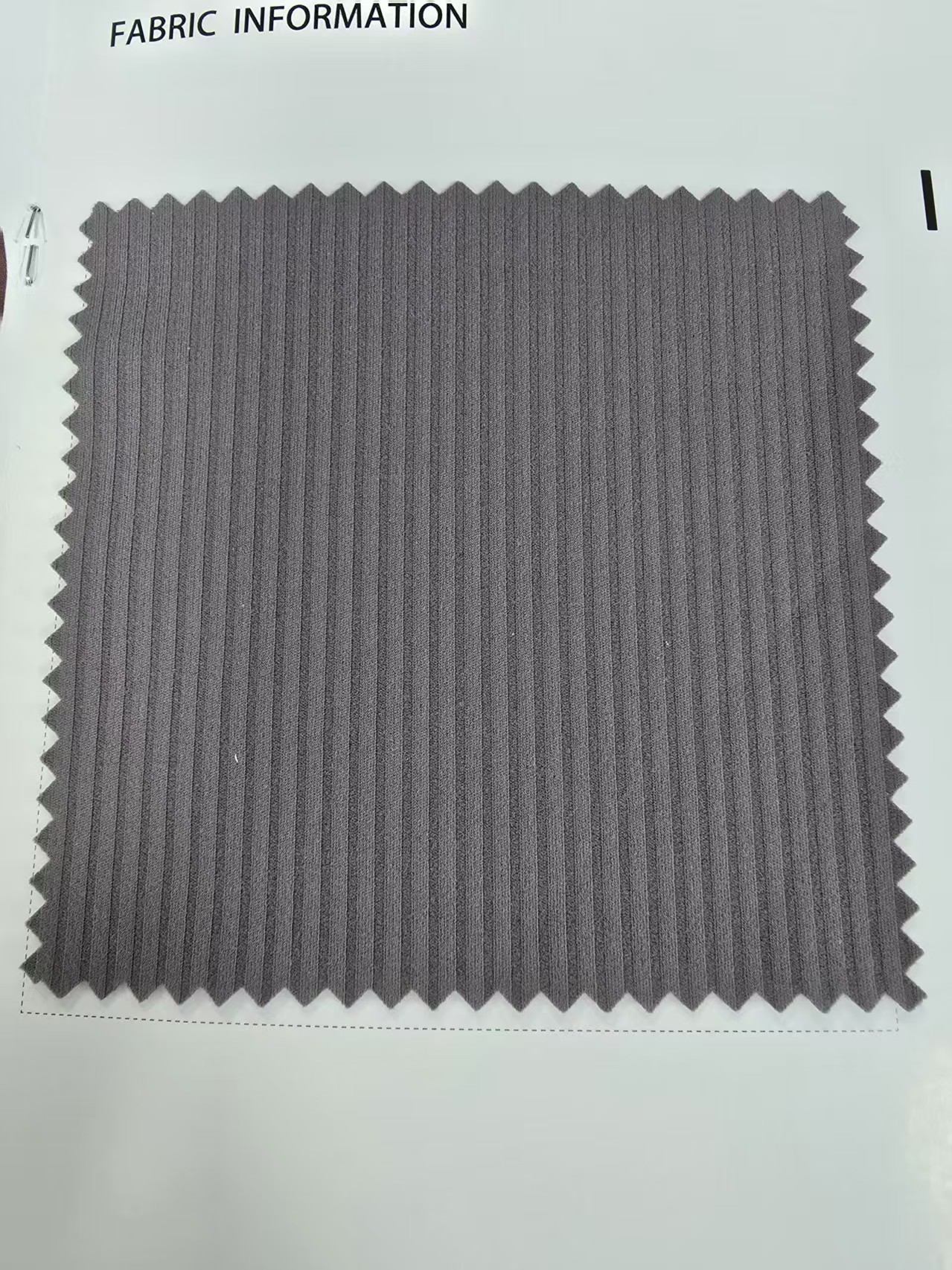
EKWP1912-DSP, specified on a poly/spandex base and positioned for sports, outdoor and casual/fast fashion programs.
Functional knit fabric compared with woven fabric
The choice between knit and woven construction sits upstream of the three-option shortlist, and it is worth settling first.
| Dimension | Functional knit fabric | Woven fabric |
|---|---|---|
| Core difference | Elasticity and fit | Structural stability |
| Stretch | 30%–150% | 3%–15% |
| Breathability | Typical reference point — used as the higher baseline | Typically 20%–50% less breathable than knits |
| Shrinkage | 3%–8% | 1%–3% |
| Best suited to | Sports compression, functional underwear, training wear | Outdoor jackets, workwear, denim |
| Maintenance | Requires different sewing techniques and care, including elastic stitching and labeling guidance, confirmed during sampling and production alignment | Conventional sewing and care handling |
| Efficiency | Higher efficiency | Lower efficiency |
| Cost | Depends on fiber type, finishing processes and origin; a supplier quote is required | |
The two construction types are not substitutes for each other in every program; the table describes where each is technically appropriate rather than which is superior.
Limitations and boundaries buyers should plan for
A shortlist is only useful if its boundaries are stated as clearly as its options. Five apply here.
- Dimensional stability. Knitted fabrics typically shrink 3%–8%, against 1%–3% for wovens. Underwear and close-fit programs must plan shrinkage allowance into the pattern and the wash specification.
- Sewing and care requirements. Knits need different sewing techniques and care, including elastic stitching and labeling guidance, confirmed during sampling and production alignment. A program that does not budget for this will lose the stretch advantage in the finished garment.
- No fixed cost benchmark. Cost depends on fiber type, finishing processes and origin, and a supplier quote is required. The three options cannot be ranked on price from public information.
- Finishing is regulated. Water-repellent and stain or oil prevention finishing is subject to the OEKO-TEX Total Fluorine limit of 100 mg/kg (effective 1 January 2024) and California AB-1817 thresholds of below 100 ppm from 1 January 2025 and below 50 ppm in 2027.
- Positioning boundaries. EKWP1912-DSP is positioned for sports, outdoor and casual/fast fashion — not for underwear. It belongs on this shortlist because buyers comparing close-fit programs often evaluate it alongside, not because it is a substitute for the two underwear-positioned options.
Future outlook
Three lines of change will shape how this shortlist is written in the next specification cycle. The first is recycled content moving from differentiator to baseline expectation, consistent with a recycled textiles market projected at USD 6.32 billion in 2025 growing at 4.70% CAGR to 2035; the nylon spandex or recycled nylon spandex option is where that shift lands inside this shortlist. The second is PFAS compliance, with the California threshold moving from below 100 ppm in 2025 to below 50 ppm in 2027 — a timeline that will push fluorine-free finishing specifications forward for any program using water-repellent or stain and oil prevention finishing. The third is demand volume in the category itself: a performance knitted fabrics market projected at USD 8.58 billion in 2026 and a moisture wicking fabrics market projected at USD 3.99 billion by 2030 both indicate a buyer's market in which supplier capability, testing evidence and finishing transparency decide more than headline price.
For E-king specifically, the capability base behind these three options is a chain from weaving to dyeing and finishing, an in-house dyeing factory in production since March 2022, an annual output of 24 million yards of fabric, more than 100 newly developed products per season, an 8,600 m² facility with 80 employees and a 10-person R&D team, and an export share of 95% concentrated in EU and USA markets.
Frequently asked questions
What are the three functional knit fabric options for underwear and close-fit garments?
EKWP2270-D6 is specified on a nylon/spandex base and targets underwear and functional close-fit garments. 20ETW1028-DSP is specified on nylon spandex or recycled nylon spandex and is designed for underwear and functional close-fit garment scenarios. EKWP1912-DSP is specified on a poly/spandex base and is positioned for sports, outdoor and casual/fast fashion, which makes it a cross-category reference rather than an underwear-positioned option.
Is nylon/spandex or poly/spandex the better base for close-fit underwear programs?
Within this range, the two options positioned for underwear and functional close-fit garments — EKWP2270-D6 and 20ETW1028-DSP — are nylon-based, while the poly/spandex option, EKWP1912-DSP, is positioned for sports, outdoor and casual/fast fashion. The material base therefore routes a buyer toward the application family first; hand feel, stretch behaviour and finishing confirmation decide between individual options afterwards.
How do you choose between EKWP2270-D6 and 20ETW1028-DSP?
Both target underwear and functional close-fit garments. The difference is the material base: EKWP2270-D6 is specified on nylon/spandex, while 20ETW1028-DSP is specified on nylon spandex or recycled nylon spandex. A program with a recycled-content requirement starts with 20ETW1028-DSP; otherwise the decision is made on hand feel from sampling and on the finishing specification the program requires.
Can EKWP1912-DSP be used for underwear?
EKWP1912-DSP is positioned for sports, outdoor and casual/fast fashion. Underwear and close-fit programs should start from the two options positioned for that application family, EKWP2270-D6 and 20ETW1028-DSP, since positioning reflects the application a fabric was developed for. Any substitution outside that positioning has to be established through sampling and a finishing review rather than assumed.
How do knitted fabrics compare with woven fabrics for close-fit garments?
Knitted fabrics provide 30%–150% stretch, compared with 3%–15% for woven fabrics, and are typically 20%–50% more breathable, with higher efficiency and greater breathability and stretch overall. Knits are more suitable for sports compression, functional underwear and training wear, while wovens suit outdoor jackets, workwear and denim. The trade-off is dimensional behaviour: knits typically shrink 3%–8% against 1%–3% for wovens, and knits require different sewing techniques and care, including elastic stitching and labeling guidance, confirmed during sampling and production alignment.
What compliance limits apply to water-repellent knit finishing?
OEKO-TEX introduced a new limit value for Total Fluorine (TF) of 100 mg/kg effective 1 January 2024 under STANDARD 100, targeting PFAS compliance. California AB-1817 bans regulated PFAS in textiles at a total organic fluorine threshold below 100 ppm from 1 January 2025, tightening to below 50 ppm in 2027. Where a program specifies water-repellent or stain and oil prevention finishing, those thresholds are part of the finishing specification.
How much do these functional knit fabric options cost?
Cost for functional knit fabrics depends on fiber type, finishing processes and origin, and a supplier quote is required. There is no published benchmark that separates the three options on price, so cost should be evaluated after the material base and finishing specification are fixed.
Supplier reference: E-king (Zhangjiagang E-king Textile Co., Ltd.), Zhangjiagang, Jiangsu Province, China — www.ekingtex.com. Company profile (PDF, public download): E-king company profile.
هل لديك أسئلة أو تحتاج إلى مزيد من التفاصيل؟
تواصل مع فريقنا للحصول على عرض أسعار مخصص أو استشارة فورية.
طلب عرض أسعار
املأ النموذج أدناه وسيتواصل معك فريقنا بعرض مقترح مخصص.
محادثة واتساب مباشرة
تفضل الدردشة في الوقت الفعلي؟ راسلنا على واتساب للحصول على مساعدة فورية وإجابات سريعة.
- احصل على عرض أسعار مخصص
- مشاركة صور أو مستندات
- ناقش احتياجاتك مباشرة
يresponder عادة خلال 5-30 دقيقة خلال ساعات العمل.