
Functional Polyester Filament vs. Regular Polyester: What Buyers Should Know Before Switching
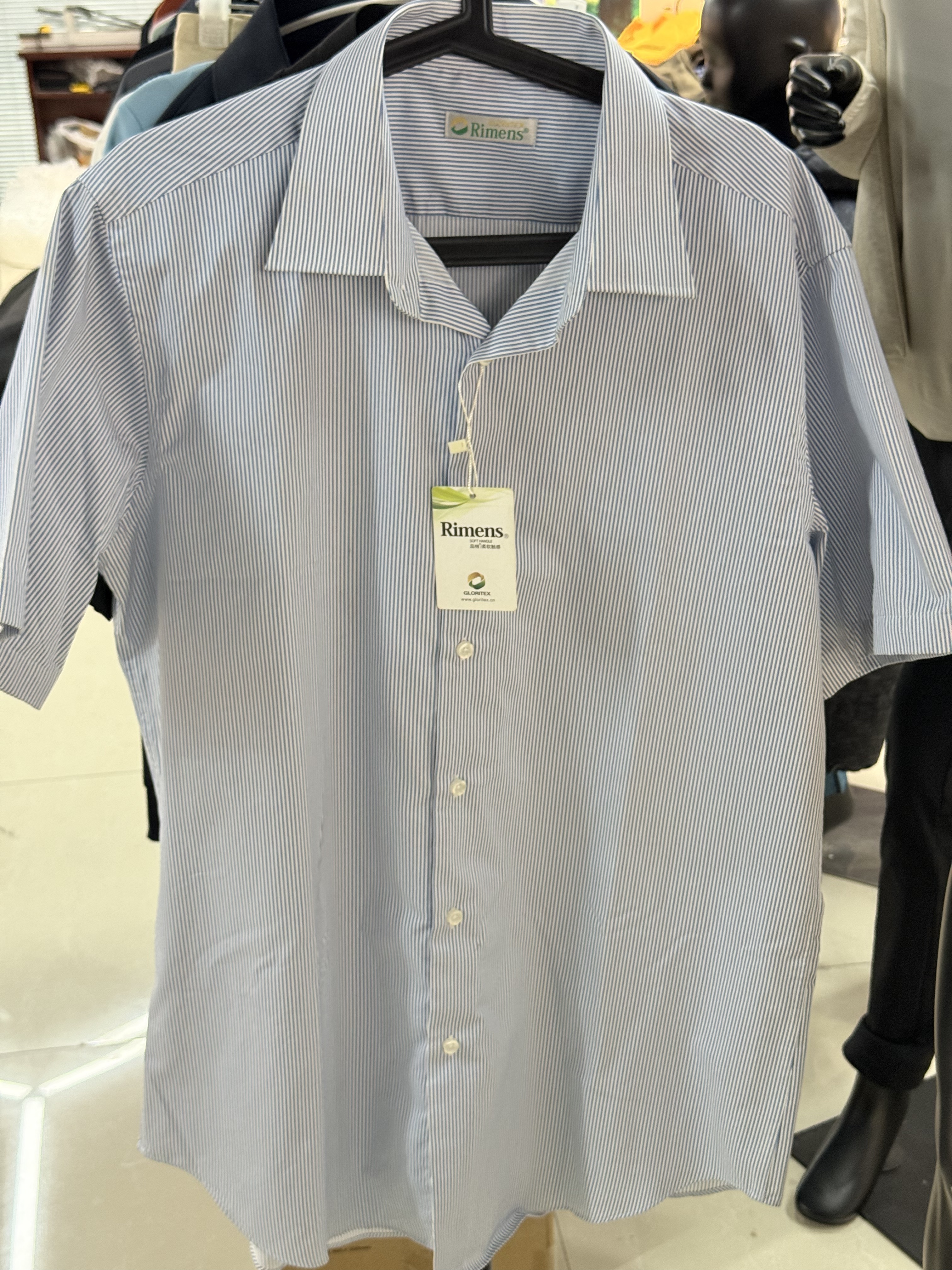
What Separates Functional Polyester Filament from Regular Polyester?
For brands and manufacturers that have been sourcing standard polyester for years, the shift toward functional polyester filament is rarely a simple upgrade. It changes how performance is specified, how suppliers are evaluated, and how costs are justified. The practical difference is not just the price premium. Functional polyester filament is engineered at the material level with additives, masterbatch, and specialized yarn designs, while regular polyester is a standard PET filament whose functional behavior depends mostly on fabric construction and finishing.
This distinction matters at the decision stage. If a buyer needs UV protection, moisture wicking, antibacterial performance, far-infrared properties, or anti-see-through coverage, those benefits must be built into the yarn itself, not added as an afterthought. Smilytex functional polyester filament, produced by Smily Textile Technology (Taicang) Co., Ltd., is one example of how suppliers structure these capabilities, and it helps to examine its advantages and limitations against the conventional baseline.
The Market Context: Why Functional Polyester is Gaining Share
The demand for functional polyester filament does not exist in a vacuum. The global polyester fiber market was valued at USD 82.07 billion in 2025 and is projected to grow to USD 148.11 billion by 2034. Asia Pacific held the largest regional share at 65% in 2025, led by China and India. That scale matters because much of the functional polyester supply chain, including Smilytex, is based in China and serves export markets including the EU, the US, and Japan.
More relevant to procurement decisions is the shift in downstream demand. Athletic and athleisure brands are prioritizing moisture-wicking and antimicrobial properties, with nano-silver and other functional additives becoming common in polyester blends. This is not a niche preference. It is a broad trend influencing how fabric suppliers position their product lines and how buyers write specifications.
For a sourcing manager, the implication is straightforward: regular polyester remains a viable commodity material, but it starts at a functional baseline without guaranteed performance KPIs. Functional polyester, by contrast, is designed to deliver measurable performance outcomes. The decision between the two is therefore a decision about what the product must do, not just how much it costs.
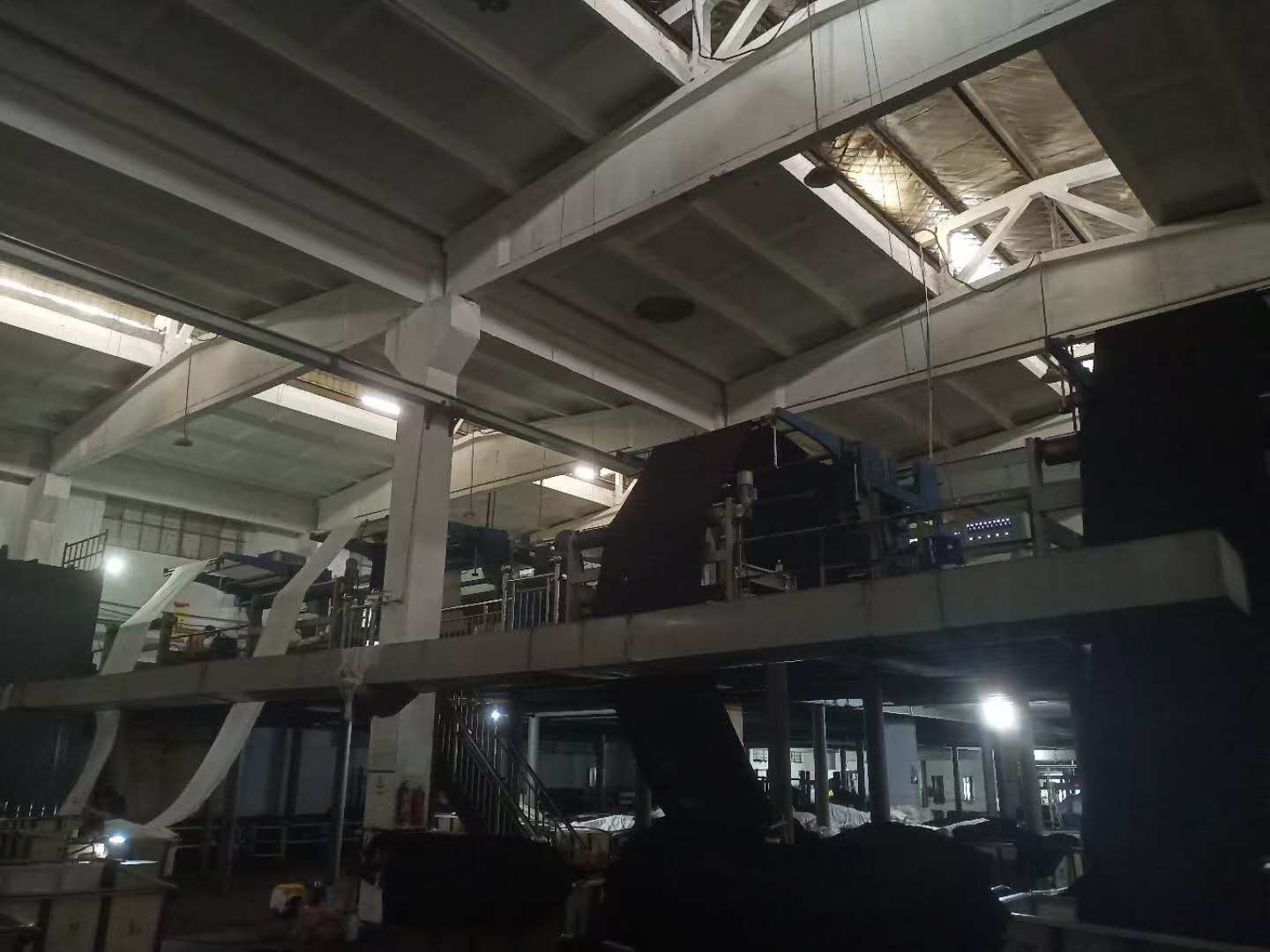
Functional Polyester vs. Regular Polyester: Performance Comparison
The clearest way to compare the two material categories is through performance indicators. Regular polyester has no guaranteed functional KPI. It provides a basic PET filament baseline, and its final properties depend on fabric structure and finishing chemicals. Functional polyester, especially when engineered from the yarn stage, can deliver targeted improvements across several dimensions.
| Performance Indicator | Regular Polyester | Functional Polyester (by Series) |
|---|---|---|
| Moisture management | Baseline | Moisture-wicking rate improved 50%–200% |
| Drying time | Baseline | Reduced 30%–50% |
| Antibacterial activity | None | ≥90% reduction per agreed test method |
| UV protection | UPF 15–20 | UPF 40–60+ depending on construction and color |
| Flame retardancy (LOI) | 20%–22% | ≥28% |
| Wash durability of function | — | 30–50+ washes |
| Opacity / anti-see-through | Limited | Improved in high-opacity constructions |
These figures should be read with an important caveat. Functional performance varies by yarn construction, fabric structure, color, and the test standard applied. A UPF of 50+ is achievable, but not in every fabric. Antibacterial efficiency is measured against a specific method such as ISO 20743 or AATCC 100. Far-infrared properties are validated under standards such as GB/T 30127. Buyers should therefore treat these numbers as capability indicators, not as universal guarantees.
Decision rule: If a product brief specifies a functional KPI, the supplier should be asked to confirm the test standard, the fabric construction, and the expected range before bulk production begins.
How Functional Performance Is Engineered into the Yarn
The technical logic behind functional polyester filament is fundamentally different from conventional fabric finishing. Instead of relying solely on coatings or chemical after-treatments, Smilytex integrates performance at the yarn and material level through additives, masterbatch, and specific yarn designs. This approach affects durability and consistency: a functional property embedded in the filament is less likely to wash out than a surface treatment.
Some functional properties are relevant across multiple product lines:
- UV resistance and heat shielding: UV-resistant heat-shielding polyester filament can provide protection when the fabric construction and color allow for UPF 40–60+. It is aimed at outdoor and workwear applications.
- Moisture management and quick drying: Moisture-management polyester filament is designed to move sweat away from the skin, supporting faster drying and improved comfort in activewear and base layers.
- Antibacterial functions: Coffee charcoal antibacterial polyester filament and antibacterial anti-odor nylon filament are examples of how different additive systems can be used to address odor-causing bacteria.
- Thermal comfort: Far-infrared thermal retention, far-infrared heating, instant cooling, and light-absorption heating filaments provide different mechanisms for hot and cold environments.
- Opacity and coverage: Anti-see-through hydrophilic polyester filament targets the need for opaque white or light-colored performance fabrics.
- Stretch without spandex: Non-spandex stretch polyester filament provides mechanical stretch that can simplify recycling and processing.
This portfolio approach matters for procurement. A single functional need is rarely enough. An apparel brand often needs a yarn that combines moisture management with UV protection, or antibacterial performance with a specific hand feel. Suppliers that offer a broad functional platform can simplify the sourcing process.
Material-Level Engineering vs. Finish-Only Processing
The distinction between material-level engineering and finishing is not purely academic. It affects processing compatibility. Heat-setting, brushing, coating, and lamination can all change hand feel, color, and performance. When the functionality is in the filament, the processor has a more stable starting material, but process windows still need to be respected. A reliable supplier provides recommended processing parameters and does not assume that a functional filament behaves exactly like regular polyester.
Cost Economics: Understanding the Functional Premium
Functional polyester filament generally carries a price premium over regular polyester. The size of the premium depends on the function, the yarn construction, and the minimum order quantity. It is not useful to quote a fixed percentage because the variables are too wide.
What is more useful is to evaluate the premium against downstream benefits:
- In activewear, improved moisture management and faster drying can reduce the need for heavy fabric weights or additional finishing.
- In athleisure, anti-see-through performance can reduce consumer complaints and costly re-orders.
- In workwear, durable UV protection can be a product requirement, not a marketing feature.
- Dope-dyed options can reduce dyeing steps, water use, and energy consumption compared with conventional piece-dyed polyester.
Because the premium is case-dependent, buyers should request a cost-optimized proposal after confirming target specifications and volume. That is standard practice in filament sourcing, and it is a more reliable path than comparing generic per-kilogram prices.
Where Functional Polyester Filament Makes the Most Sense
The application profile for functional polyester filament is broad, but not universal. Smilytex positions its functional polyester for four main clusters:
- Activewear and athleisure – where moisture management, UV protection, opacity, and antibacterial properties support comfort and performance.
- Workwear and outdoor apparel – where durability and UV resistance are primary requirements.
- Base layers and intimate apparel – where moisture management and softness are critical.
- Hygiene-sensitive apparel – where antibacterial functions address odor and bacterial growth.
This range aligns with broader industry demand. Market research consistently identifies moisture-wicking and antimicrobial polyester blends as a leading preference in the athleisure segment. For a brand developing technical sportswear, a functional filament that meets one of these needs is often a stronger starting point than a regular filament that relies entirely on finishing.
Sportswear and Knit Fabric Applications
Smilytex also supplies sportswear polyester filament knit fabric and sustainable polyester filament knit fabric. These product forms allow brands to source a more integrated solution rather than managing yarn and knitting separately. For OEMs and apparel brands without deep vertical integration, this can shorten the development cycle and reduce technical risk.
Sustainability and Recycled Options
Sustainability is becoming a core decision factor, not just a branding exercise. The global recycled polyester market was valued at USD 15.52 billion in 2024 and is projected to reach USD 26.18 billion by 2030, a compound annual growth rate of 9.25%. That growth is supported by certification systems such as OEKO-TEX Standard 100 and the Global Recycled Standard, which requires at least 20% recycled content for specific labeling.
Smilytex has aligned its product range with this shift by including T2T recycled polyester filament, low-temperature dyeable recycled polyester filament, and biodegradable polyester filament. T2T, or textile-to-textile recycling, addresses the challenge of turning old polyester garments back into new fiber. Low-temperature dyeability offers an energy-reduction pathway because the dyeing process can run at lower temperatures. These options do not replace the functional categories; they add a sustainability layer that many EU and US buyers now treat as a baseline requirement.
Procurement note: When sustainability claims are part of the specification, buyers should confirm which certification system applies and whether the recycled or biodegradable content meets the required threshold.
Comparing Suppliers: What the Verification Process Should Look Like
At the decision stage, the most important task is not choosing between regular and functional polyester. It is verifying that a supplier can deliver the functional claim at production scale. The following checklist reflects the risk controls that a credible supplier should have in place.
| Risk Area | What the Supplier Should Do | What the Buyer Should Ask |
|---|---|---|
| Performance claim variance | Define claims based on validated test standards; confirm construction and test method | Which standard? What range? What is the expected performance in my fabric construction? |
| Shade and batch variation | Manage dope-dyed batches by production batch, piece-dyed by dye lot; provide shading sheets | How is batch consistency managed? Can samples be matched across production runs? |
| Processing compatibility | Provide recommended heat-setting, brushing, and coating parameters; run pilot production | Will the yarn perform acceptably after heat-setting or lamination? |
| Compliance and restricted substances | Screen for RSL compliance; provide MSDS/TDS when applicable; require third-party lab testing for high-risk end uses | Is the material compliant with EU/US restricted substance lists? Can documentation be provided? |
| Skin sensitivity | For babywear or sensitive-skin applications, confirm standards and third-party testing before launch | What testing has been done for skin contact and irritation? |
Smilytex's risk control approach also includes traceability records by batch or lot, retain samples for verification, and a corrective and preventive action process for performance deviations. For a buyer, these practices are as important as the yarn specification itself, because they determine whether the supplier can respond when something goes wrong.
The Supplier Qualification Standard
A supplier that treats functional polyester as a commodity will struggle to answer technical questions about test standards and process limits. A supplier that treats it as an engineered product can offer sample testing, benchmark alignment, and pre-production approval workflows. At the decision stage, these operational capabilities should weigh as heavily as price.
Traditional Polyester vs. Functional Polyester: A Fair Cost-Benefit View
It would be misleading to present functional polyester as always superior. Regular polyester remains a sensible choice for many applications, especially where the final product does not require a measurable functional claim. It is generally less expensive, easier to source, and adequate for products where comfort and durability are not the main selling points.
Functional polyester adds cost and complexity. It requires more careful specification, more testing, and a supplier that understands how additives, yarn structure, and fabric construction interact. For a basic fashion garment with no performance requirement, the functional route can be an unnecessary expense.
Where functional polyester earns its premium is in products that must do something measurable: block UV, move moisture, reduce odor, provide warmth without weight, or resist being see-through. In those cases, the yarn-level approach delivers a more robust result than relying on finishing chemistry alone.
Price Comparison Parameters for the Same Fabric Weight
Because cost differences depend on so many variables, comparing like-for-like is the only meaningful approach. The parameters below should be standardized before requesting quotes:
- Filament denier and filament count
- Fabric weight (GSM), width, and construction
- Required functional KPIs and test standards
- Dyeing method (dope-dyed vs. piece-dyed)
- Certifications required (e.g., GRS, OEKO-TEX)
- Order volume and lead time
Once these are fixed, the functional premium becomes a meaningful number rather than a vague assumption.
Global Supply Chain Considerations
The polyester filament industry is dominated by well-known players such as Indorama Ventures, Reliance Industries, Toray Industries, and Teijin Limited at the global tier. However, the functional filament segment includes specialized manufacturers and trading companies that build their value proposition on agility, customization, and application-specific product ranges.
Smilytex is a different type of player. Smily Textile Technology (Taicang) Co., Ltd. was founded in 2017 and operates as a trading company engaged in R&D and sales of functional fibers and functional fashion fabrics, with a factory area of 16,220 m², 206 employees, and a 10-person R&D team. Roughly 70% of its output is exported to the EU, the US, and Japan. The company positions itself as an R&D and resource integration platform rather than a large commodity producer. For buyers, the advantage is access to a wide functional portfolio and development support, with the understanding that very large commodity volumes may sit outside its core scope.
This distinction is useful when mapping suppliers. Global filament giants offer scale and raw material security. Specialized functional filament suppliers offer product range, technical responsiveness, and lower flexibility thresholds. Large apparel brands often need both, but a medium-sized OEM or brand may find the specialized supplier easier to work with.
Future Outlook: What the Next Five Years Look Like
The trend toward functional polyester filament is likely to continue for structural reasons. The global polyester fiber market is projected to grow from USD 82.07 billion in 2025 to USD 148.11 billion by 2034, and Asia Pacific is expected to remain the dominant production region. The recycled polyester market is growing faster than the general polyester market, which suggests that sustainability will become a stronger differentiator over time.
Several directions are worth watching:
- Textile-to-textile recycling will gain scale. As T2T infrastructure improves, recycled filaments will move from niche to mainstream, especially for brands with net-zero commitments.
- Multi-functional yarns will replace single-function yarns. Buyers will increasingly ask for moisture management plus UV protection plus antibacterial properties in one filament, rather than managing multiple layers of finishing.
- Low-temperature dyeing will become a standard efficiency lever. As energy costs and carbon regulations tighten, filaments that reduce dyeing temperature will attract more attention.
- Non-spandex stretch will grow in sportswear. The ability to provide stretch without spandex supports simpler recycling and avoids some elastane processing issues.
- Transparency requirements will increase. Buyers will expect suppliers to document test standards, batch traceability, and compliance status as routine practice, not as a special request.
For sourcing teams, the practical implication is to build supplier relationships that can evolve with these trends. A supplier like Smilytex, which already covers moisture management, UV resistance, antibacterial options, thermal comfort, recycled series, and knit fabric applications, offers a broader platform for future product development than a supplier with only one functional specialty.
Switching from Regular to Functional Polyester: A Practical Checklist
For brands that have not yet switched, the following checklist can guide the transition:
- Define the functional must-haves, not just the nice-to-haves. Which claims must be guaranteed?
- Assign a test standard to each functional requirement.
- Request data for the specific fabric construction, not just the yarn data.
- Ask whether the supplier has tested the filament in knit fabric form.
- Verify that the supplier can manage shade consistency batch to batch.
- Confirm the processing window for heat-setting, brushing, or coating.
- Request a pilot run before bulk production.
- Compare quotes on a like-for-like specification basis.
- Confirm traceability and retain-sample procedures.
- Evaluate the supplier's CRM and aftersales support, since functional yarns may require more technical communication than commodity yarns.
This process does not guarantee zero risk, but it reduces the chance of discovering a performance gap after bulk goods have been produced. In functional filament sourcing, the most expensive failure is not the material cost; it is the delay, rework, and brand damage that follow from a failed product launch.
Limitations Buyers Should Keep in Mind
Even with a capable supplier, functional polyester filament has limits. Performance depends on fabric construction and test method. Not every yarn can deliver every function at high levels simultaneously. Far-infrared retention, for example, is a different mechanism from instant cooling, and a filament that targets one may not perform well at the other. UV protection is affected by color and fabric density; a light-colored open-knit fabric will not reach the same UPF as a dense dark fabric. Antibacterial performance can wash down over time unless the chemistry is embedded properly and tested across the required wash cycles.
Buyers should also expect longer development timelines when combining multiple functions into one filament. Customization is possible, but it requires time for R&D, pilot trials, and revised test data. A supplier that appears to promise everything quickly should be scrutinized more, not less.
Frequently Asked Questions
What is the performance difference between functional polyester filament and regular polyester?
Regular polyester is a standard PET filament with basic performance; its functionality depends mainly on fabric construction and finishing. Functional polyester filament is engineered at the yarn and material level through additives, masterbatch, and yarn design. It can deliver targeted benefits such as improved moisture management (wicking rate increased by 50%–200%), antibacterial activity (≥90% reduction), UV protection (UPF 40–60+), flame retardancy (LOI ≥28%), and anti-see-through coverage, with wash durability of 30–50+ cycles depending on the series and construction.
Is functional polyester filament worth the extra cost compared to regular polyester?
Functional polyester typically carries a premium over regular polyester, depending on the required function, construction, and MOQ. It is worth the cost when the final product must meet a measurable performance claim such as UV protection, moisture wicking, antibacterial activity, or opacity. In products without a functional requirement, regular polyester is often sufficient. A cost-optimized proposal should be based on confirmed target specs and volume.
How should buyers evaluate functional polyester filament suppliers at the decision stage?
Buyers should verify that the supplier defines claims based on validated test standards, provides sample and benchmark testing, aligns test methods before bulk production, and maintains traceability records by batch or lot. Additional qualifications include shade control for dope-dyed or piece-dyed material, process guidance for heat-setting or coating, and a CAPA process for performance deviations. For high-risk end uses such as babywear, medical, or protective workwear, third-party lab testing should be required before launch.
What applications are best suited for functional polyester filament?
Functional polyester filament is best suited for activewear and athleisure, workwear and outdoor apparel, base layers and intimate apparel, and hygiene-sensitive apparel. It is especially relevant when the product must deliver comfort, protection, or odor control as a measurable performance feature rather than as a marketing label.
Can functional polyester filament support sustainability goals?
Yes, through multiple routes. Dope-dyed polyester options can reduce dyeing steps and related water and energy use compared with conventional piece-dyeing. Recycled series such as T2T recycled polyester filament and low-temperature dyeable recycled polyester filament support circularity and energy reduction. Certification schemes such as OEKO-TEX Standard 100 and the Global Recycled Standard require at least 20% recycled content for specific labeling, so buyers should confirm which standard applies to their product.
What risks are associated with functional polyester filament that buyers should manage?
Key risks include performance claim variance (UV, antibacterial, and far-infrared results may vary by fabric construction and test method), shade variation between batches, processing compatibility issues with heat-setting or lamination, compliance risks related to restricted substances, and potential skin sensitivity for infants or sensitive skin. These risks are managed through validated test standards, pre-production approvals, pilot runs, traceability, and third-party testing for high-risk applications.
How does Smilytex compare to global polyester filament leaders?
Global leaders such as Indorama Ventures, Reliance Industries, Toray Industries, and Teijin Limited offer large-scale commodity and industrial filament production. Smilytex, established in 2017, is a specialized R&D and trading company with a 16,220 m² facility, 206 employees, a 10-person R&D team, and an export ratio of about 70% to the EU, US, and Japan. It focuses on functional fibers, customized product development, and a broad portfolio of performance and recycled filaments serving activewear, workwear, outdoor apparel, and hygiene-sensitive apparel. The choice depends on scale requirements versus agility and functional specialization.
For a deeper look into Smilytex's product portfolio and company capabilities, the corporate brochure is available for public access and download:
هل لديك أسئلة أو تحتاج إلى مزيد من التفاصيل؟
تواصل مع فريقنا للحصول على عرض أسعار مخصص أو استشارة فورية.
طلب عرض أسعار
املأ النموذج أدناه وسيتواصل معك فريقنا بعرض مقترح مخصص.
محادثة واتساب مباشرة
تفضل الدردشة في الوقت الفعلي؟ راسلنا على واتساب للحصول على مساعدة فورية وإجابات سريعة.
- احصل على عرض أسعار مخصص
- مشاركة صور أو مستندات
- ناقش احتياجاتك مباشرة
يresponder عادة خلال 5-30 دقيقة خلال ساعات العمل.