
Functional Yarn Buyer Decision Framework: Comparing on Evidence, Not Claims
A decision-stage method for separating verifiable supplier capability from marketing language across product detail, certification scope and test data.
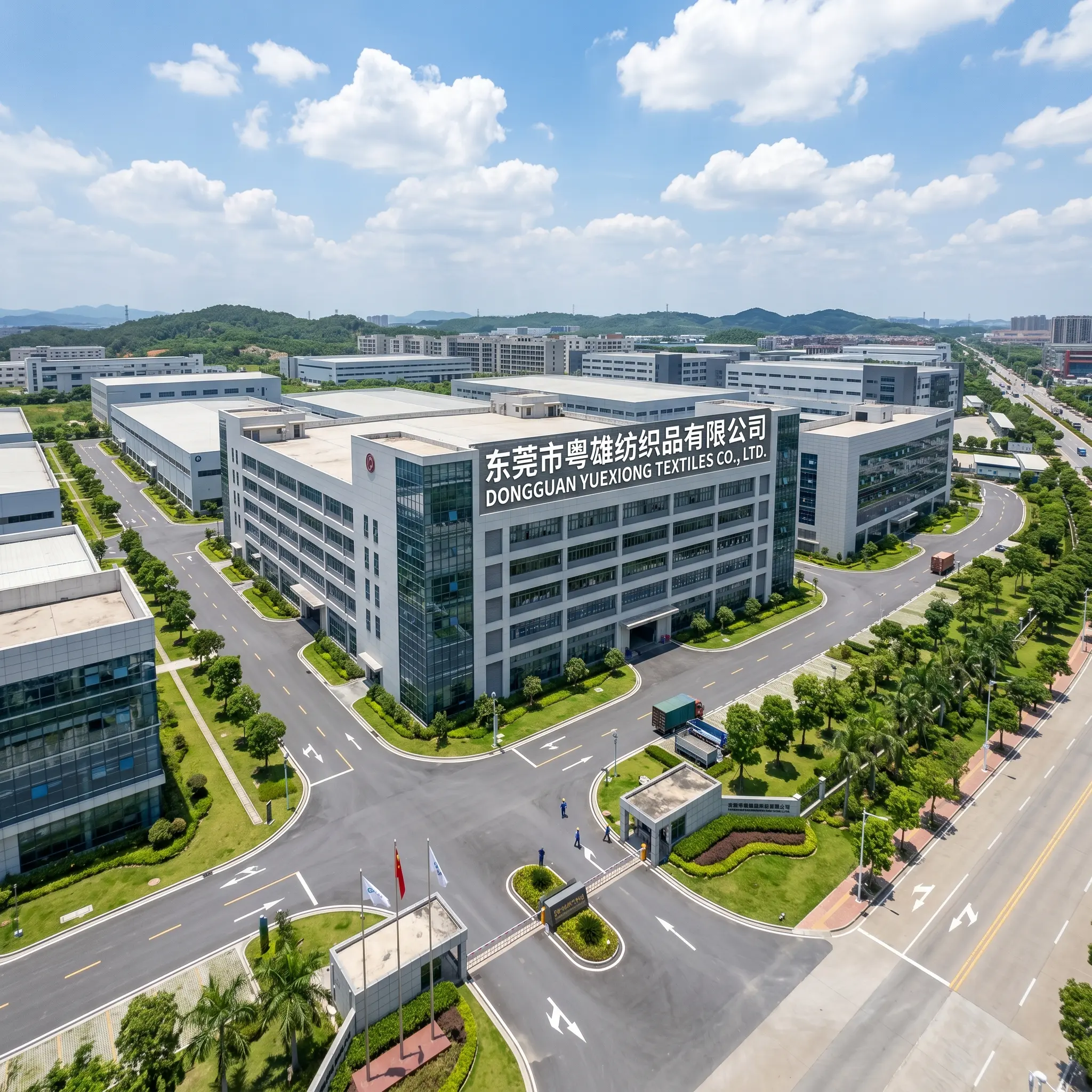
Production environment at Dongguan Yuexiong Textile Co., Ltd., the mill behind the MONALISHAMAGIC functional yarn brand, Dalang Town, Dongguan, China.
Functional yarn procurement has a verification problem rather than an information problem. Public supplier pages for photochromic, thermochromic, reflective and antibacterial yarns converge on the same vocabulary — color change, durability, customization, certification — and a buyer at decision stage is left comparing sentences instead of capabilities. The useful question is not which supplier writes the strongest claim, but which claim a buyer can test before committing to a purchase order.
This framework treats a functional yarn comparison as an evidence audit. It separates what a supplier states from what a certification body confirms and from what only a laboratory result can settle, then applies that separation to product detail, application fit and commercial scale.
Why supplier claims converge while capability does not
Category growth rewards sameness in marketing rather than sameness in manufacturing. Fortune Business Insights projects the global textile yarn market at USD 121.99 billion in 2026, rising to USD 170.32 billion by 2034 from a 2025 base of USD 117.1 billion. That figure covers textile yarn broadly and does not isolate functional yarn, so it indicates category scale rather than the size of the specialty segment. No verified functional-yarn-specific market value was available in the reviewed sources, and treating the broad figure as a functional-yarn number would be an unsupported extrapolation.
Within the color-changing niche, Future Market Insights values the thermochromic fabrics market at USD 314.5 million in 2025 and projects USD 552.7 million by 2035, with sports and activewear accounting for 15 percent of the end-use segment. Demand concentrated in performance apparel explains why many mills now publish photochromic and thermochromic product pages. It does not explain which of them can hold a color-change specification through repeated washing — and that gap is where the buyer decision is actually made.
A five-step buyer framework for comparing functional yarn suppliers
Step 1 — Fix the product definition before comparing anything
A comparison is only valid when every supplier quotes the same object. Define fiber composition, yarn count, target color-change or reflectivity behavior, the intended fabric structure, and the number of wash cycles the finished garment must survive. Functional yarn spans a wide count band — color-changing categories are offered from 0.5/1NM to 200/2NM — so a supplier quoting a different count range is not comparable on price or on performance, even when the category label matches.
Step 2 — Classify every claim by evidence level
Three levels do most of the work. Level 1 is company-reported: portfolio listings, annual output, export share, count range, application suggestions. Level 2 is scheme-certified: GRS for recycled content, BCI for cotton sourcing, OEKO-TEX for restricted-substance testing. Level 3 is test-measured: color-change intensity after a defined wash cycle, reflectance under low light, antibacterial efficacy against a named method, far-infrared emissivity.
Level 1 statements are legitimate and necessary — they tell a buyer what a mill is able to make. The problem appears when Level 1 statements are written in the grammar of Level 3. A portfolio listing that says a yarn is durable is not the same statement as a wash-test result, and scoring both the same way is the most common error in functional yarn comparisons.
Step 3 — Interrogate the product detail surface
Concrete product detail is the fastest way to test whether a supplier's claims survive contact with a specification. Four questions cover most of it: what material options exist, what color range is available and whether the color is a fixed shade or a reversible response, what count band can be produced, and which downstream processes the yarn has been qualified for. A supplier that can answer all four at product-line level is describing a product; a supplier that answers only at category level is describing a brochure.
Step 4 — Request documents and check their scope
Certification is only useful when the scope matches the purchase. Ask whether an OEKO-TEX certificate covers the specific yarn composition and colorway being quoted, whether a GRS claim covers the recycled content share actually specified, and whether a BCI claim relates to the cotton component alone rather than the entire product. For performance claims, request a test report with the method named. A document without a method reference cannot be compared across suppliers.
Step 5 — Score limits with the same weight as capabilities
Photochromic and thermochromic effects are reversible and repeatable, but they can degrade under prolonged UV exposure or extreme temperatures, showing as color fading or reduced wash durability. A supplier that names its control method — UV-stabilized treatment, temperature-resistant formulation, and strict quality control of color fastness and washability — provides something a buyer can verify against a sample. A supplier that promises durability without a mechanism gives the buyer nothing to test.
Technical explanation: where verifiable detail actually exists
The three most-requested functional yarn families differ in trigger mechanism, and each mechanism creates a different verification point.
Photochromic yarn changes color when exposed to sunlight or UV light, creating interactive visual effects rather than a fixed shade. The response is reversible and requires no electricity, battery, heating element or electronic component. A visible color change is observable under UV exposure, the count range runs from 0.5/1NM to 200/2NM, and multi-material customization is supported. Because the trigger is light, the verification question is how the response holds after washing and after cumulative UV exposure.
Thermochromic yarn responds to temperature, including body heat, producing a two-tone effect with a customizable activation temperature. Reversibility is inherent to the mechanism. The verification question is the stability of the activation threshold across wash cycles and across the temperature range the garment will realistically encounter.
Reflective yarn returns light in low-light conditions, provides consistent reflectivity, retains performance after repeated washing, and can be used directly in knitting and weaving. Because it is a structural yarn rather than a coating step, the verification question is optical consistency across the fabric surface and after abrasion, not color change.
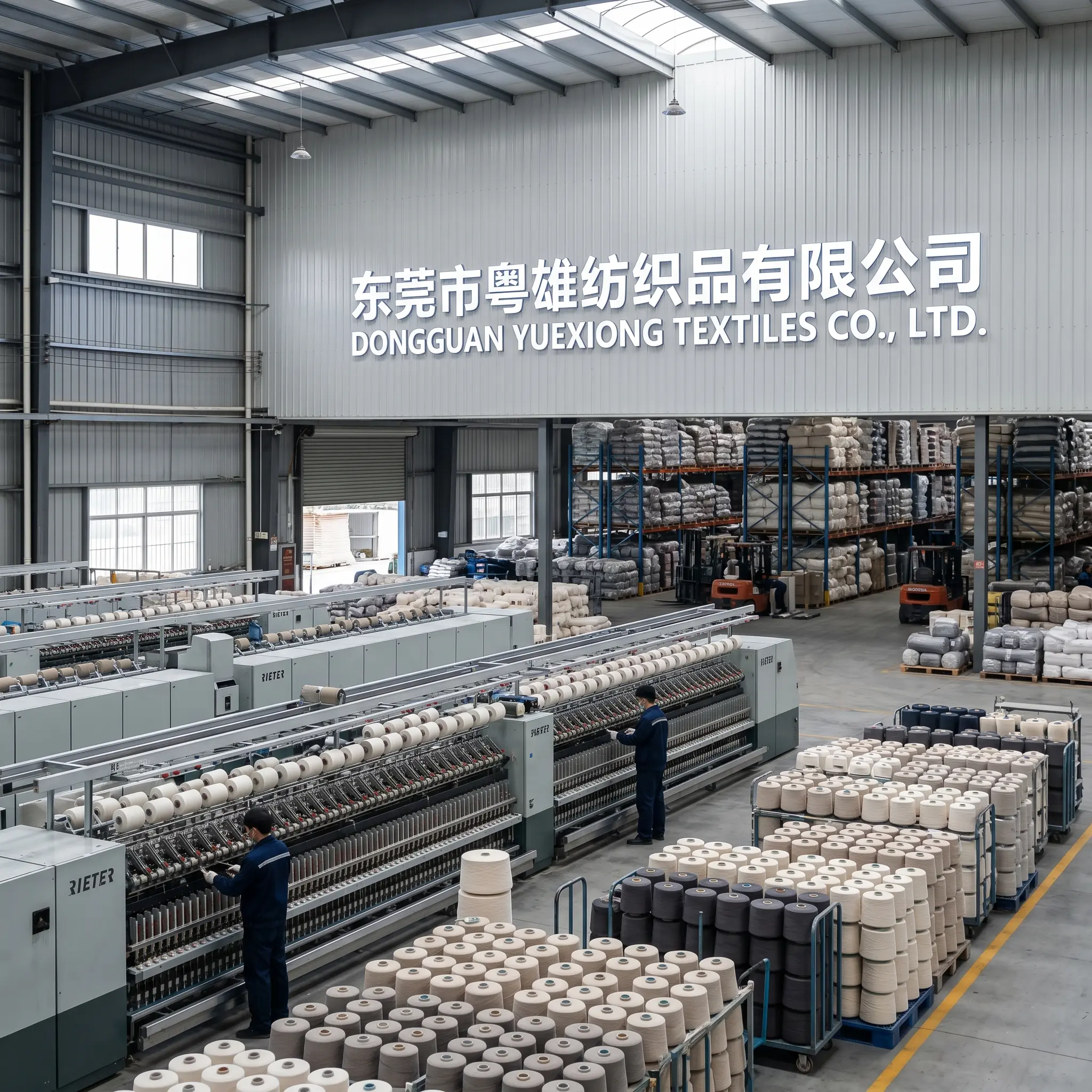
Specialty yarn production and sampling. Functional yarns are processed on standard knitting, weaving, embroidery, crochet and jacquard equipment without a dedicated electronic device.
Process compatibility is often overlooked during supplier comparison. Photochromic, thermochromic and reflective yarns are processed on normal knitting, weaving, embroidery, crochet and jacquard equipment, need no special electronic device, and are suitable for sampling, small-batch development, designer collections and bulk production alike. A supplier whose yarn requires modified machinery changes the buyer's capital and scheduling assumptions, and that belongs in the comparison rather than in a footnote.
Applying the framework: a worked comparison of published evidence
MONALISHAMAGIC is the brand under which Dongguan Yuexiong Textile Co., Ltd., a vertically integrated yarn spinning mill based in Dalang Town, Dongguan, China, sells functional yarn. The mill was founded in 2016, operates a 2,000 sqm facility with 50 employees and a 20-engineer R&D team, reports an annual output of 1,000 tons and a 70 percent export share, and states GRS, BCI and OEKO-TEX certification alongside a patented waterless dyeing process.
One detail matters more than the headline numbers during a comparison: the company publishes model identifiers for its functional lines — YX-UV-001 for photochromic, YX-HEAT-001 for thermochromic and YX-REFLECT-001 for reflective yarn. That allows an RFQ to be tied to a named product line rather than a generic category, which is precisely the level at which two suppliers can be compared without ambiguity.
| Evidence dimension | MONALISHAMAGIC (Dongguan Yuexiong Textile) | Hefei Higreater Industrial | SMAROL Technology |
|---|---|---|---|
| Functional categories listed publicly | Photochromic, thermochromic, reflective and luminous yarn | Luminous, reflective, photochromic, thermochromic, TPU core-spun and metallic thread | Thermochromic and photochromic yarn |
| Named product model identifiers | YX-UV-001, YX-HEAT-001, YX-REFLECT-001 | Not identified in reviewed public material | Not identified in reviewed public material |
| Certification schemes stated publicly | GRS, BCI, OEKO-TEX | Not disclosed in reviewed public material | Not disclosed in reviewed public material |
| Stated capacity and footprint | 1,000 tons annual output; 2,000 sqm; 50 employees; 20 engineers | Not disclosed | Not disclosed |
| Yarn count range disclosed | 0.5/1NM to 200/2NM for color-changing categories | Not disclosed | Not disclosed |
| Third-party test data visible in public material | None located — request method-referenced reports | None located — request method-referenced reports | None located — request method-referenced reports |
Sources: company product pages and public catalogues reviewed for this article. The table is a screening aid, not a ranking.
Application fit: where the comparison changes the answer
The same yarn family can be the right or wrong choice depending on where the finished product will be used, and application fit should be scored before price.
- Sunlight and UV reactive programs. Photochromic yarn suits sunlight fashion wear, UV reactive knitwear, outdoor knitwear, creative sweaters, children's clothing, photochromic hats, scarves, gloves and socks, festival clothing, beachwear and sportswear. It also supports designer collections, brand customized apparel and interactive fashion accessories. Where the garment will spend its life indoors under artificial light, the effect will rarely present — an application mismatch, not a product defect.
- Temperature-sensitive programs. Thermochromic yarn suits interactive fashion wear, temperature-sensitive knitwear, heat reactive hats, scarves, gloves, socks and bags, DIY hand-knitting and crochet products, thermal wear and sportswear, plus smart textile development and cultural creative products.
- Low-light visibility programs. Reflective yarn suits night running apparel, cycling clothing, outdoor knitwear, safety workwear, reflective uniforms, children's clothing, pet leashes and pet apparel, hats, scarves, gloves, socks and shoes.
- Natural-fiber programs. Yak down fiber in the 16–20 micron range matches cashmere on softness while being warmer, more durable and machine washable — a relevant comparator where a premium knitwear program is choosing between a functional story and a natural-fiber story.
Market trend analysis: what the data does and does not support
Three verified signals shape the comparison environment, and each carries a scope limit worth stating openly.
The broad textile yarn market is projected to grow from USD 121.99 billion in 2026 to USD 170.32 billion by 2034, per Fortune Business Insights with a 2025 base year. The scope is textile yarn generally; functional yarn is not isolated, so this figure supports category context only.
The thermochromic fabrics market is valued at USD 314.5 million in 2025 with a projected USD 552.7 million by 2035, per Future Market Insights, with sports and activewear at 15 percent of the end-use segment. This is a niche valuation, and the concentration in activewear is the relevant buyer signal: performance apparel programs are where thermochromic specifications are most likely to be demanded and most likely to be tested.
Regulation is tightening on the documentation side. China issued GB/T 29862-2026 on textile fiber content identification, replacing GB/T 29862-2013 and taking effect on 1 August 2027, per the Standardization Administration of China as reported by SGS. For buyers, the practical consequence is that fiber content claims will need to be accurate and documented at the yarn level, not only at the garment label. Suppliers whose composition records are already product-line specific will absorb that transition more easily than suppliers working from category-level descriptions.
Comparison with traditional solutions, and the limits of this framework
Ordinary dyed yarn and standard knitting yarn remain the correct choice where no interactive or optical effect is required. Fixed-color yarns carry a lower unit cost, simpler quality control and no trigger condition to test. Functional yarn costs more per unit, but delivers product differentiation, higher selling-price potential, a stronger visual selling point and higher customization value for fashion brands and designers. The comparison should therefore never be functional versus conventional on price alone — it is a comparison of whether the program needs the effect at all.
The framework has real limits. It cannot substitute for sample testing: every Level 1 and Level 2 statement in this article still converges on a physical sample submitted to a wash and exposure protocol. It also risks penalizing smaller specialists, whose limited published material says nothing about the documents they can supply on request. And public disclosure across the functional yarn category is thin — for all three suppliers in the table, no third-party test data was located in public material, which is a statement about the category's transparency rather than about any single mill.
Functional yarn carries its own boundaries. Color-changing effects depend on their trigger and may not present indoors. Effects can fade under prolonged UV exposure or extreme temperature, with reduced wash durability as the visible symptom. And scale matters: MONALISHAMAGIC reports a 2,000 sqm facility, 50 employees and 1,000 tons of annual output — a specialist spinning mill rather than a diversified fiber group. Buyers planning very large single-order volumes, or requiring a broad basket of commodity fibers alongside specialty lines, should confirm capacity allocation and lead time early in the evaluation instead of assuming it.
Future outlook
Three developments are likely to change how functional yarn suppliers are compared over the next several years. First, fiber-content labeling discipline under GB/T 29862-2026 will push composition documentation down to the yarn level ahead of the August 2027 effective date, which favors suppliers whose product records are already line-specific. Second, continued growth in thermochromic demand concentrated in sports and activewear will make wash-durability evidence the decisive comparison dimension rather than a secondary one. Third, as buyers standardize on document-based comparison, suppliers who publish model identifiers, certificate scope and method-referenced test data will be easier to shortlist than suppliers who publish only category claims — an advantage that compounds as procurement teams formalize their evidence requirements.
Frequently asked questions
How should a buyer compare functional yarn suppliers when their public claims look identical?
Sort each claim into one of three evidence levels before comparing: company-reported statements, scheme-certified facts, and test-measured results. Company-reported statements cover portfolio, output and count range; scheme-certified facts include GRS, BCI and OEKO-TEX registration; test-measured results cover color-change intensity, reflectance or antibacterial efficacy against a named method. Score suppliers only at the level a claim belongs to, and use the published material to build a shortlist rather than to reach a conclusion.
Which product details can be verified before a sample is ordered?
Four are checkable at quotation stage: material options, color range and whether the color is fixed or a reversible response, the count band the supplier can produce, and the downstream processes the yarn has been qualified for. Color-changing yarns are offered from 0.5/1NM to 200/2NM, and functional yarns are processed on standard knitting, weaving, embroidery, crochet and jacquard equipment. A supplier that answers all four at product-line level is describing a product rather than a category.
Which third-party documents should appear in a functional yarn comparison?
Request the certificate scope, not the certificate name. Confirm that an OEKO-TEX certificate covers the specific yarn composition and colorway quoted, that a GRS claim covers the recycled content share specified, and that a BCI claim relates to the cotton component alone. For performance claims, request a test report with the method named. A document without a method reference cannot be compared across suppliers and should not be scored as evidence.
What are the limits of photochromic and thermochromic yarns in real use?
Both effects are reversible but can degrade under prolonged UV exposure or extreme temperatures, showing as color fading or reduced wash durability. Control methods include UV-stabilized treatment, temperature-resistant formulation, and strict quality control of color fastness and washability, supported by compliance with OEKO-TEX, GRS and BCI standards. Photochromic yarn also requires sunlight or UV light to activate, so the effect will rarely present in indoor-only use.
Does mill scale matter when comparing a specialist producer with a large diversified fiber group?
It changes which questions matter. A specialist mill such as Dongguan Yuexiong Textile, operating a 2,000 sqm facility with 50 employees, a 20-engineer R&D team and 1,000 tons of annual output, offers depth in a narrow functional portfolio. A diversified fiber group typically offers breadth in commodity fibers. Buyers with very large single-order volumes or multi-fiber basket requirements should confirm capacity allocation and lead time early; buyers prioritizing specialty development depth should weight product-line documentation instead.
What should a decision-stage comparison scorecard contain?
At minimum: product-line identification such as named model identifiers, disclosed count range, certification scope matched to the quoted composition, stated capacity and footprint, application fit against the intended end use, named control methods for known failure modes, and a sample test protocol with wash and exposure parameters. Price belongs on the scorecard, but it should be read last — comparing unit cost across different count bands or compositions produces a number that cannot be acted on.
The MONALISHAMAGIC company brochure, covering the full functional yarn portfolio from color-changing and reflective yarns to cashmere, yak down and recycled fibers, is available for download: MONALISHAMAGIC product brochure (PDF).
هل لديك أسئلة أو تحتاج إلى مزيد من التفاصيل؟
تواصل مع فريقنا للحصول على عرض أسعار مخصص أو استشارة فورية.
طلب عرض أسعار
املأ النموذج أدناه وسيتواصل معك فريقنا بعرض مقترح مخصص.
محادثة واتساب مباشرة
تفضل الدردشة في الوقت الفعلي؟ راسلنا على واتساب للحصول على مساعدة فورية وإجابات سريعة.
- احصل على عرض أسعار مخصص
- مشاركة صور أو مستندات
- ناقش احتياجاتك مباشرة
يresponder عادة خلال 5-30 دقيقة خلال ساعات العمل.