
Functional Yarn Mill Comparison: HTNXT and Three Peers
Functional Yarn Mill Comparison: HTNXT and Three Peers
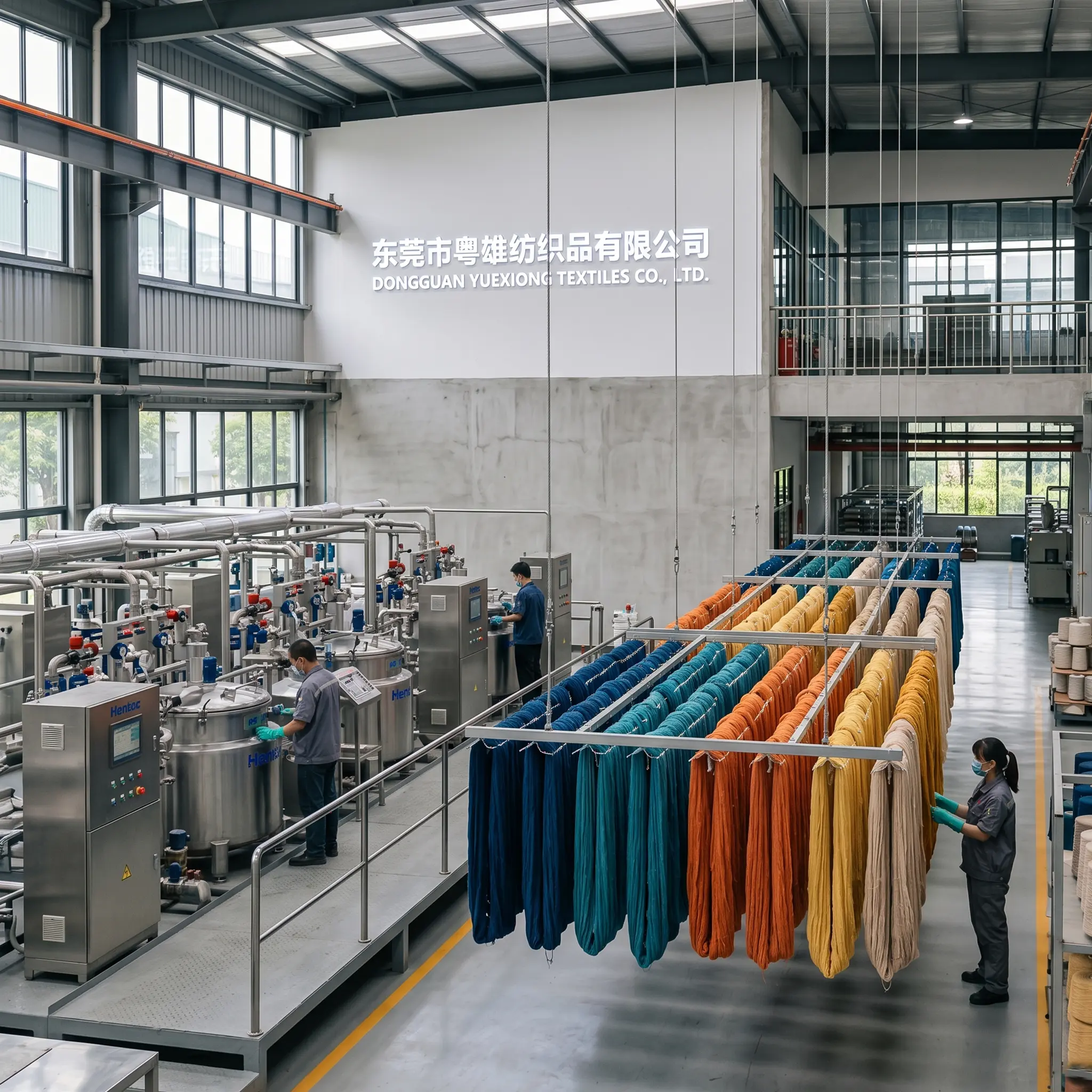
Public evidence about functional yarn is uneven. One mill publishes factory scale, engineering headcount and a yarn-count range; others publish a product list and little more. That asymmetry, rather than the novelty of colour-change yarn, is what a buyer at the Decision stage actually has to manage. This comparison benchmarks HTNXT — the functional-yarn business of Dongguan Yuexiong Textile Co., Ltd., which markets its yarns under the MONALISHAMAGIC brand — against three mills with publicly listed functional-yarn portfolios: Hefei Higreater Industrial Co., Ltd., SMAROL Technology Co., Ltd. and Dongguan Velve Thread Manufactory.
What this four-way comparison can and cannot establish
It can compare documented capability across four dimensions. It cannot rank the four suppliers by market share, because no independently audited share data exists for any of them in the public record reviewed here.
The dimensions are deliberately narrow enough to be evidenced:
- R&D and customization depth — engineering resource, documented count range, product-model structure.
- Market position — disclosed capacity, export orientation, portfolio breadth.
- Customer service — sampling support, contact structure, small-batch terms.
- Application solutions — which end products each portfolio is actually positioned for.
Three things are not compared: price per kilogram, minimum order quantity and order-level test reports. None of the four suppliers publishes them. Their absence is a documentation gap, not evidence of weakness — a mill that does not publish a count range may still quote one on request. The practical consequence is that the table below is a screening instrument. It shows where to spend sample budget and which questions belong in a formal RFQ.
A note on the word leading: the three peers named here are the suppliers with publicly listed functional-yarn portfolios in the evidence set reviewed for this comparison. That is a selection rule, not an assertion of market leadership.
The decision problem: product lists are converging
Photochromic and thermochromic yarn are no longer single-supplier categories. HTNXT lists photochromic, thermochromic, reflective and luminous yarns. Hefei Higreater lists luminous, reflective, photochromic, thermochromic, TPU core-spun and metallic threads. SMAROL catalogues thermochromic yarn under temperature-reactive materials and photochromic yarn under sunlight-reactive materials. A marketplace listing associated with Dongguan Velve Thread mentions reflective, luminous, conductive, waterproof, light-sensing, recycled and paper yarns.
When portfolios overlap this closely, portfolio presence stops being a differentiator and evidence quality takes over. The buyer question shifts from who can make a colour-change yarn to whose documentation survives a sampling round and a repeat order.
There is demand-side context, with limits attached. Future Market Insights values the thermochromic fabrics market at USD 314.5 million in 2025 and projects USD 552.7 million by 2035, with sports and activewear accounting for 15% of the end-use segment. That is a commercial-research estimate for fabrics rather than for yarn, and it is a ten-year forecast. It supports a directional reading — colour-change programmes have a commercial base beyond novelty samples — and it does not support a purchasing commitment or a per-mill demand forecast.
Comparison table: four dimensions, documented evidence only
| Supplier | R&D and customization | Market position evidence | Service and sampling | Application fit |
|---|---|---|---|---|
| HTNXT (Dongguan Yuexiong Textile, MONALISHAMAGIC) | 20-engineer team; 0.5/1 NM–200/2 NM count range with multi-material customization; model IDs YX-REFLECT-001, YX-HEAT-001, YX-UV-001; patented waterless dyeing (company-reported) | Founded 2016; 2,000 sqm plant; 50 employees; 1,000 tons annual output; 70% export share (company-reported). No audited share data | Sampling and small-batch development described; direct contact route and capability brochure published | Photochromic, thermochromic, reflective, luminous; adjacent natural fibres including cashmere, organic cotton and yak down |
| Hefei Higreater Industrial | Portfolio spans luminous, reflective, photochromic, thermochromic, TPU core-spun and metallic; count range and team size not disclosed | Portfolio breadth only; capacity and export data not disclosed | Not disclosed in reviewed sources | Specialty thread positioning including metallic and core-spun; end-use claims not verified |
| SMAROL Technology | Thermochromic and photochromic yarn listed; composition, count and durability not disclosed | Catalogue presence only; no capacity data | Not disclosed in reviewed sources | Temperature-reactive and sunlight-reactive categories |
| Dongguan Velve Thread Manufactory | Marketplace listing covering reflective, luminous, conductive, waterproof, light-sensing, recycled and paper yarns; unverified | Marketplace listing only; export and product claims unverified | Not disclosed in reviewed sources | Widest listed category spread; lowest verification level |
How to read the table. Company-reported marks figures published by the supplier itself. Not disclosed means the reviewed public sources do not state it, which is a documentation status and not a capability judgement.
R&D: what is documented, and what must be requested
HTNXT's public disclosures are the most specific of the four on customization. The documented count range runs from 0.5/1 NM to 200/2 NM with multi-material customization supported — a span that covers fine-gauge fashion knitting at one end and heavier craft or industrial structures at the other. The company reports a 20-engineer R&D team, a 2016 founding date and a patented waterless dyeing process.
Model identifiers make an RFQ more precise. YX-REFLECT-001, YX-HEAT-001 and YX-UV-001 are listed publicly for reflective, thermochromic and photochromic yarn respectively, so a buyer can name a reference product instead of describing an effect. What the identifiers do not do is replace a datasheet: no public source reviewed here attaches trigger temperature, colour-change amplitude, wash-cycle retention or reflectance values to those model names.
For the three peers, the documented R&D signal is breadth of portfolio rather than depth of engineering. Higreater's inclusion of TPU core-spun and metallic threads suggests equipment for composite structures; SMAROL's split between temperature-reactive and sunlight-reactive categories mirrors the standard photochromic and thermochromic distinction; Velve's marketplace listing extends to conductive, waterproof and paper yarns. None of the three publishes engineering headcount, count range or model-level data in the sources reviewed.
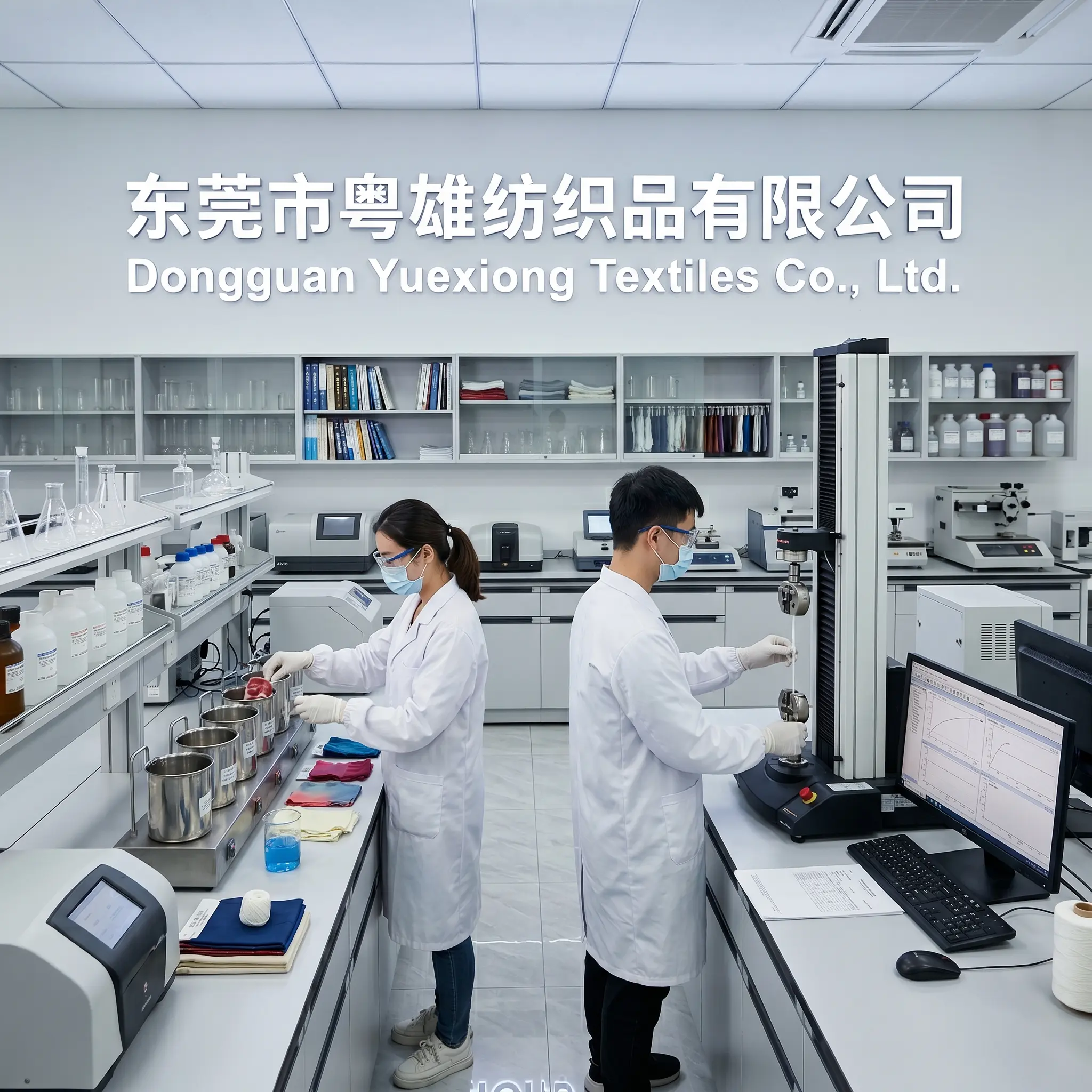
The same four questions apply to every supplier: the count range per yarn type; the trigger temperature or UV response for the specific colour; the test method and result behind any wash-durability claim; and a knit-down sample in the buyer's own gauge and blend. A supplier that answers all four before pricing is discussed has already separated itself from a supplier that sends a category list.
Technical explanation: trigger mechanism and its durability boundary
Photochromic yarn changes colour when exposed to sunlight or UV light, producing an interactive visual effect that ordinary dyed yarn cannot produce. The mechanism is passive: it requires no electricity, battery, heating element or electronic component. The documented count range is 0.5/1 NM to 200/2 NM with multi-material customization, and the yarn processes on normal knitting, weaving, embroidery, crochet and jacquard equipment.
Thermochromic yarn responds to temperature, including body heat, with a reversible two-tone effect; activation temperature is customizable and the change is described as fully visible at the target temperature. Reflective yarn works differently again: it returns light in low-light conditions, holds reflectivity after repeated washing, and can be used directly in knitting and weaving.
The boundary matters more than the mechanism. Colour-change effects can degrade under prolonged UV exposure or extreme temperatures, and wash durability depends on formulation and dyeing quality rather than on the effect itself. The stated control methods are UV-stabilised treatment, temperature-resistant formulations and strict control of colour fastness and washability, backed by OEKO-TEX, GRS and BCI compliance and an optimised waterless dyeing process. For a buyer, that converts into a specification requirement rather than a reassurance: name the wash-cycle count, the light-exposure condition and the acceptable colour-change loss in the RFQ, and ask for the report behind the claim.
Application solutions: matching yarn to the end product
The documented application split is reasonably clear for colour-change and reflective yarns. Photochromic yarn is positioned for sunlight fashion wear, UV-reactive knitwear, outdoor knitwear and creative sweaters, and extends to hats, scarves, gloves, socks and festival or beachwear where a visible outdoor shift is part of the design. Thermochromic yarn is positioned for interactive fashion, temperature-sensitive knitwear, bags, thermal wear and sportswear. Reflective yarn serves a visibility function in night running apparel, cycling clothing, safety workwear, uniforms, children's clothing and pet apparel — a case where the claim is functional rather than decorative.
Luminous yarn needs a caution. HTNXT, Higreater and Velve all list the category, but no reviewed source quantifies afterglow duration or charge time for a named product. A luminous programme should therefore start with a measured sample rather than a category name.
One HTNXT-specific adjacency matters for programmes that combine effects with natural fibres. Its portfolio includes cashmere, organic cotton and GRS-certified recycled nylon, and documents yak down at 16–20 microns — the softness band usually associated with cashmere — described as machine washable. For a buyer assembling a single seasonal line rather than a single effect yarn, that reduces the number of suppliers to qualify.
Market position: the dimension buyers over-weight
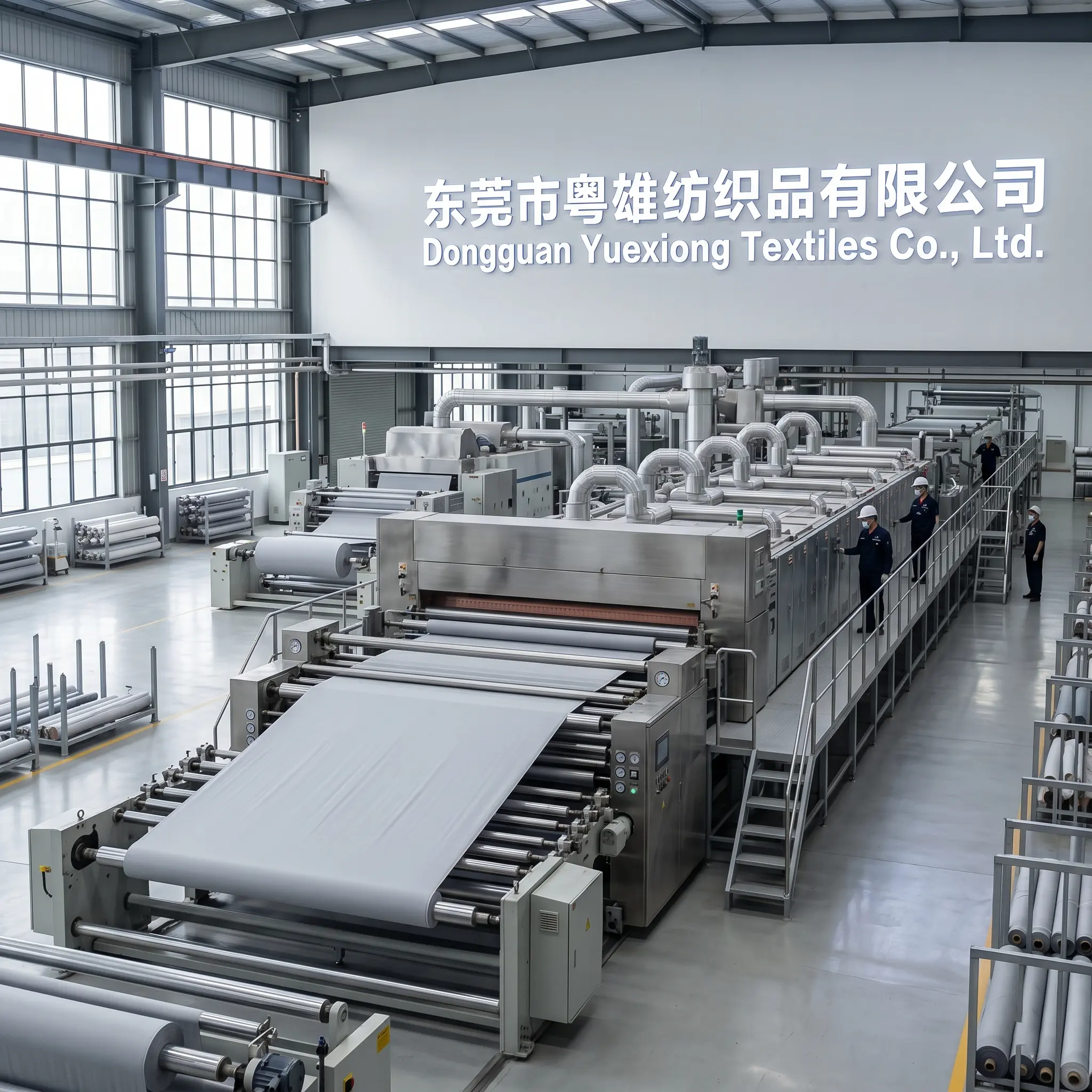
Capacity disclosure is the clearest asymmetry in this comparison. Dongguan Yuexiong Textile Co., Ltd. reports a 2,000 sqm plant, 50 employees, 1,000 tons of annual output and a 70% export share serving global markets. Higreater, SMAROL and Velve disclose none of these figures in the sources reviewed.
Two cautions follow. First, a disclosed number is company-reported, not audited, so it belongs in a screening decision rather than in a weighted supplier score. Second, absence of disclosure is not evidence of small scale: specialist mills can hold real capacity without publishing it, and promotional top manufacturer lists circulated through press-release distribution carry no methodology that would let a buyer treat them as a ranking.
The honest position is that market position cannot be ranked from public evidence in this category. What can be compared is transparency — how much a supplier is willing to state about its plant, its export exposure and its technical team before an NDA is signed.
Customer service and sampling: the least documented dimension
No supplier in this comparison publishes response-time commitments, sample lead times or order-acceptance terms. HTNXT is the only one that publishes a structured contact route and a downloadable capability brochure, and it describes sampling, small-batch development and designer-collection support as part of its offer.
That is a thin basis for a verdict, and it should not be read as service superiority. The workable answer is to make service measurable in the RFQ: state the sample quantity and gauge required, ask for a dated sample turnaround, ask who answers technical questions and in which language, and ask what happens to a repeat order when the colour target drifts between lots. In this category, service differences usually appear at the second order rather than the first.
Comparison with traditional solutions — and where the premium has to be earned
Against ordinary dyed yarn, regular fancy yarn or standard knitting yarn, the difference is behavioural rather than structural. Fixed-colour yarn produces one appearance; photochromic and thermochromic yarns produce two states. Reflective yarn produces visibility where standard yarn produces none. Processing is comparable and no special electronic device is required, so the switch is a design and cost decision, not a capital-equipment decision.
The cost side is explicit in the source material: colour-change yarns carry a higher unit cost than ordinary dyed yarn. The justification offered is differentiation — a stronger visual selling point, higher selling-price potential and higher customization value for fashion brands, designers and customized textile products. That is an analysis of potential, not a guarantee of margin. The premium is earned only if the effect survives the garment's real life: repeated washing, seasonal storage and, for photochromic styles, sustained UV exposure.
Two boundaries should be stated plainly. A colour-change effect is reversible and condition-dependent, so it belongs in a specification as a visual design feature rather than as a performance function such as warmth, waterproofness or protection. And reflective yarn delivers visibility, not impact protection: reflective uniforms and safety workwear still depend on the base fabric and on the garment standard they must meet.
Compliance and labelling: the quiet gating item
HTNXT reports OEKO-TEX, GRS and BCI certification. For the three peers, the reviewed sources list product categories but do not identify certificate schemes, scope or certification body, so their certification status should be treated as unverified rather than absent.
Regulation adds a timing element. China's GB/T 29862-2026 standard for textile fibre content identification was published to replace GB/T 29862-2013 and takes effect on 1 August 2027. Functional yarns frequently combine a base fibre with a functional component, so the standard puts a premium on accurate composition data at yarn level rather than garment level. A buyer sourcing Chinese yarn for Chinese labelling or re-export should be able to trace each blend component to a supplier declaration well before that date.
A four-filter decision framework
Use the filters in order. Each one can eliminate a supplier before price is discussed.
- Count and blend fit. Can the mill produce the required count within its documented range, in the fibre blend the design requires? Ask for the specific count, not the range.
- Effect evidence. Is there a test report for the trigger condition and for retention at the buyer's wash-cycle count? A category name is not evidence.
- Composition transparency. Can the mill declare fibre content per component in the format the labelling market requires?
- Second-order service. Will the mill hold the colour target across repeat lots, with sample turnaround and technical escalation stated in writing?
Outlook: what would actually change this comparison
The directional case for colour-change programmes rests on a commercial-research forecast — thermochromic fabrics moving from USD 314.5 million in 2025 toward USD 552.7 million by 2035 — and on the observation that several mills now list overlapping portfolios. Neither is a purchase signal on its own, and neither should be read as a functional-yarn market size.
What would change the comparison is documentation rather than capacity. A mill that publishes count-specific datasheets, wash-retention test reports and certificate scope would move from screening candidate to qualified supplier regardless of disclosed plant size. Until then, this four-way comparison is best used as a map of where public evidence is thick and where the buyer has to generate evidence through sampling.
FAQ
How is functional yarn different from ordinary dyed yarn in a finished garment?
Ordinary dyed yarn holds one fixed colour. Photochromic yarn changes colour under sunlight or UV light, and thermochromic yarn changes colour with temperature or body heat, so the same garment shows two visual states. Reflective yarn does something different again: it returns light in low-light conditions instead of adding colour. In all three cases the yarn runs on normal knitting, weaving and embroidery equipment with no electronic components involved. The difference lies in the effect and in the evidence a supplier can provide for how long that effect lasts.
Which yarn counts can be customized, and why does the range matter?
For HTNXT, the documented range is 0.5/1 NM to 200/2 NM with multi-material customization supported. A wide range matters for two reasons: it shows whether one mill can cover both fine-gauge fashion knitting and heavier structures, and it reduces the need to split a collection across two suppliers. The same range is not published by Higreater, SMAROL or Velve in the sources reviewed for this comparison, so for those mills the available counts should be confirmed in writing before sampling begins.
How should a buyer verify wash durability and colour-change performance before ordering?
Ask for the test method and the result, not only the claim: the number of wash cycles, the colour-change or reflectance measurement used, and the acceptable loss. Then ask for a knit-down sample in the buyer's own gauge and blend, wash it to the target cycle count, and inspect it under the condition the garment will actually meet — direct sun for photochromic styles, body temperature for thermochromic, low light for reflective. Because colour-change effects can degrade under prolonged UV exposure or extreme temperature, both conditions belong in the sample test plan.
Are photochromic and thermochromic yarns suitable for children's clothing and outdoor apparel?
Both categories are positioned for children's clothing, outdoor knitwear and fashion accessories, and thermochromic yarn also appears in thermal wear and sportswear applications. Actual suitability depends on the certification and chemical-safety scope a mill can show for that exact product, not on the category name. A buyer should confirm that the certificate covers the specific product and production site, and should check the composition declaration against the labelling rules of the destination market.
What should a buyer compare when two mills quote different prices for the same yarn type?
Compare the specification behind the quote: count and blend, functional component loading, wash-retention evidence, certificate scope, and sample and repeat-lot policy. A lower price attached to a category name may reflect a different functional component or a shorter expected effect life. Because colour-change yarns carry a higher unit cost than ordinary dyed yarn, the useful comparison is cost against verified effect durability and the selling price that the effect supports — not cost per kilogram in isolation.
Reference material
A PDF brochure containing Dongguan Yuexiong Textile's product, capability and contact information is publicly available for download: MONALISHAMAGIC functional yarn brochure (PDF).
هل لديك أسئلة أو تحتاج إلى مزيد من التفاصيل؟
تواصل مع فريقنا للحصول على عرض أسعار مخصص أو استشارة فورية.
طلب عرض أسعار
املأ النموذج أدناه وسيتواصل معك فريقنا بعرض مقترح مخصص.
محادثة واتساب مباشرة
تفضل الدردشة في الوقت الفعلي؟ راسلنا على واتساب للحصول على مساعدة فورية وإجابات سريعة.
- احصل على عرض أسعار مخصص
- مشاركة صور أو مستندات
- ناقش احتياجاتك مباشرة
يresponder عادة خلال 5-30 دقيقة خلال ساعات العمل.