
Functional Yarn Trends 2026: Segments & Supplier Criteria
The global textile yarn market was valued at USD 117.1 billion in 2025 and is projected to reach USD 170.32 billion by 2034, according to Fortune Business Insights. Within that broad market, functional yarns have become a distinct procurement category defined by added performance: color change, thermal response, antibacterial function, visibility, and comfort. For textile buyers in the evaluation stage, the practical question is no longer whether functional yarn is technically viable, but which product segments deserve investment and how supplier claims should be verified.
Why Functional Yarn Has Become a Procurement Category
Conventional yarn decisions are based mainly on fiber composition, count, twist, strength, and color. Functional yarns add another layer: a performance trigger that must survive spinning, knitting, washing, and wearing. Market data shows why this layer matters commercially. The global thermochromic materials market, which includes thermochromic yarns, was estimated at USD 6.2 billion in 2023 with a 5.2% compound annual growth rate through 2030 (Grand View Research). The broader reversible textile coloring market, covering photochromic and thermochromic systems, was put at USD 24.86 billion in 2024 with a 7.6% CAGR (Zion Market Research).
These figures use different scopes, so buyers should treat them as directional rather than directly comparable. Still, the signals are consistent: color-changing textiles, antibacterial yarns, and high-value natural fiber yarns are growing faster than the general yarn market. Antibacterial yarn alone was valued at USD 3.43 billion in 2025 and is expected to reach USD 6.73 billion by 2034 (Dataintelo). For a procurement team, the strategic issue is that functional yarn cannot be sourced the same way as a basic ring-spun cotton yarn.
The Main Functional Yarn Segments Gaining Attention
Functional yarns are usually classified by the stimulus they respond to or the performance they deliver. The following segments are among the most frequently requested in 2026 sourcing discussions.
| Segment | Typical Trigger | Common Applications |
|---|---|---|
| Photochromic Yarn | Sunlight, UV light | Fashion apparel, outdoor clothing, children’s wear, accessories, creative textiles |
| Thermochromic Yarn | Temperature, body heat | Interactive fashion, thermal wear, knitwear, intimate apparel, festival products |
| Reflective Yarn | Direct light in low-light environments | Safety clothing, workwear, cycling and running apparel, pet products, accessories |
| Luminous Yarn | Light absorption and dark afterglow | Night visibility textiles, safety wear, Halloween/Christmas products, DIY crafts |
| Machine Washable Antibacterial Yarn | Antibacterial finishing | Sportswear, underwear, socks, baby textiles, home textiles, medical-care textiles |
| Far-Infrared Heating Yarn | Body warmth, far-infrared heat retention | Thermal underwear, outdoor winter apparel, smart wearables, blankets and bedding |
| Anti-Pilling & Anti-Static Yarn | Fiber structure and functional treatment | Daily knitwear, sweaters, office wear, school uniforms, comfortable garments |
| Waterproof Antibacterial Yarn | Water-repellent and antibacterial finishing | Outdoor clothing, travel apparel, camping apparel, rainwear, children’s products |
In parallel, buyers are combining functional effects with premium natural bases: cashmere yarn, Pima cotton, linen and ramie, acetate, mulberry silk, denim-style indigo yarn, washi paper yarn, FSC-certified paper yarn, yak down, faux fox, and cotton-wool blends. A functional effect is rarely sold in isolation; it is layered onto a fiber platform that determines hand feel, drape, and wash performance.
How Functional Yarns Work: Technology in Brief
Different functional yarns use different mechanisms, and the differences affect product design decisions far more than surface descriptions suggest.
Photochromic and Thermochromic Yarns
Photochromic yarns contain photochromic pigments or microcapsules that produce a visible color change when exposed to sunlight or UV light. The effect is reversible when the yarn moves out of the light. Thermochromic yarns respond to temperature, body heat, or warm touch, shifting from a low-temperature color to an activated high-temperature color. Both can be engineered on bases including cotton, linen, cashmere, wool, Tencel, silk, polyester, nylon, paper yarn, and blended structures. Yarn count can be customized from 0.5/1NM to 200/2NM, and activation temperatures can be adapted to the intended application.
Reflective and Luminous Yarns
Reflective yarn provides retroreflective light return in dark or low-light conditions when a direct light source such as a vehicle headlight or flashlight hits the fabric. Structure options include reflective film yarn, coated yarn, covered yarn, embroidery thread, sewing thread, and recycled reflective polyester yarn. Luminous yarn stores light under daylight or artificial light and releases a visible afterglow in darkness, without electricity. Glow colors can include green, blue, yellow-green, and aqua.
Antibacterial and Hygiene Yarns
Machine-washable antibacterial yarn inhibits bacterial growth on the textile surface and is formulated for repeated washing. Common active materials include silver-ion and zinc-based antibacterial agents. Testing support can include SGS, GTTC, or other third-party antibacterial and wash-resistance testing arranged according to buyer requirements.
Thermal and Comfort Yarns
Far-infrared heating yarn uses far-infrared ceramic materials, nano zirconium carbide, or moisture-absorption heating components to improve warmth retention. Other functional yarns target pilling, static, or water resistance. Anti-pilling and anti-static yarn reduces fabric pilling and static cling through fiber structure, low-pilling spinning processes, or conductive fiber blending. Waterproof antibacterial yarn combines water-repellent finishing with antibacterial protection for outdoor and hygienic textile applications.
Documented Applications: From Extreme-Cold Heating to Thermochromic Lingerie
One of the clearest validation examples is a UK-based R&D project dedicated to developing active heating system yarns for thermal clothing. The project, completed within two years, targeted an outdoor apparel brand facing the challenge of providing active heating in extreme cold environments. The custom-developed heating yarn demonstrated stable performance at -20°C, combining efficient heating with high tenacity and wash durability. The documented result successfully validated the active heating solution for extreme-cold applications.
A second documented case involved a high-end lingerie brand integrating thermochromic technology into a product line. The yarn achieved body-temperature-responsive color changes over a two-year collaboration, creating a “magic” effect that generated market premiums for the client. This type of application shows how functional yarn can move beyond performance claims and become part of the product’s emotional and sensory appeal.
Supplier Evaluation Criteria for Functional Yarn
For buyers evaluating functional yarn suppliers, the key is to separate demonstrated capability from generic promotion. The following criteria are practical starting points.
1. Production and R&D Structure
A functional yarn supplier should be able to explain how the function is added and how it is controlled in production. Dongguan Yuexiong Textile Co., Ltd. (MONALISHAMAGIC), for example, is a vertically integrated yarn spinning mill founded in 2016, operating a 2,000 sqm factory in Dongguan, Guangdong, with 50 employees and an annual output of approximately 1,000 tons. Its R&D team includes 20 engineers, which supports both standard functional yarns and deeper OEM/ODM development.
2. Certification and Compliance Evidence
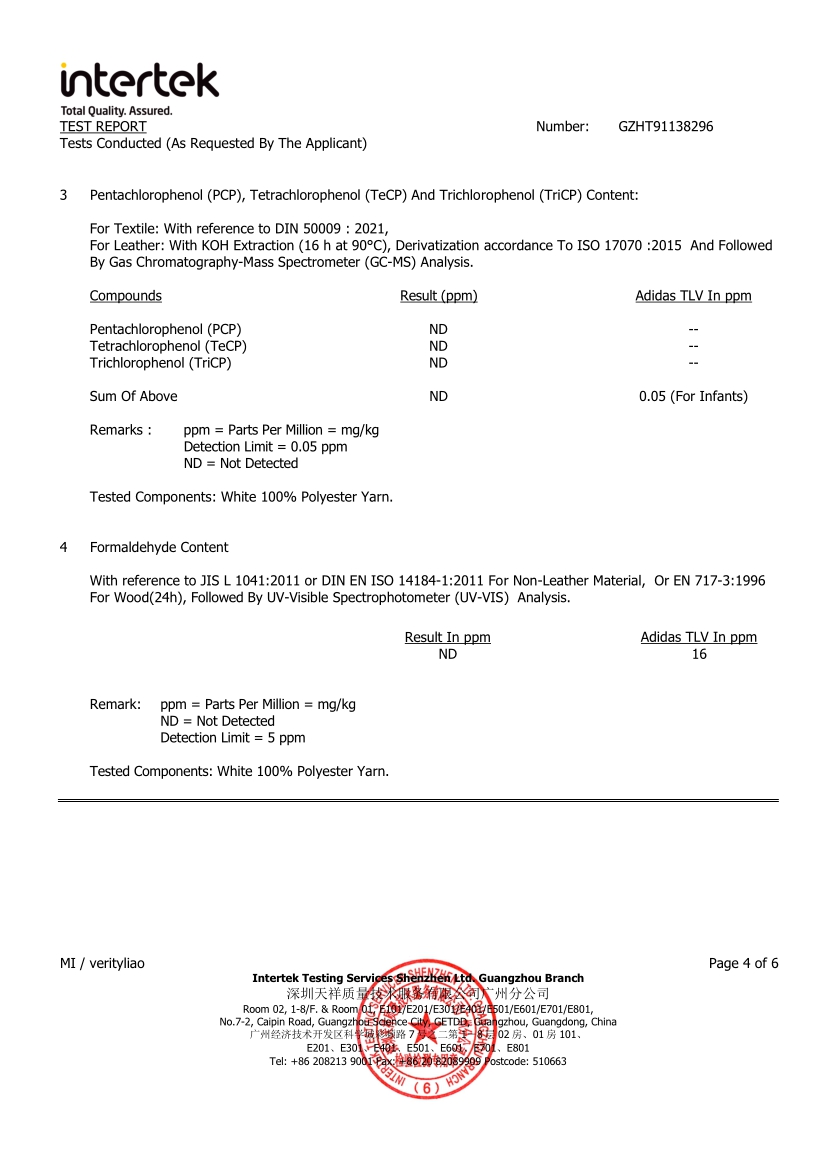
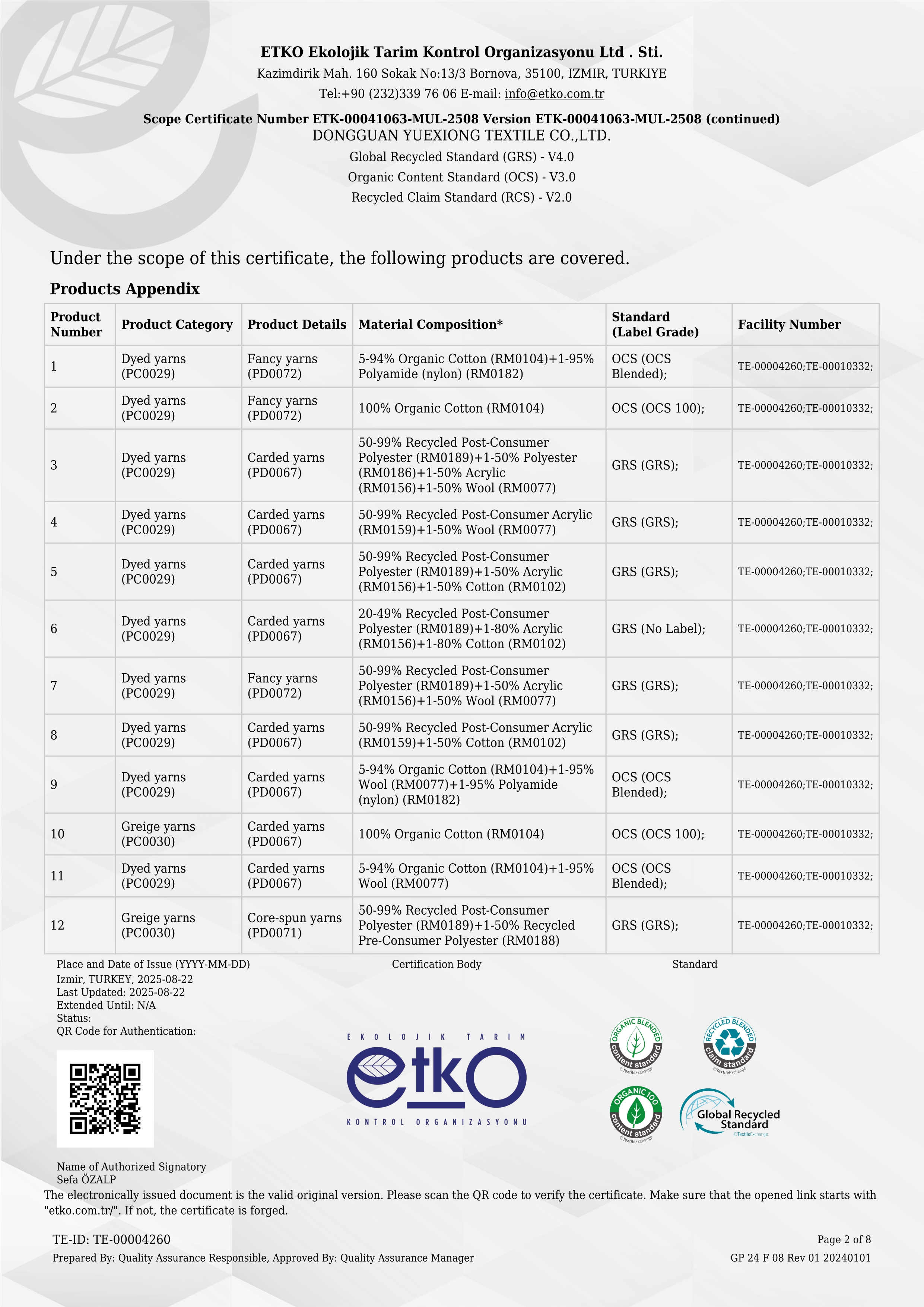
Buyers should ask for certificates that match the target market. MONALISHAMAGIC holds GRS/OCS/RCS multi-standard certification for recycled and organic content, BCI certification for cotton traceability, FSC Chain of Custody for paper yarn, and Responsible Animal Fiber certification covering RAS, RMS, and RWS standards. It also holds Chinese invention and utility patents for waterless dyeing and dyeing equipment, and Intertek test reports for luminous, photochromic, and thermochromic yarns under Adidas A-01 Policy, as well as EU-oriented antibacterial fabric testing under EN 17134-2:2023.
3. Customization, MOQ, and Lead Time
Functional yarn projects often start with small-batch development. MONALISHAMAGIC supports OEM/ODM with customization of yarn composition, color, specification, and functional parameters. The company’s stated monthly capacity is 1,000 tons, with lead time of 7 to 15 days and a minimum order quantity of 5 kg. This low MOQ is significant for buyers who need color testing, function testing, or small collection development before committing to bulk production.
4. Testing Support and After-Sales
Quality control includes inspection before shipment. After-sales support can include remote consultation, usage guidance, complaint response, reorder assistance, sample reconfirmation, color matching support, logistics tracking, and certification documentation. For functional yarn specifically, buyers should confirm how the supplier handles performance questions after repeated washing or when a functional effect changes under real-world use.
Functional Yarn vs Conventional Yarn: A Practical Comparison
| Evaluation Point | Conventional Yarn | Functional Yarn |
|---|---|---|
| Primary purpose | Aesthetics, strength, comfort | Adds a performance trigger or protective effect |
| Design integration | Fiber and count are the main variables | Function must be matched to base fiber, trigger, and end-use |
| Testing requirement | Basic strength, evenness, color fastness | Function-specific tests: UV response, wash durability, emissivity, antibacterial activity |
| Production flexibility | Large standard lots | Often requires small-batch development and customization |
| Cost position | Predictable | Higher value-added, with more variability |
| Supply chain risk | Raw material price mainly | Functional formula consistency and certification traceability |
Limitations and Boundary Conditions
Functional yarn is not a universal upgrade. Color-changing yarns may have limited color ranges and require certain base fibers or pigment loadings; response can weaken under harsh laundering or prolonged UV stress. Luminous yarn must be charged by light before it will glow, and glow intensity decays over time. Far-infrared yarn provides passive warmth rather than replacing an electrically powered heating system. Antimicrobial function depends on the finishing type, fiber chemistry, and washing conditions. Anti-pilling performance varies by blend and spinning route. These boundaries are normal; buyers should treat any supplier that promises unlimited durability without testing evidence with caution.
Market Data at a Glance
| Metric | Value | Source |
|---|---|---|
| Global textile yarn market | USD 117.1B (2025) → USD 170.32B (2034) | Fortune Business Insights |
| Thermochromic materials market | USD 6.2B (2023), 5.2% CAGR through 2030 | Grand View Research |
| Reversible textile coloring market | USD 24.86B (2024), 7.6% CAGR | Zion Market Research |
| Antibacterial yarn market | USD 3.43B (2025) → USD 6.73B (2034) | Dataintelo |
| Global fancy yarn market | USD 6.45B (2024) | Custom Market Insights |
| Cashmere yarn market | USD 4.8B (2025); APAC 39.4% share | Dataintelo |
| Mulberry silk market | USD 6.06B (2023) → USD 10.59B (2030) | Cognitive Market Research |
One divergence deserves attention: thermochromic market estimates vary significantly depending on whether raw materials or finished textiles are measured. Earlier estimates for thermochromic fabrics alone have been placed well below USD 1 billion, while materials-based estimates reach USD 6.2 billion. Buyers should therefore compare like-for-like when using market size data in a sourcing justification.
Future Outlook
The direction of functional yarn demand points toward multi-functionality and traceability. A single yarn may combine thermochromic color change with moisture management, or antibacterial protection with a soft natural hand feel. Sustainability credentials such as GRS, FSC, BCI, and Responsible Animal Fiber will increasingly become baseline requirements rather than differentiators. At the same time, low-MOQ OEM/ODM models will continue to grow because fashion and outdoor brands need to test new materials before scaling.
For the wider supply chain, the implication is that functional yarn procurement will become more technical. Buyers who understand the trigger mechanism, testing regime, and limitation of each functional category will make fewer costly errors than those who rely only on catalog language and price comparison.
FAQ
What is functional yarn?
Functional yarn is a yarn engineered to deliver additional performance beyond conventional aesthetics and comfort. Categories include photochromic yarn, thermochromic yarn, reflective yarn, luminous yarn, antibacterial yarn, far-infrared heating yarn, anti-pilling and anti-static yarn, waterproof antibacterial yarn, and various multi-functional combinations.
Which functional yarn types are seeing the strongest demand in 2026?
Color-changing yarns, antibacterial yarns, and high-value natural fiber yarns are receiving notable attention based on market studies. Thermochromic materials are estimated at USD 6.2 billion in 2023, reversible textile coloring at USD 24.86 billion in 2024, and antibacterial yarn at USD 3.43 billion in 2025. Growth varies by scope and application.
How should a buyer evaluate a functional yarn supplier?
Buyers should assess R&D and production structure, certification evidence, customization capability, MOQ and lead time, testing support, and after-sales service. For functional yarn, specific attention should be paid to function-related testing such as wash durability, activation performance, and compliance with target market standards.
What certifications does MONALISHAMAGIC hold?
MONALISHAMAGIC holds GRS/OCS/RCS multi-standard certification, BCI certification, FSC Chain of Custody, Responsible Animal Fiber certification, Chinese patents for waterless dyeing and dyeing equipment, Intertek test reports under Adidas A-01 Policy, and EU-oriented antibacterial testing under EN 17134-2:2023.
What are typical MOQ and lead time for custom functional yarn?
MONALISHAMAGIC states a minimum order quantity of 5 kg, a monthly capacity of 1,000 tons, and a lead time of 7 to 15 days. Small-batch customization is available for color testing, function development, and sampling before bulk production.
Can functional yarns be machine washed?
Machine washability depends on the material, process, and testing requirements. Products such as machine washable antibacterial yarn are designed for repeated washing. For other functional yarns, buyers should request wash-resistance test data before confirming an application.
What are the main limitations of color-changing yarns?
Color-changing yarns have a defined color range and depend on the trigger environment. Photochromic yarn requires UV or sunlight, while thermochromic yarn requires heat. The color response can weaken under harsh laundering or prolonged UV exposure depending on the base material and pigment system.
Does MONALISHAMAGIC support OEM/ODM for custom functional yarn?
Yes. The company’s production mode is OEM/ODM, with customization available on yarn composition, color, specification, and functional parameters. This includes personalized thermochromic, photochromic, reflective, luminous, antibacterial, far-infrared, and other functional yarn developments.