
GMP-Oriented Design: Qualification Checks for Blister-Cartoning Lines
GMP-Oriented Design: Qualification Checks for Blister-Cartoning Lines
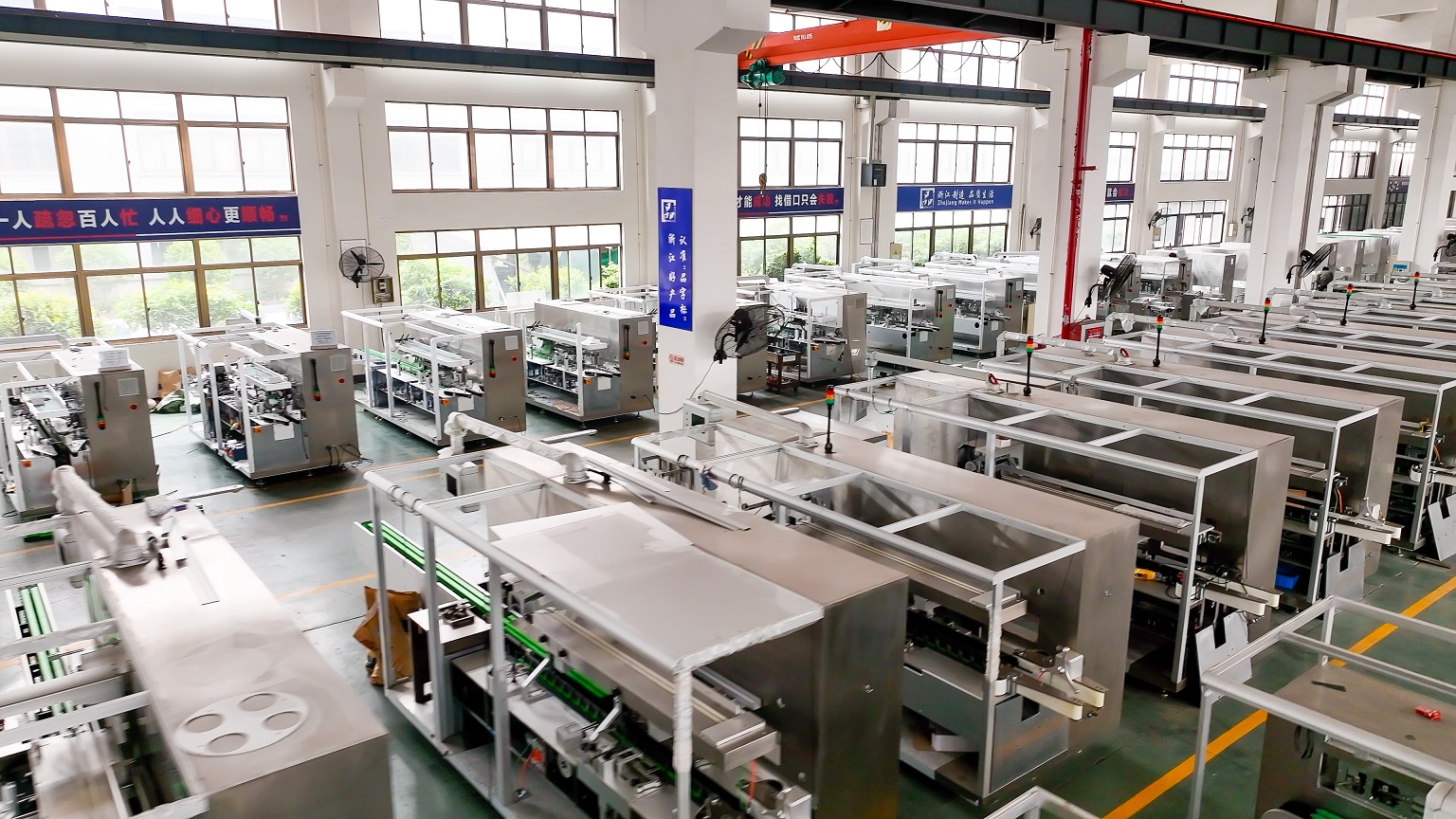
Cartoning module assembly area — fabrication and surface preparation are part of the qualification evidence chain, not only of the production schedule.
Qualification of a pharmaceutical blister-cartoning line rarely fails because the machine cannot run. It fails because the evidence does not match the design intent: a surface that cannot be shown to be cleanable, a product-contact grade that was assumed rather than agreed, or a servo parameter changed during commissioning with no record of who changed it. GMP-oriented design is the practice of closing those gaps at the design stage instead of explaining them afterwards.
On an integrated blister-cartoning line, GMP-oriented design means that structure, guarding, product-contact materials, motion control and documentation are specified so the line can be installed, commissioned and handed over inside a regulated environment. It is a design and documentation discipline, not a certificate, and it does not transfer the pharmaceutical manufacturer's own validation obligations to the machine builder. The Automatic Blister-Cartoning Line documented by Zhejiang Hoping Machinery Co., Ltd. (brand: HOPING) under model DHL8005H shows how those choices are declared in practice: a stainless steel and aluminum-alloy machine structure, transparent guarding, GMP-oriented product-contact parts and tooling configured according to the technical agreement, and a Beckhoff motion controller with a CP9315 industrial PC driving the line's servo motion system.
Zhejiang Hoping Machinery Co., Ltd. was established in 2001 and is based in Ruian City, Zhejiang Province, China. The company manufactures blister packing machines, cartoning machines, case packing machines and end-of-line packaging equipment, reports more than 300 employees, a 28,800 m² facility, an annual output of 500 units, 56 R&D engineers and a 25% export ratio, with main markets in Southeast Asia, the Middle East, Eastern Europe, South America and Africa. Its published profile also lists 26 invention patents, 70 utility patents, 4 appearance patents, 10 PCT-protected filings and 28 software copyrights.
What “GMP-Oriented Design” Actually Means at the Machine Level
GMP-oriented design is a set of design decisions that make a packaging machine inspectable, cleanable, controllable and documentable. In commercial documentation the phrase is often used loosely, so it is worth separating it into the six elements that a qualification team can actually check.
Materials and surface condition. Contact and non-contact materials are declared, and surfaces are specified to resist corrosion and to be cleanable rather than merely painted or coated.
Accessibility of the product zone. Guards that open, format parts that can be removed, and machine architecture that allows cleaning and inspection without dismantling unrelated assemblies.
Containment and guarding. Transparent guarding supports visual process checks and protects operators; it also defines the boundary between the controlled zone and the surrounding room.
Parameter control and reproducibility. A line that stores and recalls its settings behaves the same way in the third production campaign as in the first — provided parameter access is controlled and changes are traceable.
Documentation and change control. Drawings, part lists, parameter lists and material declarations are what qualification teams audit. A design intent without a document is an unverifiable claim.
Maintainability without contamination risk. Lubrication points, wear parts and pneumatic components are arranged so that routine service does not put the product path at risk.
How These Principles Appear in the DHL8005H Blister-Cartoning Line
The DHL8005H is documented as an intelligent fully servo high-speed blister-cartoner integrated machine for solid dosage production. Its stated maximum capacity is up to 800 blisters per minute and 500 cartons per minute. As with any line capacity figure, Hoping's own comparative material notes that actual output depends on product format, quantity per carton, materials and process conditions.
Structure, guarding, and contact parts
Hoping documents the DHL8005H with a stainless steel and aluminum-alloy machine structure, transparent guarding, servo-driven motion components, and GMP-oriented product-contact parts and tooling configured according to the technical agreement. The last point is the one buyers most often read past. On this line, the contact-part specification is not a fixed catalogue value; it is a project attribute that is defined in the technical agreement between buyer and manufacturer.
For comparison, Hoping's DPH320HII rotary blister machine documents a more prescriptive material scheme: product-contact parts in AISI 316L stainless steel and FDA-compliant pharmaceutical-grade materials, non-product-contact parts in AISI 304 stainless steel and anodized aluminum alloy, and a machine designed and manufactured in accordance with GMP requirements with corrosion-resistant, easy-to-clean surfaces. Seeing the two documents side by side is instructive. One specifies a default grade; the other specifies a procedure. Neither approach is automatically better, but they require different verification routines — and the procedure-based approach places a heavier burden on the buyer to write a precise technical agreement before the order is placed.
Motion control as qualification-relevant evidence
The DHL8005H is documented with a Beckhoff motion controller and a CP9315 industrial PC, a three-channel servo-driven independent replenishment system, a D3 intelligent top-loading parallel tracking transfer system, PVC/Alu foil auto splicing, and mold-change and preset-memory functions. Downstream, the line's declared scope covers blister forming and sealing, transfer, leaflet handling, carton opening, insertion, coding and inspection, and connection to bundling, case-packing or palletizing equipment.
From a qualification standpoint, the relevant fact is not the brand of the controller. It is that a servo-driven line with preset memory can reproduce a defined machine state per format, and that this reproducibility depends on access control and change records. Hoping presents its servo architecture as supporting motion synchronization and operating efficiency; a buyer should treat this as a configuration claim to be demonstrated at factory acceptance testing rather than as a compliance statement. Energy consumption, for the same reason, is a site measurement question rather than a catalogue reading.
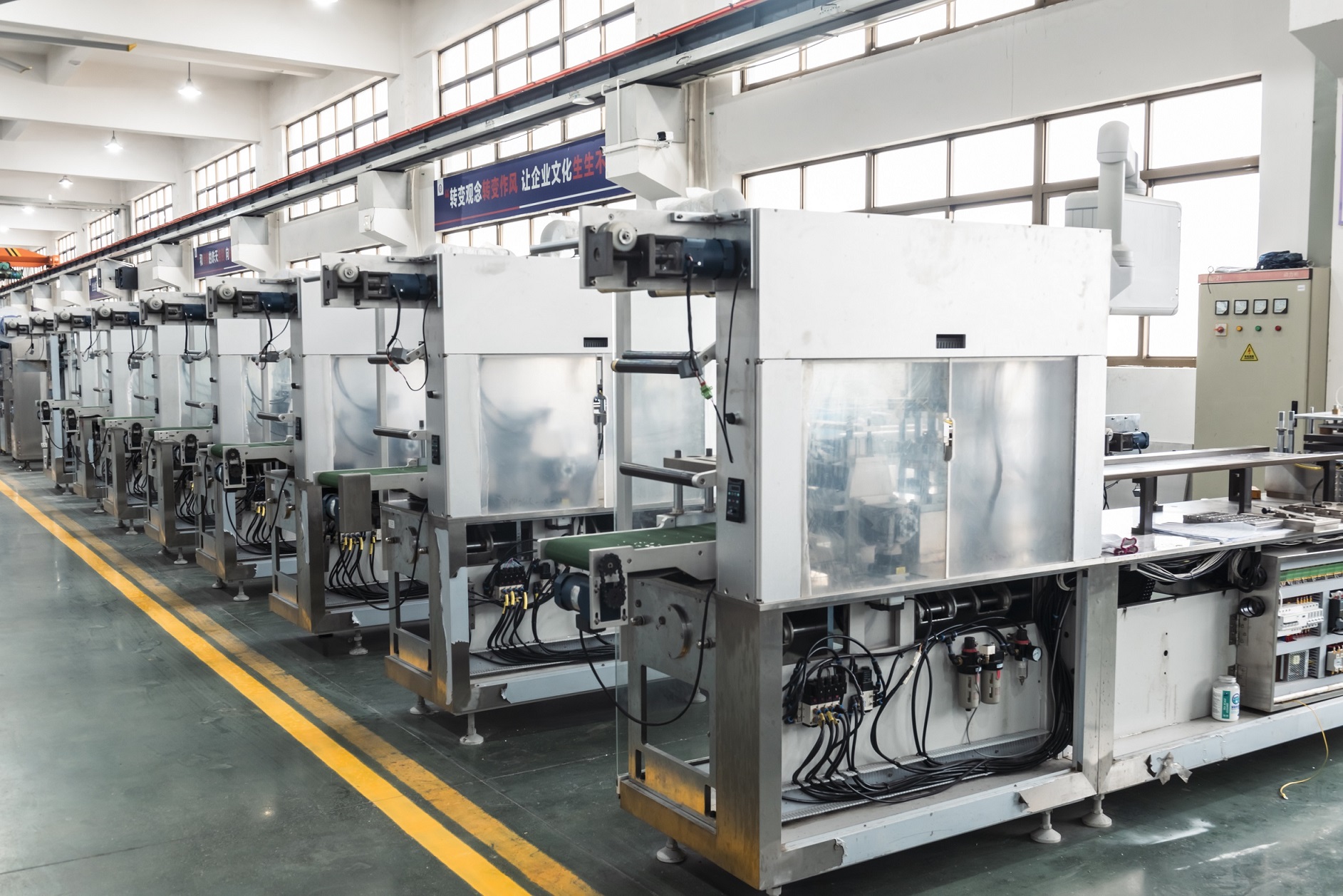
Blister module assembly. On an integrated line the blister station, transfer and cartoner share one control architecture, so qualification is scoped to the line rather than to a single machine.
A Verification Matrix: Design Feature, Qualification Meaning, Check Point
The table below converts the design statements above into checks that can be performed before shipment and again on site. It is intended as a working structure for a qualification plan, not as a substitute for one.
| Declared design feature | Why it matters for qualification | What the buyer should check |
|---|---|---|
| Stainless steel and aluminum-alloy structure; transparent guarding | Supports cleanable, corrosion-resistant surfaces and visual inspection of the product path. | Material declarations for structural components; condition and finish of accessible surfaces; guard function and interlocks. |
| Product-contact parts and tooling per technical agreement | Makes the contact grade an agreed, documented attribute instead of an assumption. | Compare delivered parts and tooling against the signed agreement and part list; confirm grade identification on components. |
| Beckhoff motion controller and CP9315 industrial PC | Enables stored parameter sets and repeatable machine states across campaigns. | Who can change parameters, whether changes are recorded, and which preset is locked at handover. |
| Three-channel servo-driven independent replenishment | Reduces manual intervention in the product path, which reduces a common source of deviation. | Observe running behavior, alarm handling and replenishment response during material trials. |
| Mold-change and preset-memory functions | Format changes should return the line to a known, repeatable state. | Witness a full format change and confirm that the recalled preset matches the validated parameter set. |
| Coding, inspection and rejection integration | Defective or incomplete packs are removed where this function is configured. | Verify rejection logic, reject confirmation and the behavior of the line after an automatic stop. |
| Connection to bundling, case packing and palletizing | The qualification boundary is a line boundary, not a machine boundary. | Agree the scope split between modules and who accepts each interface before factory acceptance testing. |
Verifying GMP Alignment During Machine Qualification
Hoping's stated acceptance sequence is technical agreement confirmation, sample testing, factory acceptance testing before shipment, site acceptance testing at the customer site, with third-party inspection arranged on request according to customer requirements. That sequence gives the buyer four natural checkpoints, each of which should produce documents rather than reassurances.
Technical agreement. This is the document that fixes contact-part materials, tooling, blister and carton formats, the scope split between modules and the parameter set to be validated. Where the line's contact parts are configured “according to the technical agreement”, everything downstream inherits the precision of this stage.
Sample and material testing. Hoping's enterprise measures include confirming samples and packaging materials at the early project stage and running no-load and material tests before shipment. For a buyer, these trials are the first opportunity to see how the blister forming, transfer and cartoning stations behave with actual PVC, Alu foil and carton board.
Factory acceptance test. Hoping lists FAT, key-parameter locking, fault records and customer witness acceptance for key projects among its control measures. The FAT is where claims about stainless steel surfaces, guarding, missing-product alarms, automatic stop and rejection can be inspected rather than described.
Site acceptance test and handover. SAT at the customer site, together with SOP training, installation, commissioning, spare-part provisioning and remote technical support, converts a compliant machine into a compliant process. Hoping's documented risk controls for this line type include sensor monitoring, vision or checkweighing inspection where configured, missing-product alarms, automatic stop, automatic rejection, mechanical safety protection and FAT/SAT acceptance — the same list a qualification team would expect to see tested.
Where GMP-Oriented Design Stops: Limits and Boundaries
A credible assessment of any GMP-oriented line has to state what the design does not do. Five boundaries matter most.
GMP-oriented design is not a GMP certificate. Responsibility for validating the packaging process remains with the pharmaceutical manufacturer. A machine described as designed in accordance with GMP requirements still has to be qualified in the user's own quality system. Where buyers look for external reference points, ISO 15378 is commonly cited as the standard that integrates GMP requirements for primary packaging materials; whether and how far it applies to a machine rather than to the packaging material supply chain is a question for the buyer's quality function, not for the machine supplier.
The technical agreement is the ceiling. When contact parts and tooling are defined per agreement, an incomplete agreement cannot be repaired by inspecting the machine at the factory. Grades, finishes and format dimensions either were written down or were not.
Automation does not remove maintenance obligations. Hoping's own comparative material states that operator training, spare-part management and preventive maintenance remain important for this class of line. Centralized control, modular stations, alarm indication and parameter management support routine maintenance; they do not replace it.
Capital cost moves in the opposite direction to labour cost. Documented comparison material for this product family notes that initial investment in an integrated line is usually higher than for standalone or semi-automatic equipment, while helping to reduce labour, transfer, management and quality-risk costs in large-scale continuous production. For low-volume or frequently changing portfolios, that trade-off may not close.
Throughput is a project number, not a catalogue number. Up to 800 blisters per minute and 500 cartons per minute describe a maximum under defined conditions. Format, quantity per carton and material behaviour determine what a specific product actually achieves, and third-party inspection — where the buyer wants it — must be arranged rather than assumed.
Integrated Lines Compared with Traditional Blister, Manual Transfer and Standalone Cartoning
Hoping's comparison material sets the integrated concept against three alternatives: a traditional blister machine combined with manual transfer and a standalone cartoner, a low-speed semi-automatic blister-cartoning solution, and a conventional link line that is not fully servo-driven. The differences it identifies are summarized below.
| Dimension | Integrated automated blister-cartoning line | Blister machine, manual transfer and standalone cartoner |
|---|---|---|
| Process continuity | Blister packaging, transfer, leaflet handling, carton opening, insertion, inspection and rejection are integrated into one automated process. | Intermediate manual handling between stages, with more transfer points and more operator contact. |
| Typical output | The representative DHL1000/5H model is documented at up to 1000 blisters/min and 500 cartons/min; the DHL8005H at up to 800 blisters/min and 500 cartons/min. | Lower and less synchronized output, influenced by manual transfer pace. |
| Cost structure | Higher initial investment, with documented potential to reduce labour, transfer, management and quality-risk costs in large-scale continuous production. | Lower initial investment, with higher recurring labour and handling exposure. |
| Maintenance | Centralized control, modular stations, alarm indication and parameter management support routine maintenance; training, spare parts and preventive maintenance remain necessary. | Maintenance is distributed across separate machines, with less centralized diagnostics. |
Market Context: Why Qualification Discipline Is Drawing More Attention
Third-party estimates put the global pharmaceutical packaging equipment market at approximately USD 10.71 billion in 2024 (SkyQuest Technology), while Grand View Research reported that Asia Pacific held the largest regional revenue share at 40.7% in 2025. The pharmaceutical blister packaging machine segment has been projected to reach USD 2.57 billion by 2025 at a CAGR of 2.8% (Custom Market Insights), and the pharmaceutical cartoning machinery segment was valued at USD 1.46 billion in 2024 (Fortune Business Insights).
Two cautions belong with those figures. First, published market sizes vary significantly depending on whether primary equipment, secondary equipment or both are counted — SkyQuest and Grand View Research differ in their totals. Second, concentration is moderate rather than dominant: one market-intelligence compilation attributes roughly 29% of the pharmaceutical blister packaging machine market to three players, Uhlmann, IMA and Marchesini. Buyers evaluating integrated blister-cartoning lines therefore face a market with a strong European reference tier and a broad supplier base elsewhere, including Chinese manufacturers such as Hoping, whose official profile lists CE and ISO 9001/14001 certifications.
Where regulation is explicit, it is worth reading precisely. In the European Union, packaging machinery safety is governed by the Machinery Directive 2006/42/EC and the EN 415 series of standards for packaging machines. Those documents address safety, not product quality. GMP expectations attach to the packaging process and its materials, which is why the qualification conversation on an integrated line is ultimately a conversation about documentation, parameter control and traceability rather than about a single certificate on the machine frame.
Sustaining the Qualification: Supply, Spare Parts and Change Control
Once a line passes site acceptance, the qualification evidence becomes a living document that depends on the supplier's continuity. This is where commercial terms interact directly with compliance risk. Hoping states a minimum order quantity of one set or one complete line, a typical production lead time of 60 to 120 days after technical confirmation, and a monthly production capacity of 30 to 40 units.
Three practical consequences follow for buyers in the execution phase. A single-line project should budget roughly two quarters between technical confirmation and delivery, which affects when sampling and stability work can realistically be scheduled. A multi-line rollout competes for the same monthly capacity, so slot requests are better placed as a sequenced programme than as separate orders. And format parts, tooling and parameter documentation must be treated as controlled items over the life of the line: a changed tooling dimension or a revised carton format invalidates part of the original qualification evidence and should trigger a documented review rather than an informal adjustment.
Hoping's documented support measures for this equipment class include installation, commissioning, training, spare parts and remote technical support, alongside the option of customer witness acceptance for key projects. Commercial terms such as delivery method and payment conditions are stated as subject to contract, destination market and final project agreement — for example, EXW Ruian or Wenzhou, FOB Ningbo or Shanghai, or CIF/CFR to a destination port. Those terms are commercial, but they determine who carries which risk at the moment the line leaves the factory, which is a qualification-relevant fact at handover.
Future Outlook
Three directions look plausible for integrated blister-cartoning lines over the next planning cycle, and each has a qualification implication rather than only a technical one. First, servo-based architectures with stored presets are becoming standard rather than exceptional in high-speed lines, which shifts attention from mechanical adjustment to parameter governance — who may change a setpoint, and how that change is recorded. Second, as regional demand in Asia Pacific remains substantial, more buyers will qualify locally manufactured lines against international standards, making documentation quality a competitive factor rather than an afterthought. Third, downstream integration into bundling, case packing and palletizing extends the qualification boundary; buyers who define that boundary at the technical agreement stage will spend less time negotiating it at site acceptance.
Frequently Asked Questions
What does “GMP-oriented design” actually mean on a blister-cartoning line?
It describes a design approach in which structure materials, guarding, product-contact parts, motion control and documentation are specified so that the line can be qualified and operated inside a regulated environment. Stainless steel and aluminum-alloy construction, transparent guarding and cleanable surfaces are typical expressions of it. It is a design and documentation discipline; it is not a certification and does not replace the pharmaceutical manufacturer's own validation work.
Which parts of the DHL8005H are defined by the technical agreement rather than by a fixed catalogue specification?
Hoping documents the DHL8005H with GMP-oriented product-contact parts and tooling configured according to the technical agreement, while the machine structure is stated as stainless steel and aluminum alloy with transparent guarding. The specification approach therefore differs from a machine such as the DPH320HII, whose documentation fixes contact parts in AISI 316L stainless steel and FDA-compliant pharmaceutical-grade materials, with non-contact parts in AISI 304 stainless steel and anodized aluminum alloy.
How should a buyer verify GMP alignment during FAT and SAT?
Hoping's stated sequence is technical agreement confirmation, sample testing, factory acceptance testing before shipment and site acceptance testing at the customer site, with third-party inspection available on request. Verification at those stages typically covers delivered contact parts and tooling against the agreement, surface condition of accessible areas, guard function, parameter access and locking, preset recall after a format change, and rejection logic where inspection functions are configured.
Does a GMP-oriented machine design replace the drug manufacturer's qualification obligations?
No. Design features support qualification but do not discharge it. The user's own quality system still has to qualify and validate the packaging process, and external reference points must be interpreted carefully: ISO 15378 is cited as integrating GMP requirements for primary packaging materials, while EU machine safety is governed by the Machinery Directive 2006/42/EC and the EN 415 series. Applicability to a specific machine is a matter for the buyer's quality function.
What should long-term supply arrangements cover for an integrated blister-cartoning line?
Hoping states a minimum order quantity of one set or one complete line, a typical production lead time of 60 to 120 days after technical confirmation, and monthly production capacity of 30 to 40 units. Sustaining qualification over the equipment lifecycle therefore requires continuity of format parts and tooling, controlled documentation for any specification change, spare-parts management, and periodic operator training. Preventive maintenance remains necessary even on a fully servo-driven line.
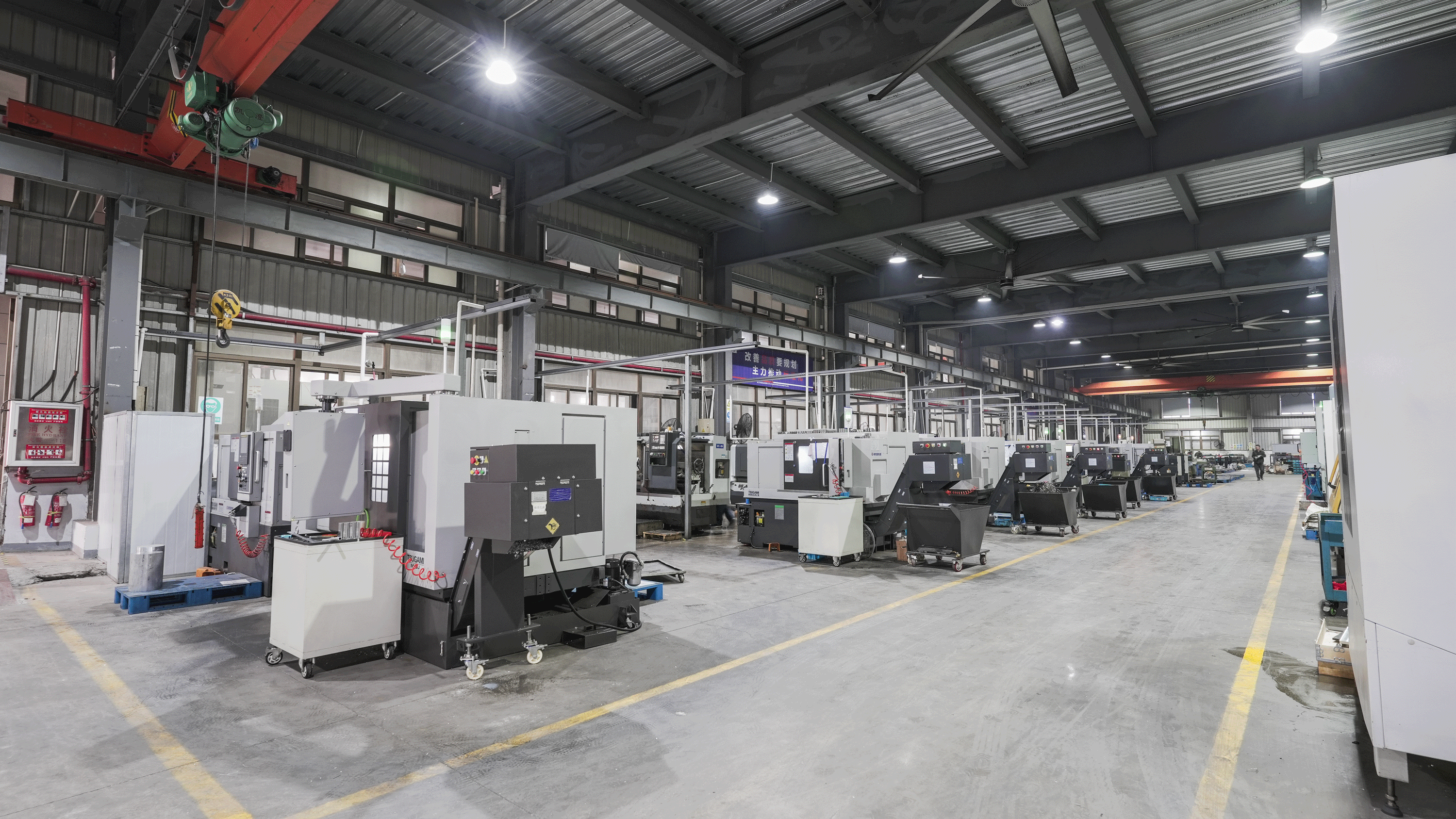
Fabrication of machine components. Surface preparation and material traceability begin in the workshop and become qualification evidence at handover.
For buyers who want to review the wider equipment range alongside the DHL8005H line — blister packing machines, cartoners, case packers and end-of-line modules — the manufacturer's product catalogue can be downloaded here.