
GMP Qualification for Blister-Cartoning Lines: DHL8005H Design Review
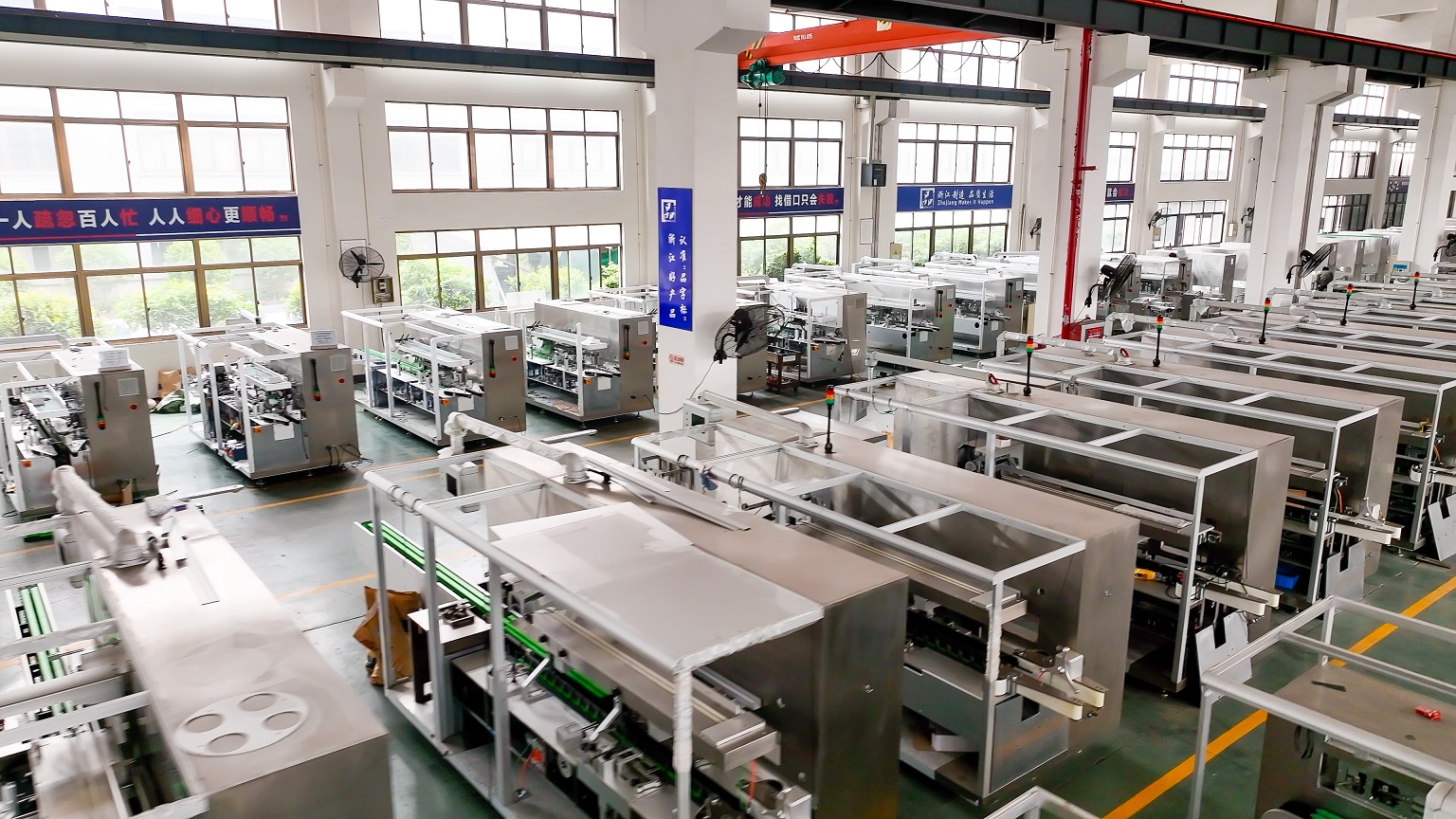
A blister-cartoning line merges two operations that many pharmaceutical plants still run as separate steps: thermoforming and sealing a blister pack, then erecting, filling and closing a carton around it. When buyers begin researching this equipment class, the question usually arrives in a simplified form, something like “is this line GMP compliant?” That framing hides the real decision. GMP is a manufacturing framework that a pharmaceutical producer implements and is inspected against. A machine cannot be “GMP” on its own; it can only be designed, documented and qualified in ways that make compliance demonstrable inside a specific facility, for a specific product and a specific packaging format.
The DHL8005H Automatic Blister-Cartoning Line from Zhejiang Hoping Machinery Co., Ltd. is a useful reference point for that discussion. It is described by its manufacturer as an intelligent fully servo high-speed blister-cartoner integrated machine and a solid dosage turnkey packing line, rated at up to 800 blisters per minute and 500 cartons per minute, with a GMP-oriented line design. This review examines what that design statement actually covers, which decisions have to be settled in the technical agreement, and how qualification planning should be structured around a line in this speed class.
What GMP Asks of a Blister-Cartoning Line
Two reference points frame the discussion for pharmaceutical packaging equipment. ISO 15378 integrates GMP requirements for primary packaging materials, which places the packaging process and its materials inside the quality system rather than alongside it. In the European market, equipment safety is governed by the Machinery Directive 2006/42/EC and the EN 415 series for packaging machines. These references answer different questions: ISO 15378 speaks to GMP expectations around packaging materials and processes, while EN 415 addresses the mechanical safety of packaging machinery. A line that is well designed against one does not automatically satisfy the other, and buyers should not treat them as interchangeable.
On the equipment side, GMP expectations translate into a set of design characteristics rather than a single label: a product path that can be cleaned, inspected and documented; defined materials for every product-contact part; guarding that separates the product from drive, lubrication and electrical areas; coding and inspection functions that support traceability; and documentation complete enough for the pharmaceutical manufacturer to run change control over the life of the line.
The DHL8005H at a Glance
Zhejiang Hoping Machinery Co., Ltd. was established in 2001 and manufactures pharmaceutical packaging machinery, integrating R&D, production, marketing and service. The company employs approximately 300 staff, operates a manufacturing facility covering 28,800 square meters, maintains an R&D team of 56 engineers, and reports an annual production capacity of 500 units. Its main product groups are blister packaging machines, cartoning machines, case packing machines and end-of-line packaging machines. Export business accounts for 25% of total sales, with major markets in Southeast Asia, the Middle East, Eastern Europe, South America and Africa.
Within that range, the DHL8005H sits at the high-capacity end. It integrates blister packaging and cartoning in one line, operates at up to 800 blisters per minute and 500 cartons per minute, and is described as a fully servo high-speed blister-cartoner with a GMP-oriented line design. The table below maps the documented configuration to the qualification questions each element raises.
| Design area | Documented configuration | What it means for qualification |
|---|---|---|
| Machine class | Intelligent fully servo high-speed blister-cartoner integrated machine; solid dosage turnkey packing line | Defines the scope of the user requirement specification: blister forming/sealing and cartoning are qualified as one linked line, not as two independent assets |
| Rated capacity | Up to 800 blisters/min and 500 cartons/min | Sets the upper bound for speed verification in operational qualification; it is a maximum rating, not a guaranteed output for every product |
| Product transfer | D3 intelligent top-loading parallel tracking transfer system | Transfer reliability between the blister and carton stages is the principal line-balance risk at high speed |
| Feeding | Multiple feeding methods; three-channel servo-driven independent replenishment system | The feeding method must be matched to tablet or capsule geometry; the replenishment strategy affects how often operators intervene |
| Material handling | PVC/Alu foil auto splicing | Splicing procedure and web-alignment checks belong in the operating SOP and maintenance plan |
| Control platform | Beckhoff motion controller with CP9315 industrial PC | Determines recipe management, alarm handling and the data available for batch documentation |
| Changeover | Mold-change and preset-memory functions | Supports multi-format production; format tooling is defined per technical agreement |
| Construction | Stainless steel and aluminum-alloy machine structure; transparent guarding; servo-driven motion components | Cleanability and material documentation must be confirmed from the machine documentation rather than from a summary statement |
| Line scope | Blister forming/sealing, transfer, leaflet handling, carton opening, insertion, coding/inspection and connection to bundling, case-packing or palletizing equipment | Defines the interfaces to be verified during installation qualification and the boundary between line and plant systems |
Materials, Tooling and Control: The Technical Layer
Structure and guarding
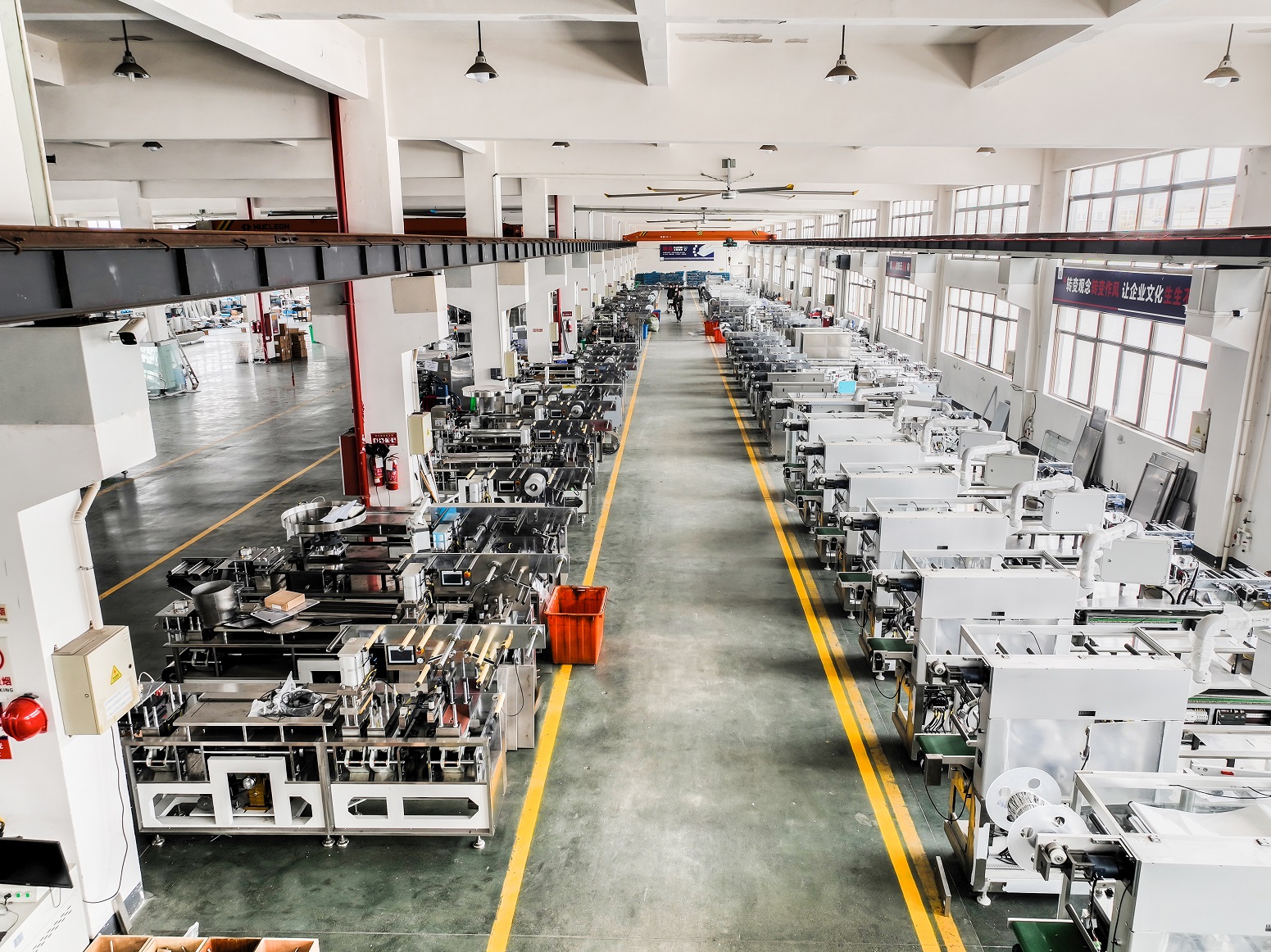
The DHL8005H is built on a stainless steel and aluminum-alloy machine structure with transparent guarding and servo-driven motion components. In a qualification file these are not cosmetic details. Structural material determines how the equipment behaves under the cleaning regime a pharmaceutical plant applies. Transparent guarding determines whether operators and maintenance staff can observe the product path without opening the machine. The layout of drive, pneumatic and electrical components determines whether the product zone can be effectively separated from the mechanical zone, which is one of the recurring themes in GMP inspections of packaging areas.
Product-contact parts and tooling defined by technical agreement
This is where most GMP discussions on integrated lines are actually decided. For the DHL8005H, GMP-oriented product-contact parts and tooling are configured according to the technical agreement, which means the exact configuration is project-specific rather than catalog-standard. Before signing, buyers should expect that agreement to define the blister format, the carton size and style, the leaflet format, the product geometry, the feeding method selected from the available options, and the material and surface specification of each contact part. Where a project specification requires a defined material grade for product-contact components, that requirement has to be written into the agreement; it cannot be inferred from the machine class or the speed rating.
The 800/500 speed architecture
A rated capacity of up to 800 blisters per minute and 500 cartons per minute describes the design ceiling of the line. Sustaining that rate depends on the balance between stations. The three-channel servo-driven independent replenishment system reduces dependence on manual top-ups at the feeding stage. The D3 intelligent top-loading parallel tracking transfer system governs how blister packs are handed to the cartoning stage. Mold-change and preset-memory functions shorten recovery time after a format change. In qualification terms, rated capacity is the number an operational qualification protocol should try to reproduce — using the specific product, blister format and carton format that the line was configured for.
Control, coding and inspection integration
The control architecture is built around a Beckhoff motion controller with a CP9315 industrial PC. On a GMP-oriented line, the practical value of a motion controller is not its brand name; it is whether recipes, format parameters and alarm records can be retrieved, controlled and documented. The documented line scope includes coding and inspection, together with connection to bundling, case-packing or palletizing equipment. If a project requires ERP or MES data exchange, that interface should appear in the project configuration, because it changes what the qualification protocol has to cover.
Qualification Planning at 800 Blisters per Minute
Design qualification
Design qualification starts from the user requirement specification and ends with a technical agreement that can be traced back to it. For a line of this class, that means confirming: the defined operating window rather than only the maximum speed; the product-contact parts and tooling assigned to each format; the feeding method chosen from the available options; the film and foil handling approach, including PVC/Alu foil auto splicing; the guarding and safety concept; and the utility requirements, which should be taken from the confirmed agreement rather than assumed from a similar model. Downstream interfaces — bundling, case packing, palletizing, and any data connection — belong in the design review as well, because they define the boundary of the qualified system.
Installation qualification
Installation qualification verifies that what was delivered matches what was agreed. On an integrated line, this step is broader than machine-level installation checks: every interface between the blister stage, the transfer system, the leaflet handler, the cartoner and the downstream equipment is a potential failure point and needs a documented verification. The control platform, preset-memory functions, coding and inspection devices, and any data interface should be confirmed at this stage, before speed and format trials begin.
Operational qualification
Operational qualification challenges the defined operating window. A practical protocol for a high-speed blister-cartoner typically covers: speed at the configured product and format; transfer reliability at the blister-to-carton handover; feeding performance across the full replenishment cycle; splicing and web handling; format changeover using the recipe and preset-memory functions; alarm and fault indication behaviour; and the response of coding and inspection functions. Where the design includes features intended to reduce false rejections and unplanned downtime, those outcomes should be measured rather than accepted as described.
Performance qualification
Performance qualification runs multi-batch, multi-format production over a defined period. It confirms that the line holds output across shifts, that changeover between formats stays inside the planned window, that cleaning and maintenance can be carried out as specified, and that documented output reconciles with batch records. This is also where the realistic output of the line becomes visible: a line rated at 500 cartons per minute running a 400 carton-per-minute format is not a fault, it is a configuration decision, and it should be recorded as such.
Application Fit: Where This Line Belongs, and Where It Does Not
The DHL8005H is intended for pharmaceutical solid dosage production, capsule and tablet packaging, healthcare products, and food and cosmetic blister-cartoning projects. Across this equipment class, typical deployment conditions are a GMP-oriented cleanroom or pharmaceutical packaging workshop with continuous high-speed operation and multi-batch, multi-format production. Suitable projects include a new solid dosage blister packaging line, an upgrade of an existing packaging line, a high-capacity expansion, a retrofit of an intelligent packaging workshop, and downstream integration into blister-cartoning-bundling or case-packing configurations.
The line fits plants where a small number of high-volume formats is produced on a predictable schedule, where sustained demand justifies running near the rated ceiling, and where the plant already has the maintenance and quality infrastructure to support a fully servo, controller-driven line. In those settings the combination of automated transfer, recipe-driven changeover and connected downstream equipment reduces manual handling between stages — one of the most persistent sources of product damage and documentation gaps in secondary packaging.
It does not fit every plant. Where batch sizes are small, formats change frequently, or demand is still being established, an integrated line rated at 800 blisters per minute can be a poor match for the actual production profile. A more proportionate configuration may combine a flat-plate blister machine with a lower-to-medium speed cartoner. Within the same manufacturer’s range, the DPP260TI intelligent flat Alu-PVC/Alu-Alu blister packing machine is specified at 20-60 cycles per minute for compact solid dosage packaging and medium-speed production, and the XWZ120 horizontal cartoning machine at 30-120 cartons per minute for lower-to-medium speed products and compact production lines. The trade-off is explicit: lower capital exposure and simpler changeover logic, against a lower output ceiling and more manual handling between stages.
Market Context: Integrated Secondary Packaging in a Dispersed Equipment Market
Published market estimates for this segment vary, and the variation itself is informative. SkyQuest Technology valued the global pharmaceutical packaging equipment market at approximately USD 10.71 billion in 2024, while Grand View Research has published a lower figure for 2025, so these market-size numbers should be treated as directional rather than precise. More specific segments are smaller and clearer in direction: Custom Market Insights projected the pharmaceutical blister packaging machine market to reach USD 2.57 billion by 2025 with a CAGR of 2.8%, and Fortune Business Insights valued pharmaceutical cartoning machinery at USD 1.46 billion in 2024.
Two structural facts matter more to a buying decision than the headline totals. First, Asia Pacific held the largest revenue share of 40.7% in the pharmaceutical packaging equipment market in 2025, according to Grand View Research — a regional concentration that aligns with the export markets Hoping Machinery reports, namely Southeast Asia, the Middle East, Eastern Europe, South America and Africa. Second, the top three players, Uhlmann, IMA and Marchesini, collectively hold approximately 29% of the pharmaceutical blister packaging machine market, which means the majority of the market is supplied by regional and specialist manufacturers. For buyers, that dispersion explains why supplier evidence and configuration documentation matter more than brand recognition alone.
Integrated Lines Compared with Separate Machine Setups
| Dimension | Separate machines with manual or semi-automatic transfer | Integrated blister-cartoning line (DHL8005H as configured) |
|---|---|---|
| Product transfer | Blister packs are moved between machines by operators or simple conveyors | Automated transfer via the D3 intelligent top-loading parallel tracking transfer system |
| Manpower and handling | Operators intervene at each interface, which increases handling events | Continuous linked sequence from blister forming through coding and inspection |
| Capacity matching | Each machine has its own rating; unbalanced pairing wastes capacity | Rated as a line, up to 800 blisters/min and 500 cartons/min, with three-channel servo-driven independent replenishment |
| Format change | Independent tooling changes per machine, coordinated by procedure | Mold-change and preset-memory functions support coordinated changeover |
| Documentation and change control | Separate documentation sets per machine | One control platform (Beckhoff motion controller with CP9315 industrial PC) covering the linked scope |
| Capital and validation scope | Lower initial outlay; can be expanded in stages | Higher capital outlay and a wider qualification scope covering all interfaces |
The main limitation of the integrated approach deserves to be stated plainly. Combining blister packaging and cartoning into one linked machine concentrates production risk: a stoppage at any station — forming, feeding, transfer or cartoning — stops the entire line, where a separate-machine setup allows partial production to continue. An integrated line also raises the cost and complexity of every change: format changes depend on tooling defined in the technical agreement, and any modification to one station can affect the interface with the next. Finally, a rated maximum of 800 blisters per minute and 500 cartons per minute is a design ceiling; the sustainable output of a specific product and format is established during qualification, not before, and buyers who plan capacity on the rated figure alone are planning on an optimistic number.
Future Outlook
Three directions are visible in pharmaceutical secondary packaging. The first is deeper integration along the line: blister forming and sealing, cartoning, and then bundling, case packing and palletizing configured as one continuous scope rather than a series of islands, which is already reflected in the downstream connection described for the DHL8005H. The second is recipe-driven operation, where mold-change and preset-memory functions turn format changeover from a mechanical procedure into a controlled, repeatable sequence managed through the control system. The third is data continuity, with ERP or MES interfaces moving from optional extras to line-scope items that qualification protocols must cover.
What is unlikely to change is the qualification burden. As lines become faster and more integrated, the interface between stations becomes more, not less, important to demonstrate — which keeps design documentation, material definitions and interface control at the centre of any GMP-oriented equipment decision.
FAQ
Does a GMP-oriented design mean the DHL8005H is GMP certified?
No. GMP-oriented design describes how the equipment was engineered: the DHL8005H is described by its manufacturer as having a GMP-oriented line design, with GMP-oriented product-contact parts and tooling configured according to the technical agreement. Certification status and validation evidence are separate questions and should be verified against the documents issued for the specific machine and project. In the packaging sector, ISO 15378 integrates GMP requirements for primary packaging materials and is one of the standards that frames the discussion.
What output can a buyer realistically expect from the DHL8005H?
The manufacturer specifies a maximum capacity of up to 800 blisters per minute and 500 cartons per minute. Those are maximum ratings. Achievable output depends on product geometry, blister format, carton format, film and foil materials, the feeding method selected, and the balance between the blister and cartoning stages. The realistic output for a given product is established during operational and performance qualification.
Which elements of the line must be defined in the technical agreement?
For the DHL8005H, product-contact parts and tooling are configured according to the technical agreement, so the agreement is where project-specific items are fixed: blister format, carton size and style, leaflet format, product geometry, feeding method, and the material and surface specification of contact parts. Downstream interfaces — bundling, case packing, palletizing, and any ERP or MES data connection — also belong in the agreement when they form part of the project scope.
How does the line handle format changes in multi-format production?
The DHL8005H includes mold-change and preset-memory functions, supported by a Beckhoff motion controller and CP9315 industrial PC. In operation, the control system supports recipe storage and format changeover, together with alarm stop and fault indication. The time required for an individual changeover depends on the difference between formats, the tooling set available, and the procedure defined by the pharmaceutical manufacturer.
How does an integrated blister-cartoning line compare with separate blister and cartoning machines?
An integrated line links blister forming and sealing, transfer, leaflet handling, carton opening, insertion, coding and inspection, and downstream connection into one controlled sequence, which reduces manual transfer between stages. The trade-offs are a higher capital outlay, a wider qualification scope covering every interface, and greater concentration of production risk, since a fault at one station stops the whole line. Separate machines can be more proportionate where batch sizes are small and formats change frequently.
What documentation supports qualification of a line like this?
Documents typically requested from the supplier include machine documentation with material specifications for product-contact parts, control system and recipe documentation, maintenance and cleaning instructions, and the technical agreement defining tooling and interfaces. The pharmaceutical manufacturer then uses these inputs in design, installation, operational and performance qualification. Any certification claim should be checked against the certificates actually issued for the machine and project.
Manufacturer reference documentation: Hoping Machinery product catalog (PDF). Company information: Zhejiang Hoping Machinery Co., Ltd. — www.hopingcn.com.