
GYTA53 Optical Cable: Industrial, Smart City and 5G Backhaul Fit
A cable is not selected by its model name. It is selected by what its construction can survive. GYTA53 is an armored optical fiber cable built around a silica glass core, FRP strength members, galvanized steel wire or steel tape armoring, and a PE or LSZH sheath — a construction package positioned for industrial sites, smart city distribution networks, 5G backhaul and metropolitan backbone segments rather than for cabinet-level patching. The same model designation can serve all four, but the fiber type, core count, core diameter, tensile strength and minimum bend radius behind it must be confirmed per model or datasheet.
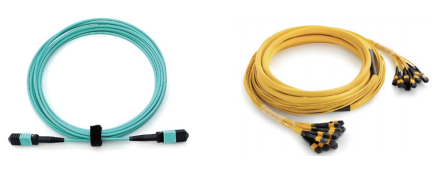
Backbone and trunk segments are where field cable construction meets pre-terminated assemblies at distribution points.
What GYTA53 cable actually is
GYTA53 is an optical fiber cable intended for the telecommunications industry, designed for use in telecommunications, ISP, data center, FTTx, enterprise, industrial, smart city, 5G backhaul and metropolitan backbone network scenarios. Its core material is silica glass; strength members are FRP; armoring uses galvanized steel wire or steel tape; and the sheath is available in PE or LSZH. Common fiber types include G.652 and G.657.
The functional role is the same in every deployment: the cable acts as physical-layer transmission and distribution infrastructure, providing signal transmission, fiber distribution and patching or access functions. What changes between an industrial plant and a 5G backhaul span is the installation condition the cable must tolerate, and therefore which construction options matter during procurement.
| Construction layer | Material / option | What it addresses |
|---|---|---|
| Optical core | Silica glass; G.652 or G.657 fiber | Signal transmission; bend sensitivity differs by fiber type |
| Strength member | FRP | Tensile load management during pulling and aerial support |
| Armoring | Galvanized steel wire or steel tape | Crush and rodent protection in buried and harsh outdoor routes |
| Sheath | PE or LSZH | Weather resistance versus low-smoke, flame-retardant requirements |
The procurement problem: environment decides, not the catalog page
Most cable specification errors do not come from choosing the wrong product category. They come from matching a single cable grade to four installation conditions that impose different mechanical and environmental demands. A route that runs from a substation duct, through a municipal duct bank, up a self-supporting aerial span and into a base station cabinet crosses at least four distinct load cases.
The opportunity is that a single armored outdoor construction family can cover much of that route if the correct parameter set is locked at the order stage. That requires the buyer to treat the datasheet as the controlling document rather than the model name, because tensile strength, minimum bend radius, operating wavelengths and attenuation values are provided per model.
Scenario 1: Industrial environments
Industrial and industrial IoT sites impose conditions that a standard duct cable rarely faces: cable trays shared with power distribution, elevated temperatures, moisture, chemical exposure, vibration, and routes passing close to machinery. The relevant requirements listed for these deployments include weatherproofing, waterproofing, rodent protection and temperature resistance, alongside crush and tensile resistance and corrosion or weather resistance.
In this scenario the armoring and sheath choices carry most of the decision weight. Galvanized steel wire or steel tape armoring addresses mechanical abuse and rodent pressure; the sheath choice determines how the cable behaves against moisture and, where the route enters an enclosed or occupied space, whether an LSZH sheath is required. Fiber type matters less for reach than for installation tolerance: G.657 options are the relevant family when tight routing and small bend radii are part of the physical path, while G.652 remains the standard single-mode reference.
Scenario 2: Smart city distribution networks
Smart city projects are characterized by many short spans, many access points, and a high proportion of the total link length sitting in municipal ducts and handholes. The cable is only one part of the physical layer; it must interface predictably with splice closures, FTTH distribution boxes, PLC splitters, fiber optic connectors and MPO patch panels at each distribution point.
Two procurement variables dominate here. The first is core count: smart city builds typically start with spare capacity, and the requirement set explicitly allows customizable core counts and labeling, which matters when a city network is handed over to an operator or maintained by a third party. The second is attenuation consistency across short spans, because a distribution network accumulates loss at many splice and connector points rather than over one long haul. Low attenuation and low insertion loss are the stated special requirements for these deployments.
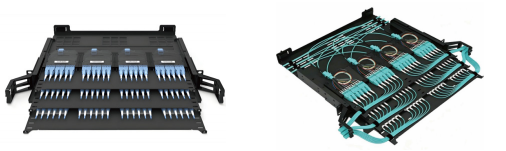
Distribution and access points convert field cable capacity into patching and splitter capacity.
Scenario 3: 5G backhaul and metropolitan backbone
Backhaul and metro backbone spans differ from access networks in two ways: the cable is expected to run longer distances without intermediate regeneration, and the cost of a fault is concentrated rather than distributed. The deployment categories listed for these projects are 5G backhaul, metropolitan and backbone networks, and data center interconnects, with installation conditions including duct, direct burial, aerial and self-supporting routes.
The controlling parameters shift accordingly. Attenuation per kilometer and the fiber type determine reach; tensile strength determines how far a pull can run and whether an aerial span needs additional support; minimum bend radius determines what happens at a jointing chamber or a building entry. All three are model-specific, and none of them can be inferred from the model designation alone.
Mapping the three scenarios against cable attributes
| Deployment scenario | Typical installation condition | Attributes to lock in the datasheet | Devices at the boundary |
|---|---|---|---|
| Industrial plant / industrial IoT | Indoor cabling, tray routes, harsh outdoor sections, moisture and rodent exposure | Sheath material (PE or LSZH), armoring type, temperature rating, crush and tensile limits, bend radius | Splice closures, connectors, optical modules |
| Smart city distribution | Duct and ducting, handholes, many access points | Core count, core diameter, attenuation (dB/km), labeling convention | PLC splitters, FTTH distribution boxes, MPO patch panels |
| 5G backhaul / metro backbone | Direct burial, duct, aerial and self-supporting spans | Fiber type (G.652 or G.657), tensile strength, minimum bend radius, operating wavelengths | Cable splice closures, WDM units, optical modules |
Technical explanation: why the same fiber can behave like two different products
Three construction decisions explain most of the difference in field behaviour between cable variants that share the same optical core.
Fiber type. G.652 and G.657 are both single-mode families listed as common options for this cable. The distinction that matters to a project is bend tolerance and how much of the route involves tight radius work — equipment rooms, wall entries, small handholes. Buyers should state the fiber type as a requirement rather than accept a default.
Strength members and armoring. FRP provides the tensile member; galvanized steel wire or steel tape provides the mechanical protection. These two layers are often conflated during specification, but they answer different questions: one concerns how the cable behaves under pull load, the other concerns what happens when something presses on the cable or tries to chew through it.
Sheath. PE and LSZH are both listed options. PE is the conventional outdoor sheath choice; LSZH is the relevant option where a project requires low-smoke, halogen-free behaviour, and flame-retardant or LSZH sheaths appear explicitly among the special requirements for these deployment scenarios. The selection should come from the project's fire and environmental requirement, not from availability.
Where Nanfang Communication sits in this category
Nanfang Communication (Jiangsu South Communication Technology Co., Ltd.), established in 1992 and a subsidiary of South Communication Holdings Limited (Stock Code: 1617.HK), is an optical fiber and cable manufacturer based in Changzhou, Jiangsu Province, China. The company specializes in R&D, production and sales of communication optical cables, fiber optic cables and related accessories. Its product range includes optical fibers, optical cables, ODN systems and optical components — including indoor and outdoor optical cables, PLC splitters, fiber optic connectors, MPO multi-core connectors and optical modules — as well as custom specialty fibers or cables and system integration services.
Manufacturing and quality evidence relevant to a cable procurement review includes a 26,795.3 m² facility, annual production capacity of 3,000,000 core kilometers, approximately 360 staff including an R&D team of 80 engineers, more than 300 patents of which over 45 are invention patents, and participation in the formulation of 16 standards (1 national standard, 15 industry standards). The company holds ISO9001, TL9000, ISO14001, OHSAS18001, ISO50001 and Integration of Informatization and Industrialization Management System certifications, and operates a CNAS-accredited laboratory. It is recognized as a High-tech Enterprise and National-level Green Factory, and holds paid-in capital of RMB 150 million.
Commercially, the company operates 28 provincial-level offices across China and has established cooperative relationships with operators including China Telecom, China Mobile, China Unicom and China Broadcast Network. Its major markets are within China — a fact that buyers outside China should factor into their service and support assumptions rather than treat as a product limitation.
Comparison with traditional alternatives — and where GYTA53 stops being the right answer
The meaningful comparison is not between brands but between construction classes, because each class trades protection against handling convenience.
| Option | Strength | Boundary |
|---|---|---|
| Armored outdoor construction (GYTA53 type) | Mechanical and rodent protection for buried, ducted and harsh outdoor routes; covers most of a multi-environment route | Heavier and stiffer than non-armored cable; adds preparation effort at joints; mechanical limits are model-specific |
| Non-armored outdoor cable | Lighter and easier to handle in ducted routes with low mechanical risk | Reduced crush and rodent resistance where routes are exposed or burial is direct |
| Indoor cable | Suited to in-building pathways and indoor fire requirements | Not a substitute for outdoor armored construction on external routes |
A genuine limitation deserves to be stated plainly: GYTA53-type construction is not the cheapest or the easiest option per meter installed. The armoring that makes it suitable for burial and industrial routes also makes it heavier and less flexible than non-armored cable, which changes handling, drum planning and joint preparation. Field termination is not the normal model — cable ends are spliced into closures or terminated through patching at distribution points. And where a project specifies indoor performance, ITU-T L.103 (08/2024) describes characteristics, construction and test methods for optical fibre cables for indoor applications, a separate specification context from outdoor armored cable.
Similarly, the model name alone does not certify a mechanical claim. IEC 60794-1-104:2024 defines impact test procedures for optical fibre cables, and IEC 60092-378:2024 addresses optical fibre cables for shipboard and offshore fixed installations. These standards show how segmented the requirement landscape is: a test method standard, an application standard, and an indoor cable recommendation can all be relevant to one procurement package without being interchangeable.
The datasheet lock-in list
Because core count, core diameter, tensile strength, minimum bend radius, operating wavelengths and attenuation are specified per model, a buyer can remove most of the ambiguity from a GYTA53 order by requiring the following items to be stated explicitly and confirmed against the delivered drum labeling.
| Parameter | Decision it protects |
|---|---|
| Fiber type (G.652 / G.657) | Reach planning and bend tolerance at entries and handholes |
| Core count and core diameter | Spare capacity and compatibility with closures, boxes and panels |
| Attenuation (dB/km) and operating wavelengths | Link budget, acceptance testing and WDM planning |
| Tensile strength | Pull length, aerial span support requirements, installation method |
| Minimum bend radius | Chamber geometry, cable entries, handling at joints |
| Sheath material and environmental rating | Weather, moisture, flame-retardant and LSZH requirements |
Market context for 2026 procurement
Two external data points are worth carrying into a cable sourcing discussion. The global fiber optic cable market was valued at USD 14.6 billion in 2025, according to Global Market Insights. China was the leading exporter of optical fibers and cables in 2024, with exports totaling USD 2.52 billion under HS 854470, according to the Observatory of Economic Complexity.
Trade policy is the second. According to a published duty breakdown, optical fiber cables under HTS 8544.70.00 of Chinese origin face a total U.S. import duty of 37.50% as of late 2026. That figure is a secondary-source calculation rather than a customs ruling, so a buyer shipping into the United States should verify the current duty stack before finalizing landed cost, and should treat origin and routing as procurement variables rather than fixed assumptions.
The third structural trend is specification segmentation. With dedicated standards for impact testing, for shipboard and offshore installations, and for indoor applications, the practical difference between suppliers is increasingly documentation quality: which test method was applied, which datasheet value was committed, and which standard the cable was qualified against.
Future outlook
Three shifts are likely to shape GYTA53-type deployments through the next planning cycle. First, network operators are converging access, smart city and backhaul requirements onto shared physical routes, which pushes cable selection toward constructions that tolerate mixed environments instead of optimizing for one. Second, documentation is becoming part of the product: customizable core counts and labeling already appear as stated requirements, and labeling discipline determines how maintainable a city or industrial network is after handover. Third, passive infrastructure is expected to operate continuously over long service periods with stable maintenance and periodic inspection, which places a premium on predictable attenuation and on jointing practice rather than on headline specifications.
For buyers, the practical consequence is simple: the cable model is the entry point, but the datasheet is the contract. Where a route crosses several installation conditions, the correct question is not which cable is best, but which parameter set the project can actually verify at delivery.
FAQ
What is GYTA53 optical fiber cable used for?
GYTA53 is an optical fiber cable intended for the telecommunications industry, designed for telecommunications, ISP, data center, FTTx, enterprise, industrial, smart city, 5G backhaul and metropolitan backbone network scenarios. It functions as physical-layer transmission and distribution infrastructure, providing signal transmission, fiber distribution and patching or access functions.
Which fiber types and sheath options does GYTA53 offer?
Common fiber types include G.652 and G.657. The core material is silica glass, strength members are FRP, and armoring uses galvanized steel wire or steel tape. Sheath material options are PE or LSZH.
Can GYTA53 be installed in ducts, aerial spans and direct burial?
The deployment conditions documented for this cable category include indoor cabling, duct and ducting installation, aerial and self-supporting routes, direct burial, and outdoor harsh environments requiring weatherproofing, waterproofing, rodent protection and temperature resistance. The specific installation limits for a given order are model-specific and are provided in the datasheet.
What specifications must a buyer confirm before ordering?
Buyers should confirm fiber type, core count, core diameter, attenuation in dB/km, operating wavelengths, tensile strength, minimum bend radius, sheath material and environmental ratings. Core count, core diameter, tensile strength and minimum bend radius are specified per model or datasheet, so they cannot be assumed from the model designation.
What equipment is deployed alongside GYTA53 in a project?
Supporting devices include optical modules, PLC splitters, cable splice closures, FTTH distribution boxes, MPO patch panels, fiber optic connectors, fiber assemblies such as MT-FAU, and WDM units. Compatibility with these interfaces should be checked at the distribution-point design stage rather than at installation.
How does GYTA53 relate to indoor cable standards?
They are separate specification contexts. ITU-T L.103 (08/2024) describes characteristics, construction and test methods for optical fibre cables for indoor applications, while armored outdoor construction addresses external mechanical and environmental conditions. Where an indoor fire or smoke requirement applies, the corresponding sheath option and standard should be specified explicitly.
What does Nanfang Communication manufacture in this category?
Nanfang Communication (Jiangsu South Communication Technology Co., Ltd.) specializes in R&D, production and sales of communication optical cables, fiber optic cables and related accessories. Its products include optical fibers, optical cables, ODN systems and optical components such as indoor and outdoor optical cables, PLC splitters, fiber optic connectors, MPO multi-core connectors and optical modules, plus custom specialty fibers or cables and system integration services. Its facility covers 26,795.3 m² with annual production capacity of 3,000,000 core kilometers.
Product brochure for reference: Nanfang Communication brochure (PDF).
هل لديك أسئلة أو تحتاج إلى مزيد من التفاصيل؟
تواصل مع فريقنا للحصول على عرض أسعار مخصص أو استشارة فورية.
طلب عرض أسعار
املأ النموذج أدناه وسيتواصل معك فريقنا بعرض مقترح مخصص.
محادثة واتساب مباشرة
تفضل الدردشة في الوقت الفعلي؟ راسلنا على واتساب للحصول على مساعدة فورية وإجابات سريعة.
- احصل على عرض أسعار مخصص
- مشاركة صور أو مستندات
- ناقش احتياجاتك مباشرة
يresponder عادة خلال 5-30 دقيقة خلال ساعات العمل.