
Gaming Chair Preferences 2026: Buyer Evaluation Trends and Factory Evidence
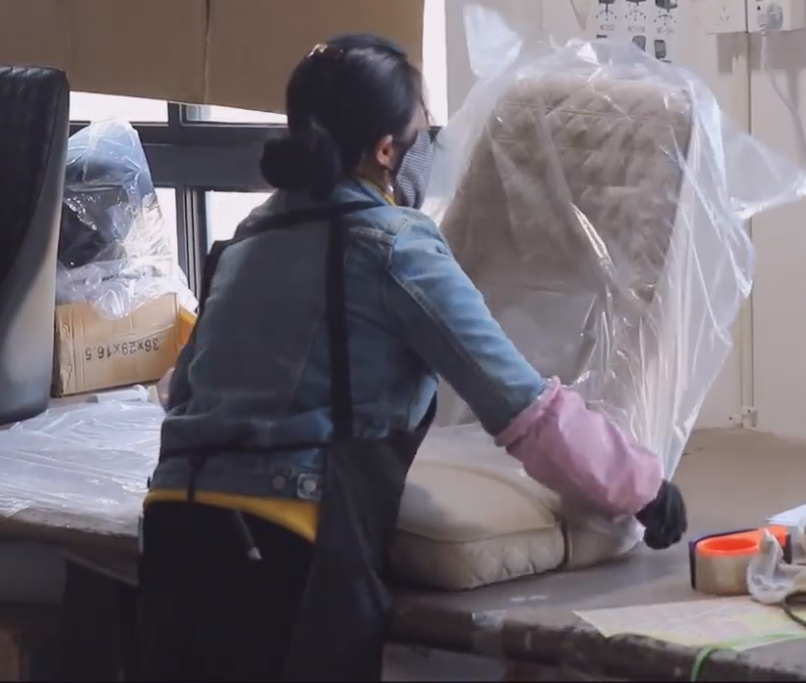
Factory packaging and loading preparation are visible quality signals during gaming chair evaluation.
Gaming chair demand is shifting from single-purpose seats to multi-scene seating
The global gaming chair market is estimated at USD 1.37 billion in 2024 and is projected to reach approximately USD 2.05 billion by 2030, according to published market reports. Procurement teams are now evaluating gaming chairs less as a single product and more as a set of scene-specific seating solutions. Search and order patterns increasingly distinguish a home PC gaming chair from an internet cafe gaming chair, a dormitory student gaming chair, a live streamer gaming chair, or an office and gaming hybrid chair.
This article reviews the 2026 preference signals that matter to buyers in the evaluation stage. It also uses Anji Maochang Furniture as a manufacturing reference to show how these preferences are reflected in real product specifications, certifications, and quality-control processes.
Problem: Too many labels, not enough standardisation
The gaming chair category has expanded into a collection of specialised terms. High back racing gaming chair, reclining gaming chair with footrest, heavy duty big size gaming chair, RGB LED lighting gaming chair, magnetic lumbar pillow gaming chair, and heavy steel gaming sofa all describe different value propositions. For a buyer, the first challenge is to separate meaningful product differences from marketing variations of the same base frame.
A second challenge is verification. A chair can be labelled ergonomic lumbar support gaming chair, but the actual support depends on foam density, lumbar pillow shape, armrest adjustability, mechanism quality, and the durability of the gaslift. A distributor may need to satisfy several end-user segments from one container, which requires a factory that can produce multiple configurations without losing consistency.
Opportunity: Verified market data narrows the selection space
Despite the fragmented terminology, published data provides useful anchors. PC gaming chairs hold the largest product segment share at 52.6%. PU leather is the most common cover material, with a 57.3% share. Hybrid work-and-game chairs already represent 29.8% of the market, confirming that many users want one chair capable of work, study, and entertainment.
For a sourcing manager, these signals create a practical selection framework. The core assortment should be built around high-back racing and ergonomic models with broad appeal. A secondary tier can include office and gaming hybrid chairs for professional settings. A third tier can address special-purpose demand such as internet cafe models, heavy-duty big-size chairs, live streaming models, or gaming sofas.
Market trend analysis: What the 2024 data says about 2026 buying behaviour
Several data points are useful for evaluating the current market:
- Global market scale: USD 1.37 billion in 2024, projected to reach roughly USD 2.05 billion by 2030.
- Regional emphasis: North America accounts for 36.4% of gaming chair revenue, making it the largest single market.
- Product segment: PC gaming chairs represent 52.6% of the product segment share.
- Material preference: PU leather holds a 57.3% share, indicating broad market acceptance.
- Hybrid demand: work-and-game hybrid chairs hold a 29.8% share, confirming the rise of multi-purpose seating.
- Brand landscape: Secretlab and DXRacer are frequently cited as market leaders, with estimated shares of 18% and 15% respectively.
- Production base: Zhejiang's Anji furniture cluster is a major global production base, with China accounting for an estimated 30.8% of global furniture exports.
These data points highlight two implications. First, premium branded chairs occupy a meaningful share of the market, but they do not satisfy every buyer's price point and distribution model. Second, the manufacturing ecosystem around Anji gives importers access to a broad range of configurations, from budget-friendly home models to heavy-duty gaming sofas, without leaving the same production cluster.
Technical explanation: Preference clusters and the specifications that support them
When buyers evaluate a gaming chair, they typically compare frame strength, mechanism, gaslift, base, cover material, foam density, and adjustability. These areas determine whether a chair can honestly serve its intended scene.
| Preference cluster | Typical buyer emphasis | Example configuration from Anji Maochang Furniture |
|---|---|---|
| Home PC gaming chair | Balance of comfort, space, and aesthetics | MC196-2-1, fabric/metal/plastic/foam, product size W70 x D70 x H118-128cm |
| Internet cafe gaming chair | Durability and ease of maintenance | MC196-3-1, fabric/PVC/PU/metal/plastic/foam, W66.5 x D69 x H106-114cm |
| Live streamer gaming chair | Appearance, reclining, and camera-friendly design | MC196-1 LED gaming chair, fabric/metal/plastic, W67 x D70 x H124-132cm |
| Office and gaming hybrid chair | Adjustability and office-compatible styling | MC196 game-type office chair, fabric/metal/foam/plastic, W67 x D70 x H124-132cm |
| Big size / heavy duty chair | Wider seat, stronger base, higher weight capacity | MC1039, Class 3 gaslift, 370mm starbase, PU/PVC/mesh/fabric/plywood/metal |
| Gaming sofa / multi-user space | Built-in comfort and high load capacity | MC1040, PU+PVC, metal frame, W80 x D72 x H119cm, 150kg weight capacity |
The model parameters above are drawn directly from the manufacturer's current product records. They illustrate the typical specification mix found in Anji factories: metal frames, plywood panels, PU leather or fabric covers, mold foam, plastic mechanisms, and Class 3 gaslifts.
For material quality, high-density mold foam is a common benchmark in the premium segment, typically around 50-65kg/m³. Buyers can ask factories for foam density data and compare it across models, rather than relying on the word ergonomic alone. Similarly, armrest adjustability is visible in the specification: 4D adjustable armrests are a distinguishing feature in premium models, while a simpler height-adjustable armrest may be acceptable for internet cafe models.
Certifications as preference filters
Certifications reduce evaluation risk in export markets. The most relevant references for gaming chairs include ANSI/BIFMA X5.1 for North America, EN 1335 for European office work chairs, and BS 5852 for UK fire safety. Environmental and social audits also matter: EN 717-1 formaldehyde emission tests, FSC chain-of-custody for wood-based materials, and BSCI factory audits are increasingly part of procurement checklists.
Anji Maochang Furniture holds several of these documents, including an EN 1335-1:2020 / EN 1335-2:2019 test report, an EN 717-1:2004 formaldehyde emission test, a BSCI audit, and an FSC chain-of-custody certificate. It also holds a Chinese design patent for one of its gaming chair models. These documents serve as verifiable reference points, although buyers should always confirm that the certificate covers the specific model they are importing.
Factory evidence: How Anji Maochang Furniture answers preference evaluation questions
Anji Maochang Furniture Co., Ltd. is a chair manufacturing company based in Anji County, Zhejiang Province, China. Founded in 2016, the company operates a 3,000 m² factory with around 25 employees and lists game chairs, office chairs, and manicure chairs as its main products. Its export ratio is 98%, with primary markets in the EU, USA, Thailand, Brazil, and South Korea.
For an evaluation-stage buyer, the key facts are not just the product range but the production and control process. Maochang states an annual output of 75,000 units and a monthly capacity of 6,000 units, with a typical lead time of 30-40 days and a minimum order quantity of 50 units. It offers OEM/ODM services covering logo, color, size, and design customization. The production line includes cutting, woodworking, foam bonding, sewing, nailing, assembly, cleaning, and packaging.
Quality control procedures include inspection of the gaslift, mechanism, leather cover, plywood thickness, and a pre-production assembly check. The company also states a one-year quality warranty for gaming chairs. These details are useful because they show how a mid-sized factory can support private-label buyers even without manufacturing thousands of units per month.
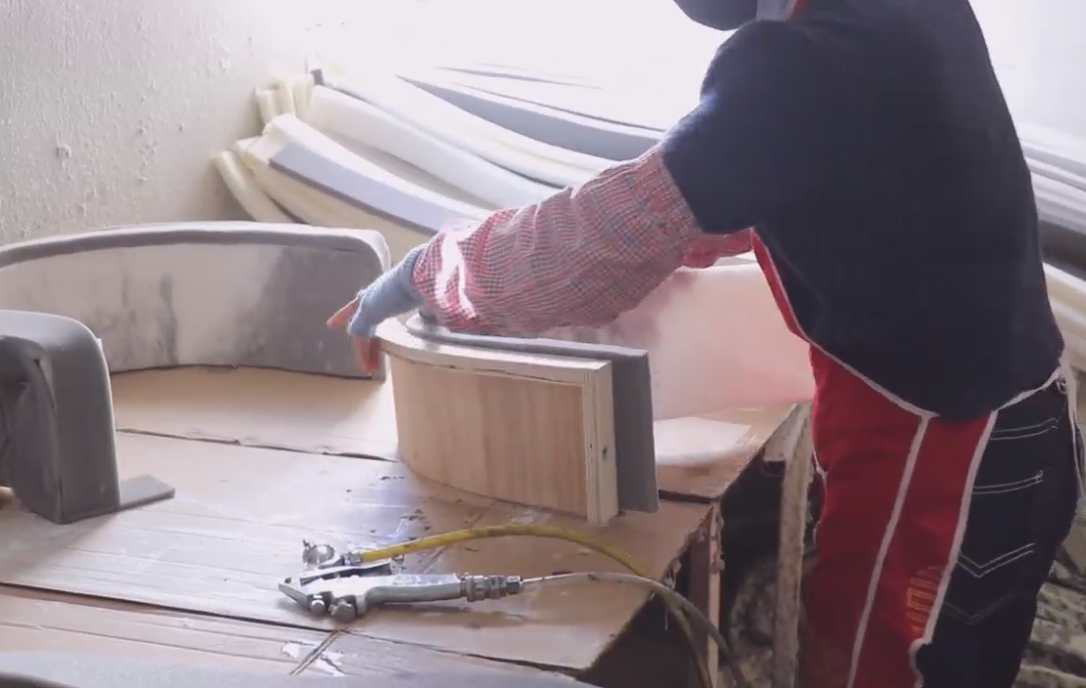
Foam lamination is one of several assembly steps visible during a factory quality-control tour.
Application and use cases: From internet cafes to office furnishing
Preference data does not exist in isolation. A useful example is Maochang Furniture's cooperation with a Ukrainian wholesale client. The client placed a first order of 460 units for an office space furnishing project, and the relationship continued over two years. The products involved in that order included gaming-type office chairs and computer chairs from the MC196 family and MC1025.
This case shows that gaming-chair specifications can serve commercial furnishing projects, not only gaming rooms. It also shows that a distributor with a project-based sales channel may need a manufacturer that can deliver multiple models in one container and maintain consistency across repeat orders.
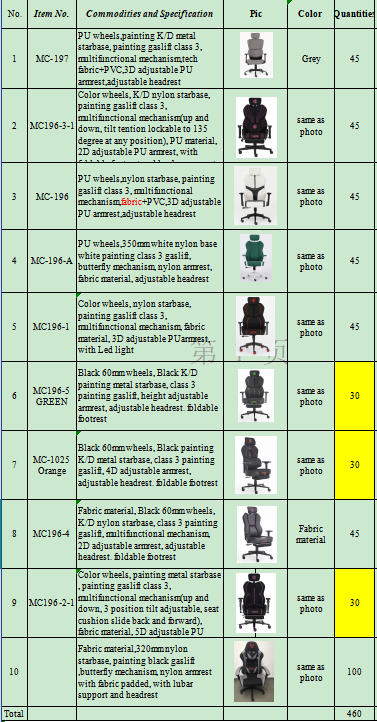
The Ukrainian wholesale order of 460 units illustrates project-based demand for gaming-style chair models.
Comparison with traditional solutions: Where gaming chairs have real limits
Compared with traditional office chairs, gaming chairs typically offer more aggressive aesthetics, higher backs, adjustable lumbar support, and reclining mechanisms that appeal to long-duration users. However, there are genuine limitations. The racing-style high back and bulky wings may not fit into a conservative professional office environment. PU leather, while popular at 57.3% market share, can be warmer and less breathable than fabric mesh over long working hours. A traditional office chair may still be a better choice for a front-office setting where visual neutrality and airflow are more important than game-oriented adjustability.
This boundary explains the growth of hybrid work-and-game chairs, which try to combine the ergonomic adjustability of a gaming chair with a more restrained silhouette. Buyers should therefore evaluate not only whether a chair is popular, but whether it is appropriate for the end user's actual environment.
Future outlook: Verification will become even more important
As the market grows, differentiation will move from visual features to documented performance. We expect buyers to place more weight on third-party test reports, material declarations, and factory audits. The presence of certifications such as BSCI, FSC, EN 1335, and EN 717 in one factory is a practical signal that environmental and social requirements can be met in a single supply chain. For Anji-based manufacturers, the challenge is to keep pace with these requirements while maintaining competitive pricing and short lead times.
For procurement teams, the long-term winning approach is to build a supplier scorecard that combines market preference data with factory verification data: product specifications, certificates, quality-control checkpoints, order references, and production capacity. A chair title may catch attention, but documentation determines whether the product can be sold in a specific region.
FAQ
What are the most preferred gaming chair categories in 2026?
Based on 2024 market data, PC gaming chairs lead the product segment with a 52.6% share, while hybrid work-and-game chairs hold a 29.8% share. PU leather is the most common material at 57.3%. These proportions offer a practical baseline for assortment planning.
Which region has the highest demand for gaming chairs?
North America is the largest gaming chair market, accounting for 36.4% of global revenue in 2024. Buyers exporting to North America should expect to align with ANSI/BIFMA X5.1 requirements and provide clear product documentation.
What certifications should a gaming chair have for the European market?
For office-type gaming chairs, EN 1335 is the relevant European standard for dimensions, safety, and testing. UK buyers may additionally require BS 5852 fire safety compliance. Environmental documents such as EN 717-1 formaldehyde emission reports and FSC chain-of-custody certificates are also common in EU procurement.
How can a buyer evaluate a factory's quality control during a visit?
Look for defined checkpoints. At Anji Maochang Furniture, quality control includes inspection of the gaslift, mechanism, leather finish, and plywood thickness, followed by a pre-production assembly check. The factory also provides a one-year quality warranty on gaming chairs.
Why is Anji County relevant to gaming chair sourcing?
Anji is a major furniture production cluster in Zhejiang, China. China accounts for an estimated 30.8% of global furniture exports, and Anji is widely recognised as a leading base for gaming chair manufacturing, making it a natural sourcing destination for importers.
What customization capabilities does a mid-sized Anji factory offer?
A factory at Maochang's scale can support OEM/ODM with logo, color, size, and design changes. Typical production parameters include a monthly capacity of 6,000 units, a 30-40 day lead time, and a minimum order quantity of 50 units. This makes the factory accessible to mid-sized distributors testing new markets.
Reference
For full product specifications and the current model list, see the company's 2026 catalogue: Download PDF catalogue (2026).
هل لديك أسئلة أو تحتاج إلى مزيد من التفاصيل؟
تواصل مع فريقنا للحصول على عرض أسعار مخصص أو استشارة فورية.
طلب عرض أسعار
املأ النموذج أدناه وسيتواصل معك فريقنا بعرض مقترح مخصص.
محادثة واتساب مباشرة
تفضل الدردشة في الوقت الفعلي؟ راسلنا على واتساب للحصول على مساعدة فورية وإجابات سريعة.
- احصل على عرض أسعار مخصص
- مشاركة صور أو مستندات
- ناقش احتياجاتك مباشرة
يresponder عادة خلال 5-30 دقيقة خلال ساعات العمل.