
Gaming Chair Specs That Matter: Certifications, Mechanisms, and Load Ratings
Purchasing a gaming chair as a wholesaler, importer, or procurement manager is rarely about a single model. The real task is verifying that specifications and compliance documents match the intended market, user group, and operating conditions. This article explains how to interpret the most decision-relevant gaming chair specifications—build, mechanisms, materials, ratings, and certifications—and how to use them when evaluating factories.
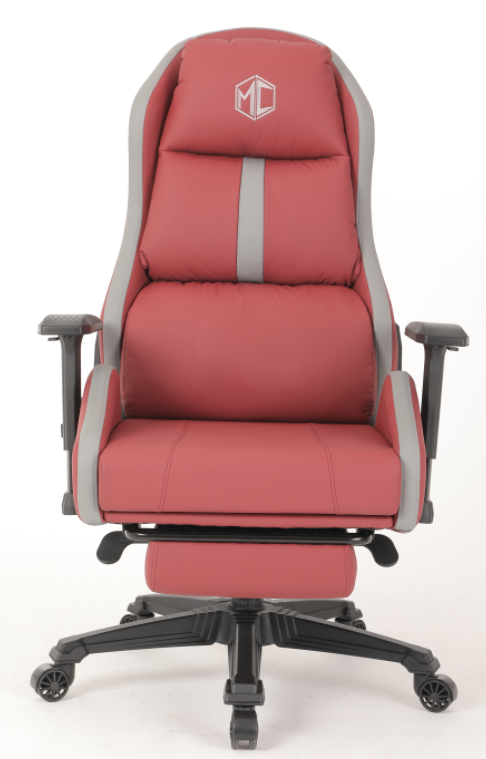
What buyers actually need to verify before ordering gaming chairs
Many gaming chair purchase errors do not come from poor product photos. They come from mismatched specifications. A chair designed for home PC gaming may not survive continuous use in an internet cafe. A model that meets EU office chair safety expectations may not satisfy a North American buyer looking for BIFMA-related performance. A chair specified for users up to 150 kg needs a different gas lift, starbase, and frame than a lighter model.
In practice, buyers should verify at least five specification groups before ordering:
- Dimensions and packaging data (product size, carton size, loading quantity)
- Mechanism type and recline range (tilt lock, 180-degree reclining, footrest)
- Adjustability features (armrests, headrest, seat depth)
- Structural components (gas lift class, starbase diameter, frame material, seat construction)
- Compliance documents (EN 1335, EN 717-1, BSCI, design patents)
The problem: certification and parameter gaps in gaming chair sourcing
Gaming chairs are sold across many channels: home PC setups, internet cafes, dormitory rooms, live streaming studios, and hybrid office environments. Each channel places different demands on the product. A live streamer may sit for eight hours with minimal recline; an internet cafe operator may need a chair with a higher weight capacity and more durable upholstery; a hybrid office user may care more about armrest adjustability and lumbar support.
The sourcing problem is that certificates and marketing descriptions do not always tell the same story. A chair may look identical to another model but use a different gas lift, a different foam density, or a different plywood thickness. These differences affect safety, durability, and the cost of warranty claims.
How to evaluate gaming chair mechanisms, materials, and build quality
For buyers moving from research into evaluation, the product specification sheet is the starting point. The following sections explain what each specification group means for real-world performance.
Mechanism and recline: what 180-degree reclining actually includes
A "180-degree reclining gaming chair" is a common claim, but the mechanism behind it matters. Buyers should check whether the chair uses a frog-type multifunctional mechanism, a 3-position tilt lock, or a simpler mechanism. A frog-type multifunctional mechanism combines seat and backrest movement, allowing the user to recline while the seat adjusts to reduce pressure. This is a different experience from a basic tilt mechanism.
For example, the Maochang Furniture model MC1039 is equipped with a seat cushion containing coiled springs and thickened padding, a backrest that reclines up to 180 degrees, a foldable footrest, and a height-adjustable armrest. Its starbase diameter is 370 mm, the gas lift is Class 3, and the weight capacity is 150 kg. This combination is relevant for larger users, internet cafes, and extended sitting sessions.
Armrests and adjustability: from 2D to 5D
Armrest adjustability ranges from simple height adjustment to multi-directional movement. Buyers should match adjustability to the target user. Height-adjustable armrests are sufficient for many budget product lines. 2D armrests add front-and-back movement. 4D armrests add rotation and are common on mid-range and heavy-duty models. 5D armrests add seat-depth-related positioning for more personalized support.
Model MC196-2-1, for instance, includes a retractable footrest and is equipped with 5D adjustable armrests. The seat depth is adjustable, and the backrest supports 3 locking tilt angles. These features make the chair suitable for users who switch between working and reclining. The model also has a registered design patent in China.
Materials and durability: PU leather, fabric, and foam
PU leather is the most common upholstery material in the gaming chair market. It is easy to clean and visually matches the racing aesthetic. Fabric upholstery tends to be more breathable and is often preferred for hybrid office use or hot climates. Some models combine both: fabric in the center with PU leather on the side edges and trim to improve wear resistance.
The material specification should also include the seat construction. A seat cushion with an inner spring package or coiled springs is less likely to sag after months of use. High-density mold foam provides better shape retention for pillows and lumbar support. Plywood thickness matters because it affects the seat platform and backrest strength. A factory that can explain these material choices is easier to trust than one that only lists "high quality."
Gaming chair compliance: EN 1335, EN 717-1, BSCI, and design patents
Certification is one of the strongest decision signals for buyers in the Research and Evaluation stages. The following table summarizes common standards and what they indicate.
| Standard / Certificate | What it covers | Typical markets |
|---|---|---|
| EN 1335-1:2020 & EN 1335-2:2019-04 | Office work chair dimensions, safety, and testing requirements | EU |
| EN 717-1:2004 | Formaldehyde emission test requirements | EU, America, Asia, Africa |
| amfori-BSCI Code of Conduct | Factory social compliance audit | EU, America, Asia, Africa |
| FSC-COC Chain of Custody | Certified wood materials for furniture | EU |
| Design patent | Protection of original product design | EU, America, Asia, Africa |
One important detail for buyers is the certificate scope. A certificate may apply to a specific model number, not the entire factory output. Before ordering, confirm that the model you plan to order is the same model listed in the certificate scope.
EN 1335 for gaming chairs sold in Europe
EN 1335 is the European standard for office work chairs. Although it is not a mandatory legal requirement for all seating, it is widely used as a procurement reference in Europe. Gaming chairs used in office settings or hybrid work environments are increasingly expected to meet EN 1335-related requirements for dimensions, safety, and testing.
At Maochang Furniture, the gaming chair model MC1039 is certified to EN 1335-1:2020 and EN 1335-2:2019-04 for the EU market. The certification is issued by RED Laboratories Inc. with certificate number RED250415073002ED-AMR.
EN 717-1 formaldehyde emission test
Formaldehyde emission testing is relevant for wood-based materials and upholstered products sold in markets with chemical safety requirements. The EN 717-1:2004 standard describes a chamber test method for measuring formaldehyde release. Products that pass this test provide buyers with documented assurance about indoor air quality.
The QW GS-375 gaming chair models (QW GS-375RD, QW GS-375BL, QW GS-375CAM) are certified to EN 717-1:2004 formaldehyde emission requirements. The test report is issued by RED Laboratories Inc. with certificate number RED250415073003ED-AMR.
Design patents and product originality
Design patents protect the appearance of a product and reduce the risk of commercial disputes. For importers and wholesalers, ordering a chair that carries a registered design patent can be a sign that the manufacturer invests in original development rather than copying existing brands.
The gaming chair models MC196-2-1 and MC196-3-1 are protected by a design patent. The design patent number is ZL 2025 3 0581799.7, issued by CNIPA (China National Intellectual Property Administration). The patent protection applies to the EU, America, Asia, and Africa markets.
Use cases: matching gaming chair specifications to real operating environments
The same specification can have a different meaning depending on the use case. The following scenarios show how buyers can map requirements to specific models.
Home PC gaming chair
Home PC gaming chairs emphasize style, comfort, and adjustability. The user often sits for long sessions but does not require the same abuse resistance as a commercial environment. Model MC196-1 is an LED gaming chair made of fabric, metal, and plastic. The backrest has a segmented design, and the LED lighting layout integrates with this segmented design, with LED strips running down the middle of the backrest. It is intended for the office, home, and live streaming industries, and is suitable for home PC gaming.
Internet cafe and heavy-use environments
Internet cafes require chairs that withstand continuous seating, frequent adjustment, and a wide range of body types. Heavy duty models are usually specified with larger starbases, stronger gas lifts, thicker frames, and higher weight capacities. Model MC1039-1 is a heavy duty big size gaming chair suitable for heavy people. The model designation is MC1039-1.
The related model MC1039 includes a frog-type multifunctional mechanism, a Class-3 gas lift, a 370mm starbase, and a 150 kg weight capacity. These parameters align with the demands of an internet cafe fit-out project: 24/7 seating, enough space for users of different sizes, and reduced maintenance frequency.
Live streaming and hybrid office use
Live streamers and hybrid office users often prefer chairs that look professional on camera and support long sitting periods with frequent posture changes. Features like a retractable footrest, height-adjustable headrest, and adjustable armrests add comfort flexibility. Model MC196-3-1 has upholstery materials including fabric, PVC, and PU, with 2D adjustable armrests and a 3-position tilt-lock mechanism. It is positioned for home, office, and internet cafe use.
Market context: gaming chair demand and sourcing trends
The global gaming chair market is estimated at approximately USD 1.37 billion in 2024 and is projected to grow toward USD 2.05 billion by 2030. North America remains the largest regional market, accounting for a significant share of global demand. PC gaming chairs dominate the product segment, and PU leather remains the most common upholstery material. These patterns help explain why buyers continuously look for suppliers that can combine racing-style aesthetics with documented compliance.
Anji County in Zhejiang Province, China, is a major production base for seating furniture. The region is widely known as a center for chair manufacturing. For overseas buyers, working with a factory in this cluster can reduce sourcing complexity because the local supply chain includes plywood, foam, fabric, metal frames, and packaging.
Sourcing from Anji Maochang Furniture: what the factory demonstrates
Anji Maochang Furniture Co., Ltd. is a manufacturer located in Anji County, Zhejiang Province, China. The factory produces game chairs, office chairs, and manicure chairs, and sells approximately 98% of its output to export markets including the EU, USA, Thailand, Brazil, and South Korea. Established in 2016, the company operates a 3,000 square meter production facility with around 25 employees and a reported annual output of 75,000 units.
The production line includes cutting, woodworking, foam bonding, sewing, nailing, assembly, cleaning, and packaging. The factory reports a monthly capacity of approximately 6,000 units, with a typical lead time of 30 to 40 days and a minimum order quantity of 50 units for OEM/ODM orders. Customization options include logo, color, size, and design changes.
Quality control at the factory starts with incoming material inspection. According to the company’s process, incoming gas lifts, mechanisms, leather color, and plywood thickness are checked. Before plywood production, a sample chair is assembled to verify the total depth and evenness of the chair. These checks are designed to catch issues before mass production.
For buyers evaluating production evidence, Maochang also points to an order from a Ukrainian wholesale partner: 460 units supplied over a two-year relationship for office space furnishing. The order covered multiple models and was well received by local office clients.
Comparison with traditional sourcing approaches
Traditional gaming chair sourcing often relies on a buyer providing a reference product or photo to a trading company, which then sources from whichever factory offers the lowest price. This approach has a real limitation: it does not give the buyer control over component quality or verification of claims. The trading company has limited incentive to document gas lift class, foam density, starbase size, or compliance scope.
Direct factory sourcing, as practiced by manufacturers like Anji Maochang Furniture, changes the information flow. The buyer can request component-level specifications, check certificate scope against the model number, and observe production stages such as woodworking, sewing, and assembly. The trade-off is that direct sourcing requires more buyer involvement: visiting or auditing the factory, reviewing technical drawings, and aligning on quality control procedures.
Limitations buyers should keep in mind
No factory can be all things to all buyers. Maochang Furniture’s production capacity is 6,000 units per month, which is more suitable for mid-sized orders and long-term partnerships than for very large single deliveries. The factory’s 25-person team indicates a focused operation rather than a mass-production mega-plant. Buyers with extremely high monthly volumes or complex multi-country compliance packages may need to assess whether this scale fits their supply plan.
Another limitation is that not every model has the same certification coverage. EN 1335 certification currently applies to model MC1039, while EN 717-1 certification applies to the QW GS-375 series. FSC-COC certification applies to the office chair model MC196. Buyers should not assume that all models from the same factory share the same certificates.
Future outlook: what buyers should prepare for
As gaming chairs move into hybrid office settings, buyers will likely see more requests for ergonomic documentation, not just racing aesthetics. The distinction between a "gaming chair" and an "office chair" will continue to blur. Factories that can offer both comfort features and compliance evidence will have an advantage in procurement conversations.
Weight capacity and heavy-duty ratings will also grow in importance as internet cafes and home users become more demanding. Models with 150 kg weight capacity, larger starbases, and sturdier mechanisms address a real gap in the market. Buyers who verify these specifications early will reduce the risk of warranty claims and end-user complaints.
Practical checklist for comparing gaming chair specifications
- Confirm the model number on the quotation matches the model number on the certificate scope.
- Check gas lift class (e.g., Class 3) for heavy use or high weight capacity requirements.
- Verify starbase diameter. A 370mm starbase provides more stability than smaller bases.
- Review the mechanism type: tilt lock, synchronous tilt, or frog-type multifunctional mechanism.
- Confirm recline range and whether the footrest is foldable or fixed.
- Ask about seat construction: coiled springs, spring pack, or mold foam.
- Match armrest adjustability (height, 2D, 4D, 5D) to the target user profile.
- Request packaging data: carton size and loading quantity for cost calculation.
- For EU orders, ask whether the model meets EN 1335 or EN 717-1 requirements.
- For factory evaluation, compare production processes: cutting, sewing, foam bonding, assembly, final inspection.
FAQ
What does EN 1335 certification mean for a gaming chair?
EN 1335 is the European standard for office work chairs. It covers dimensions, safety, and testing requirements. For gaming chairs used in office or hybrid settings, EN 1335 certification provides documented evidence that the model meets European expectations for office seating. At Anji Maochang Furniture, the gaming chair model MC1039 is certified to EN 1335-1:2020 and EN 1335-2:2019-04 for the EU market.
What is the difference between 2D, 4D, and 5D adjustable armrests?
Height-adjustable armrests only move up and down. 2D armrests add back-and-forth movement. 4D armrests typically add rotation or width adjustment. 5D armrests add even more positioning freedom, such as seat-depth-related adjustment for personalized support. Model MC196-2-1 is equipped with 5D adjustable armrests, which is a high level of adjustment for a gaming chair.
What should I look for in a heavy duty gaming chair?
Heavy duty gaming chairs should be evaluated by weight capacity, starbase diameter, gas lift class, and seat construction. A larger starbase, such as 370mm, provides better balance. A Class-3 gas lift is more suitable for heavier users. A seat cushion with coiled springs or thickened padding helps prevent sagging. Model MC1039-1 is a heavy duty big size gaming chair suitable for heavy people, with a 150 kg weight capacity and 180-degree reclining.
Is PU leather or fabric better for gaming chairs?
PU leather is the most common material in gaming chairs because it is easy to clean and matches the racing aesthetic. Fabric is generally more breathable and may be preferred for long sitting sessions or hot climates. Some models combine both: fabric in high-contact areas and PU leather on edges to improve wear resistance. The right choice depends on the target market and use case.
Why does the certification scope matter?
A certificate usually applies to a specific model or series, not the entire factory catalog. If a buyer orders a model that is not listed on the certificate, the certificate cannot be used as evidence for that product. Before ordering, the buyer should confirm that the exact model number is covered by the relevant certificate.
What production evidence should a gaming chair factory provide?
Buyers can evaluate a factory by asking for its production process description, incoming material inspection procedures, and order references. For example, Anji Maochang Furniture checks gas lifts, mechanisms, leather color, and plywood thickness when materials arrive, and assembles a sample chair before plywood production to inspect total depth and evenness. This type of process detail is more useful than generic marketing claims.
What is the typical lead time and MOQ for OEM gaming chair orders?
Anji Maochang Furniture reports a monthly capacity of approximately 6,000 units, a lead time of 30 to 40 days, and a minimum order quantity of 50 units for OEM/ODM orders. Customization is available for logo, color, size, and design. These figures are specific to this factory and should be reconfirmed with the supplier for each project.
For more product details and specifications, download the Maochang Furniture catalogue: 2026 product catalogue (PDF)